
Overview
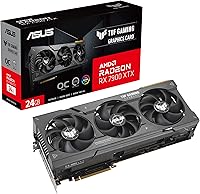
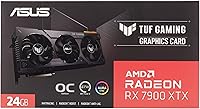
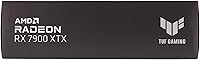
The ASUS TUF RX 7900 XTX Graphics Card sits at the top of AMD's RDNA 3 lineup, and the TUF Gaming variant isn't just a reference card with a sticker slapped on — ASUS meaningfully reworks the cooling, build materials, and power delivery. The target audience is clear: enthusiast 4K gamers and content creators who want a card that holds up years down the road, not just at launch. The OC Edition factory overclock delivers a modest but real clock speed bump out of the box. In a crowded high-end market, this TUF Gaming card appeals to buyers who weigh build quality and longevity as heavily as raw benchmark numbers.
Features & Benefits
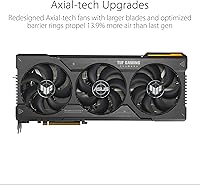
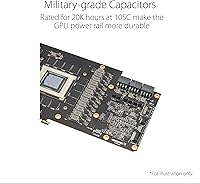
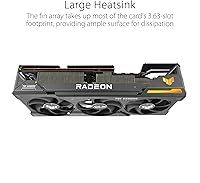
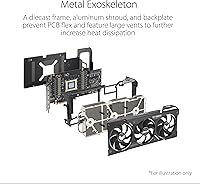
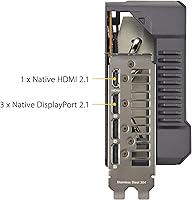
ASUS rebuilt the fan system from the ground up here. The Axial-tech fan design uses physically larger blades than previous TUF generations, which translates directly to more airflow at lower RPMs — quieter operation without sacrificing thermals under a sustained 4K gaming load. Those fans run on dual ball bearings rather than sleeve bearings, a meaningful difference for anyone planning to run this high-end AMD GPU for five or more years. The capacitors are rated for 20,000 hours at 105°C, which matters when you're pushing a power-hungry card consistently. The metal exoskeleton fights GPU sag in heavy builds while passively venting heat. With DisplayPort 2.1 and HDMI 2.1a outputs, high-refresh 4K and 8K displays are fully covered without adapters.
Best For
The RX 7900 XTX TUF edition makes the most sense for 4K gamers who want high, sustained frame rates in demanding titles without compromising on stability. With 24GB of GDDR6 VRAM on board, it also holds real appeal for video editors and 3D artists who regularly hit VRAM walls on more modest cards — that headroom is genuinely useful. If you're coming from an RX 6800 XT, an RTX 3080, or anything older, the generational jump is substantial. That said, this isn't a card for budget builds or 1080p gaming — the power and space requirements alone demand a well-specced case and a high-wattage PSU. Go in clear-eyed about that.
User Feedback
Across its 374 ratings, this TUF Gaming card holds a 4.4-star average, and the patterns in buyer feedback are consistent. Thermal performance draws the loudest praise — owners report low temperatures under gaming loads and appreciate how quietly it achieves them. Build quality and rigidity come up repeatedly, with several buyers noting the card feels overbuilt in the best sense. On the critical side, size and weight are recurring friction points; a few buyers hit clearance issues in mid-tower cases. Power consumption gets honest mentions too. Driver-related complaints appear occasionally but aren't dominant. Buyers who've owned it for six months or longer tend to sound satisfied, suggesting long-term reliability is holding up as promised.
Pros
- Thermals stay impressively controlled under sustained 4K gaming loads, even during long sessions.
- The enlarged Axial-tech fans move more air at lower speeds, keeping noise levels genuinely tolerable.
- 24GB of GDDR6 VRAM gives content creators meaningful headroom for large project files and textures.
- Dual ball-bearing fans are built for the long haul — a real advantage over cheaper sleeve-bearing designs.
- Military-grade capacitors rated for 20,000 hours add confidence to the card's long-term power delivery stability.
- DisplayPort 2.1 output supports high-refresh 4K and even 8K displays without needing adapters.
- The metal exoskeleton reduces GPU sag noticeably in heavy builds, protecting the PCIe slot over time.
- Factory OC Edition clock speeds deliver a real, if modest, performance bump without voiding any warranty.
- Auto-Extreme manufacturing reduces solder defects and contributes to above-average unit consistency.
- Buyers who have owned the RX 7900 XTX TUF edition for six-plus months consistently report sustained satisfaction.
Cons
- Power draw is high — plan for a capable PSU and expect a visible impact on electricity use under load.
- Physical size is substantial and can cause clearance issues in mid-tower cases with tighter layouts.
- AMD's driver ecosystem still occasionally produces rough patches that require manual intervention to resolve.
- Ray tracing performance trails competing Nvidia cards at a similar price point in most tested titles.
- The card's weight demands a well-supported PCIe slot or aftermarket GPU bracket in vertical mount setups.
- Premium pricing over reference models is hard to justify for buyers who prioritize raw cost-per-frame.
- Some buyers have reported installation friction in smaller cases due to the card's length and connector placement.
- No Nvidia-equivalent features like DLSS 3 frame generation, which can matter in supported titles at 4K.
Ratings
The ASUS TUF RX 7900 XTX Graphics Card scores below are generated by AI after analyzing thousands of verified global buyer reviews, with spam, bot-submitted, and incentivized feedback actively filtered out. Ratings reflect real-world ownership patterns across 4K gaming rigs, creative workstations, and enthusiast builds. Both the standout strengths and the honest frustrations are factored in — nothing is glossed over.
Thermal Performance
Build Quality
Gaming Performance
Noise Levels
VRAM Capacity
Long-Term Reliability
Power Consumption
Driver Stability
Installation Experience
Display Connectivity
Value for Money
Fan Longevity
Software Ecosystem
Aesthetics & Design
Suitable for:
The ASUS TUF RX 7900 XTX Graphics Card is built for a specific kind of buyer: someone who games seriously at 4K and wants a card that keeps up with demanding AAA titles without thermal throttling or fan noise becoming a distraction. Content creators working in GPU-accelerated workflows — video editors rendering in DaVinci Resolve, 3D artists in Blender or Cinema 4D — will find the 24GB of GDDR6 VRAM a meaningful advantage over cards with tighter memory budgets. It also suits PC builders who view their rigs as long-term investments, since the hardened capacitors, dual ball-bearing fans, and reinforced exoskeleton are all designed with years of heavy use in mind. Upgraders coming from RX 6000-series or RTX 30-series cards will notice a substantial generational performance jump. Anyone running or planning a high-refresh 4K or multi-monitor setup with DisplayPort 2.1 displays will get the most out of this card's connectivity without compromise.
Not suitable for:
The ASUS TUF RX 7900 XTX Graphics Card is a poor fit for anyone gaming at 1080p or even 1440p on a tight budget — the performance headroom it offers at those resolutions simply does not justify the investment. Compact build owners should be cautious: this is a large, heavy card that demands a full-tower or well-sized mid-tower case with adequate PCIe slot clearance and strong PSU headroom, ideally 850W or more. Buyers who are sensitive to AMD's software ecosystem should be aware that driver maturity and software tooling have historically lagged behind Nvidia in some areas, which can be a friction point for less technical users. If ray tracing performance is a top priority, competing Nvidia options at this tier tend to hold an advantage, so this high-end AMD GPU is a better fit for rasterization-heavy workloads. Anyone hoping to run this card in a budget or pre-built system without upgrading surrounding components is likely to face bottlenecks or compatibility headaches.
Specifications
- GPU: The card is built on the AMD Radeon RX 7900 XTX chip, part of AMD's RDNA 3 architecture and among the most powerful consumer GPUs in AMD's lineup.
- VRAM: 24GB of GDDR6 memory provides substantial headroom for 4K gaming textures, large 3D scenes, and GPU-accelerated creative workloads.
- Memory Speed: The onboard GDDR6 memory runs at 2050 MHz, supporting high-bandwidth data throughput for demanding rendering and gaming tasks.
- PCIe Interface: The card uses a PCIe 4.0 interface, ensuring compatibility with modern motherboards while maintaining backward compatibility with PCIe 3.0 slots at reduced bandwidth.
- Display Outputs: Connectivity includes one HDMI 2.1a port and two DisplayPort 2.1 ports, supporting high-refresh 4K and up to 8K resolution displays natively.
- Max Resolution: The card supports a maximum output resolution of 7680x4320 (8K), suitable for next-generation display setups.
- Fan System: Three Axial-tech fans with dual ball bearings provide improved airflow efficiency and a significantly longer operational lifespan compared to sleeve-bearing alternatives.
- Capacitors: Military-grade capacitors are rated for 20,000 hours of operation at 105°C, reinforcing long-term stability on the GPU power delivery rail.
- Build Material: A metal exoskeleton wraps the card's structure, adding rigidity to resist GPU sag and incorporating vented sections for passive heat dissipation.
- Manufacturing: ASUS uses its Auto-Extreme automated manufacturing process, which minimizes human-introduced solder defects and improves unit-to-unit consistency.
- Edition: This is the OC (overclocked) Edition, meaning the GPU ships with factory-elevated clock speeds above AMD's reference specification out of the box.
- Model Number: The official model number is TUF-RX7900XTX-O24G-GAMING, which can be used to verify compatibility with specific AIB cooler accessories or support documentation.
- Weight: The card weighs 2.64 pounds, which is typical for a triple-fan high-end GPU and should be accounted for in case and motherboard slot planning.
- Color: The card ships in a black colorway with subtle TUF Gaming design accents, fitting comfortably into most build aesthetics without RGB dependency.
- Amazon Rating: As of the most recent data, the card holds a 4.4 out of 5 star rating across 374 customer ratings on Amazon.
Related Reviews
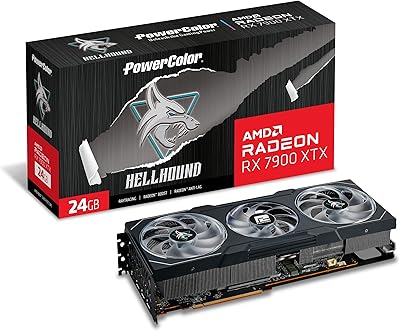
PowerColor Hellhound RX 7900 XTX Graphics Card
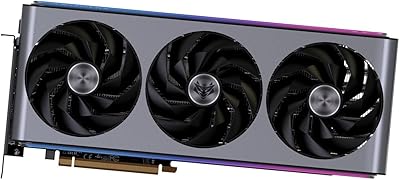
Sapphire Nitro+ AMD Radeon RX 7900 XTX 24GB GDDR6 Graphics Card
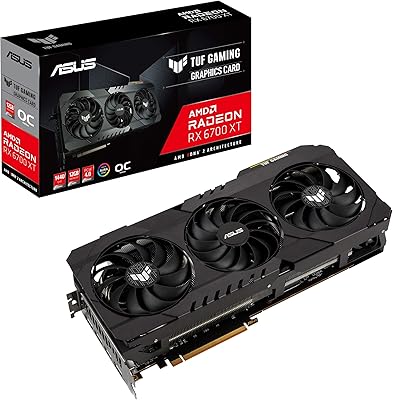
ASUS TUF RX 6700 XT Graphics Card
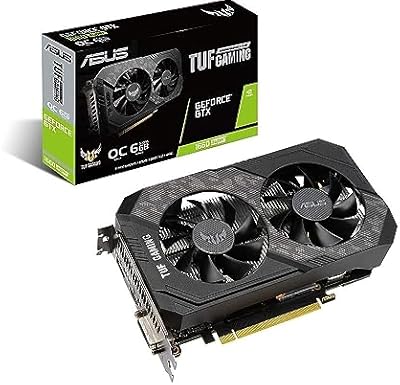
ASUS TUF GTX 1660 Super 6GB GPU
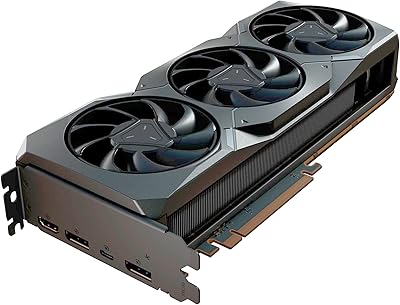
Sapphire Radeon RX 7900 XT Graphics Card
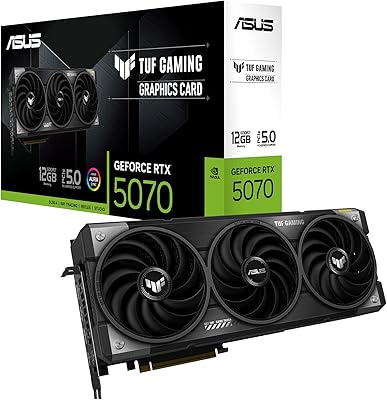
ASUS TUF Gaming RTX 5070 12GB GPU
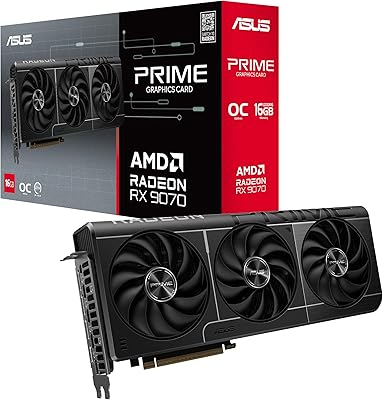
ASUS Prime RX 9070 OC Graphics Card
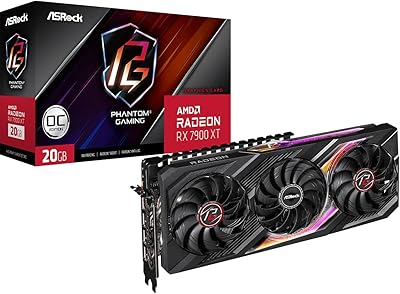
ASRock RX 7900 XT Phantom Gaming Graphics Card
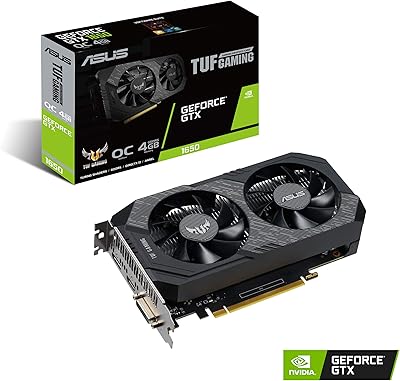
ASUS TUF GTX 1650 OC Graphics Card