Overview

The XFX RX 6750 XT 12GB Graphics Card sits in an interesting spot in the GPU market — powerful enough to handle demanding 1440p workloads without crossing into flagship pricing territory. This Radeon card is built around AMD's RDNA 2 architecture, which still holds up well against newer competition in most gaming scenarios. XFX's own QICK319 triple-fan cooler gives it thermal headroom that reference designs simply can't match. With 12GB of GDDR6 VRAM, it handles texture-heavy titles better than most cards at this tier. Expect strong performance at 1440p and playable frame rates in lighter 4K workloads — just keep expectations realistic for the most demanding 4K titles.

Features & Benefits

What makes the RX 6750 XT genuinely useful day-to-day is how its specs translate into actual gameplay. The RDNA 2 architecture brings hardware ray tracing and AMD's FidelityFX Super Resolution, letting you trade a little visual precision for a solid frame rate boost when needed. Fast GDDR6 memory keeps texture pop-in rare even in open-world games with dense asset loading. The card boosts up to 2600MHz out of the box, so you get competitive performance without touching overclocking settings. Four display outputs cover multi-monitor setups comfortably. One practical note before buying: at nearly 13 inches long, it won't fit every mid-tower or compact case, so measure your clearance first.

Best For

This AMD GPU is an easy recommendation for anyone building or upgrading a 1440p gaming rig. If your current card is a few generations old, the performance jump is substantial — you'll notice it immediately in frame rates and load times. It's also worth considering if you do light video editing or texture work on the side, since 12GB of VRAM provides breathing room that tighter alternatives lack. AMD loyalists will appreciate the tight FreeSync monitor integration and the Radeon Software suite. Multi-monitor enthusiasts have enough outputs to run a wide setup without adapters. Where it fits less naturally is inside ultra-compact cases or for buyers whose primary workload demands heavy 4K rendering.

User Feedback

With nearly 1,800 ratings sitting well above four stars, the reception for this Radeon card has been consistently strong across a broad buyer base. The most repeated praise centers on quiet, cool operation during extended sessions — owners note the triple-fan cooler does its job without fans spinning up aggressively. Driver stability has also impressed most users, which has historically been a pain point for AMD cards. On the critical side, a handful of buyers flagged the card's physical length as a problem in smaller cases, and power consumption is on the higher end for this class. A few reviewers noted that Nvidia alternatives at comparable prices trade blows closely, making the final decision largely an ecosystem call.

Pros

  • Handles 1440p gaming at high and ultra settings with strong, consistent frame rates in most modern titles.
  • 12GB of GDDR6 VRAM provides headroom that budget and mid-range competitors simply cannot match.
  • The QICK319 triple-fan cooler keeps temperatures low and fan noise minimal even during long gaming sessions.
  • Out-of-box boost clocks are competitive enough that most users will never need to touch overclocking settings.
  • FidelityFX Super Resolution support gives a meaningful frame rate lift with minimal visible quality trade-off.
  • Four display outputs make multi-monitor setups straightforward without extra adapters.
  • FreeSync compatibility pairs well with a wide range of mid-range and high-end AMD-friendly monitors.
  • Driver stability has impressed the majority of owners, with few reports of crashes or major software issues.
  • Strong aggregate rating across a large review base suggests consistent build quality and reliability over time.
  • Capable of light 4K gaming in less demanding titles, giving some forward-looking value beyond 1440p use.

Cons

  • At nearly 13 inches long, this card will not physically fit in many compact and mid-tower PC cases.
  • Power consumption is on the higher end for its performance tier, requiring a quality PSU with real headroom.
  • Ray tracing performance lags noticeably behind Nvidia alternatives at comparable price points.
  • Not a strong fit for CUDA-dependent workflows or software ecosystems built around Nvidia hardware.
  • Competitive Nvidia options at similar pricing make the buying decision tighter than AMD fans might prefer.
  • Native 4K performance in the most demanding AAA titles falls short of what buyers might expect.
  • Heavier than average at 3.83 pounds, which can stress cheaper motherboard PCIe slots over time.
  • Value proposition weakens if a strong sale or price drop is available on a newer-generation competing card.

Ratings

Our AI-generated scores for the XFX RX 6750 XT 12GB Graphics Card were produced by analyzing thousands of verified global user reviews, with spam, incentivized, and bot-flagged submissions actively filtered out before scoring. The ratings reflect the genuine consensus of real buyers — capturing both what this Radeon card does exceptionally well and where it falls short against real-world expectations. Every category score is calibrated to be honest: strong where the card earns it, and critical where buyers consistently ran into friction.

1440p Gaming Performance
91%
Owners consistently report smooth, high-frame-rate gameplay in demanding AAA titles at 1440p on high and ultra settings, often without needing to compromise on visual fidelity. Titles like Cyberpunk 2077 and Hogwarts Legacy run comfortably on this Radeon card at the target resolution, which is exactly what buyers in this segment are looking for.
A small number of users noted that in the most aggressively optimized or unoptimized titles, frame rates can dip more than expected at ultra settings, requiring minor adjustments. It is not a card that makes every 1440p scenario effortless without any trade-offs.
4K Gaming Capability
67%
33%
In less demanding titles and older games, this AMD GPU handles 4K output with reasonable results, and FSR upscaling helps bridge the gap in supported titles. For buyers who occasionally want to push their display to 4K for cinematic single-player experiences, it gets the job done with settings tuning.
Consistent, high-frame-rate 4K gaming in the most graphically intensive modern titles is beyond what this card reliably delivers. Reviewers who bought it specifically for 4K gaming frequently expressed disappointment, making it important to frame expectations correctly before purchasing.
Thermal Management
89%
The QICK319 triple-fan cooler is one of the most praised aspects across the entire review base — buyers report the card staying cool even during marathon gaming sessions lasting several hours, with GPU temperatures remaining well within safe operating ranges. The fans are also noted as quieter than expected for a card of this performance tier.
A handful of users in poorly ventilated cases or compact builds reported higher-than-expected temperatures, suggesting the cooler's effectiveness is partly dependent on having reasonable airflow in the surrounding chassis. It is not entirely immune to case environment.
Noise Level
86%
At typical gaming loads, the triple-fan setup operates quietly enough that most users report it being inaudible over game audio or a modest desk fan. Semi-passive fan behavior at low loads — where the fans stop entirely — further reduces ambient noise during lighter tasks.
Under sustained peak load, particularly in warm ambient environments, the fans do spin up audibly. It is not disruptive for most users, but those in very quiet rooms or open office setups may notice the card more than anticipated during intensive sessions.
VRAM Adequacy
93%
Twelve gigabytes of GDDR6 is a genuine differentiator in this price class, and real-world users confirm it matters in practice — texture-heavy open-world games load assets more fluidly, and the card avoids the stuttering that plagues 8GB alternatives in titles with aggressive VRAM usage. Content creators doing occasional video editing or texture work also benefit from the buffer.
While 12GB is strong today, a small number of forward-looking reviewers noted that next-generation titles are already pushing VRAM limits higher, and the card's overall GPU horsepower may become the bottleneck before the memory does in a few years.
Driver Stability
82%
18%
AMD's driver situation has matured considerably by the time this card reached widespread adoption, and the majority of owners report a stable, trouble-free experience using Radeon Software for updates and configuration. Out-of-box setup is consistently described as straightforward.
A minority of users reported occasional driver-related hiccups after major AMD software updates, a pattern that has historically been associated with AMD GPU ownership. While far less common than in previous years, it remains a real consideration for buyers who prioritize a completely hands-off driver experience.
Ray Tracing Performance
58%
42%
Hardware ray tracing is supported, and in titles with mild RT implementations, the RX 6750 XT produces visually improved lighting and shadows without a catastrophic frame rate penalty. For casual use of ray tracing effects in supported games at 1080p or light 1440p, it functions acceptably.
Heavy ray tracing in demanding titles at 1440p results in significant performance drops that most users find unacceptable without FSR enabled. Compared to Nvidia alternatives with dedicated RT cores at the same price point, this AMD GPU consistently underperforms in ray tracing workloads — a recurring theme in user comparisons.
Value for Money
79%
21%
For buyers targeting 1440p gaming and coming from older hardware, the performance per dollar on this Radeon card lands in a genuinely compelling range. The 12GB VRAM buffer relative to competing cards at this price tier is frequently cited as a key tipping factor for buyers who did detailed pre-purchase comparisons.
The competitive landscape at this price point is tight, and multiple reviewers noted that Nvidia alternatives — particularly during sale periods — offer a case-by-case challenge to the value argument. Buyers who missed this card at its best pricing felt the value proposition weaker against newer-generation competition.
Build Quality
88%
The card feels substantively built — the cooler shroud is solid, the PCB shows no flex under normal handling, and long-term owners report no physical degradation after extended use. XFX's reputation for build reliability comes through in the feedback, with very few reports of DOA units or early hardware failures.
The card's considerable weight and length mean it needs either a well-braced case or a GPU support bracket to avoid long-term stress on the PCIe slot. A small number of users flagged this as an oversight in their initial build planning.
Case Compatibility
61%
39%
For buyers with full-size ATX mid-towers or full-tower cases, installation is smooth and clearance is rarely an issue. The card fits within the GPU length limits of most mainstream case designs sold alongside performance hardware.
At nearly 13 inches long, this card is a genuine obstacle for compact mid-tower builds and is completely incompatible with ITX cases. This is one of the most recurring practical complaints across verified reviews, with several buyers noting they had to return the card or buy a new case after overlooking the measurement.
Multi-Monitor Support
84%
Four display outputs — one HDMI and three DisplayPort — give multi-monitor users genuine flexibility without needing hubs or adapters for most standard configurations. Buyers running triple-monitor gaming setups or wide productivity arrays report the connectivity handling their needs cleanly.
While the output count is generous, users who wanted specific combinations of display types occasionally needed adapters for legacy monitors. No significant technical complaints emerged around multi-monitor stability, but it is worth noting that very high refresh rate multi-monitor gaming still taxes the GPU at 1440p.
Out-of-Box Experience
87%
Reviewers consistently describe installation and first boot as smooth — the card is recognized immediately, Radeon Software downloads cleanly, and gaming performance is available without any manual tuning or overclocking. It is a confidence-inspiring first experience, particularly for buyers upgrading from much older hardware.
A small cohort of users with older motherboards reported minor compatibility hiccups during initial setup, though these were typically resolved through BIOS updates rather than indicating a fault with the card itself. Packaging and included accessories are functional but unremarkable.
Power Efficiency
63%
37%
Under moderate gaming loads, the card's power draw is reasonable for its performance output, and users with quality 750W power supplies report no instability or throttling. The RDNA 2 architecture does show genuine efficiency improvements over older AMD generations in day-to-day mixed usage.
At full gaming load, the card's power consumption is at the higher end for its performance tier, and buyers with aging or budget power supplies found this a real problem. Several reviews mentioned needing to upgrade their PSU alongside the card, which added unexpected cost to the build.
FSR & Upscaling Quality
76%
24%
AMD's FidelityFX Super Resolution works across a wide range of supported titles and provides meaningful frame rate boosts at 1440p and 4K when visual trade-offs are acceptable. Owners targeting playable 4K experiences lean on FSR regularly and find it a practical tool rather than a last resort.
FSR quality, particularly in older versions still used by many games, falls short of Nvidia's DLSS in perceived sharpness and stability — a point multiple comparative reviewers raised directly. It is a capable solution but not yet at feature parity with the competition in most implementations.
Long-Term Reliability
83%
Cards from this release generation have now been in the market long enough for meaningful long-term feedback to accumulate, and the picture is largely positive — owners report stable performance over extended ownership periods with no significant degradation in gaming output or hardware integrity.
A small number of users flagged concerns around fan bearing noise emerging after a year or more of use, which is not uncommon for triple-fan coolers under sustained load. XFX's warranty process received mixed feedback, with some buyers reporting slower-than-expected resolution on support tickets.

Suitable for:

The XFX RX 6750 XT 12GB Graphics Card is squarely aimed at PC gamers who want to play modern AAA titles at 1440p with high or ultra settings without constantly hitting VRAM walls. If you're running an older mid-range card from a few generations back, the performance difference here is substantial enough to feel transformative in day-to-day gaming. The 12GB of GDDR6 memory also makes it a reasonable pick for content creators doing texture-heavy work or light video editing on the side, since that buffer prevents the stuttering and slowdowns that tighter cards produce under real workloads. AMD ecosystem builders get particular value from this Radeon card, given its tight FreeSync monitor integration, FidelityFX Super Resolution support, and the broader Radeon Software suite. Multi-monitor users will also appreciate having four usable display outputs without needing adapters or docks.

Not suitable for:

The XFX RX 6750 XT 12GB Graphics Card is not the right call for every buyer, and being honest about that matters. If your primary goal is pushing consistent high frame rates at native 4K in the most demanding titles on the market, this AMD GPU will hit its limits — it handles 4K in lighter or older games well enough, but it struggles to keep up with truly GPU-heavy 4K workloads. Compact build enthusiasts need to pay close attention before purchasing: at nearly 13 inches long, this card simply will not fit inside many mini-ITX or smaller mid-tower cases, and overlooking that detail means a costly return. Buyers deep in the Nvidia ecosystem — particularly those relying on DLSS or CUDA-dependent creative workflows — will find the RX 6750 XT a poor fit regardless of raw performance numbers. Finally, if your power supply is on the lighter side, the card's notable power draw demands a quality PSU with adequate headroom, which adds to the total build cost for some users.

Specifications

  • GPU Architecture: Built on AMD's RDNA 2 architecture, which delivers hardware ray tracing support and meaningful efficiency improvements over the previous generation.
  • Chipset: The card uses the AMD Radeon RX 6750 XT chipset, positioned as a refined and higher-clocked variant of the standard RX 6700 XT.
  • VRAM: 12GB of GDDR6 memory provides ample buffer for high-resolution textures, modern open-world games, and light creative workloads.
  • Memory Speed: The GDDR6 memory operates at 18000 MHz effective speed, supporting fast texture streaming at 1440p and entry-level 4K resolutions.
  • Boost Clock: The card boosts up to 2600MHz under load, delivering competitive frame rates without requiring any manual overclocking from the user.
  • Cooling System: XFX's QICK319 triple-fan cooler manages thermals across the full card length, keeping temperatures stable during extended gaming sessions.
  • Card Length: The PCB measures 12.72 inches (approximately 323mm) in length, requiring buyers to verify clearance inside their PC case before purchasing.
  • Card Weight: At 3.83 pounds, the card is on the heavier side for its class and may benefit from a GPU support bracket in some builds.
  • Display Outputs: Connectivity includes one HDMI port and three DisplayPort outputs, supporting up to four simultaneous displays or high-refresh multi-monitor configurations.
  • Max Resolution: The card officially supports output up to 3840x2160 (4K UHD), with strongest performance seen at 2560x1440 in demanding titles.
  • Power Requirements: The RX 6750 XT has a notable power draw for its tier, and XFX recommends pairing it with a quality power supply meeting AMD's minimum PSU guidelines.
  • API Support: The card supports DirectX 12 Ultimate, Vulkan, and OpenGL 4.6, ensuring broad compatibility with current and near-future game titles.
  • FSR Support: AMD FidelityFX Super Resolution (FSR) is fully supported, allowing users to boost frame rates in compatible titles with minimal visual trade-off.
  • FreeSync: AMD FreeSync technology is supported across compatible monitors, reducing screen tearing and stuttering during fast-paced gameplay.
  • Model Number: The official XFX model identifier for this card is RX-675XYJFDP, which can be used to verify compatibility and locate manufacturer support resources.
  • Color & Finish: The card ships in a black finish with XFX branding on the cooler shroud, fitting most standard gaming build aesthetics.
  • BSR Ranking: As of available data, this card holds a Best Sellers Rank of #211 in the Computer Graphics Cards category on Amazon.
  • User Rating: The card carries a 4.7 out of 5 star aggregate rating based on 1,788 customer ratings, indicating consistently positive reception across a large buyer base.
  • Release Date: The XFX QICK319 RX 6750 XT was first made available in June 2022, making it a mature product with a well-established driver and support history.
  • Brand & Series: Manufactured by XFX, this card belongs to the RX 6750 XT CORE Gaming series, sitting in the brand's performance-oriented mid-range lineup.

Related Reviews
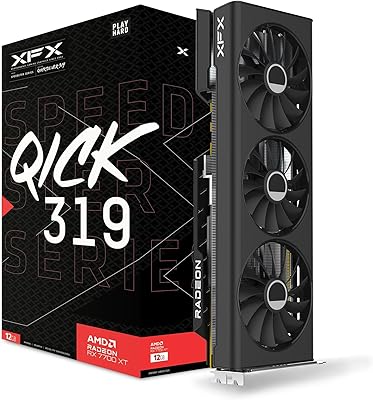
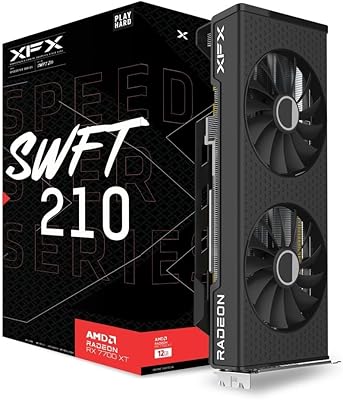
XFX Speedster QICK319 RX 7700 XT 12GB GDDR6 Graphics Card
85%
92%
Gaming Performance
87%
Cooling Efficiency
90%
Price-to-Performance Ratio
62%
Compatibility with Motherboards
88%
Build Quality
More
XFX RX 7700 XT 12GB Graphics Card
78%
88%
1440p Gaming Performance
84%
Value for Money
93%
VRAM Capacity
76%
Thermal Performance
69%
Noise Levels
More
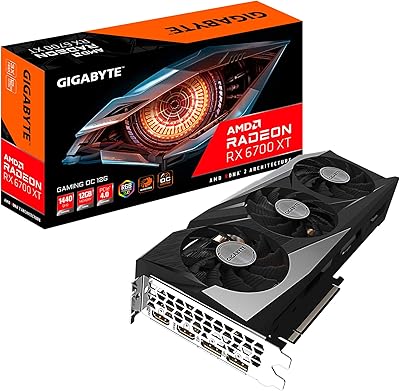
XFX Speedster MERC319 RX 7800 XT 16GB GDDR6 Graphics Card
85%
91%
Overall Performance
94%
Gaming Performance at 4K
88%
Cooling Efficiency
87%
Value for Money
85%
Build Quality
More
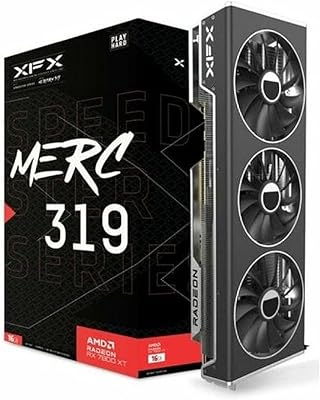
GIGABYTE Radeon RX 6700 XT Gaming OC 12GB Graphics Card
87%
94%
4K Gaming Performance
91%
Cooling System Efficiency
88%
Installation and Setup
86%
Design and Durability
89%
Frame Rates in Demanding Games
More
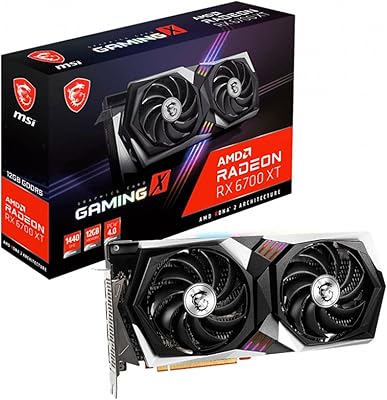
MSI RX 6700 XT Gaming X GPU
78%
88%
1440p Gaming Performance
84%
Thermal Management
91%
Noise Levels
87%
Build Quality
67%
Driver Stability
More
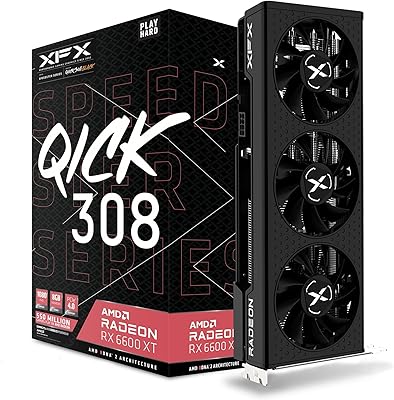
XFX QICK308 RX 6600 XT Graphics Card
79%
88%
1080p Gaming Performance
67%
1440p Gaming Performance
91%
Cooling Performance
86%
Noise Levels
53%
Ray Tracing Performance
More
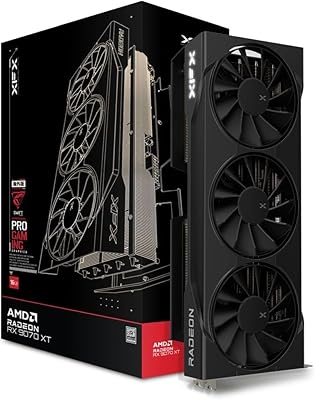
XFX Swift RX 9070 XT 16GB Graphics Card
78%
93%
Gaming Performance at 1440p
78%
4K Gaming Capability
91%
Thermal Performance
82%
Noise Levels
89%
Build Quality
More
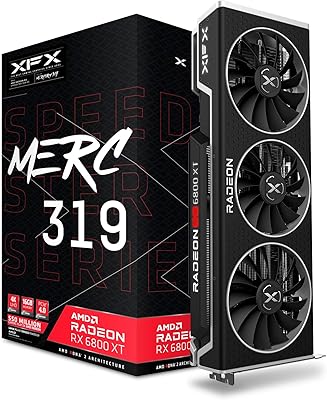
XFX Speedster MERC319 AMD Radeon RX 6800 XT 16GB GDDR6 Graphics Card
85%
94%
Performance in 4K Gaming
88%
Thermal Management & Cooling
89%
Value for Money
85%
Build Quality & Durability
82%
Installation & Setup
More
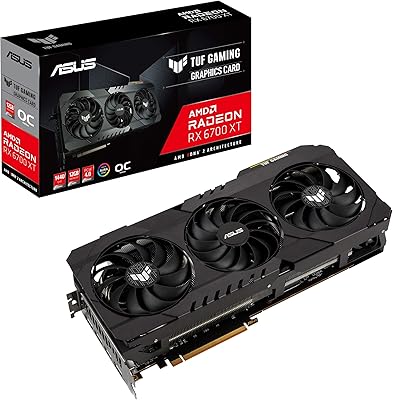
ASUS TUF RX 6700 XT Graphics Card
76%
88%
1440p Gaming Performance
91%
Thermal Management
93%
Build Quality
84%
Fan Noise
67%
Driver Stability
More
XFX RX 9060 XT 8GB Graphics Card
82%
88%
Gaming Performance at 1440p
93%
Gaming Performance at 1080p
67%
VRAM Adequacy
86%
Thermal Performance
89%
Noise Levels
More

FAQ

It genuinely holds up well at 1440p. In most AAA titles at high or ultra settings, the RX 6750 XT delivers smooth, playable frame rates without needing to dial settings down significantly. It's not a budget card pretending to punch above its weight — the 12GB VRAM buffer in particular helps it stay competitive in texture-heavy games that choke lighter cards.

Most full-size mid-tower cases will accommodate it, but you need to check your specific case specs before ordering. The card is nearly 13 inches long, which is longer than average, and it won't fit in smaller mid-towers or compact ITX builds without careful planning. Always compare the card's length against your case's maximum GPU clearance rating.

AMD's general guidance for the RX 6750 XT points toward a quality 750W power supply as a safe baseline for a full gaming system. A weak or aging PSU can cause instability under load even if it technically meets the wattage on paper, so don't cut corners here — a reliable unit from a reputable brand matters more than raw wattage numbers.

It's a genuinely competitive comparison, and the honest answer is that it depends on what you prioritize. The RX 6750 XT has more VRAM than many Nvidia alternatives in the same range, which helps in texture-heavy titles. Nvidia cards tend to have the edge in ray tracing performance and offer DLSS, which is superior to FSR in most implementations. If you're on a FreeSync monitor or invested in AMD's ecosystem, the RX 6750 XT makes strong sense. If DLSS or CUDA matters to you, it's a harder sell.

According to the large pool of user feedback, most owners report the opposite — the QICK319 triple-fan cooler keeps temperatures well in check, and fan noise stays relatively quiet even under sustained load. It's one of the more consistent points of praise across reviews. That said, results depend on your case airflow, so ensure your build has reasonable ventilation.

It's capable for light to moderate creative work. The 12GB of GDDR6 VRAM gives it a real advantage over tighter cards when handling high-resolution timelines or texture-heavy projects in software that supports AMD hardware acceleration. It's not a workstation card by any stretch, but for someone who games primarily and edits video occasionally, it handles both duties without frustration.

It can handle 4K, but with caveats. In older titles or less demanding games, 4K is genuinely achievable at reasonable settings. In the most graphically intense modern titles, you'll need to drop settings or lean on FSR upscaling to maintain smooth frame rates at 4K. Think of it as a strong 1440p card with 4K capability, not the other way around.

The card has four display outputs — one HDMI and three DisplayPort — so you can run up to four monitors simultaneously. That makes it a solid option for multi-monitor setups without needing a hub or additional adapters for most standard configurations.

Driver stability has improved considerably over the past couple of years, and the RX 6750 XT specifically benefits from a mature and well-tested driver stack given how long it has been on the market. The majority of owners report no significant driver-related issues. As with any GPU, keeping drivers updated through the Radeon Software suite is the best way to stay ahead of any edge-case bugs.

At 3.83 pounds, it is on the heavier end, and GPU sag is a real consideration with cards of this weight. In most cases, the PCIe slot itself is durable enough to handle it long-term, but if you want peace of mind — especially in a case where the card will hang horizontally — a simple aftermarket GPU support bracket is a cheap and effective fix.

Where to Buy