Overview

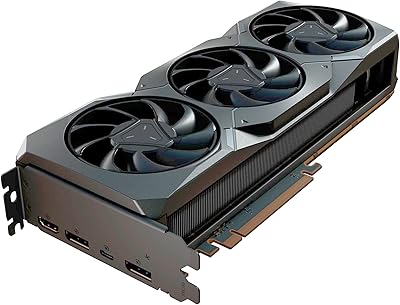
The XFX RX 7700 XT Graphics Card sits squarely in the competitive mid-range 1440p market, going head-to-head with options like the RTX 4060 Ti and its own predecessor, the RX 6800. XFX has been building AMD cards for years, and that long partnership shows in the board design and component selection — this isn't a budget afterthought dressed up in a fancy shroud. The card runs on AMD RDNA 3 architecture, which brings meaningful efficiency improvements over RDNA 2, not just in raw performance but in how much heat and power it demands per frame. Expect strong rasterization, competitive VRAM headroom at 12GB, and a cooler that clearly means business.
Features & Benefits

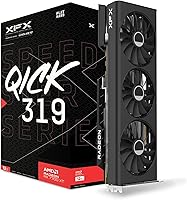
RDNA 3 brings real efficiency gains — the RX 7700 XT consistently extracts more frames per watt than cards from the previous generation, which matters if you care about long-term power bills or system thermals. The 12GB of GDDR6, backed by AMD Infinity Cache, gives this RDNA 3 GPU a meaningful edge in texture-heavy titles and heavily modded games where 8GB cards start struggling. The boost clock reaches 2599 MHz in practice, though actual in-game clocks will vary — treat it as a ceiling, not a guarantee. XFX's triple-fan QICK cooler keeps temperatures well controlled under sustained loads, running quietly enough that you'll forget it's there during long sessions. DisplayPort 2.1 outputs add genuine future-proofing for high-refresh 1440p or entry-level 4K setups.

Best For

This XFX card makes the most sense for 1440p gaming enthusiasts who want high frame rates in demanding AAA titles without paying for flagship-tier features they won't use. If you're running a FreeSync monitor, the AMD ecosystem integration is genuinely useful — variable refresh rate support works reliably and without the licensing overhead of G-Sync. Light content creators doing video editing or 3D rendering will appreciate the 12GB VRAM buffer, which keeps things smooth without requiring a professional-grade card. It fits comfortably in standard ATX mid-towers without the slot clearance drama that larger flagship cards create. Upgraders coming from an RX 580 or GTX 1080 will notice a substantial and very welcome performance gap.

User Feedback

Across thousands of reviews, buyers consistently highlight thermal performance and quiet operation as standout strengths — most report the card running cool and staying surprisingly subdued even during extended sessions. The out-of-box experience gets solid marks too, with well-packaged hardware and no widespread QC issues. Where it gets more nuanced is AMD's driver software: a portion of users, particularly those switching from Nvidia, note that Adrenalin can feel less polished and occasionally requires a clean reinstall after updates. Coil whine shows up in a small but consistent minority of reports. Long-term owners generally describe stable performance over months of use, and the 4.5-star average across over 9,000 ratings reflects a strong consensus — edge cases are largely tied to software, not hardware.

Pros

  • Delivers strong 1440p gaming performance across both AAA and esports titles.
  • 12GB GDDR6 VRAM provides real headroom in texture-heavy and modded games.
  • RDNA 3 architecture offers noticeably better performance-per-watt than the previous generation.
  • The triple-fan QICK cooler keeps temperatures controlled and fan noise impressively low under load.
  • DisplayPort 2.1 outputs future-proof the card for high-refresh or next-gen display setups.
  • FreeSync support works reliably and without extra licensing costs over competing solutions.
  • Hardware ray tracing and AI accelerators are included, not bolted on as an afterthought.
  • XFX's long track record with AMD boards translates to solid component quality and build consistency.
  • Fits standard ATX mid-towers without the slot or length conflicts that plague larger flagship cards.
  • Over 9,000 Amazon ratings at 4.5 stars reflects a broad and consistently satisfied buyer base.

Cons

  • AMD Adrenalin software can require a full clean reinstall after certain driver updates, which is frustrating.
  • A small but recurring number of buyers report coil whine, particularly under heavy GPU load.
  • Ray tracing performance trails Nvidia’s equivalent tier cards by a meaningful margin in RT-heavy titles.
  • No native DLSS support — AMD’s FSR is capable but not universally available across all games.
  • 4K gaming is technically possible but inconsistent; this card was not designed to excel at that resolution.
  • At 13-plus inches long, case compatibility should be verified before purchasing, especially in tighter builds.
  • Occasional reports of the card running warm in poorly ventilated cases suggest airflow planning is necessary.
  • The Radeon software suite still lags behind GeForce Experience in polish and ease of use for new users.

Ratings

The XFX RX 7700 XT Graphics Card scores below are generated by AI after processing thousands of verified global buyer reviews, with spam, bot activity, and incentivized feedback actively filtered out. The results reflect a candid picture of where this RDNA 3 GPU genuinely excels and where real users have run into friction. Both the strengths and the recurring pain points are represented transparently so you can make a confident decision.
1440p Gaming Performance
91%
Buyers consistently report smooth, high-frame-rate gameplay in demanding AAA titles at 1440p — games like Cyberpunk 2077 and Hogwarts Legacy run at high settings without the stutters or VRAM pressure that plague 8GB alternatives. The RDNA 3 architecture gives this card a noticeable edge over its direct predecessor in real-world gaming scenarios.
Performance can vary more than expected between titles depending on AMD driver optimization maturity for specific engines. A handful of users noted frame pacing irregularities in certain DX11 titles that required driver tweaks to resolve.
Thermal Management
88%
The triple-fan QICK cooler keeps GPU junction temperatures well within safe ranges even during multi-hour gaming sessions, with most users reporting core temps staying comfortably controlled under sustained load. Several buyers specifically called out that the card runs cooler than competing triple-fan solutions they had previously owned.
In cases with poor front-to-back airflow, temperatures can creep higher than expected, suggesting the cooler performs best when paired with a well-ventilated enclosure. A minority of users in hot climates reported needing to increase case fan speeds to keep things fully stable.
Cooling Noise Level
86%
Under typical gaming loads, most users describe the card as impressively quiet — the fans rarely need to spin fast enough to become intrusive, and the semi-passive mode during light desktop use means the card is completely silent when it doesn't need cooling. This is a real quality-of-life benefit for open-desk setups.
At sustained maximum load — think extended stress tests or very demanding GPU-compute tasks — fan noise does become audible and slightly coarse. A small percentage of buyers reported fan bearing noise developing after several months of use.
Value for Money
84%
Across the review pool, buyers repeatedly describe this XFX card as one of the stronger value propositions in its tier — delivering meaningful 1440p performance at a price point that doesn't demand premium-tier sacrifice. The 12GB VRAM in particular is cited as a differentiating factor buyers feel adds longevity to the purchase.
Some buyers felt the value equation shifts if you primarily play ray tracing-heavy titles, where competing Nvidia cards at similar prices offer a more compelling RT experience. A few long-term owners noted that used alternatives occasionally surface at noticeably lower prices, making the full retail cost harder to justify retroactively.
Driver Stability
67%
33%
For users who set up their system cleanly and stick with stable driver releases, day-to-day operation is largely trouble-free. AMD has improved Adrenalin meaningfully over recent release cycles, and a significant portion of buyers report no software issues whatsoever after initial installation.
This is the most consistently cited pain point across the review base: a meaningful subset of buyers — particularly those switching from Nvidia — encountered driver-related crashes, black screens, or software conflicts that required a DDU clean install to resolve. Major driver updates carry more risk than equivalent Nvidia releases.
Ray Tracing Performance
61%
39%
Hardware ray tracing accelerators are present on every Compute Unit, meaning the card handles RT in supported titles without fully falling back to software rendering. In titles with lighter RT implementations, the performance hit is manageable and the visual payoff noticeable.
Compared to Nvidia's RTX 4060 Ti at a similar price point, ray tracing performance on the RX 7700 XT trails by a significant margin in heavily RT-dependent games like Alan Wake 2 or Dying Light 2. Buyers who prioritize RT-heavy gameplay will likely find this card underwhelming in that specific area.
VRAM Adequacy
93%
At 12GB, this RDNA 3 GPU stands out in its tier — users running high-resolution texture packs, heavily modded Bethesda titles, or simultaneous gaming-plus-streaming workloads report no memory-related performance degradation where 8GB cards would otherwise stutter. It provides genuine headroom for the next few years of game releases.
For purely standard 1440p gaming without mods or high-res packs, 12GB is more than currently necessary — some buyers felt they were paying for capacity they don't actively use today. It's a future-proofing premium rather than an immediate need.
Build Quality
83%
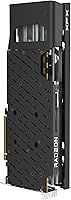
XFX's long history manufacturing AMD boards shows in the physical quality of the card — the shroud feels solid, the PCIe connector is well-reinforced, and the overall construction inspires confidence during installation. Most buyers describe the unboxing experience as professional, with protective packaging that arrived without damage.
The aesthetics are functional rather than striking — buyers who prioritize aggressive RGB lighting or a premium visual design may find the all-black shroud underwhelming compared to flashier alternatives. A small number of reports flagged minor backplate flex under pressure.
Software Ecosystem
66%
34%
AMD Adrenalin includes genuinely useful features — the performance overlay, game-specific profile management, and FreeSync configuration tools are all practical additions that users coming from basic setups will appreciate. Radeon Anti-Lag and Radeon Boost provide measurable responsiveness improvements in supported competitive titles.
The Adrenalin interface is cluttered and can feel counterintuitive compared to GeForce Experience, particularly for users new to the AMD ecosystem. Feature parity with Nvidia's software suite — especially around streaming tools and AI-powered features — remains an ongoing gap that buyers notice quickly.
Display Connectivity
89%
Three DisplayPort 2.1 outputs and one HDMI port give this card excellent multi-monitor versatility, and DP 2.1 specifically future-proofs the setup for 4K at 144Hz or 1440p at 240Hz without needing a new card to support next-gen display standards. Multi-monitor productivity setups are well catered for.
The single HDMI port can be a minor inconvenience for users with multiple HDMI-only displays or TV setups, requiring a DP-to-HDMI adapter that adds cost and occasionally introduces compatibility quirks with older televisions.
Installation Experience
81%
19%
Most buyers describe physical installation as straightforward — the card's standard dual-slot form factor and clear power connector layout make it accessible even for first-time builders. Packaging quality is consistently praised for keeping the card well-protected during shipping.
At 13.2 inches in length, a minority of buyers discovered tight clearance issues in smaller ATX mid-towers that weren't immediately obvious from their case specifications. Checking GPU length compatibility beforehand is essential and not always intuitive for newer builders.
Long-Term Reliability
79%
21%
The majority of long-term owners report stable, consistent performance over extended ownership periods with no hardware degradation or unexpected failures. Fan longevity appears solid based on the volume of multi-month reviews without complaints about mechanical wear.
Coil whine is a recurring — if minority — complaint that appears more frequently under GPU-compute loads than during standard gaming. It is not universal, but its presence is consistent enough across reviews to warrant mention for users sensitive to high-frequency electronic noise.
FreeSync Integration
87%
AMD's FreeSync implementation on this card is reliable and covers a wide range of compatible monitors without requiring proprietary licensing fees. Buyers with FreeSync Premium or FreeSync Premium Pro monitors consistently describe tear-free, responsive gameplay that justifies staying in the AMD ecosystem.
FreeSync performance depends heavily on the monitor's certified range — users with budget FreeSync panels occasionally reported the variable refresh range being too narrow to fully benefit during heavy performance drops. Non-FreeSync users gain nothing from this feature.
4K Capability
53%
47%
In less demanding titles and older games, the RX 7700 XT can sustain playable 4K frame rates at reduced settings, and the DisplayPort 2.1 outputs ensure there's no signal bottleneck when connecting a 4K display. For casual or older-title 4K use, it holds up reasonably well.
Modern AAA games at 4K push this card well past its performance ceiling — frame rates drop below comfortable thresholds at high settings without significant resolution or quality compromises. Buyers who purchased expecting serious 4K gaming capability have been consistently disappointed.

Suitable for:

The XFX RX 7700 XT Graphics Card is built for PC gamers who want to play modern AAA titles at 1440p with high frame rates and don't want to pay flagship prices to do it. If your monitor tops out at 1440p and you're running FreeSync, this card slots into that setup almost perfectly — AMD's variable refresh rate support is reliable and well-integrated across the Radeon driver stack. Upgraders stepping up from older mid-range GPUs like the RX 580, GTX 1070, or even the RX 5700 will find the performance gap genuinely significant, not just on paper. The 12GB VRAM buffer also makes this RDNA 3 GPU a reasonable choice for light content creators who do occasional video editing or 3D rendering and need breathing room beyond what 8GB cards offer. Builders working with standard ATX mid-tower cases will have no fitment issues, and anyone already invested in the AMD ecosystem — FreeSync monitors, AMD CPUs — will get the most cohesive experience out of this XFX card.
Not suitable for:

If your primary target is 4K gaming, the RX 7700 XT is not the right tool — it can push 4K in some lighter titles, but it will struggle to hold consistent high frame rates in demanding modern games at that resolution, and you'd be better served saving for a tier-up. Buyers who are deeply embedded in the Nvidia ecosystem — particularly those using DLSS-dependent titles, Nvidia Broadcast, or other GeForce-specific software — will find AMD's alternatives functional but not equivalent. The XFX RX 7700 XT Graphics Card is also not ideal for users who want a completely hands-off driver experience; AMD's Adrenalin software has improved significantly, but it still occasionally requires manual cleanup after major updates in ways that Nvidia's drivers typically don't. Competitive esports players who game at 1080p on high-refresh monitors would likely find better value in a less expensive card, since the extra horsepower here is optimized for 1440p workloads. Finally, anyone building in a small form factor or mini-ITX case should double-check clearances carefully — at over 13 inches in length, this is not a compact card.
Specifications

  • GPU Chip: Powered by the AMD Radeon RX 7700 XT die, built on TSMC's 5nm process node as part of the RDNA 3 generation.
  • Architecture: AMD RDNA 3 delivers improved performance-per-watt and updated compute, ray tracing, and AI acceleration units compared to RDNA 2.
  • Compute Units: The card features 54 active Compute Units, each containing updated dual-issue shader processors introduced with RDNA 3.
  • VRAM: 12GB of GDDR6 memory provides ample headroom for high-texture 1440p gaming, modded titles, and light creative workloads.
  • Memory Speed: GDDR6 memory operates at 18 Gbps effective speed, paired with AMD Infinity Cache to reduce latency and bandwidth bottlenecks.
  • Clock Speeds: Base clock reaches up to 1785 MHz, game clock up to 2276 MHz, and boost clock up to 2599 MHz under optimal thermal conditions.
  • Display Outputs: Connectivity includes one HDMI port and three DisplayPort 2.1 outputs, supporting up to four simultaneous displays.
  • Max Resolution: Supports output up to 7680x4320 (8K) resolution, though practical high-frame-rate gaming is best suited to 1440p.
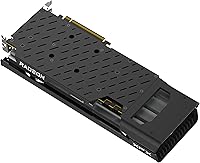
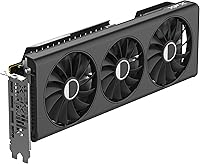
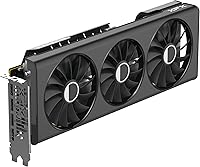
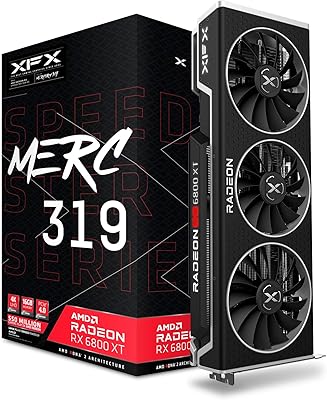
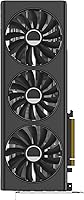
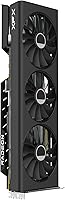
  • Cooling System: XFX's triple-fan QICK cooling shroud uses three independent fans and a multi-heatpipe heatsink to manage thermals under sustained gaming loads.
  • Card Dimensions: The card measures 13.2 x 5.1 x 2 inches, occupying a standard dual-slot profile with length suitable for most ATX mid-tower cases.
  • Weight: The card weighs 2.2 pounds, which is typical for a triple-fan mid-range GPU and should not require additional PCIe slot support brackets in most builds.
  • Ray Tracing: Hardware ray tracing accelerators are built into each Compute Unit, enabling RT effects in supported titles without fully relying on shader fallback.
  • AI Acceleration: On-chip AI accelerators support AMD's FidelityFX Super Resolution (FSR) upscaling and other machine-learning-assisted rendering features.
  • AMD Technologies: Includes AMD Radeon Anti-Lag for reduced input latency and Radeon Boost for dynamic resolution scaling in supported competitive titles.
  • Power Connector: Requires an 8-pin PCIe power connection; a 650W or higher power supply is recommended for stable operation in a typical gaming system.
  • API Support: Fully supports DirectX 12 Ultimate, Vulkan 2.0, and OpenGL 4.6, ensuring compatibility with modern and legacy game engines.
  • FreeSync Support: AMD FreeSync Premium and FreeSync Premium Pro are supported, enabling tear-free variable refresh rate output on compatible monitors.
  • Release Date: First made available in September 2023 as part of AMD's RDNA 3 mid-range product refresh targeting the 1440p gaming segment.

Related Reviews
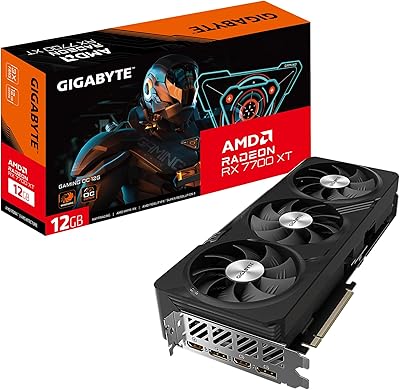
GIGABYTE RX 7700 XT 12GB Graphics Card
83%
88%
1440p Gaming Performance
91%
Thermal Performance
83%
Noise Level
93%
Build Quality
76%
Value for Money
More
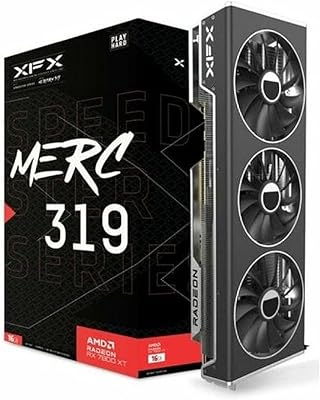
XFX Speedster MERC319 RX 7800 XT 16GB GDDR6 Graphics Card
85%
91%
Overall Performance
94%
Gaming Performance at 4K
88%
Cooling Efficiency
87%
Value for Money
85%
Build Quality
More
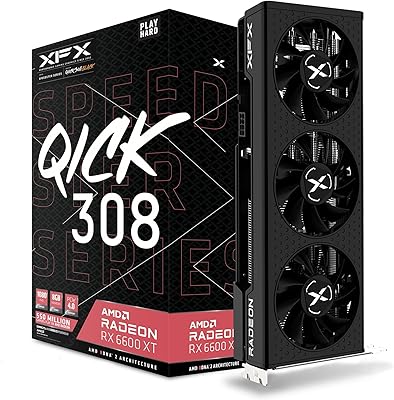
XFX QICK308 RX 6600 XT Graphics Card
79%
88%
1080p Gaming Performance
67%
1440p Gaming Performance
91%
Cooling Performance
86%
Noise Levels
53%
Ray Tracing Performance
More
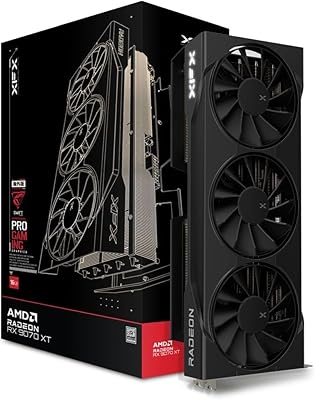
XFX Swift RX 9070 XT 16GB Graphics Card
78%
93%
Gaming Performance at 1440p
78%
4K Gaming Capability
91%
Thermal Performance
82%
Noise Levels
89%
Build Quality
More
XFX Speedster MERC319 AMD Radeon RX 6800 XT 16GB GDDR6 Graphics Card
85%
94%
Performance in 4K Gaming
88%
Thermal Management & Cooling
89%
Value for Money
85%
Build Quality & Durability
82%
Installation & Setup
More
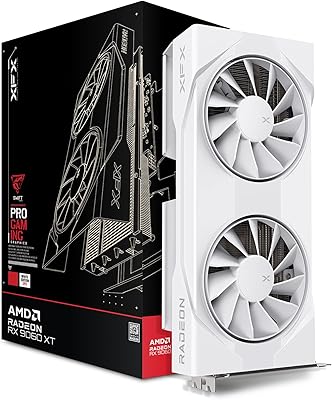
XFX RX 9060 XT 8GB Graphics Card
82%
88%
Gaming Performance at 1440p
93%
Gaming Performance at 1080p
67%
VRAM Adequacy
86%
Thermal Performance
89%
Noise Levels
More
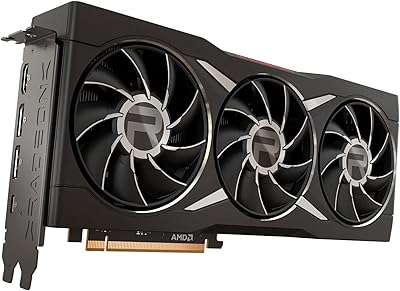
AMD Radeon RX 6950 XT Graphics Card
72%
92%
4K Gaming Performance
94%
VRAM Capacity & Bandwidth
51%
Power Consumption
48%
Physical Size & Case Fit
67%
Driver Stability
More
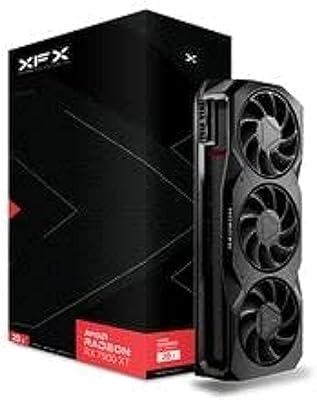
XFX Radeon RX 7900 XT 20GB
79%
88%
Gaming Performance at 4K
93%
VRAM Capacity & Headroom
86%
Thermal Management
61%
Power Consumption
67%
Driver Stability & Software
More
GIGABYTE Radeon RX 6500 XT Eagle 4GB Graphics Card
83%
92%
Value for Money
88%
Gaming Performance (1080p)
90%
Cooling System Efficiency
63%
4K Performance
84%
Build Quality
More
Sapphire Radeon RX 7900 XT Graphics Card
78%
91%
Rasterization Performance
63%
Ray Tracing Performance
93%
VRAM Capacity
88%
Build Quality
84%
Thermal Management
More

FAQ

It genuinely is. The RX 7700 XT was built with 1440p as its primary target, and it shows — most modern AAA titles run at high settings with strong, stable frame rates at that resolution. It's not cutting corners to get there either; the 12GB VRAM buffer means you're unlikely to hit memory-related stutters that can affect 8GB cards in demanding scenarios.

In pure rasterization at 1440p, the two trade blows depending on the title, though the RX 7700 XT often comes out slightly ahead in raw throughput. Where the RTX 4060 Ti has a clear edge is ray tracing performance and DLSS access. If you play a lot of RT-heavy games or rely on DLSS, Nvidia has the advantage. For general 1440p gaming and FreeSync monitor owners, the AMD option holds its own well.

A 650W PSU is the generally recommended minimum for a system built around this RDNA 3 GPU. If your system has a high-end CPU or multiple storage drives, bumping to 750W gives you a comfortable headroom margin and keeps your PSU out of peak-load territory during demanding gaming sessions.

The card is 13.2 inches long, which fits comfortably in standard ATX mid-towers and most full towers. Where you need to be careful is with smaller cases — compact ATX or micro-ATX builds with restricted GPU clearance may be tight or incompatible. Always check your case's listed maximum GPU length before ordering.

Most users describe it as genuinely quiet during gaming. The QICK cooler is well-dimensioned for the card's thermal load, so it rarely needs to spin fans at high RPM to stay in a safe temperature range. During lighter desktop use or video playback, the fans can stop entirely in semi-passive mode.

The driver situation has improved a lot over the past couple of years, and for the vast majority of users, Adrenalin works fine day-to-day. That said, occasional issues after major driver updates are still reported — the most reliable fix when something goes wrong is a clean uninstall using DDU (Display Driver Uninstaller) followed by a fresh install. It's a mild inconvenience rather than an ongoing headache for most.

Technically yes, but it's not where the card shines. In lighter or older titles you can hit playable frame rates at 4K, but demanding modern games will push it well below 60fps at that resolution without significant settings reductions. If 4K is your primary goal, you'd be better served by a tier-up.

Yes — with one HDMI and three DisplayPort 2.1 outputs, it can drive up to four displays simultaneously. The DisplayPort 2.1 standard also means you're covered for high-bandwidth setups like 4K at 144Hz or 1440p at 240Hz on compatible monitors.

At 1440p today, 12GB is more than you need for most games — 8GB cards generally manage fine. Where it becomes genuinely useful is in heavily modded titles, texture-pack-heavy games, or if you're doing any light 3D rendering or video editing alongside gaming. Think of it as future-proofing rather than a current necessity.

XFX typically offers a limited warranty on their graphics cards, though the exact duration can vary by region and registration status — checking XFX's official support page after purchase is the best way to confirm your specific coverage. Registering your card on their site after purchase is generally recommended to ensure full warranty eligibility.