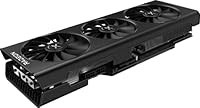
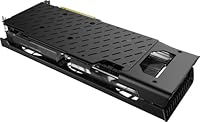
Overview

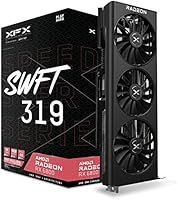
The XFX Speedster SWFT319 RX 6800 Graphics Card arrived at a time when AMD was genuinely competing at the top of the GPU market, and it still makes a strong case today. Built on AMD's RDNA 2 architecture, it targets the sweet spot between high-refresh 1440p gaming and cautious entry into 4K territory. XFX has been an AMD board partner for years, and that relationship shows in the build quality — solid construction, a well-engineered cooler, and reliable long-term driver support. Competing cards at this tier offer different trade-offs, but this XFX card's 16GB VRAM advantage continues to age well as modern titles push memory budgets higher.

Features & Benefits

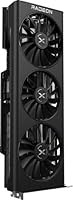
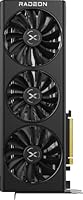
The triple SWFT 319 fan cooler is one of the more practical decisions XFX made here. Under sustained gaming loads, temperatures stay comfortably managed, and at idle the fans often stop spinning entirely — a small but appreciated touch in quieter setups. The 16GB of GDDR6 memory is the headline that actually matters: running demanding titles at 1440p ultra settings with high-resolution texture packs, you rarely hit a wall. The boost clock pushing past 2100MHz translates to smooth, consistent frame delivery. Connectivity covers both DisplayPort and HDMI, so pairing with most modern monitors is straightforward. AMD's FidelityFX Super Resolution adds meaningful upscaling flexibility across a wide game library.

Best For

This AMD-powered GPU makes the most sense for 1440p ultra-settings gaming, where its large VRAM buffer handles texture-heavy environments without compromise. It is also a practical choice for content creators running AMD-optimized rendering pipelines, since the memory headroom supports large asset workloads comfortably. Ryzen-based builds gain an extra edge through Smart Access Memory compatibility, which can push frame rates further at no additional cost. If raw rasterization benchmarks are your priority above all else, a competing card at a similar price might edge it out in certain titles. But for buyers who value VRAM capacity, an open driver ecosystem, and long-term flexibility, the SWFT319 RX 6800 is a well-rounded pick.

User Feedback

Across more than 3,300 ratings, buyers consistently highlight the same two strengths: cooling performance and VRAM capacity. Many note the card runs quieter than expected during lighter workloads, which matters for all-day use. The recurring concern is power draw and physical size — at over 13 inches in length, it simply does not fit smaller form-factor cases, and it demands a capable power supply under sustained load. A handful of users flagged occasional friction with AMD's Adrenalin software, though most describe driver stability as acceptable over time. The overall satisfaction rate is high, and most buyers feel the card delivered on its core promise of high-resolution gaming without hitting frustrating memory limits.

Pros

  • 16GB of GDDR6 VRAM gives meaningful headroom for high-resolution texture packs and future game releases.
  • The triple-fan SWFT 319 cooler keeps temperatures well-managed even during long gaming sessions.
  • Fans often stop completely at idle, making the card genuinely quiet during light desktop use.
  • Smart Access Memory compatibility delivers free performance gains on Ryzen-based platforms.
  • FidelityFX Super Resolution support works across a wide range of games without vendor restrictions.
  • AMD's open driver ecosystem means no locked-in proprietary features or platform dependencies.
  • DisplayPort and HDMI outputs cover virtually every modern monitor and TV setup without adapters.
  • Over 3,300 buyer ratings back up the card's real-world reliability with a strong 4.5-star average.
  • The SWFT319 RX 6800 holds its own at 1440p ultra settings where VRAM headroom matters most.
  • RDNA 2 architecture brings a mature, well-supported feature set including ray tracing and upscaling.

Cons

  • At over 13 inches long, this card will not fit many compact or mid-tower cases without careful planning.
  • Power draw under sustained gaming load is substantial and demands a high-quality, adequately rated PSU.
  • Ray tracing performance trails behind competing architectures at equivalent price points.
  • AMD's Adrenalin software has drawn occasional complaints about reliability and interface complexity.
  • Raw rasterization speed can be outpaced by rival cards in titles optimized for competing GPU vendors.
  • The card's weight and size may stress older or budget motherboard PCIe slots over time.
  • No Nvidia-exclusive features like DLSS are available, which matters in titles where DLSS outperforms FSR.
  • Buyers in regions with limited AMD service infrastructure may face longer warranty resolution times.

Ratings

The XFX Speedster SWFT319 RX 6800 Graphics Card scores below are generated by AI after analyzing thousands of verified global buyer reviews, with spam, bot activity, and incentivized feedback actively filtered out before scoring. Across more than 3,300 real-world ratings, this AMD-powered GPU earns consistent praise in several key areas while drawing honest criticism in others. Both strengths and genuine pain points are reflected transparently in every category score.

Thermal Performance
88%
The triple SWFT 319 fan cooler keeps GPU temperatures solidly in check during extended 1440p gaming sessions, with most users reporting junction temps that never push into throttling territory. The semi-passive fan stop at idle is a standout feature that many buyers specifically called out — running quietly during web browsing or light tasks is a daily quality-of-life win.
Under sustained, full-load scenarios like extended benchmark runs or long rendering jobs, some users noted that temperatures climbed higher than expected. A handful of buyers in poorly ventilated cases reported that the cooler had to work harder to maintain safe temps, suggesting case airflow plays a meaningful role in real-world results.
Noise Levels
84%
At idle, the fans switch off entirely, making this XFX card practically silent during everyday desktop use — a detail that creative professionals and office-adjacent builders genuinely appreciate. Under moderate gaming loads, the fan curve is well-tuned and the noise profile stays unobtrusive compared to reference-style blower coolers.
At maximum fan speed during intense sustained workloads, the three fans collectively produce a noticeable airflow hum that some users in quieter setups found more intrusive than expected. It is not unusually loud for the performance class, but buyers sensitive to fan noise may want to tune the fan curve manually through AMD's software.
VRAM Capacity
94%
Sixteen gigabytes of GDDR6 is genuinely future-resistant at this tier, and buyers repeatedly noted that this XFX card handled texture-heavy mods, high-resolution asset packs, and demanding open-world titles without the stuttering that plagues 8GB and 12GB competitors. For content creators, the headroom for large video timelines and 3D scene assets was a frequently praised advantage.
While 16GB is a strength today, the memory operates on a 256-bit bus rather than a wider interface, which means raw bandwidth is not class-leading despite the generous capacity. In bandwidth-sensitive workloads, this can narrow the gap between this card and competitors with faster or wider memory configurations.
1440p Gaming Performance
86%
At 1440p ultra settings, the SWFT319 RX 6800 delivers the kind of smooth, high-frame-rate experience that its target audience is paying for — most buyers reported hitting strong frame rates in demanding titles without needing to compromise on texture or shadow quality. The combination of boost clock and VRAM capacity keeps performance consistent across long sessions.
In a handful of titles that are more aggressively optimized for competing GPU architectures, frame rates lag behind what a similarly priced rival card can deliver at the same resolution. Buyers who primarily play titles in Nvidia's preferred optimization ecosystem may see a measurable performance gap in those specific games.
Ray Tracing Capability
63%
37%
Hardware ray tracing is present and functional on the RDNA 2 architecture, and in titles with lighter RT workloads — ambient occlusion, softer shadows — the card handles the effect without a dramatic performance cliff. Buyers using RT selectively rather than maxing every setting found it a worthwhile addition to their visual toolkit.
Pushing ray tracing to maximum settings in demanding titles like Cyberpunk 2077 or Control results in frame rate drops that most buyers found too steep to keep RT enabled at high resolutions. Competing cards in the same price bracket handle full RT loads more gracefully, and for RT-focused gamers this card is a genuine compromise.
4K Output Capability
61%
39%
The card can output and render at 4K, and buyers using it for light 4K tasks — media playback, desktop productivity across a 4K display, or older and less demanding game titles — found the experience perfectly usable. The 16GB VRAM buffer does help with 4K texture streaming when frame rate targets are lowered.
True 4K ultra gaming is a stretch for this AMD-powered GPU in current AAA titles, and buyers who purchased expecting smooth 4K performance in demanding games were often disappointed. The card is best understood as a 1440p card with 4K capability as a secondary feature rather than a native strength.
Build Quality
89%
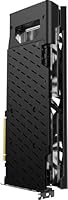
XFX's manufacturing reputation as a long-standing AMD board partner comes through in the physical product — the card feels dense and well-assembled, with a backplate and shroud that hold up to repeated handling during builds and upgrades. Buyers who had previously owned XFX products noted consistency in the brand's construction quality over multiple generations.
At 3.56 pounds, the card's weight puts meaningful stress on the PCIe slot in unsupported builds, and a few users noted visible sag over time without a GPU bracket. The physical bulk also means it occupies more internal case volume than some competing triple-fan designs of similar spec.
Cooling System Design
83%
The SWFT 319 cooler's heat pipe layout and fan blade design do their job efficiently across the card's full length, and buyers consistently noted that the thermal solution feels purpose-built rather than generic. The large surface area of the heatsink contributes to its ability to dissipate heat without running fans at high speeds constantly.
The cooler's effectiveness is partly dependent on adequate case airflow, which means buyers with older or budget cases may not get the full benefit of XFX's thermal engineering. A few users also noted that the plastic shroud feels less premium than the metal heatsink underneath it, a minor but noticeable build compromise.
Driver Stability
72%
28%
AMD's Adrenalin driver releases have matured considerably since the RX 6800's launch, and the majority of long-term owners report a stable, reliable day-to-day experience once they are on a current driver version. Game compatibility and performance optimization have improved consistently through regular AMD updates.
A recurring thread among critical reviews involves early driver versions causing instability, crash loops, or compatibility issues with specific game titles — AMD's driver rollout pace can occasionally introduce new problems alongside fixes. Buyers who upgraded drivers immediately after release sometimes experienced issues that required rolling back to a prior version.
Software Experience
67%
33%
AMD's Adrenalin software suite covers the essentials well — fan curve control, overlay monitoring, FSR integration, and performance tuning are all accessible from a single interface. Buyers who spent time learning the software found the feature set competitive with alternative GPU management ecosystems.
The Adrenalin interface is polarizing: several buyers described it as bloated, unintuitive, or prone to consuming background resources. Compared to leaner third-party alternatives, AMD's first-party software draws consistent criticism for its complexity and occasional instability after updates.
Value for Money
78%
22%
The 16GB VRAM at this price tier is a value proposition that buyers frequently cited as the decisive factor in choosing this card over 8GB or 12GB alternatives. For 1440p gaming longevity and creative workloads, the memory headroom justifies the investment for buyers who plan to hold the card for several years.
In a GPU market where competing cards have become more price-competitive, the SWFT319 RX 6800 sits in a tier where buyers must weigh VRAM capacity against raw frame-rate-per-dollar metrics. In some benchmark comparisons, rival cards at comparable or lower prices deliver better rasterization performance, making the value calculation dependent heavily on how much the buyer values VRAM headroom.
Compatibility
81%
19%
Standard PCIe connectivity and broad AMD Adrenalin driver support means this XFX card drops into most existing desktop builds without friction. Ryzen platform users specifically benefit from SAM compatibility, which is enabled with a simple BIOS toggle and delivers meaningful frame rate improvements in supported titles.
The card's 13-inch length creates a hard compatibility ceiling for compact and some mid-tower cases, and buyers who did not verify clearance before purchasing reported frustrating returns. Older systems with lower-rated PSUs also face a compatibility challenge given the card's sustained power demands.
Case Fitment
58%
42%
For buyers with full-tower or spacious mid-tower cases, the card installs cleanly and the length is not an issue in practice. Large-case PC builders consistently reported no fitment problems and appreciated the card's solid presence once seated.
The 13.27-inch length is a genuine obstacle for a significant portion of standard mid-tower cases on the market, and this was one of the most frequently cited complaints among negative reviews. Compact ITX and mATX builds are effectively excluded from consideration, narrowing the card's compatible audience more than its specifications might initially suggest.
Power Efficiency
66%
34%
At moderate gaming loads and desktop use, the card's power draw is reasonable and the RDNA 2 architecture's efficiency improvements over prior AMD generations are noticeable in idle and light-load consumption figures. Buyers using the card for mixed workloads rather than continuous full-load gaming found the efficiency profile acceptable.
Under sustained full gaming load, the power draw climbs to a level that demands a high-quality 750W or greater PSU for comfortable headroom, which adds to total build cost. A number of buyers running 650W units reported instability under heavy load, requiring a PSU upgrade they had not budgeted for.

Suitable for:

The XFX Speedster SWFT319 RX 6800 Graphics Card is a strong fit for PC gamers who have settled on 1440p as their primary resolution and want to run modern titles at ultra settings without constantly worrying about VRAM limits. As texture quality in AAA games continues to climb, having 16GB of GDDR6 on hand is a genuine buffer against the memory constraints that plague cards with smaller allocations. Ryzen platform users get an additional practical advantage through Smart Access Memory, which can meaningfully boost frame rates in supported titles at no extra cost. Content creators working in AMD-friendly applications — video editors, 3D artists, or streamers who do light rendering work — will also find the memory headroom and RDNA 2 compute capabilities genuinely useful day-to-day. If you prioritize an open, cross-platform driver ecosystem over vendor-locked features, this AMD-powered GPU aligns well with that philosophy.

Not suitable for:

The XFX Speedster SWFT319 RX 6800 Graphics Card is a harder sell for buyers building in compact or mid-tower cases with tight GPU clearance, since the card stretches past 13 inches and requires careful fitment planning before purchasing. Gamers chasing the absolute highest frame rates in pure rasterization benchmarks may find that competing cards at a similar price tier edge this card out in specific workloads, particularly in titles heavily optimized for rival architectures. If ray tracing performance is your primary benchmark — running demanding RT effects at high resolutions — RDNA 2 trails behind its closest competitors in that particular discipline. Buyers with modest power supplies should also pause: this card draws serious wattage under sustained load, and pairing it with an underpowered PSU is a recipe for instability. Finally, anyone running a small form-factor build or an older case should physically verify GPU clearance before committing.

Specifications

  • GPU Chipset: The card is built on the AMD Radeon RX 6800 chipset, part of AMD's RDNA 2 generation of graphics processors.
  • Architecture: AMD RDNA 2 architecture underpins the card, bringing improved compute efficiency and hardware ray tracing support over the previous generation.
  • VRAM: 16GB of GDDR6 memory provides substantial headroom for high-resolution textures, multi-monitor setups, and memory-intensive workloads.
  • Boost Clock: The GPU boosts up to 2105MHz under load, delivering consistent frame delivery in demanding gaming scenarios.
  • Cooler: XFX's SWFT 319 triple-fan cooling solution manages thermals across the card's full length with a semi-passive fan stop at idle.
  • Max Resolution: The card supports output up to 7680x4320 (8K), though practical 8K gaming requires significant graphical concessions.
  • Video Outputs: Connectivity includes DisplayPort and HDMI ports, covering the full range of modern gaming monitors and television displays.
  • Card Dimensions: The card measures 13.27 x 5.12 x 2.05 inches, classifying it as a full-length, dual-slot-plus GPU that requires generous case clearance.
  • Card Weight: At 3.56 pounds, the card carries meaningful heft and benefits from a GPU support bracket in larger builds to prevent PCIe slot sag.
  • Memory Interface: The 16GB GDDR6 pool operates over a 256-bit memory interface, supporting the bandwidth demands of high-resolution rendering.
  • Brand: XFX is a dedicated AMD board partner with a long track record of producing custom-cooled Radeon graphics cards.
  • Model Number: The official model identifier is RX-68XLAQFD9, used for warranty registration, driver compatibility lookups, and support requests.
  • Amazon Rating: The card holds a 4.5-star average across more than 3,300 verified buyer ratings on Amazon, reflecting broadly positive real-world satisfaction.
  • BSR Ranking: It ranks #83 in Amazon's Computer Graphics Cards category, indicating strong and sustained sales performance in a competitive segment.
  • Release Date: The card was first listed in November 2021, placing it in the initial wave of RDNA 2 custom board partner releases.

Related Reviews
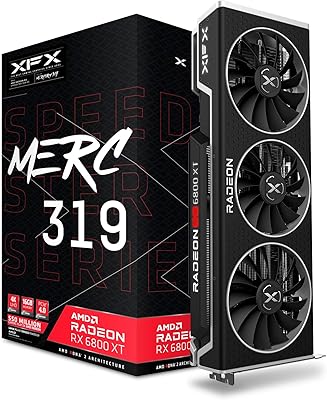
XFX Speedster MERC319 AMD Radeon RX 6800 XT 16GB GDDR6 Graphics Card
85%
94%
Performance in 4K Gaming
88%
Thermal Management & Cooling
89%
Value for Money
85%
Build Quality & Durability
82%
Installation & Setup
More
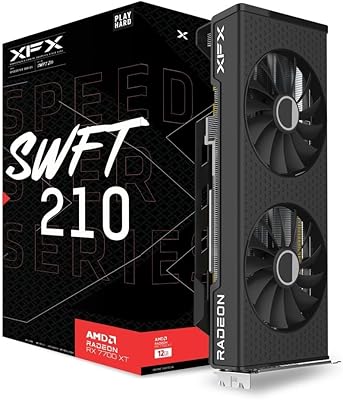
XFX RX 7700 XT 12GB Graphics Card
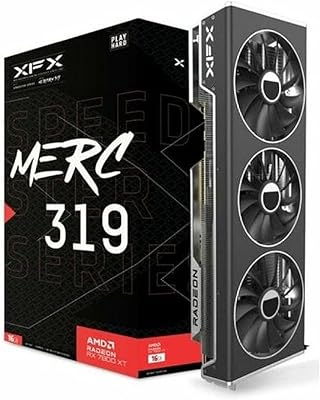
78%
88%
1440p Gaming Performance
84%
Value for Money
93%
VRAM Capacity
76%
Thermal Performance
69%
Noise Levels
More
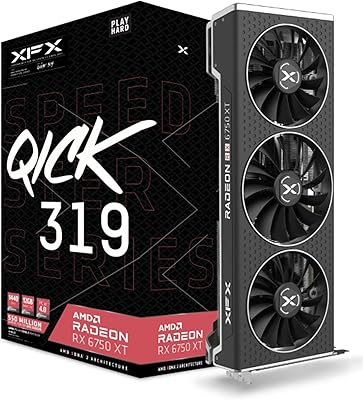
XFX RX 6750 XT 12GB Graphics Card
79%
91%
1440p Gaming Performance
67%
4K Gaming Capability
89%
Thermal Management
86%
Noise Level
93%
VRAM Adequacy
More
XFX Speedster MERC319 RX 7800 XT 16GB GDDR6 Graphics Card
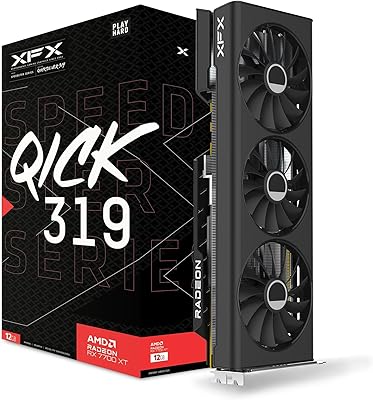
85%
91%
Overall Performance
94%
Gaming Performance at 4K
88%
Cooling Efficiency
87%
Value for Money
85%
Build Quality
More
XFX Speedster QICK319 RX 7700 XT 12GB GDDR6 Graphics Card
85%
92%
Gaming Performance
87%
Cooling Efficiency
90%
Price-to-Performance Ratio
62%
Compatibility with Motherboards
88%
Build Quality
More
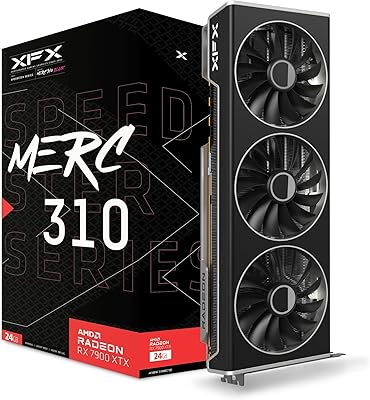
XFX Speedster MERC310 AMD Radeon RX 7900XTX 24GB GDDR6 Graphics Card
87%
95%
Performance
94%
Gaming Experience
88%
Cooling Efficiency
92%
Frame Rate Stability
91%
Visual Quality
More
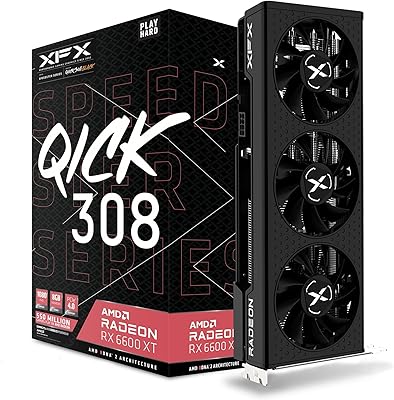
XFX QICK308 RX 6600 XT Graphics Card
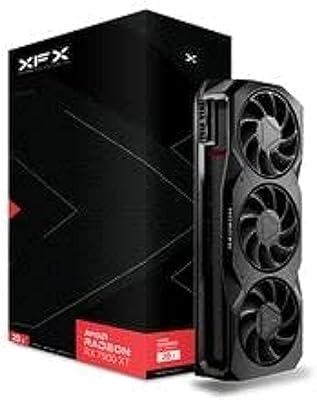
79%
88%
1080p Gaming Performance
67%
1440p Gaming Performance
91%
Cooling Performance
86%
Noise Levels
53%
Ray Tracing Performance
More
XFX Radeon RX 7900 XT 20GB
79%
88%
Gaming Performance at 4K
93%
VRAM Capacity & Headroom
86%
Thermal Management
61%
Power Consumption
67%
Driver Stability & Software
More
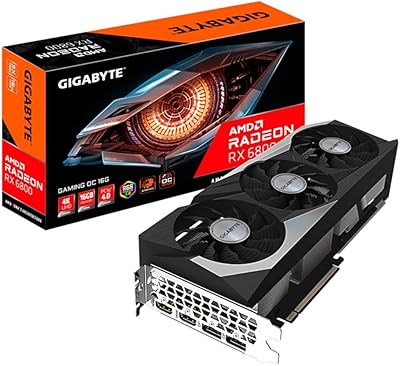
Gigabyte Radeon RX 6800 16GB Graphics Card
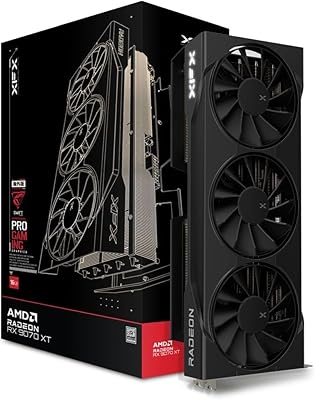
77%
88%
Gaming Performance
91%
Thermal Management
87%
Noise Level
93%
VRAM Capacity
89%
Build Quality
More
XFX Swift RX 9070 XT 16GB Graphics Card
78%
93%
Gaming Performance at 1440p
78%
4K Gaming Capability
91%
Thermal Performance
82%
Noise Levels
89%
Build Quality
More

FAQ

That depends on your case's GPU length clearance. This XFX card measures just over 13 inches long, which exceeds the supported length in many budget and compact mid-towers. Before buying, check your case spec sheet for maximum GPU length — anything under 320mm could be a tight or impossible fit.

AMD recommends at least a 650W power supply for the RX 6800, but given real-world peak draw under sustained gaming load, a quality 750W unit gives you a comfortable buffer. Do not cut corners on PSU quality here — a cheap unit rated at 650W may not deliver stable power when the card is fully loaded.

Yes, Smart Access Memory is fully supported when paired with a compatible AMD Ryzen processor and a 500-series or newer motherboard with the feature enabled in BIOS. In supported games, SAM can push frame rates noticeably higher at no hardware cost, making it a worthwhile setup step for Ryzen users.

Most users report that the SWFT 319 cooler handles heat quietly enough that fan noise is not a major issue during typical gaming sessions. At idle or during light tasks, the fans stop completely, which is a genuine plus for quieter workstation environments. Under sustained full load it does produce audible airflow, but it is not unusually loud for a card in this performance class.

It can push 4K at reduced or medium settings in many titles, but calling it a true 4K gaming card is a stretch. Where it genuinely excels is 1440p at ultra settings, where the 16GB VRAM buffer and boost clock combine to deliver smooth, consistent performance without hitting memory limits. Treat 4K as a secondary capability rather than a primary use case.

RDNA 2 includes hardware ray tracing support, so the capability is there. That said, AMD's RT performance at this generation trails Nvidia's competing cards in the same price range when RT effects are pushed to maximum. For light to moderate ray tracing in supported titles it is workable, but if RT performance is your top priority, the competitive landscape is worth researching before deciding.

Yes, and the 16GB VRAM is a genuine asset for that kind of work. Applications that support AMD's ROCm compute platform or OpenCL acceleration will put this AMD-powered GPU to good use for rendering, encoding, and processing larger project files. It is not a dedicated workstation GPU, but for prosumer creative work it performs well above entry-level options.

The card includes both DisplayPort and HDMI outputs, supporting multi-monitor configurations without needing adapters for most standard setups. The exact number of physical ports on this model allows for driving multiple displays simultaneously, which works well for productivity or sim-racing setups alongside gaming use.

AMD has maintained consistent Adrenalin driver updates for RDNA 2 cards since launch, and the RX 6800 remains a well-supported part of that ecosystem. Some users have noted occasional friction with the Adrenalin software interface, but core driver stability for gaming has improved significantly since the card's release. Keeping drivers current via AMD's official site or the software itself is the best practice.

At 3.56 pounds and over 13 inches long, sag is a real consideration, particularly in larger tower builds where the card spans a long distance unsupported. A GPU support bracket — an inexpensive accessory — is worth adding to your build to protect the PCIe slot from long-term stress. Many enthusiast cases now include a support bracket by default, so check yours before worrying.

Where to Buy