Overview
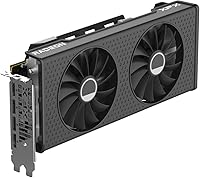
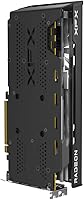
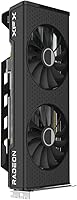
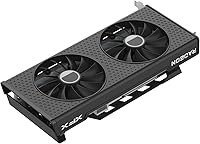
The XFX RX 7700 XT 12GB Graphics Card sits in a crowded mid-range GPU segment, but it earns its place by targeting the sweet spot most PC builders actually care about: smooth, high-frame-rate 1440p gaming. Built on AMD's RDNA 3 architecture, this Radeon card brings genuine generational gains over its predecessors without demanding a flagship budget. The dual-fan SWFT210 cooler keeps things reasonably compact for a card at this performance tier — it won't dominate a mid-tower, but it's not petite either. That 12GB GDDR6 buffer is arguably the headline spec, offering more headroom than several pricier competitors in the same bracket.
Features & Benefits
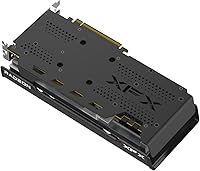
RDNA 3 brings more than just raw rasterization speed — hardware ray tracing, improved AI workloads, and AMD's FSR 3 upscaling are all available here, making this XFX GPU relevant well beyond basic frame-pushing. The 12GB of GDDR6 memory running at 18 Gbps gives it room to breathe in texture-heavy titles, open-world games with high-res texture packs, and light video editing tasks. A boost clock of 2544 MHz sounds impressive on paper, and in practice the card holds its frequencies well under sustained gaming loads. The output configuration — one HDMI and three DisplayPort connections — means running a triple-monitor setup is straightforward without adapters.
Best For
The SWFT210 is an easy recommendation for anyone building or upgrading a 1440p gaming rig without wanting to spend on high-end GPU territory. It also makes sense for content creators who need reliable VRAM for GPU-accelerated video exports, light 3D rendering, or running multiple applications simultaneously. Multi-monitor enthusiasts will appreciate the triple DisplayPort output without needing a hub or adapter. If you're coming from a mid-generation Polaris or Navi 1 card, the jump is substantial. AMD-ecosystem users in particular benefit — FSR 3 support and Radeon-native features like Radeon Anti-Lag are baked in and genuinely useful day-to-day.
User Feedback
With over 9,000 ratings and a solid 4.5-star average, owner sentiment for this Radeon card skews positive — and the reasons aren't surprising. Most buyers highlight the performance-per-dollar ratio and the generous VRAM as the two biggest draws, especially when comparing against competing cards with 8GB at similar price points. The out-of-box AMD driver experience gets decent marks too, which hasn't always been the case historically. On the flip side, some users report the card running louder under full load than expected, and a handful flagged fit issues in compact cases given its length. A small number noted early driver instability, though most resolved that with updates.
Pros
- The 12GB GDDR6 VRAM gives this Radeon card a real edge over competing 8GB cards at similar price points.
- RDNA 3 architecture brings hardware ray tracing and FSR 3 upscaling without requiring a flagship GPU.
- 1440p gaming performance is consistently strong across a wide range of modern titles.
- Triple DisplayPort outputs make multi-monitor configurations straightforward with no adapters needed.
- Boost clocks hold well under sustained gaming loads, avoiding the frequency drop-off seen in some competing cards.
- Out-of-box AMD driver experience has improved significantly and most users report a trouble-free setup.
- The SWFT210 cooler keeps thermals in check during everyday gaming without running excessively hot.
- At 3.3 pounds, the card is solid without being ungainly for standard mid-tower and full-tower cases.
- FSR 3 support adds meaningful performance headroom in supported titles for AMD-ecosystem users.
- With over 9,000 ratings averaging 4.5 stars, real-world satisfaction levels are well above average for this category.
Cons
- At 11.18 inches long, the SWFT210 will not fit in many compact or small-form-factor cases.
- Fan noise under full load is more noticeable than some buyers expect, particularly in quieter setups.
- Native 4K performance in demanding AAA titles is limited — this is not a true 4K gaming card.
- A subset of early buyers reported driver instability that required updates or clean reinstalls to resolve.
- Power draw is meaningful and users with older or lower-wattage PSUs may need to upgrade before installing.
- NVIDIA-exclusive features like DLSS 3 frame generation are completely unavailable on this XFX GPU.
- Ray tracing performance, while present, lags behind NVIDIA counterparts at equivalent rasterization performance levels.
- Users upgrading from a recent mid-range RDNA 2 card may find the generational performance jump less dramatic than expected.
- The dual-fan cooler, while functional, lacks the refinement of premium triple-fan solutions at higher price tiers.
- Resale value for AMD mid-range cards historically depreciates faster than equivalent NVIDIA offerings in the secondary market.
Ratings
The XFX RX 7700 XT 12GB Graphics Card earns its strong market reputation across thousands of verified global purchases, and these AI-generated scores reflect a rigorous analysis of that real-world feedback — with spam, bot activity, and incentivized reviews actively filtered out. The scorecard below captures both the areas where this Radeon card genuinely impresses and the friction points that real buyers have flagged, giving you an honest picture before you commit.
1440p Gaming Performance
Value for Money
VRAM Capacity
Thermal Performance
Noise Levels
4K Capability
Driver Stability
Build Quality
Multi-Monitor Support
Installation & Setup
Ray Tracing Performance
FSR 3 Upscaling
Power Efficiency
Long-Term Reliability
Suitable for:
The XFX RX 7700 XT 12GB Graphics Card is purpose-built for PC gamers who want strong 1440p performance without crossing into high-end GPU pricing — if that describes your build, this card is genuinely worth your attention. It's especially well-matched to players who run demanding open-world or texture-heavy titles, where that 12GB GDDR6 buffer provides real breathing room that 8GB cards simply can't match. Content creators who dabble in GPU-accelerated video editing or light 3D rendering will also find it capable without needing a workstation-class card. AMD ecosystem users get added value through FSR 3 support and Radeon-native features like Anti-Lag, which translate into tangible in-game improvements. Multi-monitor setups are well-served by the triple DisplayPort configuration, making it a practical choice for productivity-focused builders who also game.
Not suitable for:
The XFX RX 7700 XT 12GB Graphics Card is not the right call for buyers targeting a compact small-form-factor build — at over 11 inches long, it simply won't fit in many mini-ITX or slim cases without a fight. Gamers who primarily want native 4K at high framerates in demanding titles will find this card stretched at that resolution; it handles lighter 4K workloads fine, but pushing 60+ fps in AAA titles at max settings is asking a lot. If you're already running a higher-tier RDNA 3 card or a recent high-end NVIDIA GPU, the performance difference won't justify a lateral move. Buyers sensitive to fan noise during extended gaming sessions should also take note — under sustained load, the dual-fan cooler is audible, which some users find distracting in quieter environments. Finally, anyone deeply invested in NVIDIA-exclusive features like DLSS 3 frame generation should look elsewhere, as those remain platform-locked.
Specifications
- Chipset: Powered by the AMD Radeon RX 7700 XT GPU built on the RDNA 3 microarchitecture.
- VRAM: Equipped with 12GB of GDDR6 memory running at an effective speed of 18 Gbps.
- Boost Clock: The GPU boosts up to 2544 MHz under gaming loads, supporting sustained high-frequency operation.
- Display Outputs: Features one HDMI port and three DisplayPort outputs, supporting up to four simultaneous displays.
- Max Resolution: Capable of driving displays up to 3840x2160 pixels, commonly known as 4K UHD.
- Cooling System: Uses XFX's dual-fan SWFT210 cooling solution designed to manage thermals across sustained workloads.
- Card Length: The card measures 11.18 inches in length, requiring adequate clearance in the chosen PC case.
- Card Width: Physical width of the card is 4.96 inches, typically occupying two or three PCIe expansion slots.
- Weight: The card weighs 3.3 pounds, which is standard for a dual-fan mid-range GPU at this performance tier.
- Model Number: The official XFX model number is RX-77TSWFTFP, useful for warranty registration and driver verification.
- Architecture: Built on AMD's RDNA 3 architecture, bringing improvements in power efficiency, ray tracing, and compute throughput.
- Series: Part of XFX's SWFT210 product line, representing the brand's dual-fan mid-range cooling configuration.
- Manufacturer: Designed and manufactured by XFX, using AMD's reference Radeon RX 7700 XT silicon.
- Release Date: First made available in August 2024, placing it within AMD's second-generation RDNA 3 product rollout.
- FSR Support: Fully supports AMD FidelityFX Super Resolution 3, including frame generation in compatible game titles.
- Ray Tracing: Includes dedicated hardware ray accelerators on-die for real-time ray tracing in supported titles.
- PCIe Interface: Connects via PCIe 4.0 interface, and remains backward-compatible with PCIe 3.0 motherboard slots.
- Ratings: Has accumulated over 9,200 verified ratings on Amazon with an average score of 4.5 out of 5 stars.
Related Reviews
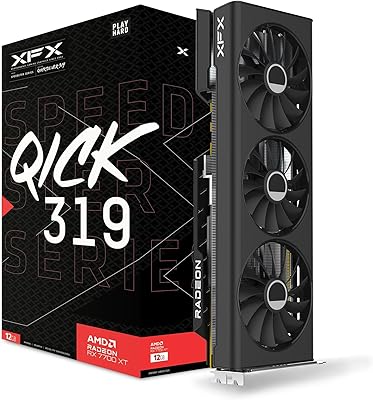
XFX RX 7700 XT Graphics Card
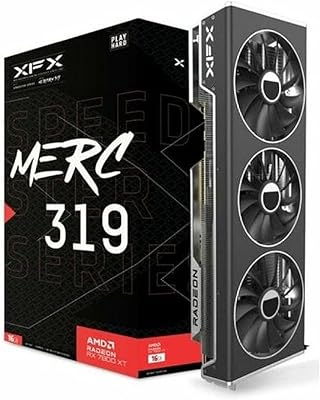
XFX Speedster MERC319 RX 7800 XT 16GB GDDR6 Graphics Card
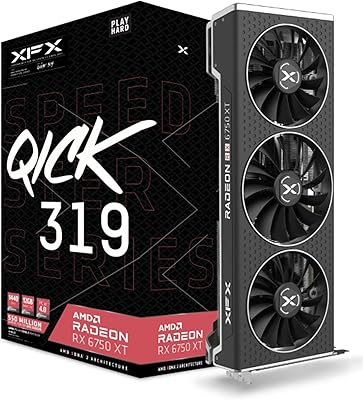
XFX RX 6750 XT 12GB Graphics Card
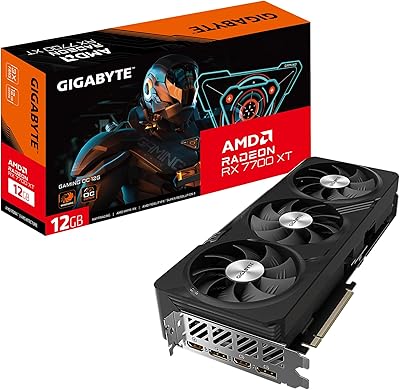
GIGABYTE RX 7700 XT 12GB Graphics Card
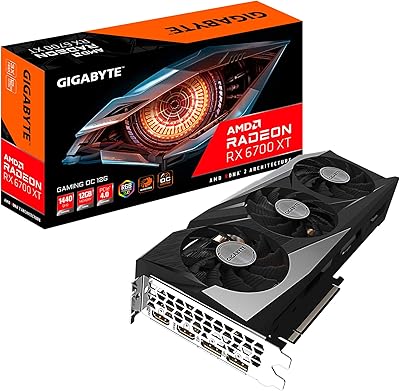
GIGABYTE Radeon RX 6700 XT Gaming OC 12GB Graphics Card
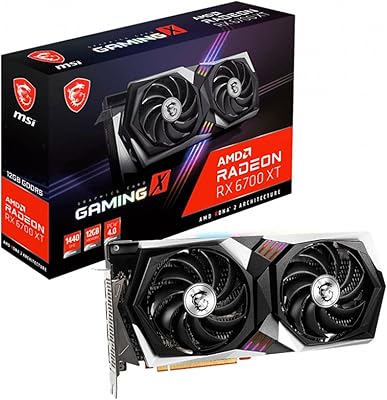
MSI RX 6700 XT Gaming X GPU
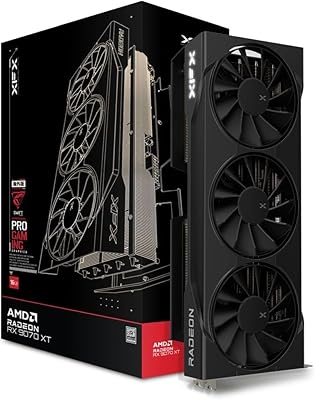
XFX Swift RX 9070 XT 16GB Graphics Card
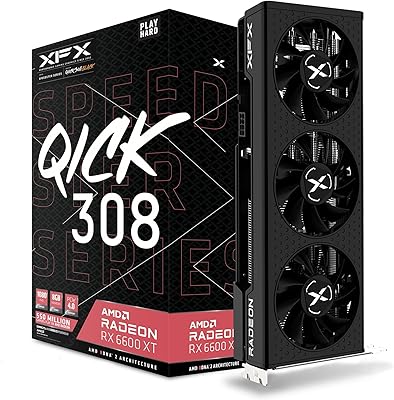
XFX QICK308 RX 6600 XT Graphics Card
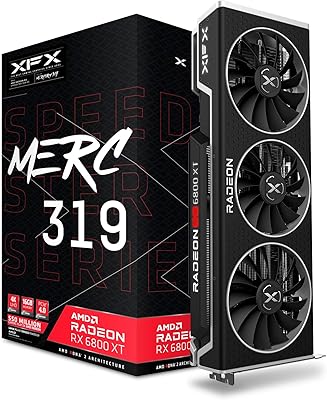
XFX Speedster MERC319 AMD Radeon RX 6800 XT 16GB GDDR6 Graphics Card