Overview

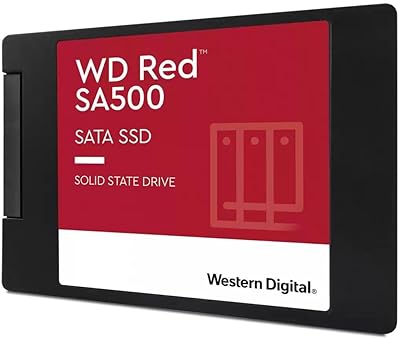
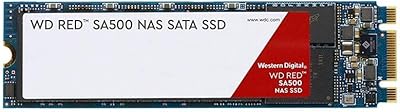
The Western Digital Red SA500 1TB NAS SSD is built with a specific purpose in mind — and that specificity is exactly why it matters. Unlike a generic desktop SSD pulled off the shelf and dropped into a NAS bay, this drive is engineered from the ground up for the constant, mixed workloads that network-attached storage systems demand around the clock. It sits in the middle of the SA500 family, offering a practical balance of capacity and cost. Physically, it uses a 2.5-inch SATA III interface — not NVMe — so buyers should confirm their enclosure has SATA bays before purchasing. Think of it as a reliable workhorse for caching and fast file access, not a workstation speed demon.

Features & Benefits

The WD Red SA500 delivers up to 560 MB/s sequential read throughput, which in a NAS context translates to fast file serving for multiple users hitting the same share simultaneously. Its 3D NAND architecture is particularly well-suited to always-on environments — it runs cooler and wears more evenly than older planar NAND designs, which matters when the drive never gets a break. The compact 7mm z-height keeps it compatible with tighter NAS bays that thicker drives simply cannot fit. For workloads like multi-user file sharing, lightweight database queries, or 4K video streaming from a central hub, the lower latency over a spinning drive is tangible. WD also bundles a data recovery service, a reassuring backstop for anyone storing critical data on their NAS.

Best For

This NAS-optimized SSD hits a practical sweet spot for a fairly specific audience. Home NAS users building a tiered storage setup will appreciate the speed boost without paying enterprise prices. Photographers and videographers routing large RAW files or 4K footage through a central NAS will notice meaningfully faster access times compared to mechanical drives. Small offices where several people pull files from shared storage simultaneously also benefit from the reduced queue depth pressure an SSD provides. It is equally useful for anyone running a lightweight VM or small database on their NAS and finding that HDD latency is becoming a real bottleneck. If your NAS bay supports SATA, this drive is a worthwhile upgrade.

User Feedback

With a 4.7-star average from over 2,300 buyers, the WD Red SA500 has earned consistent trust from real NAS users. The most common praise centers on how straightforward installation is in popular enclosures from Synology and QNAP, and the obvious before-and-after speed difference when replacing a mechanical drive. Long-term owners frequently mention that this drive runs cool and quiet even after months of continuous operation. That said, it does cost more per gigabyte than a standard consumer SSD, and users chasing maximum throughput should note that SATA has a hard speed ceiling that NVMe does not. Random read and write performance under heavy mixed loads is respectable but not class-leading. For dedicated NAS use, though, most buyers consider the premium well justified.

Pros

  • Designed specifically for 24/7 NAS operation, unlike repurposed desktop SSDs that were never validated for that environment.
  • Sequential read speeds up to 560 MB/s make multi-user file serving noticeably faster than any mechanical hard drive.
  • 3D NAND architecture runs cooler and more consistently under sustained workloads, which matters in an always-on enclosure.
  • The slim 7mm z-height fits compact NAS bays that cannot accommodate standard 9.5mm drives.
  • Bundled data recovery service provides a meaningful safety net for users storing important files on their NAS.
  • Verified compatibility with popular enclosures from Synology and QNAP reduces guesswork during setup.
  • Silent and shock-resistant compared to spinning drives, making it ideal for NAS units kept in living spaces or offices.
  • A 4.7-star average across more than 2,300 ratings reflects broad, real-world satisfaction over an extended period.
  • Reduces latency for lightweight database queries and multi-user shared access in small business settings.
  • Drop-in installation is straightforward, with most users reporting no driver or configuration issues out of the box.

Cons

  • SATA III interface imposes a hard throughput ceiling that NVMe-based alternatives can blow past for demanding workloads.
  • Costs noticeably more per gigabyte than standard consumer SSDs that perform similarly in non-NAS use cases.
  • Random write performance under heavy mixed loads is respectable but not class-leading among current SATA competitors.
  • No M.2 form factor option means users with NVMe-only NAS enclosures cannot use this drive at all.
  • One terabyte fills up faster than expected in media-heavy households, and scaling storage gets expensive at this price tier.
  • WD does not publish the full TBW endurance rating as prominently as some competitors, making direct longevity comparisons harder.
  • Not ideal for sustained large sequential writes, such as continuous video recording directly to the NAS.
  • Buyers in markets with limited WD service infrastructure may find the data recovery benefit difficult to actually redeem.

Ratings

The scores below reflect an AI-driven analysis of thousands of verified global buyer reviews for the Western Digital Red SA500 1TB NAS SSD, with spam, bot-submitted, and incentivized feedback actively filtered out before scoring. Each category is graded on real-world user experiences — not manufacturer claims — so both the genuine strengths and recurring frustrations are represented transparently. Buyers consistently praised its NAS-specific reliability, while a vocal minority raised honest concerns about pricing and SATA-era speed ceilings.

NAS Compatibility
94%
Users across Synology, QNAP, and Asustor enclosures consistently report plug-and-play installation with zero configuration headaches. The drive appears on most major NAS compatibility lists, which gives buyers genuine confidence before they even open the box.
A small number of users with older or budget-tier NAS models found the drive was not officially listed, requiring extra research. In a handful of edge cases, firmware mismatches with aging enclosures led to detection issues that needed a NAS update to resolve.
Read Performance
88%
Real-world sequential reads closely match the rated 560 MB/s ceiling in NAS benchmarks, which translates to fast folder loads and snappy file delivery when multiple users are on the network simultaneously. Photographers serving large RAW files from a central NAS notice the difference immediately compared to any spinning drive.
SATA III is the hard ceiling here, and buyers who assumed they were getting NVMe-class performance were caught off guard. For sustained large sequential transfers where the local network is not the bottleneck, the 560 MB/s cap is real and visible in side-by-side testing with M.2 NVMe alternatives.
Write Performance
76%
24%
For typical NAS write patterns — documents, database entries, photo imports, and mixed-size file backups — write speeds are consistent and well above what a spinning drive delivers. Users running lightweight OLTP workloads report stable throughput without the unpredictable dips that plague some consumer SSDs under sustained load.
Under prolonged heavy write scenarios, such as continuous large-volume data ingestion or extended backup jobs, write speeds taper off more noticeably than sequential read figures suggest. Buyers doing sustained camera uploads or large RAID rebuild operations flagged this as a limitation compared to higher-endurance enterprise alternatives.
24/7 Reliability
91%
Long-term users — many reporting 18 months to three years of continuous operation — describe the drive as rock-solid with no unexpected dropouts or errors logged in their NAS dashboards. The 3D NAND design appears to handle heat accumulation in enclosed bays better than older NAND generations did in similar conditions.
A small percentage of reviewers experienced early failures within the first six months, which, while statistically rare, is disproportionately represented in critical reviews and worth acknowledging. WD's warranty and data recovery service handled most of these cases, but the process required patience.
Value for Money
67%
33%
For buyers who genuinely need NAS-validated endurance and 24/7 certification, the premium over a generic consumer SSD is justifiable — especially given the bundled data recovery service and WD's proven track record in the storage industry. Small business users tend to view the cost as reasonable insurance against downtime.
Home users comparing price-per-gigabyte against mainstream consumer SSDs like the Samsung 870 EVO find it difficult to stomach the gap when benchmark scores look similar on paper. For anyone whose NAS workload is light and intermittent, the NAS-specific premium delivers diminishing returns in practice.
Endurance Rating
83%
The drive's TBW rating is calibrated for real NAS workloads rather than desktop use patterns, giving users confidence when running the drive in environments that mix reads and writes throughout the day without pause. Users managing shared storage for small teams report no signs of wear degradation over extended periods.
WD does not surface the exact TBW figure as prominently as some competitors do, which frustrates technically minded buyers who want to calculate drive lifespan against their specific write loads. Without a clear published number front and center, direct endurance comparisons require digging through spec sheets.
Installation Experience
92%
Reviewers consistently describe installation as straightforward, with the drive recognized immediately by popular NAS operating systems like DSM and QTS without any additional steps. The standard 2.5-inch form factor means no adapters or brackets are needed in the vast majority of enclosures.
Users migrating from a larger-capacity HDD sometimes underestimated the planning required for data migration before the physical swap, leading to frustrating downtime that was self-inflicted but worth flagging. A few users noted the 7mm height required a spacer in certain older desktop caddies designed only for 9.5mm drives.
Thermal Performance
86%
Under continuous NAS operation, the drive maintains stable temperatures without throttling in most enclosures, even those with minimal active airflow. Users running two-bay NAS units in home office environments report the drive stays notably cooler than the mechanical drives it replaced.
In densely packed multi-bay NAS units with poor airflow between bays, a small number of users observed slightly elevated idle temperatures during summer months. While no thermal failures were reported, buyers with fanless or poorly ventilated enclosures should factor in airflow planning.
Noise and Vibration
97%
Being a solid-state drive, it produces absolutely no mechanical noise or vibration, which users in home offices and living spaces specifically call out as a major quality-of-life improvement over spinning drives. NAS units placed on desks or shelves in shared spaces become almost inaudible once the HDD is replaced.
The only noise-related complaints are indirectly related — some users noted their NAS fans spun up slightly more in response to the enclosure's overall power behavior after the upgrade, though this was enclosure-specific and not caused by the drive itself.
Latency & Responsiveness
84%
Users running multi-user shared storage environments notice a meaningful reduction in wait times when multiple people access the NAS simultaneously — something mechanical drives genuinely struggle with under parallel request loads. For lightweight databases and shared project folders, the day-to-day responsiveness improvement is one of the most commonly praised outcomes in reviews.
Random 4K read and write latency, while much better than any HDD, does not reach the low single-digit millisecond figures that NVMe drives achieve. For latency-critical applications like high-frequency database transactions, this SATA-era floor is a genuine constraint that more demanding users will notice.
Data Recovery Service
74%
26%
The inclusion of Western Digital's data recovery service is viewed positively by buyers who store important personal archives or business files on their NAS, functioning as a meaningful backstop beyond standard warranty replacement. Several reviewers specifically cited this as a deciding factor when comparing the WD Red SA500 against otherwise similar competing drives.
Users who actually attempted to use the data recovery service found the process slower and more bureaucratic than expected, with response times that varied significantly by region. The service is also not a substitute for a proper backup strategy, and a few buyers mistakenly treated it as one before experiencing a failure scenario.
Build & Form Factor
89%
The drive feels solid and well-constructed for its weight class, and the 7mm profile is a practical advantage that opens up compatibility with slim NAS bays that thicker drives physically cannot enter. The compact dimensions and negligible weight make physical handling and installation clean and uncomplicated.
The drive ships without mounting screws or a spacer, which catches some buyers off guard when their enclosure requires accessories that are not included in the box. While these are inexpensive to source separately, it adds a minor friction point to an otherwise smooth setup experience.
Brand Trust
88%
Western Digital's reputation in the storage industry carries real weight with experienced NAS users, many of whom have run WD drives for over a decade across multiple product generations. The Red branding has an established identity specifically around NAS reliability, which gives buyers a level of brand-level confidence that newer or less specialized manufacturers cannot easily match.
Some long-term WD customers expressed disappointment that certain SA500 firmware updates were slow to roll out, particularly for enclosures reporting intermittent SMART warnings. The brand's reputation is strong, but it also sets a high expectations bar that occasionally leads to heightened frustration when support falls short.

Suitable for:

The Western Digital Red SA500 1TB NAS SSD is purpose-built for anyone running a NAS enclosure who is tired of mechanical drives holding them back. Home users who have built a Synology or QNAP box for family backups, media streaming, or photo libraries will notice a real and immediate difference in responsiveness. Photographers and videographers who route large files through a central NAS — whether for collaborative editing or archival access — benefit from the lower latency and consistent throughput this drive provides over spinning storage. Small offices where four or five people are pulling documents, spreadsheets, or project files from a shared NAS simultaneously will find that the reduced queue congestion keeps things moving smoothly throughout the day. Anyone running a lightweight virtual machine or a small database on their NAS, where HDD seek times were previously a frustrating bottleneck, will also find this drive a meaningful step forward. The 7mm slim profile and SATA III interface make it physically compatible with a wide range of enclosures, including compact two-bay units where space is tight.

Not suitable for:

Buyers expecting NVMe-class speeds should look elsewhere — the WD Red SA500 operates over SATA III, which caps out around 560 MB/s sequential read regardless of how fast the drive itself could theoretically go. If your NAS enclosure only has M.2 NVMe slots, this drive simply will not fit or function. Desktop PC builders or gamers looking for a system drive upgrade will find that standard consumer SSDs at lower price points offer comparable or better performance for those workloads, making the NAS-specific premium hard to justify. The Western Digital Red SA500 1TB NAS SSD also does not make economic sense as a bulk cold-storage solution — for large archives that are rarely accessed, high-capacity HDDs remain far more cost-effective per terabyte. Users with older NAS enclosures limited to SATA II should note they will not realize the drive's full performance potential. And if your primary concern is raw sequential write speed for sustained large-file transfers, the write performance under prolonged mixed loads is solid but not exceptional compared to newer generation SATA competitors.

Specifications

  • Capacity: This drive offers 1TB of usable storage, suitable for primary NAS storage or high-performance caching tiers.
  • Interface: It connects via SATA III at 6 Gb/s, the standard interface found in the vast majority of consumer and prosumer NAS enclosures.
  • Form Factor: The 2.5-inch form factor is the universal standard for NAS drive bays, fitting enclosures from virtually every major manufacturer.
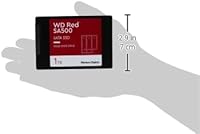
  • Drive Height: At just 7mm tall, this drive fits slim NAS bays that cannot physically accommodate the thicker 9.5mm drives.
  • Sequential Read: Maximum sequential read speed reaches up to 560 MB/s, enabling fast file delivery to multiple simultaneous network users.
  • NAND Type: Western Digital uses 3D NAND flash memory, which layers cells vertically to improve density, endurance, and thermal behavior in continuous-use environments.
  • Designed Use: This drive is explicitly validated for NAS-specific workloads including caching, primary storage, and 24/7 continuous operation.
  • Operating Mode: The drive is rated for round-the-clock operation, making it suitable for NAS systems that never power down.
  • Dimensions: Physical dimensions measure 3.95 x 2.75 x 0.28 inches, consistent with standard 2.5-inch internal SSD sizing.
  • Weight: The drive weighs just 0.15 ounces, reflecting the absence of any moving parts typical of solid-state storage.
  • Model Number: The official model identifier is WDS100T1R0A, which should be used when verifying compatibility with NAS manufacturer compatibility lists.
  • Series: This drive belongs to the WD Red SA500 series, Western Digital's dedicated line of SATA SSDs engineered for NAS environments.
  • Data Recovery: Western Digital includes access to its data recovery service, providing an additional layer of protection for users storing critical or irreplaceable data.
  • Installation Type: This is an internal drive requiring physical installation inside a compatible NAS enclosure or desktop PC bay — it is not an external or portable device.
  • Hardware Platform: Compatible with PC and NAS enclosure platforms that feature a standard 2.5-inch SATA III drive bay.

Related Reviews
Western Digital WD Red SA500 2TB SSD
82%
94%
NAS Compatibility
91%
Endurance & Longevity
83%
Sustained Performance
67%
Value for Money
89%
Installation Experience
More
WD Red SA500 500GB NAS SSD
83%
91%
NAS Compatibility
88%
Read Performance
74%
Write Performance
93%
24/7 Reliability
89%
Installation Ease
More
WD Red SA500 4TB NAS SSD
83%
93%
NAS Compatibility
91%
Endurance & Longevity
87%
Read & Write Performance
61%
Value for Money
89%
Installation Ease
More
Western Digital WD Red Plus 1TB NAS Hard Drive
84%
91%
Long-Term Reliability
93%
NAS Compatibility
88%
RAID Performance
83%
Noise & Vibration
77%
Heat Management
More
WD My Passport SSD 1TB Portable Drive
83%
91%
Transfer Speed
88%
Build Quality
63%
Thermal Management
96%
Portability
89%
Data Security
More
Western Digital SN700 1TB NVMe SSD
90%
94%
Sequential Read Performance
89%
Write Performance
92%
Reliability and Endurance
95%
Compatibility with NAS
91%
Latency in Multi-User Environments
More
Western Digital WD Green 1TB Internal SSD
83%
91%
Real-World Speed Improvement
63%
Sustained Write Performance
94%
Ease of Installation
88%
Value for Money
82%
Long-Term Reliability
More
WD Red SN700 4TB NVMe SSD
79%
93%
NAS Compatibility
86%
Sustained Performance
88%
Endurance & Longevity
67%
Thermal Management
91%
Installation Experience
More
Western Digital 1TB WD Blue SN570 NVMe SSD
87%
92%
Performance
91%
Value for Money
88%
Ease of Installation
94%
Read/Write Speed
85%
Power Efficiency
More
Western Digital WD Blue SA510 1TB SSD
83%
83%
Read & Write Speed
88%
Everyday Responsiveness
91%
Installation & Compatibility
86%
Value for Money
89%
Long-Term Reliability
More

FAQ

In most cases, yes. The WD Red SA500 is widely used in Synology and QNAP enclosures and frequently appears on their official compatibility lists. That said, always check your specific NAS model against the manufacturer's compatibility database before buying, since some older or budget enclosures have restrictions.

It is a SATA III drive, not NVMe. This is an important distinction — if your NAS only has M.2 NVMe slots, this drive will not fit. It is designed for the standard 2.5-inch SATA bays found in the majority of consumer and small business NAS enclosures.

Technically it will work in a desktop with a 2.5-inch SATA bay, but it is not the most cost-effective choice for that use case. It is validated and priced for NAS environments, so a standard consumer SSD would give you comparable desktop performance at a lower price per gigabyte.

A consumer SSD might seem like a cheaper alternative, but most are not tested or rated for 24/7 continuous operation. The WD Red SA500 is specifically validated for the sustained mixed read/write workloads a NAS generates, which can be harder on flash storage than typical desktop use. Over time, that validation matters for reliability.

The jump is substantial for latency-sensitive tasks. Accessing frequently used files, loading shared folders, and serving multiple users simultaneously will feel noticeably snappier. Sequential reads up to 560 MB/s dwarf what a mechanical drive can deliver. For large sequential transfers like moving big video files, the improvement is real but the network itself often becomes the bottleneck before the drive does.

Yes, completely silent. Since it has no moving parts whatsoever, it produces zero mechanical noise or vibration. If sound is a concern, the NAS enclosure fans will be the only noise source once you swap out a spinning drive for this one.

For most home and small business NAS workloads, the endurance headroom is generous. Western Digital rates the SA500 series for sustained NAS use, and real-world reports from long-term users consistently describe years of trouble-free operation. If you are writing enormous amounts of data continuously — think surveillance recording at scale — that is a different workload, but typical NAS use is well within this drive's comfort zone.

It genuinely matters for certain enclosures. Some compact two-bay or desktop NAS units have tight bays where a 9.5mm drive physically will not seat or close properly. If you have one of those enclosures, the 7mm profile is not a nice-to-have — it is a requirement. For full-size rack NAS units, it is less of a concern.

Western Digital bundles access to a data recovery service for situations where the drive fails and you need to retrieve data from it. The process involves contacting WD support and following their claim procedure. It is not a substitute for proper backups, but it provides a meaningful fallback for users who store important files and want an extra layer of protection beyond their own backup practices.

The price difference comes down to validation and intended use. Generic consumer SSDs are tested for desktop workloads — intermittent reads and writes with regular idle periods. This drive is specifically tested for the 24/7, mixed-load environment inside a NAS. That does not always show up in a spec comparison, but it is reflected in the drive's reliability track record among NAS users over time. If your NAS stores anything you cannot afford to lose, that distinction is worth considering.

Where to Buy