Vogzone X550-T2 Dual-Port 10GbE PCIe Network Card
Overview
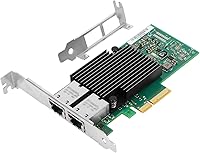
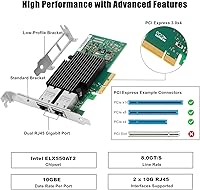
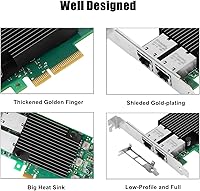
The Vogzone X550-T2 Dual-Port 10GbE PCIe Network Card enters a market long dominated by Intel’s own branded hardware, offering buyers a third-party option built around the same genuine Intel ELX550AT2 controller at a noticeably lower price. That’s the core pitch: identical silicon, different label. The card slots into a PCIe 3.0 x4 interface and remains backward compatible with older PCIe 1.1 and 2.0 systems, which matters if you’re retrofitting aging server hardware. It ships with both a standard and low-profile bracket included, a small but practical detail for SFF or 1U builds. With 335 Amazon ratings averaging 4.4 out of 5 and a top-30 bestseller rank in its category, buyer reception has been consistently solid.
Features & Benefits
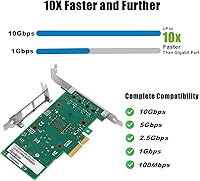
Both copper RJ45 ports on this dual-port 10GbE card handle auto-negotiating link speeds from 100Mbps all the way up to 10GbE, so you’re not locked to a fixed rate when connecting to mixed-speed switches or network-attached storage. The Intel ELX550AT2 chip brings real enterprise functionality: SR-IOV and VMDq let hypervisors like VMware ESXi assign dedicated virtual functions to individual VMs, cutting overhead noticeably. TCP checksum offloading, iSCSI, and NFS hardware offloads keep your host CPU free for actual work rather than packet processing. Jumbo Frames and DPDK round out the feature set for high-throughput pipelines, and PXE boot support makes diskless server provisioning straightforward.
Best For
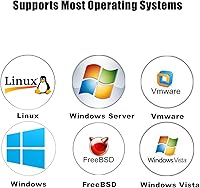
The Vogzone X550-T2 is probably the strongest fit for homelab builders who want genuine 10GbE throughput on a NAS or Proxmox server without paying Intel’s full retail premium. If you’re already running CAT6 cabling or a 10GbE switch, this Intel-chip NIC slots in cleanly — no SFP+ transceivers or optical infrastructure required. IT admins managing small-to-medium environments will appreciate broad driver coverage across ESXi, RHEL, Ubuntu, and FreeBSD, though verifying compatibility with your specific kernel or ESXi build version before purchasing is genuinely worth doing. The bundled low-profile bracket also makes this card viable for compact rack deployments where full-height cards simply won’t clear the chassis.
User Feedback
The most consistent buyer praise centers on native driver recognition — many users confirm the card appears cleanly in ESXi and mainstream Linux distributions without any manual driver hunting. Chip authenticity also gets positive marks, which matters in a segment where counterfeit Intel-chip NICs are genuinely common. On the downside, passive cooling is a real consideration: several owners report noticeable heat buildup during sustained 10GbE transfers, so chassis airflow deserves attention. A smaller group has run into compatibility hiccups with older motherboards or non-standard BIOS configurations. Packaging is functional rather than polished, but the card and brackets arrive without issue. The broad consensus is that performance holds up well against Intel’s own branded equivalent.
Pros
- Genuine Intel ELX550AT2 silicon delivers real 10GbE performance without the full Intel brand price tag.
- Dual RJ45 ports auto-negotiate from 100Mbps to 10GbE, working cleanly with mixed-speed switch environments.
- SR-IOV support lets ESXi and other hypervisors assign dedicated virtual functions to individual VMs efficiently.
- Native driver recognition in major Linux distros and VMware ESXi means most users skip manual driver installs entirely.
- TCP checksum offloading and NFS/iSCSI hardware offloads keep host CPU usage low under heavy storage traffic.
- Low-profile bracket included in the box, making compact 1U and SFF server builds straightforward.
- PXE boot support enables diskless server provisioning without extra hardware or configuration workarounds.
- Backward-compatible with PCIe 1.1 and 2.0 slots, useful when retrofitting older server hardware.
- Buyers consistently report chip authenticity, a genuine concern in the third-party Intel NIC market.
- Solid 4.4-star average across hundreds of real-world buyers gives reasonable confidence for a third-party card.
Cons
- Passive cooling only — sustained 10GbE workloads generate significant heat with no active airflow to manage it.
- Chassis airflow quality directly impacts long-term thermal reliability, which requires planning most consumer builds do not account for.
- Occasional compatibility reports with older motherboards and non-standard BIOS versions mean it is not universally plug-and-play.
- No macOS support at all, making it a non-starter for Mac Pro or Hackintosh network upgrades.
- Third-party origin means no direct manufacturer firmware validation or enterprise support SLA available.
- Driver compatibility depends on your specific kernel version or ESXi build, so pre-purchase verification is genuinely necessary.
- Packaging is minimal and functional — no cable, no software, no documentation beyond the basics.
- Buyers who need SFP+ or fiber connectivity will find copper-only RJ45 ports a hard limitation.
- Without active cooling, placement inside a dense build requires deliberate thermal planning to avoid issues.
- Some enterprise procurement policies will flag third-party NICs regardless of chipset authenticity or performance results.
Ratings
The scores below for the Vogzone X550-T2 Dual-Port 10GbE PCIe Network Card were generated by AI after analyzing verified buyer reviews from global sources, with spam, bot-submitted, and incentivized feedback actively filtered out. Both the consistent strengths and the recurring pain points are reflected as transparently as possible, so you get an honest picture of what real-world owners actually experience. This dual-port 10GbE card earns high marks in several areas but has a few notable trade-offs worth understanding before you buy.
Chipset Authenticity
Driver Compatibility
Virtualization Support
Thermal Management
OS Coverage Breadth
PCIe Slot Flexibility
Form Factor Versatility
Throughput Performance
Value for Money
Build Quality
Packaging & Unboxing
Motherboard Compatibility
Setup Experience
Suitable for:
The Vogzone X550-T2 Dual-Port 10GbE PCIe Network Card is a strong match for homelab enthusiasts, self-hosted storage builders, and small-to-medium business IT admins who need genuine 10GbE throughput without the premium attached to Intel’s own branded hardware. If you’re running a TrueNAS, Proxmox, or VMware ESXi environment and want a card that installs cleanly without chasing down obscure drivers, this Intel-chip NIC covers most major platforms including RHEL, Ubuntu, FreeBSD, and current ESXi builds — though confirming compatibility with your specific kernel or hypervisor version before ordering is a sensible step. The dual copper RJ45 ports work especially well for anyone already running CAT6 infrastructure who wants to avoid the added cost and complexity of SFP+ optics. Hardware offloads for iSCSI and NFS make it particularly useful in storage-heavy workloads where keeping CPU utilization low actually matters. The included low-profile bracket is a practical bonus for anyone building into 1U rack chassis or compact SFF cases where full-height cards are simply not an option.
Not suitable for:
The Vogzone X550-T2 Dual-Port 10GbE PCIe Network Card is not the right pick for every buyer, and it’s worth being honest about where it falls short. Passive cooling is the most practical concern: under sustained full-speed transfers, the card runs hot, and if your chassis has poor airflow or the card is sandwiched between other components, thermal throttling or long-term reliability degradation becomes a real risk. Users with older motherboards or non-standard BIOS implementations have reported occasional recognition issues, so it is not a guaranteed plug-and-play experience on every system. Anyone running macOS can stop here — this card has no Mac driver support at all. If you need the assurance of direct manufacturer support, validated firmware updates, and enterprise-grade SLAs, the third-party nature of this NIC may give procurement teams pause regardless of how well it performs. Finally, buyers who need SFP+ connectivity for fiber or direct-attach copper runs will need to look at a different product category entirely.
Specifications
- Chipset: Powered by the Intel ELX550AT2 controller, the same silicon used in Intel's own branded X550-T2 cards.
- Port Configuration: Two copper RJ45 ports, each capable of independent full-duplex operation at speeds up to 10GbE.
- Link Speeds: Each port auto-negotiates across five speed tiers: 100Mbps, 1GbE, 2.5GbE, 5GbE, and 10GbE.
- PCIe Interface: Uses a PCIe 3.0 x4 electrical interface, physically compatible with x4, x8, and x16 motherboard slots.
- PCIe Compatibility: Backward compatible with PCIe 1.1 and 2.0 platforms, allowing installation in older server and desktop hardware.
- Virtualization: Supports SR-IOV and VMDq, enabling hypervisors to assign dedicated virtual network functions to individual virtual machines.
- Offload Engines: Hardware offloads include TCP checksum, iSCSI, FCoE, and NFS, reducing packet-processing burden on the host CPU.
- Traffic Management: Supports Jumbo Frames, DPDK, and DCB for high-throughput and low-latency data center traffic scenarios.
- Boot Support: PXE boot is supported, allowing network-based OS provisioning for diskless or thin-client server configurations.
- OS Compatibility: Drivers are available for Windows 10, Windows 11, Windows Server, RHEL, Ubuntu, SUSE, FreeBSD, and VMware ESXi; compatibility depends on specific kernel or hypervisor build version.
- Cooling Method: Passive cooling only, with no onboard fan; adequate chassis airflow is required under sustained high-throughput workloads.
- Bracket Options: Ships with both a standard full-height bracket and a low-profile bracket, supporting a wider range of chassis form factors.
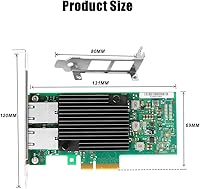
- Card Dimensions: Physical dimensions measure 8.8″ in length, 5.9″ in width, and 1.1″ in height.
- Weight: The card weighs 6.7 ounces, consistent with a full-length dual-port PCIe NIC with passive heatsink.
- Mac Support: No macOS driver is available; this card is not compatible with Apple Mac systems in any configuration.
Related Reviews
ULANSeN Intel 82576 Dual-Port Gigabit Network Card
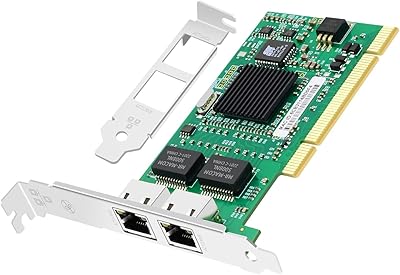
Jeirdus Intel 82546 Dual-Port Gigabit NIC
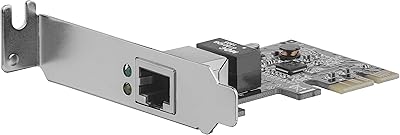
StarTech ST1000SPEX2L 1-Port PCIe Network Card
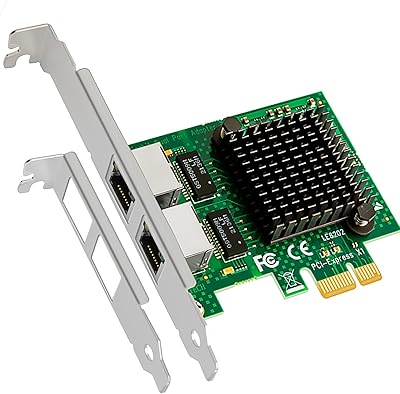
GLOTRENDS LE8202 2-Port Gigabit PCIe Network Card
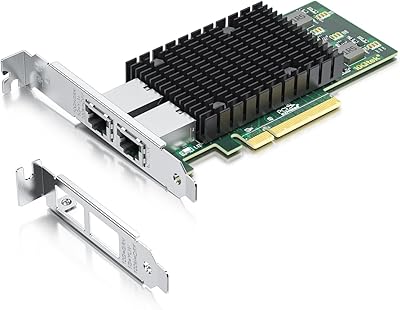
10Gtek X540-10G-2T Dual-Port 10GbE Network Card
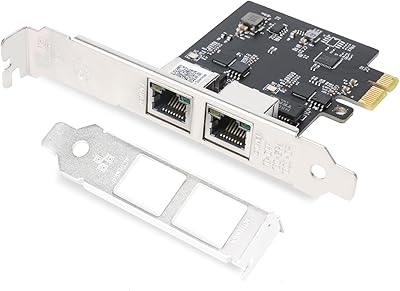
QINIYEK RTL8125B Dual-Port 2.5G PCIe NIC
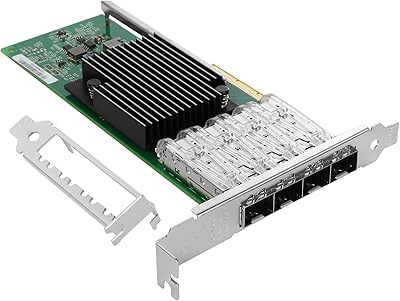
Euqvos PCIe Ethernet Network Card X710-DA4 10Gb 4 Port SFP+
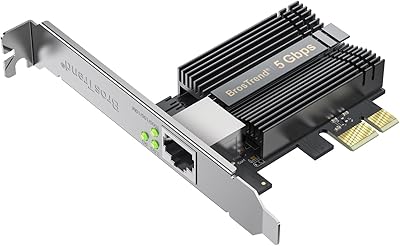
BrosTrend 5Gbps PCIe Network Card
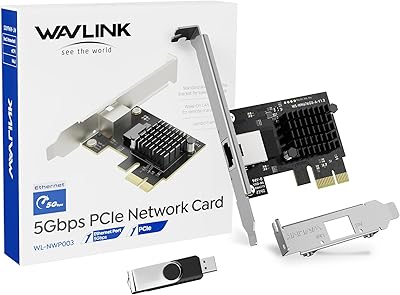
WAVLINK RTL8126 5Gbps PCIe Network Card