Overview

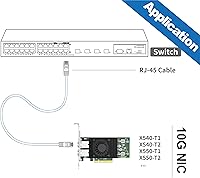
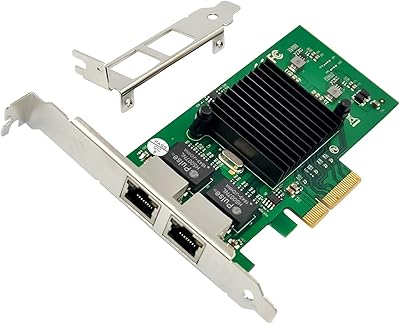
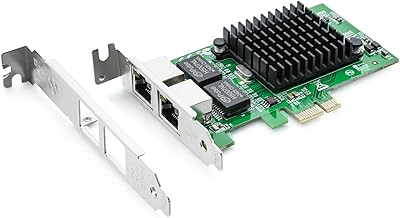
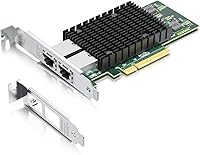
The 10Gtek X540-10G-2T Dual-Port 10GbE Network Card has held a firm spot near the top of its category since its debut in 2016, and that staying power is not accidental. Unlike generic third-party NICs that cut corners on the silicon, this card runs on a genuine Intel X540 chip — the same controller found in Intel's own branded adapters. Two copper RJ45 ports and a PCIe x8 interface round out the physical package. For anyone who needs real 10GbE throughput without paying a significant premium for the Intel badge alone, this 10GbE network card is a serious option worth a close look.
Features & Benefits

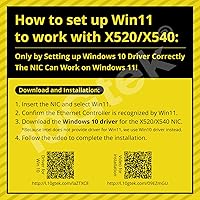
The Intel X540 controller is the real differentiator here — it handles hardware-level offloads like checksum calculation and interrupt moderation, keeping CPU overhead manageable during heavy traffic bursts. The dual RJ45 ports reach up to 100 meters over Cat-6A cable, which is practical for structured office or data center cabling without running fiber. Despite being a PCIe x8 card, it fits x16 slots without issue, and the included low-profile bracket means compact server chassis are not off the table. OS coverage is broad — Linux, Windows Server, and ESXi work natively — though Windows 11 requires a manual driver setup that 10Gtek documents on request.

Best For

This Intel X540 adapter is a natural fit for home lab builders who want legitimate 10GbE performance without the cost of branded OEM cards. It also covers small business environments well — the dual-port layout handles link aggregation or failover without needing a second card entirely. Virtualization users on ESXi or Proxmox will find driver recognition reliable enough for passthrough configurations. NAS builds running iSCSI or NFS over 10G are another strong use case. If you are upgrading from a 1GbE setup and already have Cat-6 cabling in place, this X540-based dual-port NIC slots in without forcing a full infrastructure rethink.

User Feedback

Across more than a thousand ratings, the X540-based dual-port NIC has earned a consistently strong reception. Linux and ESXi users repeatedly note that the card is recognized at boot without manual driver hunting — plug-and-play compatibility in those environments is the most praised trait. The bundled low-profile bracket also gets genuine appreciation from buyers fitting the card into SFF cases. That said, Windows 11 users occasionally report friction during setup; the card functions, but it is not automatic, and buyers who were not warned ahead of time found that frustrating. A smaller number of reviewers also flag that the card runs noticeably warm under sustained 10G loads, making case airflow worth planning around.

Pros

  • Runs on a genuine Intel X540 controller — the same chip found in significantly more expensive branded NICs.
  • Linux and ESXi detect the X540-based dual-port NIC natively at boot, with no manual driver hunting required.
  • Dual RJ45 ports enable link aggregation or failover without occupying a second PCIe slot.
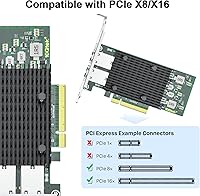
  • PCIe x8 card fits x16 slots without any electrical or physical compatibility issues.
  • Bundled low-profile bracket makes installation possible in 1U rackmount servers and compact SFF cases.
  • Hardware iSCSI offload reduces CPU overhead during sustained block storage transfers in NAS environments.
  • Cat-6A support allows runs up to 100 meters, covering most structured office and data center cabling layouts.
  • Three-year warranty and 30-day returns provide meaningful purchase protection for a server component.
  • Has held a top-ten bestseller rank in its category consistently since 2016 — a real signal of sustained reliability.
  • 10Gtek provides Windows 11 driver guidance on request, so the setup hurdle is solvable with a quick support contact.

Cons

  • Windows 11 requires manual driver setup — there is nothing in the box to warn buyers or walk them through it.
  • No printed documentation or quick-start guide included, which is a gap for less experienced users.
  • Runs noticeably warm under sustained full-duplex 10G loads — airflow planning is not optional in tight enclosures.
  • Does not support hot-swapping, limiting use in environments that require live NIC replacement without downtime.
  • A small but recurring number of buyers have reported DOA units, with no onboard LED diagnostics to quickly isolate the fault.
  • Support response times can be inconsistent for international buyers, particularly when driver documentation is needed urgently.
  • FCoE compatibility is technically present but rarely validated by real buyers, making it an unconfirmed feature for SAN environments.
  • Buyers sourcing through third-party marketplace sellers have occasionally raised concerns about counterfeit units.
  • Cat-5e cabling will not carry 10GbE reliably at any useful distance — a mismatch buyers sometimes attribute to the card.
  • No self-test utility or diagnostic software is included, making early-failure diagnosis more time-consuming than it needs to be.

Ratings

The 10Gtek X540-10G-2T Dual-Port 10GbE Network Card has accumulated well over a thousand verified purchases globally, and the scores below reflect what real buyers consistently report after hands-on use — processed by AI to filter out incentivized, bot-generated, and outlier submissions. Both the genuine strengths and the friction points that show up repeatedly across user cohorts are captured here, so you get an honest picture before committing.
Driver Compatibility
91%
Linux and ESXi users are the clearest winners here — the Intel X540 controller is so well-documented in open-source and VMware driver stacks that most installations require zero manual intervention. Home lab users running Proxmox or TrueNAS report the card showing up immediately after boot, which matters a lot when you are configuring a storage network at midnight.
Windows 11 is the consistent exception. The card functions under it, but only after manual driver configuration that requires reaching out to 10Gtek directly for guidance. Buyers who assumed it would work out of the box on a fresh Windows 11 machine were caught off guard, and a handful found the process frustrating enough to leave negative reviews.
Value for Money
88%
Running on the same Intel X540 silicon as far more expensive branded adapters means buyers get real enterprise-grade offloading capability at a fraction of the OEM cost. For home lab builders and SMB IT admins who need dual-port 10GbE without a capital expenditure conversation, the price-to-performance ratio is difficult to argue with.
The savings only feel genuine if you already know what the Intel X540 chip represents. Buyers without that context sometimes question whether they are getting a reliable product or just a cheap card dressed up in marketing language — a perception issue that 10Gtek has not fully resolved in its product presentation.
Controller Chip Quality
93%
The genuine Intel X540 controller is not a rebadged or clone chip — it carries full Intel driver lineage, hardware checksum offload, interrupt moderation, and long-term firmware support. For server environments where NIC stability over months of continuous uptime matters, this silicon choice is what separates this card from budget alternatives using lesser controllers.
There is no real technical weakness tied to the X540 chip itself at this price point. The only recurring concern is that buyers have occasionally worried about counterfeit units reaching them through third-party sellers, so sourcing directly from 10Gtek or a verified channel is worth the extra diligence.
Installation Experience
74%
26%
For technically confident users — sysadmins, network engineers, and experienced home lab builders — the physical installation is genuinely straightforward. The card fits both standard and low-profile cases thanks to the included bracket swap, and PCIe slot insertion is clean with no fitment issues reported across the large review base.
Less experienced buyers, particularly those picking up their first 10GbE card for a Windows desktop, hit walls quickly. The Windows 11 driver gap, absence of a quick-start guide in the box, and reliance on contacting support for setup documentation all add friction that would be avoidable with better out-of-box materials.
Thermal Performance
67%
33%
Under typical workloads — NAS transfers, iSCSI mounts, moderate virtualization traffic — the card runs at acceptable temperatures without requiring dedicated airflow. Most rackmount server environments with standard case fans handle it without any thermal planning at all.
Under sustained full-duplex 10G saturation, a meaningful number of buyers note that the card runs noticeably warm. In small form factor builds with limited airflow, this becomes a real concern rather than a theoretical one. A few users specifically recommended positioning the card near a case fan, especially in passively cooled or compact enclosures.
Build Quality & Hardware Finish
79%
21%
The PCB construction feels solid and consistent with what you would expect from a card in regular server rotation. Bracket tolerances are tight, the RJ45 ports have good retention clip action, and there are no reports of physical defects arriving at scale across the review base.
The card does not feel premium in hand compared to a boxed Intel or Broadcom OEM part. The finish is functional rather than refined, which is entirely acceptable for a server slot card but worth noting for buyers who equate aesthetics with quality.
ESXi & Virtualization Support
89%
ESXi recognition is one of the most praised traits across the review base. The Intel X540 VIB driver is included in VMware's native driver stack, meaning the card shows up in vSphere without hunting for community forks or unsigned driver packages. PCI passthrough to VMs also works reliably according to multiple Proxmox and ESXi users.
Older ESXi versions occasionally require a specific VIB installation step rather than zero-touch detection. Users on ESXi 6.0 and earlier reported needing to manually load the ixgbe driver, which is straightforward for experienced admins but an unwelcome surprise for those expecting complete plug-and-play behavior.
Storage Protocol Support (iSCSI, NFS, FCoE)
83%
The hardware iSCSI offload capability is a genuine operational benefit in NAS and SAN environments — it reduces initiator CPU load during sustained block storage transfers, which is exactly the kind of low-level efficiency that matters in always-on storage architectures. NFS performance over 10G is consistently reported as clean and stable.
FCoE support, while technically present, is rarely validated by buyers in consumer or SMB contexts. Users with FCoE-specific requirements would be better served confirming compatibility with their specific SAN fabric before purchasing, as real-world FCoE testing data in the review base is thin.
Low-Profile Bracket Inclusion
86%
Including both a full-height and a low-profile bracket in the box is a small but genuinely appreciated detail. Buyers fitting this card into 1U rackmount servers or compact SFF desktop cases specifically call this out as a practical inclusion that saved them from sourcing a bracket separately.
The bracket swap itself requires a small screwdriver and a bit of careful handling — the fit is snug enough that a couple of buyers reported minor difficulty aligning the low-profile version. Not a serious issue, but worth knowing if you are working in a cramped chassis.
Packaging & Unboxing
71%
29%
The card arrives securely padded and is protected with an anti-static bag, which is the baseline expectation for any PCIe component. Most buyers report no damage on arrival even when shipped via standard carrier handling.
Documentation inside the box is minimal. There is no printed quick-start guide, no driver disc, and no clear reference to the Windows 11 manual setup process. For a product that has a known compatibility caveat on a major OS, the absence of even a one-page insert addressing it is a repeated complaint.
Warranty & Post-Sale Support
81%
19%
A three-year warranty backed by a 30-day return window puts this card well above many generic NIC alternatives in terms of purchase confidence. Buyers who contacted 10Gtek support for the Windows 11 driver guide generally report a responsive experience, which matters for a product with a known setup nuance.
Support quality appears to be inconsistent across time zones and languages. Some international buyers found response times slower than expected, and a few noted that the support interaction for Windows 11 setup felt like it should have been pre-packaged documentation rather than a reactive email exchange.
Cat-6 and Cat-6A Cable Compatibility
84%
The dual RJ45 ports reaching up to 100 meters over Cat-6A is a practical advantage for structured office cabling where fiber is not already in place. Buyers upgrading from 1GbE infrastructure report being able to reuse existing Cat-6 runs for shorter distances without rewiring, which meaningfully reduces deployment cost.
Buyers using older Cat-5e cabling hoping to push 10G speeds will hit a wall — the card itself is fine, but Cat-5e simply cannot reliably carry 10GbE at any useful distance. A small number of buyers discovered this the hard way and attributed the issue to the card before diagnosing their cabling.
PCIe Slot Compatibility
87%
The PCIe 2.1 x8 card fitting into x16 slots without issue gives buyers a lot of motherboard flexibility. Owners of workstation and server boards with a mix of slot sizes report no problems physically or electrically, and bandwidth headroom at PCIe 2.1 x8 is more than sufficient for dual 10G links running simultaneously.
The x8 physical connector will not fit into an x4 or x1 slot, which has confused a handful of buyers with limited PCIe lanes on budget motherboards. This is a basic PCIe specification reality, not a flaw in the card, but clearer product labeling could prevent the mismatch from happening at the point of purchase.
Long-Term Reliability
85%
Given that this card has been commercially available since 2016 and consistently holds a top-ten rank in its category, the long-term reliability picture is encouraging. Users running it in always-on NAS and server environments report multi-year operation without failure, which is the most meaningful durability signal available.
A small but non-trivial number of buyers report DOA units or early failures within the first few weeks. While the rate appears to be within normal NIC failure distribution, the absence of a simple self-test utility or LED diagnostic indicator makes identifying a dead card versus a configuration issue unnecessarily time-consuming.

Suitable for:

The 10Gtek X540-10G-2T Dual-Port 10GbE Network Card is a strong match for anyone who needs enterprise-grade 10GbE connectivity without the price tag of a major OEM brand. Home lab enthusiasts running TrueNAS, Proxmox, or ESXi will find it particularly well-suited — the Intel X540 controller is deeply embedded in open-source and VMware driver stacks, so setup on those platforms is about as frictionless as it gets. IT admins managing small or mid-sized server environments will appreciate the dual-port layout, which opens up link aggregation or active-passive failover without requiring a second card slot. If your storage architecture relies on iSCSI or NFS over 10G, the hardware offload capability on this card meaningfully reduces CPU burden during sustained transfers. It also works well in compact builds since the bundled low-profile bracket removes the usual guesswork around chassis compatibility.

Not suitable for:

The 10Gtek X540-10G-2T Dual-Port 10GbE Network Card is not the right pick for buyers who expect a fully guided, out-of-the-box experience on Windows 11 — the setup requires manual driver configuration, and without proactive communication with 10Gtek support, the process can stall an otherwise straightforward deployment. Users with motherboards that only offer PCIe x4 or x1 slots will hit a hard physical incompatibility, since the card requires at least an x8 slot to seat properly. Anyone running the card in a small form factor enclosure with poor airflow should be aware that sustained 10G saturation generates meaningful heat, and without at least one directed case fan nearby, thermal throttling or long-term component stress is a real possibility. Buyers who want hot-swap capability for live server environments should also look elsewhere — this card does not support it. Finally, anyone with Cat-5e cabling throughout their premises hoping to push full 10GbE speeds will be disappointed, as the limitation lies with the cable infrastructure, not the NIC itself.
Specifications

  • Controller Chip: Powered by a genuine Intel X540 controller, which provides hardware-level offloads including checksum computation and interrupt moderation for reduced CPU load.
  • Port Configuration: Equipped with two RJ45 copper ports, each capable of full 10 Gbps throughput independently and simultaneously.
  • PCIe Interface: Uses a PCIe 2.1 x8 connector running at 5.0 GT/s, physically compatible with x8 and x16 motherboard slots.
  • Max Data Rate: Supports 10 Gigabits per second per port, delivering a combined theoretical maximum of 20 Gbps across both ports.
  • Cable Support: Supports Cat-6A cabling up to 100 meters and Cat-6 cabling up to 55 meters for 10GbE operation.
  • Storage Protocols: Natively supports iSCSI, FCoE, and NFS protocols, enabling storage-over-Ethernet deployments in server and virtualization environments.
  • OS Compatibility: Officially compatible with Windows Server 2003, 2008, and 2012, Windows 7, 8, and 10, Linux kernel distributions, and VMware ESX/ESXi.
  • Windows 11: Functional under Windows 11 but requires manual driver installation; 10Gtek provides a setup guide upon request before use.
  • Bracket Options: Ships with both a standard full-height bracket and a low-profile bracket, supporting installation in standard ATX cases as well as 1U rackmount and SFF enclosures.
  • Hot-Swap Support: Hot-swapping is not supported; the host system must be powered down before installing or removing the card.
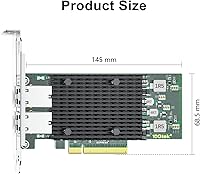
  • Card Dimensions: Measures 8.8″ in length, 5.7″ in width, and 1.2″ in height, placing it in the standard half-length PCIe card form factor.
  • Weight: The card weighs 7.8 ounces, which is typical for a dual-port 10GbE NIC with full bracket hardware included.
  • Warranty: Covered by a 3-year free replacement warranty provided directly by 10Gtek, along with lifetime technology support.
  • Return Policy: Eligible for a 30-day free return window from the date of purchase, offering a meaningful risk buffer for compatibility testing.
  • Market Rank: Holds a #7 bestseller ranking in the Internal Computer Networking Cards category on Amazon, reflecting sustained commercial adoption since 2016.
  • First Available: Originally listed in June 2016, giving this product a multi-year track record in the 10GbE NIC market.
  • Manufacturer: Designed and sold by 10Gtek, a networking hardware brand focused on high-speed LAN adapters and SFP transceivers for server environments.
  • In-Box Contents: Package includes the NIC itself, one low-profile replacement bracket, and no additional cabling or software media.

Related Reviews

ULANSeN Intel 82576 Dual-Port Gigabit Network Card
81%
91%
Driver Compatibility
84%
Virtualization Support
88%
Value for Money
79%
Throughput Performance
63%
Build Quality
More
10Gtek 10Gb PCI-E NIC Network Card X520-10G-1S
85%
88%
Performance
91%
Installation Ease
85%
Compatibility
90%
Data Transfer Speed
87%
Reliability
More
Jeirdus Intel 82546 Dual-Port Gigabit NIC
76%
93%
Driver Compatibility
88%
Value for Money
79%
PCI Bus Compatibility
67%
Build Quality
91%
Bracket Inclusion & Flexibility
More
QNAP QSW-2104-2T Unmanaged Network Switch
84%
96%
Ease of Setup
88%
Port Configuration & Versatility
97%
Noise Level
63%
Thermal Performance
84%
Build Quality
More
GLOTRENDS LE8202 2-Port Gigabit PCIe Network Card
82%
88%
Driver Compatibility
91%
Ease of Installation
94%
Value for Money
86%
OS & Platform Coverage
79%
Build Quality
More
StarTech ST1000SPEX2L 1-Port PCIe Network Card
82%
91%
Ease of Installation
88%
Connection Stability
93%
Low-Profile Compatibility
82%
OS & Driver Compatibility
94%
Value for Money
More
OWC 14-Port Thunderbolt Dock
85%
93%
Port Selection & Density
88%
Thunderbolt Bandwidth & Data Speed
91%
Display Output Performance
86%
Charging Passthrough
89%
Card Reader Speed
More
StarTech ST1000SPEXI PCIe Gigabit Network Card
82%
94%
Driver Stability & OS Compatibility
92%
Connection Reliability & Uptime
91%
Installation Ease
67%
Value for Money
96%
Chipset Quality
More
H!Fiber.com 82576-2T-X1 Dual-Port Gigabit Network Card
81%
93%
Value for Money
91%
Linux Compatibility
78%
Installation Ease
71%
Virtualization Support
74%
Build Quality
More
GLOTRENDS ST7315 1-Port 10Gb SFP+ Ethernet Network Card
84%
91%
Performance
88%
Compatibility
84%
Ease of Installation
92%
Value for Money
70%
Driver Support
More

FAQ

Yes, it will work without any issues. PCIe slots are backward and forward compatible in terms of physical sizing — an x8 card seats and operates correctly in an x16 slot. You will not lose any functional bandwidth for dual 10GbE operation at PCIe 2.1 x8 speeds.

The chip is a genuine Intel X540 controller, not a third-party clone or rebadge. This matters practically because it means you get full access to Intel's native driver stack, which is actively maintained across Linux, Windows Server, and VMware platforms — something clone-chip cards cannot guarantee long-term.

Not automatically, no. The 10Gtek X540-10G-2T Dual-Port 10GbE Network Card does function under Windows 11, but it requires a manual driver installation process that is not documented inside the box. You will need to contact 10Gtek support before or after purchase to get the setup guide — they do provide it, but the expectation of plug-and-play on Windows 11 will leave you frustrated if you go in blind.
Under normal mixed workloads it stays at acceptable temperatures, but under sustained full-duplex 10G saturation it runs noticeably warm. If your case has limited airflow, positioning at least one directed fan near the card is a smart precaution. It is not a card you want in a completely passive enclosure under heavy load.

Cat-6 will work, but only up to about 55 meters for reliable 10GbE operation. If your cable runs are shorter than that, you are fine reusing existing Cat-6 infrastructure. For longer runs, Cat-6A is required to reach the full 100-meter specification. Cat-5e will not reliably support 10GbE at any practical distance, so factor that in if your building uses older cabling.

ESXi detects the Intel X540 controller natively in most modern versions because VMware includes the ixgbe driver in its base image. On older ESXi releases like 6.0, you may need to manually install the VIB driver package, but it is a well-documented process with no third-party or unsigned drivers involved.

Yes, iSCSI is one of the strongest use cases for this NIC. The Intel X540 controller handles iSCSI offloading in hardware, which means the initiator workload on your server CPU stays low even during sustained block storage transfers. Both software and hardware iSCSI initiator configurations work with this card.

In most cases, yes. The included low-profile bracket is the standard half-height form factor that fits the vast majority of 1U and 2U rackmount servers with low-profile PCIe slots. That said, always verify your server chassis specifies low-profile PCIe card support before purchasing, as some ultra-compact designs have proprietary slot configurations.

10Gtek backs this card with a 3-year warranty, so a defective or failed unit within that window should qualify for a free replacement. For the first 30 days you also have the option of a full return. The main practical caveat is that diagnosing a truly dead card versus a configuration issue can take time since there are no onboard diagnostic LEDs to give you a quick status signal.

Yes, and this is a well-documented use case in the Proxmox community. The Intel X540 controller is IOMMU-compatible and passes through to VMs cleanly on most AMD and Intel platforms with virtualization and IOMMU enabled in BIOS. Multiple users in home lab environments specifically report this working reliably without driver issues inside the guest OS.