Overview

The QINIYEK RTL8125B Dual-Port 2.5G PCIe NIC is a straightforward answer for desktop users who want faster local network speeds without tearing apart their entire setup. Built around Realtek's RTL8125B chipset, this 2.5G network card slots into any PCIe x1 through x16 lane, so compatibility with most modern motherboards is rarely an issue. It landed on Amazon in late 2023 and has quietly climbed into the top 700 of its category — not a flashy debut, but a steady one. The mid-range price makes it a practical upgrade path for home labs and small offices that want 2.5Gbps throughput without committing to an expensive new motherboard.
Features & Benefits

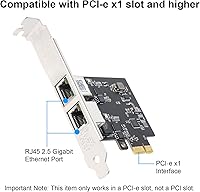
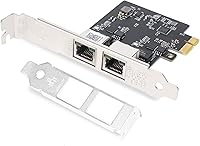
The standout feature here is clearly the dual RJ45 configuration. Having two independent 2.5Gbps ports on a single PCIe x1 card means you can connect your NAS to one port and your main workstation switch to the other — all without occupying a second expansion slot. The RTL8125B adapter also handles VLAN tagging, Wake-on-LAN, PXE boot, and Jumbo Frames, which matters if you're running a home server or a virtualized environment. Backward compatibility with 1Gbps and 100Mbps infrastructure is a genuine relief; you don't have to swap out every switch on day one. One important caveat: full 2.5Gbps speed requires your switch and the other endpoint to also support it.

Best For

This dual-port NIC is a natural fit for home lab builders running a NAS alongside a hypervisor — connecting both devices at 2.5Gbps from a single card is the kind of efficiency that pays for itself quickly. Small offices upgrading to a 2.5G-capable switch but stuck with older motherboards will also find it useful. If you're working inside a compact or mini-ITX case, the included low-profile bracket removes what would otherwise be a deal-breaker. Linux and Windows Server users should feel comfortable here too, given the RTL8125B's solid driver ecosystem. That said, if you only need a single 2.5Gbps connection and have no plans for the second port, a cheaper single-port card might serve you just as well.

User Feedback

Sitting at 4.2 out of 5 stars across 62 reviews, the RTL8125B adapter earns cautious confidence rather than universal enthusiasm. On the positive side, buyers consistently mention painless installation on Windows 10 and 11, with drivers loading automatically in most cases. Build quality draws little complaint, and there is no widespread mention of unusual heat or early failure. Where things get more mixed is Linux — a handful of users ran into driver hiccups depending on their kernel version, so it's worth checking current community threads before buying if Linux is your primary OS. The dual-port design divides opinion too: power users love having two separate connections, while casual buyers feel they're paying for a feature they will never actually use.

Pros

  • Two independent 2.5Gbps ports from a single PCIe x1 slot saves a valuable expansion slot in any build.
  • Windows 10 and 11 driver recognition is nearly automatic — most users are up and running in under ten minutes.
  • Backward compatibility with 1Gbps and 100Mbps switches means you can upgrade the card before upgrading your whole network.
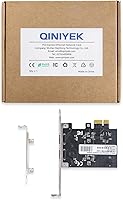
  • Both standard and low-profile brackets are included, covering slim cases and full-size towers equally.
  • VLAN tagging, Wake-on-LAN, and PXE boot work as advertised for home server and virtualization setups.
  • The RTL8125B adapter fits PCIe slots from x1 all the way to x16, making motherboard compatibility a non-issue for most desktop builds.
  • Solid thermal behavior under sustained transfers — no reported instability or throttling during typical workloads.
  • A one-year warranty and 30-day return window provide a reasonable safety net for a mid-range networking purchase.

Cons

  • Linux users on older kernels may need to compile drivers manually, which is not a beginner-friendly experience.
  • Official QINIYEK documentation is minimal, leaving advanced feature setup largely to community forums and trial-and-error.
  • The second RJ45 port adds cost that single-connection buyers will never recover in actual use.
  • Mac OS compatibility is listed but almost unverifiable — real buyer confirmation on that platform is essentially absent.
  • After-sales support quality is inconsistent, with some users reporting slow or templated responses to technical questions.
  • No heatsink is included on the chip, which is standard for this tier but a minor concern in poorly ventilated cases.
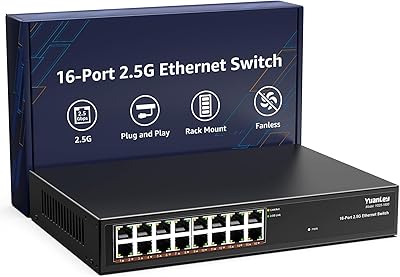
  • Full 2.5Gbps throughput requires a compatible switch and endpoint — the card alone cannot fix a gigabit-limited network path.
  • Bracket fit can require minor adjustment in certain SFF cases, which is a small but occasionally fiddly issue.
  • Brand recognition is low compared to Intel or Broadcom, which may matter in professional environments where component provenance is scrutinized.

Ratings

The scores below reflect an AI-driven analysis of verified global buyer reviews for the QINIYEK RTL8125B Dual-Port 2.5G PCIe NIC, with spam, bot-generated, and incentivized feedback actively filtered out before scoring. Each category captures what real users experienced after installing the card in their own rigs — not what the spec sheet promises. Both the genuine strengths and the friction points are represented as honestly as the data allows.

Ease of Installation
88%
Most Windows 10 and 11 users report the card was recognized immediately after insertion, with drivers loading automatically through Windows Update. For a typical desktop user with no networking background, the whole process takes under ten minutes.
A subset of users on older Windows versions or niche Linux distributions ran into driver sourcing issues that required manual steps. It is not a dealbreaker, but it does mean the experience is not equally frictionless across all platforms.
Windows Driver Compatibility
91%
Across Windows 10 and 11 installs, driver recognition is nearly automatic and consistently praised. Even Windows Server 2016 users report solid out-of-box support, which matters when deploying in a small business or home lab environment.
Support on very old Windows versions like XP or Vista is listed but rarely tested by modern reviewers, so real-world reliability there is unclear. Driver update cadence from QINIYEK is also not well documented.
Linux Driver Compatibility
63%
37%
The RTL8125B chipset has open-source driver support in recent Linux kernels, and users on Ubuntu 22.04 LTS or Debian 12 generally get it working without needing third-party patches. For mainstream distros on current kernels, it is a reasonable experience.
Users on older kernels or less common distributions like Arch with custom configs have reported needing to compile drivers manually. That extra step catches Linux newcomers off guard and is the single most recurring frustration across negative reviews.
Dual-Port Utility
78%
22%
For home lab users running a NAS alongside a virtualization host, having two separate 2.5Gbps connections from one PCIe slot is genuinely useful — it avoids occupying a second expansion slot and simplifies cable management in tight builds.
Buyers who only need a single faster connection find the second port goes unused, making them feel they paid a premium for something irrelevant to their setup. The value of dual ports is highly dependent on use case.
Throughput Performance
83%
When paired with a 2.5G-capable switch and a compatible endpoint, users confirm the adapter delivers the expected speed improvement over standard gigabit — noticeable particularly during large local file transfers to a NAS.
Full 2.5Gbps is only achievable when the entire path supports it, and some buyers were surprised to find their switch was the bottleneck. The card itself performs well; the ecosystem dependency is just not always communicated clearly at purchase.
Build Quality
81%
19%
The PCB feels solid and components are neatly laid out. Users who have handled multiple budget NICs note this one does not feel as flimsy, and there are no widespread reports of bent ports or cracked brackets out of the box.
It is not in the same league as enterprise-grade cards from Intel or Broadcom, and the plastic bracket on the standard profile feels only average. A small number of users mentioned minor cosmetic imperfections on arrival.
Low-Profile Bracket Fit
79%
21%
Including a low-profile bracket in the box is a practical touch that many competing cards skip. Builders working with slim or mini-ITX cases appreciate not having to hunt for a compatible bracket separately.
A few users noted the low-profile bracket required slight adjustment to align cleanly with their case cutout. The fit is not always precise enough to feel polished, particularly in tighter SFF cases from certain manufacturers.
Heat and Thermal Behavior
84%
Under sustained transfers, the card runs warm but not hot. No users have flagged thermal throttling or instability caused by heat, and there are no reports of nearby PCIe components being affected during prolonged use.
There is no heatsink on the chip, which is common for this class of card but worth noting if you are building in a poorly ventilated case. Passive cooling is adequate for typical workloads but untested under extreme sustained throughput.
PCIe Slot Compatibility
93%
Fitting into x1 through x16 slots across PCIe 1.0 to 4.0 means this card works with practically any desktop motherboard made in the last decade. Users with older LGA 1151 boards and newer AM5 builds alike report clean compatibility.
There is little to criticize here beyond the standard reminder that physical slot availability depends on your specific board layout. Users with a crowded ATX build and a large GPU may find the x1 slot blocked or inconveniently positioned.
Value for Money
72%
28%
For users who actually need both ports, the price per port compares favorably against buying two single-port 2.5G cards. Home lab builders in particular find the math works in their favor when the second connection is put to use.
Users who only want a single 2.5Gbps port can find cheaper single-port RTL8125B cards, which makes the dual-port version feel overpriced for their needs. The value equation is real but conditional on your actual use case.
Advanced Feature Support
76%
24%
VLAN tagging, Wake-on-LAN, and PXE boot are confirmed working by server and virtualization users who rely on these features daily. DPDK support is a genuine bonus for anyone doing packet processing workloads on Linux.
These features require some configuration knowledge to activate, and casual users who stumbled on them in the spec list had trouble finding clear documentation. QINIYEK's own support materials on advanced setup are thin.
OS Breadth Beyond Windows and Linux
58%
42%
The adapter is listed as compatible with Mac OS and DOS, which technically expands its appeal beyond the typical audience. A niche group of users running FreeBSD or older systems may find it functional.
Real-world verification of Mac OS and DOS compatibility is nearly absent from buyer reviews. Purchasing this card specifically for macOS without first confirming driver availability for your exact OS version is a risk.
Warranty and After-Sales Support
67%
33%
A one-year warranty and a 30-day return window are standard for this category and give buyers a reasonable safety net. QINIYEK does provide a direct support email for technical questions.
Response quality and speed from QINIYEK support is inconsistently rated, with some users reporting prompt help and others receiving slow or templated replies. For buyers with complex Linux issues, community forums may be more reliable than official support.
Package and Accessories
71%
29%
The box includes both standard and low-profile brackets, which immediately doubles the number of compatible cases without any extra purchase. The card arrives adequately protected for standard shipping conditions.
There is no printed installation guide inside the box, and the included documentation is minimal. First-time NIC installers who prefer a physical quick-start guide will need to look online, which is a minor but real inconvenience.

Suitable for:

The QINIYEK RTL8125B Dual-Port 2.5G PCIe NIC is a strong fit for home lab enthusiasts who want to push faster throughput between a NAS, a virtualization host, or a dedicated backup machine — all without buying a new motherboard. If you have a 2.5G-capable switch already in place, or you are planning to add one, this card lets your existing desktop join that faster network at a price that does not require serious justification. The dual-port design pays dividends when you genuinely need two separate connections from one machine: think a Proxmox host bridging a management network and a storage network simultaneously, or a small office server handling client traffic on one port and backup traffic on the other. Small office administrators who need Windows Server compatibility out of the box will also appreciate how little friction is involved on the Microsoft side. Builders stuffing components into a slim or mini-ITX case get an added bonus in the included low-profile bracket, which removes a compatibility obstacle that often derails compact builds at the last step.
Not suitable for:

If all you need is a single faster Ethernet connection for a gaming PC or a general-purpose desktop, the QINIYEK RTL8125B Dual-Port 2.5G PCIe NIC is probably more card than you need, and cheaper single-port RTL8125B alternatives would serve that purpose just as well for less. The value case for dual ports collapses entirely if the second RJ45 is going to sit empty. Linux users on older kernel versions or niche distributions should also pause before buying — manual driver compilation is a real possibility, and QINIYEK's own documentation is thin enough that you may end up relying on community resources to get things working. Anyone expecting Mac OS support should independently verify driver availability for their specific OS version before committing, since real-world confirmation from buyers on that platform is nearly absent. Finally, buyers who prioritize enterprise-grade reliability or brand pedigree from names like Intel or Broadcom will find this card falls short of that benchmark, even if it performs adequately for home and light professional use.
Specifications

  • Chipset: The card is built on the Realtek RTL8125B controller, a widely supported chip used across consumer and prosumer 2.5G networking products.
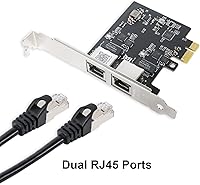
  • Network Ports: Two independent RJ45 ports are provided, each capable of operating at up to 2.5Gbps simultaneously.
  • Port Speeds: Each port supports three link speeds: 2500 Mbps, 1000 Mbps, and 100 Mbps, negotiating automatically based on the connected device.
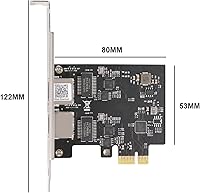
  • PCIe Interface: The card uses a PCIe x1 edge connector and is physically and electrically compatible with x1, x2, x4, x8, and x16 slots across PCIe versions 1.0 through 4.0.
  • Form Factor: The card ships with both a standard-height bracket and a low-profile bracket, supporting installation in full-size towers and slim or mini-ITX cases.
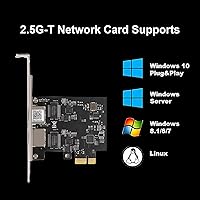
  • OS Support: Supported operating systems include Windows 7 through 11, Windows Server 2003 through 2016, Linux, DOS, and Mac OS.
  • Network Protocols: The card supports VLAN tagging (802.1Q), Wake-on-LAN, PXE network boot, DPDK for packet processing, and Jumbo Frames up to standard MTU limits.
  • Compliance Standards: The adapter meets IEEE 802.3bz, 802.3ab, 802.3u, 802.3i, 802.3x, 802.3ad, 802.3az, 802.1Q, and IEEE 1588 specifications.
  • Dimensions: The retail package measures 6.81 x 5.83 x 1.26 inches, with the card itself weighing 4.2 oz (approximately 0.12 kg).
  • Model Number: The official model identifier is BJ-RTL8125B-T2, used for driver lookups and warranty verification with the manufacturer.
  • Warranty: QINIYEK provides a one-year limited warranty covering manufacturing defects, with a 30-day free return window from the date of purchase.
  • After-Sales Support: The manufacturer offers 24/7 customer support via email and claims lifetime technical assistance for driver and configuration inquiries.
  • Link Aggregation: The card supports IEEE 802.3ad link aggregation (LACP), allowing both ports to be bonded for increased throughput or redundancy when paired with a compatible managed switch.
  • Energy Efficiency: IEEE 802.3az Energy Efficient Ethernet is supported, reducing power draw during periods of low network activity.
  • Time Synchronization: IEEE 1588 Precision Time Protocol (PTP) support is included, relevant for applications requiring synchronized clocks across networked devices.
  • ASIN: The Amazon Standard Identification Number for this product is B0CJ2KR1LG, useful for locating the correct listing when searching for driver documentation or warranty claims.

Related Reviews
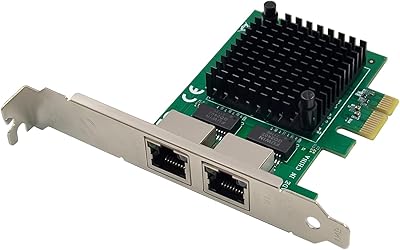
ULANSeN Dual I226-V 2.5GbE PCIe Network Card
82%
88%
Chipset Reliability
91%
Installation Ease
86%
OS & Platform Compatibility
71%
Thermal Performance
89%
Value for Money
More
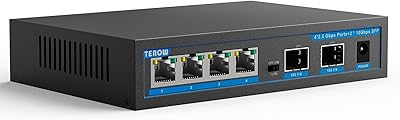
TEROW 4-Port 2.5G 2-Port SFP+ Network Switch
81%
93%
Value for Money
96%
Ease of Setup
88%
Port Performance & Link Stability
71%
SFP+ Port Compatibility
84%
Build Quality & Materials
More
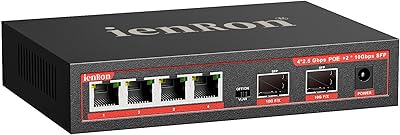
ienRon 6-Port 2.5Gb PoE Switch with 2-Port 10Gb SFP+
85%
86%
Performance
91%
Ease of Setup
88%
PoE Power Delivery
84%
Build Quality
93%
Fanless Operation
More
YuanLey 16-Port 2.5G Ethernet Switch
84%
91%
Ease of Setup
94%
Fanless Design & Noise Levels
88%
Speed & Performance
85%
Build Quality
92%
Value for Money
More
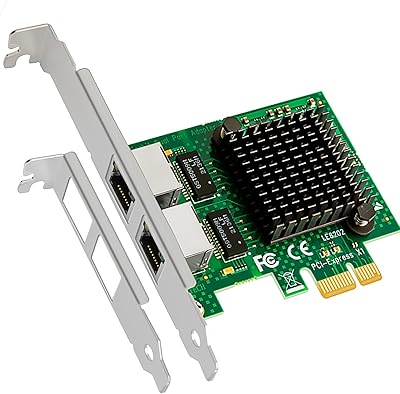
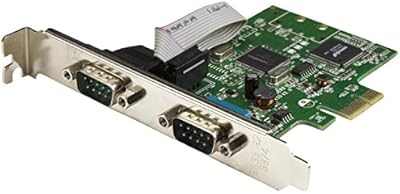
GLOTRENDS LE8202 2-Port Gigabit PCIe Network Card
82%
88%
Driver Compatibility
91%
Ease of Installation
94%
Value for Money
86%
OS & Platform Coverage
79%
Build Quality
More
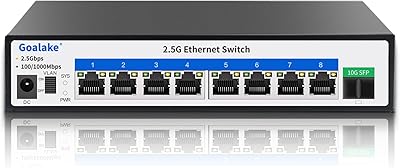
BrosTrend 8-Port 2.5G Unmanaged Switch
83%
93%
Port Speed Consistency
96%
Ease of Setup
61%
Build Quality
74%
Thermal Performance
91%
Value for Money
More
VIMIN 18-Port 2.5G Unmanaged Switch
87%
86%
Performance
92%
Ease of Setup
88%
Build Quality
94%
Fanless Design
85%
Compatibility with Devices
More
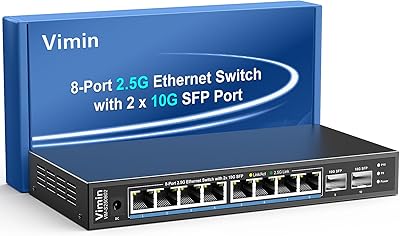
Goalake 8-Port 2.5G Ethernet Switch
80%
91%
Port Count & Configuration
88%
Throughput & Switching Performance
93%
Ease of Setup
79%
Build Quality & Materials
96%
Fanless & Noise Level
More
Sodola 6-Port 2.5G Managed Switch
88%
88%
Performance
93%
Ease of Setup
85%
Build Quality
89%
Energy Efficiency
84%
Compatibility
More
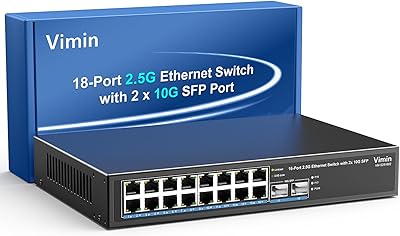
VIMIN 10-Port 2.5G Unmanaged Switch
79%
96%
Ease of Setup
89%
Port Performance
84%
Build Quality
67%
Thermal Management
71%
SFP Uplink Usability
More

FAQ

Yes, a PCIe x1 slot is exactly what this card is designed for. It will also fit in any larger slot — x4, x8, or x16 — without any issue, since PCIe is backward and forward compatible in terms of physical insertion.

In most cases, no. Windows 10 and 11 typically detect the RTL8125B chipset automatically through Windows Update and load the appropriate driver without any user action. If for some reason automatic detection does not trigger, Realtek publishes drivers on their official site that install in a few clicks.

On recent Ubuntu LTS releases like 22.04 or 24.04, the RTL8125B driver is included in the kernel and the card should come up automatically. If you are on an older kernel version — say, something below 5.9 — you may need to install the driver manually from Realtek's GitHub repository. It is not complicated if you are comfortable with the terminal, but it is an extra step worth knowing about upfront.

They run independently. Each port has its own controller path to the RTL8125B chip, so both can handle 2.5Gbps traffic simultaneously without sharing a pool. The PCIe x1 interface has enough bandwidth to support both ports under realistic workloads.

Absolutely. The card negotiates speed automatically, so if your switch only supports 1Gbps, the port will connect at 1Gbps just like any other gigabit NIC. You do not need a 2.5G switch to use the card — you just will not see 2.5Gbps speeds until your switch also supports it.

The included low-profile bracket fits most SFF and slim desktop cases that follow standard low-profile PCIe specs. A handful of users have noted it occasionally needs slight adjustment to align cleanly with the rear I/O cutout, but it is generally a straightforward swap from the pre-installed standard bracket.

WOL works as expected on this card, provided your motherboard BIOS also has Wake-on-LAN enabled and your power supply supports standby power. It is a chipset-level feature of the RTL8125B and has been confirmed working by home server users who rely on it to remotely power on machines.

Yes, the card supports IEEE 802.3ad LACP, which means you can configure both ports as a bond on Linux using standard bonding or team drivers. You will need a managed switch that also supports LACP on the connected ports to make it work. On Windows, NIC teaming via Server editions or third-party tools is also an option.

It runs warm during sustained transfers but nothing concerning. There is no heatsink on the chip, which is typical for this class of card. In a normally ventilated case with even minimal airflow, thermal behavior is a non-issue. Users running it in fanless or very tight enclosures should ensure at least passive airflow near the PCIe area.

Honestly, if the second port serves no purpose in your setup, you would be better off with a single-port RTL8125B card, which typically costs noticeably less. The dual-port design adds real value when you have two devices or two network segments to connect, but paying for that second port when it will sit unused is hard to justify on a pure value basis.