Overview

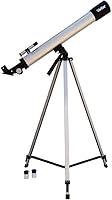
The Vivitar TEL50600 60x/120x Refractor Telescope is one of those rare budget picks that actually makes sense as a first step into amateur astronomy. Built around a 46mm objective lens with manual focus, it follows a classic refractor design — straightforward, reliable, and easy for newcomers to understand. The dual-magnification setup gives beginners real flexibility without overwhelming them with complexity. And unlike many entry-level scopes that ship without a proper stand, this one includes a full-size adjustable tripod. That is a meaningful inclusion at this price. Just go in with clear eyes: this is a starter scope, not a tool for serious deep-sky observation.
Features & Benefits

The two eyepiece lenses — each stored in its own protective case — let you choose between 60x for wide, stable views and 120x when you want to push in closer on the moon's surface. A 3x finder scope sits on top of the tube to help you actually locate objects before swapping to higher power, which beginners will appreciate more than they expect. The mirrored diagonal eyepiece angles your view comfortably, cutting down neck strain during longer sessions. The altazimuth mount keeps movement intuitive — up, down, left, right — no polar alignment required. A bundled 5-piece cleaning kit rounds things out, a small but genuinely useful addition that helps keep the lenses in good shape.

Best For

This beginner refractor is a natural fit for kids aged 8 and up getting their first real look at the night sky — setup is quick, controls are simple, and spotting craters on the moon tends to hook them immediately. Parents shopping for a gift that feels substantial without a serious investment will find this hits that sweet spot well. Casual adults curious about Jupiter or the lunar surface from their backyard on a clear night will also get their money's worth. Scout leaders and classroom educators will appreciate how lightweight and easy to transport the whole kit is, tripod included, making group sessions genuinely practical.

User Feedback

With nearly 800 ratings averaging 3.8 stars, the Vivitar scope lands in honest, mixed territory — which is about right for what it is. Ease of setup and overall value come up repeatedly in positive reviews, and many buyers note that kids genuinely love the moon-viewing experience. The tripod also draws praise for being sturdier than expected at this price. On the critical side, reviewers consistently note that 120x image quality leaves something to be desired — at that magnification, a 46mm lens simply struggles to deliver sharp views. Build quality is another recurring concern, with several users flagging plastic parts that feel fragile or connectors that do not seat perfectly. For its intended audience, though, the core experience holds up.

Pros

  • Includes a full-size adjustable tripod right out of the box, which many comparable scopes skip.
  • Quick, tool-free setup makes it genuinely accessible for kids and first-time users.
  • The 60x eyepiece delivers clear, steady views of the moon that impress beginners every time.
  • A 3x finder scope is a thoughtful inclusion that helps locate objects before switching magnification.
  • The mirrored diagonal eyepiece makes extended viewing sessions comfortable and strain-free.
  • At this price tier, the bundled 5-piece lens cleaning kit adds real, practical value.
  • Lightweight at under 3 pounds, making it easy to carry outside and reposition quickly.
  • Dual magnification options give young users something to grow into as their skills develop.
  • The altazimuth mount keeps navigation simple and intuitive, with no complex alignment required.
  • Works well as a gift — it looks substantial and feels like a proper telescope, not a toy.

Cons

  • Image quality at 120x is noticeably soft and blurry, especially for anything other than the moon.
  • Plastic components feel fragile, and some users report parts that do not fit together securely.
  • The 46mm aperture is too small to deliver satisfying views of planets or any deep-sky objects.
  • Focus adjustment can be finicky, requiring patience that younger children may not have.
  • At higher magnification, vibrations from the tripod can make holding a steady view difficult.
  • The scope has limited long-term value — enthusiastic beginners will outgrow it relatively quickly.
  • Some users report inconsistent quality control, with occasional units arriving with misaligned optics.
  • The finder scope, while helpful in concept, can be tricky to calibrate precisely for new users.

Ratings

Our AI-generated scores for the Vivitar TEL50600 60x/120x Refractor Telescope are produced by analyzing thousands of verified global user reviews, with spam, incentivized, and bot-flagged submissions actively filtered out before any scoring is applied. The results reflect a genuinely balanced picture — where this beginner refractor earns its praise and where real buyers consistently run into frustration. Both sides are represented transparently so you can make a confident, informed decision.

Value for Money
82%
18%
For the asking price, the sheer volume of what is included — two eyepieces, a full-size tripod, a finder scope, a diagonal, and a cleaning kit — strikes most buyers as a strong deal. Parents and gift-givers in particular tend to feel they got more than they expected for the investment.
A small but vocal group of users feels the savings come at a cost that shows up over time, particularly in optical performance and part durability. If a buyer pays a modest amount more, they can access scopes with meaningfully better build and optics, which makes the value equation feel less clear-cut for adult hobbyists.
Optical Clarity
61%
39%
At 60x magnification, lunar views are genuinely impressive for a scope at this level — crater detail is visible and consistently earns positive reactions from first-time users. On clear, still nights the moon can look stunning, and that single experience often justifies the purchase for families.
Push to 120x and the image degrades noticeably — soft edges, reduced contrast, and atmospheric shimmer all compound the limitations of a 46mm aperture. Planetary detail is disappointing even under good conditions, and users hoping to see Saturn's rings sharply or resolve Jupiter's cloud bands will find the optics simply cannot deliver.
Ease of Setup
88%
Setup is consistently one of the most praised aspects across reviews — most users report being ready to observe within 10 to 15 minutes of opening the box, without needing instructions. The tripod locks easily, the tube attaches without tools, and kids can participate in the assembly process themselves.
A handful of users note that aligning the finder scope takes some trial and error the first time, which can frustrate younger children who want to start looking immediately. A small number of units also arrived with components that did not seat or thread as smoothly as expected.
Build Quality
54%
46%
The telescope looks and feels more substantial than a toy-store equivalent, which matters when giving it as a gift — unboxing it feels satisfying. The tripod in particular draws consistent praise for being sturdier than buyers anticipated at this price point.
The optical tube, focuser housing, and several joints are plastic-heavy, and durability concerns show up regularly in longer-term reviews. Parts have been reported to crack or loosen with repeated use, and some users flag connection points between components that never felt fully secure right out of the box.
Magnification Performance
58%
42%
Having two distinct magnification options gives beginners a meaningful learning experience — starting at 60x and stepping up to 120x teaches the basic relationship between power and field of view. For the moon especially, switching between the two eyepieces during a session adds genuine engagement.
The 120x eyepiece is the product's most controversial feature. Physics is working against it: a 46mm objective simply cannot gather enough light to make 120x truly useful in most conditions. Reviews are split, with roughly half finding it too blurry to bother with and the other half treating it as an occasional novelty.
Tripod Stability
74%
26%
The full-size expandable tripod is a genuine differentiator in this price category, where many competitors ship toy-grade stands. It adjusts to a practical height for both seated and standing observers, and holds the tube steadily enough for comfortable 60x viewing.
At 120x magnification, vibration sensitivity becomes a real issue — touching the telescope briefly or having a breeze pass through can shake the image for several seconds. The pan-and-tilt head also has a small amount of play that more experienced observers will find irritating when trying to track a moving object.
Finder Scope Usability
67%
33%
The inclusion of a 3x finder scope is a thoughtful design choice that beginners appreciate once they understand how to use it — it dramatically reduces the time spent hunting for objects before switching to the main eyepiece. Experienced users will recognize it as a legitimate aid rather than a cosmetic addition.
Getting the finder scope aligned with the main tube requires patience and is not well-explained in the included instructions. Young or impatient users frequently skip using it altogether, which defeats its purpose. Calibration can also drift slightly with repeated handling.
Comfort & Ergonomics
76%
24%
The mirrored diagonal eyepiece is a standout comfort feature — it lets observers look downward at roughly a 45-degree angle rather than craning their neck skyward, which makes extended sessions noticeably more comfortable. Kids especially benefit from this since they tend to use the scope for longer stretches when they are excited.
The focuser knob requires a fairly precise touch, and younger children sometimes struggle to dial in a sharp image without accidentally overshooting. There is no fine-focus mechanism, which makes hitting the exact focal point at 120x more difficult than it needs to be.
Portability
84%
At just under 3 pounds for the full kit, this beginner refractor is easy to carry outside for a backyard session or load into a car for a trip somewhere darker. Educators and scout leaders mention this frequently — being able to pack it up and move it without a dedicated case or vehicle space is a real practical benefit.
There is no included carrying case for the full assembled kit, so transporting it requires some improvisation with bags or boxes. The tripod legs, while adjustable, are not the quickest to collapse and re-extend, adding a small amount of friction to the setup and teardown process.
Image Brightness
59%
41%
Under genuinely dark skies away from city light pollution, the scope gathers enough light at 60x to make the moon look bright and detailed. For casual suburban backyard use on clear nights, lunar brightness is rarely a complaint.
The 46mm aperture is a hard ceiling on light-gathering ability, and it shows in anything other than bright targets. The moon and Venus work well, but dimmer objects like star clusters appear faint and lack the punch that even a modestly larger aperture would provide. At 120x the image darkens considerably.
Accessories Included
79%
21%
The bundle feels well-rounded for the price — both eyepieces come with storage cases, the diagonal is already attached, and the Zeikos cleaning kit means buyers do not need to source basic lens care separately. It is one of the more complete out-of-the-box packages at this tier.
The quality of some accessories is noticeably budget-grade — the eyepiece cases, for instance, offer minimal protection and feel flimsy. A few buyers also note that the cleaning kit, while appreciated, contains lower-quality cloths that they would not trust on more expensive optics.
Durability Over Time
51%
49%
For light, occasional use — a few times per month for a season or two — most units hold up without major issues. Parents who use it primarily for supervised viewing sessions with children tend to report fewer problems than those who hand it over for unsupervised daily use.
Long-term durability is where this scope draws its most critical reviews. Plastic joints loosen, focus mechanisms develop wobble, and some users report the optical tube losing alignment after drops or even normal handling. It is best thought of as a one-to-two season instrument rather than a long-term investment.
Age Appropriateness
86%
For children aged 8 to 12 specifically, the scope hits a sweet spot — it is not so complex that it overwhelms, but it feels grown-up enough to be genuinely exciting. The moon-viewing experience in particular tends to create real enthusiasm for astronomy in that age group.
Children under 8 may struggle with the manual focus and finder scope alignment without consistent adult assistance. On the older end, teenagers with any real astronomy interest tend to outgrow the optical capabilities within a single season, making the long-term appeal narrow for that group.

Suitable for:

The Vivitar TEL50600 60x/120x Refractor Telescope is genuinely well-matched for families with curious kids aged 8 and up who want to explore the night sky without committing to a serious hobby investment. If your child has been asking about stars, planets, or the moon, this starter telescope gives them a real, hands-on experience that a toy version simply cannot. Parents shopping for a birthday or holiday gift will find it checks the boxes: it looks and feels like a real instrument, sets up without frustration, and delivers the kind of wow moment — spotting craters on the moon for the first time — that makes the gift memorable. Casual adult hobbyists who just want to spend a clear evening scanning the sky from the backyard will also find it satisfying for that purpose. Teachers, scout leaders, or anyone running outdoor educational sessions will appreciate how lightweight and portable the full kit is, making it practical to carry and set up in different locations without any fuss.
Not suitable for:

Anyone approaching this as a serious astronomy tool should look elsewhere — the Vivitar TEL50600 60x/120x Refractor Telescope was simply not built for that audience. A 46mm objective lens has real optical limits, and users expecting crisp, detailed views of planets or deep-sky objects at 120x magnification are likely to walk away disappointed. Teenagers or adults who have already used a decent scope and want to step up their observing game will quickly find this beginner refractor too limiting in both build quality and optical performance. The plastic construction, while acceptable for young beginners, will frustrate buyers who expect durability for regular, long-term use. If you are shopping for someone who takes astronomy even moderately seriously, it is worth stretching the budget further for a scope with a larger aperture and more robust mechanics.

Specifications

  • Brand: Manufactured by Vivitar, a consumer optics and electronics brand with a long history in entry-level imaging products.
  • Model Number: This telescope is identified by model number TEL50600, also referenced as VIV-TEL-50600 in official documentation.
  • Magnification: Ships with two eyepiece lenses providing 60x and 120x magnification levels for flexible viewing options.
  • Objective Lens: The primary objective lens has a diameter of 46mm, which determines the scope's light-gathering capacity.
  • Tube Length: The optical tube measures 120mm in length, contributing to a compact and manageable overall form factor.
  • Eyepiece Type: Both included eyepieces are Barlow-style lenses, each stored in its own protective case to prevent damage.
  • Diagonal: A mirrored diagonal eyepiece is included to redirect the viewing angle for more comfortable, strain-free observation.
  • Finderscope: A 3x reflex finder scope is mounted on the tube to help users locate and center objects before switching to higher power.
  • Mount Type: The telescope uses an altazimuth mount, allowing straightforward vertical and horizontal movement without complex alignment procedures.
  • Focus Type: Focusing is fully manual, adjusted by turning the focus knob along the eyepiece drawtube until the image sharpens.
  • Tripod: Includes a full-size expandable tripod that provides a stable base and adjusts in height to accommodate different users.
  • Dimensions: The assembled product measures approximately 28.75″ in depth by 3.5″ in width by 8.5″ in height.
  • Item Weight: The complete kit weighs 2.85 pounds, making it lightweight enough for children and easy to carry outdoors.
  • Recommended Age: Vivitar recommends this telescope for users aged 8 and up, positioning it as a supervised beginner instrument.
  • Cleaning Kit: A Zeikos ZE-CL5 5-piece lens cleaning kit is bundled with the telescope to help maintain optical clarity over time.
  • Availability: This product was first made available in June 2009 and remains an active, non-discontinued item in Vivitar's lineup.

Related Reviews
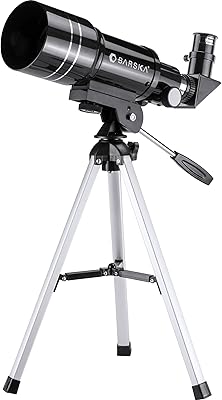
Barska Starwatcher Refractor Telescope 60mm
80%
91%
Value for Money
88%
Ease of Setup
93%
Portability
85%
Performance (Planetary Viewing)
62%
Performance (Deep-Sky Viewing)
More
Barska Starwatcher 70mm Refractor Telescope
66%
72%
Optical Clarity
58%
Magnification Performance
54%
Build Quality
84%
Ease of Setup
88%
Portability & Storage
More
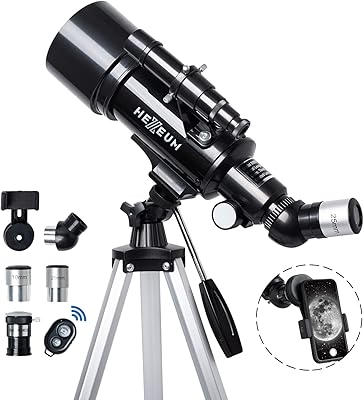
HEXEUM AZ50070 70mm Refractor Telescope
73%
78%
Optical Clarity
88%
Value for Money
57%
Tripod Stability
66%
Ease of Assembly
63%
Finderscope Usability
More
HUGERSTAR 80600 Refractor Telescope
70%
78%
Optical Clarity
88%
Ease of Setup
61%
Tripod Stability
83%
Value for Money
84%
Portability
More
CELTICBIRD 90700 90mm Refractor Telescope
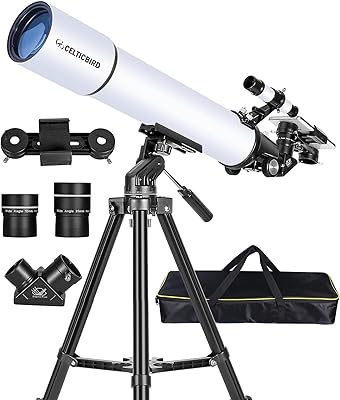
70%
83%
Optical Clarity
76%
Mount Precision
88%
Tripod Stability
81%
Ease of Assembly
62%
Finderscope Usability
More
PISEZ 90800 90mm Refractor Telescope
68%
83%
Optical Clarity
81%
Value for Money
72%
Ease of Setup
68%
Magnification Range
61%
Tripod Stability
More
Celticbird 80mm 800mm Refractor Telescope
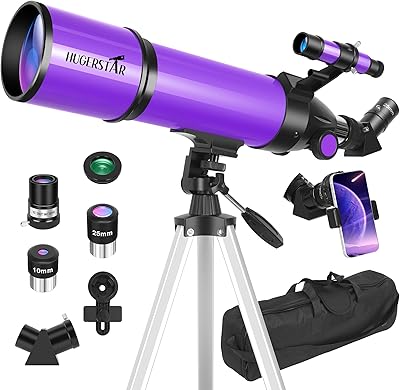
75%
83%
Optical Clarity
91%
Ease of Assembly
78%
Mount Usability
61%
Tripod Stability
58%
Included Eyepiece Quality
More
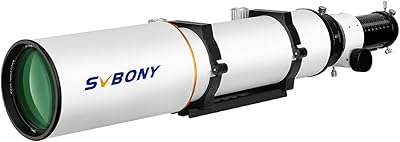
SVBONY SV503 80mm ED Refractor Telescope
81%
91%
Optical Clarity
88%
Focuser Quality
86%
Chromatic Aberration Control
89%
Build Quality & Materials
83%
Value for Money
More
SVBONY SV503 102mm ED Refractor Telescope
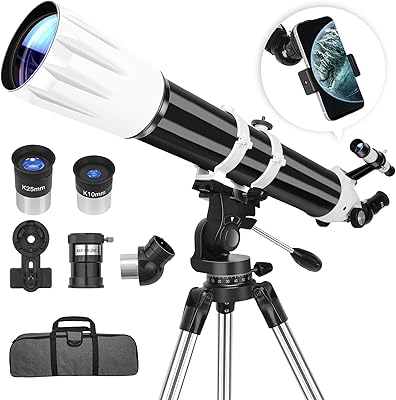
82%
88%
Optical Performance
93%
Focuser Quality
84%
Chromatic Aberration Control
91%
Build Quality
86%
Astrophotography Suitability
More
Hawkko 90900 Refractor Telescope
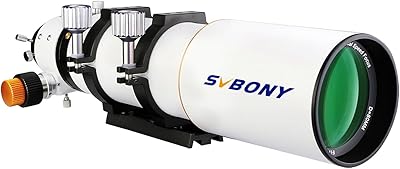
75%
83%
Optical Clarity
76%
Build Quality
69%
Mount Smoothness
88%
Ease of Setup
71%
Magnification Range
More

FAQ

Yes, it is genuinely well-suited for that age group. The controls are simple, setup does not require any tools or special knowledge, and the altazimuth mount moves in intuitive directions. Spotting the moon is usually a quick win that keeps kids engaged right away.

Possibly, but manage your expectations carefully. With a 46mm objective lens, you may catch a hint of Saturn's rings under ideal dark-sky conditions at 60x, but the views will be small and not particularly detailed. Jupiter's moons are more achievable. This beginner refractor is much better suited for lunar observation than planetary detail work.

Most users report having it ready to use in under 15 minutes, even without reading the instructions closely. The tripod expands and locks simply, and the optical tube attaches to the mount without complicated steps. It is one of the more painless setups in this category.

It depends on the conditions. On a calm, clear night with a steady atmosphere, 120x can give you a more detailed look at the lunar surface. But with a 46mm lens, the image at that magnification is often dim and can appear soft or shaky, especially if there is any wind or vibration. Most users find the 60x eyepiece more reliably satisfying for everyday use.

For this price range, the tripod is surprisingly solid. It is full-size and adjustable, and most reviewers note it is sturdier than they expected. That said, at 120x magnification even minor vibrations become noticeable, so touching the tube or a gust of wind can temporarily disrupt the view.

The moon is the star of the show with this starter telescope — crater detail at 60x is genuinely impressive and will wow most first-time viewers. Bright planets like Jupiter and Venus are visible as discs rather than just points of light, though fine detail is limited. Deep-sky objects like nebulae or galaxies are largely beyond what this scope can deliver meaningfully.

For the right recipient, absolutely. Kids with a curiosity about space will love it, and the kit feels complete and substantial when unboxed. If you are buying for a teenager or adult who already has some astronomy experience, it may feel underwhelming — in that case, a larger aperture scope would be a better investment.

Standard 0.965-inch eyepieces are compatible with this scope, and they are widely available from third-party sellers. You do not need to buy Vivitar-branded replacements specifically, which gives you some flexibility if you want to upgrade the included lenses down the road.

The bundled 5-piece Zeikos cleaning kit covers the basics — it typically includes a brush, cleaning fluid, and cloths appropriate for optical glass. For routine dust removal, a soft brush or air blower is best before using any liquid. Avoid wiping the lens dry without loosening debris first, as that can scratch the coating.

Technically yes, but with a caveat. The mirrored diagonal eyepiece flips the image, which makes terrestrial viewing feel disorienting since objects appear inverted or mirror-reversed. It works better as a dedicated nighttime astronomy scope; for daytime use, a spotting scope or binoculars would give you a much more natural and comfortable experience.

Where to Buy