Overview

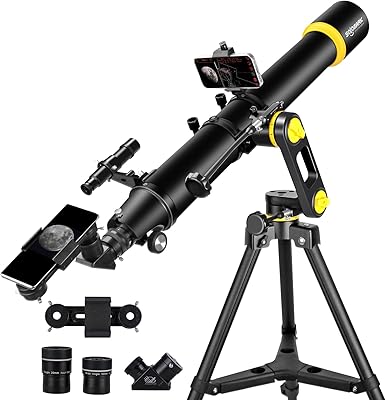
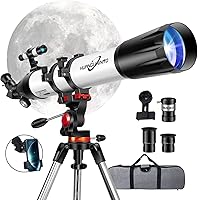
The PISEZ 90800 90mm Refractor Telescope sits in an interesting spot — capable enough to outperform toy-grade optics, yet approachable enough for a curious 10-year-old or a first-time adult stargazer. Its defining characteristics are the 90mm aperture and 800mm focal length, a combination that gives it a real optical advantage over the smaller 60–70mm scopes that flood this category. Out of the box, you get two eyepieces, a 3x Barlow lens, a finder scope, an adjustable tripod, a carry bag, and a phone adapter. The altazimuth mount keeps things simple — point and look — though it means you'll be manually nudging the scope as planets drift across the field. For lunar and planetary views, it delivers; for faint deep-sky objects, temper your expectations.

Features & Benefits

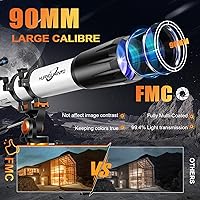
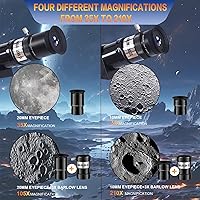
Where this refractor telescope earns its keep is in the light-gathering department. A 90mm opening pulls in meaningfully more light than the smaller apertures common in this price range, which translates to crisper detail on the Moon's craters and better contrast when hunting Saturn's rings. The two eyepieces pair with the included 3x Barlow lens to give you a working range from 35x up to 210x — though real-world conditions rarely make the upper end practical; atmospheric shimmer tends to degrade images well before you hit that ceiling. The fully coated optics cut down on glare, a noticeable help under suburban skies. A 5x24 finder scope with crosshair lines makes initial target acquisition far less frustrating, and the included zenith mirror makes daytime spotting feel natural.

Best For

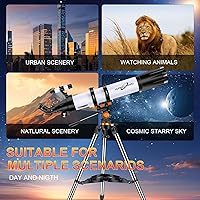
This beginner telescope is a comfortable match for kids aged 8 and up, and for adults who are curious about astronomy but not ready to invest in serious equipment. It shines brightest when pointed at the Moon or bright planets — Saturn's rings are visible, Jupiter's bands come through, and lunar crater detail can be genuinely impressive on a steady night. Families will appreciate that it works just as well as a daytime spotting scope, extending its usefulness beyond clear nights. The included carry bag and manageable setup time make it reasonable for travel or backyard sessions away from home. If your goal is faint galaxies or deep nebulae, this scope isn't the right tool — but for everything else at a beginner level, it covers the essentials confidently.

User Feedback

Sitting at 4.2 stars across 87 ratings, the PISEZ 90mm scope has earned a generally positive reputation among buyers, though the picture is a bit mixed once you dig into the details. Lunar views come up repeatedly as a highlight — sharp, detailed, and enough to genuinely wow a first-time observer. Assembly draws occasional complaints, mostly from buyers who skipped the instruction manual, and some users report that the tripod wobbles under heavier handling. The phone adapter works, but results vary considerably by smartphone size and how much patience the user brings to alignment. Worth noting: 87 reviews is a modest base, so the current score could shift with time. Read a cross-section of individual experiences before deciding.

Pros

  • The 90mm aperture is a genuine step up from the smaller beginner scopes that dominate this price range.
  • Lunar detail is consistently impressive — craters and ridgelines come through with satisfying clarity on steady nights.
  • The included carry bag is well-designed and makes the whole kit genuinely portable, not just technically portable.
  • Two eyepieces plus a 3x Barlow give beginners a versatile set of magnification options right out of the box.
  • Fully coated optics make a noticeable difference under suburban or light-polluted skies by cutting down on glare.
  • The altazimuth mount is intuitive enough that a child can learn to operate it independently within a single session.
  • The zenith mirror makes comfortable viewing at high angles far more manageable, especially for younger users.
  • The 5x24 finder scope with crosshair reticle significantly reduces the frustration of locating objects for the first time.
  • Works equally well as a daytime spotting scope, adding practical value beyond nighttime astronomy.
  • The phone adapter is a fun, low-pressure introduction to astrophotography for curious beginners.

Cons

  • The tripod can wobble noticeably at higher magnifications, which makes fine adjustments more frustrating than they should be.
  • 210x maximum magnification is largely theoretical — real-world atmospheric conditions make it rarely usable.
  • Assembly instructions could be clearer; several buyers reported confusion during initial setup without the video guide.
  • The altazimuth mount requires constant manual nudging as celestial objects drift, which interrupts longer viewing sessions.
  • The phone adapter delivers inconsistent results and requires considerable patience to align properly with different handsets.
  • At 11.53 pounds fully assembled, younger kids may struggle to reposition the scope without adult help.
  • Deep-sky performance is limited; faint objects like distant nebulae or galaxies will likely disappoint.
  • With only 87 ratings at time of writing, the overall score is based on a relatively small sample and could shift.
  • The finder scope bracket can feel flimsy and may need careful handling to maintain alignment over time.
  • No motorized tracking means this scope is less practical for extended planetary observation sessions as objects move quickly.

Ratings

Our team trained an AI model on verified global buyer reviews for the PISEZ 90800 90mm Refractor Telescope, actively filtering out incentivized, duplicate, and bot-generated feedback to surface what real users actually experienced. The scores below reflect an honest synthesis of both recurring praise and legitimate frustrations — nothing has been softened to protect the product's image. If a category underperforms, that will show clearly in the number.

Optical Clarity
83%
For a beginner-class scope, the image quality on the Moon and bright planets genuinely impresses. Users consistently describe sharp crater detail and readable ring separation on Saturn during steady nights, which is the core promise of any entry-level refractor.
At higher magnification settings, images soften noticeably — a combination of atmospheric limits and the optical ceiling of the lens system. Some users expecting crisp planetary views at maximum power were left underwhelmed, particularly on nights with poor seeing conditions.
Value for Money
81%
19%
Buyers frequently cite the 90mm aperture as a differentiator that makes this refractor feel like more than its price tag suggests. The full accessory bundle — two eyepieces, Barlow lens, finder scope, tripod, carry bag, and phone adapter — removes the need for immediate add-on purchases.
A handful of reviewers noted that some bundled accessories, particularly the finder scope bracket and phone adapter, feel like afterthoughts in terms of build quality. If those components disappoint, the perceived value takes a proportional hit.
Ease of Setup
72%
28%
Once users work through the first assembly, most report the process becomes intuitive and manageable in under 15 minutes. The video instructions provided by PISEZ were specifically called out as more helpful than the printed manual for visual learners.
The initial setup confused a meaningful share of first-time buyers, particularly around attaching the finder scope and aligning the mount. Instructions lack the clarity needed for true beginners, and a few users needed to watch third-party tutorials before things clicked.
Magnification Range
68%
32%
The practical middle range — roughly 60x to 120x — works well for the Moon and planetary targets, and the dual-eyepiece plus Barlow setup gives beginners meaningful flexibility to experiment with different power levels from the start.
The 210x ceiling is largely theoretical. In real-world observing, images at that magnification are too soft and jittery to be useful on most nights. Buyers who selected this scope specifically for high-power planetary views often walk away feeling misled by the spec sheet.
Tripod Stability
61%
39%
The adjustable tripod covers a reasonable height range and is stable enough for low-to-mid magnification work in calm conditions. For casual backyard viewing sessions, most users found it serviceable without constant readjustment.
Wobble is a recurring complaint, especially once magnification climbs above 100x — even minor vibrations from touching the scope take several seconds to settle. Observers who plan extended planetary sessions will find the instability genuinely disruptive to the experience.
Portability
79%
21%
The included carry bag is one of the most appreciated accessories in the bundle, with users noting that the entire kit fits neatly inside for car trips, camping, or moving between backyard and a nearby dark-sky spot. Setup at a new location is fast once you know the scope.
At just under 12 pounds for the full kit, it is manageable but not effortlessly light — younger kids will need adult help carrying and positioning it. It is not a practical airplane carry-on and fits better in the trunk than in overhead storage.
Build Quality
66%
34%
The optical tube itself feels reasonably solid for a scope in this tier, and the focuser operates smoothly without the slop sometimes found on cheaper alternatives. Most users report no structural issues after months of regular use.
The plastic components — particularly the finder scope bracket, eyepiece caps, and phone adapter — feel noticeably cheaper than the optical tube suggests. A few buyers reported the finder scope losing alignment after repeated handling, requiring periodic re-centering.
Focuser Performance
74%
26%
The manual focus mechanism is smooth enough that children can operate it without accidentally overshooting their target, and the travel range is adequate for the included eyepieces. Most users found precise focus achievable within a few seconds of adjustment.
At maximum magnification with the Barlow attached, the focuser becomes harder to operate with fine precision — small adjustments create bigger image shifts. Users with shaky hands or younger children may find it frustrating to hold sharp focus during extended viewing.
Finder Scope Usability
71%
29%
The 5x24 finder scope with crosshair reticle makes a real difference for beginners who struggle to point the main tube at a specific target. Users appreciated having a dedicated aiming tool rather than guessing with a red dot or naked-eye alignment.
The bracket holding the finder scope is one of the weaker physical components and can drift out of alignment if handled roughly. A few users found that after a car trip or bump, the finder scope needed to be re-aligned before use — a minor but recurring annoyance.
Phone Adapter
54%
46%
For casual Moon photography, the adapter does produce shareable results when patience is applied, and it turns a purely visual experience into something the whole family can enjoy together by capturing and sharing what they see.
Results are highly inconsistent across different phone models, and alignment is genuinely fiddly — most users reported needing multiple attempts before capturing anything usable. It is a fun extra but falls short of delivering reliable astrophotography results.
Altazimuth Mount
69%
31%
The altazimuth design makes pointing the scope feel natural and intuitive, even for children and complete beginners. There is no polar alignment ritual, no counterweight balancing — just unlock, point, and look, which keeps the focus on observing rather than setup mechanics.
Without any motorized tracking, planets drift out of the field of view quickly at higher magnifications and require constant manual nudging. For observers who want to study a planet carefully for more than a minute at a time, this becomes a repetitive and mildly frustrating part of the experience.
Deep-Sky Performance
43%
57%
Under dark suburban skies, the Orion Nebula and Pleiades cluster are visible and enjoyable at low magnification — enough to give beginners a taste of objects beyond the solar system without requiring a specialized instrument.
Faint galaxies, dim nebulae, and most deep-sky objects beyond the brightest showpieces are effectively out of reach. The 90mm aperture simply cannot gather enough light for serious deep-sky work, and this scope was never designed for that purpose.
Daytime Use
77%
23%
The included zenith mirror corrects image orientation so that birds, landscapes, and distant objects appear right-side up during daytime spotting sessions. Several users specifically praised this dual functionality, noting they use the scope regularly even on cloudy nights.
The altazimuth mount, while fine for casual daytime use, is not as ergonomic as a dedicated spotting scope tripod head for quickly tracking moving subjects like birds in flight. Panning smoothly requires some practice before it feels natural.
Instruction Quality
58%
42%
The supplementary video instructions are a genuine asset and helped numerous buyers get through the assembly process when the printed manual left them confused. PISEZ deserves credit for providing a multimedia support option alongside the physical documentation.
The printed manual alone is not sufficient for most first-time telescope owners, with several reviewers describing confusing diagrams and incomplete steps. Buyers who are not comfortable searching for video tutorials online may struggle more than necessary on their first night.

Suitable for:

The PISEZ 90800 90mm Refractor Telescope is a genuinely good match for families who want to introduce kids aged 8 and up to astronomy without handing them something fragile or frustratingly limited. If your primary targets are the Moon, Saturn's rings, or Jupiter's cloud bands, this refractor telescope has the aperture to deliver views that will actually impress a first-timer. Parents who want a gift that pulls kids away from screens and toward something educational will find it checks that box reliably. It also works well as a daytime spotting scope, so it gets use even when the sky isn't cooperating at night. The included carry bag and straightforward altazimuth mount make it practical for travel, camping trips, or a quick setup in the backyard without a lot of fuss. Adults who are astronomy-curious but cautious about spending serious money before they know if the hobby will stick will also find this beginner telescope a sensible starting point.

Not suitable for:

The PISEZ 90800 90mm Refractor Telescope is not the right tool for anyone whose ambitions lean toward faint deep-sky objects like distant galaxies, dim nebulae, or globular clusters — the aperture simply isn't large enough, and the altazimuth mount offers no motorized tracking to compensate. Serious hobbyists who have already outgrown a starter scope will find this refractor telescope underpowered and the tripod too wobbly for extended high-magnification sessions. The advertised 210x upper magnification sounds impressive on paper, but in practice atmospheric turbulence and the limits of the optical system mean images at that power are usually too soft to be useful — buyers expecting crisp planetary detail at maximum zoom will be disappointed. Anyone hoping to do meaningful astrophotography should also look elsewhere; the phone adapter is a casual novelty, not a tool capable of producing publishable or even consistently sharp images. If you already own a decent 70mm or 80mm scope, the upgrade in performance here may not justify the switch.

Specifications

  • Brand: Manufactured by PISEZ under model number 90800.
  • Aperture: The objective lens measures 90mm in diameter, enabling meaningful light collection for a beginner-class refractor.
  • Focal Length: The optical tube has an 800mm focal length, giving a focal ratio of approximately f/8.9.
  • Magnification: Using the included eyepieces and 3x Barlow lens, usable magnification ranges from 35x to 210x.
  • Eyepieces: Two eyepieces are included: a 10mm and a 20mm, both designed for the standard 1.25-inch barrel format.
  • Barlow Lens: A 3x Barlow lens is included, tripling the effective magnification of each eyepiece when attached.
  • Finder Scope: A 5x24 finder scope with a crosshair reticle and mounting bracket is included to assist with initial target acquisition.
  • Optical Coating: All optical glass elements feature a fully coated anti-reflection treatment to improve light transmission and reduce glare.
  • Mount Type: The telescope uses a manual altazimuth mount, allowing straightforward up-down and left-right movement without motorized tracking.
  • Tripod: An adjustable tripod is included in the package and supports the telescope at variable heights to suit different observers.
  • Zenith Mirror: An included zenith mirror corrects image orientation, making both daytime terrestrial viewing and comfortable high-angle observing more practical.
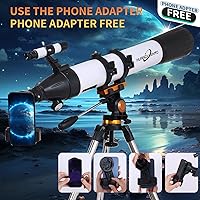
  • Phone Adapter: A smartphone adapter is included, enabling basic afocal photography by mounting a phone camera directly over an eyepiece.
  • Focus System: Focusing is performed manually via a rack-and-pinion or sliding focuser mechanism on the eyepiece end of the tube.
  • Item Weight: The complete kit weighs approximately 11.53 pounds, which includes the optical tube, mount, and tripod assembly.
  • Carry Bag: A dedicated carry bag is included that fits the telescope, tripod, and accessories together for transport and storage.
  • Smartphone Fit: The included phone adapter is compatible with most standard smartphones for casual afocal astrophotography use.
  • Availability: This product was first made available in November 2024 and carries a Best Sellers Rank of approximately 1,872 in Camera and Photo Products.

Related Reviews
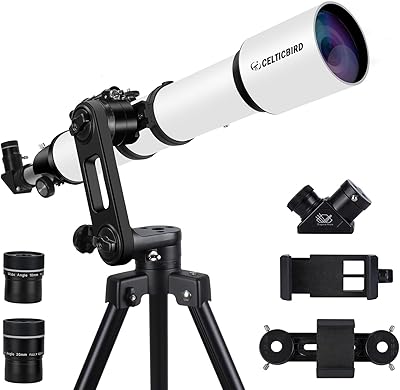
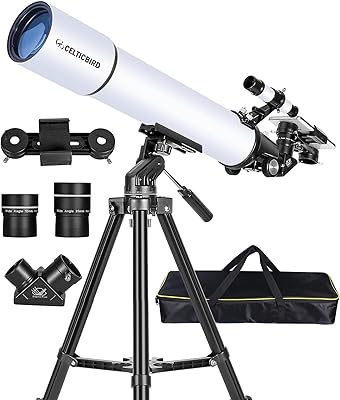
CELTICBIRD 90700 90mm Refractor Telescope
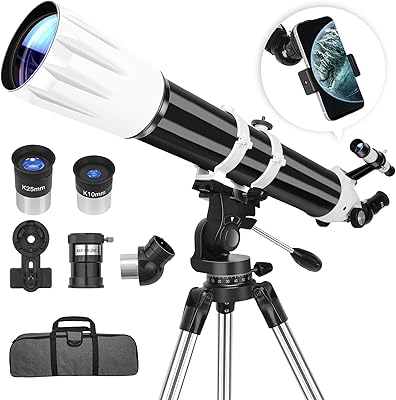
70%
83%
Optical Clarity
76%
Mount Precision
88%
Tripod Stability
81%
Ease of Assembly
62%
Finderscope Usability
More
Hawkko 90900 Refractor Telescope
75%
83%
Optical Clarity
76%
Build Quality
69%
Mount Smoothness
88%
Ease of Setup
71%
Magnification Range
More
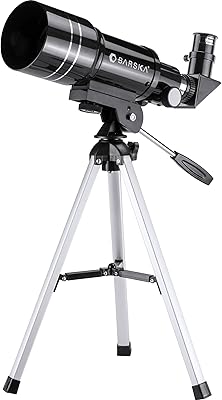
Barska Starwatcher 70mm Refractor Telescope
66%
72%
Optical Clarity
58%
Magnification Performance
54%
Build Quality
84%
Ease of Setup
88%
Portability & Storage
More
HUGERSTAR 80600 Refractor Telescope
70%
78%
Optical Clarity
88%
Ease of Setup
61%
Tripod Stability
83%
Value for Money
84%
Portability
More
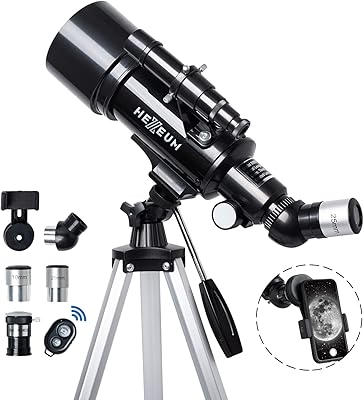
HEXEUM AZ50070 70mm Refractor Telescope
73%
78%
Optical Clarity
88%
Value for Money
57%
Tripod Stability
66%
Ease of Assembly
63%
Finderscope Usability
More
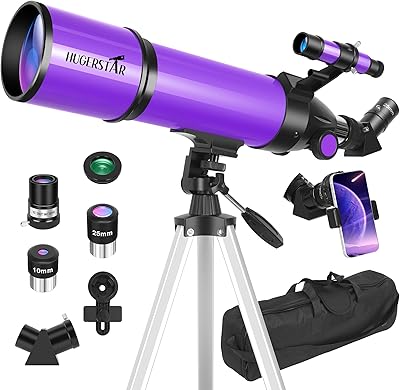
Celticbird 80mm 800mm Refractor Telescope
75%
83%
Optical Clarity
91%
Ease of Assembly
78%
Mount Usability
61%
Tripod Stability
58%
Included Eyepiece Quality
More
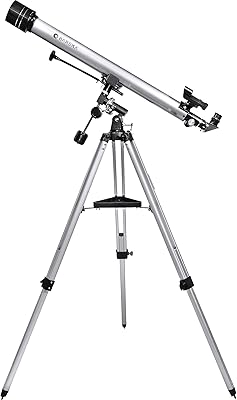
Barska Starwatcher Refractor Telescope 60mm
80%
91%
Value for Money
88%
Ease of Setup
93%
Portability
85%
Performance (Planetary Viewing)
62%
Performance (Deep-Sky Viewing)
More
SOLOMARK 90mm Refractor Telescope
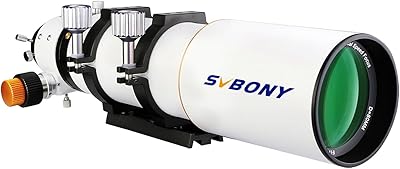
74%
83%
Optical Clarity
88%
Mount Stability
81%
Tripod Build Quality
71%
Ease of Assembly
66%
Focuser Performance
More
SVBONY SV503 102mm ED Refractor Telescope
82%
88%
Optical Performance
93%
Focuser Quality
84%
Chromatic Aberration Control
91%
Build Quality
86%
Astrophotography Suitability
More
Koolpte AZ90900 90mm Refractor Telescope
68%
83%
Optical Clarity
79%
Mount Stability
86%
Ease of Setup
81%
Value for Money
61%
Phone Adapter Usability
More

FAQ

Yes, and this is genuinely one of the highlights of owning this refractor telescope. On a clear, steady night, Saturn's rings are visible and distinct even at moderate magnification. It won't look like a Hubble photo, but it's more than enough to stop a first-time viewer in their tracks.

Most users get it assembled in 20 to 40 minutes the first time, following the included manual or the video instructions. After that initial learning curve, setup drops to around 10 minutes. The altazimuth mount is notably simpler to configure than equatorial alternatives, which helps a lot.

Honestly, it's closer to a marketing ceiling than a practical target. In real observing conditions, atmospheric turbulence causes images to blur well before you reach that power level. Most experienced users find the sweet spot sits between 60x and 120x for this type of scope. Use the higher magnifications on exceptionally steady nights only.

Kids aged 10 and up can generally manage it on their own once they've had an adult walk them through setup once or twice. The altazimuth mount is intuitive — it moves in directions that feel natural. Younger kids around 8 will likely need some help focusing and locating objects, but they can absolutely participate and look through it independently.

It works, but with caveats. You can capture decent Moon shots with patience and a steady hand, and it's a fun way to share what you're seeing. Don't expect consistent, sharp results — alignment is fiddly, and results vary a lot depending on your phone's camera app and lens placement. Think of it as a fun bonus rather than a serious imaging tool.

Yes, and it works quite well for that purpose. The included zenith mirror corrects the image orientation so that terrestrial objects appear right-side up, which makes daytime use comfortable and intuitive. It's a genuine dual-use scope, not just an astronomy-only instrument.

It comes with enough to get started immediately — two eyepieces, a Barlow lens, finder scope, tripod, zenith mirror, phone adapter, and a carry bag. The one thing some beginners eventually add is a better-quality eyepiece, but that's entirely optional and not necessary out of the box.

It depends on how you use it. At lower magnifications, the wobble is barely noticeable. At higher magnifications, any vibration from nudging the scope or bumping the tripod becomes more visible. Letting the scope settle for a few seconds after repositioning solves most of the problem. It's an annoyance rather than a dealbreaker, but worth knowing going in.

Absolutely — in fact, starting with the 20mm eyepiece alone (without the Barlow) gives you a wider field of view that's ideal for sweeping across the lunar surface. That's actually the recommended starting point for new users before working up to higher magnification.

The carry bag keeps everything compact and organized, but at the assembled tripod size and roughly 11.5 pounds total, it's more of a car-trip companion than an airplane carry-on. It's very manageable for hiking to a dark sky site or packing in a trunk for a camping weekend — just don't expect it to slide into overhead storage.