Overview

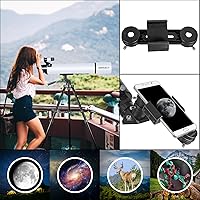
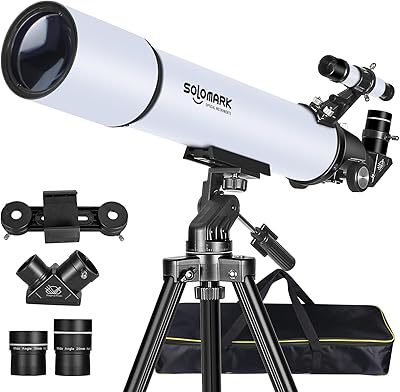
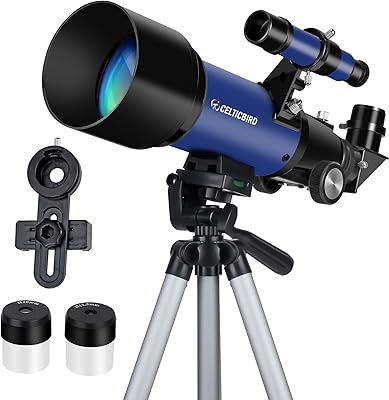
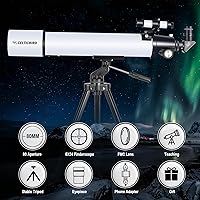
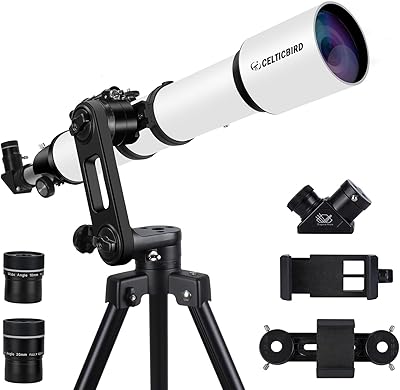
The Celticbird 80mm 800mm Refractor Telescope is a mid-range entry-level scope that punches a bit above its weight for adults and curious beginners ready to seriously look up at the night sky. At its core, this refractor is defined by its 80mm objective lens and 800mm focal length — a pairing that delivers an f/10 ratio well suited to lunar and planetary targets. The package is complete out of the box: dual eyepieces, an altazimuth mount, carry bag, and a phone adapter for snapshots. Celticbird is a newer brand, arriving in late 2023, yet it has climbed quickly into the top refractor bestsellers — which says something, though the category is crowded with similar designs.
Features & Benefits

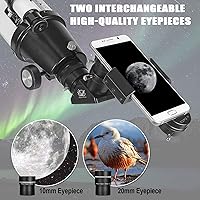
The jump from a 60mm or 70mm tube to this refractor's 80mm aperture is more meaningful than it sounds — you collect noticeably more light, which translates to crisper detail on the lunar surface and better contrast on Jupiter's cloud bands. Multi-coated optics help further, cutting down internal reflections so the image at the eyepiece stays clean. The two included wide-angle eyepieces — 20mm for sweeping views and 10mm for tighter looks — cover the most useful magnification range right away. The altazimuth mount is a genuine plus for beginners: no polar alignment, no complicated setup, just point and look. A 5x24 finder scope and tool-free assembly round things out nicely for anyone new to the hobby.

Best For

This beginner telescope is a natural fit for adults stepping into astronomy for the first time — especially those who want a complete, ready-to-use setup without the learning curve of an equatorial mount. It also works well as a gift for adults or teenagers who have expressed genuine interest in the night sky, since everything needed arrives in one bag. If your target list is primarily the moon, Saturn's rings, or Jupiter's moons, the Celticbird scope has the optics to deliver satisfying views of all three. Where this refractor starts to struggle is with faint deep-sky objects — galaxies and nebulae are largely out of reach, so serious deep-sky observers should look at larger apertures.

User Feedback

Buyers consistently highlight two things: how sharp the moon looks on a clear night, and how painlessly the scope goes from box to backyard. Those are real wins. On the critical side, the stock eyepieces draw the most complaints — at higher magnification, image quality softens noticeably, and many owners add a Barlow lens fairly quickly, hinting that the optical tube has more potential than the included glass unlocks. The tripod wobbles in even mild wind, which gets frustrating during longer sessions. Feedback on the phone adapter is mixed — standard phones seat fine, but larger models can be awkward. The 3-year warranty earns genuine appreciation, and most buyers feel the overall value holds up solidly for this price tier.

Pros

  • The 80mm aperture delivers noticeably sharper and brighter lunar views than smaller 60–70mm beginner scopes.
  • Saturn's rings and Jupiter's moons are realistically visible on a clear night, which is a genuine payoff for new observers.
  • Tool-free assembly means most users are looking through the eyepiece within 20 minutes of opening the box.
  • The altazimuth mount removes a significant learning barrier — no alignment procedures, no confusing settings.
  • A dedicated carry bag with space for all accessories makes packing up and heading to darker skies genuinely convenient.
  • Multi-coated optics reduce internal glare and produce cleaner, higher-contrast planetary images than uncoated glass would.
  • The included phone adapter lets casual users capture and share moon photos the same night they set up.
  • A 3-year warranty is meaningfully better coverage than most competitors in this category offer.
  • The optical tube has enough headroom that adding an aftermarket Barlow lens produces a real performance upgrade.
  • Customer support response within 24 hours is consistently praised, which matters when a beginner runs into setup questions.

Cons

  • Stock eyepieces soften noticeably at higher magnifications, limiting the scope's ceiling without an upgrade.
  • The tripod wobbles in even mild wind, which disrupts viewing during longer planetary sessions.
  • Plastic fittings in the mount hardware can loosen over time with regular use and transport.
  • The phone adapter struggles to hold larger modern smartphones securely, making astrophotography hit-or-miss.
  • No deep-sky capability — faint objects like galaxies and nebulae are effectively off the target list.
  • The finder scope's 24mm aperture is too small for spotting dimmer targets under light-polluted suburban skies.
  • No astronomy guidance is included, leaving complete beginners to find external resources for locating planets and stars.
  • At close to 10 pounds packed, it is manageable but not light enough for serious hiking or backpacking.
  • Focuser backlash at high magnification makes precise final focus more fiddly than it should be.

Ratings

The Celticbird 80mm 800mm Refractor Telescope has been scored by our AI system after analyzing verified buyer reviews from multiple global markets, with spam, bot-generated, and incentivized feedback actively filtered out. The scores below reflect both what genuinely impresses users and where real frustrations surface — nothing is glossed over. From first-light lunar sessions to everyday handling, each category captures the honest consensus of people who have actually used this scope.
Optical Clarity
83%
Most users report a genuinely sharp, high-contrast view of the moon at moderate magnification — craters and ridgelines come through with satisfying detail. The multi-coated 80mm objective delivers noticeably cleaner images than the 60–70mm scopes many buyers had used previously.
At the upper magnification range, particularly beyond 100x, image softness becomes apparent and chromatic fringing can appear around bright targets like the moon's limb. The stock eyepieces are largely responsible, rather than the optical tube itself.
Ease of Assembly
91%
Buyers consistently describe getting the scope from box to backyard in under 20 minutes without needing any tools. The included manual and video walkthrough are clear enough that first-timers rarely report confusion during setup.
A small number of users noted that the finder scope alignment instructions could be clearer, requiring a bit of trial and error on the first night out. This is a minor friction point but worth knowing ahead of time.
Mount Usability
78%
22%
The altazimuth mount is a genuine strength for beginners — no polar alignment, no software, just intuitive directional movement. Tracking a slow-moving object like the moon or a planet feels natural after just a few minutes of practice.
Experienced observers may find the AZ mount limiting fairly quickly, since it cannot compensate for Earth's rotation during extended viewing sessions. Fine adjustment at higher magnifications also takes some patience before movements feel precise.
Tripod Stability
61%
39%
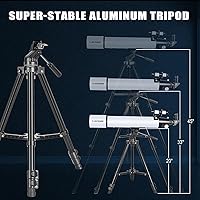
On calm nights and flat surfaces, the aluminum tripod holds the scope steady enough for comfortable extended viewing. Height adjustability from 20″ to 45″ means both adults and younger users can observe without awkward posture.
Any wind at all introduces noticeable vibration, and the tripod legs can flex slightly when nudging the scope to track objects. Multiple buyers flagged this as one of their top frustrations, especially during longer planetary sessions.
Included Eyepiece Quality
58%
42%
The two wide-angle eyepieces cover the most useful magnification range for a beginner — the 20mm is comfortable for scanning and the 10mm brings planets in noticeably closer. For casual first-year astronomy, they get the job done.
The Kellner-style eyepieces show their limitations at higher magnifications, with edge-of-field softness and reduced eye relief that some adults find uncomfortable. A significant portion of buyers mention upgrading to aftermarket eyepieces or adding a Barlow lens within a few months.
Phone Adapter & Astrophotography
63%
37%
Capturing a moon photo through a refractor and sharing it the same evening is a real draw for casual users, and the included adapter makes that possible without buying extra accessories. Standard-sized smartphones seat and align reasonably well.
Larger modern smartphones — anything with a wide camera module or a thick case — can be awkward or impossible to fit securely. Centering the phone over the eyepiece takes patience, and vibration during shutter release can blur the image.
Portability & Carry Case
86%
The dedicated carry bag is a genuine convenience that competitors at this tier do not always include. Everything packs into a single organized case, making it practical for trips to darker skies outside the city or camping weekends.
The bag is functional rather than premium — the padding is modest and the zippers feel like they would need careful handling over years of use. The packed weight of just under 10 pounds is manageable but not exactly ultralight for hiking.
Finder Scope Performance
72%
28%
The 5x24 reflex finder scope makes locating targets far less frustrating than using the main eyepiece cold, particularly when pointing at a known bright star or planet. Alignment is straightforward once dialed in on the first session.
The 24mm aperture lets in limited light, making it harder to spot dimmer targets on nights with any ambient light pollution. Urban observers in particular may find the finder more useful for bright objects only.
Value for Money
82%
18%
Relative to similarly speced beginner refractors, this scope offers a reasonably complete accessory package — mount, bag, adapter, and two eyepieces — without forcing buyers to piece together a starter kit separately. Most reviewers feel the price is appropriate for what arrives.
A few buyers note that spending a bit more gets you meaningfully better eyepieces and a sturdier tripod from competing brands. The value holds up well for the entry level but starts to look less compelling once you start comparing accessories individually.
Build Quality & Materials
67%
33%
The optical tube feels solid and the focuser moves smoothly without excessive play, which matters more than it sounds when you are trying to land precise focus on a planet. Most structural components hold up well to regular backyard use.
Plastic is prevalent in the mount hardware and eyepiece holders, and some buyers report looseness developing in fittings after extended use. It reads as a scope designed for careful, periodic use rather than rugged handling or frequent transport.
Instruction & Learning Support
74%
26%
The printed manual is more detailed than typical budget-scope documentation, and the option to access a setup video reduces the first-night confusion that has turned off many beginners with other brands. Customer support response within 24 hours is frequently praised.
Astronomy-specific guidance — how to actually find Saturn, what magnification to use on different targets — is absent from the included materials. New users will need to supplement with outside resources to get the most out of the scope quickly.
Focuser Smoothness
76%
24%
The rack-and-pinion focuser operates with a reasonably smooth travel that makes fine-tuning lunar focus satisfying rather than frustrating. At moderate magnifications, landing on sharp focus takes only a few turns.
At high magnifications the focuser's backlash becomes more apparent, and small overcorrections can knock you just past the sharpest focus point. A few users mention slight image shift when focusing, which is typical for this class of scope.
Warranty & Customer Support
88%
A 3-year satisfaction warranty stands out noticeably in this product tier, where 1-year coverage is far more common. Buyers who have contacted the manufacturer report responsive and genuinely helpful replies within the stated 24-hour window.
As a newer brand with a limited track record, there is less long-term data on how warranty claims are actually resolved beyond the initial contact. Buyers should keep documentation of their purchase in case a claim is needed later.

Suitable for:

The Celticbird 80mm 800mm Refractor Telescope is built for adults who are genuinely curious about astronomy but have no prior experience with telescopes and want a setup that does not require an engineering degree to operate. If your primary targets are the moon, Saturn's rings, or Jupiter's cloud bands, this refractor delivers views that will genuinely satisfy a newcomer — the 80mm aperture is wide enough to make those objects look impressive rather than disappointingly small. It also works well as a complete, thoughtful gift for a teenager or adult who has expressed real interest in the night sky, since everything needed arrives in one organized carry bag. Adults returning to the hobby after many years away will appreciate the no-fuss altazimuth mount — there is no polar alignment, no tracking motor to configure, just intuitive movement. Travelers and campers who want to bring a capable scope to darker skies without hauling a large case will find the packed size and included bag genuinely practical.
Not suitable for:

Buyers who have already spent time with a starter telescope and are ready to push into serious deep-sky observing — hunting faint galaxies, globular clusters, or nebulae — will find the Celticbird 80mm 800mm Refractor Telescope falls short of what those targets demand. Aperture is the single biggest factor in deep-sky performance, and 80mm simply does not gather enough light to make most Messier objects look like anything more than faint smudges. Observers who want to do astrophotography beyond casual moon snapshots should also look elsewhere — the altazimuth mount cannot track objects across the sky, which is a hard requirement for any kind of long-exposure imaging. If you live somewhere with frequent wind or plan to use this scope on uneven ground, the tripod's tendency to wobble under those conditions will become a persistent frustration. And if you are an experienced amateur who already owns decent eyepieces and a solid mount, the accessories bundled here add little value and the optical tube alone may not justify the cost compared to buying components separately.
Specifications

  • Objective Lens: The primary lens measures 80mm in diameter, gathering enough light for clear views of the moon and brighter planets like Saturn and Jupiter.
  • Focal Length: The optical tube has an 800mm focal length, producing an f/10 focal ratio well suited to high-contrast lunar and planetary observation.
  • Magnification: The two included eyepieces deliver 40x magnification with the 20mm and 80x magnification with the 10mm straight out of the box.
  • Eyepieces: Two wide-angle eyepieces (20mm and 10mm) are included, described as Kellner or Plossl design with a standard 1.25-inch barrel diameter.
  • Lens Coating: The objective lens features multi-fully coated optics to reduce internal reflections and improve light transmission for cleaner, higher-contrast images.
  • Mount Type: The scope ships with an altazimuth (AZ) mount, allowing simple directional movement on two axes without any polar alignment or motorized tracking.
  • Finderscope: A 5x24 reflex finderscope is included to help users locate targets before switching to the main eyepiece for detailed viewing.
  • Tripod: The aluminum tripod is height-adjustable from 20″ to 45″, accommodating both seated and standing observers of varying heights.
  • Focus System: Focusing is achieved via a manual rack-and-pinion focuser, which provides smooth travel for landing sharp focus at moderate magnifications.
  • Phone Adapter: A smartphone mount adapter is included in the kit, enabling afocal photography through the eyepiece with compatible devices.
  • Carry Bag: A dedicated carry bag is included and sized to hold the optical tube, mount, tripod, eyepieces, and all accessories in one organized package.
  • Item Weight: The complete kit weighs 9.98 pounds, making it manageable for transport to a backyard or a nearby dark-sky site.
  • Packed Dimensions: When stored in its carry bag, the kit measures 28.7″ x 10.2″ x 5.5″, fitting in the trunk of most standard passenger vehicles.
  • Optical Tube Length: The optical tube measures 800mm in length, which is consistent with the scope's focal length as a non-folded refractor design.
  • Warranty: Celticbird provides a 3-year satisfaction warranty, with customer support available to respond within 24 hours of contact.
  • Compatible Devices: The included phone adapter is designed for use with smartphones, though fitment varies depending on phone size and case dimensions.
  • Assembly: The scope is designed for tool-free assembly, with all components connecting without screwdrivers or additional hardware.
  • Brand Origin: The telescope is manufactured by Celticbird, a brand that entered the market in late 2023 and has since reached top-10 status in the refractor telescope category.

Related Reviews
HUGERSTAR 80600 Refractor Telescope
70%
78%
Optical Clarity
88%
Ease of Setup
61%
Tripod Stability
83%
Value for Money
84%
Portability
More
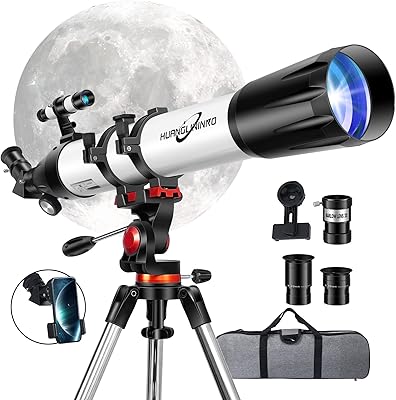
CELTICBIRD 90700 90mm Refractor Telescope
70%
83%
Optical Clarity
76%
Mount Precision
88%
Tripod Stability
81%
Ease of Assembly
62%
Finderscope Usability
More
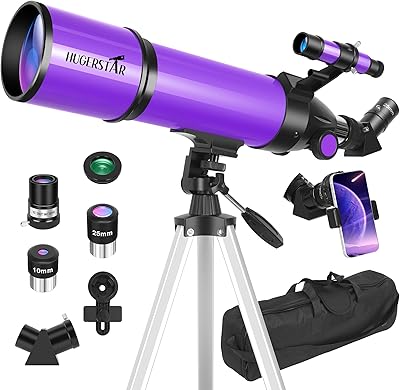
PISEZ 90800 90mm Refractor Telescope
68%
83%
Optical Clarity
81%
Value for Money
72%
Ease of Setup
68%
Magnification Range
61%
Tripod Stability
More
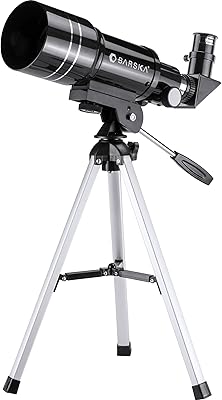
SOLOMARK 80900 Refractor Telescope
76%
83%
Optical Clarity
71%
Build Quality
62%
Tripod Stability
88%
Ease of Assembly
81%
Value for Money
More
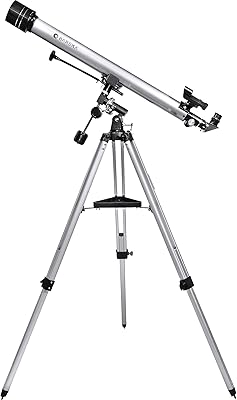
Barska Starwatcher 70mm Refractor Telescope
66%
72%
Optical Clarity
58%
Magnification Performance
54%
Build Quality
84%
Ease of Setup
88%
Portability & Storage
More
Barska Starwatcher Refractor Telescope 60mm
80%
91%
Value for Money
88%
Ease of Setup
93%
Portability
85%
Performance (Planetary Viewing)
62%
Performance (Deep-Sky Viewing)
More
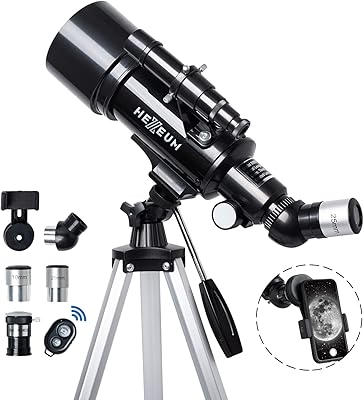
HEXEUM AZ50070 70mm Refractor Telescope
73%
78%
Optical Clarity
88%
Value for Money
57%
Tripod Stability
66%
Ease of Assembly
63%
Finderscope Usability
More
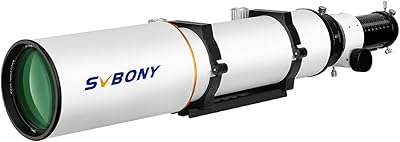
SVBONY SV503 80mm ED Refractor Telescope
81%
91%
Optical Clarity
88%
Focuser Quality
86%
Chromatic Aberration Control
89%
Build Quality & Materials
83%
Value for Money
More
CELTICBIRD 70mm Kids Refractor Telescope
75%
88%
Ease of Assembly
76%
Optical Clarity
61%
Tripod Stability
84%
Value for Money
71%
Magnification Range
More
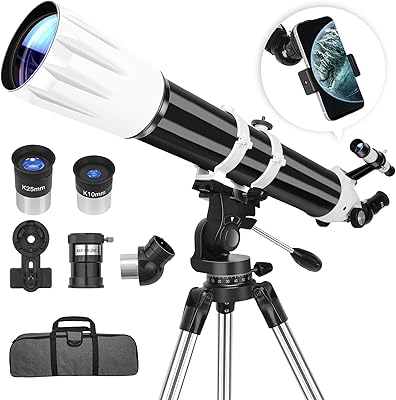
SVBONY SV503 102mm ED Refractor Telescope
82%
88%
Optical Performance
93%
Focuser Quality
84%
Chromatic Aberration Control
91%
Build Quality
86%
Astrophotography Suitability
More

FAQ

Yes, and it is one of the genuine highlights of owning this refractor. On a steady, clear night at around 80x magnification, Saturn's rings are clearly separated from the planet's disk. It is not a photographic-quality view, but it is enough to stop most first-time observers in their tracks.

Most users report being ready to observe in 15 to 20 minutes on their first attempt, and under 10 minutes once they are familiar with the process. No tools are needed — everything connects by hand. The included setup video is worth watching before your first session.

This is where it gets tricky. Standard-sized phones seat reasonably well, but larger phones — especially those with oversized camera modules or thick protective cases — can be difficult to center and hold securely. If you have a large-format phone, budget for a universal smartphone telescope adapter as a backup.

Theoretically you can calculate a maximum around 160x for an 80mm aperture, but in practice the stock eyepieces start to soften noticeably beyond 80x. Adding a quality 2x Barlow lens and a better eyepiece can push usable performance toward 120x on nights with stable air, but chasing extreme magnification on any beginner refractor tends to disappoint.

Not in any satisfying way. The Andromeda Galaxy is detectable as a faint smudge, and the Orion Nebula shows some structure, but faint deep-sky targets genuinely require more aperture than 80mm provides. If deep-sky observing is your primary goal, you would be better served by a larger Dobsonian reflector in the same budget range.

Finder scope alignment is a normal first-session task with any telescope. Point the main scope at a distant daytime landmark, center it carefully in the main eyepiece, then adjust the finder scope's alignment screws until the same object sits centered in the finder's crosshairs. Once aligned, it should hold well unless the scope takes a hard knock.

You can, but with a caveat. Refractors at f/10 produce an inverted image, so land targets will appear upside down unless you add a correct-image diagonal or erecting eyepiece. At higher magnifications the narrow field of view also makes tracking moving subjects like birds quite challenging. It is usable in a pinch but not optimized for terrestrial use.

Yes, both eyepieces use the standard 1.25-inch barrel format, which is the most common size in amateur astronomy. This means you have a wide range of affordable aftermarket eyepieces and Barlow lenses available. Many owners find that a single quality 1.25-inch Plossl or wide-angle eyepiece noticeably improves what the optical tube can deliver.

On flat, hard surfaces in calm conditions it is stable enough. On grass, gravel, or any surface with give, the legs can shift slightly during use. Wind is the bigger concern — even a gentle breeze can introduce vibration that takes a few seconds to settle each time you move the scope. For windy or uneven locations, pressing the tripod legs firmly into the ground and using the slowest possible touch on the mount helps significantly.

Based on buyer reports, the customer support team is responsive and genuinely helpful at the initial contact stage, typically replying within 24 hours. As a relatively young brand, there is limited long-term data on complex warranty claim resolutions, so keeping your order confirmation and any packaging is a sensible precaution. For the most common issues — a missing accessory or a cosmetic defect — the process appears to be straightforward.