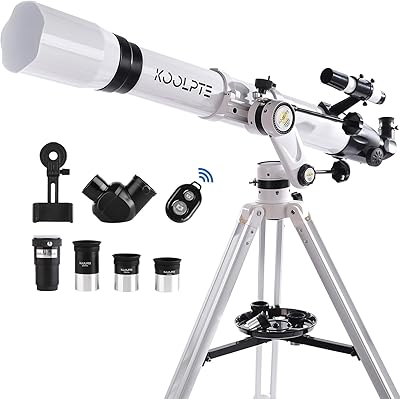
Overview

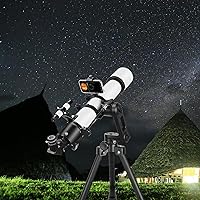
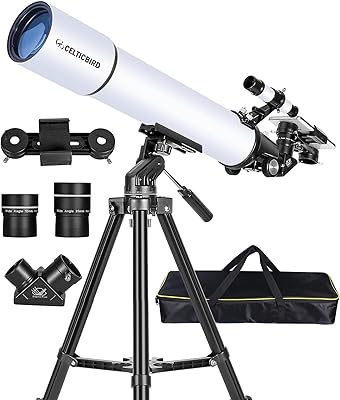
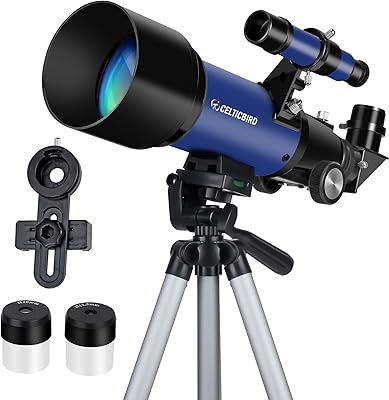
The CELTICBIRD 90700 90mm Refractor Telescope is a mid-range optical instrument that punches respectably above its weight for anyone just getting into astronomy. Its 90mm aperture and 700mm focal length form the core of its identity — enough light-gathering muscle to resolve lunar craters in satisfying detail and pick out Saturn's rings on a clear night. The brand is a newer name, having launched this model in mid-2024, so you are not buying decades of heritage here. What sets this refractor telescope apart from cheaper alternatives is its all-metal AZ mount — a meaningful upgrade over the flimsy plastic hardware common at similar price points. Solid, honest, capable.
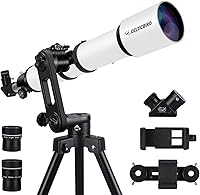
Features & Benefits

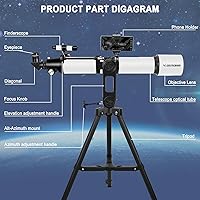
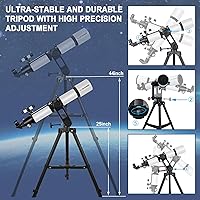
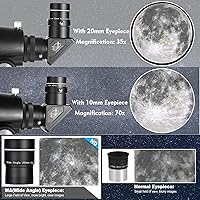
Start with the optics: a 90mm multi-coated objective lens gathers noticeably more light than the 70mm or 76mm scopes that dominate this category, translating to brighter, crisper views of the moon and planets. The Kellner eyepieces are a sensible choice at this tier — functional and sharp at the center of the field, though not as wide-angle as pricier designs. The Vertisteel AZ mount deserves attention: fine-adjustment handles and a calibrated scale let you nudge the scope precisely without overcorrecting, which matters when tracking a moving target. The stainless steel tripod stands 51 inches tall and feels planted. As for the phone adapter, it works, but manage expectations — afocal phone photography produces decent lunar shots, not Hubble imagery.

Best For

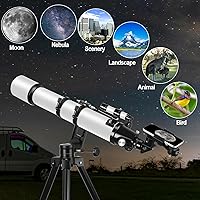
This beginner astronomy scope fits a specific buyer profile, and knowing that upfront saves frustration. If you are an adult or teenager taking your first serious look at the night sky, it rewards patience without demanding expertise. Lunar and planetary observers get the most from it — the focal ratio suits bright, high-contrast targets far better than faint deep-sky objects like galaxies. It also makes a genuinely thoughtful gift, the kind that actually gets used rather than shelved after one session. Backyard observers who value a stable, wobble-free setup over something lightweight and portable will appreciate the build. Curious smartphone photographers wanting to capture the moon through an eyepiece will find it a reasonable starting point.

User Feedback

With 134 ratings and a 4.3-star average for a scope on the market less than a year, buyer sentiment leans positive. Optical clarity on the moon is the most praised aspect — reviewers consistently describe crisp crater detail on clear nights. The tripod rigidity earns genuine appreciation, especially from buyers who have wrestled with wobbly cheaper alternatives. On the other side, the finderscope draws complaints about alignment difficulty, and several buyers mention a learning curve getting comfortable with the AZ mount movement. The phone adapter gets mixed mentions — useful for some, fiddly for others. As a newer brand, their customer support track record remains limited in the review pool, which is worth factoring in before purchasing.

Pros

  • The 90mm aperture delivers noticeably brighter, sharper lunar views than the 70mm scopes common at this price point.
  • All-metal Vertisteel AZ mount with fine-adjustment handles provides smoother, more precise tracking than plastic-mount rivals.
  • Stainless steel tripod legs hold firm with minimal vibration, even during longer backyard sessions.
  • Multi-coated objective lens produces clean, bright images without the washed-out look of uncoated budget optics.
  • Assembly is beginner-friendly — most first-timers report being set up and viewing the moon within an hour.
  • Included phone adapter lets beginners capture satisfying lunar shots without needing extra accessories.
  • Adjustable tripod height accommodates both adults and younger observers comfortably.
  • Kellner eyepieces offer sharper center-of-field performance than the basic designs bundled with cheaper scopes.
  • At this price tier, the overall build quality feels substantively more durable than direct competitors.
  • Makes a genuinely usable gift — not a shelf ornament — for teens and astronomy-curious adults.

Cons

  • The 5x24 finderscope alignment drifts over time and frustrates beginners trying to locate targets quickly.
  • Focuser backlash becomes noticeable at higher magnifications, making critical planetary focus difficult to nail.
  • No carry bag or storage case is included, which is a real oversight given the scope's bulk.
  • The phone adapter works best on the moon only — planetary and deep-sky phone shots are largely unrewarding.
  • CELTICBIRD is a brand-new name with limited support history, adding uncertainty around warranty follow-through.
  • Included eyepieces do not fully exploit what the 90mm objective is capable of — upgrades are likely needed.
  • At over 14 pounds, the setup is impractical for travel or dark-sky site trips without a vehicle.
  • Deep-sky performance is weak — faint galaxies and nebulae show little detail, especially under suburban skies.
  • Some users report minor finish inconsistencies on smaller hardware components straight out of the box.
  • The learning curve on the AZ mount can discourage impatient beginners during the first few sessions.

Ratings

The scores below reflect our AI-driven analysis of verified buyer reviews for the CELTICBIRD 90700 90mm Refractor Telescope, sourced globally and filtered to remove incentivized, bot-generated, and spam submissions. Each category is scored independently to give you an honest picture of where this beginner astronomy scope genuinely delivers and where real-world buyers have run into friction.

Optical Clarity
83%
Most buyers report crisp, bright lunar views right out of the box — crater rims and mountain ridges resolve with satisfying detail on a clear night. The multi-coated 90mm objective gathers noticeably more light than smaller competing scopes, making the moon and planets feel genuinely rewarding to observe.
Some users notice edge-of-field softness and mild chromatic fringing around bright objects like the moon, which is common for refractors at this price tier but still worth knowing. A few planetary observers felt the included eyepieces limited how far the optics could be pushed.
Mount Precision
76%
24%
The Vertisteel AZ mount stands out compared to the loose, wobbly altazimuth mounts found on cheaper scopes. Fine-adjustment handles let users nudge the telescope incrementally, which becomes genuinely useful when trying to keep a planet centered as Earth rotates.
Several buyers report a noticeable learning curve before the mount movement feels intuitive — particularly for users coming from no prior astronomy experience. At higher magnifications, even minor overcorrections can send the target out of frame, requiring patience to master.
Tripod Stability
88%
The stainless steel tripod legs are consistently praised as one of the most tangible upgrades over budget alternatives. Buyers working on patios or uneven grass report minimal vibration after slewing, which makes longer observing sessions far more enjoyable.
At just over 14 pounds total, the setup is not particularly portable for hiking or travel stargazing. A handful of reviewers noted that the tripod leg locks require a firm hand to tighten properly, otherwise subtle creep can occur over time.
Ease of Assembly
81%
19%
The majority of buyers — including those with no prior telescope experience — report getting the scope assembled and pointed at the moon within 30 to 45 minutes of opening the box. Instructions are clear enough that most first-timers do not need to consult online tutorials.
A small but consistent group of reviewers found the finderscope bracket attachment fiddly, and a few noted that certain component fits required more force than expected. First-time assembly is generally smooth, but reassembly after storage trips can feel less intuitive.
Finderscope Usability
62%
38%
The 5x24 finderscope does its basic job — it narrows down the sky enough to help beginners land on the moon or a bright planet when starting from scratch. For casual backyard use targeting obvious objects, most users get there eventually.
For a scope this capable optically, the finderscope feels like a weak link. Alignment drifts over time and multiple buyers describe frustration trying to reconcile what they see in the finder versus the main eyepiece, especially at higher magnifications. Upgrading to a red-dot finder is a common community recommendation.
Eyepiece Quality
69%
31%
The included Kellner eyepieces deliver clean, usable views for lunar and planetary work — they are a step above the basic Huygens or Ramsden designs bundled with many entry-level scopes. Center-of-field sharpness is genuinely good for the price.
Apparent field of view is narrow compared to modern wide-angle designs, which makes tracking objects feel more demanding. Experienced observers who have used better eyepieces will likely want to invest in upgrades quickly, as the included pieces do not fully exploit what the 90mm objective can deliver.
Phone Adapter & Astrophotography
57%
43%
The bundled phone adapter makes lunar photography accessible to complete beginners — snapping a recognizable moon shot through the eyepiece is genuinely achievable and satisfying for first-timers. The adapter fits a reasonable range of smartphone sizes.
Afocal phone photography has real limitations that the adapter cannot overcome — blurry edges, alignment fussiness, and vibration from tapping the shutter are consistent complaints. Anyone expecting planetary detail shots or deep-sky images will be disappointed; this is strictly a moon-and-bright-objects tool.
Build Quality & Materials
79%
21%
The all-metal construction of the optical tube and mount body gives this beginner astronomy scope a noticeably premium feel compared to rivals with plastic focusers and die-cast mounts. Buyers consistently note that it feels built to last through regular outdoor use.
Some smaller components — particularly the focuser tension ring and the finderscope bracket — feel less refined than the main tube and mount. The coating on metal parts has also attracted minor complaints about finish quality on a small number of units received.
Value for Money
77%
23%
For what the CELTICBIRD 90700 delivers optically and mechanically, buyers in this price bracket generally feel they received fair value — particularly those who compared it against similarly priced 70mm or 76mm options and noticed the real difference a larger aperture makes on the moon.
Buyers who purchased expecting a near-professional experience occasionally feel let down, pointing to eyepiece limitations and finderscope frustrations as areas where the value proposition weakens. The newer brand also adds a layer of uncertainty around long-term support that slightly tempers the overall value picture.
Portability & Storage
58%
42%
For a home or backyard setup that stays mostly in one spot, the size and weight are perfectly manageable. The 51-inch tripod height is comfortable for adult use while also accommodating younger family members with a simple adjustment.
At over 14 pounds assembled, moving this scope between locations takes real effort, and there is no dedicated carry bag included. Apartment dwellers or users hoping to take it to dark-sky sites regularly will find the bulk and lack of included storage a genuine inconvenience.
Focuser Smoothness
72%
28%
Achieving sharp focus on bright objects like the moon is straightforward with the manual rack-and-pinion focuser. Most buyers report finding the sweet spot quickly once they get a feel for the tension, and fine focus holds well during short sessions.
At higher magnifications, the focuser backlash becomes noticeable — a common trait at this price point, but still frustrating when trying to achieve critical focus on planetary detail. A few reviewers noted the focuser felt slightly loose out of the box and needed tightening before use.
Brand Reliability & Support
54%
46%
Several buyers report positive interactions with CELTICBIRD support for missing or damaged parts, suggesting the team is at least responsive to direct customer issues. The product listing has been maintained and updated since launch, which is a reasonable signal of active brand engagement.
As a brand with under a year of market history and a limited review pool of 134 ratings, there simply is not enough data to draw firm conclusions about long-term reliability or warranty follow-through. Buyers who prioritize established brand support may feel more comfortable with older names in the category.
Suitability for Kids & Teens
74%
26%
The adjustable tripod height and intuitive altazimuth movement make this a workable scope for teenagers who are genuinely curious about astronomy. Parents report that the moon views alone are enough to sustain interest well past the first night out.
Younger children under 10 may find the manual focus and mount adjustments more demanding than expected without adult guidance. The finderscope alignment issues that frustrate adults can be especially discouraging for kids who want instant results.
Star & Deep-Sky Performance
49%
51%
Under reasonably dark skies, the 90mm aperture can resolve some brighter star clusters and the Orion Nebula shows a faint but identifiable glow. For beginners, these glimpses of deep sky are novel and motivating even if technically limited.
This refractor telescope is fundamentally a solar-system and lunar scope — its focal ratio and included eyepieces are not optimized for wide-field deep-sky work. Buyers who purchased specifically for galaxy or nebula hunting are among the most disappointed voices in the review pool.

Suitable for:

The CELTICBIRD 90700 90mm Refractor Telescope is a strong match for adults and teenagers who are stepping into astronomy for the first time and want a scope that genuinely rewards curiosity without demanding technical expertise from day one. If your primary targets are the moon and brighter planets like Saturn and Jupiter, this refractor telescope is well-suited to deliver the kind of views that make the hobby click — crater fields, ring detail, and cloud bands are all within reach on a steady night. Parents shopping for a meaningful gift for a teen who has expressed interest in space will find this a far more usable option than the toy-grade scopes that tend to disappoint within a week. Backyard stargazers who value a planted, wobble-free setup over something lightweight and packable will appreciate the all-metal stainless steel tripod that holds its position without constant readjustment. The included phone adapter also makes this a reasonable starting point for anyone wanting to dabble in lunar photography with their smartphone, as long as expectations are kept realistic about image quality.
Not suitable for:

The CELTICBIRD 90700 90mm Refractor Telescope is not the right tool for observers whose primary interest lies in deep-sky targets — galaxies, faint nebulae, and globular clusters will largely underwhelm through this scope, particularly from light-polluted suburban skies. Serious amateur astronomers who have already outgrown a starter scope and are looking for their next step up will likely find the included eyepieces and finderscope limiting almost immediately, requiring additional investment to unlock what the optics can actually do. This beginner astronomy scope is also a poor fit for anyone who needs something truly portable — at over 14 pounds with no dedicated carry case, hauling it to a remote dark-sky site is a genuine logistical hassle. Buyers who want a set-it-and-track-it experience for detailed planetary imaging should look toward motorized equatorial mounts, as the manual altazimuth design here requires constant manual nudging. Finally, if brand longevity and a well-established support network matter to you — CELTICBIRD is still a very young name, and the track record simply is not there yet to offer full confidence on that front.
Specifications

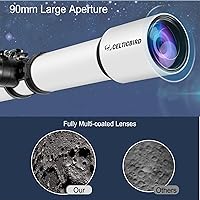
  • Objective Diameter: The primary lens measures 90mm, offering meaningful light-gathering capability for lunar and planetary observation.
  • Focal Length: The optical tube has a focal length of 700mm, yielding a focal ratio of approximately f/7.8.
  • Eyepiece Type: Kellner-design eyepieces are included, providing sharp center-of-field performance suited to bright targets like the moon and planets.
  • Finderscope: A 5x24 optical finderscope is mounted on the tube to help users locate and center celestial targets before viewing.
  • Mount Type: The Vertisteel Altazimuth mount features fine-adjustment handles and a calibrated scale for precise manual positioning in both altitude and azimuth axes.
  • Tripod Material: The tripod legs are constructed from thick stainless steel, contributing to the scope's overall rigidity and vibration resistance during use.
  • Tripod Height: The tripod extends to a maximum working height of 51 inches, with adjustability to accommodate observers of varying heights.
  • Focus Type: Focusing is achieved manually via a rack-and-pinion focuser on the eyepiece drawtube.
  • Phone Adapter: A smartphone adapter is included in the box, enabling afocal photography through the eyepiece using a compatible smartphone.
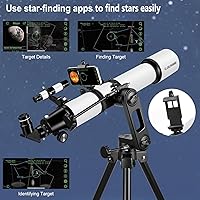
  • Phone Holder: A dedicated phone holder bracket is included, designed to assist with star-finding when paired with a stargazing app on a smartphone.
  • Compatible Devices: The phone adapter and holder are designed for use with smartphones; no specific operating system or model requirement is stated.
  • Assembled Weight: The fully assembled telescope and tripod system weighs approximately 14.07 pounds.
  • Dimensions: The assembled unit measures 35.4″ in depth by 12.4″ in width by 7.1″ in height.
  • Lens Coating: The objective lens features multi-layer fully coated optics with high-transmission coatings to maximize light throughput and image contrast.
  • Model Number: The manufacturer model designation for this telescope is 90700, reflecting its 90mm aperture and 700mm focal length.
  • Brand & Origin: This telescope is manufactured by Celticbird, a brand that entered the consumer telescope market in August 2024.
  • Optical Tube Length: The optical tube length is 700mm, consistent with the stated focal length of the refractor design.
  • Availability Date: This product was first listed for sale on August 23, 2024, making it a relatively new entry in the consumer telescope category.

Related Reviews
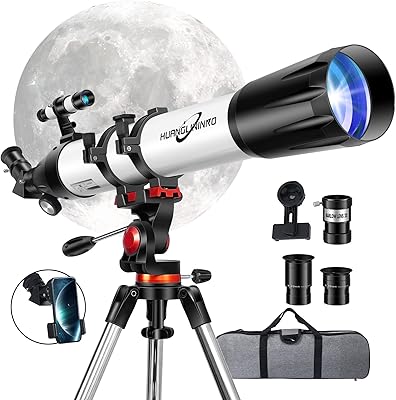
Celticbird 80mm 800mm Refractor Telescope
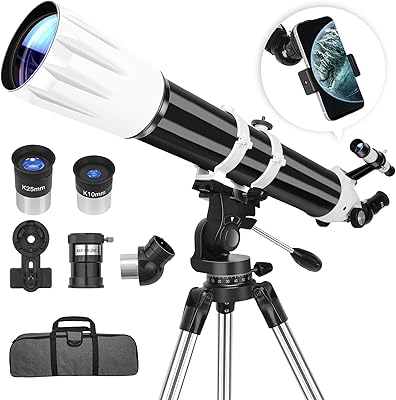
75%
83%
Optical Clarity
91%
Ease of Assembly
78%
Mount Usability
61%
Tripod Stability
58%
Included Eyepiece Quality
More
PISEZ 90800 90mm Refractor Telescope
68%
83%
Optical Clarity
81%
Value for Money
72%
Ease of Setup
68%
Magnification Range
61%
Tripod Stability
More
Hawkko 90900 Refractor Telescope
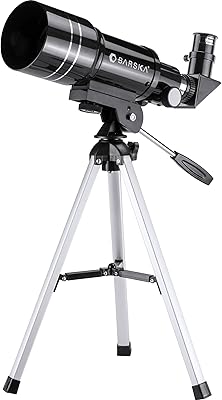
75%
83%
Optical Clarity
76%
Build Quality
69%
Mount Smoothness
88%
Ease of Setup
71%
Magnification Range
More
Barska Starwatcher Refractor Telescope 60mm
80%
91%
Value for Money
88%
Ease of Setup
93%
Portability
85%
Performance (Planetary Viewing)
62%
Performance (Deep-Sky Viewing)
More
HUGERSTAR 80600 Refractor Telescope
70%
78%
Optical Clarity
88%
Ease of Setup
61%
Tripod Stability
83%
Value for Money
84%
Portability
More
HEXEUM AZ50070 70mm Refractor Telescope
73%
78%
Optical Clarity
88%
Value for Money
57%
Tripod Stability
66%
Ease of Assembly
63%
Finderscope Usability
More
Barska Starwatcher 70mm Refractor Telescope
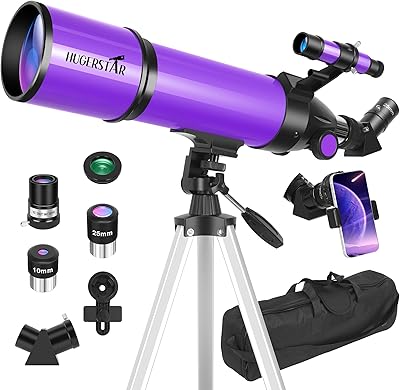
66%
72%
Optical Clarity
58%
Magnification Performance
54%
Build Quality
84%
Ease of Setup
88%
Portability & Storage
More
Koolpte AZ90900 90mm Refractor Telescope
68%
83%
Optical Clarity
79%
Mount Stability
86%
Ease of Setup
81%
Value for Money
61%
Phone Adapter Usability
More
SVBONY SV503 102mm ED Refractor Telescope
82%
88%
Optical Performance
93%
Focuser Quality
84%
Chromatic Aberration Control
91%
Build Quality
86%
Astrophotography Suitability
More
CELTICBIRD 70mm Kids Refractor Telescope
75%
88%
Ease of Assembly
76%
Optical Clarity
61%
Tripod Stability
84%
Value for Money
71%
Magnification Range
More

FAQ

Yes, on a clear night with steady atmospheric conditions, Saturn's rings are resolvable through this refractor telescope. You will see them as a distinct, separated band rather than a vague smudge. Managing your magnification with the included eyepieces is key — start lower and work up slowly for the sharpest view.

Most first-time users report being assembled and pointed at the moon within 30 to 45 minutes. The instructions are reasonably clear, though attaching the finderscope bracket and aligning it correctly tends to take the most time. Having a second pair of hands for the first assembly makes the process noticeably smoother.

It works well for teenagers and older children who have a genuine interest in astronomy, especially with a parent nearby for the first few sessions. The adjustable tripod accommodates shorter observers comfortably. Younger children under 9 or 10 may struggle with the manual focus and mount adjustments without consistent adult guidance.

A practical rule of thumb for refractors is roughly 2x per millimeter of aperture, which puts the realistic ceiling around 180x for this beginner astronomy scope. Beyond that, atmospheric turbulence and optical limitations reduce image quality rather than revealing more detail. The included eyepieces do not reach that ceiling, so aftermarket eyepieces can help you explore the upper range.

The adapter is designed to fit a range of smartphone sizes, but very large flagship phones with thick cases may require removing the case to fit securely. It clips over the eyepiece via a clamping mechanism, so the fit depends more on your phone's width than its brand. Expect some trial and error before getting consistent shot alignment.

You can glimpse some of the brighter deep-sky targets — the Orion Nebula and open star clusters like the Pleiades are reasonable targets under dark skies. However, this is fundamentally a lunar and planetary scope; its focal ratio is not optimized for wide-field deep-sky observation. From suburban or urban locations with light pollution, faint galaxies will be largely invisible.

To align the finderscope, point the main scope at a distant daytime landmark, then adjust the finderscope's bracket screws until the same object is centered in the finder's crosshairs. The alignment generally holds for a session but can drift after transport or rough handling. It is worth rechecking alignment at the start of each outing, as several users have noted it shifts more than expected over time.

Technically yes, refractors can be used for daytime land viewing. However, this scope's longer focal length makes it less ideal for wide terrestrial scanning compared to dedicated spotting scopes. Images will also appear inverted without a diagonal corrector designed for land use, which is a minor but noticeable quirk for daytime applications.

Celticbird lists warranty terms through the Amazon product page, but as a brand less than a year old, their long-term support track record is still limited. Early buyer feedback suggests their support team is responsive to reports of missing or damaged parts. If warranty reliability is a major priority for you, it is worth checking for updated seller communications before purchasing.

A red-dot finder is one of the most practical early upgrades — it makes locating objects far faster than the included 5x24 optical finder. A wider-field eyepiece in the 20-25mm range will give you a more comfortable view for sweeping the moon and open clusters. A basic moon filter is also worth adding if lunar glare becomes overwhelming at higher magnifications.