Overview

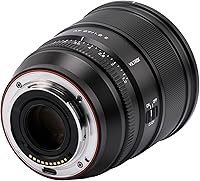
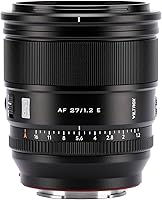
The VILTROX 27mm f/1.2 Sony E-Mount Prime Lens enters a competitive space as a third-party alternative for APS-C Sony shooters who want a genuinely fast prime without committing to Sony's own pricing. On an APS-C sensor, the 27mm focal length translates to roughly a 40mm full-frame equivalent — a natural, unexaggerated field of view that handles portraits, street work, and casual travel photography with equal comfort. VILTROX has steadily built a reputation as a Chinese optics brand that delivers real optical performance at prices below OEM. This isn't a budget lens, though. It sits firmly in premium third-party territory, making it most compelling for a6700 and a6500 owners who want a portrait-capable prime with serious credentials.

Features & Benefits

The headline spec is obvious, but what f/1.2 actually delivers in practice matters more than the number. In low-light environments like indoor events or evening street scenes, you gain roughly two stops over a typical kit lens — enough to keep ISO manageable and shutter speeds usable. The autofocus motor is near-silent and quick enough for everyday portraits, locking onto eyes reliably on compatible Sony bodies, which is genuinely useful for run-and-gun shooting. Optically, the 15-element construction keeps chromatic aberration well controlled even wide open. The 28cm minimum focus distance opens up closer compositional options that many primes in this range simply do not offer. USB firmware support means the lens stays updatable long-term.

Best For

This fast prime lens makes the most sense for Sony APS-C photographers who shoot people — whether that is formal portraits, candid street work, or documentary-style coverage. The near-silent autofocus and eye-tracking reliability also make it a credible choice for video shooters who need a lens that will not compromise audio tracks or miss a face mid-take. It is a logical step up for anyone moving on from a kit zoom who wants to experience what a wide-aperture prime actually changes about their images. Travel photographers will find the 40mm-equivalent field of view flexible enough to carry as a single lens for a full day out. Those wanting OEM-comparable AF integration without G Master pricing will find this Sony E-mount optic worth serious consideration.

User Feedback

With a 4.6-star average across around 123 ratings, buyer sentiment for this fast prime lens leans clearly positive. Photographers consistently highlight sharpness and bokeh quality as standout strengths, with many noting that center sharpness wide open exceeds expectations for a third-party lens at this price. Autofocus reliability on newer Sony bodies draws praise from both stills and video users. The criticisms worth knowing: some buyers flag the weight and barrel size as noticeably substantial on compact APS-C bodies, and a handful report mild edge softness at maximum aperture. A few reviewers mention the USB firmware update working as advertised. On balance, most buyers feel the value proposition holds up well against native Sony alternatives, though the review pool is still relatively modest.

Pros

  • The f/1.2 aperture delivers genuinely usable low-light performance and smooth, creamy background separation.
  • Eye-tracking autofocus works reliably on compatible Sony bodies, making portrait sessions notably easier.
  • Center sharpness wide open impresses for a third-party lens at this price point.
  • The near-silent AF motor makes this fast prime lens a practical choice for on-camera video recording.
  • A 28cm minimum focus distance adds creative close-focus flexibility that many competing primes skip.
  • USB firmware upgrades mean the lens can be improved over time without sending it anywhere.
  • EXIF data transmission keeps your metadata complete and in-camera shooting information accurate.
  • The 40mm-equivalent field of view is versatile enough to cover portraits, street, architecture, and travel in one lens.
  • Holding a 4.6-star average from real buyers indicates consistent optical and mechanical satisfaction.
  • Sits well below Sony native f/1.2 pricing while delivering comparable autofocus integration on APS-C bodies.

Cons

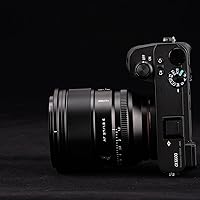
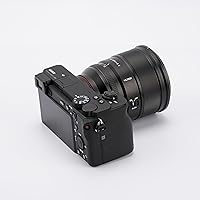
  • At 2.59 lbs, the VILTROX 27mm f/1.2 noticeably unbalances smaller, lighter APS-C camera bodies.
  • Edge sharpness at maximum aperture lags behind center performance and requires stopping down for even results.
  • Autofocus, while capable, can occasionally hunt in very low-contrast or dim lighting conditions.
  • The lens barrel size is bulky relative to what most APS-C shooters expect from a prime in this category.
  • Not compatible with full-frame Sony bodies for serious use — vignetting at wider apertures is a real limitation.
  • With around 123 ratings at the time of writing, the long-term reliability track record is still limited.
  • No weather sealing is mentioned, which is a real gap for outdoor shooters working in unpredictable conditions.
  • The price places it above casual upgrade territory, making it a hard sell for infrequent or hobby photographers.
  • Chromatic aberration, while controlled, is not fully eliminated at f/1.2 in high-contrast scenes.

Ratings

The VILTROX 27mm f/1.2 Sony E-Mount Prime Lens has been evaluated by our AI rating system after analyzing verified global buyer reviews, actively filtering out incentivized, bot-generated, and duplicate submissions to surface what real photographers actually experience. With a strong 4.6-star average from roughly 123 ratings, this fast prime earns consistent praise — but the scores below reflect both where it genuinely excels and where buyers have run into honest friction.
Optical Sharpness
88%
Center sharpness wide open at f/1.2 is the most celebrated quality among buyers, with portrait and street photographers reporting crisp subject detail even in challenging light. Stopping down to f/2 or f/2.8 brings the whole frame into impressive clarity that rivals pricier native options.
Edge and corner sharpness at maximum aperture falls noticeably short of the center performance, which can be a real issue for architecture or landscape shooters who need consistent rendering across the full frame. Most buyers accept this as a trade-off, but it is worth knowing before you buy.
Bokeh Quality
91%
Background rendering is widely praised as one of the strongest aspects of this Sony E-mount optic, with reviewers describing smooth, creamy out-of-focus transitions that hold up well even at moderate subject-to-background distances. Portrait photographers in particular find that the bokeh gives images a three-dimensional quality that is hard to achieve with slower primes on APS-C.
At very close focus distances, some buyers notice slightly busy bokeh rendering toward the edges of the blur zone, which can be distracting in certain compositional situations. This is a minor issue in practice and unlikely to bother most portrait or street shooters.
Autofocus Speed
79%
21%
For everyday portrait sessions, street shooting, and casual video work, the autofocus is quick enough to feel confident and is clearly a step above what older third-party Sony lenses offered. Eye-tracking engagement on bodies like the a6700 is reliable in well-lit environments and locks on quickly for standard portrait distances.
In low-contrast or dim conditions, some buyers report occasional hesitation and hunting before the lens settles on focus, which can mean missed moments during fast-moving events. It does not quite match the instantaneous acquisition of Sony G or Zeiss native glass, and action or wildlife photographers will feel that gap.
Low-Light Performance
86%
The f/1.2 aperture is genuinely useful for indoor event photography, evening street shooting, and any situation where you want to keep ISO under control without a flash. Buyers working in restaurants, galleries, and dimly lit venues report a clear practical advantage over f/1.8 or f/2 alternatives.
While the aperture does its job, autofocus reliability in very dark environments drops enough that some photographers resort to manual focusing or using AF assist. The lens performs best in low light when there is at least some contrast for the AF system to work with.
Build Quality
77%
23%
The physical construction feels solid and purposeful, with a barrel that inspires confidence during regular handling and gives the impression of a lens built to last through frequent use. Most buyers describe it as feeling premium relative to what they expected from a third-party manufacturer.
There is no weather sealing mentioned or confirmed, which is a meaningful gap for outdoor photographers who shoot in light rain or dusty environments. A few buyers have noted that the focus ring action, while smooth, lacks the tactile refinement of Sony native lenses at a similar price point.
Size & Handling
62%
38%
The substantial barrel gives the lens a professional feel in hand, and photographers using gripped bodies or shooting in a studio context find the size easy to manage. On larger APS-C bodies or any full-frame Sony, the balance is acceptable for extended sessions.
At 2.59 lbs, this is a heavy lens for an APS-C prime, and buyers using compact bodies like the a6100 or ZV-E10 consistently mention that it front-loads the camera uncomfortably during long handheld shoots. Travelers and street photographers who value discretion and light-kit portability will feel this tradeoff acutely.
Video Usability
83%
The near-silent autofocus motor is a genuine practical advantage for on-camera video recording, where mechanical lens noise is a common dealbreaker with cheaper third-party options. Eye-tracking during video is functional on supported Sony bodies, and focus transitions are smooth enough for most documentary and YouTube-style productions.
During extended video takes with shifting subject distances, a small number of buyers report occasional focus breathing and minor AF micro-adjustments that can be visible on larger screens. It is capable for video but not specifically engineered as a cinema or broadcast lens.
Chromatic Aberration Control
74%
26%
The 15-element optical construction does a solid job keeping purple and green fringing controlled in most shooting conditions, which buyers appreciate when reviewing images from high-contrast outdoor scenes. In typical portrait or street scenarios, aberrations are rarely prominent enough to require post-processing correction.
In strongly backlit or very high-contrast situations shot wide open, some lateral chromatic aberration becomes visible at subject edges and requires correction in Lightroom or Capture One. It is manageable but worth noting for photographers who shoot in JPEG and prefer straight-out-of-camera files.
Eye-Tracking AF Reliability
81%
19%
Eye-tracking integration with compatible Sony bodies like the a6700 works as advertised for portrait and people photography, with buyers reporting that the lens locks onto faces and eyes quickly in cooperative lighting. For wedding, event, or family portrait work, the reliability is strong enough to shoot with confidence.
Eye-tracking performance drops when subjects are partially occluded, wearing glasses, or moving in dim light, which is a system-level limitation rather than a lens defect but still affects the real-world experience. Buyers accustomed to Sony native lenses may notice the eye-tracking is slightly less tenacious in edge-case scenarios.
Value for Money
76%
24%
For buyers coming from kit zooms or budget primes, the optical and autofocus step-up delivered by the VILTROX 27mm f/1.2 feels well-justified given what comparable Sony native glass costs. Most reviewers explicitly state they feel they got strong performance relative to the price, especially compared to Sony G-series alternatives.
At its asking price, this is not an impulse purchase, and buyers who discover the weight or edge softness limitations after buying sometimes feel the value proposition is less clear than it appeared initially. A small number of reviewers note that for portrait-only use, a less expensive f/1.8 option might deliver nearly equivalent real-world results.
Close-Focus Capability
84%
The 28cm minimum focus distance is a practical differentiator that buyers use to capture tight detail shots, environmental portraits, and food photography without switching lenses. Street photographers in particular appreciate being able to get close to subjects without needing to step back to recompose.
At minimum focus distance, depth of field becomes extremely shallow at f/1.2, which makes precise manual focus or careful AF point selection essential to nail sharpness on the intended subject. It is not a macro lens and will not satisfy photographers who need true close-up magnification.
Firmware & Longevity
82%
18%
USB firmware update support is a meaningful practical benefit that buyers have already put to use, with several noting that post-purchase firmware updates improved autofocus behavior noticeably. The ability to update the lens yourself at home adds genuine long-term value and confidence in the product.
VILTROX's firmware update process requires downloading software from their website, which is functional but less polished than the in-camera update experience offered by Sony native lenses. With a relatively small buyer pool and a recent launch date, the long-term firmware support track record is still being established.
Focal Length Versatility
85%
The 40mm full-frame equivalent is widely regarded by photographers as one of the most natural and versatile focal lengths available, and buyers confirm this lens covers an impressive variety of genres in a single day of shooting. From street candids to architectural details and casual portraits, the field of view feels neither too tight nor too wide.
Because it is a prime, photographers accustomed to the convenience of a zoom will find themselves physically repositioning more often to recompose. The 40mm equivalent also sits in a range where some shooters prefer either a wider 35mm feel or a tighter 50mm look, making focal length preference the most personal variable in the buying decision.

Suitable for:

The VILTROX 27mm f/1.2 Sony E-Mount Prime Lens is built for Sony APS-C shooters who are ready to move past kit glass and want a single, capable prime that earns its place in a bag. Portrait photographers will get the most out of it — the wide aperture produces genuine subject separation at everyday distances, and the 40mm-equivalent field of view keeps compositions natural without the exaggerated perspective of something wider. Street photographers benefit from the same combination: a focal length that blends in and a fast enough aperture to shoot in mixed or fading light without wrestling ISO. Video shooters on the a6700 or similar bodies will appreciate the near-silent autofocus and eye-tracking reliability, since a lens that hums on-camera is essentially unusable for serious video work. Travel photographers who prefer one lens over a zoom bag will find the focal length versatile enough to stretch across genres in a single day.
Not suitable for:

Buyers expecting a lightweight, compact pairing for their small APS-C body should think carefully before purchasing — at 2.59 lbs, the VILTROX 27mm f/1.2 Sony E-Mount Prime Lens is genuinely heavy for a crop-sensor lens, and it will front-load smaller bodies like the a6100 or ZV-E10 in a way that gets uncomfortable on long outings. Full-frame Sony shooters should look elsewhere entirely, since this lens is optimized for APS-C sensors and will produce heavy vignetting on full-frame bodies at wider apertures. Photographers who demand absolute edge-to-edge sharpness wide open will need to stop down slightly, as maximum aperture performance toward the corners does not match the strong center performance. If your primary interest is wildlife or sports, the autofocus, while solid, is not the fastest available on Sony E-mount and may not keep pace with erratically moving subjects the way a native Sony G lens would. Budget-focused buyers should also be clear-eyed: this is a premium-priced third-party lens, not an entry-level purchase.
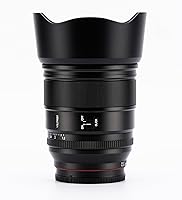
Specifications

  • Focal Length: The lens has a 27mm focal length, which translates to approximately a 40mm full-frame equivalent when mounted on an APS-C Sony body.
  • Max Aperture: The maximum aperture is f/1.2, enabling strong background separation and usable exposure in low-light environments.
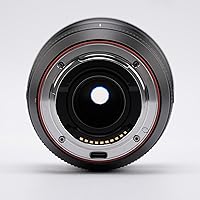
  • Lens Mount: Designed exclusively for Sony E-Mount, making it compatible with APS-C and full-frame Sony mirrorless bodies, though optimized for APS-C use.
  • Optical Formula: The lens uses 15 glass elements arranged in 11 groups to balance sharpness, aberration control, and light transmission across the aperture range.
  • Min Focus Distance: The minimum focusing distance is 28cm (approximately 11 inches), allowing closer subject framing than many competing primes in this category.
  • Autofocus Type: Autofocus is driven by a motor-driven, near-silent system that supports eye-tracking on compatible Sony bodies and is well-suited to video recording.
  • EXIF Support: Full EXIF data transmission is supported, meaning lens metadata — including aperture and focal length — is recorded accurately with every image file.
  • Firmware Upgrade: The lens supports USB firmware upgrades, allowing users to install performance improvements or bug fixes without returning the lens for service.
  • Dimensions: The lens measures 3.7 x 3.2 x 3.2 inches, giving it a noticeably substantial barrel diameter relative to typical APS-C prime lenses.
  • Weight: The lens weighs 2.59 lbs, which is on the heavier end for an APS-C-oriented prime and may affect balance on lighter Sony bodies.
  • Lens Type: This is a wide-angle prime lens with a fixed focal length, offering no optical zoom and designed to maximize aperture and optical quality.
  • Compatible Cameras: Primary compatibility covers Sony APS-C bodies including the a6700 and a6500, with physical mount compatibility extending to Sony a7-series full-frame bodies.
  • Minimum Aperture: The minimum aperture is not explicitly listed in official specs, but the lens is designed to stop down well for landscape and architecture use cases.
  • Eye-Tracking AF: Eye-tracking autofocus is supported on compatible Sony bodies, enabling reliable subject-locking during portrait and documentary-style shooting.
  • Manufacturer: The lens is manufactured by VILTROX, a Chinese optics brand that has expanded its lineup of autofocus-capable mirrorless lenses across multiple mount systems.
  • Availability Date: The lens became publicly available in January 2024, making it a relatively recent addition to the Sony E-mount third-party lens ecosystem.
  • BSR Ranking: At the time of evaluation, this lens held a Best Sellers Rank of number 31 in the Mirrorless Camera Lenses category on Amazon.
  • User Rating: The lens carries an average rating of 4.6 out of 5 stars based on approximately 123 buyer ratings on Amazon.

Related Reviews

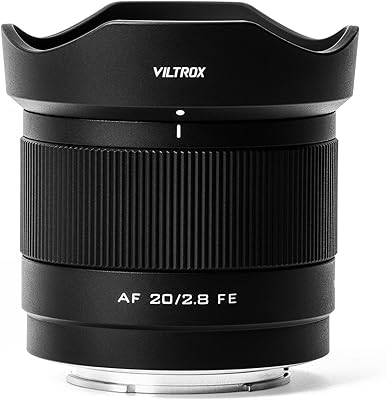
Viltrox 20mm f/2.8 FE Wide-Angle Lens
74%
93%
Value for Money
74%
Image Sharpness
71%
Autofocus Performance
67%
Build Quality
96%
Portability & Size
More
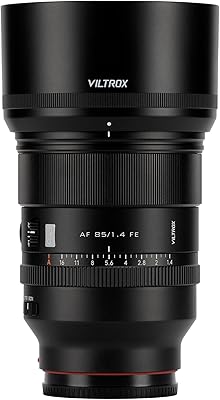
VILTROX 85mm f/1.4 Pro FE Portrait Lens
82%
91%
Optical Sharpness
93%
Bokeh Quality
84%
Autofocus Speed & Reliability
88%
Autofocus Noise
86%
Build Quality & Materials
More
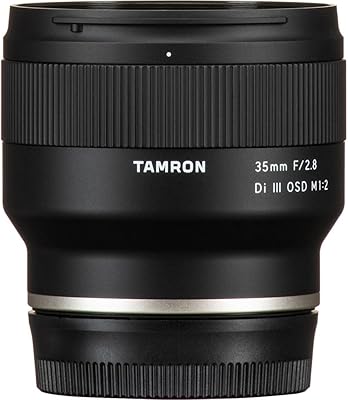
Tamron 35mm f/2.8 Di III OSD M1:2 Lens for Sony E-Mount
85%
94%
Image Quality
75%
Autofocus Speed
90%
Macro Performance
88%
Build Quality
91%
Portability
More
Tamron 35-150mm F/2-2.8 Di III VXD Lens
84%
92%
Optical Sharpness
89%
Autofocus Performance
94%
Aperture Versatility
87%
Build Quality
78%
Value for Money
More
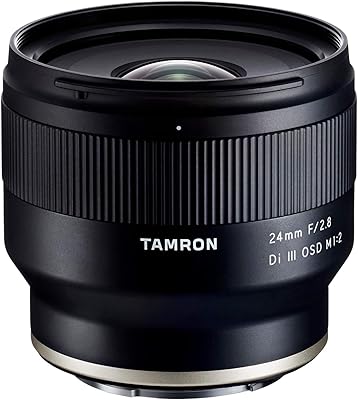
Tamron 24mm F/2.8 Di III OSD Lens
79%
91%
Image Sharpness
93%
Value for Money
74%
Build Quality & Durability
71%
Autofocus Performance
88%
Macro Capability
More
ZEISS Batis 135mm f/2.8 Telephoto Lens
82%
93%
Optical Sharpness
91%
Bokeh and Background Rendering
82%
Autofocus Performance
89%
Build Quality and Weather Sealing
68%
Value for Money
More
ZEISS Batis 40mm f/2 Prime Lens
83%
94%
Optical Sharpness
92%
Color & Contrast Rendering
91%
Build Quality
83%
Autofocus Performance
67%
Value for Money
More
Sigma 56mm Contemporary Prime Camera Lens
84%
93%
Optical Sharpness
91%
Bokeh Quality
84%
Autofocus Performance
88%
Video AF & Audio
89%
Low-Light Performance
More
Tamron 20-40mm f/2.8 Di III VXD Lens
80%
91%
Image Sharpness
89%
Autofocus Performance
83%
Build Quality & Durability
94%
Size & Portability
67%
Zoom Range Versatility
More
VILTROX 35mm f/1.7 Fujifilm X-Mount Lens
83%
91%
Optical Sharpness
83%
Autofocus Speed
88%
Bokeh Quality
72%
Build Quality
87%
Video Performance
More

FAQ

Yes, the VILTROX 27mm f/1.2 Sony E-Mount Prime Lens is well-matched to the a6700 specifically. Eye-tracking autofocus is supported, and the electronic connection handles EXIF data and firmware updates. Real-world AF performance on the a6700 is generally reported as fast and reliable for stills, though extremely fast or erratic movement may occasionally challenge it.
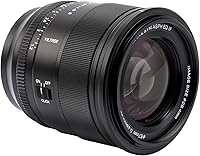
Physically, yes — it mounts on any Sony E-mount body. However, this lens is optimized for APS-C sensors. On a full-frame body at wider apertures, you will likely see significant vignetting around the edges. You can use the camera's APS-C crop mode to work around this, but you will lose a large portion of your megapixel count.

It is competitive for everyday shooting — portraits, street, casual video — but it is honest to say it does not quite match the snappiest Sony G or Zeiss native lenses in terms of raw acquisition speed. For most shooters, the difference will not matter. If you are tracking unpredictably moving subjects in challenging light, native glass may give you a slight edge.

It depends on how you shoot. Handheld for short sessions, most people adapt quickly. But on smaller APS-C bodies like the a6400 or ZV-E10, the lens will noticeably front-load the camera, and extended handheld shooting can become tiring. If you use a grip or shoot on a tripod frequently, the weight is far less of an issue.

Center sharpness at f/1.2 is genuinely strong and one of the aspects buyers most consistently praise. Edge and corner sharpness, however, softens at maximum aperture — which is normal behavior for fast primes. If you need edge-to-edge consistency, stopping down to f/2 or f/2.8 brings a meaningful improvement across the frame.

VILTROX provides a USB firmware update tool that connects directly to the lens via a USB port on the barrel. You download the latest firmware from VILTROX's official website, connect the lens to your computer, and run the updater. The process is straightforward and has been confirmed by buyers to work as described. Keeping firmware current is worth doing, as updates can address autofocus behavior.

It handles video well for most use cases. The near-silent autofocus motor means it will not bleed mechanical noise into on-camera audio, which is a real practical advantage. Eye-tracking works during video on supported bodies, and smooth focus transitions are achievable. It is not a dedicated cinema lens, but for YouTube, documentary, or travel video work, it performs solidly.

On an APS-C sensor, f/1.2 gives you noticeably more background blur than an f/1.8 or f/2 lens, though the effect is less dramatic than f/1.2 would produce on a full-frame body due to the smaller sensor size. For head-and-shoulders portraits with moderate subject-to-background separation, the bokeh is smooth and pleasing. Buyers specifically call out the background rendering as one of this fast prime lens's strongest qualities.

It adds genuine flexibility compared to primes with 35–45cm minimum distances. You can fill the frame with a face at a flattering working distance, or move in tight on a product or food dish without needing a macro lens. It is not a true macro lens and will not hit 1:1 magnification, but for detail shots and close environmental compositions, the short focusing distance is a real benefit.

The 15-element optical construction does a reasonable job of managing chromatic aberration, especially stopped down slightly. Wide open in very high-contrast scenes — bright backlighting, for example — you may see some fringing at edges, but it is not severe and can typically be corrected in post-processing with standard lens correction tools. Overall, aberration control is considered a strength by most buyers who shoot in varied conditions.