Overview

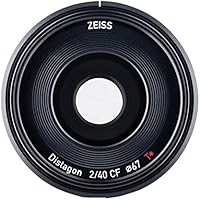
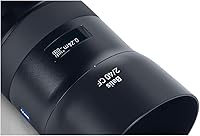
The ZEISS Batis 40mm f/2 Prime Lens occupies an interesting niche in the Sony full-frame ecosystem — a focal length that feels genuinely natural to shoot with, yet distinct enough from the crowded 35mm and 50mm options to earn its own identity. The Batis line sits at the top of ZEISS's mirrorless-native offerings, and this particular prime has attracted serious photographers who want German optical engineering without mounting an adapter. The build is compact and weather-sealed, which matters when you're hauling one lens through rain or dusty markets. And yes, there's an OLED display on the barrel — unusual enough that it's worth discussing properly.
Features & Benefits

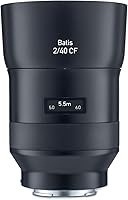
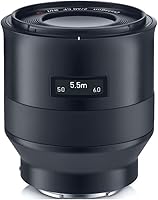
At f/2, this ZEISS 40mm delivers the kind of subject separation and low-light performance you'd expect from a fast prime — but what sets it apart is the rendering character. Images carry that distinctly ZEISS look: rich contrast and color that the T* coating helps deliver by cutting down flare in ways you actually notice when shooting backlit scenes. The OLED display on the barrel shows focus distance and depth of field — handy at night or during video work where squinting at a screen isn't practical. Autofocus is native to Sony E-mount, running quietly and reliably, which matters for anyone shooting video or working in quieter environments.

Best For

The lens is a natural fit for street and travel photographers who want one sharp, compact prime that won't attract attention or add strain over long days. Sony A7 and A9 series shooters looking to consolidate a bag around a single walk-around option will find 40mm hits a practical sweet spot — wider than a nifty fifty yet less extreme than 35mm, giving you slightly more context in a frame without losing intimacy. Videographers will appreciate the quiet autofocus and the near-human perspective of the focal length. Those shooting in unpredictable conditions — rain, dust, humidity — will lean on the weather-sealed metal body with confidence.

User Feedback

Owners consistently praise sharpness wide open and the color rendering that ZEISS optics are known for — many describe it as one of the more optically satisfying primes they have used on Sony bodies. Build quality earns similar enthusiasm; it feels substantial without being heavy. That said, the price draws regular scrutiny. Buyers inevitably weigh this Batis prime against Sony G-series options and Sigma Art alternatives that cost considerably less. The OLED display divides opinion — some find it genuinely useful in dim interiors or when pulling focus manually; others consider it a curiosity they rarely use. Autofocus performance is largely praised, though some older Sony bodies reportedly show less consistency than newer ones.

Pros

  • Sharpness wide open is exceptional — images hold detail and clarity at f/2 without needing to stop down.
  • The ZEISS T* coating produces noticeably rich color and contrast, especially in backlit or high-contrast scenes.
  • Weather and dust sealing on the metal body makes it a reliable companion in unpredictable outdoor conditions.
  • Native Sony E-mount autofocus is quiet and smooth, making it genuinely practical for video as well as stills.
  • At roughly 361g, this Batis prime is compact and light enough for all-day carry without fatigue.
  • The 40mm focal length hits a genuinely useful sweet spot between 35mm and 50mm for everyday shooting.
  • The OLED focus distance and depth-of-field display on the barrel is a practical aid in dark shooting environments.
  • Full-frame coverage means no compromises for Sony A7 or A9 series users shooting at full resolution.
  • Build quality feels premium and substantive — this lens inspires confidence in a way few others do at this size.

Cons

  • No optical stabilization built into the lens, which puts more reliance on in-body stabilization from the camera body.
  • The price is steep enough that direct competitors from Sony and Sigma offer strong value at this focal length for less.
  • The OLED display, while functional, adds complexity and is a potential long-term reliability concern some buyers note.
  • Autofocus consistency has been reported as less reliable on older Sony bodies compared to current generation cameras.
  • The 40mm focal length has a narrower audience than 35mm or 50mm, and some buyers find adapting to it takes time.
  • No aperture ring, which may frustrate photographers who prefer tactile manual control during video work.
  • Lens hood is sold separately, which feels like an oversight at this price tier.
  • Resale value, while reasonable, does not hold as strongly as Sony G Master lenses in the used market.

Ratings

The scores below reflect AI-driven analysis of verified global user reviews for the ZEISS Batis 40mm f/2 Prime Lens, with spam, bot activity, and incentivized feedback actively filtered out to ensure reliability. We have weighted both the praise and the recurring frustrations equally, so what you see here is an honest picture of what real owners experience over time — not a curated highlight reel. Strengths are credited where they are earned, and pain points are called out without softening.

Optical Sharpness
94%
Owners consistently describe this Batis prime as sharp from the moment you open the aperture wide — not edge-to-edge perfect in every situation, but centrally outstanding in the way that makes portrait and street shots look immediately credible. Stopping down to f/4 or f/5.6 extends that sharpness across the full frame, and reviewers who compare it directly to competing Sony or Sigma options acknowledge it resolves fine detail with real authority.
A small number of users note slight softness in the extreme corners at f/2 on high-resolution sensors like the A7R series, which some feel is noticeable when pixel-peeping large prints. This is a common trait for fast primes at maximum aperture, but buyers shooting flat subjects or architecture may want to keep it in mind.
Color & Contrast Rendering
92%
The ZEISS T* coating earns its reputation here — colors come through with a richness and depth that many photographers describe as immediately distinctive, particularly in backlit or mixed-light scenes where lesser lenses tend to wash out or shift. Owners who photograph food, portraits, and travel imagery frequently single out the color rendering as the primary reason they chose this lens over alternatives at a similar focal length.
A few users feel the contrast rendering can occasionally feel slightly clinical compared to vintage ZEISS optics, particularly in scenes with complex lighting. This is a minor and subjective complaint, but photographers looking for a softer, more painterly rendering may find it slightly more neutral than expected.
Build Quality
91%
The all-metal construction earns near-universal approval from buyers who have handled a lot of lenses — it communicates solidity without the lens feeling punishing to carry all day. Photographers who move between indoor and outdoor conditions regularly, including light rain and dusty markets, report that the weather sealing holds up without any degradation in operation or image quality.
A handful of users note that the smooth metal barrel can feel slightly slippery during cold-weather shooting with gloves, and the absence of a physical aperture ring frustrates photographers accustomed to tactile control during video work. These are ergonomic rather than durability concerns, but they do affect the shooting experience for some users.
Autofocus Performance
83%
On current Sony A7 and A9 generation bodies, the autofocus is praised for being fast, quiet, and reliable enough for candid street shooting and even moderate-action scenarios. Video shooters specifically appreciate how little motor noise bleeds into audio recordings, which makes this ZEISS 40mm a practical choice for run-and-gun documentary or vlog-style footage.
Owners using older Sony bodies — particularly pre-A7 III generation cameras — report noticeably less consistent autofocus, especially in lower-contrast or low-light situations. A few users also note that continuous tracking for moving subjects is competent but not in the same league as dedicated sports or action-optimized Sony G Master optics.
Value for Money
67%
33%
Buyers who are fully committed to the Sony full-frame ecosystem and who regularly produce work where optical quality has a direct professional impact tend to feel the investment justifies itself over time. The build longevity and optical consistency are genuinely strong arguments for the price when amortized across years of intensive use.
This is where the most persistent user frustration surfaces — the existence of the Sony FE 40mm f/2.5 G and the Sigma 45mm f/2.8 at substantially lower price points makes this lens a very hard sell on value grounds alone. Casual or enthusiast photographers who cannot point to a direct professional need for the optical performance gap will likely feel the price difficult to rationalize.
OLED Display Usability
72%
28%
Users who work in low-light environments — event photographers, videographers doing manual focus pulls, or photographers in dimly lit interiors — consistently describe the OLED display as a practical tool that earns its place once you start using it regularly. The readability in dark conditions is genuinely better than trying to read traditional distance scale engravings.
For the majority of everyday shooters, the display goes largely ignored, and several users describe it as a feature that impressed them unboxing but rarely enters their workflow in practice. There is also a low-level concern among some buyers about the long-term reliability of an electronic component embedded in a lens that sees heavy use.
Focal Length Versatility
78%
22%
Photographers who commit to 40mm tend to become genuinely attached to it — it covers street, travel, casual portrait, and documentary work in a way that feels natural and unremarkable in the best sense, not drawing attention to itself the way a very wide or very tight focal length might. Buyers describe adapting to it quickly, often within a few days of deliberate use.
The 40mm position generates ongoing buyer hesitation precisely because it sits between two far more established focal lengths. Some users who picked it up hoping it would replace both a 35mm and 50mm in their bag report ultimately still reaching for those lenses in specific situations, meaning it does not always function as the single-prime solution they hoped for.
Portability & Size
88%
At roughly 361g with a modest physical footprint, the lens balances well on compact Sony A7-series bodies without creating the front-heavy feeling that larger primes can produce over a long shooting day. Street photographers and travelers specifically call out the low profile as a practical advantage when trying to remain unobtrusive in public spaces.
It is noticeably larger and heavier than the Sony FE 40mm f/2.5 G, which some buyers discover only after comparing in-person, and a few users report this was a factor in their eventual decision to return or resell. For a compact mirrorless system, size sensitivity is real, and the size difference is not trivial.
Bokeh & Background Rendering
86%
The nine-bladed aperture produces smooth, rounded out-of-focus areas that owners describe as pleasing rather than mechanical, particularly in portrait-distance shooting where specular highlights in the background render as clean circles rather than hard-edged shapes. At f/2, subject separation is strong enough to produce clearly differentiated foreground and background layers.
At 40mm the background compression is less dramatic than longer primes, meaning bokeh is appealing but not as visually dominant as what a 85mm or 135mm would produce at similar apertures. Buyers who prioritize heavily blurred backgrounds as a primary creative tool may feel somewhat constrained by the focal length regardless of the aperture.
Flare & Ghosting Resistance
89%
The T* coating handles backlit and contra-jour shooting situations with notable composure — photographers who shoot street scenes with direct sun in or near the frame describe far fewer unwanted artifacts than with comparable lenses lacking equivalent coatings. Colors remain saturated and contrast holds well even in challenging high-contrast lighting conditions.
In extreme direct-sun scenarios without a hood attached, some users report occasional mild veiling flare, and the fact that the lens hood is sold separately means many buyers are shooting without this protection initially. Fitting a hood at purchase time essentially eliminates most of these complaints, but it should not be an extra purchase at this price point.
Video Suitability
81%
19%
The quiet autofocus motor and the natural 40mm perspective make this lens a capable video companion for documentary and interview-style work on Sony mirrorless bodies. The OLED display adds an unexpected but real benefit for manual focus shooters who want reliable distance reference without diverting attention from the scene.
The absence of an aperture ring limits direct exposure control during recording in a way that dedicated cine or hybrid lenses address natively, which matters to videographers who want tactile in-shot adjustments. Breathing — the slight change in field of view when adjusting focus — is present, though controlled enough that it rarely becomes distracting in typical use.
Low-Light Performance
87%
Shooting handheld in dim indoor environments — restaurants, museums, evening events — at f/2 gives photographers enough light-gathering to maintain usable shutter speeds where a slower lens would force a compromise on ISO or motion blur. Users who frequently shoot without flash in available-light situations consistently list this as one of the practical arguments for the wider aperture over cheaper f/2.5 alternatives.
Without optical stabilization, the lens is entirely dependent on the camera body for shake correction, which means older Sony bodies with weaker IBIS may still struggle at very low shutter speeds. Users who frequently shoot in near-darkness or who have camera shake sensitivity should factor body compatibility carefully before deciding this meets their low-light needs.
Resale Value Retention
74%
26%
ZEISS optics generally hold their value better than generic third-party lenses on the used market, and this Batis prime benefits from a buyer community that understands what it is and why it commands a premium. Well-maintained copies with original packaging tend to sell relatively quickly among Sony shooters.
The resale price does not hold as firmly as Sony G Master lenses, which carry stronger brand recognition among mainstream Sony users and tend to dominate used market search queries. Buyers purchasing this lens as a long-term asset should be aware that brand cachet within the Sony ecosystem leans toward first-party options at resale time.

Suitable for:

The ZEISS Batis 40mm f/2 Prime Lens is purpose-built for Sony full-frame shooters who have decided that optical quality and build integrity matter more than saving money. Street photographers and documentary shooters will find the focal length genuinely liberating — it frames the world in a way that feels natural without the claustrophobia of a 50mm or the wide-angle distortion of a 35mm, making it easier to work quickly in unpredictable environments. Travel photographers who want one compact, weather-resistant prime they can trust in rain, humidity, or dusty conditions will appreciate the metal construction and the peace of mind it provides. Videographers working on Sony A7 or A9 bodies will benefit from the quiet native autofocus and the near-human perspective that the focal length naturally produces on screen. This lens also suits enthusiasts who have outgrown kit zooms and want a single, meaningful upgrade that genuinely changes how their images look and feel.
Not suitable for:

The ZEISS Batis 40mm f/2 Prime Lens is a hard sell for anyone who is budget-conscious or still exploring whether prime lenses suit their shooting style — at this price point, the investment only makes sense if you already shoot Sony full-frame and you know you reach for a standard focal length regularly. Photographers who rely heavily on in-lens optical stabilization will find none here, which can be a real limitation when shooting handheld in low light on older Sony bodies without strong in-body stabilization. If you primarily shoot Sony APS-C cameras, the crop factor pushes the effective field of view closer to 60mm, which changes the character of the lens entirely and undermines the case for buying it. Budget-oriented buyers who are weighing this against the Sigma 45mm f/2.8 or Sony's own FE 40mm f/2.5 G should know those alternatives deliver respectable results at a fraction of the investment. And if you shoot Canon, Nikon, or any non-Sony system, this lens simply is not compatible.
Specifications

  • Focal Length: This is a fixed 40mm lens designed for full-frame Sony E-mount cameras.
  • Max Aperture: The maximum aperture is f/2, allowing strong background separation and solid low-light performance.
  • Min Aperture: The aperture closes down to f/22 for maximum depth of field when conditions require it.
  • Sensor Format: Designed for 35mm full-frame sensors, covering the complete image circle without vignetting on Sony full-frame bodies.
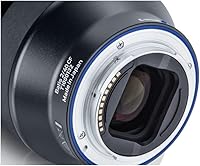
  • Camera Mount: Uses the native Sony E-Mount interface, ensuring full electronic communication with compatible Sony mirrorless cameras.
  • Weight: The lens weighs 361g (approximately 12.7 oz), keeping it practical for extended handheld use.
  • Dimensions: Physical measurements are 3.7 x 3.6 x 3.6 inches, making this a compact option for its optical class.
  • Lens Type: Classified as a standard prime, placing it in the natural perspective range used for everyday and documentary shooting.
  • Optical Coating: ZEISS T* anti-reflective coating is applied to reduce flare and ghosting while improving color saturation and contrast.
  • OLED Display: An integrated OLED panel on the lens barrel shows focus distance and depth-of-field scale, readable even in low-light conditions.
  • Weather Sealing: The lens features dust and splash resistance through sealed metal construction, suitable for outdoor use in light rain or dusty environments.
  • Autofocus System: Native autofocus is powered by an internal drive motor optimized for quiet, smooth operation compatible with Sony mirrorless bodies.
  • Manufacturer: Designed and manufactured by Carl Zeiss AG, a German optical company with a long-standing reputation in precision optics.
  • Availability: This lens was first made available in November 2018 and remains an active product in the ZEISS lineup.
  • Filter Thread: The lens accepts 67mm screw-in filters, a standard size that gives access to a wide range of polarizers, ND filters, and UV protectors.
  • Aperture Blades: The aperture diaphragm uses 9 rounded blades, contributing to smooth, circular bokeh rendition in out-of-focus areas.
  • Minimum Focus: The minimum focusing distance is approximately 24cm (about 9.4 inches), allowing moderately close subject work without extension tubes.
  • Image Stabilization: This lens does not include optical stabilization; it relies entirely on in-body image stabilization available in compatible Sony bodies.

Related Reviews
ZEISS Batis 135mm f/2.8 Lens for Sony E Mount
89%
95%
Image Quality
78%
Autofocus Performance
90%
Build Quality
92%
Weather Sealing
85%
Portability
More
Nikon Z f
Nikon Z f
80%
93%
Build Quality & Design
91%
Image Quality
82%
Autofocus Performance
76%
Video Capabilities
84%
In-Body Stabilization
More
ZEISS Batis 18mm f/2.8 for Sony E Mount Mirrorless Cameras
89%
94%
Image Quality
89%
Low-Light Performance
92%
Build Quality
81%
Autofocus Performance
95%
Portability/Size
More
Tamron 20-40mm f/2.8 Di III VXD Lens
80%
91%
Image Sharpness
89%
Autofocus Performance
83%
Build Quality & Durability
94%
Size & Portability
67%
Zoom Range Versatility
More
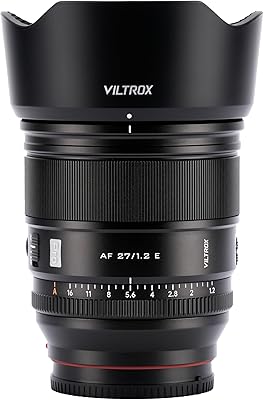
VILTROX PRO 27mm f/1.2 Auto Focus Prime Lens for Sony E-Mount
86%
86%
Autofocus Speed
91%
Sharpness and Image Quality
88%
Bokeh Quality
80%
Build Quality
74%
Low Light Performance
More
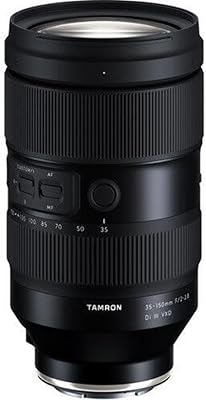
Tamron 35-150mm F/2-2.8 Di III VXD Lens
84%
92%
Optical Sharpness
89%
Autofocus Performance
94%
Aperture Versatility
87%
Build Quality
78%
Value for Money
More
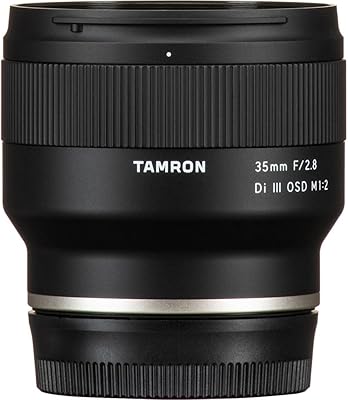
Tamron 35mm f/2.8 Di III OSD M1:2 Lens for Sony E-Mount
85%
94%
Image Quality
75%
Autofocus Speed
90%
Macro Performance
88%
Build Quality
91%
Portability
More
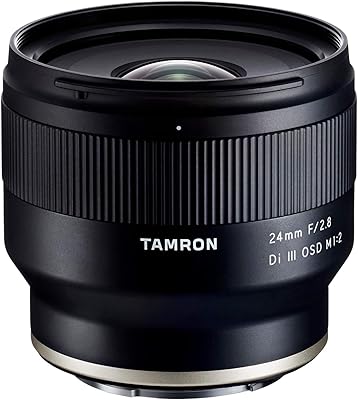
Tamron 24mm F/2.8 Di III OSD Lens
79%
91%
Image Sharpness
93%
Value for Money
74%
Build Quality & Durability
71%
Autofocus Performance
88%
Macro Capability
More
Sony SEL35F18 35mm f/1.8 Prime Lens
82%
91%
Optical Sharpness
88%
Low-Light Performance
79%
Autofocus Speed
83%
Video Autofocus
84%
Image Stabilization
More
Canon EF-S 24mm f/2.8 STM Lens
79%
88%
Image Sharpness
82%
Autofocus Performance
61%
Build Quality
96%
Portability & Size
74%
Low-Light Capability
More

FAQ

Physically, yes — the Sony E-mount is shared between full-frame and APS-C bodies, so the lens will attach and function. However, on an APS-C sensor the effective field of view becomes roughly 60mm due to the crop factor, which changes the character of the lens noticeably. It was designed and optimized for full-frame, so that is where it performs as intended.

It is a fair question and one many buyers wrestle with. In practice, 40mm sits in a genuinely useful middle ground — slightly more context than a 50mm but without the subtle distortion you can get at 35mm on subjects close to the frame. Many photographers who try it find it quickly becomes their default because it renders scenes in a way that feels close to how we naturally see. That said, if you already own both a 35mm and a 50mm and love them, the overlap may be difficult to justify at this price.

It is useful in specific situations rather than an essential daily feature. When shooting in dim conditions — a dimly lit venue, an evening event, or any situation where squinting at your camera screen is awkward — being able to glance at the barrel and read the focus distance is genuinely practical. For manual focus pullers doing video work, it can also help with repeatable focus marks. For general daytime shooting, many users acknowledge they rarely look at it.

No, there is no optical stabilization built into this lens. You will be relying on whatever in-body stabilization your Sony camera offers. On newer Sony A7 IV or A7R V bodies with strong IBIS, this is generally not a problem in most shooting situations. On older bodies with more modest stabilization, you may notice the limitation in low light at slower shutter speeds.

The Sony FE 40mm f/2.5 G is a genuinely strong lens and a very real competitor. It is smaller, lighter, and considerably less expensive. The Batis prime has a half-stop wider aperture at f/2 versus f/2.5, which matters in low light and for background separation. It also has the OLED display and weather sealing that feels more robust. Optically, both lenses are excellent — the decision largely comes down to budget and whether the wider aperture and ZEISS rendering signature justify the price difference for your work.

It is rated for dust and splash resistance, meaning it can handle light rain and typical outdoor exposure with reasonable confidence. It is not fully submersible or designed for heavy downpours. Most photographers who use it outdoors regularly report feeling comfortable in drizzle and dusty conditions. As with any weather-resistant gear, it is a level of protection, not a guarantee — pairing it with a similarly sealed Sony body makes the most sense.

On the A7 III the autofocus is reliable and quick for most still photography. On newer bodies like the A7 IV or A7R V, you tend to get slightly more responsive tracking and better face and eye detection integration, since those bodies have more advanced AF algorithms that work with native E-mount lenses. For video autofocus, the lens runs quietly, which is one of its stronger practical traits across body generations.

The filter thread is 67mm, which is a common size with good availability across brands. You should have no trouble finding polarizing filters, neutral density filters, or UV protectors in this size without needing step-up rings.

The lens hood is not included in the standard box — it is sold separately, which is a notable omission at this price tier and a recurring complaint from buyers. The box typically includes the lens, front and rear caps, and documentation. If you plan to shoot outdoors in variable lighting, picking up the dedicated hood at the same time is worth doing.

This Batis prime holds its value reasonably well in the used market — ZEISS optics tend to retain buyer interest and do not depreciate as aggressively as some third-party lenses. That said, Sony G and G Master lenses often command stronger resale prices simply because of higher brand recognition among Sony shooters. Buying in good condition and keeping the original box and accessories will help you get the best return if you ever choose to sell.

Where to Buy

Fort Worth Camera The Print Refinery
In stock $639.99
Helix Camera & Video
In stock $1,169.00