Overview

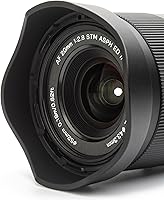
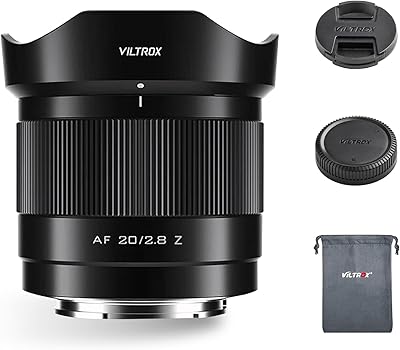
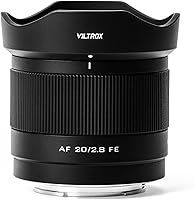
The Viltrox 20mm f/2.8 FE Wide-Angle Lens has carved out a notable niche in the Sony E-mount ecosystem by offering full-frame wide-angle coverage at a price that doesn't require a second thought. Viltrox has been building a credible reputation as a third-party lens maker that punches well above its cost bracket — and this wide-angle prime is a good example of why. The 20mm focal length and f/2.8 aperture sit squarely in sweet-spot territory for travel, street, and landscape work. It's a budget-conscious optic, not a professional flagship, and understanding that distinction upfront will shape how much you enjoy using it.
Features & Benefits

The STM and lead screw focus motor combination keeps autofocus near-silent and quick enough for most still photography situations — though don't count on it for tracking fast action or erratic video subjects. Optically, the lens uses ten elements across eight groups, with a mix of ED glass and aspherical elements that do a solid job controlling chromatic aberration and distortion at moderate shooting distances. At roughly 157 grams, the compact build is one of its strongest selling points — this is a lens you'll genuinely forget is in your bag until you need it. It gets surprisingly close to subjects too, making wide environmental portraits more dynamic. EXIF support and USB firmware updates round out a thoughtfully specified package.

Best For

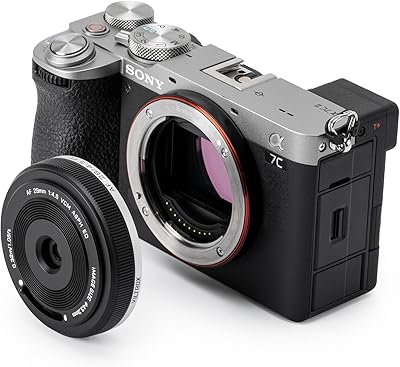
This compact Sony E-mount lens is an easy recommendation for travel and street photographers who already own a Sony body and want a wide-angle option without adding significant weight to their kit. Sony APS-C users on the a6700 or a6400 will get an effective field of view closer to 30mm, which still works nicely for environmental shots. On full-frame bodies like the a7 IV or a7C, the 20mm perspective shines for architecture and landscapes where you want maximum breadth in the frame. It also works well as a wide-angle complement to a standard zoom — a practical first or second lens purchase for someone building out a Sony system on a considered budget.

User Feedback

Across a broad base of owner reviews, the Viltrox 20mm earns consistent praise for center-frame sharpness and its surprisingly small footprint — many buyers admit they didn't expect a full-frame prime to feel this light. The 4.5-star average reflects genuine satisfaction, not just polite ratings. That said, recurring feedback points to noticeable corner softness when shooting wide open, and some barrel distortion creeps in at close focus distances. Autofocus performs reliably for portraits and static subjects, but reviewers note it can hunt in low light or struggle with fast motion. On the positive side, Viltrox's ongoing firmware support is frequently called out as a trust-builder — buyers appreciate that the company actively updates the lens post-purchase.

Pros

  • Remarkably light and compact for a full-frame lens — easy to forget it is in your bag.
  • Center-frame sharpness is consistently strong across a wide range of shooting conditions.
  • Near-silent autofocus makes it genuinely discreet for street and candid photography.
  • Gets impressively close to subjects, opening up creative wide-angle compositions.
  • EXIF data is transmitted correctly, so metadata and in-camera corrections work as expected.
  • Viltrox actively releases firmware updates, which buyers consistently highlight as a trust-builder.
  • The 91.6-degree field of view is well-suited for landscapes, interiors, and environmental portraits.
  • Offers full-frame wide-angle coverage at a price that leaves room in the budget for other gear.
  • Compatible with both APS-C and full-frame Sony E-mount bodies, adding flexibility across future upgrades.
  • The 52mm filter thread is a common size, making filter accessories easy and affordable to source.

Cons

  • Corner sharpness drops noticeably when shooting wide open — requires stopping down for consistent results.
  • Barrel distortion becomes visible at close focus distances and may need correction in post.
  • Autofocus can hunt in low light or struggle to lock on fast-moving subjects.
  • Not well-suited for video work that requires smooth, reliable continuous autofocus tracking.
  • Build quality, while acceptable, does not match the feel of Sony G or Zeiss-branded lenses.
  • No weather sealing, which limits confidence when shooting in rain or dusty outdoor environments.
  • The f/2.8 maximum aperture is modest compared to faster third-party alternatives at similar price points.
  • Some users report occasional focus accuracy inconsistencies when shooting at the minimum focus distance.

Ratings

The scores below reflect an AI-driven analysis of verified global user reviews for the Viltrox 20mm f/2.8 FE Wide-Angle Lens, with spam, bot activity, and incentivized feedback actively filtered out to ensure integrity. Patterns across thousands of real-world shooting experiences — from travel and street photography to landscape and architecture work — shaped every score. Both the genuine strengths and the honest frustrations buyers encountered are transparently captured here.

Value for Money
93%
This is consistently where the Viltrox 20mm earns its loudest praise. Buyers who compared it to first-party Sony wide-angle primes repeatedly noted that the performance gap doesn't justify the significant price difference for casual and enthusiast use. For someone building a Sony kit without a flagship budget, it delivers more than expected.
A small subset of buyers who upgraded from this lens to pricier glass reported that the value equation shifts once you start shooting professionally — the optical limitations become harder to justify ignoring. For high-volume or commercial work, the real cost is time spent correcting distortion and corner softness in post.
Image Sharpness
74%
26%
Center-frame sharpness draws consistent compliments from buyers shooting landscapes and street scenes, particularly when stopped down to mid-aperture ranges. At f/5.6 through f/11, the lens resolves detail cleanly enough to satisfy most enthusiast photographers who aren't pixel-peeping at 100 percent crops.
Wide open at f/2.8, corner sharpness drops in a way that's hard to ignore for architecture or interior shots where edge detail matters. Several reviewers specifically flagged this as a dealbreaker for real estate photography, and astrophotographers noted that stars toward the frame edges show noticeable softening.
Autofocus Performance
71%
29%
For still subjects — street scenes, posed portraits, travel snapshots — the autofocus locks on reliably and operates quietly enough that it's a non-issue in public settings. Buyers using it on Sony a7-series bodies praised how well it integrated with the camera's phase-detect system for everyday shooting.
The system shows real strain when subjects are moving unpredictably or when light levels drop significantly. Video shooters in particular flagged inconsistent continuous autofocus tracking as a recurring frustration, with the lens occasionally hunting mid-clip in a way that's difficult to hide in the final footage.
Build Quality
67%
33%
The physical construction feels solid enough for a lens in this price range — the mount fits Sony bodies without wobble, and the focus ring has a smooth, consistent action that doesn't feel loose or gritty. Most buyers were pleasantly surprised that it didn't feel cheap despite the lightweight chassis.
The absence of any weather sealing is the most commonly raised build concern, particularly among outdoor photographers who shoot in unpredictable conditions. A few buyers also noted that the plastic finish doesn't inspire the same confidence as metal-barreled alternatives when taking the lens into rough field conditions.
Portability & Size
96%
Across hundreds of reviews, the size and weight consistently provoke genuine surprise — buyers who handled it in person for the first time regularly mentioned that it's smaller than they anticipated from product photos. For travel photographers who count every gram, this compact Sony E-mount lens is a rare full-frame prime that disappears into a bag or coat pocket.
The compact form factor does mean the focus ring is narrower than photographers used to larger lenses might prefer, making precise manual focus pulls slightly fiddlier. A small number of reviewers with larger hands found the overall grip experience a little cramped when mounted on a full-size Sony body.
Distortion Control
61%
39%
With in-camera lens correction enabled on compatible Sony bodies, the barrel distortion issue is largely handled automatically for JPEG shooters. The EXIF transmission works correctly, so Sony's distortion profile kicks in without any manual setup, which makes the issue nearly invisible for casual shooters who don't shoot RAW exclusively.
RAW shooters who prefer to manage corrections manually in Lightroom or Capture One reported that the barrel distortion — particularly at close focus distances — requires deliberate correction and isn't subtle. Architectural and interior photographers found this the most consistent pain point across their shooting, especially near the frame edges.
Low-Light Capability
66%
34%
The f/2.8 maximum aperture is workable for evening street photography and dimly lit indoor environments, particularly on Sony full-frame bodies with strong high-ISO performance that compensates for what the lens can't provide optically. Buyers using it on the a7 IV and a7C noted comfortable results in restaurant and urban night shooting scenarios.
Compared to f/1.8 or f/2 alternatives — even at higher price points — f/2.8 gives up a meaningful amount of light-gathering in genuinely dark environments. Buyers who primarily shoot concerts, events, or night landscapes found themselves wishing for an extra stop of aperture more often than they'd anticipated.
Firmware & Software Support
88%
Viltrox's commitment to post-purchase firmware updates earned repeated and specific praise in buyer reviews — this isn't a brand that releases a lens and goes quiet. Several buyers mentioned that autofocus behavior improved noticeably after a firmware update, which builds real confidence in the long-term ownership experience.
The USB update process, while functional, requires a computer and the right cable, which is an extra step that less technically confident buyers found mildly inconvenient. A small number of users also reported confusion finding the correct firmware version on Viltrox's website, suggesting the update experience could be smoother.
Chromatic Aberration
72%
28%
The inclusion of ED glass elements does meaningful work here — buyers shooting high-contrast scenes like bright skies against dark foliage noted that lateral chromatic aberration is well-controlled and rarely needs correction in post. For a lens at this price point, the optical engineering is genuinely commendable.
Some longitudinal chromatic aberration does appear at wide apertures around high-contrast edges, and a subset of buyers noticed purple fringing in specific backlit scenarios. It's not a constant issue, but photographers who regularly shoot into the light or with strong background highlights will encounter it occasionally.
Bokeh Quality
63%
37%
At the minimum focus distance, background separation is achievable and the seven-blade aperture produces reasonably smooth out-of-focus areas for a wide-angle lens. Buyers using it for environmental portrait work appreciated that it can render backgrounds softly when the subject is close enough to the front element.
Wide-angle lenses are inherently limited in their ability to produce strong background blur, and the Viltrox 20mm is no exception — buyers expecting creamy bokeh similar to a 50mm or 85mm prime were consistently disappointed. At typical shooting distances, backgrounds remain largely in focus regardless of aperture setting.
Vignetting
69%
31%
On full-frame bodies with in-camera correction enabled, vignetting is largely invisible in everyday shooting — Sony's profile for this lens handles the corners competently for JPEG and in-camera processed files. Buyers who shoot with correction applied rarely listed vignetting as a concern worth mentioning.
RAW files show visible corner darkening at f/2.8, which requires manual correction in post-processing software. Landscape photographers who frequently blend exposures or create panoramas noted that inconsistent corner exposure across frames added a small but real complication to their editing workflow.
Manual Focus Experience
58%
42%
The focus ring operates smoothly with no notable stickiness or resistance issues, and the lens responds to manual focus input without electronic lag on compatible Sony bodies. For videographers who manually pull focus on static setups, the action is predictable enough to work with.
The focus ring travel is relatively short, making precise focus at close distances feel rushed and difficult to control accurately. Buyers accustomed to the longer, dampened focus throws on premium manual-focus lenses found this aspect particularly underwhelming, especially for the kind of deliberate wide-angle close-up work the lens's minimum focus distance suggests.
Lens Flare Resistance
64%
36%
The included lens hood provides a practical baseline of protection against direct light sources in the frame, and many buyers found it sufficient for everyday shooting in mixed lighting. Casual street and travel photographers rarely flagged flare as a meaningful problem under normal conditions.
Shooting directly into strong light sources — sun stars at f/11 or backlit architectural scenes — does produce visible flare and ghosting artifacts that can be tricky to remove in post. Several landscape photographers noted that the coatings, while adequate, don't match the flare resistance of pricier Sony G or Zeiss optics in challenging backlit situations.
Compatibility & Integration
91%
EXIF data transfers correctly to all tested Sony E-mount bodies, lens correction profiles apply automatically, and in-body image stabilization coordinates without issues on bodies that support it. Buyers across a range of Sony APS-C and full-frame cameras — from the a6400 to the a7R V — reported no meaningful compatibility problems.
A handful of early adopters encountered minor autofocus quirks with specific Sony firmware versions before Viltrox issued corrective updates. While these issues were resolved, they serve as a reminder that third-party lenses occasionally trail official Sony bodies in day-one compatibility, which matters for buyers who update camera firmware immediately upon release.

Suitable for:

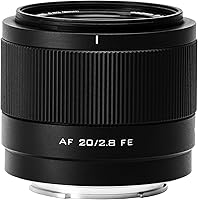
The Viltrox 20mm f/2.8 FE Wide-Angle Lens is a strong match for Sony mirrorless shooters who want a capable wide-angle prime without carrying extra bulk or spending significantly more on a first-party option. Travel photographers will appreciate how little it adds to a bag — at under 160 grams, it's the kind of lens you stop noticing until you actually need it. Street photographers benefit from the near-silent autofocus, which keeps things discreet in public settings where a noisy lens would draw unwanted attention. Landscape and architecture enthusiasts get a genuinely wide field of view that handles expansive scenes well, particularly when shooting stopped down to the mid-aperture range. APS-C Sony body owners on the a6700 or a6400 also get solid value here, using it as an affordable way to push their effective focal length into wider territory. If you're building out a Sony kit on a thoughtful budget and need a wide-angle complement to a standard zoom, this compact lens is a practical, well-considered choice.
Not suitable for:

The Viltrox 20mm f/2.8 FE Wide-Angle Lens is not the right call for photographers who demand edge-to-edge sharpness or who regularly shoot wide open in situations where corner detail matters — astrophotography and real estate interiors being obvious examples. Videographers who need fast, confident tracking autofocus for moving subjects will likely find the focus system falls short of expectations, particularly in dynamic or low-light scenarios. If you're shooting professionally and need a lens that can handle heavy, recurring use with no optical compromises, the price gap between this and a Sony G-series option starts to feel more justified. Users who are sensitive to barrel distortion at close focus distances should also go in with realistic expectations — it is a known issue that post-processing can correct, but it is there. Finally, anyone who has already invested in fast glass and prioritizes maximum low-light performance will find the f/2.8 ceiling somewhat limiting compared to wider-aperture alternatives at higher price points.
Specifications

  • Focal Length: Fixed 20mm focal length provides a wide field of view suited for landscapes, architecture, and environmental storytelling.
  • Maximum Aperture: Opens to f/2.8, allowing for usable low-light performance and modest background separation at close focus distances.
  • Minimum Aperture: Stops down to f/16, giving full control over depth of field across a wide range of lighting conditions.
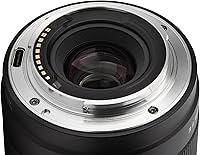
  • Lens Mount: Designed for Sony E-mount, compatible with both full-frame FE and APS-C Sony mirrorless camera bodies.
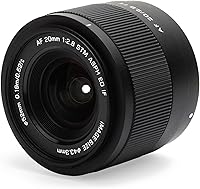
  • Optical Design: Built from 10 elements arranged in 8 groups, incorporating 2 ED elements, 1 high-refractive-index element, and 2 aspherical elements.
  • Field of View: Covers a 91.6-degree angle of view on full-frame bodies, narrowing to approximately 61 degrees on APS-C sensors.
  • Focus Motor: Uses a combined STM and lead screw drive system for quiet, reasonably responsive autofocus suited to still photography.
  • Focus Modes: Supports both autofocus and manual focus, switchable depending on shooting preference or camera body assignment.
  • Focus Distance: Focuses as close as 0.19m (roughly 7.5 inches) from the subject, enabling near-field wide-angle compositions.
  • Magnification: Achieves a maximum magnification ratio of 0.17x, which is capable for contextual close-up shots but not macro work.
  • Aperture Blades: Seven-blade aperture construction produces reasonably smooth out-of-focus rendering at wider aperture settings.
  • Weight: Weighs approximately 157g (5.5 oz), making it one of the lightest full-frame wide-angle primes available for Sony E-mount.
  • Dimensions: Measures 65mm in diameter and 59.5mm in length, compact enough to pair comfortably with smaller Sony mirrorless bodies.
  • Filter Thread: Accepts 52mm screw-in filters, a common and widely available size that keeps filter costs manageable.
  • EXIF Support: Transmits full EXIF metadata to the camera body, enabling accurate lens correction profiles and shooting data recording.
  • Firmware Updates: Supports USB-based firmware upgrades, allowing users to install Viltrox updates directly without sending the lens for service.
  • Sensor Format: Fully covers the 35mm full-frame image circle, with no vignetting issues on Sony full-frame bodies under normal use.
  • Lens Hood: A lens hood is included in the box, providing basic flare protection without adding significantly to the overall kit size.

Related Reviews

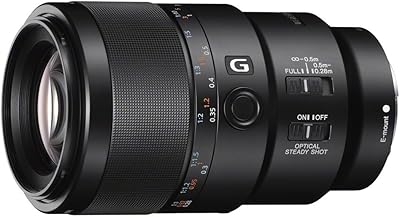
Sony SEL90M28G FE 90mm f/2.8 Macro Lens
88%
95%
Macro Performance
91%
Autofocus Speed & Quietness
89%
Build Quality & Durability
88%
Low-Light Performance
72%
Weight & Handling
More
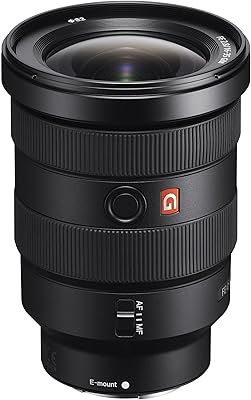
Sony FE 16-35mm F2.8 GM Zoom Lens
82%
94%
Optical Sharpness
91%
Aperture Consistency
89%
Autofocus Performance
88%
Build Quality & Weather Sealing
86%
Distortion Control
More
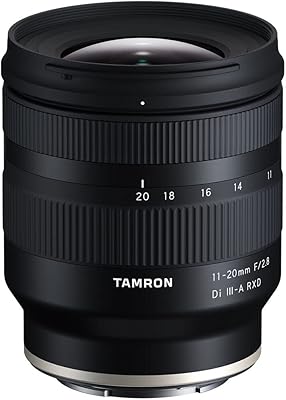
Tamron 11-20mm F/2.8 Di III-A Wide-Angle Lens
84%
91%
Image Sharpness
88%
Autofocus Performance
86%
Build Quality & Weather Sealing
74%
Value for Money
67%
Distortion & Optical Corrections
More
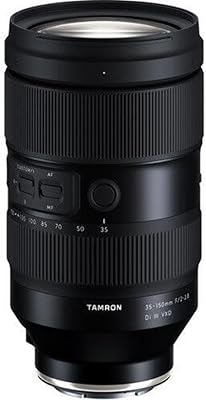
Tamron 35-150mm F/2-2.8 Di III VXD Lens
84%
92%
Optical Sharpness
89%
Autofocus Performance
94%
Aperture Versatility
87%
Build Quality
78%
Value for Money
More
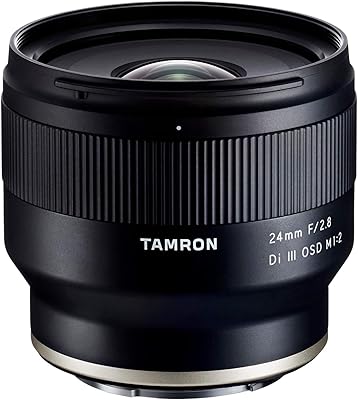
Tamron 24mm F/2.8 Di III OSD Lens
79%
91%
Image Sharpness
93%
Value for Money
74%
Build Quality & Durability
71%
Autofocus Performance
88%
Macro Capability
More
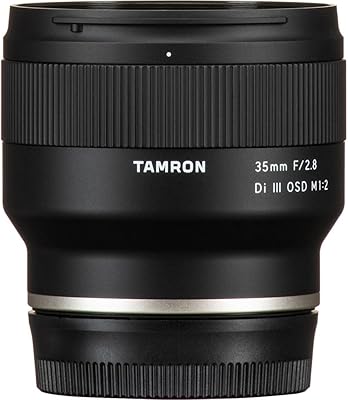
Tamron 35mm f/2.8 Di III OSD M1:2 Lens for Sony E-Mount
85%
94%
Image Quality
75%
Autofocus Speed
90%
Macro Performance
88%
Build Quality
91%
Portability
More
Sony SEL20F18G 20mm F1.8 Wide-Angle Lens
81%
93%
Optical Sharpness
91%
Autofocus Performance
89%
Aperture & Low-Light Ability
88%
Build Quality
87%
Video Usability
More
Viltrox AF 20mm F2.8 Wide-Angle Lens
81%
88%
Image Sharpness
83%
Autofocus Performance
81%
Build Quality & Durability
93%
Value for Money
96%
Portability & Size
More
VILTROX 28mm f/4.5 Pancake Lens
72%
96%
Portability & Size
88%
Build Quality
81%
Image Sharpness
74%
Autofocus Performance
48%
Low-Light Capability
More
Canon EF-S 24mm f/2.8 STM Lens
79%
88%
Image Sharpness
82%
Autofocus Performance
61%
Build Quality
96%
Portability & Size
74%
Low-Light Capability
More

FAQ

Yes, the Viltrox 20mm f/2.8 FE Wide-Angle Lens is fully compatible with Sony APS-C E-mount bodies like the a6400 and a6700. Keep in mind that on those cameras, the 20mm focal length becomes effectively closer to 30mm due to the crop factor, which still makes for a useful wide-to-normal perspective.
For most still photography — street, travel, landscapes, casual portraits — the autofocus is reliable and quiet enough that you won't think about it much. Where it shows its limits is with fast-moving subjects or in dim conditions, where it can hunt a bit before locking on. It's a competent system, just not a sports-grade one.

The lens feels reasonably well-built for its price bracket — it's lightweight, but not in a way that suggests flimsy materials. The focus ring operates smoothly and the mount fits Sony bodies without noticeable play. That said, there's no weather sealing, so you'll want to be careful shooting in rain or dusty environments.

It's a real limitation worth knowing about before buying. Wide open at f/2.8, the corners are noticeably softer than the center, which matters for architecture or astrophotography where edge sharpness counts. Stop down to around f/5.6 or f/8 and the image quality across the frame becomes considerably more consistent.

Yes, the front element accepts 52mm filters, which is a common and affordable size. ND filters, polarizers, and UV protectors all attach without any compatibility issues, and you won't struggle to find 52mm options from most filter brands.

It does — EXIF metadata transfers properly, which means the camera can apply its built-in lens correction profiles for distortion and vignetting. This is particularly useful since the Viltrox 20mm does show some barrel distortion at close focus distances, and in-camera correction handles a lot of that automatically.

Viltrox provides firmware updates through their website, and the lens connects to a computer via USB for the upgrade process. It's straightforward — no special tools or service visits required. Viltrox has a decent track record of releasing updates that address autofocus behavior and compatibility improvements, so it's worth keeping the firmware current.

It depends on what kind of video you're shooting. For static or slow-panning shots, the near-silent focus motor is a genuine advantage. For run-and-gun or subject-tracking video, the autofocus system isn't really up to the task — it can struggle to keep up with moving subjects fluidly. Manual focus pullers will be more satisfied than those relying purely on continuous AF.

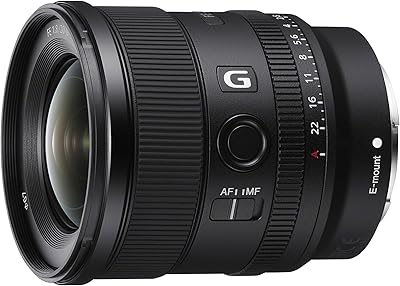
The Sony G version is a significantly more capable lens — sharper in the corners, faster to focus, better built, and optically superior in low light thanks to the wider maximum aperture. It also costs several times more. The Viltrox makes sense if you want a wide-angle prime for occasional or casual use; the Sony G is the choice if wide-angle work is central to what you shoot professionally.

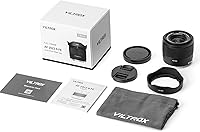
Yes, the compact Sony E-mount lens ships with a lens hood and lens caps included. It's a basic but complete package — you won't need to buy any immediate add-ons to start shooting. A dedicated case or pouch is not included, so if you want extra protection in a bag, that's worth picking up separately.