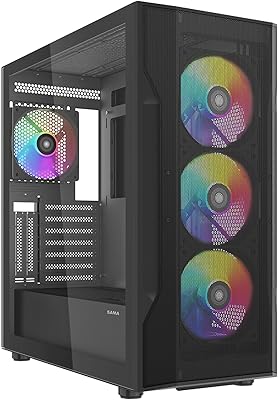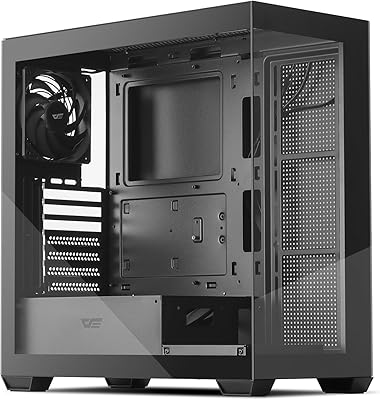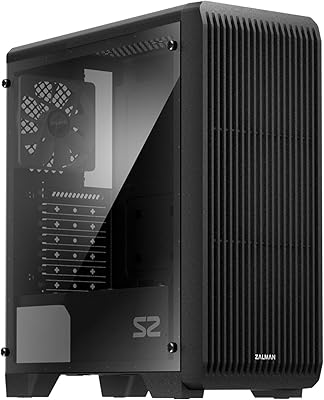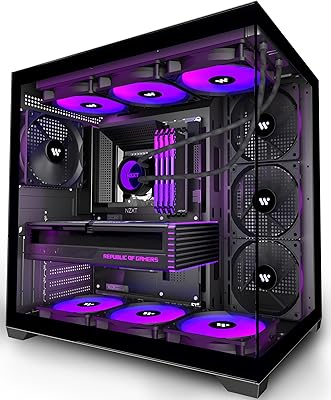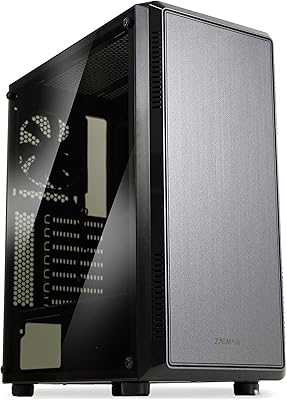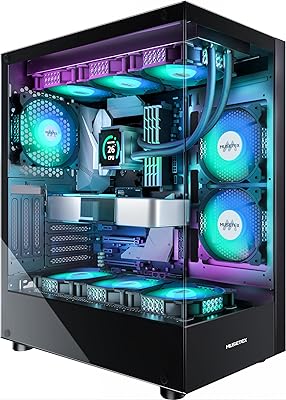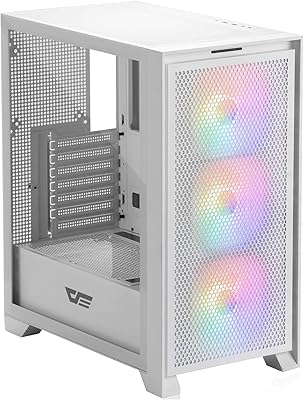
Overview

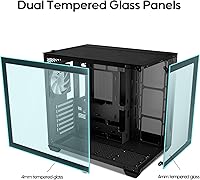
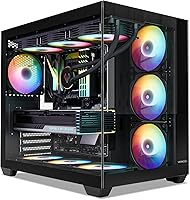
The Vetroo AL900 ATX Mid Tower PC Case arrives as a genuinely compelling mid-range option for builders who want their rig to look as good as it performs. The defining feature is immediately obvious when you unbox it: 270° of tempered glass wrapping the front, side, and top panels gives you an unobstructed view of everything inside. Vetroo timed this release to coincide with the RTX 50 and RX 9000 GPU generations, and that compatibility is baked into the chassis dimensions. The YTX hidden-connector layout takes a fresh approach to keeping cables out of sight without requiring hours of frustration. One thing to know going in: only one rear fan ships in the box. Budget for extras.

Features & Benefits

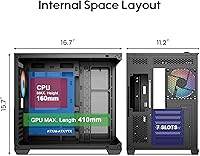
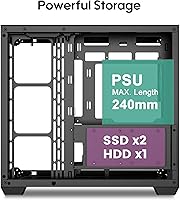
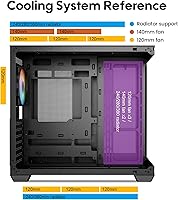
The glass coverage here is not just a gimmick — when you sit a build with ARGB fans behind three panels of tempered glass, the visual payoff is real. On the practical side, the 410mm GPU clearance means even physically oversized RTX 5090 cards slide in without bracket removal or creative positioning. Cooling flexibility is a genuine strength: this mid-tower case supports a 360mm radiator up top and up to ten 120mm fans across the system, giving you room to scale cooling as your budget grows. The front I/O Type-C port at 10Gbps matters when transferring large files fast. PSU installation sits at the bottom with up to 200mm of length supported — a sensible, modern layout.

Best For

The AL900 makes the most sense for builders who treat their PC as something worth displaying. If you are dropping a large modern GPU into your next build — an RTX 5080 or 5090, for example — the verified GPU clearance removes one headache from the planning process. It is also a solid pick for anyone eyeing a 240mm or 360mm AIO without wanting to jump to a full tower. First-time builders will appreciate the hidden-connector board design, which makes cable management far less intimidating. And if you are trying to keep costs reasonable while still getting full tempered glass coverage, Vetroo's glass-forward chassis sits in a price bracket where few rivals offer this much visibility.

User Feedback

Buyers have responded well to this mid-tower case, with a 4.6-star average across several hundred ratings. The most common praise centers on easy assembly and how roomy the interior feels once you are actually working inside it. The glass presentation earns consistent compliments, especially from builders running RGB setups. Where feedback turns critical: dust filtration is minimal for a case this open, and a handful of owners note the panels feel less rigid than expected at this price. The single included fan is probably the most repeated complaint — buyers who skimmed the specs feel shortchanged. On a more positive note, the cable management system and Type-C front I/O generally live up to what is advertised.

Pros

  • Three-panel 270° tempered glass coverage gives your build far more visual presence than a standard side-window case.
  • A 410mm GPU clearance comfortably fits the largest current-generation graphics cards without modification.
  • Top-mount support for a 360mm radiator gives serious cooling headroom inside a mid-tower footprint.
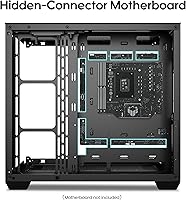
  • The YTX hidden-connector layout genuinely simplifies cable management for builders of all experience levels.
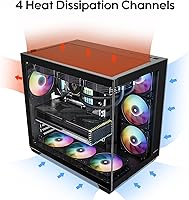
  • Supports up to ten 120mm fans, so you can scale airflow as your budget and cooling needs grow.
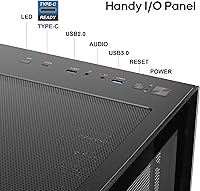
  • The front I/O Type-C port runs at 10Gbps, which is noticeably faster than the USB-A 3.0 ports found on older cases.
  • Buyers consistently rate assembly as straightforward, with a roomy interior that does not feel cramped during the build process.
  • Compatible with ATX, M-ATX, and ITX motherboards, giving you flexibility if you decide to change your build direction.
  • Bottom-mount PSU design keeps power supply cables low and out of the main viewing area behind the glass.

Cons

  • Only one rear fan is included — most builds will need three to five additional fans to achieve adequate airflow.
  • Dust filtration is limited for a case this open, requiring more frequent cleaning to keep internals looking presentable.
  • Some owners have reported that the tempered glass panels feel less rigid than expected, raising handling concerns.
  • No fan hub or ARGB controller is included, so managing multiple fans may require an additional splitter or motherboard headers.
  • The single included fan is a rear exhaust unit only — front and top intake positions are completely empty at purchase.
  • At nearly 14 pounds empty, this mid-tower case is heavier than some rivals, which can matter for desk placement or LAN events.
  • CPU cooler height is capped at 160mm, which rules out some of the taller premium air coolers on the market.
  • The maximum PSU length of 200mm may exclude a small number of older or larger power supplies from fitting properly.

Ratings

Our AI-generated scores for the Vetroo AL900 ATX Mid Tower PC Case are derived from analyzing hundreds of verified global user reviews, with active filtering applied to remove incentivized, duplicate, and bot-generated submissions. The ratings transparently reflect both what buyers genuinely love about this chassis and where it falls short in real-world builds. Strengths like the 270° glass design and GPU clearance are weighed honestly against recurring frustrations around fan inclusion and dust management.

Aesthetic Design
91%
Three panels of tempered glass wrapping the front, side, and top create a showcase effect that standard side-window cases simply cannot match. Builders running ARGB fans consistently report that the 270° coverage makes interior lighting look dramatically more immersive in a dimly lit room, which is the core reason most buyers chose this chassis.
The all-black exterior offers no color variety for builders who prefer a white or gray frame, limiting its appeal to a specific aesthetic. The wide glass exposure also makes fingerprints and smudges highly visible, requiring frequent wiping to keep the premium look intact day to day.
GPU Compatibility
94%
A 410mm GPU clearance is one of the most practically useful specs here, covering every current-generation card including triple-fan RTX 5090 models without bracket removal or creative workarounds. Builders upgrading to RTX 50 or RX 9000 series hardware felt genuine reassurance knowing fitment was verified before the GPU arrived.
While length clearance is generous, GPU thickness on particularly chunky three or four-slot cards should still be independently verified against slot count. No official documentation addresses GPU sag prevention, so owners of very heavy graphics cards may want to factor in a third-party support bracket separately.
Value for Money
86%
The combination of 270° tempered glass, verified large-GPU clearance, and top-mount 360mm radiator support is genuinely difficult to match from competing brands at the same price tier. Most buyers feel the overall quality and visual impact punch well above what the price tag implies.
The value equation shifts once you add the cost of additional fans that most builds will realistically need. Buyers who did not read the spec sheet closely and then had to immediately purchase two or three more fans felt the effective total cost was meaningfully higher than they expected.
Fan Inclusion
48%
52%
The single included rear fan is a quality FDB unit that runs quietly and produces a clean ARGB effect, so it at least handles the exhaust role adequately while you plan your full fan configuration. It also connects directly to standard motherboard headers, making initial setup simple.
Shipping a case with this much emphasis on airflow and visual impact with only one fan is the most consistent complaint across user reviews globally. Buyers who expected the case to be functionally ready out of the box were caught off guard, and the frustration is understandable given how prominently the multi-fan capacity is advertised.
Airflow Performance
67%
33%
When fully populated with fans, users report solid thermal results even during sustained gaming sessions with high-end GPUs, and the ten-fan capacity gives builders room to scale cooling precisely to their needs. The top 360mm radiator mount adds serious headroom for liquid-cooled systems.
Out of the box with just a single rear fan, airflow is inadequate for any demanding build — front intake positions are completely empty, which creates a direct hotspot risk for the GPU and storage. The open glass design also does not channel air as efficiently as cases with dedicated mesh intake paths and filter staging.
Cable Management
83%
The YTX hidden-connector layout genuinely reduces the cable mess visible behind the glass, and most builders including first-timers found routing far less stressful than in conventional cases. The channels behind the motherboard tray are logically placed for power, data, and fan cables.
The system depends on your PSU cables being long enough to reach neatly — non-modular units with short runs can still create visible clutter despite the routing provisions. A few builders noted limited clearance behind the tray when trying to fit thick sleeved cable extensions or custom cable combs.
Cooling Flexibility
87%
Top-mount support for a 360mm radiator is a meaningful advantage in a mid-tower, letting builders run high-performance liquid cooling without jumping to a larger and more expensive chassis. The fan scaling from one to ten gives the build genuine room to grow alongside future hardware upgrades.
Front radiator mounting options are more limited than some rivals at a comparable price, constraining certain dual-radiator configurations. Builders planning a push-pull 360mm setup at the top should carefully measure clearance since thick radiators combined with fans stacked on both sides can get tight in that position.
Ease of Assembly
88%
Buyer feedback consistently highlights a roomy interior that gives hands genuine working space during motherboard seating, GPU installation, and cable runs. The hidden-connector layout also reduces the number of confusing routing decisions a first-time builder faces, which shortens the overall build time noticeably.
The three tempered glass panels require careful individual handling during installation, which can slow things down significantly when building solo. Several owners noted that aligning all panels correctly before securing them demanded more patience than the rest of the assembly process combined.
Front I/O
79%
21%
The 10Gbps USB-C port is a practical upgrade over older front-panel implementations and makes a real difference when connecting modern external drives or peripherals without reaching to the rear of the system. Having both USB-C and USB-A 3.0 available up front covers the connectivity needs of most everyday workflows.
The overall port count is modest — one USB-C, one USB 3.0, and one USB 2.0 — which can feel limiting when multiple devices need simultaneous front-panel access. There is no SD card reader and no additional high-speed port, which keeps the panel from being fully future-proof for content creators or power users.
Dust Filtration
51%
49%
Basic filtration at the PSU intake area addresses at least one common dust entry point, and builders who configure a positive-pressure fan setup can reduce dust accumulation across open intake paths. Keeping the system at positive pressure is a practical workaround that experienced builders will apply instinctively.
The three-panel tempered glass design leaves most intake paths essentially unfiltered, which is a real long-term trade-off for a case built to be displayed. Owners in dusty environments report cleaning the interior and fans far more frequently compared to mesh-and-filter designs, and the dust is particularly visible against the open glass backdrop.
Panel Rigidity
63%
37%
For day-to-day stationary desk use, the glass panels hold their position without rattling or vibrating under normal system loads. Builders who handle the panels carefully during installation consistently report no fit or finish issues, and the panels seat cleanly when properly aligned.
Compared to tempered glass panels on cases at higher price points, these feel noticeably thinner to many owners, raising questions about long-term durability under repeated removal cycles. A handful of buyers reported edge chipping or micro-cracking during panel removal, particularly when working in a hurry or without adequate support.
Interior Space
84%
The interior is genuinely roomy for a mid-tower, and reviewers consistently note that working inside felt comfortable even with large hands or bulky GPU installations. The 410mm GPU clearance combined with vertical headroom makes component placement feel more flexible than similarly sized competing enclosures.
Running a 360mm top radiator simultaneously with a large triple-slot GPU can create tight clearance between the two depending on the specific hardware combination. Builders planning the most complex dual-radiator and oversized-GPU configurations would still benefit from a full-tower, where vertical separation is simply not a concern.
RGB Integration
89%
The 270° glass coverage transforms standard ARGB fan lighting into a full ambient effect that fills the room, especially noticeable during evening gaming sessions. The included ARGB fan uses standard motherboard headers, so syncing it with an existing lighting ecosystem requires no additional software or proprietary controllers.
With only one ARGB fan in the box, the full visual payoff the glass design promises requires additional fan purchases to realize. Buyers who expected a fully lit, populated showcase right after unboxing were visibly disappointed once they saw how many mounting positions were empty.
Noise Levels
71%
29%
The single pre-installed fluid dynamic bearing fan operates at a noticeably low noise floor at standard RPMs, and FDB construction generally delivers longer lifespan and quieter operation than sleeve-bearing alternatives common at this price range. Builders running minimal fan configurations report a pleasantly quiet idle experience.
As additional fans are added to the empty front and top positions, noise management becomes entirely the builder's responsibility since no fan hub or controller is included. Running a full complement of fans without RPM regulation through a motherboard or dedicated controller can produce a noticeably louder system than buyers anticipate.
Build Quality
74%
26%
The steel chassis frame is solid for the price category, with no flex or wobble reported once components are installed and the system is sitting on a desk. The matte black finish resists fingerprints on the metal surfaces reasonably well for a case always on visual display.
The weakest link in perceived build quality is the glass panel system, which several owners described as feeling less premium compared to rivals at higher price points. Mounting hardware and panel clips function correctly but lack the refined, confidence-inspiring feel that buyers upgrading from budget cases might expect.

Suitable for:

The Vetroo AL900 ATX Mid Tower PC Case is a strong fit for builders who want their system to look impressive without stretching into premium pricing territory. If you are planning a build around a current-generation GPU — particularly one of the physically bulky RTX 50 or RX 9000 series cards — the 410mm clearance means you will not run into fitment surprises. Builders who love RGB setups will get real value from the three-panel tempered glass design, since the front, side, and top panels create a genuine showcase effect rather than just a window on one side. It also suits anyone planning to add liquid cooling down the road, since the top mount handles up to a 360mm radiator without requiring a case upgrade. First-time builders in particular will appreciate the hidden-connector motherboard layout, which takes much of the guesswork out of cable routing from the start.

Not suitable for:

Buyers who prioritize quiet, dust-free operation should think carefully before committing to this mid-tower case. The wide-open tempered glass design that makes it so visually appealing also means dust filtration is minimal — without regular cleaning and a thoughtful fan configuration, buildup will become visible quickly. Users who need more than one fan out of the box and do not want to spend extra immediately will also feel the gap, since only a single rear fan is included. If you are building a compact workstation for a tight desk space or a small-form-factor environment, the 16.73 x 15.75 x 11.22-inch footprint may be more than you need. Similarly, builders who prefer a completely enclosed, tool-free panel design for frequent hardware swaps might find the glass panel handling here less convenient than more service-oriented cases in a similar price range.

Specifications

  • Form Factor: ATX Mid Tower chassis designed for standard desktop builds with room for high-end components.
  • Dimensions: The case measures 16.73″ long by 15.75″ deep by 11.22″ tall, representing a standard mid-tower footprint.
  • Weight: The empty chassis weighs 13.88 pounds, which is moderately heavy for a mid-tower due to the multi-panel glass construction.
  • Motherboard Support: Compatible with full ATX, Micro-ATX, and Mini-ITX form factor motherboards.
  • Glass Coverage: Tempered glass panels span the front, side, and top of the chassis, delivering 270° of unobstructed interior visibility.
  • Included Fans: One pre-installed ARGB PWM FDB fan is included in the rear exhaust position; no front or top fans are included.
  • Fan Capacity: The chassis supports up to ten 120mm fans distributed across the front, top, rear, and bottom positions.
  • Radiator Support: A single 360mm radiator can be mounted in the top position, with smaller 240mm and 280mm units also supported.
  • GPU Clearance: Maximum graphics card length is 410mm, accommodating the physically oversized RTX 50 and RX 9000 series GPUs without modification.
  • CPU Cooler Height: Air coolers up to 160mm tall are supported, covering the majority of popular single-tower and dual-tower designs.
  • PSU Clearance: Power supply units up to 200mm in length are supported, installed in a bottom-mount position.
  • PSU Mounting: The power supply mounts at the bottom of the chassis, keeping cables low and away from the main viewing area.
  • Front I/O: The front panel provides one USB-C port at 10Gbps, one USB 3.0 port, and one USB 2.0 port for peripheral and device connectivity.
  • Interior Design: The YTX layout uses a hidden-connector motherboard installation system intended to reduce visible cabling behind the tempered glass panels.
  • GPU Compatibility: Explicitly validated for use with NVIDIA RTX 50 series and AMD RX 9000 series graphics cards based on physical fitment specifications.
  • Color: Available in Black, featuring a matte black steel frame with contrasting tempered glass panels.

Related Reviews
Vetroo AL800 Mid Tower ATX PC Case
76%
78%
Build Quality
84%
Tempered Glass Panel
76%
Airflow Performance
61%
Fan Included & Expandability
69%
Cable Management
More
Vetroo AL900 ATX Mid Tower PC Case
78%
93%
Aesthetic Design
78%
Build Quality
86%
Cooling Potential
63%
Cable Management
88%
GPU Compatibility
More
darkFlash DS900 ATX Mid-Tower PC Case
75%
76%
Build Quality
83%
Cooling Potential
91%
Aesthetics & Visibility
88%
Value for Money
74%
Cable Management
More
KEDIERS K4 ATX Mid Tower PC Case
80%
91%
Value for Money
93%
Aesthetic Design
74%
Build Quality
72%
Cooling Performance
84%
Ease of Assembly
More
SZSKYING CMSVB-1 Mid-Tower PC Gaming Case
74%
91%
Value for Money
88%
Included Fans
86%
Aesthetics & RGB
61%
Build Quality
74%
Airflow Performance
More
Zalman S4 Mid-Tower ATX PC Case
75%
72%
Build Quality
88%
Value for Money
91%
Ease of Assembly
67%
Airflow Performance
63%
Cable Management
More
Zalman S2 ATX Mid-Tower PC Case
76%
88%
Airflow Performance
63%
Build Quality
91%
Value for Money
86%
Ease of Assembly
84%
Cooling Expandability
More
SAMA S40 Mid Tower ATX PC Case
79%
88%
Airflow Performance
83%
Included Fan Quality
79%
Build Quality & Finish
92%
GPU Compatibility
61%
Cable Management
More
Zalman S3 ATX Mid-Tower PC Case
74%
83%
Value for Money
71%
Build Quality
58%
Airflow & Cooling Performance
86%
Ease of Assembly
67%
Acrylic Side Panel
More
DARKROCK EC2 ATX Mid Tower PC Case
77%
88%
Airflow Performance
91%
Cooling Headroom
67%
Build Quality
84%
GPU Compatibility
86%
Ease of Assembly
More
Antec C5 ARGB
Antec C5 ARGB
84%
93%
Out-of-Box Value
88%
Build Quality
84%
Airflow & Thermal Performance
86%
Cable Management
91%
ARGB Lighting Quality
More

FAQ

Yes. The Vetroo AL900 ATX Mid Tower PC Case provides 410mm of GPU clearance, and Vetroo specifically designed it with RTX 50 and RX 9000 series compatibility in mind. Even the physically large RTX 5090 fits without removing any brackets or making changes to the interior layout.

Just one — a single ARGB PWM fan mounted at the rear exhaust position. The AL900 supports up to ten 120mm fans total, but all the front and top positions are empty when you unbox it. Budget for at least two or three additional fans if you want reasonable airflow from the start.

Yes, the top mount is sized for a 360mm radiator, which is the largest commonly available AIO size. Smaller 240mm and 280mm units fit there as well, so you have a good range of liquid cooling options without needing a full-tower chassis.

Honestly, dust filtration is one of the trade-offs you accept with this design. The wide-open glass panels prioritize visibility, so dust gets in more freely than with an enclosed case. If you run multiple fans, plan to clean the interior regularly — every few weeks in a dusty environment — to keep things looking tidy through all that glass.

It is removable, but some owners have noted the panels feel less solid than those on pricier cases. Take your time when removing them and avoid putting lateral pressure on the mounting points. It is not a tool-free pop-off design, so factor that in if you swap hardware frequently.

It supports all three — ATX, M-ATX, and Mini-ITX. The interior is spacious enough that even a smaller Micro-ATX build still gets the full benefit of the cable management routing and cooling options.

The ceiling for CPU air coolers is 160mm, which covers a wide range of popular options including most dual-tower designs. If you are eyeing a particularly tall cooler, just double-check its exact height spec before ordering — a few high-end air coolers push past that limit.

It is a full 10Gbps data port, not just a charging connector. That makes a real difference when you are moving large video files or game installs to and from a fast external SSD — it is noticeably quicker than the USB-A 3.0 port sitting next to it.

It is a solid option for a first build. The YTX hidden-connector layout simplifies cable routing, the interior is genuinely roomy compared to cramped budget cases, and most buyers find assembly straightforward. The visual payoff of seeing your finished build through three panels of glass is a nice bonus for the effort you put in.

This mid-tower case accepts power supplies up to 200mm in length, installed in the bottom-mount position. Almost all standard ATX PSUs on the market today are well within that range, but if you have an older, modular, or unusually large unit, measure it before assuming it will fit cleanly.