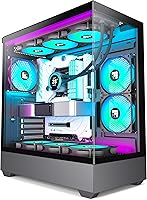
Overview

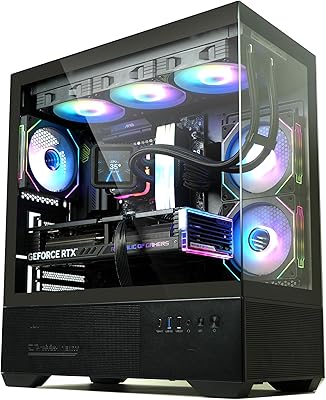
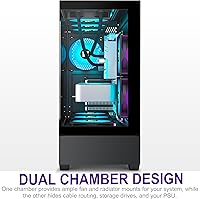
The FOIFKIN F1 Mid-Tower Gaming PC Case arrived on the market in late 2024 and has quietly climbed to a top-50 ranking in its category — a fast rise for a brand most builders hadn't heard of before. What sets it apart structurally at this price is its dual-chamber layout, which physically separates the PSU and cabling from the main hardware compartment. Toss in a tempered glass side panel and six pre-installed ARGB fans, and the visual package is genuinely hard to argue with. Just go in with realistic expectations: FOIFKIN is a newer name, and brand track record matters when you're planning a long-term build.

Features & Benefits

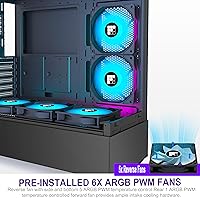
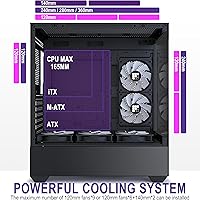
Six pre-installed 120mm ARGB PWM fans is the headline spec — five pulling air in via a reverse-blade setup, one pushing it out — but quantity alone doesn't tell the whole story. Fan quality varies at this price tier, and these are no-name units, so manage expectations accordingly. The dual-chamber design does real work though, keeping PSU heat and cable clutter physically separated from your components. Top-mounted 360mm radiator support means you can pair this chassis with a high-end AIO cooler without compromise. GPU clearance extends to 400mm, CPU coolers fit up to 170mm tall, and the front I/O covers Type-C 3.0, USB 3.0, and two USB 2.0 ports.

Best For

This mid-tower case makes the most sense for builders putting together their first rig who want to skip the headache of sourcing fans separately. If your build includes a large GPU — cards in the 360mm to 400mm range — the clearance is there without modifications. It's also a practical pick for anyone planning a 360mm AIO cooler but not willing to spend more on the chassis itself. M-ATX and ITX boards get plenty of breathing room in this footprint, which is a nice bonus for compact-board users. Where it fits less well is in a professional workstation context where long-term brand support is a genuine concern.

User Feedback

With 311 ratings and a 4.5-star average, the reception for this gaming chassis has been stronger than you'd expect from such a new brand. Buyers consistently call out the fan count and lighting as standout positives, along with the clarity of the tempered glass panel and the overall feel of the build. That said, a recurring complaint involves cable management clearance being tighter than product photos suggest, especially behind the motherboard tray. A handful of users also flag concerns about fan hub reliability over extended use. Warranty and after-sales support from lesser-known brands can be inconsistent, and that's worth factoring into your decision before buying.

Pros

  • Six pre-installed ARGB PWM fans means most builders won't need to buy additional cooling out of the box.
  • The dual-chamber layout keeps PSU heat and cable bulk physically separated from your main components.
  • Top-mounted 360mm radiator support makes this gaming chassis compatible with high-end AIO coolers.
  • GPU clearance extends to 400mm, covering virtually every current consumer graphics card on the market.
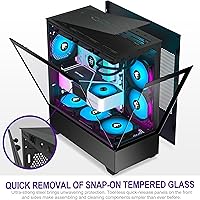
  • The tempered glass side panel is high-hardness and offers a clear, undistorted view of the build inside.
  • Front I/O includes a Type-C 3.0 port, which is still not a given at this price point.
  • Supports ATX, M-ATX, and ITX motherboards, giving builders flexibility without needing a different case.
  • At over 300 ratings with a 4.5-star average, the early community reception has been notably positive for a new brand.
  • Bottom-mounted PSU keeps the center of gravity low and frees up space in the main chamber.
  • Three SSD mounts plus one HDD bay cover most modern storage configurations without extra hardware.

Cons

  • FOIFKIN is a relatively new brand with limited track record, making warranty and long-term support a real unknown.
  • The pre-installed fans are unbranded units — fan hub or controller reliability has been flagged in early user reports.
  • Cable management clearance behind the motherboard tray is tighter than product photos suggest.
  • Builders expecting premium panel rigidity may notice some flex in the plastic sections under handling.
  • Only one USB 3.0 port on the front I/O panel can feel limiting for power users with multiple fast-transfer devices.
  • The brand has minimal presence in enthusiast communities, making peer troubleshooting harder to find.
  • Fan noise levels under full PWM load are not well-documented, which matters for quiet-build use cases.
  • Radiator mounting on top may require careful planning if also using a tall CPU air cooler near the same space.

Ratings

The scores below were generated by our AI rating engine after analyzing verified buyer reviews for the FOIFKIN F1 Mid-Tower Gaming PC Case from across global markets, with spam, incentivized, and bot-flagged submissions actively filtered out before scoring. Each category reflects the honest distribution of praise and frustration found in real builder experiences — nothing is softened to protect the brand, and nothing is inflated to reward novelty. Where users disagreed sharply, that tension is visible in the numbers.

Cooling Performance
83%
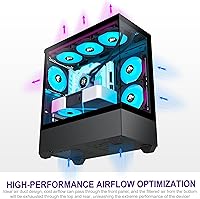
Having six PWM fans configured and ready before the first component goes in makes a real difference for builders who just want adequate airflow without spending extra. The reverse-intake orientation on five fans creates a positive pressure environment that most budget cases don't attempt, and real-world temps reported by buyers have been consistently respectable for mid-range GPU and CPU pairings.
The fans are unbranded, and a portion of buyers noted inconsistent RPM behavior under sustained load — a sign that the fan hub or controller may not be the most reliable component in the package. Users running high TDP processors reported that the single exhaust fan creates a slight imbalance, pushing some builders to add a rear fan independently.
Build Quality
74%
26%
For a chassis at this price tier, the steel frame holds its shape well during the build process and doesn't exhibit the flexing that cheaper competitors show when you're torquing down a motherboard. Several buyers specifically called out that the case felt more substantial than they expected when unboxing, which set a positive tone for the rest of the assembly.
The plastic elements — particularly around the front panel and I/O shroud — show their budget origins under close inspection, with fitment that isn't always flush. A handful of reviewers noted minor panel alignment issues out of the box, and the overall rigidity doesn't match what you'd find from established mid-tower brands at a slightly higher price point.
Cable Management
61%
39%
The dual-chamber design does the most important organizational job well: it keeps the PSU, its cabling, and the power routing physically separated from the main build area, which gives the visible side of the chassis a cleaner look without requiring much effort from the builder.
Behind the motherboard tray is where things get tight — routing thick modular PSU cables or chunky CPU power cables through the available cutouts requires patience and some compression force that experienced builders find frustrating. The rubber grommets on cable pass-throughs are functional but don't cover the gap cleanly, which shows through the glass on some builds.
Tempered Glass Panel
88%
Buyers consistently praised the clarity and thickness of the glass — it doesn't have the faint tint or distortion that some budget panels introduce, meaning your ARGB lighting reads true through the side. The high-hardness rating also gives it a reassuring solidity when removing or replacing it during component swaps.
The panel attaches via thumbscrews rather than a tool-free hinge mechanism, which some builders found mildly annoying during iterative assembly sessions. A few users also noted the panel has no dampening or seal at the edges, so vibration noise from the fans can occasionally travel through the glass at high RPM.
ARGB Lighting
86%
Six ARGB fans running simultaneously create a genuinely striking light show, especially in a darkened room, and the built-in LED switch cycles through enough modes to satisfy buyers who don't want to deal with software. Buyers who synced the lighting through their motherboard's ARGB header reported smooth integration with common platforms.
Without a dedicated controller beyond the front-panel button, fine-tuning specific zones or colors isn't possible unless your board supports ARGB sync. A small number of users reported one or two fans in their unit showing slightly different color output than the rest, suggesting minor consistency variation in the LED strips across the fan batch.
Radiator Compatibility
81%
19%
Supporting a 360mm radiator on the top mount is a genuine differentiator at this price bracket — most competing cases in the same range cap out at 240mm. Buyers who installed popular 360mm AIO coolers reported a clean fit with no bracket modifications required, which is exactly what you want when spending on a liquid cooler.
Clearance between a top-mounted 360mm radiator and tall RAM with heatspreaders is tight, and a couple of builders had to swap to lower-profile memory to make the fit work. The top mounting area also lacks a dust filter, which means radiator-mounted intake configurations will pull particulates through with no barrier over time.
Component Clearances
85%
GPU clearance to 400mm comfortably handles current flagship cards including most triple-fan designs, and the 170mm CPU cooler height limit covers virtually every popular tower cooler on the market. Builders using high-end air coolers like the NH-D15 or Dark Rock Pro confirmed clean fitment without forcing.
PSU length maxes out at 200mm, which eliminates some longer semi-modular units that builders may already own. The 200mm cap isn't unusual for a mid-tower, but it's worth checking your PSU spec sheet before assuming compatibility — a few buyers were caught off guard by this.
Front I/O
79%
21%
Including a Type-C 3.0 port on the front panel is a meaningful addition that a surprising number of cases at this price still omit, and buyers who regularly plug in modern peripherals or charge devices noted its practical day-to-day usefulness. The audio and mic jacks are positioned logically and felt sturdy in testing.
Having only a single USB 3.0 port alongside the two USB 2.0 ports is a limitation that becomes noticeable quickly if you're frequently connecting fast storage or modern accessories. The USB 2.0 ports feel somewhat redundant in 2024 builds, and a second USB 3.0 port would have been a more useful allocation of front-panel real estate.
Installation Experience
77%
23%
First-time builders repeatedly highlighted the pre-installed fans as a meaningful simplification — one less assembly step, with no cable routing or bracket work to figure out before the motherboard even goes in. The case layout is logical enough that builders without a guide could navigate it by intuition.
Standoffs are pre-installed for ATX only, requiring removal and repositioning for M-ATX and ITX builds — not unusual, but the screws were tight enough out of the box that a couple of buyers stripped a standoff during repositioning. The included documentation is minimal, which may frustrate absolute beginners hitting unexpected snags.
Dust Filtration
52%
48%
A bottom filter beneath the PSU bay is present and does its job for protecting the power supply intake, which is the most important single filtration point in a bottom-mount PSU layout. The filter is removable for cleaning without tools.
Beyond the PSU filter, dust protection on this chassis is essentially absent — the top radiator mount, front intake area, and rear exhaust have no mesh or filter of any kind. Over months of use, builders in dusty environments will find significant accumulation on fans and heatsinks, requiring more frequent maintenance than cases with full filtration.
Noise Levels
66%
34%
At low to mid PWM speeds — typical for light gaming or everyday desktop work — the fan noise stays in a background hum range that most buyers found acceptable without earplugs or a headset. The PWM control allows the system to idle quietly when thermals allow.
At full load, six 120mm fans in an enclosed chassis produce a collective noise level that several buyers described as noticeably loud. Since these are unbranded fans without published acoustic specs, buyers prioritizing a quiet build have no reliable benchmark to work from and should plan for potential aftermarket fan replacement.
Storage Options
73%
27%
Three SSD mounts cover the needs of the vast majority of modern gaming builds, and having a dedicated 3.5-inch HDD bay is a useful carryover for builders migrating storage from an older system. The SSD trays are tool-free for 2.5-inch drives, which speeds up the build process.
With only one HDD bay, builders running large media libraries or NAS-adjacent setups on a single machine will hit a ceiling quickly. The SSD mounting positions are functional but not ideally located for showcase builds — they're in the PSU chamber and not visible through the glass, which some buyers found disappointing for aesthetics.
Brand Reliability
58%
42%
The early reception from verified buyers has been stronger than many expected from a brand with no prior market history — a 4.5-star average across 311 ratings in under six months signals that the product itself is delivering on its core promises for most purchasers. Amazon's return window provides a practical safety net for the initial purchase risk.
FOIFKIN has no established warranty service infrastructure, no public track record for how defective unit claims are handled, and virtually no presence in enthusiast communities where peer support is normally found. For builders planning a multi-year system, betting on responsive after-sales support from an unknown brand is a genuine gamble that more risk-averse buyers should weigh carefully.

Suitable for:

The FOIFKIN F1 Mid-Tower Gaming PC Case is a strong fit for first-time PC builders who want to skip the fan-shopping phase entirely and get straight to assembling their rig. If your priority list includes solid airflow, visible RGB lighting, and a tidy interior without spending a fortune on the chassis itself, this mid-tower case checks those boxes in a practical way. Builders planning a large GPU — anything up to 400mm — or a 360mm AIO liquid cooler on top will find the clearances genuinely accommodating rather than just technically spec-compliant. The dual-chamber design also makes it a reasonable choice for anyone who struggles with cable management, since isolating the PSU bay does a lot of the organizational heavy lifting for you. M-ATX and ITX board users who want the breathing room of a full mid-tower footprint will feel right at home here too.

Not suitable for:

Experienced builders with brand loyalty expectations or a preference for established names with proven customer support track records may find it hard to commit to a chassis from FOIFKIN, which has a limited history in the market. The FOIFKIN F1 Mid-Tower Gaming PC Case is also not the right call for anyone building a professional workstation where long-term reliability and warranty follow-through genuinely matter — the unknowns with a newer brand are simply harder to accept in that context. Builders with particularly complex cable routing needs should note that the space behind the motherboard tray is on the tighter side, which can frustrate experienced hands used to more premium layouts. If you're planning to swap out the included fans immediately for high-performance aftermarket units, the included fan quantity loses most of its appeal and you may be better served by a chassis with stronger structural fundamentals at a similar price. Those who care deeply about front-panel aesthetics over airflow efficiency should also look elsewhere, as the design prioritizes function over a flashy facade.

Specifications

  • Form Factor: ATX Mid-Tower chassis compatible with ATX, M-ATX, and Mini-ITX motherboards.
  • Dimensions: The case measures 430mm deep, 213mm wide, and 490mm tall (16.9″ x 8.38″ x 19.2″).
  • Weight: Fully unboxed unit weighs approximately 15.67 pounds before any components are installed.
  • Included Fans: Six 120mm ARGB PWM fans come pre-installed: five reverse-intake and one forward-exhaust.
  • Radiator Support: Supports up to a 360mm radiator mounted at the top of the chassis.
  • GPU Clearance: Accommodates graphics cards up to 400mm (15.75 inches) in length.
  • CPU Cooler Height: Air coolers up to 170mm tall will fit without modification.
  • PSU Clearance: Bottom-mounted PSU bay accepts power supply units up to 200mm in length.
  • Storage Bays: Includes one 3.5-inch HDD bay and three 2.5-inch SSD mounting positions.
  • Side Panel: High-hardness tempered glass side panel provides a clear, scratch-resistant view of internal components.
  • Front I/O: Front panel includes one Type-C 3.0 port, one USB 3.0 port, two USB 2.0 ports, and separate mic and audio jacks.
  • PSU Mount: Power supply mounts at the bottom of the case within the isolated dual-chamber compartment.
  • Materials: Construction combines steel panels, plastic accents, and a tempered glass side window.
  • Chamber Design: Dual-chamber layout physically separates the PSU and cable routing area from the main motherboard compartment.
  • Color: Available in black with ARGB fan lighting visible through the tempered glass panel.
  • Controls: Front panel includes a power button, restart button, and a dedicated LED switch for fan lighting.
  • Availability Date: The product first became available on Amazon in September 2024.
  • BSR Ranking: Holds a top-50 Best Sellers Rank in the Computer Cases category on Amazon as of early 2025.

Related Reviews
SZSKYING CMSVB-1 Mid-Tower PC Gaming Case
74%
91%
Value for Money
88%
Included Fans
86%
Aesthetics & RGB
61%
Build Quality
74%
Airflow Performance
More
ANSAITE W9 Mid-Tower ATX PC Case
77%
88%
Value for Money
91%
RGB & Lighting Performance
74%
Airflow & Cooling Capacity
63%
Build Quality & Materials
84%
Cable Management
More
MUSETEX K2
MUSETEX K2
80%
93%
Aesthetic Design
74%
Build Quality & Materials
78%
Cooling Performance
61%
Fan Noise Levels
91%
Hardware Compatibility & Clearance
More
darkFlash DRX70 ATX Mid-Tower PC Case
74%
83%
Value for Money
78%
Airflow Performance
89%
Ease of Assembly
67%
RGB Lighting
71%
Build Quality & Materials
More
Apevia Hydra-PK Mid Tower Gaming PC Case
76%
88%
Value for Money
83%
Included Fan Quality
91%
Aesthetic & Finish
72%
Airflow Performance
74%
Build Quality
More
Montech X5 ATX Mid-Tower PC Case
81%
88%
Airflow Performance
91%
Value for Money
79%
Build Quality & Materials
93%
GPU Compatibility & Support
84%
Cable Management
More
Zalman Chronix Mid Tower ATX PC Case
78%
88%
Aesthetic Design
74%
Build Quality
83%
Included ARGB Fans
86%
Cooling Potential
84%
Internal Clearance
More
MOROVOL P5 Mid Tower ATX PC Case
75%
83%
Airflow Performance
88%
Value for Money
71%
Build Quality
58%
Noise Levels
84%
Ease of Assembly
More
Zalman i3 NEO ATX Mid Tower PC Case
80%
72%
Build Quality
88%
Value for Money
68%
Airflow Performance
91%
Aesthetics & Design
83%
Ease of Assembly
More
MSI MPG SEKIRA 100R Mid Tower Gaming PC Case
86%
94%
Cooling Performance
89%
Build Quality
91%
Ease of Installation
88%
Aesthetics & RGB Lighting
90%
Airflow & Ventilation
More

FAQ

Yes, all six 120mm ARGB fans come pre-installed at the factory — five positioned as reverse-intake and one as exhaust. You shouldn't need to do any fan mounting out of the box, which is one of the more practical things about this mid-tower case for first-time builders.

GPU clearance goes up to 400mm (just over 15.75 inches), which covers the RTX 4080 and most RTX 4090 models comfortably. That said, always verify your specific card's length before buying — some triple-fan 4090 variants push very close to that limit depending on the brand.

Yes, the top of the case supports a 360mm radiator. Just keep in mind that if you're also using a tall tower-style air cooler on your CPU in any other configuration, you'll want to double-check clearance around the top mount area. For AIO builds, the fit is clean.

This is one of the more honest concerns raised by buyers. The space behind the motherboard tray is workable, but it's on the tighter side — don't expect the generous routing clearance you'd find on a premium chassis. Flat cables and some patience go a long way here.

The fans are PWM-controlled, so at lower speeds they're reasonably quiet for daily use. At full tilt they're audible, as you'd expect from six 120mm units. Since these are no-name fans, there's limited independent noise data available — if silence is a top priority, swapping them for known-quiet aftermarket fans is worth considering.

It fits ATX, Micro-ATX, and Mini-ITX boards. The mid-tower footprint gives smaller boards a lot of room to breathe, which is a nice bonus if you're building around an M-ATX or ITX platform.

Yes, the front I/O panel includes one Type-C 3.0 port alongside a USB 3.0 port and two USB 2.0 ports. Having Type-C on the front at this price point is a genuine plus — it's still absent on a lot of competing budget cases.

There's a dedicated LED switch button on the front panel that cycles through lighting modes without any software required. If your motherboard has an ARGB header, you may also be able to sync the fans through your board's lighting software, depending on the fan hub wiring included.

That's a fair concern and worth taking seriously. FOIFKIN launched in late 2024 and doesn't have the support track record of brands like Lian Li or Fractal Design. The Amazon listing does have a 4.5-star average across over 300 ratings, which is encouraging, but if brand warranty reliability is a top priority for your build, that's a legitimate reason to look at more established options.

The case includes one 3.5-inch HDD bay and three 2.5-inch SSD mounts, so a mixed storage setup works fine. If you're running more than three SSDs, you'd need to get creative, but for most standard home or gaming builds the storage capacity is more than adequate.