Overview

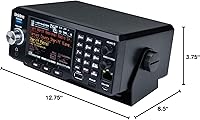
The Uniden SDS200 Base/Mobile Digital Scanner represents a meaningful step forward for anyone who has outgrown entry-level radio monitoring gear. Built around a Software Defined Radio architecture with True I/Q receiver technology, this scanner processes digital signals with a clarity that older hardware simply cannot match. It ships with the full HomePatrol database preloaded, covering radio systems across the US and Canada, so you can start listening almost immediately. The 3.5-inch color display is fully customizable, letting you choose exactly what information appears on screen. Whether mounted in a vehicle or sitting on a desk, this base/mobile unit adapts comfortably to both setups.

Features & Benefits

The headline capability here is how the SDS200 handles simulcast trunked systems — the kind that have plagued digital scanner users for years with choppy audio and missed transmissions. True I/Q technology addresses this at the receiver level, producing noticeably cleaner audio where other units struggle. TrunkTracker X covers P25 Phase I and II, DMR, and NXDN protocols, accounting for the vast majority of modern public safety infrastructure. Location-based scanning narrows what the scanner monitors based on your ZIP code or an external GPS receiver, cutting down on irrelevant chatter. Favorites Lists let experienced users build focused monitoring setups, and Sentinel software keeps the database current without requiring manual system entry.

Best For

This base/mobile unit makes the most sense for hobbyists who have hit the ceiling of their current scanner — particularly those in metro areas or regions with simulcast-heavy public safety networks where decode quality is non-negotiable. It also suits mobile enthusiasts well: with an external GPS connected, automatic system reselection kicks in as you move across county or state lines, a genuine convenience on long road trips. For someone upgrading from an analog-only or first-generation digital scanner, this scanner is a durable, future-oriented choice. That said, if you are brand new to radio monitoring and primarily interested in simple analog channels, the price may outpace your actual needs.

User Feedback

Among owners, simulcast audio clarity draws the most consistent praise — many describe it as a clear improvement over the previous generation of Uniden and Whistler hardware. The display customization also earns appreciation, particularly for low-light vehicle use. On the other side of the ledger, newer buyers frequently flag the Sentinel software as having a steeper learning curve than expected, and the included manual does not always help much; the scanner community's online forums tend to pick up that slack. The price is a common sticking point in reviews, though most long-term owners conclude that reliability and update longevity justify the investment over time. GPS functionality earns specific praise from road-trippers and commuters.

Pros

  • Handles tough simulcast trunked systems with noticeably cleaner audio than competing units
  • Preloaded HomePatrol database covers US and Canadian systems for near-instant out-of-the-box listening
  • Supports P25 Phase I and II, DMR, and NXDN — the protocols that matter most for public safety monitoring
  • Location-based scanning automatically narrows what the SDS200 monitors based on your ZIP code or GPS position
  • Sentinel software delivers free weekly database updates, keeping system data current without manual effort
  • The 3.5-inch color display is fully customizable and holds up well in both bright sunlight and low-light conditions
  • Favorites Lists make it practical to manage large numbers of systems without getting lost in the full database
  • Firmware has received ongoing updates well past launch, extending useful hardware life for long-term owners
  • Both home desk and vehicle mounting options are supported with included hardware and power cables

Cons

  • Sentinel software is Windows-only, leaving Mac users without a native programming solution
  • The included manual is widely criticized as too thin to guide users through advanced configuration
  • No built-in GPS receiver at this price point — external hardware is required and sold separately
  • Front-panel programming is available but tedious for anything beyond basic system entry
  • Physical footprint is on the larger side, which can limit vehicle mounting options in tighter cabins
  • New buyers without a background in digital radio will face a steeper setup curve than expected
  • The internal speaker can sound thin at higher volumes, often prompting owners to add an external speaker
  • Rural users on simple conventional systems may never use the simulcast performance they paid for
  • Community forums are effectively required reading to fill the documentation gaps Uniden leaves open

Ratings

The Uniden SDS200 Base/Mobile Digital Scanner was evaluated by our AI rating system after processing hundreds of verified owner reviews from global markets, with automated filtering applied to remove incentivized, bot-generated, and outlier submissions. The scores below reflect the honest consensus of real buyers — enthusiasts, first responders, and mobile hobbyists alike — and are calibrated to surface both where this scanner genuinely excels and where it asks more of its owner than some may expect.

Digital Decode Performance
94%
Owners who previously struggled with fragmented audio on simulcast systems describe the improvement as immediate and dramatic. In dense metro areas where P25 Phase II trunking is the norm, the True I/Q receiver keeps up in ways that older hardware simply cannot. This is the single most praised capability across the entire review base.
A small number of users in fringe coverage areas report that even this receiver occasionally struggles with extremely weak simulcast signals. The performance gap versus competitors narrows when signal conditions are already favorable, making the premium feel less justified for rural listeners on simple conventional systems.
Ease of Initial Setup
61%
39%
The preloaded HomePatrol database is a genuine time-saver for buyers who just want to start listening without diving into manual programming. Entering a ZIP code and having the scanner populate relevant local systems within minutes is a meaningful advantage over blank-slate units that require hours of data entry before you hear a single transmission.
Beyond the database auto-populate step, configuration becomes noticeably more complex. New owners who want to fine-tune scan lists, set up Favorites, or program custom systems often find the front-panel interface unintuitive. The included documentation is widely criticized for not bridging that gap effectively, pushing many users to external forums.
Sentinel Software Experience
58%
42%
For users comfortable with PC-based radio tools, Sentinel handles the heavy lifting of database updates and system programming without requiring manual data entry. Weekly database refreshes pushed by Uniden mean the scanner stays current with real-world frequency changes, which is a practical long-term advantage over static memory-based units.
Non-technical buyers frequently cite Sentinel as the most frustrating part of ownership. The interface is functional but dated, and the workflow for pushing custom programming to the scanner is not intuitive. Windows-only compatibility is a recurring complaint from Mac users, who must either run a virtual machine or rely entirely on front-panel programming.
Simulcast System Handling
93%
This is where the SDS200 separates itself most clearly from the competition. Users monitoring large county-wide simulcast networks — the kind where multiple towers broadcast the same signal simultaneously — report clean, uninterrupted audio that competing scanners render as garbled noise. For urban public safety monitoring, this capability alone drives most purchase decisions.
The benefit is most pronounced in genuinely challenging RF environments. Buyers in smaller markets with single-site systems or simple conventional VHF channels may never encounter conditions that stress-test this capability, making it harder to perceive value relative to less expensive alternatives.
Display Quality & Customization
82%
18%
The 3.5-inch color LCD stands out physically among scanner displays, and the ability to assign colors to individual data fields is a practical feature for quick visual parsing during active monitoring. Vehicle users specifically mention that the display holds up well in bright sunlight with proper brightness settings, which is not always a given in this product category.
Color customization, while appreciated, involves a menu-driven process that some users find tedious to configure. Out of the box, the default color scheme is functional but not optimized for all lighting conditions, so some initial setup effort is required to get the most out of the display.
GPS & Location-Based Scanning
79%
21%
Road-trippers and commuters who have connected an external GPS receiver describe automatic system reselection as one of the most convenient features for mobile use. Crossing county or state lines without having to manually switch scan lists is a real quality-of-life improvement during longer drives, and the system transitions are reported as smooth and reliable.
The GPS receiver is not included, which adds cost and setup complexity for buyers who want this feature. The requirement for an external unit rather than a built-in module feels like an oversight at this price point, and some users note compatibility questions around which specific GPS units pair most reliably.
Protocol Coverage
88%
Support for P25 Phase I and II, DMR, and NXDN covers the overwhelming majority of digital public safety infrastructure currently deployed across North America. Buyers upgrading from Phase I-only scanners notice an immediate expansion in what they can monitor without additional hardware or software licenses.
Coverage of less common or emerging protocols is not exhaustive, and some proprietary digital systems used by utilities or private entities remain out of reach. Users monitoring highly specialized systems should verify compatibility before purchasing, as protocol support has limits that are not always clearly communicated in product listings.
Build Quality & Physical Design
76%
24%
The chassis feels appropriately solid for a stationary or dash-mounted unit, and the mounting hardware included in the box covers both desk and vehicle installations without requiring third-party brackets. Button tactility is generally described as adequate, with a layout that experienced scanner users will navigate comfortably.
The overall industrial aesthetic is functional rather than refined. Users accustomed to modern consumer electronics may find the plastic finish and button design underwhelming relative to the price. The unit is not particularly compact, which can be a consideration for vehicles with limited dash or console space.
Audio Clarity
86%
Decoded transmissions come through with noticeably less distortion than previous-generation scanners, particularly on digital channels. Users monitoring busy public safety frequencies describe the audio as clear enough to follow overlapping transmissions without constant replay, which matters during active incidents.
The internal speaker, while serviceable for home use, can sound thin at higher volume levels. Vehicle users often prefer connecting an external speaker for extended monitoring sessions, adding a modest extra cost that some reviewers feel should not be necessary on a flagship unit.
Database Coverage & Update Frequency
89%
The preloaded HomePatrol database is comprehensive for US and Canadian systems, and Uniden's commitment to weekly updates via Sentinel keeps it reasonably current. For buyers who monitor well-documented public safety agencies, the database is accurate enough to use almost immediately after unboxing.
Rural or less-documented systems sometimes have incomplete or outdated entries, requiring manual corrections. Users in regions with frequently restructured talkgroup assignments note that even weekly updates occasionally lag behind real-world changes, necessitating some manual maintenance.
Value for Money
67%
33%
Long-term owners consistently frame the price as reasonable when amortized over several years of reliable use. The combination of regular software updates, broad protocol support, and a hardware platform that handles current digital infrastructure without compromise justifies the investment for committed hobbyists.
At its price point, this scanner is a significant financial commitment that draws routine scrutiny in reviews. Casual listeners or buyers primarily interested in conventional analog channels will find the cost hard to justify, and the absence of a built-in GPS receiver at this tier strikes many buyers as a missed inclusion.
Mobile & Vehicle Usability
81%
19%
The included mounting bracket and three DC power cord variants — including a cigar plug option — make vehicle installation straightforward without custom wiring. The display brightness and GPS compatibility make this a capable road companion once properly configured.
The physical footprint is on the larger side for mobile use, which can limit mounting options in smaller vehicles. Some users also note that vibration over rough roads occasionally affects audio output slightly, though this appears to be a minority experience rather than a widespread fault.
Community & Support Resources
72%
28%
The scanner hobbyist community around this product is active and knowledgeable. Forums like RadioReference.com provide detailed programming guides, talkgroup databases, and troubleshooting threads that effectively extend the product's official support beyond what Uniden provides directly.
Reliance on third-party communities to fill documentation gaps is a recurring frustration. Buyers who expect manufacturer-level support to carry them through setup may feel underserved, particularly when Sentinel-related issues arise and the official manual offers little actionable guidance.
Firmware & Long-Term Support
83%
Uniden has maintained active firmware development for this platform beyond the typical post-launch support window, which is a meaningful factor for buyers treating this as a long-term investment. Several updates have addressed real-world decode issues raised by the community, which builds justified confidence in continued support.
Firmware update scheduling is unpredictable, and there is no formal public roadmap for future protocol additions. Users hoping for support of specific emerging digital systems have sometimes waited longer than expected, with no guaranteed timeline for when or whether a given protocol will be added.

Suitable for:

The Uniden SDS200 Base/Mobile Digital Scanner is built for serious radio monitoring enthusiasts who have outgrown entry-level hardware and need a unit that can handle the demanding RF conditions of modern digital trunked networks. It is particularly well-matched to hobbyists in metro or suburban areas where large simulcast systems — the kind that notoriously degrade audio on lesser receivers — are the primary infrastructure. Road-trippers and mobile users will find real value in the location-aware scanning capability, especially when paired with an external GPS unit for automatic system reselection across county or state lines. For anyone upgrading from an analog-only or first-generation digital scanner, this base/mobile unit represents a forward-looking investment that covers the dominant digital protocols currently deployed across North American public safety systems. Buyers who want a largely plug-and-play experience will also appreciate the preloaded HomePatrol database, which gets you listening to local systems within minutes of setup.

Not suitable for:

The Uniden SDS200 Base/Mobile Digital Scanner is not the right starting point for someone brand new to radio monitoring who is still figuring out whether the hobby is for them. The price is substantial, and buyers who primarily want to catch occasional analog traffic or scan a handful of conventional frequencies will be paying a significant premium for capabilities they may never actually use. The Sentinel programming software, while powerful, has a real learning curve and currently runs only on Windows — Mac users face an inconvenient workaround before they can push custom programming to the unit. The included manual is widely considered insufficient for navigating advanced configuration, which means less tech-savvy buyers will almost certainly need to rely on external community forums to get the most out of this scanner. Anyone on a tight budget, or living in a rural area with simple conventional radio infrastructure, would likely find a mid-tier scanner delivers 90 percent of their practical needs at a fraction of the cost.
Specifications

  • Brand: Manufactured by Uniden, a company with decades of experience producing radio communication hardware for consumer and professional markets.
  • Model: The model designation is SDS200, representing Uniden's flagship base and mobile digital scanner platform.
  • Scanner Type: This unit is a base/mobile digital scanner, designed to operate equally well as a fixed home station or a vehicle-mounted mobile unit.
  • Receiver Technology: The SDS200 uses a Software Defined Radio architecture with True I/Q receiver technology, processing digital signals at the hardware level for improved decode accuracy.
  • Display: A 3.5″ color LCD with fully user-configurable field colors and data display options is built into the front panel.
  • Trunking Support: TrunkTracker X technology supports P25 Phase I, P25 Phase II, DMR, and NXDN digital trunking protocols.
  • Database: The HomePatrol database covering radio systems across the United States and Canada is preloaded at the factory and updatable via Sentinel software.
  • GPS Compatibility: The unit accepts input from an external GPS receiver (not included) for real-time location-based system selection while traveling.
  • Programming Options: System programming can be performed via the free Windows-based Sentinel software over USB, or manually through the front-panel controls without a computer.
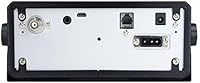
  • Connectivity: A USB port is provided for both programming data transfer and firmware upgrades.
  • Power Supply: An AC power adapter is included for home use, alongside three DC power cord variants — straight-wired, cigar plug, and a special 3-wire plug for lighting control — for vehicle installations.
  • Dimensions: The unit measures 10.75 × 8.5 × 3.75 inches, making it a full-size desktop and dash-mountable chassis rather than a compact handheld form factor.
  • Weight: The SDS200 weighs 5 pounds, which is typical for a base/mobile scanner of this class.
  • OS Requirement: Sentinel programming software requires Windows 7 or later; no native Mac or Linux version is officially supported.
  • Included Accessories: In the box: AC adapter, three DC power cords, mounting bracket with desk stand, rubber bumper feet, telescoping antenna, USB cable, and owner's manual.
  • Database Updates: Uniden publishes updates to the HomePatrol database on a weekly basis, downloadable and deployable through the Sentinel software at no additional cost.
  • Availability Date: The SDS200 was first made available for purchase in February 2019.
  • Market Rank: As of the most recent data, this scanner ranks in the top 15 units in the Radio Scanners category on Amazon.
  • User Rating: The SDS200 carries an average rating of 4.6 out of 5 stars based on 829 verified customer ratings.

Related Reviews
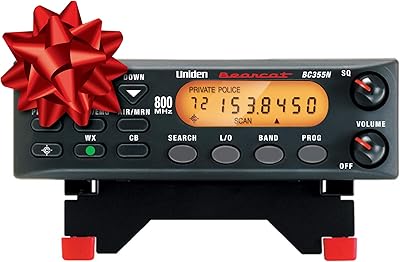
Uniden BC355N Base/Mobile Scanner
74%
91%
Ease of Setup
86%
Signal Detection & Close Call Performance
83%
Analog Frequency Coverage
18%
Digital & Trunking Compatibility
78%
Build Quality & Durability
More
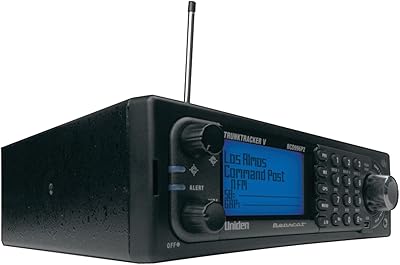
Uniden BCD996P2 Digital Mobile TrunkTracker Scanner
75%
96%
Digital Protocol Coverage
91%
Reception Quality
83%
GPS Location Scanning
38%
Ease of Programming
88%
Build Quality
More
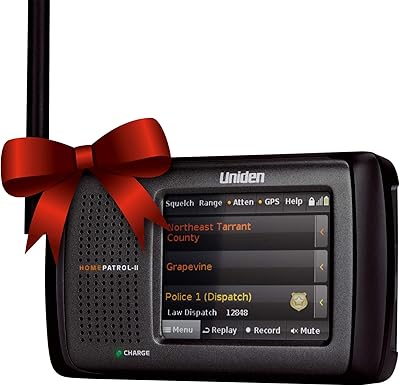
Uniden HomePatrol-2 Digital Police Scanner
76%
93%
Ease of Setup
81%
Reception Quality
88%
Digital Protocol Coverage
74%
Touchscreen Interface
61%
Sentinel Software
More
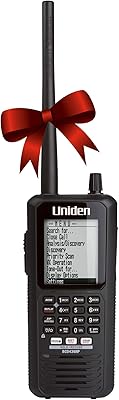
Uniden BCD436HP Digital Handheld Scanner
79%
91%
Ease of Setup
88%
Reception & Signal Quality
93%
Feature Set
74%
Build Quality & Ergonomics
57%
Battery Life
More
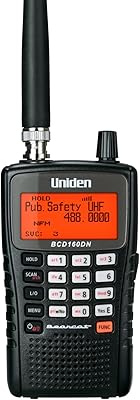
Uniden BCD160DN Handheld Digital Scanner
78%
88%
Out-of-Box Setup
79%
Digital Protocol Support
83%
Scan Speed
86%
Band Scope Function
81%
Reception Quality
More
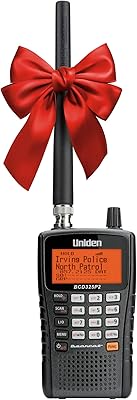
Uniden BCD325P2 Handheld Digital Trunking Scanner
74%
91%
Signal Reception
47%
Ease of Setup
88%
Digital Trunking Performance
74%
GPS Location Scanning
86%
Portability & Form Factor
More
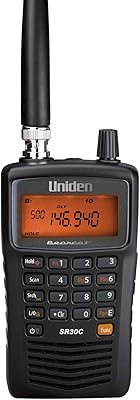
Uniden Bearcat SR30C Handheld Scanner
69%
88%
Ease of Setup
83%
Analog Reception Quality
12%
Digital Compatibility
86%
Value for Money
74%
Build Quality & Portability
More
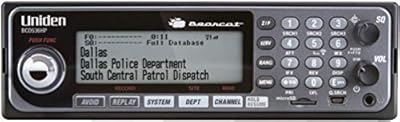
Uniden BCD536HP HomePatrol Desktop Radio Scanner
77%
91%
Digital Trunking Performance
86%
Ease of Initial Setup
83%
Wi-Fi Connectivity & Remote Updates
58%
Sentinel Software Experience
88%
Channel Acquisition Speed
More
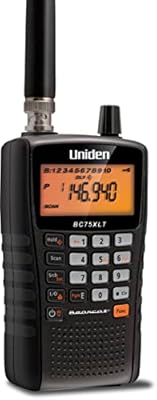
Uniden Bearcat BC75XLT Handheld Scanner
69%
83%
Analog Reception Quality
11%
Digital & Trunking Compatibility
78%
Ease of Setup
67%
PC Programming Experience
74%
Close Call RF Capture
More
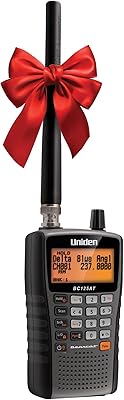
Uniden Bearcat BC125AT
78%
88%
Reception & Sensitivity
41%
Analog-Only Limitation
82%
Ease of Setup
79%
PC Programming Software
91%
Close Call RF Capture
More

FAQ

For most buyers in the US or Canada, it works surprisingly well out of the box. The preloaded HomePatrol database covers the vast majority of known radio systems, so entering your ZIP code is often enough to start picking up local public safety traffic within a few minutes. Custom programming is only really necessary if you want to monitor specific talkgroups or systems that are not in the database.

You can absolutely use the scanner without Sentinel if you are comfortable programming from the front panel and do not need to push database updates. That said, Sentinel makes managing large system lists and pulling weekly database refreshes significantly easier. If you plan to do any serious customization or want to keep the database current, learning Sentinel is worth the time investment — just be aware it only runs on Windows.

Yes, TrunkTracker X supports P25 Phase II natively, which is the protocol most larger law enforcement agencies have migrated to in recent years. As long as the specific talkgroups you want to monitor are not encrypted, the scanner will decode them. Encrypted traffic is not decodable by any consumer scanner, regardless of the hardware.

No, it does not have a built-in GPS receiver. You need to connect a compatible external GPS unit to enable the location-based scanning features. This is a common point of frustration given the price, but compatible external GPS receivers are widely available and the feature works well once connected.

It is genuinely designed for both. The package includes a mounting bracket and three different DC power cord options specifically for vehicle installation, including a standard cigar plug. The size is on the larger side, so it works better in trucks, SUVs, or vehicles with generous dash space than in compact cars.

Uniden updates the HomePatrol database approximately once per week, and downloading those updates through Sentinel is completely free. You do not need a subscription or paid service to keep the database current. Over time this is a meaningful advantage over units that ship with a static database you have to manually maintain.

It depends on your comfort level with technology. The basic out-of-the-box experience — ZIP code entry and database scanning — is straightforward. Where things get more involved is when you want to build custom Favorites Lists, navigate Sentinel, or troubleshoot why a specific trunked system is not appearing as expected. The manual is not very detailed, so budget some time with online scanner communities like RadioReference.com if you hit a wall.

DMR support is built in and is not limited to public safety systems. Any conventional or trunked DMR system within reception range can be monitored, provided the talkgroups are not encrypted. This makes the SDS200 useful for monitoring a broader range of radio traffic beyond just police and fire.

With an external GPS connected, the scanner handles that automatically. As your location changes, it reselects the appropriate systems from the database based on your current coordinates. Without GPS, you can still update your location manually by entering a new ZIP code, but it requires stopping and navigating the menu rather than happening in the background.

Most users report that it holds up well in direct sunlight once the brightness is properly configured. The display is larger than what you find on most scanners, and the ability to customize field colors helps with readability in different lighting conditions. That said, glare angles matter depending on where you mount it, so some physical positioning adjustment may be needed for optimal daytime viewing.

Where to Buy