Overview

The Uniden BCD996P2 Digital Mobile TrunkTracker Scanner has held a firm spot near the top of the radio scanner category since its 2015 launch — and that staying power says something real. This is not a casual listening device. It is built for hobbyists, public safety monitors, and radio enthusiasts who want serious coverage of modern digital trunked systems. Ranked consistently among the best in its class, the BCD996P2 earns that position through capability, not marketing. That said, buyers should come in with clear eyes: this mobile scanner rewards patience and technical willingness, and first-timers may face a meaningful setup challenge before it truly delivers.
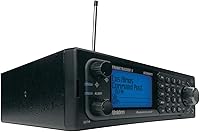
Features & Benefits

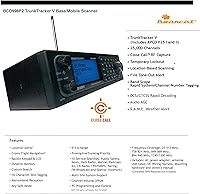
The BCD996P2's headline capability is its support for virtually every major trunked radio protocol in use today — APCO P25 Phase 1 and Phase 2, X2-TDMA, Motorola, EDACS, and LTR. In practice, that means comprehensive digital coverage whether you're tracking a county sheriff department or a transit authority. The 25,000 channels are allocated dynamically, so the scanner distributes memory where it's actually needed rather than locking fixed slots per system. Close Call RF Capture quietly monitors for nearby transmissions in the background, alerting you without cutting off whatever you're already listening to. Pair that with GPS-linked location scanning and S.A.M.E. weather alerts, and this TrunkTracker unit handles a remarkable range of real-world monitoring tasks.

Best For

This TrunkTracker unit fits best in the hands of someone who already knows what trunked systems are — or is genuinely eager to learn. Amateur radio hobbyists monitoring P25 Phase 2 systems, public safety listeners in areas with updated digital infrastructure, and event-goers who want to follow air traffic, race communications, or marine channels will get significant value here. The GPS auto-switching feature is a real draw for people who commute or travel across coverage areas frequently. One honest caveat: if you are not comfortable with software like Sentinel or communities like RadioReference.com, initial programming will feel daunting. This is a scanner for the committed, not the casually curious.

User Feedback

Among the nearly 2,800 reviews this mobile scanner has accumulated, a clear pattern emerges. Experienced users consistently praise reception quality and the depth of trunking system support — particularly for P25 Phase 2 coverage in well-equipped metro areas. Build quality also draws regular compliments, with many owners reporting years of reliable daily use. On the other side, beginners frequently cite the instruction manual as inadequate, and the interface does look dated next to app-driven alternatives. Programming without Sentinel or guidance from RadioReference.com can turn a first weekend into a frustrating one. The honest takeaway: outstanding long-term value for the technically patient, but a rough start for anyone expecting to simply plug in and scan.

Pros

  • Covers every major digital trunking protocol in active use, including P25 Phase 1 and Phase 2, Motorola, EDACS, and LTR.
  • GPS-linked location scanning automatically loads the right systems for your area as you drive.
  • Close Call RF Capture detects nearby transmissions in the background without interrupting active channel reception.
  • 25,000 dynamically allocated channels mean memory goes where it is actually needed, not wasted on empty fixed slots.
  • S.A.M.E. weather alerts provide location-specific severe weather warnings, not just generic regional broadcasts.
  • Consistently ranked among the top units in its category, backed by a large and experienced user community.
  • Build quality earns frequent long-term praise, with many owners reporting years of reliable daily use.
  • The RadioReference.com community and Sentinel software make programming far more manageable than going it alone.
  • Analog and digital conventional channels are supported alongside trunked systems, covering a broad range of signal types.
  • Strong reception performance, particularly in metropolitan areas with active P25 Phase 2 deployments.

Cons

  • Programming from scratch without Sentinel or a RadioReference database is a genuinely frustrating experience for newcomers.
  • The printed manual is widely considered inadequate for the complexity of features this mobile scanner offers.
  • The interface design feels dated and lacks the modern usability that newer app-connected devices provide.
  • No handheld or battery-powered option — this unit requires a 12V DC power source, limiting where it can be used.
  • Buyers in areas without digital trunked infrastructure will not get proportional value from what they are spending.
  • Initial setup time investment is significant; expect several hours before the scanner performs at its potential.
  • No built-in Wi-Fi or Bluetooth connectivity limits integration with modern devices or remote monitoring setups.
  • Screen size and display technology lag behind what users accustomed to contemporary electronics might expect.

Ratings

The scores below reflect an AI-driven analysis of thousands of verified buyer reviews for the Uniden BCD996P2 Digital Mobile TrunkTracker Scanner, with spam, incentivized feedback, and bot activity actively filtered out to surface what real owners actually think. This mobile scanner earns high marks in several technical categories, but the ratings also transparently capture where experienced hobbyists and frustrated newcomers part ways. Both the genuine strengths and the recurring pain points are represented here without sugarcoating.

Digital Protocol Coverage
96%
Owners who monitor P25 Phase 2 systems — increasingly the standard for metropolitan public safety agencies — consistently describe this as one of the only scanners that handles them without gaps or workarounds. Coverage of Motorola, EDACS, LTR, and X2-TDMA alongside Phase 1 and Phase 2 means real-world users rarely hit a system the BCD996P2 cannot decode.
A small number of users in regions with highly localized or proprietary trunking variants have reported occasional decoding hiccups, particularly on aging EDACS ProVoice systems. These edge cases are uncommon, but they do surface in reviews from users with niche monitoring needs.
Reception Quality
91%
Across urban and suburban environments, the BCD996P2 pulls in signals that comparable scanners at lower price points miss entirely. Frequent commuters and event hobbyists at air shows and racetracks specifically praise the sensitivity, noting it picks up activity at the fringe of coverage areas where other units go quiet.
In dense urban environments with significant RF interference, a handful of users report occasional noise or false triggers, particularly with Close Call enabled at high sensitivity. Antenna quality matters significantly here, and some owners find the stock antenna underwhelming for fringe reception.
GPS Location Scanning
83%
For users who commute across county or agency boundaries regularly, the auto-switching GPS feature eliminates the tedious manual process of changing active system groups mid-drive. Reviewers who travel between metro areas describe it as one of the most practically useful features on the unit once properly configured.
The GPS functionality requires a separately purchased receiver, which surprises buyers who assume it is included. Configuration is also non-trivial — if your location-based system groups are not cleanly programmed beforehand, the feature can switch to the wrong system or behave erratically near boundary zones.
Ease of Programming
38%
62%
Users who invest time in learning Sentinel software and pull databases from RadioReference.com report that programming, while complex, becomes manageable with practice. Once a region is fully loaded, many describe the setup as a one-time investment that pays off across years of reliable scanning.
This is the single most common source of negative reviews, and the criticism is fair. Out-of-the-box manual programming is genuinely difficult for anyone without prior scanner experience, and the included documentation does not bridge that gap effectively. Beginners who skip community resources frequently give up or return the unit.
Build Quality
88%
Long-term owners repeatedly note that this TrunkTracker unit holds up well under daily use, whether permanently mounted in a vehicle or running continuously on a home desk. The chassis feels solid, the buttons retain their tactile response over time, and units purchased years ago are still reported as functioning without hardware issues.
The front panel and overall aesthetic look dated by current consumer electronics standards, and the knobs and display surround feel more utilitarian than refined. A few owners have noted that the display backlight can dim unevenly on older units after extended use.
Close Call RF Capture
79%
21%
Hobbyists who use their scanner at events or in unfamiliar areas appreciate how Close Call surfaces active nearby frequencies they had not thought to program. The Do-Not-Disturb mode is a thoughtful addition that prevents the feature from becoming intrusive during active monitoring sessions.
Some users find Close Call too aggressive at its default sensitivity settings, triggering on spurious signals or intermod interference in RF-heavy environments like stadiums or near broadcast towers. Dialing in the right sensitivity threshold requires experimentation and is not intuitively documented.
Weather Alert Functionality
82%
18%
The S.A.M.E. alert system earns consistent praise from users in storm-prone regions, particularly because it filters alerts to the user's specific county rather than triggering on warnings for distant areas. Reviewers in the Midwest and Gulf Coast regions specifically call this feature out as genuinely useful during severe weather seasons.
The weather alert system is functional but not exceptional compared to dedicated weather radios, and a small number of users report occasional missed alerts during periods of weak NOAA signal. It is a solid bonus feature rather than a primary reason to choose this scanner over alternatives.
Display & Interface
51%
49%
The 4-line alphanumeric display provides enough information to identify active systems and channels at a glance, which experienced users find sufficient for in-vehicle monitoring. Channel tag names imported from RadioReference databases make the display genuinely informative once the scanner is properly programmed.
By modern standards, the display looks visibly aged — low contrast, limited backlighting, and no touchscreen interaction leave users accustomed to contemporary devices underwhelmed. Several reviewers note that reading the display while driving in bright sunlight requires deliberate effort, which is a real usability concern.
Value for Money
74%
26%
For buyers who fully utilize the P25 Phase 2 and GPS scanning capabilities, the price reflects access to functionality that alternatives simply do not offer at any comparable cost. Long-term owners across multiple years of use tend to view the investment positively once the learning curve is behind them.
Buyers who underestimate the programming complexity or who live in areas with limited digital trunking infrastructure often feel they overpaid for capability they cannot practically access. The additional cost of a programming cable, GPS receiver, and potentially a RadioReference subscription adds up beyond the sticker price.
Documentation & Setup Support
33%
67%
The RadioReference.com community and Uniden's own user forums provide extensive real-world guidance that effectively compensates for the manual's shortcomings. Experienced users point new buyers to these resources as the actual path to a working setup, and the community knowledge base is deep and actively maintained.
The included manual is widely criticized as inadequate for the complexity of the product — it covers basic operation but leaves critical trunking and GPS configuration steps under-explained. For buyers who prefer self-contained documentation without relying on third-party communities, this is a significant frustration.
Software Integration
71%
29%
Sentinel software is free, regularly updated, and once mastered provides a genuinely efficient way to manage large system databases. The ability to import directly from RadioReference.com means users in well-documented regions can populate hundreds of channels accurately without manual data entry.
Sentinel requires a Windows PC and a separately purchased programming cable, which presents a real barrier for Mac users and those without a desktop computer readily available. The software interface itself is functional but not modern, and first-time users often find the workflow confusing without tutorial support.
Vehicle Installation
86%
The 12V DC power requirement and compact form factor make in-vehicle installation straightforward for users with basic mounting hardware. Reviewers who install the BCD996P2 in trucks, SUVs, and patrol-style vehicles consistently describe a clean, secure fit with standard dash or console mounts.
The unit does not include a dedicated vehicle mounting bracket in the box, which surprises some buyers expecting a complete in-car kit. Cable management around the power connection and optional GPS receiver can be awkward depending on vehicle layout.
Long-Term Reliability
89%
Multi-year ownership reviews are notably positive on hardware durability, with a meaningful number of buyers reporting trouble-free operation well beyond typical consumer electronics lifespans. The unit's continued production and firmware support since 2015 reinforces confidence in its long-term viability.
A small percentage of users report issues with the volume or squelch knob developing intermittent behavior after extended use, a common wear point on scanning equipment. Replacement parts and repair support are available but require navigating Uniden's service channels, which some users describe as slow.
Frequency Range & Versatility
87%
Beyond trunked public safety systems, the BCD996P2 covers air band, marine, railroad, and amateur radio frequencies, making it genuinely multi-purpose for hobbyists with varied interests. Event-goers find this breadth particularly valuable when a single scanner needs to serve multiple monitoring tasks in one outing.
Military encrypted communications and certain federal agency transmissions remain inaccessible, as they are with all consumer scanners — but some buyers arrive with unrealistic expectations about what the unit can receive. This is an inherent legal and technical limitation, not a product deficiency, but it does generate occasional disappointed reviews.

Suitable for:

The Uniden BCD996P2 Digital Mobile TrunkTracker Scanner is built for a specific kind of buyer — one who takes radio monitoring seriously and has either the technical background or the determination to develop it. Amateur radio hobbyists who actively follow digital trunked systems, particularly those running P25 Phase 2, will find this unit covers their needs thoroughly and then some. Public safety listeners in counties and cities that have upgraded to modern digital infrastructure will appreciate the depth of protocol support, which spans virtually every trunked system type in active use across North America. Frequent drivers benefit meaningfully from the GPS-linked scanning feature, which automatically shifts to locally programmed systems as your location changes — a practical advantage that saves real time on the road. Event enthusiasts who scan air shows, auto races, or marine traffic will also get solid value, since the dynamic channel architecture handles multi-system monitoring without compromise.
Not suitable for:

The Uniden BCD996P2 Digital Mobile TrunkTracker Scanner is genuinely not the right choice for someone who wants a simple, out-of-the-box listening experience. Without a willingness to invest time in programming — either manually or through Sentinel software with a database from RadioReference.com — the device will deliver very little useful audio straight out of the box. Buyers in rural areas still running older analog-only systems may find they are paying a significant premium for digital trunking capability they cannot actually use locally. The form factor is base or mobile only, so anyone looking for a portable handheld unit to carry around will need to look elsewhere in Uniden's lineup. The interface also shows its age; if a modern touchscreen or smartphone-paired app experience matters to you, this TrunkTracker unit will feel like a step back rather than forward.
Specifications

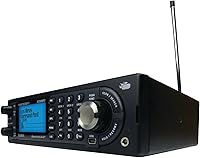
  • Form Factor: Designed as a base or mobile unit, the BCD996P2 mounts in a vehicle or sits on a desk — it is not a handheld portable scanner.
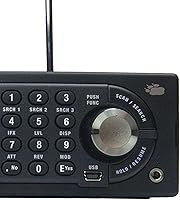
  • Dimensions: The unit measures 11 x 3.75 x 8.5 inches, making it compact enough for a standard dash or desktop installation.
  • Weight: At 2 pounds, the scanner is light enough for easy mounting without requiring heavy-duty hardware.
  • Power Source: Operates on 12V DC, suitable for direct vehicle power connections or a compatible AC adapter for home desk use.
  • Channel Capacity: Supports up to 25,000 dynamically allocated channels, distributing memory across systems based on actual programming rather than fixed slot assignments.
  • Trunking Protocols: Compatible with APCO P25 Phase 1 and Phase 2, X2-TDMA, Motorola, EDACS, and LTR trunked radio systems.
  • Analog Support: Scans conventional analog channels in addition to digital trunked systems, covering a broad range of legacy and modern frequencies.
  • Close Call RF: Close Call RF Capture with Do-Not-Disturb mode detects nearby radio transmissions in the background without interrupting reception of active channels.
  • GPS Scanning: A compatible external GPS receiver enables location-based scanning, automatically activating programmed systems relevant to the user's current position.
  • Weather Alerts: S.A.M.E. NOAA weather alert functionality delivers location-specific emergency notifications rather than broadcasting alerts for the entire regional area.
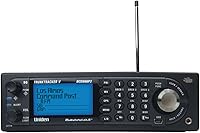
  • Display: A 4-line alphanumeric display shows system names, channel tags, and status information in readable text format while scanning.
  • Battery: Includes one lithium ion battery; the unit is primarily powered externally but ships with battery support for certain operational configurations.
  • Connectivity: GPS receiver input allows integration with compatible external GPS units for location-triggered system selection while in transit.
  • Color: Available in black with a functional, no-frills industrial design typical of professional-grade scanning equipment.
  • In the Box: The package includes the scanner unit, relevant mounting hardware, and the included lithium ion battery; a programming cable for Sentinel software is sold separately.
  • Software Support: Compatible with Uniden's Sentinel software, which allows users to import system databases from RadioReference.com and program the scanner via PC.
  • Market Rank: Holds a top-5 ranking in the Radio Scanners category on Amazon, reflecting sustained demand and long-term buyer satisfaction since its 2015 launch.
  • Manufacturer: Made by Uniden, a brand with decades of history in consumer radio and scanning equipment manufacturing.
  • Model Number: The official model designation is BCD996P2, identifying it as the Phase 2-capable successor in Uniden's 996 mobile scanner line.
  • Release Date: First made available in March 2015 and has remained in active production without manufacturer discontinuation as of the latest available data.

Related Reviews

Uniden HomePatrol-2 Digital Police Scanner
76%
93%
Ease of Setup
81%
Reception Quality
88%
Digital Protocol Coverage
74%
Touchscreen Interface
61%
Sentinel Software
More
Uniden BC355N Base/Mobile Scanner
74%
91%
Ease of Setup
86%
Signal Detection & Close Call Performance
83%
Analog Frequency Coverage
18%
Digital & Trunking Compatibility
78%
Build Quality & Durability
More
Uniden BCD436HP Digital Handheld Scanner
79%
91%
Ease of Setup
88%
Reception & Signal Quality
93%
Feature Set
74%
Build Quality & Ergonomics
57%
Battery Life
More
Uniden BCD160DN Handheld Digital Scanner
78%
88%
Out-of-Box Setup
79%
Digital Protocol Support
83%
Scan Speed
86%
Band Scope Function
81%
Reception Quality
More
Uniden SDS200 Base/Mobile Digital Scanner
79%
94%
Digital Decode Performance
61%
Ease of Initial Setup
58%
Sentinel Software Experience
93%
Simulcast System Handling
82%
Display Quality & Customization
More
Uniden BCD325P2 Handheld Digital Trunking Scanner
74%
91%
Signal Reception
47%
Ease of Setup
88%
Digital Trunking Performance
74%
GPS Location Scanning
86%
Portability & Form Factor
More
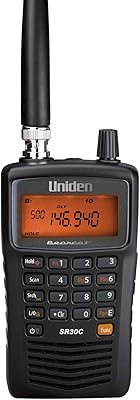
Uniden Bearcat SR30C Handheld Scanner
69%
88%
Ease of Setup
83%
Analog Reception Quality
12%
Digital Compatibility
86%
Value for Money
74%
Build Quality & Portability
More
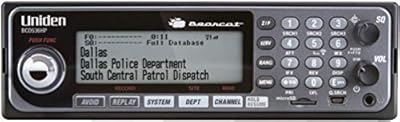
Uniden BCD536HP HomePatrol Desktop Radio Scanner
77%
91%
Digital Trunking Performance
86%
Ease of Initial Setup
83%
Wi-Fi Connectivity & Remote Updates
58%
Sentinel Software Experience
88%
Channel Acquisition Speed
More
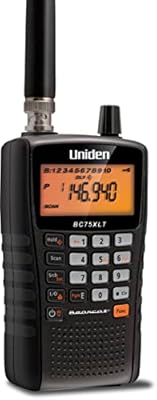
Uniden Bearcat BC75XLT Handheld Scanner
69%
83%
Analog Reception Quality
11%
Digital & Trunking Compatibility
78%
Ease of Setup
67%
PC Programming Experience
74%
Close Call RF Capture
More
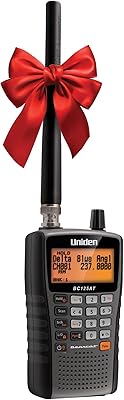
Uniden Bearcat BC125AT
78%
88%
Reception & Sensitivity
41%
Analog-Only Limitation
82%
Ease of Setup
79%
PC Programming Software
91%
Close Call RF Capture
More

FAQ

You can program the BCD996P2 manually using the front keypad, but it is a slow and complex process for anything beyond basic conventional channels. Most experienced users strongly recommend picking up a USB programming cable and using Uniden's free Sentinel software alongside a RadioReference.com database for your area. It will save you hours of frustration and get the scanner performing properly much faster.

In most cases, yes — as long as your local agencies are running a system type the scanner supports, which includes P25 Phase 1 and Phase 2, Motorola, EDACS, and LTR. The best way to confirm is to check RadioReference.com, enter your county or city, and see what trunked systems are listed there. If your area runs P25 Phase 2, this mobile scanner is one of the few units that handles it fully.

Yes, that is exactly what it is designed for. The BCD996P2 runs on 12V DC and connects directly to your vehicle's power. The GPS location-based scanning feature is particularly useful while driving, as it automatically activates the right regional systems as you move between coverage areas — so you are not manually switching profiles at every county line.

A compatible external GPS receiver is required for the location-based scanning feature, and one is not included in the box. Uniden's own GPS receiver accessory works reliably with this unit, and a few third-party options are also compatible. Check the RadioReference forums for current recommendations, as compatibility can vary by firmware version.

It can be, but it is not the easiest entry point. The Uniden BCD996P2 Digital Mobile TrunkTracker Scanner has a significant setup and programming curve that tends to overwhelm complete beginners. If you are new to scanning but motivated to learn, budget extra time for setup and lean heavily on the RadioReference.com community forums — they are genuinely helpful. If you want something simpler to start with, a basic handheld analog scanner might be a better first step.
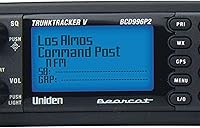
Yes, the BCD996P2 covers a wide frequency range that includes civil air band communications, making it popular at air shows and airports. Military air traffic is technically receivable on unencrypted frequencies, though encrypted military communications cannot be decoded by any consumer scanner. Air show hobbyists commonly use this unit for exactly that purpose.

Close Call works by continuously monitoring the RF environment for strong nearby signals, even while the scanner is actively scanning other channels. When it detects something significant nearby, it interrupts and tunes to that frequency — or, if you have Do-Not-Disturb enabled, it waits until there is a gap in reception before alerting you. It is genuinely useful for catching local transmissions you did not know to program, like a nearby event or emergency response.

It works perfectly well as a home base scanner. You will need a 12V DC power supply — a dedicated AC-to-DC adapter rated for the unit does the job cleanly. Many users run this TrunkTracker unit on a desk full-time and only move it to a vehicle occasionally. Just note that the GPS feature requires an attached GPS receiver to function, whether at home or in the car.

Uniden has released firmware updates for this unit over the years, and some updates have added meaningful improvements to digital decoding. It is worth checking Uniden's support site periodically, as updates are applied through Sentinel software. Staying current is particularly relevant if you notice any decoding issues or if new P25 system variants become common in your area.

The BCD996P2 adds P25 Phase 2 support, which the older BCD996XT does not have. That is the single most important distinction. Phase 2 is an increasingly common upgrade for public safety radio systems, and without support for it, a scanner will go silent on a growing number of agencies. If your local systems have migrated or are planning to migrate to Phase 2, the upgrade from the older model is worth it.

Where to Buy