Overview

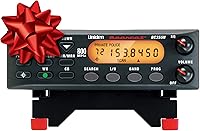
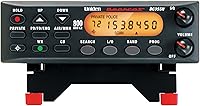
The Uniden BC355N Base/Mobile Scanner is a solid entry-level radio scanner that has earned a spot in the top three of its category — and for good reason. It comes loaded with six pre-programmed service banks covering police, fire, EMS, marine, air, weather, and CB frequencies, so curious listeners can start picking up local transmissions almost immediately. It runs off an AC adapter at home or connects to a vehicle power outlet on the road, making it genuinely dual-purpose. One thing to know before buying: this Bearcat scanner handles conventional analog signals only. No digital, no trunking. If your area has already upgraded its public safety infrastructure, that matters a lot.
Features & Benefits

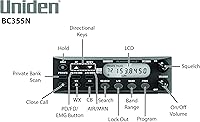
The standout feature most new users notice first is Close Call RF Capture — a function that automatically locks onto strong signals broadcasting nearby without you having to hunt for frequencies manually. Think of it as the scanner doing the legwork for you. Beyond that, the BC355N stores up to 300 channels across its service banks, which is plenty of room to build out a useful local lineup over time. A backlit LCD display keeps things readable at night or in a dimly lit car interior. Aircraft band coverage in AM mode with 8.33 kHz stepping is a nice touch for aviation enthusiasts. Power options cover home and vehicle use without extra accessories.

Best For

This analog scanner hits its stride in rural and suburban areas where local agencies still broadcast on conventional analog frequencies. If your county fire department or sheriff office has not switched to a digital or trunked system yet, you will get solid, reliable coverage right out of the box. It is also a strong pick for hobbyists who want to monitor aircraft communications, follow amateur radio activity, or keep tabs on weather alerts during storm season. First-time scanner buyers will appreciate that setup does not require advanced programming knowledge — plug in and scan is genuinely how it works. For anyone chasing race events or air shows, this fits the job well.

User Feedback

Among the thousands of reviews on record, the pattern is pretty consistent. Users who checked their local radio infrastructure beforehand tend to be happy — they praise the quick signal detection, the readable display, and how painless the initial setup is. Build quality draws favorable comments too. The frustration, when it appears, almost always comes down to one thing: buyers in areas that have moved to digital or trunked systems find this scanner essentially deaf to their local emergency channels. A handful of users also note the stock antenna underperforms at distance. A quick check of your local system type before ordering makes all the difference.

Pros

  • Six pre-programmed service banks cover police, fire, EMS, marine, air, weather, and CB with zero manual entry required.
  • Close Call RF Capture locks onto strong nearby signals automatically, making it easy to discover active local frequencies.
  • Setup takes minutes — unbox, power on, and you are already scanning.
  • The backlit display stays readable in dark car interiors and low-light rooms without straining your eyes.
  • Includes AC adapter, DC cable, and automotive outlet plug, so home and vehicle use are both covered immediately.
  • 300 channels of memory gives you plenty of room to build a personalized local frequency lineup over time.
  • Aircraft band monitoring in AM mode is a genuine bonus for aviation hobbyists near regional airports.
  • Solid build quality holds up well in permanent home base setups, with reviewers reporting reliable long-term performance.
  • Ranks in the top three of its category, reflecting consistent satisfaction among analog scanner buyers.

Cons

  • Completely useless in areas where local agencies have switched to digital or trunked radio systems.
  • No alphanumeric channel labeling means you see a raw frequency number, not a readable station name.
  • The included stock antenna underperforms in fringe or rural areas far from transmitters — an upgrade is often necessary.
  • No internal battery means the BC355N is always tethered to a power source, ruling out true portable use.
  • Squelch control is manual and requires adjustment in high-interference environments like busy highways or industrial zones.
  • No SAME weather alerting, so the unit will not wake or notify you to county-specific storm warnings automatically.
  • Buyers in digital-heavy metro areas consistently report disappointment after discovering the analog-only limitation post-purchase.
  • No trunking follow capability makes it impossible to track conversations that hop between frequencies on modern systems.

Ratings

The scores below for the Uniden BC355N Base/Mobile Scanner were generated by our AI engine after analyzing thousands of verified global user reviews, with spam, bot submissions, and incentivized feedback actively filtered out. Both the genuine strengths that keep this scanner ranked near the top of its category and the real frustrations buyers have encountered are reflected transparently in every score.
Ease of Setup
91%
Most first-time buyers report being up and scanning within minutes of unboxing. The pre-programmed service banks mean there is no need to manually enter frequencies before you hear your first transmission — a huge relief for hobbyists who just want to listen, not program.
The manual is functional but thin on context for complete beginners who want to understand what they are actually hearing. Users who want to customize beyond the presets need to spend some extra time learning the channel memory system.
Signal Detection & Close Call Performance
86%
The Close Call RF Capture function genuinely impresses in practice — drive through a neighborhood and it will latch onto active nearby transmissions automatically. Reviewers in analog-heavy areas describe it as one of the most useful features for discovering active local frequencies without any guesswork.
Close Call performance drops noticeably in dense urban environments where signal interference is higher. It also offers no advantage if your local agencies use digital or trunked systems, since those signals are simply invisible to this scanner.
Analog Frequency Coverage
83%
Six pre-programmed banks covering police, fire, EMS, marine, air, weather, and CB give this Bearcat scanner a genuinely wide reach for analog listeners. Rural and suburban users consistently report strong, reliable coverage of their local public safety channels right out of the box.
Coverage is only as good as your local infrastructure allows. In regions where agencies have migrated to digital or P25 trunked systems, the BC355N picks up nothing useful on those channels — a hard ceiling that no firmware update can fix.
Digital & Trunking Compatibility
18%
82%
There is little positive to say here by design — this is a conventional analog-only unit, and Uniden is upfront about that. Buyers who understand the limitation and live in analog-friendly areas have no complaints because they never expected digital support.
This is the single biggest source of buyer disappointment across the review pool. Users in metro areas or counties that have already transitioned to digital trunked systems find the BC355N essentially non-functional for local emergency monitoring, which is the primary reason most people buy a scanner.
Build Quality & Durability
78%
22%
The chassis feels solid and purposeful for a unit in this price tier. Reviewers who use it as a permanent home base setup report no issues after years of continuous use, and the buttons have a tactile feel that holds up well over time.
It is not ruggedized, and the housing shows scratches with regular handling. A few mobile users noted the unit feels slightly light for vibration-heavy vehicle environments, though actual hardware failures are rarely reported.
Display Readability
81%
19%
The backlit LCD makes a real difference when using this analog scanner in a dark car interior or a dimly lit room at night. Reviewers consistently call the display clear and easy to read at a glance, which matters when you are scanning through channels quickly.
The display is functional but dated — no alphanumeric channel tagging means you see a frequency number, not a label like Fire Dispatch. Users who want to know at a glance what they are listening to have to memorize their own channel assignments.
Included Antenna Performance
59%
41%
For suburban use within a reasonable range of transmitters, the stock antenna does a workable job. Casual users in mid-density areas report picking up local fire and weather broadcasts without any antenna upgrade.
In fringe areas or rural locations where transmitters are farther away, the stock antenna falls short and users frequently recommend an immediate upgrade to an external antenna. This is one of the more consistent complaints across the review base.
Channel Memory & Organization
74%
26%
Three hundred channels split across six service banks gives users a practical amount of storage for building a customized local lineup over time. Hobbyists who monitor multiple services — air traffic one day, marine the next — appreciate having dedicated banks for each.
There is no alphanumeric labeling, so channel organization relies entirely on the user remembering what frequency they stored where. For anyone building a large local database, this becomes tedious without a notebook or external reference.
Power Flexibility
84%
Shipping with an AC adapter, a DC power cable, and an automotive outlet plug is a practical choice that makes the BC355N genuinely dual-purpose. Swapping from a home desk setup to a road trip requires no extra accessories, which buyers notice and appreciate.
There is no internal battery option, so the unit is always tethered to a power source. This is not a deal-breaker for home or vehicle use, but it does rule out truly portable, handheld-style monitoring scenarios.
Value for Money
77%
23%
For analog-heavy regions, this Bearcat scanner offers a strong feature set at an accessible price point. The Close Call technology and pre-programmed banks alone would justify the cost for a hobbyist who just wants a low-effort entry into scanning without investing in a premium digital unit.
The value proposition collapses if your local area has gone digital. Buyers who discover after purchase that their county uses a trunked system feel the purchase was a complete waste, and those reviews pull the overall satisfaction score down considerably.
Noise & Squelch Control
72%
28%
The squelch control works as expected for an analog scanner of this type, cutting out the static between transmissions cleanly in most listening environments. Users monitoring weather channels particularly appreciate the quiet gaps between broadcasts.
In noisy RF environments — near airports, busy highways, or industrial areas — some users report the squelch requiring frequent manual adjustment to keep background interference under control. It is not automatic or adaptive in any meaningful way.
Aircraft Band Monitoring
76%
24%
Aviation hobbyists specifically call out the aircraft band coverage as a highlight. The AM mode with 8.33 kHz step spacing lets users tune into tower and ground communications at smaller regional airports, which is a niche but genuinely appreciated feature.
Coverage is limited to conventional AM aircraft communications. Users hoping to monitor military or encrypted aviation frequencies will find those channels inaccessible, and the lack of digital support means some newer airspace communications are out of reach.
Weather & Emergency Alert Monitoring
82%
18%
NOAA weather band coverage is a consistent bright spot in the reviews. Storm trackers and weather enthusiasts praise the BC355N for reliable, clear weather channel reception, and the preset bands mean weather monitoring works immediately without any setup.
The unit does not support SAME weather alerting, which means it will not automatically wake or alert you to a specific county warning while sitting idle. Users who want passive storm alerts in the background need a dedicated weather alert radio for that function.

Suitable for:

The Uniden BC355N Base/Mobile Scanner is an excellent fit for anyone taking their first step into the radio scanning hobby and wanting results without a steep technical learning curve. If you live in a rural or suburban area where local police, fire, and EMS agencies still broadcast on conventional analog frequencies, this Bearcat scanner will deliver exactly what you expect — local transmissions, weather alerts, and aircraft communications with minimal setup effort. Storm trackers and weather enthusiasts get immediate access to NOAA channels right out of the box, no programming required. Aviation hobbyists who enjoy listening to regional airport tower communications will find the aircraft band coverage a genuine bonus. It also works well as a mobile unit for road trips, race events, or air shows where analog activity is plentiful, and the flexible power options mean you can run it at home or in a vehicle without buying anything extra.
Not suitable for:

The Uniden BC355N Base/Mobile Scanner is the wrong tool if your local public safety agencies have already migrated to digital or trunked radio systems — and in most mid-size to large metro areas, they have. This analog scanner simply cannot decode those signals, meaning you will power it on, hear static, and feel like you wasted your money. Before ordering, it is worth spending five minutes on a site like RadioReference.com to check what system type your county uses; if you see P25, DMR, or any trunked system listed, you need to step up to a digital-capable model instead. The BC355N is also not the right choice for anyone who wants a truly portable, battery-powered handheld unit, since it requires a wired power connection at all times. Power users who want alphanumeric channel labels, trunking follow, or any form of digital decoding will hit a hard wall with this analog scanner very quickly.
Specifications

  • Manufacturer: The BC355N is manufactured by Uniden, a long-established brand in consumer radio and scanning equipment.
  • Model Number: The official model designation is BC355N, which identifies this as the conventional analog variant in the Bearcat base and mobile scanner lineup.
  • Dimensions: The unit measures 9.25″ deep by 8.26″ wide by 2.68″ tall, giving it a compact footprint suitable for a desk shelf or vehicle mount.
  • Weight: The BC355N weighs 3.25 pounds, making it manageable for both permanent home installation and occasional vehicle transfer.
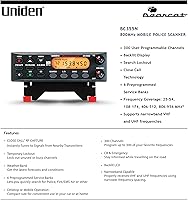
  • Channel Capacity: The scanner stores up to 300 programmable channels organized across 6 dedicated service banks for convenient category-based scanning.
  • Service Banks: Six pre-programmed service banks cover police, fire, EMS, marine, aircraft, weather, and CB frequency ranges out of the box.
  • Radio Type: This is a conventional analog-only scanner and cannot decode digital, P25, DMR, or any trunked radio system transmissions.
  • Close Call RF Capture: The integrated Close Call RF Capture Technology automatically detects and tunes to strong nearby analog transmissions without requiring manual frequency input.
  • Aircraft Band: Aircraft band monitoring operates in AM mode with 8.33 kHz step spacing, covering the standard civil aviation frequency range.
  • Display: The unit features a backlit LCD display that remains readable in low-light conditions such as dark vehicle interiors or dimly lit rooms.
  • Power Options: The BC355N ships with an AC power adapter for home use, a DC power cable, and an automotive outlet plug for in-vehicle operation.
  • Trunking Support: Trunking system monitoring is not supported; users in areas with trunked public safety infrastructure will need a digital-capable model instead.
  • Digital Support: Digital radio decoding is not available on this model; it is designed exclusively for conventional analog frequency reception.
  • Frequency Coverage: The scanner covers a broad range of analog frequencies spanning public safety, marine, aviation, weather, amateur radio, and CB bands.
  • Best Sellers Rank: The BC355N holds a top-3 ranking in the Radio Scanners category, reflecting sustained demand among entry-level scanner buyers.
  • Antenna: A standard whip antenna is included in the box, suited for suburban reception; users in fringe or rural areas may benefit from an upgraded external antenna.
  • Battery Operation: The unit does not support internal battery operation and requires a continuous wired power connection via one of the included power accessories.
  • First Available: This model was first made available in September 2011 and has not been discontinued, indicating long-term manufacturer support and parts availability.

Related Reviews
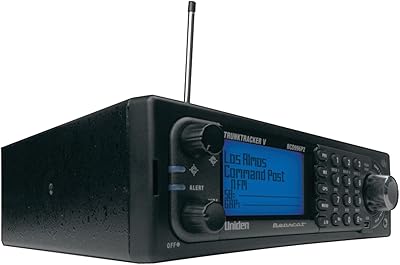
Uniden BCD996P2 Digital Mobile TrunkTracker Scanner
75%
96%
Digital Protocol Coverage
91%
Reception Quality
83%
GPS Location Scanning
38%
Ease of Programming
88%
Build Quality
More
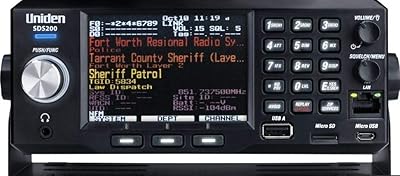
Uniden SDS200 Base/Mobile Digital Scanner
79%
94%
Digital Decode Performance
61%
Ease of Initial Setup
58%
Sentinel Software Experience
93%
Simulcast System Handling
82%
Display Quality & Customization
More
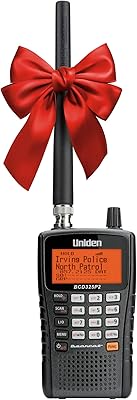
Uniden BCD325P2 Handheld Digital Trunking Scanner
74%
91%
Signal Reception
47%
Ease of Setup
88%
Digital Trunking Performance
74%
GPS Location Scanning
86%
Portability & Form Factor
More
Uniden BCD436HP Digital Handheld Scanner
79%
91%
Ease of Setup
88%
Reception & Signal Quality
93%
Feature Set
74%
Build Quality & Ergonomics
57%
Battery Life
More
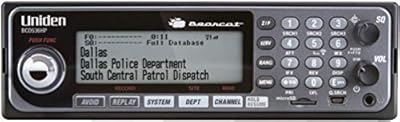
Uniden BCD536HP HomePatrol Desktop Radio Scanner
77%
91%
Digital Trunking Performance
86%
Ease of Initial Setup
83%
Wi-Fi Connectivity & Remote Updates
58%
Sentinel Software Experience
88%
Channel Acquisition Speed
More
Uniden Bearcat SR30C Handheld Scanner
69%
88%
Ease of Setup
83%
Analog Reception Quality
12%
Digital Compatibility
86%
Value for Money
74%
Build Quality & Portability
More
Uniden HomePatrol-2 Digital Police Scanner
76%
93%
Ease of Setup
81%
Reception Quality
88%
Digital Protocol Coverage
74%
Touchscreen Interface
61%
Sentinel Software
More
Uniden Bearcat BC75XLT Handheld Scanner
69%
83%
Analog Reception Quality
11%
Digital & Trunking Compatibility
78%
Ease of Setup
67%
PC Programming Experience
74%
Close Call RF Capture
More
Uniden Bearcat BC125AT
78%
88%
Reception & Sensitivity
41%
Analog-Only Limitation
82%
Ease of Setup
79%
PC Programming Software
91%
Close Call RF Capture
More
Uniden BCD160DN Handheld Digital Scanner
78%
88%
Out-of-Box Setup
79%
Digital Protocol Support
83%
Scan Speed
86%
Band Scope Function
81%
Reception Quality
More

FAQ

It depends entirely on what radio system your local police use. If your department still broadcasts on conventional analog frequencies, this Bearcat scanner will pick them up without any trouble. If your county has switched to a digital or trunked system — which many larger cities and suburbs have — you will not hear anything useful. Before buying, check RadioReference.com and look up your county to see what system type is listed.

Close Call is essentially an automatic frequency finder. Instead of you manually scanning through a range of frequencies, the BC355N monitors for strong RF signals in its immediate vicinity and jumps to them instantly when it detects one. It is particularly handy when you are in an unfamiliar area and want to find out what is transmitting nearby without doing any manual research first.

Yes, that is one of the main selling points of this unit. It ships with an AC adapter for home use and both a DC cable and an automotive outlet plug for vehicle use, so you can move it between locations without buying any extra accessories.

Not necessarily. The six pre-programmed service banks let you start scanning immediately after powering on. If you want to add specific local frequencies you have discovered, you can store them in the 300-channel memory, but out of the box you can start listening right away.

Yes, aviation monitoring is one of its stronger use cases. It covers the civil aircraft band in AM mode with 8.33 kHz step spacing, which means you can tune into regional airport tower and ground communications. It will not cover encrypted or military aviation channels, but for civilian air traffic it works well.

Unfortunately, yes. The included stock antenna is adequate for suburban areas with transmitters reasonably nearby, but it shows its limits in rural or fringe locations. Many users upgrade to an aftermarket external antenna fairly quickly, especially if they are trying to pull in signals from greater distances.

It receives NOAA weather band frequencies, so you can tune in to weather broadcasts and listen to forecasts and storm reports. However, it does not support SAME alerting, which means it will not automatically trigger an alarm for your specific county the way a dedicated weather alert radio would. For passive background listening it is fine; for automated emergency alerts it falls short.

Honestly, no. A P25 system is a digital trunked radio network, and this analog scanner has no ability to decode those signals. You would need to upgrade to one of Uniden's digital-capable models, such as the BCD436HP or BCD536HP, which are built specifically for digital and trunked system monitoring.

The 300-channel capacity sounds like a lot, but in practice most users in a typical suburban or rural area will fill somewhere between 30 and 80 channels with genuinely useful local frequencies. The rest of the capacity is there if you monitor multiple areas or services, but you are unlikely to need all 300 slots for a single location.

For the right location, absolutely. The pre-programmed banks and Close Call technology mean you can get real results without needing to understand frequency theory or do hours of research upfront. The one homework assignment worth doing before buying is confirming that your local public safety agencies still use analog — that single check will determine whether this analog scanner is a great starter unit or the wrong tool entirely.

Where to Buy