Overview

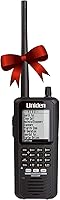
The Uniden BCD436HP Digital Handheld Scanner sits in a category of its own — a unit that borrows the plug-and-play simplicity Uniden perfected with their HomePatrol line and wraps it into a traditional handheld body. Instead of spending hours manually entering frequencies, you type in your zip code and the scanner figures out which local systems to monitor on its own. That one change makes it genuinely approachable for people who were previously put off by the hobby. It has held a top-ten rank in radio scanners for years, and that staying power says something. This is a serious tool at a serious price, best suited to people who actually intend to use it regularly.
Features & Benefits

The core of what makes this handheld scanner work so well is TrunkTracker V, which taps into the RadioReference database to automatically identify and lock onto trunked digital systems in your area across the US and Canada. Close Call RF Capture is the other standout — it passively sniffs for nearby active transmissions and jumps to them without any setup, which is genuinely useful at events or in unfamiliar areas. The GPS integration lets the scanner adjust dynamically as you move between locations. Toss in a four-minute Instant Replay buffer, S.A.M.E. weather alerts, and a large display with fully customizable color and flash alert options, and the feature set is hard to argue with.

Best For

This digital scanner punches above its weight for public safety monitoring — police, fire, EMS, ambulance — especially for users who want that coverage without touching a frequency database manually. It also travels well, making it a go-to for NASCAR fans, air show regulars, and anyone who attends events where radio chatter adds real context to what you're watching. Rural users who move through multiple counties will appreciate how the BCD436HP redetects local systems automatically. It is also a natural step up for someone coming from a basic analog unit who wants digital trunking without committing to a steep technical learning curve before hearing anything useful.

User Feedback

Across nearly 2,800 reviews and a 4-out-of-5-star average, the BCD436HP earns consistent praise for its out-of-box usability — most buyers report being up and scanning within minutes. The Close Call feature draws particular enthusiasm from hobbyists who enjoy discovering unexpected local traffic. That said, two complaints surface often enough to take seriously: battery drain is faster than many users expect under active use, so keeping a set of rechargeables handy is a practical necessity rather than a suggestion. And while the initial setup is straightforward, deeper menu navigation has a real learning curve that a few buyers found frustrating. GPS response time when moving between zones also drew mixed reactions.

Pros

  • Zip-code setup gets you scanning local systems in minutes, no frequency database knowledge required.
  • TrunkTracker V automatically identifies and monitors nearby digital trunking systems across the US and Canada.
  • Close Call RF Capture discovers active nearby transmissions on the fly, no pre-programming needed.
  • GPS-linked scanning adapts to your location automatically as you move between regions.
  • Four-minute Instant Replay lets you catch transmissions you missed while distracted.
  • S.A.M.E. weather alerts can be filtered to your specific county, cutting out irrelevant regional noise.
  • The large display with customizable color and flash alerts makes channel identification genuinely intuitive.
  • At one pound, this digital scanner is light enough for extended handheld use at events or in the field.
  • Nearly 2,800 reviews and a top-ten category rank reflect a long track record of real-world reliability.
  • Covers an unusually wide frequency range, including aircraft, military, and railroad bands beyond standard public safety.

Cons

  • Battery drain on AAA cells under active scanning is faster than most buyers expect — rechargeables are essentially mandatory.
  • The menu system past initial setup has a meaningful learning curve that the simplified entry point does not prepare you for.
  • GPS zone transitions can lag, causing the scanner to miss local traffic during the recalibration window.
  • Zero water resistance makes outdoor use in rain or high humidity a genuine risk with no protection.
  • RadioReference database gaps in rural or less-documented areas reduce the reliability of the automatic setup feature.
  • The tall form factor at over 9 inches is bulkier than many buyers picture from the product listing.
  • Advanced features like custom alert programming often go unused because the configuration process is not intuitive without the manual.
  • No rechargeable battery pack is included, which feels like an oversight given how quickly AAAs deplete.
  • Some users report audio artifacts on heavily compressed digital trunking signals that base station units handle more cleanly.

Ratings

The Uniden BCD436HP Digital Handheld Scanner has been stress-tested by a wide and vocal user base since its 2014 debut, and the scores below reflect what our AI found after analyzing thousands of verified global reviews — filtering out incentivized, bot-generated, and outlier feedback to surface the real consensus. Both the genuine strengths and the friction points buyers repeatedly encountered are represented here without sugarcoating.
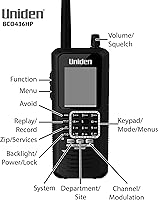
Ease of Setup
91%
The zip-code-based auto-configuration is the single most praised aspect of this scanner across user reviews. Buyers who previously avoided the hobby because of manual frequency programming report being fully operational within a few minutes of unboxing, which is a meaningful shift for this category.
The initial setup really is that straightforward, but once you move past it, the menu system introduces complexity that catches some users off guard. A handful of reviewers felt the gap between easy entry and deeper configuration was wider than expected.
Reception & Signal Quality
88%
TrunkTracker V combined with the RadioReference database delivers reliable digital trunking performance across a wide frequency range, and users in suburban and urban areas report clean, consistent audio on public safety channels. Close Call RF Capture adds a layer of real-time discovery that analog-only scanners simply cannot match.
Performance in rural fringe areas or regions with sparse RadioReference data is noticeably weaker. A minority of users report missed or choppy transmissions in locations where digital trunking infrastructure is thin or inconsistently mapped in the database.
Feature Set
93%
For a handheld unit, the breadth of capability here is genuinely impressive — GPS-linked scanning, four-minute Instant Replay, S.A.M.E. weather alerts, and fully customizable visual alert patterns cover nearly every scenario a serious hobbyist or preparedness-minded buyer would want. Enthusiast reviewers regularly call this the most complete portable scanner they have owned.
Some of the more advanced features, like custom alert programming and GPS-triggered system switching, require a meaningful time investment to configure correctly. Users who do not read the manual thoroughly often leave these capabilities unused, which undercuts the value for casual buyers.
Build Quality & Ergonomics
74%
26%
The BCD436HP feels solid enough for regular handheld use, and the extra-large display is genuinely easier to read at a glance than most competing units in this class. At one pound, it sits comfortably in hand for extended listening sessions.
The plastic housing does not inspire confidence for outdoor or field use, particularly given the complete absence of water resistance. Users who take this scanner to events in unpredictable weather have expressed concern, and a few reported cosmetic wear appearing sooner than expected.
Battery Life
57%
43%
The scanner runs on standard AAA batteries, which means you can grab replacements virtually anywhere — a genuine convenience for travel or emergency use when you cannot predict your access to charging infrastructure.
Active scanning drains three AAA batteries faster than most buyers anticipate, and this complaint appears in enough reviews to treat it as a structural limitation rather than an edge case. Investing in a quality set of rechargeable NiMH AAAs and a spare charged set is essentially mandatory for anyone planning extended use.
Display & Interface
82%
18%
The large backlit display with user-configurable alert colors and flash patterns is one of the more thoughtful design choices on this unit. Being able to assign distinct visual cues to different channel types — fire, police, weather — helps users track incoming transmissions without staring at the screen constantly.
The menu navigation beneath the display is where the interface loses points. Button layout and menu depth feel dated compared to more modern touchscreen-driven devices, and new users often describe spending significant time in the manual just to find basic configuration options.
GPS Performance
66%
34%
When GPS is working well, the location-aware scanning feature adds real utility for users who move between counties or travel through unfamiliar areas — the scanner adapts its active systems list without requiring manual intervention, which is exactly what mobile users need.
Update speed when crossing into a new coverage zone drew mixed reactions from reviewers. Some users found the transition laggy enough to miss relevant local traffic during the window where the GPS was still recalibrating, which is frustrating in fast-moving scenarios like road trips.
Audio Quality
79%
21%
Audio output is clear and loud enough for noisy environments like race events or outdoor gatherings, and the 15 configurable volume levels for custom alerts give users fine-grained control that cheaper scanners do not offer. Most buyers report the speaker handles busy channel traffic without significant distortion.
At maximum volume, a thin quality to the audio becomes noticeable on some transmissions, particularly heavily compressed digital signals. Users monitoring aircraft or certain trunked systems mention occasional audio artifacts that are absent on higher-end base station units.
Close Call RF Capture
89%
This feature consistently earns its own praise in user reviews, separate from the rest of the scanner's capabilities. At events like NASCAR races or air shows, it surfaces active nearby transmissions that users did not know to look for, turning the scanner into an exploratory tool rather than just a monitoring device.
Close Call sensitivity can occasionally latch onto strong interference sources rather than meaningful transmissions, which requires some tuning to filter. Users new to RF environments may find this feature produces confusing results until they understand how to configure the sensitivity threshold.
Coverage & Database Accuracy
83%
The RadioReference integration covers an impressive breadth of the US and Canada, and in well-documented metro areas, the system detection is accurate and up to date. Public safety, military, weather, and aviation bands are all represented within the supported frequency ranges.
Database accuracy is only as good as the RadioReference community maintaining it, and in less-populated regions the information can lag behind real-world system changes. Users in smaller markets occasionally find the scanner latches onto outdated or discontinued channel configurations.
Value for Money
71%
29%
For the target buyer — someone who wants serious digital trunking capability without building a desktop base station — the BCD436HP delivers a genuinely comprehensive toolkit in a portable form factor. The feature-to-price ratio makes sense for committed enthusiasts who will actually use everything it offers.
For casual buyers or those who just want to occasionally hear police traffic, the price point is difficult to justify when simpler, more affordable units can handle basic analog monitoring. This scanner rewards users who invest time in it, and those who do not often feel they overpaid.
Weather Alert Functionality
86%
The S.A.M.E. alert system allows users to filter weather broadcasts by specific county or region, which means you get relevant emergency notifications rather than alerts for areas dozens of miles away. Emergency preparedness households in storm-prone regions specifically call this out as a decisive purchase factor.
The weather alert system requires correct initial configuration to deliver on its potential — users who leave it at default settings sometimes receive overly broad alerts that feel noisy and unhelpful. The setup is not difficult, but it is an extra step that some buyers skip.
Portability
81%
19%
At roughly nine inches tall and one pound, the BCD436HP is genuinely pocketable for a scanner with this level of capability. Field users and event attendees appreciate being able to carry it for hours without fatigue, and the form factor works well with aftermarket belt clips and cases.
The 9-inch height makes it taller than many casual users expect from a handheld device, and it does not disappear into a jacket pocket the way a compact radio might. For discreet monitoring in public spaces, the profile is noticeable.
Documentation & Learning Curve
62%
38%
The manual covers the full feature set in reasonable detail, and the online scanner community — particularly forums tied to RadioReference — has built up years of guides, tips, and setup walkthroughs specifically for this unit, which makes finding help relatively straightforward.
The out-of-box documentation alone is not enough to unlock the scanner's full potential, and several reviewers felt the official manual assumed more prior knowledge than a first-time digital scanner buyer would have. Buyers coming from analog units often describe a steeper adjustment than they anticipated.

Suitable for:

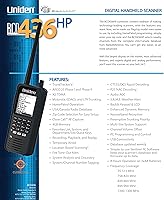
The Uniden BCD436HP Digital Handheld Scanner was built for people who want serious radio monitoring capability without spending weeks learning how to program a scanner from scratch. It is an ideal fit for public safety enthusiasts — anyone who genuinely wants to follow local police, fire, EMS, or ambulance traffic in real time and wants the scanner to figure out the relevant channels automatically. Event-goers who attend NASCAR races, air shows, or boat races will find the Close Call and GPS features add real utility in environments packed with active radio traffic. Travelers and rural users who frequently move between counties or regions benefit from the automatic system re-detection, which removes the need to manually reconfigure when crossing coverage zones. It also makes a strong case for emergency preparedness households that want a reliable weather alert system tied to their specific county rather than a broad regional broadcast.
Not suitable for:

If you are looking for a casual, inexpensive way to occasionally eavesdrop on local police frequencies, this handheld scanner is likely more scanner than you need or want to manage. The price tier firmly places it in the committed-enthusiast category, and buyers who do not intend to explore its full feature set will almost certainly feel the investment was not worth it. The complete absence of water resistance makes it a poor choice for anyone planning to use it regularly outdoors in unpredictable conditions — rain, humidity, or dusty environments are all genuine risks with no protection built in. Users in areas with sparse or outdated RadioReference database coverage will also find the automated setup less reliable than the marketing suggests, which undermines one of its core selling points. And if you run on batteries without a plan — no rechargeables, no backup set — the AAA drain under active use will become an irritant fast enough to sour the overall experience.

Specifications

  • Brand: Manufactured by Uniden, a brand with a long history in consumer radio and scanning equipment.
  • Model: BCD436HP, part of the HomePatrol Series of digital handheld scanners.
  • Dimensions: The unit measures 3.8″ wide by 2.4″ deep by 9.02″ tall.
  • Weight: Complete unit weighs approximately 1 pound without batteries installed.
  • Scan Speed: Cycles through up to 85 channels per second during active scanning operation.
  • Frequency Range: Covers 25–512 MHz, 758–824 MHz, 849–869 MHz, 894–960 MHz, and 1240–1300 MHz bands.
  • Trunking: Supports TrunkTracker V technology for both analog and digital trunked radio system monitoring.
  • Database: Integrates with the RadioReference database to automatically detect and load nearby radio systems by zip code.
  • GPS Support: Accepts an optional external GPS receiver to enable location-aware scanning and automatic system switching.
  • Instant Replay: Stores up to 240 seconds (4 minutes) of the most recently received transmissions for on-demand playback.
  • Weather Alerts: Includes S.A.M.E. (Specific Area Message Encoding) technology for county-filtered emergency and weather broadcasts.
  • Close Call: Close Call RF Capture detects strong nearby transmissions in real time without requiring pre-programmed frequencies.
  • Display: Features an extra-large backlit display with support for 7 alert colors, 3 flash patterns, and 15 volume levels.
  • Power Source: Requires 3 AAA batteries; no proprietary rechargeable pack is included in the box.
  • Water Resistance: Not water resistant; the unit offers no rated protection against moisture, rain, or dust ingress.
  • Coverage Area: System database and automatic detection features cover radio systems across the United States and Canada.
  • Category Rank: Holds a top-10 position in the Radio Scanners category on Amazon, ranked #8 at time of publication.
  • Release Date: First made available for purchase in January 2014 and remains in active production.

Related Reviews

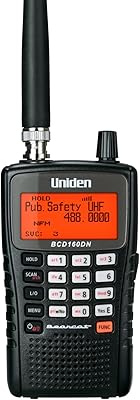
Uniden BCD160DN Handheld Digital Scanner
78%
88%
Out-of-Box Setup
79%
Digital Protocol Support
83%
Scan Speed
86%
Band Scope Function
81%
Reception Quality
More
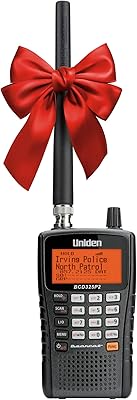
Uniden BCD325P2 Handheld Digital Trunking Scanner
74%
91%
Signal Reception
47%
Ease of Setup
88%
Digital Trunking Performance
74%
GPS Location Scanning
86%
Portability & Form Factor
More
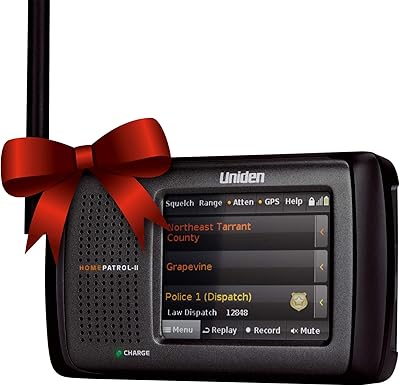
Uniden HomePatrol-2 Digital Police Scanner
76%
93%
Ease of Setup
81%
Reception Quality
88%
Digital Protocol Coverage
74%
Touchscreen Interface
61%
Sentinel Software
More
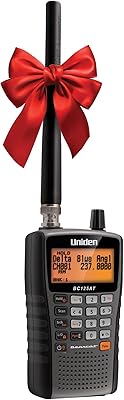
Uniden Bearcat BC125AT
78%
88%
Reception & Sensitivity
41%
Analog-Only Limitation
82%
Ease of Setup
79%
PC Programming Software
91%
Close Call RF Capture
More
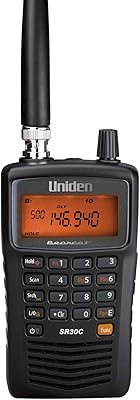
Uniden Bearcat SR30C Handheld Scanner
69%
88%
Ease of Setup
83%
Analog Reception Quality
12%
Digital Compatibility
86%
Value for Money
74%
Build Quality & Portability
More
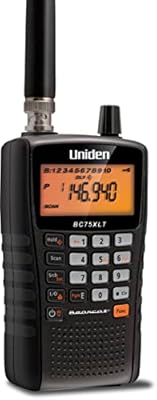
Uniden Bearcat BC75XLT Handheld Scanner
69%
83%
Analog Reception Quality
11%
Digital & Trunking Compatibility
78%
Ease of Setup
67%
PC Programming Experience
74%
Close Call RF Capture
More
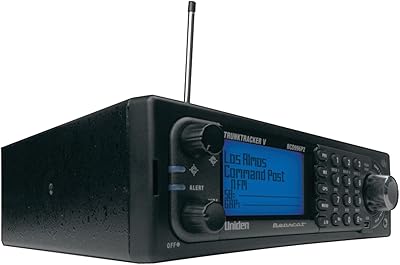
Uniden BCD996P2 Digital Mobile TrunkTracker Scanner
75%
96%
Digital Protocol Coverage
91%
Reception Quality
83%
GPS Location Scanning
38%
Ease of Programming
88%
Build Quality
More
Whistler TRX-1 Handheld Digital Scanner
78%
93%
Digital Protocol Coverage
88%
Build Quality
47%
Ease of Programming
86%
Audio Recording
91%
Frequency Range & Versatility
More
Uniden SDS200 Base/Mobile Digital Scanner
79%
94%
Digital Decode Performance
61%
Ease of Initial Setup
58%
Sentinel Software Experience
93%
Simulcast System Handling
82%
Display Quality & Customization
More
Uniden PRO401HH 40-Channel Handheld CB Radio
77%
86%
Audio Clarity
67%
Range Performance
61%
Battery Life & System
79%
Build Quality
91%
Ease of Use
More

FAQ

For the most part, yes — entering your zip code is genuinely all it takes to get up and running. The scanner pulls from the RadioReference database and automatically loads nearby radio systems. That said, if you want to customize alerts, filter specific channels, or fine-tune what you hear, there is a full menu system that requires some reading and setup time.

Yes, and this is one of the BCD436HP's better real-world features. If you have a GPS receiver connected, the scanner updates its active system list based on your current location automatically. Without GPS, you can manually re-enter a zip code for your new area, which takes just a moment.

It is a legitimate concern that comes up consistently in user reviews. Three AAA batteries under active heavy scanning will not last a full day for most users. The practical fix most experienced owners land on is a set of quality rechargeable NiMH AAA batteries and a spare charged set nearby — treating disposables as a true backup rather than the primary power source.

No, and no consumer scanner legally can. The Uniden BCD436HP Digital Handheld Scanner will detect and monitor unencrypted digital trunking systems, but channels that are encrypted by the agency broadcasting them will appear silent or skipped. In many larger metro areas, a significant portion of police traffic has moved to encrypted systems, so coverage varies considerably by location.
Close Call is essentially a passive radar for radio signals — the scanner continuously checks for strong nearby transmissions and jumps to them automatically, even if those frequencies are not in your programmed list. It is most useful at events like NASCAR races, airshows, or anywhere with dense radio activity where you want to discover what is happening around you without knowing the frequencies in advance.

No, GPS hardware is not included in the box. The BCD436HP has a port that accepts a compatible external GPS receiver, which you would need to purchase separately. The GPS functionality is useful but optional — the scanner works fully without it, just without the automatic location-based system switching.

It depends on your expectations. The initial setup is genuinely beginner-friendly — easier than most scanners in this class. But the price point is substantial, and getting the most out of the deeper features takes time and willingness to read documentation. If you are completely new to scanning and just want to casually hear local traffic, a more affordable entry-level unit might be a smarter first step.

Technically you can bring it outside, but the unit has zero water resistance rating, so any meaningful rain exposure is a real risk. At an outdoor event on a clear day it is fine, but if weather is unpredictable, a protective case or bag is worth considering. This is one of the more commonly cited limitations for field use.

The scanner continuously buffers the last four minutes of received audio in a rolling loop. If you miss something — a call comes in while you are distracted or the volume is low — you can play it back immediately without having to wait for a repeat transmission. It is a simple but genuinely useful feature for anyone monitoring active emergency channels.

Basic database access for the zip-code setup feature is built into the scanner and does not require a paid subscription for standard use. However, RadioReference also offers a premium subscription service on their website that provides more detailed and frequently updated system data, which some advanced users find worthwhile — but it is entirely optional and not required to operate the scanner.

Where to Buy