Overview

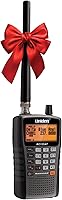
The Uniden Bearcat BC125AT is a well-established analog handheld scanner that has quietly held a top spot in its category for years — and for good reason. It targets hobbyists and enthusiasts looking for a reliable, approachable entry point into radio scanning without overspending. One thing to understand upfront: this is a strictly analog device. It cannot monitor digital or trunking radio systems, which is a critical distinction. If you're in a rural or suburban area where public safety agencies still broadcast on analog frequencies, this Bearcat scanner is a capable and satisfying tool. Urban users in cities that have modernized their infrastructure, however, may find it falls noticeably short of expectations.
Features & Benefits

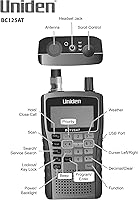
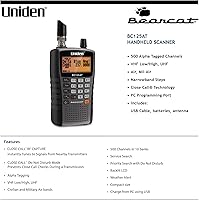
What makes the BC125AT genuinely useful day-to-day is how thoughtfully its features are arranged. The 500 alpha-tagged channels, divided into 10 storage banks, let you label each frequency by name — so instead of scrolling past raw numbers, you see a label like County Fire or Airport Tower. The Close Call RF capture technology is a real highlight: it automatically sniffs out nearby active transmissions and locks in, which is particularly satisfying when you're somewhere unfamiliar. Ten pre-programmed search bands cover aviation, marine, railroad, weather, NASCAR, and more, so you can start listening within minutes of unboxing. Programming manually is manageable but slow; the free PC software and included USB cable make the whole process considerably smoother.

Best For

This handheld scanner hits its stride in specific situations. If you're in a rural or suburban county where police, fire, and EMS still run on analog frequencies, it's a genuinely practical listening tool. Aviation enthusiasts will find the aircraft band coverage impressive — both civil and military air traffic come through clearly. It's also a natural fit for trackside use at NASCAR or motorsport events, where team communications are part of the experience. Boaters monitoring VHF marine channels will appreciate the dedicated band support. And for anyone just getting into the hobby, this Bearcat scanner makes a solid, frustration-free starting point — or a thoughtful gift for someone curious about amateur radio and emergency preparedness.

User Feedback

Among nearly 3,000 ratings, the BC125AT lands at a solid four stars, and the pattern across reviews is consistent. Buyers praise the build quality and reception, particularly those using it for aviation monitoring or rural public safety — these folks tend to be genuinely satisfied. The most recurring complaint, by a clear margin, comes from urban buyers who discovered their local agencies had switched to digital systems after purchasing. That's a painful and avoidable outcome. Battery life with standard AAs draws mostly positive mentions. A few users find the printed manual dense, but those same reviewers note that the PC software resolves most programming confusion quickly. Realistic expectations seem to be the dividing line between satisfied and disappointed owners.

Pros

  • Close Call technology automatically locks onto nearby active transmissions — no manual frequency hunting required.
  • 500 named, alpha-tagged channels make it easy to identify who you are actually listening to at a glance.
  • Pre-programmed search bands mean aviation, marine, and weather monitoring are accessible within minutes of unboxing.
  • Reception sensitivity on aviation and VHF marine bands consistently earns praise from dedicated hobbyists.
  • The BC125AT runs on standard AA batteries — no proprietary packs, no charging cables to track down.
  • At just over one pound, this handheld scanner is genuinely portable enough for day-long outdoor events.
  • Free PC programming software dramatically simplifies channel setup compared to front-panel entry.
  • The orange backlit display stays legible in low-light conditions, which matters at evening events or nighttime monitoring.
  • Broad frequency coverage from 25 to 512 MHz spans civilian, military, marine, and amateur radio bands.
  • Solid build quality means it handles regular outdoor use without feeling fragile or cheap.

Cons

  • Completely useless for digital or trunked radio systems — a dealbreaker for most urban buyers.
  • The printed manual is dense and poorly organized, leaving many first-time users genuinely confused early on.
  • No water resistance of any kind limits usefulness on boats or in unpredictable outdoor weather.
  • The display washes out in direct sunlight, which is frustrating during outdoor daytime events.
  • Manual keypad programming is slow and tedious for anyone loading more than a handful of channels.
  • Ten banks of 50 channels each fills up faster than expected for users monitoring multiple agencies.
  • PC software works but feels dated and has reported compatibility issues on newer operating systems.
  • Buyers in recently digitized areas often discover the limitation only after purchase — research is essential beforehand.
  • The antenna adds awkward height that makes the scanner harder to stow in small bags or pouches.

Ratings

The ratings below for the Uniden Bearcat BC125AT were generated by our AI system after analyzing thousands of verified buyer reviews from global markets, with spam, incentivized, and bot-flagged submissions actively filtered out. The scores reflect real-world ownership experiences across a wide range of use cases — from trackside NASCAR monitoring to rural public safety listening. Both where this handheld scanner genuinely delivers and where it falls short are represented transparently in each category.
Reception & Sensitivity
88%
Users consistently report strong signal pickup across aviation, marine, and railroad bands. In suburban and rural areas, the scanner pulls in weak or distant transmissions that cheaper alternatives miss entirely — a quality that aviation hobbyists in particular call out repeatedly.
In fringe coverage areas or near heavy RF interference, occasional signal dropout is noted. A handful of users found that reception on the lower frequency bands felt inconsistent compared to the mid-range sweet spot where this scanner excels.
Analog-Only Limitation
41%
59%
For users in areas still running conventional analog systems, this is not a limitation at all — it is simply the right tool for the job. Rural counties, smaller municipalities, and many marine and aviation bands remain fully analog, making the BC125AT perfectly capable there.
This is the single biggest source of buyer regret. Urban and suburban users in cities where police, fire, and EMS have migrated to digital trunking systems get essentially nothing useful out of this scanner. The limitation is real, and its impact on satisfaction scores is severe for the wrong buyer.
Ease of Setup
82%
18%
The pre-programmed search bands mean most users can start scanning within a few minutes of inserting batteries. Hobbyists new to the hobby frequently mention being surprised by how quickly they heard live traffic — aviation and weather bands especially require almost no configuration.
Manual channel-by-channel programming through the keypad is slow and the printed manual is not particularly beginner-friendly. Users who skipped the PC software reported frustration; those who used it had a much smoother experience overall.
PC Programming Software
79%
21%
The free software paired with the included USB cable genuinely reduces the programming burden. Users who took the time to set it up on a computer found they could load frequencies, name channels, and organize banks far faster than using the front panel alone.
The software is functional but dated in its interface design, and a few users on newer operating systems reported compatibility hiccups during installation. It is not intuitive out of the box, and the online documentation for it is thin.
Close Call RF Capture
91%
This feature earns enthusiastic mentions across hundreds of reviews. When walking through a fairground, sitting at a race track, or near an active airport, the scanner automatically jumps to whatever nearby transmission is strongest — no manual searching required. It feels almost like a discovery tool.
Close Call can occasionally latch onto strong local interference sources like wireless routers or other electronics rather than actual radio traffic. In dense urban environments this creates false triggers that interrupt intentional listening sessions.
Channel Organization
84%
Having 500 named, alpha-tagged channels divided into 10 banks gives this scanner a level of organization that genuinely pays off over time. Users who invested an hour labeling channels by agency, location, or interest type say navigating the scanner becomes second nature quickly.
Ten banks with 50 channels each sounds generous, but power users monitoring multiple agencies across a wide area can fill them up faster than expected. There is no way to expand capacity, and reorganizing a full bank later is tedious.
Build Quality & Durability
83%
For a mid-range handheld device, the BC125AT feels reassuringly solid. The casing does not flex under pressure, buttons have a positive click, and the unit holds up well to the kind of handling it gets at outdoor events, on boats, or in work trucks.
It is not water resistant in any meaningful way, which limits its utility in rain or marine spray without a protective case. A few long-term users also noted that the rubber antenna connector can loosen with repeated swaps over months of use.
Display & Readability
77%
23%
The orange backlit LCD is easy to read in dim conditions — a detail that matters at night races or during evening outdoor monitoring. Alpha tags displayed alongside frequency numbers make scanning feel organized rather than cryptic.
In direct bright sunlight the display washes out noticeably. The screen is also on the smaller side, so users with limited vision sometimes struggle to read channel names at a glance without bringing the unit closer.
Battery Life
81%
19%
Running on two standard AA batteries, the BC125AT gets solid listening time under normal use. Users who keep it on during multi-hour events like air shows or race days report lasting through the entire session without a battery swap.
Heavy use with the backlight on drains batteries faster than casual listeners expect. Rechargeable AAs work fine but some users found slightly reduced runtime compared to alkaline cells, which is common for this type of device.
Portability & Form Factor
86%
At just over a pound and compact enough to fit in a jacket pocket, this handheld scanner goes where a base unit cannot. Race fans, boaters, and hikers mention the comfortable grip and manageable size as a key part of why they reach for it regularly.
The antenna adds meaningful height to the overall profile, making it slightly awkward to stow in tight spaces like a small belt pouch. The form factor is practical but not particularly refined compared to newer competing designs.
Frequency Range Coverage
87%
Spanning 25 to 512 MHz across multiple bands, the coverage breadth is one of this scanner's genuine strengths. Civil and military aviation, VHF marine, amateur radio, FRS, GMRS, CB, and railroad bands all fall within reach — a meaningful spread for the price tier.
The coverage gaps between the listed frequency ranges mean certain niche bands fall outside what the scanner can reach. Users chasing very specific federal or commercial frequencies occasionally discover the band they want is just outside the supported range.
Value for Money
78%
22%
For analog scanning use cases, the price-to-capability ratio is strong. Buyers who researched their local radio infrastructure beforehand and confirmed analog systems are still in use consistently feel the purchase was money well spent.
For urban buyers who discover post-purchase that their area has gone digital, the value calculation collapses entirely. At this price point, the lack of any digital capability feels limiting compared to what competitors now offer at modestly higher prices.
Documentation & Learning Curve
58%
42%
Once users find the right online communities and third-party frequency databases, getting the most out of this scanner becomes much more accessible. The scanning hobby has an active community that compensates for the thin official documentation.
The included manual is dense, poorly indexed, and assumes more prior knowledge than most new buyers have. Uniden's official support resources are functional but lean, and first-time scanner owners regularly report feeling lost during initial setup without outside help.

Suitable for:

The Uniden Bearcat BC125AT is built for a specific kind of buyer, and when it lands in the right hands, it delivers genuine value. If you live in a rural or suburban area where local police, fire, and EMS agencies still broadcast on conventional analog frequencies, this scanner gives you reliable, real-time access to those communications without a steep learning curve. Aviation enthusiasts are particularly well-served — civil and military air bands come through clearly, making it a natural companion for airport spotting or airshow attendance. Motorsport fans who attend NASCAR or local racing events will appreciate being able to tune into team-to-pit communications trackside, which adds a whole new dimension to the experience. Boaters and mariners monitoring VHF marine channels will find the dedicated band support practical and ready to use out of the box. It also makes a thoughtful gift for anyone curious about the radio scanning hobby, amateur radio, or emergency preparedness — the pre-programmed search bands mean a newcomer can start hearing live traffic within minutes of opening the box.
Not suitable for:

The Uniden Bearcat BC125AT has one limitation that is not a minor caveat — it is the defining factor in whether this scanner works for you at all. If you live in a mid-size or large city where public safety agencies have migrated to digital trunking systems like Project 25 or DMR, this scanner will not pick up police, fire, or EMS communications, period. There is no firmware update or workaround that changes this; digital monitoring requires a fundamentally different and more expensive class of device. Users who expect to monitor encrypted channels will also be disappointed, as no analog scanner of any kind can decode those. Anyone wanting a single device that covers both analog and digital systems should look at Uniden's own digital-capable models or comparable offerings from other manufacturers. If you're primarily interested in keeping tabs on busy urban emergency services or modern trunked radio networks, this handheld scanner will frustrate rather than satisfy, regardless of its other strengths.

Specifications

  • Product Type: Analog-only handheld radio scanner; not capable of receiving digital, trunked, or encrypted radio transmissions.
  • Channels: Supports 500 individually alpha-tagged channels organized across 10 programmable storage banks of 50 channels each.
  • Frequency Range: Covers four frequency bands: 25–54 MHz, 108–174 MHz, 225–380 MHz, and 400–512 MHz (UHF).
  • Search Bands: Includes 10 pre-programmed search bands spanning police, fire, marine, civil air, military air, ham, railroad, CB, FRS/GMRS/MURS, and racing.
  • Close Call: Close Call RF capture technology automatically detects and tunes to strong nearby transmissions without manual frequency input.
  • PC Programming: Fully programmable via a Windows-compatible PC using the included USB cable and free downloadable Uniden software.
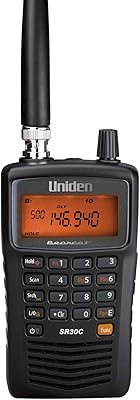
  • Display: Orange backlit alphanumeric LCD screen displays channel names, frequencies, and scanner status in low-light conditions.
  • Dimensions: Unit measures 2.17″ deep, 4.33″ wide, and 7.28″ tall, not including the antenna.
  • Weight: Complete unit weighs 1.01 lbs, making it suitable for extended handheld use at events or in the field.
  • Power Source: Operates on 2 standard AA batteries (included); compatible with alkaline or rechargeable NiMH AA cells.
  • Voltage: Operates at 3 volts nominal, drawing power from the two AA cells in series.
  • Water Resistance: No water or moisture resistance rating; the unit should be kept dry and away from rain or marine spray.
  • Two-Way Radio: Receive-only device with no transmission capability; it cannot be used for two-way voice communication on any frequency.
  • Alpha Tagging: Each of the 500 channels can be assigned a custom alphanumeric name up to 16 characters for easy identification.
  • In the Box: Package includes the scanner unit, USB programming cable, 2 AA batteries, wrist strap, and belt clip; software is downloaded separately.
  • Manufacturer: Designed and supported by Uniden, a consumer electronics brand with decades of experience in radio scanning products.
  • Model Number: Official model designation is BC125AT; this unit was first made available in August 2011 and remains in active production.
  • Warranty: Covered by Uniden's standard one-year limited warranty; customer support is reachable by phone at 1-800-297-1023.

Related Reviews
Uniden Bearcat BC75XLT Handheld Scanner
81%
88%
Ease of Use
92%
Portability
85%
Signal Reception
78%
Battery Life
65%
Display Quality
More
Uniden Bearcat 880 CB Radio
81%
94%
Display Clarity & Customization
88%
Noise Reduction Performance
84%
Build Quality & Durability
86%
Ease of Use & Setup
90%
Communication Range (Short & Long)
More
Uniden Bearcat SR30C Handheld Scanner
81%
88%
Ease of Use
91%
Portability
85%
Battery Life
80%
Channel Variety
73%
Signal Reception
More
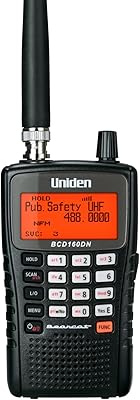
Uniden Bearcat BCD160DN Handheld Digital Scanner
85%
88%
Signal Clarity
82%
Ease of Use
90%
Portability
85%
Programming Flexibility
87%
Reception Range
More
Uniden CMX760 Bearcat Compact Mobile CB Radio
84%
88%
Value for Money
92%
Ease of Installation
94%
Size and Portability
78%
Audio Quality
85%
Durability
More
Uniden Bearcat 980 40-Channel SSB CB Radio
86%
88%
Performance
90%
Ease of Use
85%
Build Quality & Durability
84%
Sound Clarity
92%
Display Visibility
More
Uniden SDS200 Scanner
85%
93%
Performance with Digital Signals
88%
Ease of Use
85%
Build Quality
90%
Display Customization
92%
Location-Based Scanning Features
More
Uniden PRO538HHFM CB Radio
86%
89%
Portability & Size
91%
Ease of Use
85%
Weather Alert Performance
87%
Power Flexibility
82%
Build Quality & Durability
More
Uniden BCD325P2 Handheld Scanner
84%
91%
Performance
88%
Ease of Use
93%
Signal Coverage
68%
Setup & Installation
85%
Portability
More
Uniden PRO510XL CB Radio
87%
88%
Performance & Signal Quality
92%
Ease of Use
90%
Durability & Build Quality
85%
Range & Communication Clarity
93%
Installation & Setup
More

FAQ

It depends entirely on what radio system your local agencies use. If they broadcast on conventional analog frequencies, the BC125AT will receive them clearly. However, if your local police or fire departments have switched to a digital trunking system like Project 25 or DMR — which is increasingly common in mid-size to large cities — this scanner will not pick them up at all. Before buying, check a site like RadioReference.com to see what system your county uses.

Yes, and this is actually one of its best use cases. Race team communications at NASCAR events are broadcast on analog frequencies, which this Bearcat scanner receives without any issue. Many motorsport fans bring it specifically for this purpose and consider it a trackside essential.

Programming manually through the keypad is functional but slow, especially if you are loading dozens of frequencies. The better approach is to use the free Uniden software with the included USB cable — it lets you enter channel data on your computer and push it all to the scanner at once, which is considerably faster and less error-prone.

It works very well for aviation monitoring. The scanner covers both civil aviation frequencies (108–174 MHz includes the VHF aviation band) and military air bands (225–380 MHz), so airport traffic, tower communications, and military aircraft are all within range. Aviation hobbyists consistently rate it highly for this specific use.

Close Call continuously monitors the RF environment around you and automatically jumps to any strong nearby transmission it detects, even if you have not programmed that frequency. At an event, near an active worksite, or anywhere with lots of radio activity nearby, it essentially does the channel-hunting for you. It is one of the features users mention most positively.

Yes. NOAA weather frequencies fall within the covered range, and the scanner includes a dedicated weather search band. You can program specific NOAA frequencies for your region or use the search band to find the strongest local broadcast automatically.

It covers the VHF marine band, so monitoring ship-to-ship, marina, and Coast Guard traffic is fully supported. The one caveat is that it has no water resistance rating whatsoever, so you would want to keep it protected from spray and rain. A waterproof pouch or case is a worthwhile addition for marine use.

It runs on two standard AA batteries, which are included in the box. Runtime varies by usage — backlight use and active scanning drain batteries faster than intermittent listening. Most users report getting through a full day of event use on a fresh set of alkalines, and rechargeable AAs work fine though with slightly shorter runtime.

Honestly, probably not for public safety monitoring. Most large urban areas have migrated to digital trunking radio systems that this scanner simply cannot decode. If your primary interest is listening to local police, fire, or EMS in a big city, you will need a digital-capable scanner instead. If your interest is aviation, marine, weather, or amateur radio, the city-versus-rural distinction matters much less.

It comes with 10 pre-programmed search bands covering the most popular categories — aviation, marine, railroad, weather, ham radio, racing, and others. These are search ranges rather than specific stored channels, but they let you start scanning active frequencies in those bands almost immediately without entering anything manually. For specific local agency frequencies, you will want to program those yourself using the PC software or keypad.