Overview

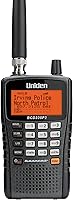
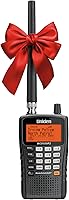
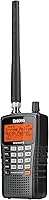
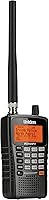
The Uniden BCD325P2 Handheld Digital Trunking Scanner is one of the more capable compact scanners you can buy without stepping into professional-grade territory. Released in 2015, it has stayed near the top of the radio scanner category for good reason — it handles both conventional analog and modern digital trunking systems, including APCO P25 Phase I and II. Its Advanced Dynamic Memory System supports up to 25,000 dynamically allocated channels, meaning you are not stuck with a rigid fixed-channel layout. Optional GPS connectivity lets it automatically select systems based on your current location, a genuinely useful feature for anyone who scans regularly across multiple areas.
Features & Benefits

The standout feature most users notice right away is Close Call RF Capture, which automatically locks onto active nearby signals without any manual scanning — handy when you do not know exactly what frequencies are in use around you. The Quick-Key system lets you assign up to 100 shortcut keys to your most-used channels, so toggling between systems takes seconds. Built-in S.A.M.E. Weather Alerts decode location-specific NOAA emergency broadcasts, a practical addition for outdoor use. DCS and CTCSS tone decode helps you identify and configure sub-audible tones quickly. At just one pound running on two AA batteries, the BCD325P2 is genuinely pocketable for field use.

Best For

This handheld trunking scanner suits a fairly specific type of buyer. If you are a hobbyist monitoring local public safety channels — fire, police, EMS — or an amateur radio operator who wants digital trunking capability without lugging around a base station, it fits the bill well. It also works nicely at events like air shows, auto races, or marine competitions where radio activity spikes and you want to catch as much as possible. Rural users whose local systems are still conventional analog will find it capable too. That said, regional infrastructure varies widely, so what this scanner can actually receive depends heavily on where you live.

User Feedback

Across nearly 2,800 reviews and a 4-out-of-5-star average, the picture is mostly positive but honest. The Close Call sensitivity and GPS auto-switching draw consistent praise, particularly from users who travel frequently between regions. Where people push back is on the setup process — programming this scanner manually is genuinely time-consuming, and many buyers end up purchasing third-party software and a PC cable separately just to get it properly configured. Battery life is another variable; heavy use drains cells quickly, and results improve noticeably with quality rechargeables. None of these complaints are dealbreakers for committed enthusiasts, but if you expect a simple plug-and-listen experience, the learning curve will likely catch you off guard.

Pros

  • Close Call RF Capture is noticeably faster at locking onto nearby active signals than most competing handheld units.
  • Full APCO P25 Phase I and II support keeps this Uniden scanner relevant as public safety agencies continue upgrading their systems.
  • The dynamic memory system with 25,000 channels removes the rigid limitations of older fixed-channel scanner designs.
  • At one pound, it slips into a jacket pocket or attaches to a belt without adding meaningful weight to your gear.
  • S.A.M.E. Weather Alerts provide location-specific NOAA emergency notifications, a practical safety feature for outdoor use.
  • Quick-Key access to up to 100 systems makes switching between your most-used channels fast once everything is programmed.
  • A large, active online community means pre-programmed databases and setup guides are available for most major metro areas.
  • DCS and CTCSS tone decode is rapid and clear, making system configuration easier for users familiar with the process.
  • Nearly 2,800 verified reviews and a strong average rating signal long-term buyer satisfaction across a wide range of use cases.

Cons

  • Programming from scratch is genuinely complex and will overwhelm buyers who are new to digital trunking scanners.
  • A PC programming cable is sold separately but is practically required — the out-of-box setup experience feels incomplete without it.
  • The GPS location scanning feature requires purchasing an external GPS receiver, which is not made clear enough at the point of sale.
  • Battery drain during heavy Close Call or trunked system monitoring is faster than many buyers anticipate with standard alkaline cells.
  • The small display can be difficult to read quickly in bright outdoor conditions, which undermines the scanner's portability advantage.
  • Digital trunking coverage is entirely dependent on local infrastructure, so actual usability varies dramatically by region.
  • The physical build, while adequate, uses plastic construction that feels less confidence-inspiring in wet or rough outdoor conditions.
  • Official documentation from Uniden is thin, leaving most new users dependent on third-party forums and community guides to get started.
  • The menu navigation and interface layout have a steep learning curve that even moderately experienced scanner users may find frustrating initially.

Ratings

The Uniden BCD325P2 Handheld Digital Trunking Scanner has been scored across key performance categories by our AI system after analyzing thousands of verified global buyer reviews, with spam, bot-generated, and incentivized feedback actively filtered out. The scores reflect what real users consistently reported over years of ownership — strengths and frustrations alike, weighted by frequency and context. No category has been softened; where buyers struggled, the scores say so.
Signal Reception
91%
Users consistently highlight the Close Call RF Capture as one of the fastest and most sensitive auto-detection systems they have used in a handheld scanner. Whether monitoring a busy air show flight line or catching local fire dispatch from a moving vehicle, the reception holds up well across a wide frequency range.
Performance in fringe or rural areas with weak signal infrastructure can be inconsistent, and a few users noted that very dense urban RF environments occasionally cause the Close Call feature to lock onto unintended signals before settling.
Ease of Setup
47%
53%
For buyers who invest time in learning the system — often through community forums and third-party guides — the BCD325P2 eventually becomes a well-organized and highly customizable scanner. Experienced users appreciate the logical structure once it clicks.
This is the single most cited pain point in user reviews. Manual programming is genuinely complex, and many buyers end up needing additional software and a PC cable just to get basic local systems loaded. Complete beginners frequently report frustration within the first few hours of ownership.
Digital Trunking Performance
88%
Support for APCO P25 Phase I and Phase II means the BCD325P2 stays relevant in areas where local agencies have upgraded their radio infrastructure. Users monitoring public safety traffic in mid-sized cities report solid decode rates and minimal dropout on active trunked systems.
Coverage quality is entirely dependent on regional infrastructure, which varies dramatically. Buyers in areas still running older conventional systems get less benefit from the trunking capability, and a small number of users in transition zones report inconsistent phase-switching behavior.
GPS Location Scanning
74%
26%
When paired with a compatible external GPS receiver, the auto location-switching feature genuinely impresses frequent travelers and commuters. Users who drive across county or state lines regularly say it removes the need to manually swap system profiles, which adds up over time.
The GPS receiver is sold separately, which catches some buyers off guard. The feature is not plug-and-play — it requires some upfront programming to define geographic boundaries for each system, adding another layer of configuration to an already steep setup process.
Portability & Form Factor
86%
At one pound and with a slim profile, this handheld trunking scanner fits comfortably in a jacket pocket or belt pouch. Users who bring it to auto races, airshows, or maritime events appreciate that it does not add meaningful bulk to their gear.
The small form factor means a smaller display, which some users find difficult to read quickly in bright outdoor conditions. The controls are compact enough that occasional accidental key presses are reported, particularly when operating one-handed.
Battery Life
58%
42%
Under light to moderate use, two AA batteries provide reasonable runtime, and the scanner ships with batteries included so you can test it immediately. Users who switch to high-capacity rechargeable cells report a noticeable improvement in endurance.
Heavy scanning sessions — particularly those involving rapid Close Call sweeps or continuous trunked system monitoring — drain standard alkaline batteries faster than many buyers expect. Several reviewers specifically mention that budgeting for rechargeables is basically a requirement for regular use.
Build Quality
79%
21%
The BCD325P2 feels solid in hand without being heavy, and the casing has held up well for users who carry it regularly to outdoor events. Most long-term owners report no structural issues after years of use.
The plastic construction does not inspire confidence for rugged environments, and the antenna connection point has drawn occasional criticism for feeling less robust than the rest of the unit. It is not rated for weather resistance, so rain or humidity exposure is a concern.
Audio Quality
76%
24%
Volume output is strong enough for outdoor use in moderately noisy environments, and the audio is clear on conventional analog signals. Users monitoring fire or EMS dispatch say speech intelligibility is generally reliable.
Digital decode audio can sound slightly compressed or choppy on some P25 Phase II systems, which is a known characteristic of the decode process rather than a hardware flaw, but it still affects the listening experience for some users.
Software & Programming Tools
51%
49%
Third-party programming software — most commonly Freescan or ProScan — integrates well with the BCD325P2, and the scanner community has built up a solid library of pre-programmed databases for major metro areas. For tech-comfortable users, this ecosystem genuinely helps.
The fact that useful programming tools are third-party and require a separately purchased cable is a meaningful friction point. The included documentation does not adequately prepare new users for the complexity involved, and several buyers felt the out-of-box experience was incomplete as a result.
Weather Alert Reliability
83%
The S.A.M.E. Weather Alert system works as advertised, decoding location-specific NOAA emergency broadcasts and alerting users to severe conditions in their immediate area. Outdoor hobbyists and rural users particularly value this as a practical safety feature.
The alert system is only as useful as your local NOAA broadcast coverage, and in some regions that coverage has gaps. A small number of users also noted a slight delay between a broadcast being issued and the scanner triggering the alert tone.
Value for Money
72%
28%
For buyers who fully utilize the digital trunking, Close Call, and GPS capabilities, the BCD325P2 delivers a strong feature set at its price tier relative to comparable handheld scanners. Long-term enthusiasts generally feel the investment pays off.
The total cost of ownership is higher than the sticker price suggests — programming cables, optional GPS receivers, and potentially paid software add up. Buyers who end up using only basic features may feel the premium price is hard to justify.
Community & Support Resources
81%
19%
The BCD325P2 benefits from a large, active online community across forums like RadioReference.com. New users can find pre-programmed databases, setup guides, and troubleshooting threads specific to their region, which meaningfully lowers the real-world learning curve.
Uniden's own official support resources are thin relative to what third-party communities provide. Users who are not comfortable navigating enthusiast forums may find the manufacturer documentation insufficient on its own.
Frequency Coverage
87%
The scanner covers a broad range of frequencies relevant to public safety, aviation, marine, railroad, and amateur radio monitoring. Users who attend events with varied radio activity — like military air shows — appreciate the wide coverage without needing additional hardware.
Some niche frequency bands used in specific regions or specialized applications are not supported, and a handful of technically advanced users noted limitations compared to higher-end base-unit scanners at a similar or slightly higher price point.
Display & Interface
63%
37%
The display provides enough information for experienced users to quickly assess what system is active and what tone data has been decoded. Dedicated scannerists say it becomes intuitive after a short adjustment period.
The display is small and not backlit in a way that works well in all lighting conditions. New users often find the interface cluttered and the menu navigation non-intuitive, which compounds the already demanding programming process.

Suitable for:

The Uniden BCD325P2 Handheld Digital Trunking Scanner is built for radio enthusiasts who are serious enough about the hobby to invest time in proper setup and want a portable unit that can handle modern digital infrastructure. It fits hobbyists who regularly monitor local public safety, fire, and EMS channels and want a scanner that keeps pace as agencies migrate to digital trunked systems, including P25 Phase I and II. Fans who bring a scanner to air shows, auto races, or marine events will appreciate the compact size and the Close Call feature, which automatically catches nearby active frequencies without manual input. For commuters or travelers who move between regions frequently, the GPS location-based scanning — once an external receiver is connected and systems are pre-programmed — removes a lot of manual switching. Amateur radio operators upgrading from a basic entry-level scanner will find the feature depth here is a meaningful step up without requiring a fixed base station setup.
Not suitable for:

The Uniden BCD325P2 Handheld Digital Trunking Scanner is genuinely not the right choice for buyers expecting a simple, ready-to-use experience out of the box. Programming this scanner manually is time-consuming and technically demanding; most users who get the most out of it rely on third-party software and a separately purchased PC cable, neither of which is included. If your local area still runs entirely on conventional analog systems, the digital trunking capability — one of the main reasons to choose this unit at its price point — goes largely unused. The GPS scanning feature, while useful in theory, requires purchasing a compatible external receiver and doing significant upfront programming before it works, so buyers who want hassle-free automation will likely be disappointed. Anyone on a tight budget should also factor in the real total cost, which climbs when you add the accessories and software that experienced users consider near-essential.
Specifications

  • Brand: Manufactured by Uniden, a well-established brand in the consumer radio and communications equipment market.
  • Model: BCD325P2, part of Uniden's TrunkTracker V handheld scanner lineup.
  • Scanner Type: Handheld digital trunking scanner supporting both conventional analog and digital trunked radio systems.
  • Dimensions: The unit measures 10 x 1 x 2 inches, making it slim enough to fit in a jacket pocket or standard belt holster.
  • Weight: The scanner weighs 1 pound with batteries installed, keeping it practical for extended handheld or mobile use.
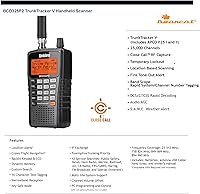
  • Channel Capacity: Supports up to 25,000 dynamically allocated channels via Uniden's Advanced Dynamic Memory System, eliminating fixed per-bank channel limits.
  • Trunking Support: Compatible with APCO Project 25 Phase I and Phase II digital trunking systems, as well as Motorola, EDACS, and LTR analog trunking formats.
  • Close Call RF: Includes Uniden's Close Call RF Capture Technology, which automatically detects and tunes to strong nearby transmissions across supported frequency ranges.
  • GPS Compatibility: Supports connection to an optional external GPS receiver (sold separately) to enable automatic location-based system and channel selection.
  • Weather Alerts: Built-in S.A.M.E. Weather Alert decodes NOAA emergency broadcasts and triggers alerts specific to the user's programmed geographic area.
  • Tone Decode: Features rapid DCS and CTCSS sub-audible tone detection, displaying decoded tone data on screen to assist with system configuration.
  • Quick-Key Access: Provides up to 100 Quick-Keys for instant enabling or disabling of programmed systems and groups during active scanning.
  • Power Source: Runs on 2 AA batteries, which are included in the box; the unit also supports optional rechargeable NiMH AA cells.
  • Connectivity: Includes a USB port for PC-based programming when used with a compatible programming cable (sold separately).
  • Display: Equipped with a backlit alphanumeric LCD display showing system name, channel tag, frequency, and decoded tone information simultaneously.
  • Release Date: First made available in March 2015 and has remained in active production without discontinuation as of the latest available information.
  • Best Sellers Rank: Ranked number 14 in the Radio Scanners category on Amazon, reflecting sustained long-term demand and buyer confidence.
  • Box Contents: The package includes the BCD325P2 scanner unit, a belt clip, wrist strap, two AA batteries, and a basic printed user guide.

Related Reviews
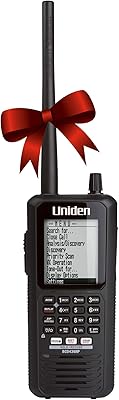
Uniden BCD436HP Digital Handheld Scanner
79%
91%
Ease of Setup
88%
Reception & Signal Quality
93%
Feature Set
74%
Build Quality & Ergonomics
57%
Battery Life
More
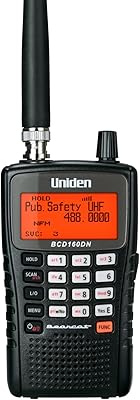
Uniden BCD160DN Handheld Digital Scanner
78%
88%
Out-of-Box Setup
79%
Digital Protocol Support
83%
Scan Speed
86%
Band Scope Function
81%
Reception Quality
More
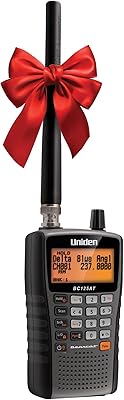
Uniden Bearcat BC125AT
78%
88%
Reception & Sensitivity
41%
Analog-Only Limitation
82%
Ease of Setup
79%
PC Programming Software
91%
Close Call RF Capture
More
Uniden Bearcat BC75XLT Handheld Scanner
69%
83%
Analog Reception Quality
11%
Digital & Trunking Compatibility
78%
Ease of Setup
67%
PC Programming Experience
74%
Close Call RF Capture
More
Uniden HomePatrol-2 Digital Police Scanner
76%
93%
Ease of Setup
81%
Reception Quality
88%
Digital Protocol Coverage
74%
Touchscreen Interface
61%
Sentinel Software
More
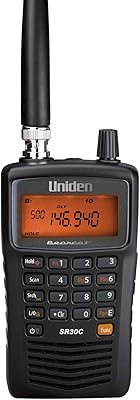
Uniden Bearcat SR30C Handheld Scanner
69%
88%
Ease of Setup
83%
Analog Reception Quality
12%
Digital Compatibility
86%
Value for Money
74%
Build Quality & Portability
More
Whistler WS1065 Digital Trunking Desktop Scanner
74%
91%
Digital Reception Quality
88%
Trunking System Performance
86%
Memory Capacity & Organization
52%
Ease of Programming
49%
PC Programming Software
More
Whistler TRX-1 Handheld Digital Scanner
78%
93%
Digital Protocol Coverage
88%
Build Quality
47%
Ease of Programming
86%
Audio Recording
91%
Frequency Range & Versatility
More
Uniden BCD996P2 Digital Mobile TrunkTracker Scanner
75%
96%
Digital Protocol Coverage
91%
Reception Quality
83%
GPS Location Scanning
38%
Ease of Programming
88%
Build Quality
More
Uniden SDS200 Base/Mobile Digital Scanner
79%
94%
Digital Decode Performance
61%
Ease of Initial Setup
58%
Sentinel Software Experience
93%
Simulcast System Handling
82%
Display Quality & Customization
More

FAQ

You will need to program it before it does anything useful. Out of the box, the BCD325P2 has no systems loaded — you have to add the frequencies and trunking systems for your area manually. Most users find the easiest path is to download free programming software like Freescan and purchase a compatible USB programming cable separately, then import data from a community database like RadioReference.com for your county or region.

In the United States, no license is required to listen with a scanner — receiving is legal for most frequencies this unit covers. However, some states and localities have restrictions on possessing a scanner in a vehicle, so it is worth checking your local laws before using it on the road.

Trunking is a system where many agencies share a pool of frequencies dynamically rather than each agency having its own dedicated channel. Many modern police, fire, and EMS departments have switched to digital trunked systems. If your local public safety agencies use a trunked network — which you can verify on RadioReference.com — then yes, trunking support matters. If they still use conventional analog channels, the trunking capability is less critical but the scanner handles those too.

That depends entirely on what systems your local agencies use. The scanner supports a wide range of conventional and digital trunking formats, but if your region runs on a system type it does not support — like DMR or NXDN — it will not decode those transmissions. Before buying, check RadioReference.com for your county to see what formats are in use locally.

No, the GPS receiver is not included and must be purchased separately. Once you connect a compatible GPS unit and pre-program geographic boundaries for each of your systems, the scanner will automatically switch to the relevant local systems as you move between areas. It is a genuinely useful feature for travelers, but it requires a meaningful amount of upfront programming to set up correctly.

Yes, the BCD325P2 works fine with standard NiMH rechargeable AA batteries, and most regular users recommend them since the scanner can be fairly demanding on alkaline cells during heavy use. Runtime varies — light conventional scanning might give you several hours, but intensive Close Call sweeps or continuous digital trunking monitoring will drain batteries faster. A quality set of high-capacity rechargeables is worth the investment.

Freescan is the most commonly recommended free option and integrates well with the BCD325P2. ProScan is a paid alternative with a more polished interface that some users prefer for complex multi-system setups. Either way, you will need a USB programming cable designed for this model — generic cables typically do not work reliably.

Yes, the BCD325P2 covers aviation band frequencies, making it popular at air shows and with hobbyists who monitor approach and departure communications at local airports. The Close Call feature is particularly handy at air events where you may not know exactly which frequencies are active at any given moment.

Regular scanning cycles through your pre-programmed channels in sequence looking for activity. Close Call works differently — it continuously monitors the RF environment around you and jumps to any strong nearby transmission automatically, even if that frequency is not in your channel list. It is useful for catching activity you did not know to program in advance, like at an event or in an unfamiliar city.

Honestly, it depends on your patience level. The hardware itself is capable and well-regarded, but the setup process is genuinely complex for a first-time scanner owner. If you are willing to spend several hours learning the system — using online guides and community forums — you will eventually get a lot out of it. If you want something simpler to get started, a more basic conventional scanner might be a better first step, and you can move up to this one later.

Where to Buy