Overview

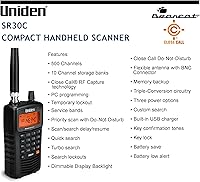
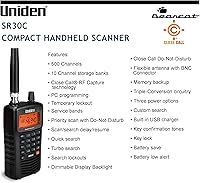
The Uniden Bearcat SR30C Handheld Scanner is a compact, no-frills analog scanner that punches well above its modest price point for hobbyists and curious newcomers to radio listening. It holds 500 channels across ten pre-loaded service banks, so you can start picking up signals almost immediately after unboxing. One thing worth stating clearly upfront: this Bearcat scanner is analog only — it cannot receive digital trunked communications, which is a dealbreaker for anyone near a major city where emergency services have migrated to digital systems. Power flexibility is a genuine strong point, with USB, alkaline AAs, or rechargeable Ni-MH cells all supported. Despite launching in 2019, it remains a top-ranked entry in its category.
Features & Benefits

The SR30C packs a surprisingly useful set of tools for an entry-level device. Close Call RF Capture is arguably its standout feature — it automatically locks onto strong nearby signals without any manual input, which is genuinely handy at events or in unfamiliar areas. Turbo Search speeds through frequencies faster than standard scan rates, while Priority Scan lets you pin your most important channels so they get checked more frequently during a sweep. The delay function briefly holds a channel open after a transmission ends, so you never miss the reply in a two-way exchange. PC programming via USB is a real convenience for anyone who would rather configure channels on a screen than navigate compact button menus.

Best For

This handheld scanner is a natural fit for a handful of specific use cases. NASCAR and motorsport fans will find it particularly worthwhile at the track, where picking up team and driver communications adds a whole new layer to race day. Aviation enthusiasts can monitor civil aircraft at airshows or near busy airports, and boaters will appreciate the pre-loaded marine frequencies. It also works well for hobbyists in rural or suburban areas where local public safety agencies still operate on analog systems. Anyone dipping their toes into radio scanning for the first time will find the SR30C approachable — the learning curve is shallow, and you are listening to real signals within minutes of setup.

User Feedback

Across nearly 3,000 ratings, the SR30C earns solid marks overall, though the feedback tells a nuanced story. Ease of setup and the pre-programmed banks draw consistent praise — most buyers report being up and running quickly. Rural users, in particular, highlight strong reception in areas where analog signals still dominate. On the flip side, the included manual is thin, and a noticeable share of buyers feel the digital incompatibility deserved more prominent disclosure before purchase. Battery life on standard AAs can fall short during extended sessions. The pattern is clear: buyers who understood what this Bearcat scanner was built for tend to walk away satisfied, while those expecting digital capability often do not.

Pros

  • Ten pre-loaded frequency banks mean you can start listening to real signals within minutes of unboxing.
  • Close Call RF Capture automatically locks onto strong nearby transmitters — incredibly handy at races or airshows.
  • Three power options, including USB and rechargeable Ni-MH cells, make it flexible for both home and field use.
  • At its price point, the SR30C offers a feature set that competing entry-level scanners rarely match.
  • Turbo Search and Priority Scan give users meaningful control over how the device handles active frequencies.
  • Compact and lightweight at under 15 ounces, easy to pack for outdoor events without adding bulk.
  • PC programming via USB makes channel setup far less tedious than navigating a small keypad alone.
  • Rural and suburban users consistently report solid analog reception quality across a wide range of signal types.
  • The delay function catches two-way conversation replies, which makes monitoring more coherent and useful.
  • A strong community of scanner hobbyists online fills documentation gaps and helps new users get up to speed quickly.

Cons

  • No digital trunking support makes it useless for monitoring emergency services in most large cities.
  • The included manual is too thin to guide users through anything beyond the most basic operation.
  • Battery life on standard AA alkaline cells can fall short during extended active-scanning sessions.
  • No backlit keypad makes button navigation genuinely difficult in low-light outdoor conditions.
  • Pre-loaded frequencies are a starting point only — local channel assignments vary and often need manual correction.
  • Dedicated programming software is not included; users must find and download third-party tools independently.
  • The plastic housing feels adequate for casual use but is not built to handle rough or frequent outdoor conditions.
  • Urban buyers may find the device scans indefinitely without landing on anything locally relevant.
  • Audio at loud outdoor venues is nearly inaudible through the built-in speaker without an earphone.
  • No database connectivity means identifying unknown frequencies requires manual cross-referencing with external sources.

Ratings

The Uniden Bearcat SR30C Handheld Scanner has been scored by our AI system after analyzing thousands of verified global buyer reviews, with spam, bot-submitted, and incentivized feedback actively filtered out. The scores below reflect a transparent, balanced picture — real strengths celebrated, genuine frustrations included. Whether this Bearcat scanner fits your needs or falls short depends heavily on where you live and what you plan to listen to, and that nuance is baked into every category here.
Ease of Setup
88%
Most buyers report being up and scanning within minutes of unboxing, largely thanks to the ten pre-loaded frequency banks. You do not need prior experience with radio scanning to get started — plug in batteries, power it on, and signals start coming through almost immediately.
The included paper manual is thin and leaves gaps for anyone who wants to do anything beyond the basics. Users who want to customize channels beyond the presets often end up relying on online forums and community guides rather than official documentation.
Analog Reception Quality
83%
In rural and suburban areas where analog signals still dominate, the SR30C performs reliably. Users monitoring local weather, railroad activity, or small-airport aircraft traffic report clear, consistent audio with minimal dropout during normal conditions.
Reception in fringe areas or urban environments with signal congestion can be inconsistent. The triple-conversion design helps with interference rejection, but users in dense metro areas may find reception less impressive than in open or low-interference environments.
Digital Compatibility
12%
88%
There is genuinely nothing positive to say here from a digital standpoint — and that honesty matters. For buyers in rural zones where local agencies have not yet migrated to digital trunking, this limitation is entirely irrelevant and causes zero frustration.
This is the single biggest source of negative reviews. Buyers near large cities who assumed the SR30C could receive police or fire communications were often disappointed to find it picks up nothing useful locally. The analog-only limitation cannot be worked around and is not upgradeable.
Value for Money
86%
At its price point, the feature set is hard to argue with for a first scanner. Close Call RF Capture, Priority Scan, Turbo Search, and ten pre-loaded banks would cost significantly more on competing devices, making this Bearcat scanner a strong starting point for budget-conscious hobbyists.
The value equation collapses if you live in a digitally-converted coverage area. In that scenario, you are paying for a device that cannot pick up the signals you actually want, and stepping up to a digital-capable model becomes the only real option.
Build Quality & Portability
74%
26%
At under 15 ounces, the SR30C is genuinely easy to carry to a race, airshow, or marina without it weighing down a bag. The compact form factor fits comfortably in hand, and the button layout is straightforward enough to navigate without looking down constantly.
The plastic housing feels appropriate for the price but does not inspire confidence for heavy outdoor use. Users who have bumped or dropped the unit report varying outcomes, and the overall build feels more suited to casual hobby use than rugged field conditions.
Battery Life
61%
39%
The flexibility of three power options — including USB charging and rechargeable Ni-MH cells — is a practical advantage. Being able to run the SR30C off a phone charger or USB power bank during a long race day is a genuinely useful contingency.
On standard AA alkaline cells, runtime under active scanning conditions draws mixed reviews. Heavy users monitoring busy frequencies for several hours report needing a fresh set of batteries sooner than expected, which adds up quickly if you rely on alkalines regularly.
Close Call RF Capture
84%
At events like NASCAR races or airshows, Close Call RF Capture proves its worth quickly — it locks onto strong nearby transmitters automatically, saving users from having to manually search for active frequencies in an unfamiliar location. It is one of the most appreciated features among event-goers.
Close Call works best with strong, nearby signals. In quieter or more remote environments, it may trigger infrequently or lock onto uninteresting local transmitters. It is a reactive tool, not a substitute for intentional channel programming in areas you know well.
PC Programming Experience
77%
23%
Programming the SR30C through a PC via USB is meaningfully easier than fighting through the keypad menu system, especially when setting up multiple custom channels. Users who take the time to use free third-party software like ARC or Freescan find it a much less frustrating experience.
Uniden does not bundle dedicated programming software in the box, which means users need to find and download it independently. The process is not complicated, but it is an extra step that feels like it should have been handled more completely out of the box.
Pre-Loaded Frequency Banks
82%
18%
Having ten service banks pre-loaded — covering aviation, marine, weather, racing, railroad, ham, CB, and more — means this handheld scanner has genuine out-of-box utility across a wide range of interests. For someone attending their first airshow or heading out on a boat, this saves hours of manual research.
The pre-loaded frequencies are a starting point, not a complete solution. Local channel assignments vary by region, so users often need to supplement or replace defaults with location-specific frequencies sourced from community databases like RadioReference.
Audio Clarity
78%
22%
Under normal analog signal conditions, the speaker produces clear, intelligible audio that works fine in outdoor environments. Users monitoring weather or marine channels during calm conditions generally report no complaints about the sound quality for a compact unit.
The built-in speaker can struggle with background noise at loud events like motor races, where you really need the earphone jack to hear anything clearly. Audio quality on weaker or more distant signals also degrades noticeably, which is expected but still a practical limitation.
Control Layout & Usability
71%
29%
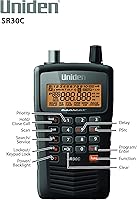
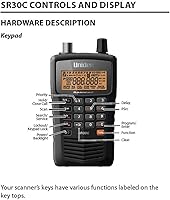
The keypad is logically organized for a compact device, and core functions like scan, hold, and manual entry are accessible without digging through multiple menu layers. First-time scanner users generally find the learning curve manageable within an hour or two of hands-on use.
The buttons are small and can feel fiddly with gloves on or in low-light conditions. Without a backlit keypad, nighttime use at outdoor events requires some familiarity with button placement before you can navigate confidently without a flashlight.
Documentation & Support
53%
47%
Uniden does maintain a customer support site, and the broader scanner hobby community — forums, YouTube walkthroughs, and sites like RadioReference — fills in most gaps effectively. For users willing to seek out that community knowledge, getting the most from the SR30C is very achievable.
The included documentation alone is insufficient for most users beyond basic operation. A device with this many features and this much configuration potential deserves a more complete manual, and the sparse official guidance is a consistent frustration mentioned across buyer reviews.
Scanning Speed
81%
19%
Turbo Search mode makes a noticeable difference when hunting through a wide range of frequencies at an event or in an unfamiliar area. Users who have compared it against older or cheaper scanners tend to appreciate how quickly the SR30C moves through channels to find active signals.
Turbo Search is most effective across conventional channels. As the channel count in a given bank grows, scan cycling can feel slower in practice than the spec suggests. Users monitoring many active channels simultaneously may notice the scanner briefly dwelling on quiet frequencies.
Suitability for Urban Use
31%
69%
In cities where pockets of analog activity still exist — certain CB users, some marine traffic near ports, civil aviation — the SR30C can still pick up something worth listening to. For very specific urban niches, it is not entirely useless.
For most urban buyers, this handheld scanner is the wrong tool. Emergency services in major metropolitan areas have overwhelmingly transitioned to digital trunking systems, meaning the SR30C will scan endlessly and find very little of local relevance. This mismatch accounts for a significant share of negative reviews.

Suitable for:

The Uniden Bearcat SR30C Handheld Scanner is genuinely well-matched to a specific kind of buyer: someone curious about radio scanning who wants to start without spending a lot, or an enthusiast with a clear, event-driven use case in mind. NASCAR and motorsport fans will get real value out of it trackside, where picking up team communications adds something you simply cannot get from a broadcast. Aviation hobbyists attending airshows or living near regional airports will find the pre-loaded civil aircraft frequencies immediately useful. Boaters monitoring marine traffic, railroad buffs, and weather watchers in areas with active NOAA broadcasts are all well-served by the ten pre-loaded banks. Perhaps most importantly, this Bearcat scanner shines in rural and suburban areas where local public safety agencies still transmit on conventional analog systems — in those locations, it works exactly as intended and delivers genuine, everyday listening value.
Not suitable for:

The single most important thing to understand before buying the Uniden Bearcat SR30C Handheld Scanner is that it cannot receive digital communications of any kind — no Project 25, no DMR, no NXDN. If you live in or near a major city where police, fire, and emergency services have migrated to digital trunking systems, this device will scan endlessly and return very little of practical interest. It is also not the right choice for anyone expecting plug-and-play simplicity beyond the pre-loaded banks — customizing channels for your specific locality requires outside research, third-party software, and a willingness to engage with the scanner hobby community. The sparse manual compounds this, leaving less patient users stranded. Power users or experienced hobbyists who need trunk-tracking, digital decoding, or database-driven scanning will find the SR30C underpowered for their needs and should look at Uniden's more advanced digital lineup instead.
Specifications

  • Channel Capacity: The SR30C stores up to 500 channels organized across ten service banks for broad frequency coverage.
  • Scanner Type: This is a conventional analog-only scanner and cannot receive digital trunking protocols such as Project 25, DMR, or NXDN.
  • Service Banks: Ten frequency banks come pre-loaded at the factory, covering police/fire, NOAA weather, marine, racing, aviation, ham radio, railroad, and CB bands.
  • Close Call RF: Close Call RF Capture technology automatically detects and tunes to strong signals from nearby transmitters without requiring manual frequency entry.
  • Scanning Modes: Turbo Search, Priority Scan, and standard scan modes are all supported, giving users meaningful control over how active channels are monitored.
  • Delay Function: A built-in delay function holds the channel open briefly after a transmission ends to capture any immediate replies in a two-way exchange.
  • PC Programming: The scanner connects to a Windows PC via USB cable and is compatible with third-party programming software for easier channel configuration.
  • Power Options: Three power methods are supported: USB connection to a PC or charger, two AA alkaline batteries, or two AA Ni-MH rechargeable batteries.
  • Ni-MH Charging: Ni-MH rechargeable AA batteries can be charged directly inside the unit using the included USB cable, eliminating the need for a separate charger.
  • Dimensions: The unit measures 7.5 x 4.5 x 2.4 inches, making it compact enough to hold comfortably in one hand or slip into a jacket pocket.
  • Weight: At 14.9 ounces without batteries, the SR30C is light enough to carry at outdoor events for extended periods without fatigue.
  • Conversion Design: A triple-conversion receiver design is used to reduce interference and improve signal selectivity across the supported frequency ranges.
  • Key Lock: A key lock function prevents accidental button presses during active scanning, which is particularly useful when carrying the unit in a bag or pocket.
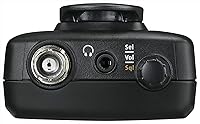
  • Earphone Jack: A standard earphone jack allows private listening, which is essential for use in loud environments such as racetracks or airshows.
  • Battery Alert: A battery low alert notifies the user when power is running low, helping avoid unexpected shutdowns during use in the field.
  • Memory Backup: Built-in memory backup retains programmed channel data for an extended period even if the scanner loses power completely.
  • OS Requirement: PC programming requires a Windows 7 or later operating system; Mac compatibility is not officially supported by Uniden.
  • Manufacturer: The SR30C is designed and manufactured by Uniden, a brand with decades of experience producing consumer radio and communications equipment.

Related Reviews
Uniden Bearcat BC125AT
78%
88%
Reception & Sensitivity
41%
Analog-Only Limitation
82%
Ease of Setup
79%
PC Programming Software
91%
Close Call RF Capture
More
Uniden Bearcat BC75XLT Handheld Scanner
69%
83%
Analog Reception Quality
11%
Digital & Trunking Compatibility
78%
Ease of Setup
67%
PC Programming Experience
74%
Close Call RF Capture
More
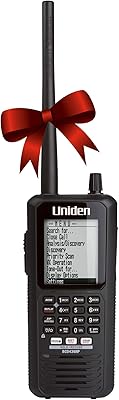
Uniden BCD160DN Handheld Digital Scanner
78%
88%
Out-of-Box Setup
79%
Digital Protocol Support
83%
Scan Speed
86%
Band Scope Function
81%
Reception Quality
More
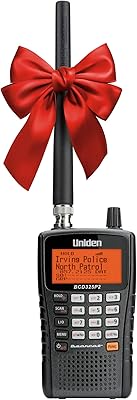
Uniden BCD325P2 Handheld Digital Trunking Scanner
74%
91%
Signal Reception
47%
Ease of Setup
88%
Digital Trunking Performance
74%
GPS Location Scanning
86%
Portability & Form Factor
More
Uniden BCD436HP Digital Handheld Scanner
79%
91%
Ease of Setup
88%
Reception & Signal Quality
93%
Feature Set
74%
Build Quality & Ergonomics
57%
Battery Life
More
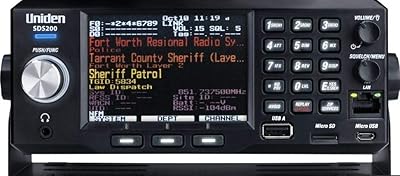
Uniden SDS200 Base/Mobile Digital Scanner
79%
94%
Digital Decode Performance
61%
Ease of Initial Setup
58%
Sentinel Software Experience
93%
Simulcast System Handling
82%
Display Quality & Customization
More
Uniden HomePatrol-2 Digital Police Scanner
76%
93%
Ease of Setup
81%
Reception Quality
88%
Digital Protocol Coverage
74%
Touchscreen Interface
61%
Sentinel Software
More
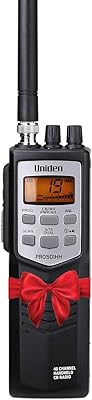
Uniden PRO401HH 40-Channel Handheld CB Radio
77%
86%
Audio Clarity
67%
Range Performance
61%
Battery Life & System
79%
Build Quality
91%
Ease of Use
More
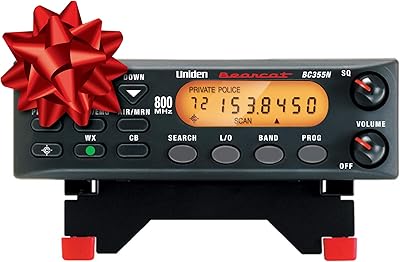
Uniden BC355N Base/Mobile Scanner
74%
91%
Ease of Setup
86%
Signal Detection & Close Call Performance
83%
Analog Frequency Coverage
18%
Digital & Trunking Compatibility
78%
Build Quality & Durability
More
Uniden BCD536HP HomePatrol Desktop Radio Scanner
77%
91%
Digital Trunking Performance
86%
Ease of Initial Setup
83%
Wi-Fi Connectivity & Remote Updates
58%
Sentinel Software Experience
88%
Channel Acquisition Speed
More

FAQ

It depends entirely on where you live. In rural and many suburban areas, local agencies still broadcast on conventional analog frequencies, and the SR30C will pick those up just fine. In most large cities, however, emergency services have moved to digital trunking systems, and this scanner cannot decode those signals at all. Check RadioReference.com for your county to see what system your local agencies use before buying.

Close Call RF Capture automatically detects strong signals from nearby transmitters and locks onto them without you needing to know the frequency in advance. It is genuinely useful at events like airshows, racetracks, or marinas where you arrive without knowing exactly what channels are active locally. Think of it as a proximity-triggered auto-tune rather than a programmed scan — a handy complement to your pre-set channels.

Uniden does not include dedicated programming software in the box, but the scanner is compatible with free and low-cost third-party tools like ARC Scanner Software and Freescan. You connect via the included USB cable and program channels from your PC, which is far easier than entering frequencies manually through the keypad. Just note that official support is for Windows only.

Battery life varies quite a bit depending on how active the frequencies are and whether you are using the speaker or earphones. On fresh AA alkaline cells under moderate use, most users get several hours of runtime, but heavy scanning sessions on busy frequency banks can drain them faster than expected. Switching to rechargeable Ni-MH cells and charging them in-unit via USB is a more economical long-term approach.

Yes, provided you have realistic expectations about what it can and cannot do. The pre-loaded banks mean you can start picking up real signals almost immediately without programming anything, and the learning curve for basic operation is gentle. The manual is sparse, so plan to supplement it with YouTube tutorials and the scanner community at sites like RadioReference — but the device itself is approachable for first-timers.

This is actually one of the strongest use cases for this Bearcat scanner. NASCAR teams communicate on analog frequencies, and the SR30C handles these well. Many race fans bring it specifically for this purpose and report it works as expected at the track. Just make sure to look up the current team frequencies for the specific race you are attending, as these can shift between seasons.

Yes, civil aviation operates on VHF frequencies that fall within the SR30C's range, and the pre-loaded aviation bank gives you a ready starting point. At airshows near active control towers, you can typically pick up air traffic control communications and pilot transmissions. Military aircraft communications use different, restricted frequencies and cannot be monitored.

Uniden does not include earphones in the box, though the unit has a standard earphone jack that accepts commonly available accessories. A USB cable for power and PC connection is included. Depending on the retailer and the specific package, some bundles may include accessories, but the standard retail box is fairly minimal — earphones and a case are worth sourcing separately if you plan to use it at loud events.

Priority Scan lets you flag certain channels as high-priority, and the scanner will briefly check those channels more frequently during a normal scan cycle. It is useful when you have one or two channels you really do not want to miss — say, a local weather frequency or a specific race team — while still scanning a broader range. You designate priority channels manually, either through the keypad or via PC programming.

The SR30C is designed for North American frequency bands and regulatory standards. While the hardware can physically receive signals in those frequency ranges regardless of geography, using a scanner to monitor certain communications may be restricted or illegal in other countries. Additionally, the pre-loaded banks are calibrated to North American services, so their utility outside the US and Canada would be limited. Always check local regulations before using any radio scanner in another country.

Where to Buy