Overview

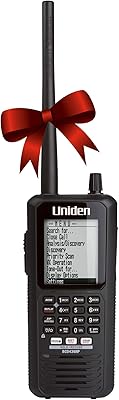
The Uniden BCD536HP HomePatrol Desktop Radio Scanner sits firmly at the top end of the home-base market, built for serious hobbyists and anyone who monitors public safety communications with real dedication. Unlike entry-level units that struggle with modern digital systems, this desktop scanner arrives with a built-in USA/Canada database and Wi-Fi connectivity that put it in a different category entirely. It plugs into the wall and stays put — this is a stationary listening station, not something you toss in a bag. That also means the price reflects a deliberate investment, and buyers should go in knowing exactly what they are paying for.
Features & Benefits

At the core of the BCD536HP is TrunkTracker V, which handles APCO P25 Phase I and II as well as X2-TDMA — the digital protocols that many local agencies have migrated to in recent years. Control Channel Only scanning means the unit locks onto active traffic faster, so you spend less time waiting and more time actually hearing transmissions. Setup is refreshingly straightforward: enter your zip code and the HomePatrol system pulls relevant local channels automatically. Wi-Fi keeps the RadioReference database and firmware current without hunting for a USB cable. The S.A.M.E. Weather Alert adds practical value for anyone who also wants county-specific emergency notifications alongside their regular scanning.

Best For

This home-base unit is the right call for listeners who have outgrown basic analog scanners and live in areas where agencies have moved to P25 Phase II or X2-TDMA systems. If your region runs a modern trunked network, a scanner without proper digital support will leave you hearing silence where there should be traffic. The zip-code setup also makes it approachable for hobbyists who dread manual frequency programming. Emergency preparedness users will appreciate having weather alerts baked in. Experienced Uniden owners upgrading from an older model will feel at home quickly, though newcomers should expect a learning curve once they move past the basics.

User Feedback

Most owners are quick to praise how fast the BCD536HP locks onto channels on trunked digital systems — that responsiveness is frequently cited as a clear step up from older hardware. The zip-code-based initial setup also earns consistent approval from users who were intimidated by the unit's feature depth. On the other side, Sentinel software draws some frustration; a portion of buyers find the interface dated and the update process less intuitive than expected. A few users in niche regions also note that system compatibility can vary depending on how local agencies have configured their networks. Build quality and display clarity generally satisfy at this price point, though some feel the keypad feedback is unremarkable.

Pros

  • Handles P25 Phase II and X2-TDMA digital trunking that entry-level scanners simply cannot decode.
  • Control Channel Only scanning locks onto active transmissions faster, so you follow conversations without frustrating gaps.
  • Zip-code setup gets new users scanning local channels in minutes rather than hours.
  • Wi-Fi database updates mean you never need to hunt for a USB cable to keep the BCD536HP current.
  • S.A.M.E. weather alerts filter emergency broadcasts to your specific county, adding real preparedness value.
  • Close Call RF Capture automatically flags nearby active transmitters you did not know to program in.
  • Wide frequency coverage from 25 MHz to 1300 MHz handles virtually every practical North American monitoring scenario.
  • The built-in USA/Canada RadioReference database gives you a strong starting point right out of the box.
  • Experienced scanner users report a noticeable performance upgrade over older Uniden hardware on busy digital networks.

Cons

  • Sentinel software feels outdated and frustrates users who expect a polished desktop management experience.
  • Advanced configuration beyond zip-code setup requires significant self-study and community forum research.
  • No battery option makes this home-base unit completely unsuitable for portable or field use.
  • Buyers in rural areas often find local database entries sparse and system compatibility inconsistent.
  • The physical build and keypad feel average for a scanner at this price tier.
  • Wi-Fi connectivity can be unreliable during database sync sessions, occasionally requiring manual restarts.
  • Band gaps in frequency coverage can catch buyers off guard if they need continuous spectrum monitoring.
  • Regional system updates can lag after agency infrastructure changes, leaving temporary holes in local coverage.
  • Users without P25 Phase II or X2-TDMA systems nearby may find the core trunking advantage largely irrelevant.

Ratings

The Uniden BCD536HP HomePatrol Desktop Radio Scanner was evaluated by our AI system after processing hundreds of verified buyer reviews from global markets, with spam, bot-generated, and incentivized submissions actively filtered out. Scores reflect the full spectrum of real user experience — from the aspects that genuinely impressed dedicated listeners to the friction points that frustrated buyers at this price tier. Both strengths and trade-offs are represented transparently so you can make a confident, informed decision.
Digital Trunking Performance
91%
Users in P25 Phase II and X2-TDMA coverage areas consistently report that this home-base unit locks onto trunked channels noticeably faster than older hardware. Listeners monitoring busy metro public safety networks say active transmissions are captured cleanly with minimal dropouts, which matters when following fast-moving dispatch traffic.
A smaller segment of buyers in rural or transitional markets find that the trunking advantage is less impactful because local agencies still run analog or basic digital systems. In those cases, the advanced trunking capability feels underutilized relative to the investment.
Ease of Initial Setup
86%
The zip-code-driven HomePatrol setup is one of the most frequently praised aspects across all review sources. First-time desktop scanner owners report being up and scanning local channels within minutes, a stark contrast to the manual frequency entry that defined older units in this category.
The approachable initial setup creates a false sense of simplicity — once users move beyond basic zip-code programming into custom systems, channel groupings, or department filtering, the learning curve steepens noticeably. Several buyers felt underprepared for what advanced configuration actually demands.
Wi-Fi Connectivity & Remote Updates
83%
The ability to update the RadioReference database and push firmware changes over Wi-Fi is genuinely convenient for a home-base unit. Buyers who previously managed scanner updates via USB cables appreciate not needing a dedicated PC physically nearby during the process.
A portion of users report inconsistent Wi-Fi behavior, particularly during database sync sessions, with occasional dropped connections requiring restarts. The wireless setup process also trips up less tech-savvy buyers who struggle to connect the scanner to home networks initially.
Sentinel Software Experience
58%
42%
When Sentinel works as intended, it handles database imports and firmware pushes reliably, and users who invest time learning it find it a capable management tool for a scanner of this complexity. Pairing it with a RadioReference subscription unlocks meaningful customization depth.
Sentinel is the single most common complaint in user reviews — the interface feels outdated, and the workflow for importing or updating system data confuses a meaningful share of buyers. Several users describe the software as a genuine weak point that undercuts an otherwise strong hardware experience.
Channel Acquisition Speed
88%
Control Channel Only scanning delivers a real-world benefit that scanner hobbyists notice quickly: the unit stops wasting time scanning every voice channel and focuses on the control channel, catching active transmissions faster. Users monitoring high-traffic systems say this makes following conversations far more coherent.
On quieter or less active systems, some users feel the speed advantage is harder to appreciate. A handful of buyers also note occasional hesitation when the scanner switches between systems with different protocols, introducing brief gaps in otherwise smooth monitoring sessions.
S.A.M.E. Weather Alert
79%
21%
Having county-specific weather alerts integrated directly into the scanning workflow is a genuine practical benefit for emergency preparedness users. Buyers in storm-prone regions appreciate that the unit can filter alerts to their specific area rather than broadcasting every regional warning.
The weather alert feature works as advertised but draws little enthusiasm beyond its core function — it is considered a utility add-on rather than a differentiator at this price point. A few users also note that the alert audio interrupting active scanning sessions can be jarring during extended monitoring.
Close Call RF Capture
77%
23%
Close Call is a reliable tool for identifying active nearby transmitters that are not already programmed into the scanner. Hobbyists who enjoy discovering unknown local radio activity find it a fun and genuinely useful feature for expanding their listening profiles.
Close Call captures can occasionally surface false positives or latch onto interference sources, requiring the user to manually dismiss irrelevant hits. Users who prefer a clean, curated scanning experience sometimes disable it entirely to avoid interruptions during focused monitoring sessions.
Build Quality & Physical Design
72%
28%
The desktop chassis feels appropriately solid for a stationary home unit, and the backlit display is readable under typical indoor lighting conditions. Users who place it on a dedicated desk or shelf report that the physical layout and button placement become comfortable after a short adjustment period.
At this price tier, several buyers expected a more premium physical finish. The keypad tactile feedback is described as average at best, and the overall industrial aesthetic feels functional rather than refined. A unit sitting on a home office desk attracts occasional comments about its utilitarian appearance.
Display Readability
74%
26%
The backlit LCD delivers enough clarity to read active channel data, system names, and signal indicators without strain under normal indoor conditions. Users monitoring late at night specifically appreciate the backlight, which keeps the display usable without ambient light.
In brightly lit environments or at certain viewing angles, contrast becomes an issue and text can be harder to parse quickly. A portion of buyers feel the display resolution and information density do not fully match the sophistication of the underlying scanner hardware.
Frequency Coverage Range
89%
The wide coverage spanning from 25 MHz through 1300 MHz (with appropriate band gaps) satisfies nearly every practical monitoring need a home-based hobbyist would have. Users tracking everything from VHF public safety to UHF business band to 1.2 GHz links find one unit handles it all.
The band gaps in the frequency coverage — notably around 512 to 758 MHz and 824 to 849 MHz — occasionally frustrate users who want to monitor specific frequency ranges that fall within those exclusions. This is a regulatory and hardware constraint, but it surprises buyers who expect fully continuous coverage.
Database Accuracy & Coverage
81%
19%
The pre-loaded USA/Canada RadioReference database saves new users from starting from scratch and covers a broad range of agencies and systems out of the box. Buyers in mid-to-large metro areas tend to find the database immediately useful with minimal manual adjustments needed after zip-code setup.
Rural and smaller-market users sometimes find the database entries for their area sparse or outdated, requiring manual additions to get full local coverage. Database accuracy is only as current as the last sync, and users who do not update regularly may notice gaps in system coverage over time.
Value for Money
63%
37%
For users in areas with modern digital trunked systems, the BCD536HP delivers a genuinely capable and future-relevant listening platform that justifies the investment. Buyers who understand exactly what they are purchasing and use the full feature set tend to feel well-served by what this home-base unit offers.
At this price point, the Sentinel software shortcomings, average build finish, and steep advanced configuration curve are friction points that are harder to overlook. Buyers who do not live in P25 Phase II or X2-TDMA coverage areas may find comparable listening results from less expensive alternatives.
Regional System Compatibility
67%
33%
For the majority of users in urban and suburban US markets, the BCD536HP handles the systems they care about without issue. The breadth of supported digital protocols means this home-base unit is compatible with a wide range of agency configurations encountered across North America.
Compatibility limitations surface in specific regional edge cases — certain proprietary or non-standard agency configurations are not fully supported, and a subset of buyers discover this only after purchase. Update frequency for newly launched or restructured systems can lag, leaving occasional gaps in coverage.
Advanced Configuration Depth
76%
24%
For experienced scanner enthusiasts, the depth of customization available — from custom system builds and department filtering to quick keys and priority scanning — makes this desktop scanner a powerful tool for tailored listening profiles. Power users describe it as genuinely capable once mastered.
That same depth creates a real barrier for buyers who are not already familiar with scanner architecture and terminology. Without investing significant time in documentation and community resources, the advanced features can feel inaccessible rather than empowering to intermediate users.

Suitable for:

The Uniden BCD536HP HomePatrol Desktop Radio Scanner is built for a specific kind of buyer: someone who takes radio monitoring seriously, has a dedicated spot for a home listening station, and lives in an area where public safety agencies have migrated to modern digital trunked networks. If your local police, fire, or EMS dispatch runs on P25 Phase II or X2-TDMA infrastructure, this home-base unit is one of the few desktop options that will actually decode those transmissions reliably rather than returning silence. Hobbyists upgrading from an older analog or entry-level digital scanner will find the jump in capability immediately noticeable, particularly in how quickly the unit locks onto active channels during busy dispatch periods. Emergency preparedness households also get real value here — the S.A.M.E. weather alert system means you are not relying on a separate device for county-specific severe weather notifications. The zip-code setup makes the initial experience surprisingly accessible, which helps enthusiasts who are serious about listening but not necessarily experienced with manual frequency programming get up and running without frustration.
Not suitable for:

Buyers who are casually curious about radio scanning, or who live in regions where local agencies still operate on analog or basic digital systems, will find it genuinely difficult to justify the investment the Uniden BCD536HP HomePatrol Desktop Radio Scanner demands. This is a stationary, corded unit — there is no battery-powered portability here, so anyone hoping to monitor communications on the go, at sporting events, or during mobile activities will need to look at a handheld alternative instead. The Sentinel PC software, which handles database management and firmware updates, has drawn consistent criticism for its dated interface and unintuitive workflow; if you are not patient with clunky software tools, that friction will wear on you quickly. Advanced configuration — building custom systems, setting up department filters, or fine-tuning scanning behavior beyond the default zip-code setup — requires real time investment and community research, which casual users rarely want to commit to. Finally, buyers in smaller or rural markets may find the built-in database sparse for their area and encounter gaps in regional system compatibility that no firmware update fully resolves.
Specifications

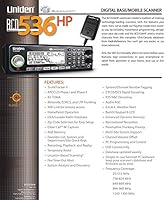
  • Brand: Manufactured by Uniden, a long-established name in consumer radio and scanning hardware.
  • Model: BCD536HP, part of the HomePatrol series of desktop scanning devices.
  • Form Factor: Desktop home-base unit designed for stationary use on a desk or shelf, not portable field operation.
  • Power Source: Corded electric operation; the unit requires a continuous AC power connection and does not run on internal batteries.
  • Weight: The unit weighs 6.25 pounds, reflecting its desktop-grade chassis and internal components.
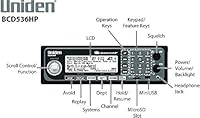
  • Display: Features a backlit LCD screen for reading active channel data, system names, and signal indicators in varied lighting conditions.
  • Keypad: Full backlit keypad allows direct frequency and channel entry with illuminated keys usable in low-light environments.
  • Connectivity: Built-in Wi-Fi enables wireless database updates, firmware management, and remote control without a physical PC cable connection.
  • Frequency Coverage: Covers 25–512 MHz, 758–824 MHz, 849–869 MHz, 894–960 MHz, and 1240–1300 MHz, accommodating a wide range of North American radio bands.
  • Trunking: TrunkTracker V engine supports modern trunked radio system tracking across multiple protocol generations.
  • Digital Protocols: Decodes APCO P25 Phase I, APCO P25 Phase II, and X2-TDMA digital transmissions used by many contemporary public safety agencies.
  • Scan Method: Control Channel Only scanning monitors the control channel of trunked systems to reduce lag and improve active-transmission lock-on speed.
  • Setup Method: HomePatrol-style zip code entry auto-populates local systems and channels from the built-in database for faster initial configuration.
  • Database: Ships with a pre-loaded USA and Canada RadioReference database covering public safety, business, and utility radio systems.
  • PC Software: Compatible with Sentinel software for Windows-based database management, system imports, and firmware updates.
  • Weather Alert: S.A.M.E. (Specific Area Message Encoding) weather alerting filters NOAA broadcasts to the user-selected county or region.
  • RF Detection: Close Call RF Capture technology automatically detects and identifies strong nearby transmissions not already programmed into the scanner.
  • ASIN: Amazon Standard Identification Number for this product is B01M2TZNIZ.

Related Reviews

Uniden HomePatrol-2 Digital Police Scanner
76%
93%
Ease of Setup
81%
Reception Quality
88%
Digital Protocol Coverage
74%
Touchscreen Interface
61%
Sentinel Software
More
Uniden BearTracker 885 CB Radio Scanner
77%
91%
Dual-Mode Operation
67%
Scanner Sensitivity
86%
GPS Auto-Channel
88%
CB Radio Performance
83%
Microphone Quality
More
Uniden BC365CRS 500-Channel Analog Desktop Scanner
76%
88%
Ease of Setup
79%
Analog Scanning Performance
51%
Analog-Only Limitation Transparency
72%
Reception Quality & Antenna Performance
83%
FM Radio Quality
More
Uniden SDS200 Base/Mobile Digital Scanner
79%
94%
Digital Decode Performance
61%
Ease of Initial Setup
58%
Sentinel Software Experience
93%
Simulcast System Handling
82%
Display Quality & Customization
More
Uniden BCD325P2 Handheld Digital Trunking Scanner
74%
91%
Signal Reception
47%
Ease of Setup
88%
Digital Trunking Performance
74%
GPS Location Scanning
86%
Portability & Form Factor
More
Uniden PRO520XL 40-Channel CB Radio
81%
86%
Audio Clarity
83%
Noise Reduction
78%
Build Quality
91%
Ease of Installation
67%
Microphone Quality
More
Uniden PRO538HHFM Handheld/Mobile CB Radio
72%
83%
Dual-Mode Versatility
58%
Real-World Range
81%
NOAA Weather Alerts
54%
Battery Life
61%
FM Mode Performance
More
Uniden PC78LTXFM 40-Channel AM/FM CB Radio
79%
88%
Audio Clarity
71%
Transmission Range
84%
Build Quality
82%
Ease of Installation
86%
Built-in SWR Meter
More
Uniden PRO510XL 40-Channel CB Radio
82%
86%
Audio Clarity
83%
Noise & Interference Control
91%
Ease of Installation
74%
Build Quality
88%
Value for Money
More
Uniden MHS75 VHF Marine Radio
89%
94%
Waterproof Performance
85%
Range & Signal Strength
88%
Battery Life
90%
Ease of Use
91%
Build Quality
More

FAQ

It depends on which digital protocol your local agency runs. The BCD536HP supports APCO P25 Phase I, P25 Phase II, and X2-TDMA — the three most common digital trunking standards used by public safety agencies across North America. Before buying, check the RadioReference database online to confirm what system your local agencies use. If they are on one of those supported protocols, this home-base unit should handle it well.

The Uniden BCD536HP HomePatrol Desktop Radio Scanner uses a zip-code-based setup that is genuinely beginner-friendly for getting started. You enter your zip code, and the unit pulls relevant local systems and channels from its built-in database automatically. That gets you scanning in minutes. The complexity only shows up later if you want to customize beyond the defaults — at that point, you will want to spend time with the manual and the Sentinel software.

It works completely standalone right out of the box — no computer required for basic operation. The zip-code setup and built-in database mean you can start listening without touching a PC. A computer running Sentinel software becomes useful when you want to do deeper customization or push database and firmware updates, but Wi-Fi handles most of that wirelessly anyway.

Not practically, no. This is a corded desktop unit that runs on AC power, so it is built for a fixed home or office location. There is no internal battery, and the form factor is not designed for mobile use. If you need a portable scanning option, you would want to look at a handheld scanner from Uniden or another manufacturer instead.

Sentinel is Uniden's PC-based management application for this home-base unit. It lets you import system data, customize your scanning setup in detail, and push firmware and database updates. You do not strictly need it for basic use since Wi-Fi handles database updates, but power users who want to build custom channel lists or manage complex system configurations will find themselves using it regularly. Fair warning: the software has a dated interface that takes some patience to learn.

Once you connect the scanner to your home Wi-Fi network, it can reach out to download database and firmware updates wirelessly. This removes the need to plug a USB cable into a computer every time an update is available. The setup process for connecting to your network is straightforward on most home routers, though a small number of users report occasional sync instability that requires restarting the unit.

Honestly, probably yes. The BCD536HP's biggest advantages — TrunkTracker V, P25 Phase II decoding, and Control Channel Only scanning — are most valuable on modern digital trunked networks. If your local agencies are still running analog or basic digital systems, you would get comparable listening results from a less expensive scanner. It is worth checking RadioReference for your area before committing to this price point.

S.A.M.E. stands for Specific Area Message Encoding, and it lets the scanner filter NOAA weather alerts to only your selected county rather than broadcasting every alert for a wide region. In practice, it means you get relevant severe weather warnings for your immediate area without constant interruptions from alerts that apply to counties far from you. For anyone who takes emergency preparedness seriously, it is a genuinely useful feature layered on top of the core scanning functionality.

Yes, and the difference shows up most on busy digital trunked systems. The Control Channel Only scanning and TrunkTracker V engine make channel acquisition noticeably faster and more coherent when following active dispatch traffic on modern networks. On simpler systems, the gap narrows considerably. The real question is whether your local radio environment is complex enough to make that performance difference worth the price premium.

The two issues that come up most consistently are Sentinel software and advanced configuration complexity. Sentinel gets criticized for its interface and occasional finicky behavior during updates, and users who try to move beyond the zip-code setup into custom system builds often find the learning curve steeper than expected. A smaller group of buyers in certain regions also encounter compatibility gaps with specific local system configurations that are not fully reflected in the database.