Overview

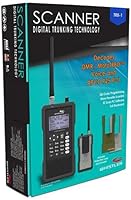
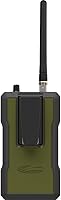
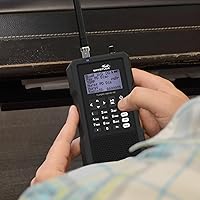
The Whistler TRX-1 Handheld Digital Scanner sits firmly at the premium end of the portable scanner market, built for people who take radio monitoring seriously — storm chasers, public safety enthusiasts, and dedicated hobbyists who've outgrown entry-level gear. What separates it from cheaper alternatives is full digital protocol support: P25 Phase I and II, DMR, and NXDN are all covered, which matters enormously in areas where agencies have migrated away from analog. Setup is less intimidating than it sounds, thanks to the bundled EZ Scan software and a preloaded USA/Canada frequency database. That said, the price reflects a serious commitment, so casual listeners should think carefully before jumping in. Physically, the TRX-1 is compact and sturdy, shaped for one-handed field use.

Features & Benefits

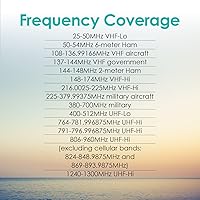
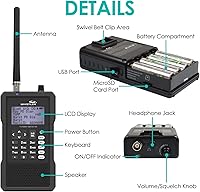
One of the TRX-1's most practical strengths is how it handles organization. You can build up to 200 custom Scanlists — grouping channels however makes sense for your monitoring style — plus a separate dedicated Skywarn list for weather events. The 50-hour audio recording feature is genuinely useful: everything gets logged to the included MicroSD card and can be pulled onto a PC for later review. The programmable tri-color LED and audible alerts mean you don't have to stare at the screen to know something important is coming through. For technically inclined users, the raw discriminator output opens the door to third-party decoding software without any hardware modifications. Coverage spans 25 MHz to 1.3 GHz, pulling in aviation, ham, weather, and military bands in one device.

Best For

This handheld scanner makes the most sense in the hands of someone who already understands the basics of radio scanning. Experienced hobbyists who've hit the ceiling on analog-only gear will appreciate the full digital protocol stack. Storm spotters and Skywarn volunteers benefit from the dedicated weather monitoring setup and fast channel access when conditions deteriorate quickly. It's also a strong pick for public safety listeners in regions where local agencies have moved to P25 Phase II or DMR infrastructure. Aviation fans get both civilian and military voice bands in a portable package. And for anyone running SDR decoding software on a PC alongside a hardware scanner, the discriminator output makes this a clean, mod-free pairing.

User Feedback

Across more than 1,300 ratings, Whistler's flagship portable holds a 4.2-out-of-5 average — solid, but with enough variation to tell a nuanced story. The most consistent praise centers on build quality and reliability, along with the depth and accuracy of the preloaded database. Critics, however, are less kind about the programming experience. First-time scanner users frequently describe the setup process as frustrating, and the interface takes real time to learn. Battery life draws mixed reactions too — four AA batteries power the unit, which some find inconvenient compared to scanners with integrated rechargeable packs. Real-world range also falls well short of the theoretical maximum in dense urban environments. Users focused on home-based listening often point to the TRX-2 desktop model as the more practical alternative.

Pros

  • Covers P25 Phase I and II, DMR, and NXDN — protocols that many local agencies have fully adopted.
  • The preloaded USA/Canada database gets you scanning real channels quickly without building everything from scratch.
  • Up to 200 custom Scanlists gives power users serious organizational flexibility.
  • Recording up to 50 hours of audio to MicroSD is a standout feature for storm chasers and archivists alike.
  • Raw discriminator output pairs cleanly with PC decoding software — no hardware hacks needed.
  • Broad 25 MHz to 1.3 GHz coverage pulls in aviation, ham, military, and weather bands in one portable unit.
  • The tri-color LED and programmable audible alerts allow for hands-free monitoring in active situations.
  • Wake-up and auto-scan scheduling is a genuinely useful feature for unattended or early-morning monitoring.
  • Build quality earns consistent praise from long-term users — this handheld scanner feels durable, not cheap.
  • Compact and light enough at 7.4 ounces for comfortable one-handed field use over long periods.

Cons

  • Programming complexity is steep — first-time scanner users frequently describe the initial setup as genuinely frustrating.
  • Relies on four AA batteries with no built-in rechargeable option, adding cost and inconvenience for heavy users.
  • Real-world range falls well short of the stated maximum in urban or obstructed environments.
  • No water resistance at all — a meaningful limitation for outdoor and field use in unpredictable conditions.
  • The interface takes significant time to learn; intuitive it is not, at least not out of the box.
  • The included 2GB MicroSD card will fill up faster than expected for users who record frequently.
  • At this price tier, the lack of a rechargeable battery system feels like an oversight compared to newer competitors.
  • Users monitoring heavily encrypted systems will find the TRX-1 unable to decrypt transmissions, regardless of protocol support.

Ratings

The scores below were generated by our AI after analyzing thousands of verified global user reviews for the Whistler TRX-1 Handheld Digital Scanner, with spam, bot activity, and incentivized feedback actively filtered out to ensure accuracy. Each category reflects the honest spread of real buyer experiences — the genuine strengths as well as the recurring pain points that show up across multiple markets and user types. Nothing here has been softened or cherry-picked.

Digital Protocol Coverage
93%
For users in areas where local agencies have fully migrated to P25 Phase II, DMR, or NXDN, this handheld scanner delivers on its core promise in a way that mid-range alternatives simply cannot. Storm chasers and public safety monitors consistently report clean decoding of digital traffic that cheaper scanners render as noise or silence.
A small segment of users discovered post-purchase that their specific local system uses an uncommon variant or heavy encryption that the TRX-1 cannot decode regardless of protocol support. Buyers in heavily encrypted jurisdictions get noticeably less value from this capability than those in open-system regions.
Build Quality
88%
The chassis feels genuinely rugged for a handheld unit — reviewers who carry it to airshows, storm spotting sessions, or long monitoring walks consistently describe it as solid and well-assembled, not plasticky. The one-handed grip design holds up well across extended field use without feeling fatiguing.
The lack of any water resistance is a recurring frustration for outdoor users who encounter unexpected drizzle or humid conditions in the field. A handful of reviewers also noted that certain button surfaces show wear earlier than expected under daily use.
Ease of Programming
47%
53%
Users who came in with prior scanner experience or a willingness to invest real time in the manual found that the EZ Scan software and preloaded database meaningfully reduce the number of hours needed to get a working setup. The Scanlist system, once learned, is praised for its organizational depth.
This is the single most cited pain point across all user feedback categories. First-time scanner owners frequently describe the programming process as confusing to the point of return consideration, and even experienced hobbyists note that the interface logic is not immediately intuitive. The learning curve is real, steep, and should not be underestimated.
Audio Recording
86%
The ability to capture up to 50 hours of radio traffic and transfer it to a PC for review or long-term storage is a standout for storm chasers and public safety enthusiasts who want to replay and analyze critical traffic after an event. The MicroSD-based approach makes it straightforward to swap storage when needed.
The included 2GB card fills up faster than casual users expect, particularly during active weather events when the scanner is running continuously. There is also a noted risk of file corruption if batteries are fully depleted during an active recording session.
Frequency Range & Versatility
91%
Spanning 25 MHz to 1.3 GHz in a single portable unit, this scanner covers an unusually wide slice of the radio spectrum — aviation hobbyists appreciate being able to pull military and civilian voice bands without carrying separate equipment. Ham radio operators get all seven major bands in one device.
The sheer breadth of coverage is also part of what makes initial setup complex, since organizing channels across that many bands into a coherent Scanlist structure takes considerable planning. Users focused on just one band type sometimes feel the breadth is more than they needed or wanted to manage.
Discriminator Output
89%
Radio enthusiasts who run decoding software like DSD+ on a PC specifically seek out scanners that offer a clean discriminator tap, and the TRX-1 delivers one without any hardware modification — a detail that matters because DIY mods can void warranties and damage sensitive internals. Reviewers describe it as a reliable, noise-free connection.
This feature has very limited appeal to the general buyer and adds nothing to the experience for users who have no interest in PC-based decoding workflows. For that segment, it is essentially a port they will never use.
Battery Life & Power System
58%
42%
Running on standard AA batteries means you can find replacements virtually anywhere — an advantage during extended field deployments like multi-day weather events where charging infrastructure may not be available. Swapping in a fresh set takes seconds and gets you back to scanning immediately.
The absence of an integrated rechargeable battery pack is a significant complaint from users who compare this handheld scanner to competitors at similar price points that include built-in packs with USB charging. Ongoing battery costs and the inconvenience of carrying spares for long sessions are recurring themes in critical reviews.
Real-World Range
63%
37%
In open rural environments and areas with good repeater infrastructure, users report solid reception that meets their practical monitoring needs — storm spotters in flat terrain are among the more satisfied voices on this point. The frequency coverage itself means the scanner is capturing distant signals across multiple bands simultaneously.
The stated 50-mile talking range figure is a theoretical maximum that bears little resemblance to urban and suburban performance, where buildings, topography, and interference cut that figure substantially. Multiple reviewers flag this disconnect between the specification and lived experience as misleading.
Alert & Notification System
82%
18%
The tri-color LED with customizable strobe patterns is more useful in practice than it might sound on paper — users monitoring during loud environments or while focused on other tasks can set color-coded alerts for specific channel activity without having to watch the screen. The audible alarm programming adds another layer of hands-free awareness.
A portion of users find the alert configuration menu confusing to navigate, particularly when trying to assign specific colors to specific Scanlists. The strobe feature, while novel, is occasionally described as overly bright in low-light indoor monitoring setups.
Scanlist Organization
84%
The ability to build up to 200 independent Scanlists — and assign the same channel object to multiple lists simultaneously — gives power users a level of monitoring flexibility that is genuinely rare at any price point. Storm chasers in particular appreciate the dedicated Skywarn list that keeps weather alerts cleanly separated from other traffic.
Getting the most out of the Scanlist system requires a meaningful upfront investment in planning and configuration that casual users are unlikely to make. Users who simply want to scan their local area without building a structured channel hierarchy often find the system more complex than they need.
Wake-Up & Scheduling
77%
23%
The auto-power-on and scan scheduling feature is genuinely appreciated by users who monitor recurring early-morning activity — commuters tracking rail traffic updates or enthusiasts capturing pre-dawn aviation sessions mention it as a feature they use regularly and would miss on cheaper alternatives.
Battery drain during unattended scheduled monitoring sessions is a practical concern, since the unit draws power even when scanning traffic that would not require human attention. Users running overnight sessions on disposable batteries report occasionally finding the unit depleted by morning.
Software & Database
79%
21%
The preloaded USA/Canada frequency database is a genuine time-saver compared to scanners that ship with blank memory, and the EZ Scan software reduces the barrier to building a working channel setup for new owners who are willing to follow the process. Regular database updates help keep the system current as local agencies change systems.
EZ Scan is functional but not elegant — several users describe the PC software interface as dated and unintuitive compared to the tools available for competing scanners. Database update frequency and long-term software support as the product ages are also cited as uncertainties.
Portability & Form Factor
85%
At 7.4 ounces and sized for single-handed operation, the TRX-1 is comfortable to carry for extended field sessions without causing noticeable fatigue. Storm spotters and airshow attendees specifically mention being able to hold and operate it one-handed while managing other gear simultaneously.
The unit has no water resistance, which meaningfully limits how confidently it can be taken into unpredictable outdoor environments — even light rain requires the user to cover or stow the scanner. Some users also find the overall footprint slightly larger than they expected from a product marketed as compact.
Value for Money
71%
29%
For users who genuinely need P25 Phase II, DMR, and NXDN support in a portable package — and who will use the recording, discriminator output, and Scanlist depth — the capability set justifies the premium price tier in a way that is hard to replicate with cheaper alternatives. Experienced hobbyists consistently rate it as worth the investment.
For casual listeners or first-time buyers who underestimate the programming complexity, the value proposition weakens considerably — the feature set they end up using represents a fraction of what they paid for. The four-AA power system without a built-in charger also adds ongoing operational costs that erode the long-term value calculus.

Suitable for:

The Whistler TRX-1 Handheld Digital Scanner is built for people who treat radio monitoring as a serious hobby or practical necessity rather than a passing curiosity. If you live or work in an area where local police, fire, or EMS agencies have migrated to P25 Phase II, DMR, or NXDN digital systems, this is one of the few portable options that can actually keep up without requiring expensive hardware modifications. Storm spotters and Skywarn volunteers will appreciate the dedicated weather list and the ability to record hours of radio traffic during active events for later review. Aviation enthusiasts get both civilian and military voice bands in a package light enough to take to an airshow or a remote monitoring location. For technically inclined users who already run SDR decoding software on a PC, the raw discriminator output makes this handheld scanner a clean, capable companion without any soldering or voided warranties.
Not suitable for:

The Whistler TRX-1 Handheld Digital Scanner is a poor fit for anyone just getting into scanning who expects a plug-and-play experience. Programming it from scratch — even with EZ Scan software — requires a real investment of time and patience, and users who skip the manual often find themselves frustrated within the first week. The price point is simply hard to justify for someone who only wants to occasionally listen to local fire traffic; a mid-range analog or basic digital scanner would serve that use case just fine. The four AA battery requirement also creates ongoing operational costs and inconvenience compared to competitors with built-in rechargeable packs, particularly for users who run it for extended sessions in the field. And since it carries no water resistance rating at all, anyone planning to use it outdoors in unpredictable weather should factor that vulnerability into their decision.
Specifications

  • Digital Protocols: Supports APCO P25 Phase I and Phase II, DMR, and NXDN digital formats for monitoring modern public safety communications.
  • Frequency Range: Covers 25 MHz to 1.3 GHz, encompassing public safety, aviation, ham radio, military voice, and NOAA weather bands.
  • Scanlists: Allows up to 200 user-defined Scanlists plus one dedicated Skywarn list for organized and flexible channel management.
  • Audio Recording: Records up to 50 hours of radio traffic to the included 2GB MicroSD card, with files transferable to a PC for archiving.
  • Storage Capacity: Supports millions of stored channel objects, with total capacity limited only by the size of the inserted MicroSD card.
  • Alert System: Features a tri-color programmable LED — capable of custom flash patterns and emergency strobe modes — paired with programmable audible alarms.
  • Discriminator Output: Provides a raw discriminator output port for connecting to third-party PC decoding software without requiring any hardware modification.
  • Auto-Scan Scheduling: Includes a wake-up timer that powers the unit on and begins scanning automatically at a user-set time.
  • Power Source: Runs on four AA batteries at 4.5V; no built-in rechargeable battery pack is included or integrated.
  • Dimensions: Measures 1.81″ deep by 5.6″ wide by 7.56″ tall, sized for one-handed grip and field portability.
  • Weight: Weighs 7.4 ounces without batteries, keeping it manageable for extended handheld use in the field.
  • Weather Frequencies: Receives all seven standard NOAA weather broadcast frequencies from 162.400 MHz through 162.550 MHz.
  • Ham Radio Bands: Covers seven amateur radio bands: 10m, 6m, 2m, 1.25m, 70cm, 33cm, and 23cm.
  • Included Software: Ships with Whistler EZ Scan programming software and a preloaded USA/Canada frequency database to simplify initial setup.
  • Water Resistance: Carries no water resistance rating and should be protected from rain, splashing, and wet field conditions.
  • Channel Resolution: Operates at 25 kHz frequency steps, which is standard for the public safety and commercial bands this scanner targets.
  • Display: Features a CE-certified scanner display designed for clear readout of channel and system data during active scanning.
  • In the Box: Package includes the scanner unit, a 2GB MicroSD card, and a printed user manual; batteries are not included.

Related Reviews
Uniden BCD436HP Digital Handheld Scanner
79%
91%
Ease of Setup
88%
Reception & Signal Quality
93%
Feature Set
74%
Build Quality & Ergonomics
57%
Battery Life
More
Uniden BCD160DN Handheld Digital Scanner
78%
88%
Out-of-Box Setup
79%
Digital Protocol Support
83%
Scan Speed
86%
Band Scope Function
81%
Reception Quality
More
Whistler WS1065 Digital Trunking Desktop Scanner
74%
91%
Digital Reception Quality
88%
Trunking System Performance
86%
Memory Capacity & Organization
52%
Ease of Programming
49%
PC Programming Software
More
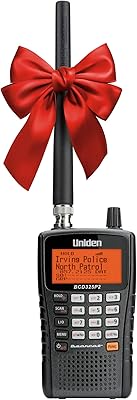
Uniden BCD325P2 Handheld Digital Trunking Scanner
74%
91%
Signal Reception
47%
Ease of Setup
88%
Digital Trunking Performance
74%
GPS Location Scanning
86%
Portability & Form Factor
More
Uniden Bearcat SR30C Handheld Scanner
69%
88%
Ease of Setup
83%
Analog Reception Quality
12%
Digital Compatibility
86%
Value for Money
74%
Build Quality & Portability
More
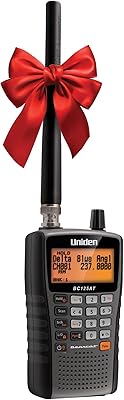
Uniden Bearcat BC125AT
78%
88%
Reception & Sensitivity
41%
Analog-Only Limitation
82%
Ease of Setup
79%
PC Programming Software
91%
Close Call RF Capture
More
Sony ZV-1 Compact Digital Vlogging Camera
75%
91%
Autofocus Performance
88%
Video Quality
47%
Battery Life
83%
Built-in Microphone
84%
Ease of Use
More
Andonstar AD203 Handheld Digital Microscope
83%
89%
Value for Money
93%
Portability & Ease of Use
82%
Magnification Quality
85%
Image & Video Quality
80%
Battery Life
More
Uniden HomePatrol-2 Digital Police Scanner
76%
93%
Ease of Setup
81%
Reception Quality
88%
Digital Protocol Coverage
74%
Touchscreen Interface
61%
Sentinel Software
More
Uniden Bearcat BC75XLT Handheld Scanner
69%
83%
Analog Reception Quality
11%
Digital & Trunking Compatibility
78%
Ease of Setup
67%
PC Programming Experience
74%
Close Call RF Capture
More

FAQ

Honestly, it has a learning curve that is steeper than most beginners expect. The included EZ Scan software and preloaded frequency database help a lot, but you will still need to spend real time reading the manual and experimenting with Scanlists before it feels intuitive. If you have zero prior experience with digital scanners, budget a few evenings for setup rather than expecting it to work out of the box.

No — and no consumer scanner legally can. The TRX-1 decodes digital protocols like P25 Phase II and DMR, but encrypted transmissions within those systems will still come through as garbled audio or silence. Whether your local agencies encrypt their traffic is worth checking before you buy any scanner at this level.

Yes, and this is one of the TRX-1's more appealing features for technically minded users. The raw discriminator output port lets you feed unprocessed audio directly into decoding software on your PC without modifying the hardware at all. It is a clean, supported connection that many enthusiasts specifically look for in a scanner at this tier.

That figure represents a best-case scenario under ideal line-of-sight conditions — think open rural terrain with no obstructions. In suburban or urban environments, effective range will be considerably shorter due to buildings, terrain, and other interference. Most users in typical settings report practical ranges well under that maximum, so treat the spec as a ceiling rather than a guarantee.

Yes, standard NiMH rechargeable AA batteries work fine in the TRX-1. Just be aware that the unit does not have a built-in charging circuit, so you will need an external charger for the batteries. Many frequent users find this setup less convenient than scanners with integrated battery packs, but it does give you the flexibility to swap in fresh cells instantly when you need to.

The core radio capabilities — digital protocols, frequency coverage, database system — are essentially the same. The TRX-2 is a desktop and mobile-mount unit designed for use in a vehicle or at a fixed home station, while the TRX-1 is built for handheld portability. If you plan to monitor primarily from home or a parked vehicle, the TRX-2 is the more practical choice; for field use, the TRX-1 is the right form factor.

Yes. The scanner's object-oriented database is designed to scale with the card you insert, so swapping in a larger MicroSD will give you more recording time and storage capacity. Just verify compatibility with cards above a certain size — sticking to a reputable brand in a reasonable capacity range is generally the safe approach.

As of the available product data, it is not listed as discontinued, and Whistler continues to provide the EZ Scan software and database updates. That said, it is worth checking Whistler's official site for the latest firmware and software support status, as database update policies can change over the life of a product.

It depends entirely on which digital system your fire department switched to. If they are running P25 Phase I or II, DMR, or NXDN, then yes, this handheld scanner is equipped to decode those signals — assuming the channels are not encrypted. Checking a resource like RadioReference.com for your county will tell you exactly what system and encryption status your local agencies use before you commit to a purchase.

Like most devices that write to flash storage, there is a risk of file corruption if power is cut abruptly during an active recording. It is a good habit to monitor battery levels and avoid letting them run completely flat during a session. Using high-capacity rechargeable AAs and keeping a spare set on hand is the simplest way to prevent losing recordings at a critical moment.

Where to Buy