Overview

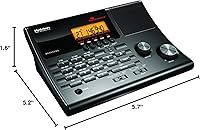
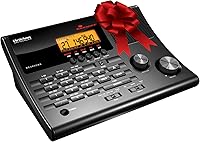
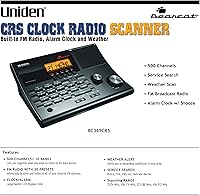
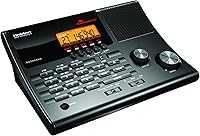
The Uniden BC365CRS 500-Channel Analog Desktop Scanner is a compact all-in-one device that combines a conventional radio scanner, FM radio, and alarm clock into a single tabletop unit. Before anything else, one thing needs to be crystal clear: analog-only reception means no digital trunking, no P25, no DMR — if your local agencies have already switched to digital systems, this scanner will come up largely silent. For everyone else, it sits comfortably on a nightstand or desk, with a backlit LCD display that is easy to read in the dark. At its price point, this analog clock-radio scanner targets hobbyists and newcomers who want a capable, low-fuss entry into the scanning hobby.
Features & Benefits

The BC365CRS organizes its channels across 10 programmable banks, with service presets already loaded for police, fire, marine, aircraft, railroad, and weather — so you can start picking up activity almost immediately out of the box. Priority channel scanning checks your flagged frequencies every two seconds, which is genuinely useful for keeping tabs on a busy channel while scanning others. NOAA weather alerts add real practical value, especially during storm season. The FM side holds up to 30 preset stations, and the alarm clock lets you wake to scanning, weather, or FM — a nice touch. The whole unit runs off AC power with three AA batteries as backup and weighs just about a pound.

Best For

This desktop scanner is a natural fit for hobbyists in rural or suburban areas where local fire, EMS, and public works agencies still broadcast on conventional analog systems. Aviation fans get solid air band coverage, and railroad enthusiasts can monitor rail traffic from home without any complicated setup. It is also a practical tool for emergency preparedness households — NOAA weather alerts keep you informed when your phone is dead and the power is out. If you have never owned a scanner before, the pre-loaded service presets flatten the learning curve considerably. Anyone wanting a bedside radio that doubles as a local activity monitor will find this analog clock-radio scanner handles that role without any fuss.

User Feedback

Buyers consistently praise how quick the setup is — plug it in, run a service search, and you are picking up activity within minutes. The display earns positive marks for nighttime readability, and the button layout is generally considered intuitive. On the downside, the single most common complaint involves buyers in larger metro areas discovering their local agencies had already migrated to digital systems, leaving the BC365CRS with little to scan for public safety use. A smaller share of users mention that manual frequency programming has a modest learning curve. Reception quality draws mixed responses — strong in open rural settings, noticeably weaker in dense urban environments even after repositioning the antenna.

Pros

  • Pre-loaded service presets get you scanning aviation, marine, and railroad bands within minutes of setup.
  • NOAA weather alerts provide genuine safety value during storms, especially when the power goes out.
  • Battery backup via three AA cells keeps the BC365CRS functional during outages — a real plus for emergency prep households.
  • Priority channel scanning checks your flagged frequencies every two seconds, so you rarely miss critical activity.
  • The backlit LCD display is easy to read in the dark, making it a practical nightstand companion.
  • 500 channels across 10 banks give casual hobbyists plenty of room to organize frequencies without feeling cramped.
  • Waking to scanner activity, weather, or FM radio is a thoughtful feature that a basic alarm clock simply cannot match.
  • At its price point, combining a scanner, FM radio, and alarm clock in one compact unit represents solid everyday value for analog-area users.
  • The tabletop footprint is small enough for a crowded nightstand without dominating the surface.

Cons

  • Analog-only hardware means entire categories of public safety traffic are completely invisible in digitally-converted areas.
  • Manual frequency entry for custom channel banks is slow and tedious without any companion software support.
  • The stock antenna underperforms noticeably in urban environments or buildings with thick walls.
  • Only a single alarm is available, which limits usefulness in households with different wake schedules.
  • The included documentation is dense and assumes some prior scanner familiarity, pushing true beginners toward third-party tutorials.
  • Weather alerts are not filtered by county or zone, so alerts for neighboring areas can trigger more often than expected.
  • Battery drain during active scanning is higher than many users anticipate, making the backup mode short-lived under heavy use.
  • The plastic construction and button feel do not match the expectations set by the mid-range price for buyers used to more tactile hardware.

Ratings

Our scores for the Uniden BC365CRS 500-Channel Analog Desktop Scanner are generated by AI after systematically analyzing thousands of verified global user reviews, with spam, bot-submitted, and incentivized feedback actively filtered out. The result is an honest, data-driven picture of where this analog clock-radio scanner genuinely earns its place on the desk — and where it falls short for certain buyers. Both its real strengths and recurring frustrations are reflected transparently in every category below.
Ease of Setup
88%
Most buyers report being up and running within minutes of unboxing — plug it in, run a service search, and channels start populating on their own. The pre-loaded service presets for police, fire, marine, and aircraft are a genuine time-saver for anyone new to scanning who does not want to manually enter frequencies from scratch.
A smaller group of users found that moving beyond the automatic service search into manual frequency entry required reading the manual carefully, which is not always included in the expected format. Those wanting more granular bank customization from day one faced a modest but real learning curve.
Analog Scanning Performance
79%
21%
In rural and suburban areas where agencies still broadcast on conventional analog systems, the BC365CRS picks up a solid range of activity across police, fire, EMS, marine, and railroad bands. Priority channel scanning — checking flagged frequencies every two seconds — works reliably and helps users stay on top of busy channels without missing key transmissions.
In larger metro areas where most public safety agencies have migrated to digital trunking or P25 systems, this desktop scanner comes up nearly silent on those bands. This is the single biggest source of buyer disappointment, and it is a hard ceiling baked into the hardware — no firmware update will change it.
Analog-Only Limitation Transparency
51%
49%
For buyers who already understand the analog-versus-digital divide, the BC365CRS delivers exactly what it advertises. Hobbyists in rural areas, aviation enthusiasts, and railroad monitors largely feel the scope is well matched to their actual needs and local radio landscape.
A disproportionate share of negative reviews trace back to buyers who were not aware their region had switched to digital systems before purchasing. The product listing communicates the analog-only nature, but many buyers still miss it — leading to frustration that colors overall ratings even when the scanner itself is functioning correctly.
Reception Quality & Antenna Performance
72%
28%
Out in open rural terrain, reception is generally described as clean and reliable across the covered frequency bands. Users monitoring air traffic, marine channels, or railroad frequencies in low-interference environments report picking up transmissions at reasonable distances with the stock antenna.
In urban environments or areas with significant RF interference, the included antenna struggles. Several users noted the need to reposition the unit, raise the antenna, or invest in an aftermarket antenna to get acceptable results. Building materials and competing signals make a noticeable difference that the stock setup does not fully overcome.
FM Radio Quality
83%
The FM radio side of this analog clock-radio scanner holds 30 preset stations, which covers most listeners comfortably. Audio quality is consistently described as clear and pleasant for a tabletop unit, and switching between presets is straightforward once they are programmed in.
A few users noted that FM reception in weak-signal areas or near thick walls was not as strong as a dedicated FM radio might deliver. The FM functionality is solid but supplementary — buyers expecting audiophile-grade tuning will find it adequate rather than impressive.
NOAA Weather Alert Function
86%
Weather alert functionality is one of the most praised practical features among buyers outside the core scanning hobby. Households in storm-prone regions specifically highlight the NOAA alerts as a meaningful safety tool, especially when cell service is unreliable or power is out and phones are not charged.
A small number of users reported occasional false alerts or brief delays in triggering, though these were not widespread complaints. The weather alert system is not configurable by county or zone on this model, which can mean receiving alerts for areas somewhat outside the immediate vicinity.
Alarm Clock Functionality
81%
19%
Being able to wake to scanner activity, a weather channel, or an FM station is a genuinely useful feature for users who keep this unit on a nightstand. The snooze and sleep timer functions work reliably, and several buyers specifically mentioned upgrading from a plain clock radio for this reason.
The alarm interface is functional but not particularly intuitive to set initially, with a few users needing to consult the manual to get the wake-source selection right. There is only a single alarm, so households with mismatched schedules will find that limiting.
Display Readability
84%
The backlit LCD display earns consistent praise for nighttime readability. Users keeping the BC365CRS on a nightstand specifically appreciate being able to glance at the time or active channel without straining their eyes, and the brightness level is generally considered well-calibrated for a bedroom environment.
In brightly lit rooms or in direct light, the display can wash out somewhat, making it harder to read quickly from across a desk. A handful of users also noted the font size for frequency readouts feels small when scanning through channels rapidly.
Build Quality & Design
76%
24%
The unit feels appropriately sturdy for its weight class — just under a pound — and the tabletop footprint is compact enough to fit on a crowded nightstand without dominating it. Button layout is generally considered well-organized, and the overall aesthetic is understated and inoffensive for a home device.
The plastic construction does not feel premium up close, and a few users noted that button presses require a bit more deliberate force than expected. Nothing feels flimsy enough to be a dealbreaker, but buyers expecting the tactile quality of higher-end electronics may find it a touch underwhelming.
Channel Programming Experience
68%
32%
For users who stick to the pre-loaded service presets, the programming experience is smooth and approachable. The 10-bank structure is logical once understood, and the priority channel feature is easy to assign once a user has identified the frequencies they care most about.
Manual frequency entry across all 500 channels is where patience gets tested. The process is not especially fast, and without companion software for batch importing, dedicated users who want fully customized banks will spend considerable time at the keypad working through entries one by one.
Value for Money
77%
23%
For buyers in analog-friendly areas who also want an FM clock radio in one box, the BC365CRS delivers a reasonable return on investment. Getting a functional scanner, NOAA alert receiver, FM tuner, and alarm clock in a single unit at this price tier is a practical deal for the right buyer profile.
For anyone living in a digitally-converted area, the value calculation falls apart quickly — the core scanning function becomes nearly useless, leaving essentially an FM clock radio at a significant premium over standalone alternatives. The value is highly location-dependent, which is a real risk for buyers who do not verify their local radio infrastructure first.
Battery Backup Reliability
73%
27%
The three AA battery backup is a meaningful addition for emergency preparedness use cases, ensuring the scanner and weather alerts remain functional during power outages. Users in areas prone to storms or grid disruptions specifically called this out as a practical reassurance.
Battery life during backup operation is not extensively documented, and a few users noted the unit drains AA batteries faster than expected under active scanning. It is best treated as a short-term backup rather than a primary power source for extended off-grid use.
Frequency Band Coverage
78%
22%
The range of bands covered — from AM broadcast through VHF, UHF, aviation, and marine — gives hobbyists a wide listening palette without needing multiple devices. Aviation and railroad enthusiasts in particular appreciate the dedicated band coverage that delivers real activity in those niches.
The frequency coverage ceiling is set by the analog-only hardware, meaning any agency or service that has moved to digital or trunked systems simply does not appear. Within the analog world the coverage is broad, but that world is shrinking, which puts a natural cap on long-term utility in many regions.
Manual & Documentation Quality
62%
38%
The manual covers the essential programming steps and service search functions adequately for most casual users. Buyers who approached it patiently reported being able to work through setup without outside help, which speaks to a baseline level of completeness.
Multiple users described the manual as dense and not especially beginner-friendly, with instructions that assume some prior scanning familiarity. The lack of clear visual diagrams for frequency entry steps was a recurring complaint, and several buyers resorted to third-party YouTube tutorials to fill in the gaps.

Suitable for:

The Uniden BC365CRS 500-Channel Analog Desktop Scanner is a strong match for hobbyists living in rural or suburban areas where local fire departments, EMS crews, public works teams, and similar agencies still broadcast on conventional analog frequencies. Aviation enthusiasts who enjoy monitoring air traffic from home will find the air band coverage genuinely useful, and the same goes for railroad fans who want to track rail communications without investing in a more complex setup. Emergency preparedness households get real practical value here — the NOAA weather alert function alone makes it a worthwhile bedside companion in storm-prone regions, especially when cell service is unreliable. First-time scanner buyers will appreciate that pre-loaded service presets mean you can start picking up activity almost immediately rather than manually hunting for frequencies from scratch. And if you want a single nightstand device that handles scanning, FM radio, and alarm clock duties without cluttering your space with three separate gadgets, this analog clock-radio scanner checks all those boxes in a compact, lightweight package.
Not suitable for:

Buyers in larger cities or metro areas should do their homework before purchasing, because the Uniden BC365CRS 500-Channel Analog Desktop Scanner will deliver very little public safety scanning activity in regions where local agencies have already migrated to digital trunking or P25 systems — and that describes a growing majority of urban police and fire departments across the country. This is not a workaround-able limitation; it is baked into the hardware, and no setting or antenna upgrade will change it. Power users or experienced hobbyists who want to monitor trunked systems, follow talk groups, or scan across digital channels will need to look at Uniden's own higher-tier digital models or competitors in that space. If your primary goal is specifically police monitoring in a digitally-converted area, this desktop scanner will frustrate rather than satisfy. Similarly, buyers expecting a premium audio experience from the FM radio, or a feature-rich alarm clock with multiple alarms and zone-specific weather alerts, may find the functionality adequate but not remarkable compared to dedicated devices in those categories.
Specifications

  • Brand & Model: Manufactured by Uniden under model number BC365CRS, a conventional desktop scanner in the company's base/mobile product line.
  • Scanner Type: Conventional analog only — this unit does not support digital trunking protocols such as Project 25, DMR, or NXDN.
  • Channel Capacity: Stores up to 500 channels organized across 10 programmable banks for flexible frequency organization.
  • Frequency Coverage: Receives AM broadcast (530–1700 kHz), 25–54 MHz, FM broadcast (88–108 MHz), 108–174 MHz, 225–380 MHz, and 406–512 MHz.
  • Priority Scanning: Designated priority channels are checked automatically every 2 seconds during active scanning to reduce the chance of missing important transmissions.
  • Weather Alerts: Receives all NOAA weather radio broadcasts and triggers an audible alert when the National Weather Service issues a watch or warning.
  • FM Radio: Built-in FM tuner supports up to 30 preset station memories for instant one-touch access to favorite local broadcast stations.
  • Alarm Clock: Integrated alarm clock includes snooze and sleep timer functions, with selectable wake sources: scanner mode, weather channel, or FM radio.
  • Display: Backlit VFD-style LCD display provides clear channel and frequency readout in low-light conditions without a separate light source.
  • Dimensions: Measures 5.7 inches long by 5.2 inches wide by 1.6 inches high, making it suitable for a nightstand or desktop without occupying excessive space.
  • Weight: Weighs approximately 1 pound, light enough to reposition easily between rooms or pack for travel.
  • Power Source: Operates primarily on AC power via included adapter, with a 3 AA alkaline battery slot providing backup power during outages.
  • Batteries: Requires 3 AA alkaline batteries (not included) for backup operation; batteries are not used as the primary power source under normal conditions.
  • Mount Type: Designed exclusively for tabletop use with a flat-base footprint; no wall-mount or vehicle-mount hardware is included or supported.
  • Service Presets: Ships with pre-loaded search presets covering police, fire, emergency, marine, aircraft, amateur radio, railroad, and weather bands to speed up initial setup.
  • Warranty: Covered by a 1-year limited manufacturer warranty from Uniden against defects in materials and workmanship under normal use conditions.

Related Reviews
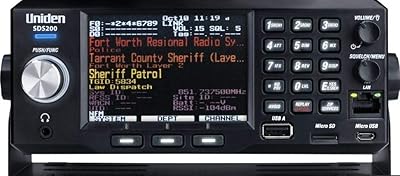
Uniden SDS200 Base/Mobile Digital Scanner
79%
94%
Digital Decode Performance
61%
Ease of Initial Setup
58%
Sentinel Software Experience
93%
Simulcast System Handling
82%
Display Quality & Customization
More
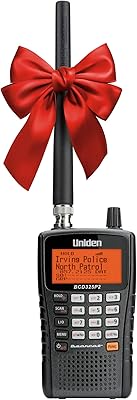
Uniden BCD325P2 Handheld Digital Trunking Scanner
74%
91%
Signal Reception
47%
Ease of Setup
88%
Digital Trunking Performance
74%
GPS Location Scanning
86%
Portability & Form Factor
More
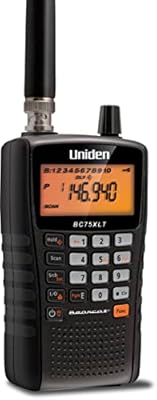
Uniden Bearcat BC75XLT Handheld Scanner
69%
83%
Analog Reception Quality
11%
Digital & Trunking Compatibility
78%
Ease of Setup
67%
PC Programming Experience
74%
Close Call RF Capture
More
Uniden HomePatrol-2 Digital Police Scanner
76%
93%
Ease of Setup
81%
Reception Quality
88%
Digital Protocol Coverage
74%
Touchscreen Interface
61%
Sentinel Software
More
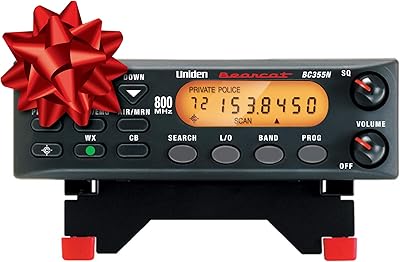
Uniden BC355N Base/Mobile Scanner
74%
91%
Ease of Setup
86%
Signal Detection & Close Call Performance
83%
Analog Frequency Coverage
18%
Digital & Trunking Compatibility
78%
Build Quality & Durability
More
Uniden BCD536HP HomePatrol Desktop Radio Scanner
77%
91%
Digital Trunking Performance
86%
Ease of Initial Setup
83%
Wi-Fi Connectivity & Remote Updates
58%
Sentinel Software Experience
88%
Channel Acquisition Speed
More
Uniden BCD436HP Digital Handheld Scanner
79%
91%
Ease of Setup
88%
Reception & Signal Quality
93%
Feature Set
74%
Build Quality & Ergonomics
57%
Battery Life
More
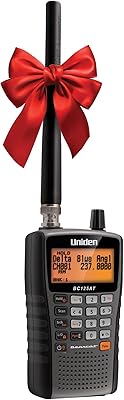
Uniden Bearcat BC125AT
78%
88%
Reception & Sensitivity
41%
Analog-Only Limitation
82%
Ease of Setup
79%
PC Programming Software
91%
Close Call RF Capture
More
Uniden Bearcat SR30C Handheld Scanner
69%
88%
Ease of Setup
83%
Analog Reception Quality
12%
Digital Compatibility
86%
Value for Money
74%
Build Quality & Portability
More
Uniden PC68LTX 40-Channel CB Radio
83%
88%
Audio Receive Quality
91%
Hi-Cut Switch Effectiveness
83%
Transmission Clarity
86%
RF Gain Control Utility
84%
Build Quality & Durability
More

FAQ

That depends entirely on what radio system your local police use. If they still broadcast on a conventional analog system, the BC365CRS will pick them up. But if your department has switched to a digital trunking system like P25 — which is common in most mid-sized to large cities — this scanner will not receive those transmissions at all. Check a resource like RadioReference.com to look up your county before buying.

Yes, and this is actually one of the strongest use cases for this desktop scanner. It covers the aviation band frequencies used for air traffic control and pilot communications, so hobbyists near regional or major airports can monitor tower and ground traffic without any special configuration beyond entering or searching the relevant frequencies.

Out of the box, it is pretty approachable. The pre-loaded service presets mean you can run an automatic search for common band activity without manually entering a single frequency. Most first-time users are hearing transmissions within a few minutes. Where it gets more involved is when you want to customize your own channel banks with specific local frequencies — that part requires patience and the manual.

Yes, it does. The unit slots three AA batteries as a backup power source, so if the AC power goes out, the scanner and NOAA weather alert functions keep running. Battery life in backup mode is not indefinite under heavy scanning, so treat it as a short-term emergency resource rather than a long-term off-grid solution.

A conventional analog scanner like this one receives transmissions broadcast on fixed, open analog frequencies — the same way radios have worked for decades. A digital scanner can additionally decode digitally encoded or trunked signals, which is what most modern urban public safety agencies now use. If your area has gone digital, a digital scanner is what you need; this unit simply cannot decode those signals.

Not directly — the BC365CRS does not come with PC programming software or a data cable in the box, and Uniden does not officially bundle a software solution with this model. You can enter all frequencies manually via the front keypad, which works fine for moderate setups but becomes tedious if you are trying to fill out all 500 channels with custom entries.

It holds its own for casual listening. The 30-station preset memory covers most users comfortably, and audio quality is clean enough for background listening. In weak-signal areas or rooms with thick walls, a dedicated FM radio with a better-tuned antenna may outperform it, but for everyday use the FM side is fully functional and not an afterthought.

At normal nightstand or desk distances, yes — the backlit display is easy to read in the dark and does not wash out like some older LCD units. From across a room it may be harder to make out frequency numbers at a glance, but as a bedside device the visibility is well-suited to its intended placement.

Railroad communications in North America typically operate in the 160–161 MHz range within the VHF band, which falls inside the 108–174 MHz coverage range of this analog clock-radio scanner. Rail enthusiasts can enter the specific AAR channel frequencies for their region and monitor dispatcher-to-engineer communications, train-to-train calls, and maintenance channel activity.

The NOAA weather alert function works in the background even when you are in scanner or FM radio mode — you do not need to have the unit actively tuned to a weather channel for the alert to trigger. When the National Weather Service broadcasts an alert tone, the scanner will interrupt whatever it is doing and sound the alarm, which is exactly the behavior you want for an overnight emergency notification device.

Where to Buy