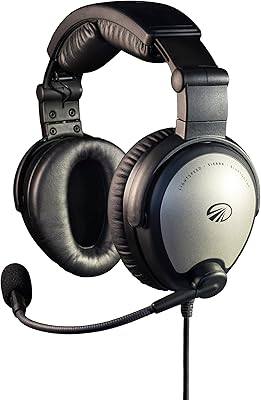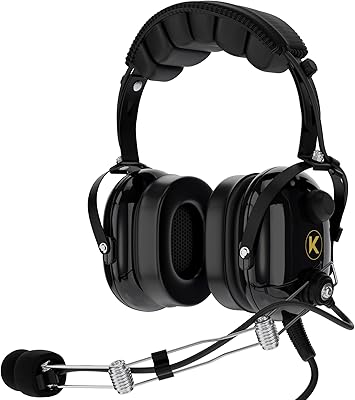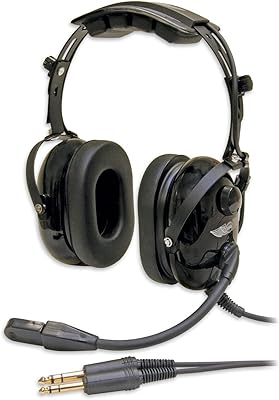


Overview

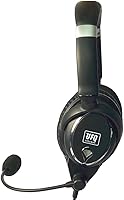
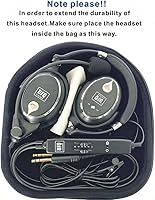
The UFQ A7 ANR Aviation Headset has quietly built a following among general aviation pilots who want active noise reduction without paying flagship prices. At just 220 grams, this aviation headset is noticeably lighter than most competitors — and that difference becomes very real after two or three hours in a noisy Cessna cockpit. UFQ is a smaller avionics brand, not a household name, but they have earned respect by focusing on comfort and value rather than marketing. To be clear: this ANR headset is not trying to outclass Bose or Lightspeed. It targets pilots who want solid noise reduction, all-day wearability, and a fair price.

Features & Benefits

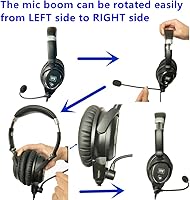
The ANR system runs on two standard AA batteries, and UFQ rates it for up to 48 hours of runtime — which, in practice, means you are unlikely to worry about a dead battery mid-flight. The steel headband holds its shape well, and the cables are Kevlar-reinforced with gold-plated GA plugs, a construction choice that should pay off over years of regular use. The flex-boom microphone rotates a full 350 degrees, so left- or right-seat pilots are both covered. A 3.5mm audio input lets you pipe in music or intercom audio, and dual volume controls give you independent management of both channels. The included leather carry bag is a practical touch that protects the headset between sessions.

Best For

This aviation headset makes the most sense for private and student pilots clocking consistent hours and feeling the fatigue that comes with noisy piston aircraft. If you have ever finished a long cross-country with a headache from clamp pressure, the low clamping force here is worth paying attention to. Pilots with smaller heads often find full-sized premium headsets uncomfortably tight — this ANR headset is built more proportionally. It is also a practical pick for flight school renters who want their own personal headset without a major financial commitment. The lightweight build and included carry bag make it easy to toss in a flight bag and go.

User Feedback

Across 228 ratings and a 4.0-star average, the UFQ A7 earns its marks primarily on comfort and value. Pilots consistently note how noticeably light it feels compared to heavier headsets they have worn, and microphone clarity gets solid marks from those flying in noisy cockpits. The ANR performance draws fair reviews — effective enough to reduce fatigue on long legs, but reviewers are candid that it does not quite reach the noise floor of top-tier competitors. Earlier buyers did flag connector durability as a concern, though UFQ has since addressed this with reinforced cables and updated connectors. The occasional fit complaint suggests sizing works better for some head shapes than others, but overall satisfaction stays high for this price tier.

Pros

  • At just 220 grams, this aviation headset is among the lightest ANR options available for general aviation use.
  • The ANR system runs on standard AA batteries with up to 48 hours of life, so mid-flight battery anxiety is essentially a non-issue.
  • Microphone clarity consistently earns positive remarks from pilots flying in high-noise cockpit environments.
  • The flex-boom mic rotates a full 350 degrees, making it equally usable from the left or right seat.
  • Kevlar-reinforced cables and gold-plated GA plugs show that durability was a genuine engineering priority, not an afterthought.
  • Dual volume controls and a mono/stereo switch give pilots practical, in-flight audio management without fumbling.
  • The leather carry bag included in the box is well-made and actually protects the headset during travel.
  • The low clamping force makes multi-hour wearing sessions noticeably more comfortable than many heavier competitors.
  • A 3.5mm audio input lets you connect a phone or tablet for music or intercom audio on longer flights.
  • At its price point, the overall package — ANR, mic, bag, and build — represents strong value for a private pilot budget.

Cons

  • ANR noise reduction does not reach the performance ceiling of flagship brands, which is a real gap for high-noise aircraft.
  • UFQ is a lesser-known brand with limited brick-and-mortar presence, making hands-on pre-purchase evaluation difficult.
  • Earlier production units had reported connector wear, and buyers cannot always be certain which hardware revision they are receiving.
  • The headset may not fit all head shapes equally well, with some users reporting a less secure or awkward fit.
  • Passive noise isolation without the ANR engaged is average at best, offering little protection if batteries run out mid-flight.
  • There is no Bluetooth connectivity, which limits wireless audio options that some modern pilots have come to expect.
  • Long-term customer support and warranty service from a smaller brand like UFQ carries more uncertainty than established competitors.
  • The headset styling is functional but plain, which may matter to pilots who wear their gear as part of a professional image.

Ratings

Our AI-generated scores for the UFQ A7 ANR Aviation Headset were produced by analyzing verified buyer reviews from around the world, with spam, bot-submitted, and incentivized feedback actively filtered out before scoring. The ratings reflect a balanced synthesis of what real pilots praised and what genuinely frustrated them — nothing is glossed over. Both the standout strengths and the honest limitations of this ANR headset are transparently represented in every category below.

Wearing Comfort
91%
The ultra-low 220g weight is the single most praised attribute across verified reviews. Pilots who fly multi-hour legs in piston singles consistently describe it as a relief compared to heavier headsets that cause jaw and scalp fatigue by the second hour. The evenly distributed clamping force rarely draws complaints, even from pilots who wear glasses.
A small but consistent group of buyers with larger head sizes report that the fit feels slightly imprecise, with ear cups not always centering cleanly over the ear. For those pilots, the comfort advantage shrinks noticeably, and long sessions can still result in some pressure points.
ANR Performance
74%
26%
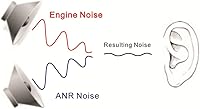
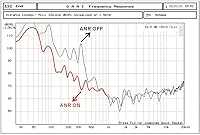
For pilots flying high-noise piston aircraft — think Cessna 172s or Piper Warriors — the noise reduction is genuinely effective at cutting fatigue-inducing low-frequency drone. The active noise cancellation engages cleanly without introducing distracting hiss, which is a real issue with cheaper ANR systems at this tier.
Experienced pilots stepping down from flagship-tier headsets will notice a meaningful gap in the noise floor. In higher-noise environments like turbocharged piston twins, the ANR struggles to deliver the same quiet that top-tier competitors can. It is solid for the price bracket, but not class-leading by any measure.
Microphone Quality
83%
The UFQ M-7U flex-boom microphone earns consistently positive remarks for cockpit clarity, with ATC readability rated highly by pilots flying in noisy training environments. The 350-degree boom rotation is a practical feature that left- and right-seat pilots both appreciate without any hardware adjustment.
Some buyers note that the mic picks up a slight nasal quality at high sidetone volumes, and a handful of reviewers mention that the boom arm does not hold its adjusted position as firmly as expected after extended use, requiring occasional repositioning mid-flight.
Build Quality
77%
23%
The steel headband and Kevlar-reinforced cable construction give the headset a more robust feel than its weight suggests. Current production versions with gold-plated GA plugs and updated connectors reflect a clear improvement over the original design, and pilots who fly regularly report no significant issues in day-to-day handling.
Earlier buyers flagged connector wear as a real concern, and while UFQ has updated the design, there is lingering uncertainty about long-term durability when the headset is used heavily across hundreds of flight hours. The plastic elements on the control module feel less premium than the headband and plugs.
Battery Life
89%
A 48-hour rating on two standard AA batteries is genuinely practical for working pilots. Most GA pilots report comfortably going a full flying week — or longer — without needing to swap batteries, which removes one more thing to manage during preflight. AA availability means replacement is never an issue at any airport.
The passive performance without active ANR engaged is noticeably weaker, so when batteries do run out, the drop in cockpit noise protection is significant. There is no low-battery indicator on the unit, which means dead batteries during a long flight can catch pilots off guard.
Value for Money
88%
Among ANR aviation headsets in this price range, the overall package — ANR system, noise-cancelling microphone, leather carry bag, and durable cable construction — is difficult to beat on a cost-per-feature basis. Student pilots and private pilots on a realistic budget consistently highlight this as the key reason they chose it over going passive.
The value calculation shifts if you factor in the uncertainty around long-term support and warranty service from a smaller brand. Buyers who anticipate needing service or repairs over a five-year ownership period may find the savings less compelling than they appear at the point of purchase.
Noise Isolation (Passive)
61%
39%
With the ANR active, the combination of passive and active isolation is adequate for most light piston cockpits. The leather ear cushions conform reasonably well to the head and reduce mid- to high-frequency noise even without electronics engaged, which benefits pilots doing pre-ANR checks on the ground.
Without active ANR, the passive isolation alone is mediocre — a known limitation of lightweight over-ear designs that prioritize cushion softness over seal firmness. Pilots flying especially loud aircraft and experiencing a dead battery situation would find the raw passive protection insufficient for comfortable communication.
Ease of Use
86%
The dual volume controls are logically placed and easy to adjust without looking away from the panel, and the mono/stereo switch is a thoughtful inclusion that student pilots flying different aircraft configurations will use regularly. Setup out of the box is minimal — plug in, insert batteries, and fly.
The control labeling is small and can be difficult to read in low-light cockpit conditions without actively searching for it. New buyers occasionally need a few flights to intuitively locate the controls by feel, which is a minor but genuine usability friction point.
Portability
92%
At 220g and packaged in a leather carry bag with a belt loop, this ANR headset is among the most portable in its category. Pilots who commute to the airport, fly club aircraft at multiple fields, or travel commercially to fly rentals consistently praise how easily it fits into a backpack or small flight bag.
The carry bag, while well-made, does not offer rigid protection against heavy impact — so pilots who pack gear aggressively or check bags should consider a hard case for travel. The bag also does not have a dedicated pocket for the audio cable, which can tangle if not managed carefully.
Audio Quality (Music)
78%
22%
The 3.5mm aux input works well for long cross-countries, and the speakers deliver cleaner music reproduction than many similarly priced aviation headsets. The mono/stereo switch is particularly useful when mixing intercom and music audio, giving the pilot real control over the listening experience.
Audiophile-level fidelity is not on the table here — the dynamic drivers do the job, but pilots accustomed to high-end consumer headphones will find the music reproduction relatively flat at higher volumes. There is also some bleed from cockpit noise into the music channel when ANR is off.
Fit & Adjustability
72%
28%
The headband adjusts smoothly across a reasonable range and tends to work well for pilots with average to smaller head sizes, which aligns with the product design intent. Pilots who found premium headsets uncomfortably tight report a noticeably better fit experience here right out of the box.
The adjustment range does not extend far enough for pilots at the larger end of head sizes, and the headset can feel slightly loose rather than secure in those cases. There is also no fine-tuning mechanism beyond the standard slide adjustment, which limits precision fit for pilots with asymmetric head shapes.
Microphone Placement Flexibility
84%
The 350-degree boom rotation is a genuine practical feature for a mixed cockpit environment, not just a specification number. Instructors who fly from both seats on different days particularly appreciate being able to reposition the mic without swapping headsets or buying a dedicated left-seat model.
The boom arm tension loosens slightly with repeated repositioning over many flight hours, which can cause the mic to gradually drift away from the optimal mouth position. This is a common wear pattern in flex-boom designs, but it becomes more noticeable after the first year of regular use.
Brand & Support Confidence
58%
42%
UFQ has built a genuine track record among budget-conscious GA pilots, and the fact that they responded to early connector complaints with a production update shows some accountability. For buyers who simply want a reliable headset and are not planning to interact with customer service, the brand performs adequately.
UFQ lacks the established dealer network, warranty service infrastructure, and brand recognition of top competitors, which creates real uncertainty for buyers thinking long-term. If something goes wrong after the return window closes, the support experience is considerably less predictable than with a major avionics brand.

Suitable for:

The UFQ A7 ANR Aviation Headset is a strong fit for general aviation pilots who fly frequently and have started to feel the physical toll of long hours in a loud cockpit. Student pilots building hours on a tight budget will find it offers genuine ANR capability without the financial sting of premium alternatives. If you fly piston singles or twins where engine and prop noise grind away at your focus, the active noise reduction here does real work to reduce that fatigue over a cross-country. Pilots who have struggled with clamp pressure or headaches from heavier headsets should pay particular attention, since the extremely low weight and even clamping design address those complaints directly. It also suits pilots who travel frequently or share a flight bag, as the included leather carry bag makes transport genuinely convenient rather than an afterthought.

Not suitable for:

Pilots who demand the absolute highest tier of ANR performance — the kind that makes a turboprop cockpit feel library-quiet — should look elsewhere, because the UFQ A7 ANR Aviation Headset does not compete at that level. Professional pilots, charter operators, or anyone flying high-performance or turbine aircraft will likely find the noise floor insufficient for their environment. If brand reputation matters to you when communicating on busy controlled airspace frequencies, this is a smaller, less established name and that may give some pilots pause. Buyers who have been conditioned by years of wearing flagship headsets may notice the difference in passive isolation and overall audio refinement. Early production runs did see some connector wear over time, and while UFQ has addressed this in current versions, buyers who are particularly hard on equipment may want to factor that history into their decision.

Specifications

  • Weight: The headset weighs 220g, making it one of the lightest over-ear ANR aviation headsets currently available on the market.
  • Headband Material: The headband is constructed from steel, providing structural rigidity while keeping the overall frame weight low.
  • Cable Construction: Cables are Kevlar-reinforced internally and terminate in gold-plated dual GA plugs designed to resist wear and corrosion over extended use.
  • Battery Type: The ANR system is powered by 2 standard AA batteries, which are widely available and easy to replace before or during a trip.
  • Battery Life: UFQ rates the ANR system for up to 48 hours of continuous operation on a fresh set of AA batteries.
  • Microphone Model: The included microphone is the UFQ M-7U, a noise-cancelling electret condenser unit mounted on a flexible boom arm.
  • Mic Rotation: The microphone boom rotates 350 degrees, allowing the mic to be positioned comfortably on either the left or right side of the headset.
  • Ear Cushions: Cushions are made from deluxe leather and are shaped to distribute clamping force evenly across the ear and surrounding area.
  • Audio Input: A 3.5mm stereo aux input is included, allowing pilots to connect a phone, MP3 player, or tablet for music or supplemental audio.
  • Audio Controls: The headset features dual independent volume controls and a mono/stereo switch for flexible in-flight audio management.
  • Noise Control: Active Noise Cancellation (ANR) is the primary noise reduction method, supplemented by passive isolation from the over-ear cup design.
  • Connectivity: The headset connects to aircraft audio panels via standard wired dual GA plugs; there is no wireless or Bluetooth audio path to the aircraft intercom.
  • Ear Placement: The headset uses an over-ear (circumaural) design, with rounded cups that fully enclose the ear.
  • Included Accessories: Each unit ships with a leather carry bag featuring a hand-held belt loop, an audio link cable, and the headset itself.
  • Package Dimensions: The retail packaging measures 9.88 x 8.7 x 3.43 inches, which is compact enough to fit in most standard flight bags.
  • Item Weight (Packaged): The packaged item weighs 1.85 pounds, reflecting the lightweight headset plus the carry case and accessories.
  • User Rating: The headset holds a 4.0 out of 5 star rating based on 228 customer ratings on Amazon as of the time of this review.
  • Availability: The product is currently active and has not been discontinued by the manufacturer, UFQ Avionics.

Related Reviews
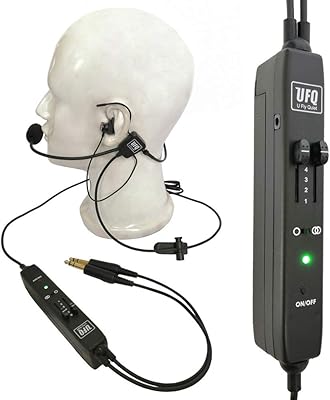
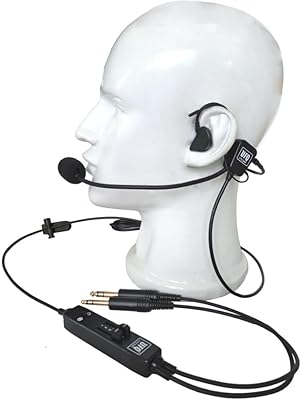
UFQ L2 ANR In-Ear Aviation Headset
81%
83%
Comfort & Wearability
71%
Active Noise Reduction
63%
Fit & Seal Consistency
68%
Microphone Performance
74%
Build Quality
More
Lightspeed Aviation Sierra ANR Aviation Headset
77%
84%
ANR Performance
76%
Comfort & Fit
71%
Bluetooth Reliability
83%
Build Quality
81%
Microphone Quality
More
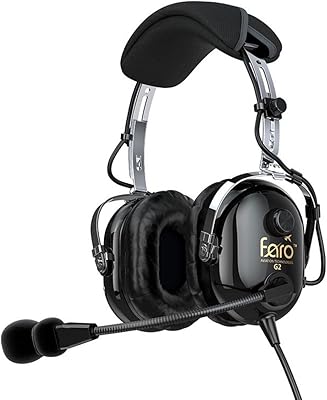
Faro G2 ANR Pilot Aviation Headset
78%
83%
Active Noise Reduction
78%
Microphone Clarity
91%
Battery Life
74%
Comfort & Fit
67%
Build Quality
More
UFQ L1 In-Ear Aviation Headset
80%
92%
Wearing Comfort
67%
Passive Noise Reduction
74%
Microphone Clarity
61%
In-Ear Fit Consistency
83%
Audio Fidelity
More
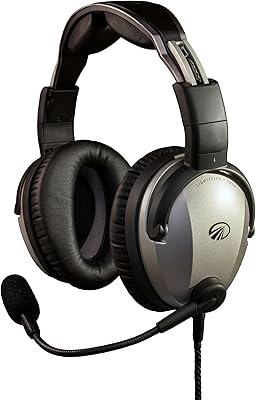
Kore Aviation P1 Aviation Pilot Headset
76%
93%
Value for Money
71%
Noise Reduction
88%
Microphone Clarity
67%
Comfort & Fit
84%
AUX Connectivity
More
Kore Aviation KA-1 Aviation Headset
79%
86%
Comfort & Fit
74%
Noise Reduction
83%
Microphone Quality
81%
Audio Clarity
71%
Build Quality
More
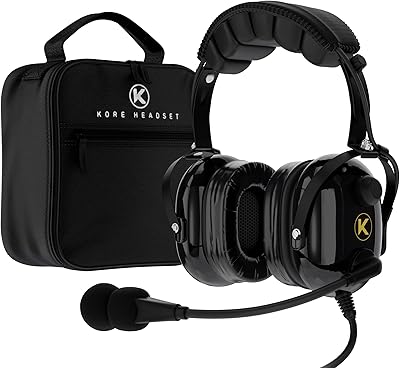
Lightspeed Zulu 3 Aviation Headset
83%
93%
Active Noise Reduction
89%
Comfort & Fit
91%
Build Quality
78%
Bluetooth Performance
88%
ComPriority System
More
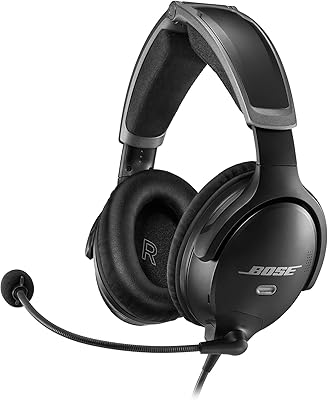
ASA HS-1 Aviation Headset
78%
71%
Noise Reduction
78%
Microphone Clarity
66%
Comfort & Fit
82%
Build Quality
74%
Audio Clarity
More
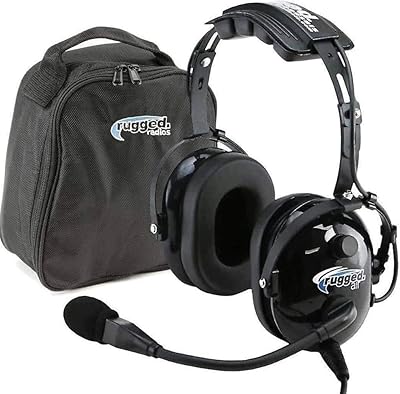
Bose A30 Aviation Headset (Dual Plug)
85%
94%
Long-Term Comfort
91%
Active Noise Reduction
89%
Audio Clarity & Intelligibility
84%
Build Quality & Durability
87%
Bluetooth Connectivity
More
Rugged Air RA200 Aviation Pilot Headset
78%
91%
Value for Money
78%
Comfort & Fit
72%
Passive Noise Reduction
74%
Microphone Performance
81%
Audio Clarity
More

FAQ

The comfort claims hold up reasonably well in practice. At 220g and with a deliberately low clamping force, most pilots report that the UFQ A7 ANR Aviation Headset feels noticeably lighter during multi-hour sessions compared to heavier alternatives. Pilots who are prone to headaches from clamp pressure tend to respond particularly well to it.

Honestly, it does not match the top tier. The active noise reduction is effective enough to meaningfully reduce fatigue in a piston cockpit, but if you have worn a Bose A20 or a Lightspeed Zulu and are expecting that level of silence, you will notice the difference. For the price, the ANR is solid — just not class-leading.

This ANR headset uses standard dual GA plugs, so it is compatible with the vast majority of general aviation aircraft that have a standard GA audio panel. It is not designed for military or helicopter LEMO connections without an adapter.

Yes. There is a 3.5mm aux input that lets you connect a phone, MP3 player, or tablet. The mono/stereo switch and dual volume controls let you manage the audio mix independently, which is a practical setup for long cross-countries.

Very easy. The headset runs on 2 standard AA batteries, which you can pick up anywhere. With up to 48 hours of rated battery life, most pilots will not need to swap batteries during a normal flying week, but carrying a spare pair in your flight bag is always a good habit.

Yes, the flex-boom rotates 350 degrees, so it can be positioned comfortably on either the left or right side of the headset. Both left- and right-seat pilots are fully accommodated without any hardware changes.

Some early buyers did flag concerns about connector wear over time. UFQ has since updated the design with Kevlar-reinforced cables and more robust connectors. Current versions appear to have addressed the issue, but it is worth keeping an eye on connector wear if you fly frequently.

Like most ANR headsets, this ANR headset can be used passively without batteries, but the passive isolation alone is only average. You will still hear cockpit noise at a level that could be fatiguing on longer flights, so keeping fresh batteries on hand is genuinely worthwhile.

It is a very reasonable choice. Student pilots logging regular hours in busy training aircraft will benefit from the ANR noise reduction, and the lower clamping force makes it easier to wear through back-to-back lessons. The price point also makes it a much more approachable entry into ANR headsets than the flagship options.

The included bag is leather with a hand-held belt loop, and it is more substantial than the thin pouches some competitors include. It provides real scratch and bump protection during transport, which matters if the headset lives in a crowded flight bag alongside charts, kneeboards, and tablets.