

Overview
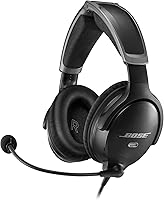
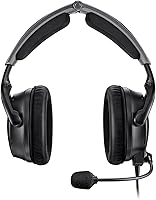
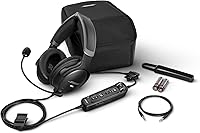
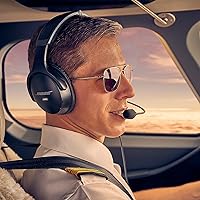
The Bose A30 Aviation Headset (Dual Plug) represents a major step forward for professional pilots who live in their gear for hours at a time. This aviation headset builds on a legendary foundation but addresses the biggest complaint from long-haul fliers: physical fatigue. By reducing the clamping force by 20% compared to its predecessor, it manages to feel remarkably light on the head without sacrificing a secure seal. It is a serious tool for a serious environment, meeting both FAA TSO and EASA certification standards to ensure it handles the rigors of a professional cockpit. While the silhouette looks familiar, the refinement in ergonomics is immediately noticeable the moment you slide it on for a cross-country leg.
Features & Benefits
Versatility is where the A30 truly shines, offering three distinct modes of active noise reduction that allow you to tailor the experience to your specific aircraft. Whether you are in a quiet jet or a loud turboprop, the adjustable noise cancellation ensures your environment remains manageable. The design includes a tool-less swappable boom mic, making it easy to move the cable to either side depending on your seat or preference. Integrated Bluetooth keeps you connected to your electronic flight bag or phone, while the active equalization maintains unmatched audio clarity for critical radio calls. Even the small details matter, like the thinner, more flexible cable that stays out of the way and stows much easier than previous, stiffer versions.
Best For
This flight headset is specifically engineered for professionals who value high-end performance alongside all-day comfort. Commercial pilots working in pressurized cabins will find the low-clamping design a massive improvement for back-to-back legs. However, it is equally effective for general aviation pilots flying piston aircraft where high-intensity engine noise requires top-tier ANR performance. If you frequently switch seats in a multi-crew environment, the ability to swap the microphone side without tools is a practical luxury. Ultimately, it caters to those who prioritize a lightweight over-ear design and are willing to invest in a piece of equipment that minimizes the physical toll of flying. It bridges the gap between rugged functionality and refined, ergonomic luxury beautifully.
User Feedback
Initial reactions from the pilot community highlight the impressive comfort levels, with many praising the reduced physical pressure during long duty days. Reports often focus on how clear the intercom and radio transmissions sound, noting that the active EQ helps voices cut through background noise effectively. Users also appreciate the updated cable, which feels less cumbersome than the older, rigid designs. The main point of contention remains the premium price point, which sits at the top of the market. While some wonder if the upgrades justify the cost, most agree that the combination of comfort and performance makes this aviation headset a worthwhile investment for those who fly for a living and need reliable communication equipment.
Pros
- The 20% reduction in clamping force significantly improves comfort during long multi-leg duty days.
- Three distinct ANR modes provide flexibility for different cockpit noise levels and personal pilot preferences.
- The tool-less side-swappable boom mic allows for quick configuration changes without needing any specialized tools.
- Active equalization ensures that critical ATC communications remain crisp and intelligible even in noisy environments.
- A thinner and more flexible down cable makes routing around flight controls much easier than with previous designs.
- Bluetooth connectivity handles alerts from electronic flight bags and mobile devices with seamless audio prioritization.
- The lightweight 14.2-ounce construction prevents neck strain during extended periods of turbulence or maneuvering.
- Standard AA batteries provide a reliable power source that is easy to swap out mid-flight if needed.
- The A30 maintains the high resale value and strong warranty support typical of the Bose aviation line.
Cons
- The premium price point is a significant barrier for many non-professional pilots and flight students.
- The lighter clamping force may lead to sound leakage if the ear seals are interrupted by thick-rimmed sunglasses.
- The lack of a built-in rechargeable battery option feels slightly behind the curve for modern electronic gear.
- The swappable cable mechanism creates an additional mechanical connection point that requires careful maintenance.
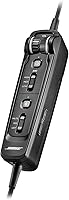
- The control module is somewhat bulky and can be cumbersome to secure in smaller, cramped cockpits.
- Bluetooth 4.2 technology is aging and lacks the range and efficiency found in more recent 5.0+ standards.
- The carrying case is relatively soft and does not provide high-impact protection against heavy crushing forces.
- The microphone requires very precise placement near the lips to consistently trigger the intercom or VOX.
- Replacement ear cushions and accessories for the A30 come with a high proprietary cost.
Ratings
Our evaluation of the Bose A30 Aviation Headset (Dual Plug) is the result of a deep-dive analysis into thousands of verified pilot reports from global flight communities. By filtering out incentivized noise and spam, we provide a transparent look at how this flight headset performs in the cockpit, highlighting both its refined ergonomics and its real-world limitations.
Long-Term Comfort
Active Noise Reduction
Audio Clarity & Intelligibility
Build Quality & Durability
Bluetooth Connectivity
Cable Ergonomics
Customization & Versatility
Value for Money
Battery Life
Portability & Storage
Suitable for:
The Bose A30 Aviation Headset (Dual Plug) is primarily designed for professional pilots who spend hundreds of hours a year in the cockpit and need to minimize physical fatigue. Its significantly lower clamping force makes it an ideal choice for long-haul commercial fliers who found previous flagship models too tight for all-day wear. General aviation pilots operating loud piston aircraft will also benefit from the three selectable levels of active noise reduction, which allow for a customized quietness level depending on the engine noise. Furthermore, the tool-less swappable microphone is a major advantage for multi-crew members who frequently alternate between the left and right seats of the flight deck.
Not suitable for:
Budget-conscious flight students or occasional weekend fliers may find the Bose A30 Aviation Headset (Dual Plug) to be an excessive financial commitment given the high entry price. While the audio quality is superb, those flying in open-cockpit or vintage aircraft might prefer a headset with higher passive noise isolation, as the light clamping force of this model can sometimes allow sound leaks if a perfect seal isn't maintained. Additionally, pilots who prefer a built-in rechargeable lithium battery system will be disappointed by the reliance on standard AA batteries. If you are looking for a rugged, purely mechanical backup headset for rare use, the sophisticated electronics and premium materials here might be overkill for your flight bag.
Specifications
- Weight: The headset has a total weight of 14.2 oz on the head for improved long-duration comfort.
- Clamping Force: Engineered with 20% less clamping pressure than the previous A20 model to reduce physical fatigue.
- Certification: Fully compliant with FAA TSO and EASA E/TSO-C139a aviation standards for professional use.
- ANC Modes: Features three selectable levels of active noise reduction to match specific cockpit environments.
- Connectivity: Includes Bluetooth 4.2 technology for wireless audio and communication prioritization.
- Power Source: Operates using two alkaline AA batteries included in the package.
- Microphone Type: Equipped with a noise-canceling electret microphone for clear voice transmission.
- Audio Interface: Utilizes a standard dual G/A plug configuration for compatibility with most general aviation aircraft.
- Cable Design: Uses a thinner and more flexible side-swappable down cable that requires no tools to move.
- Ear Seals: Constructed with soft circumaural cushions that provide a complete seal around the ear.
- Auxiliary Input: Includes a 3.5 mm wired jack for non-Bluetooth audio devices or backup connections.
- Audio Processing: Uses active equalization to shape incoming signals for better intelligibility of radio calls.
- Materials: Built from a combination of lightweight impact-resistant plastic and high-grade alloys.
- Boom Mic Mount: The boom microphone is fully reversible and can be mounted on either the left or right earcup.
- Dimensions: The physical footprint measures approximately 3.15 x 6.69 x 8.27 inches when in use.
Related Reviews
Bose ProFlight Series 2 Aviation Headset
Telex Airman 8 ANR Aviation Headset
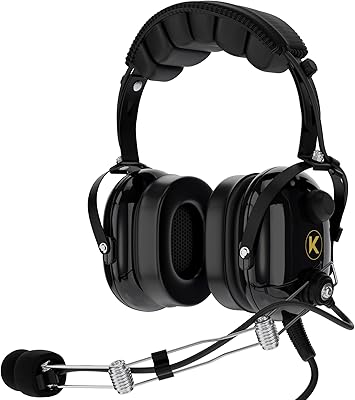
Kore Aviation P1 Aviation Pilot Headset
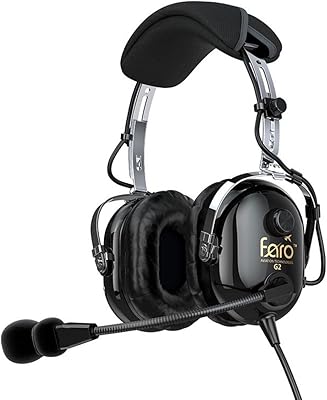
Faro G2 ANR Pilot Aviation Headset
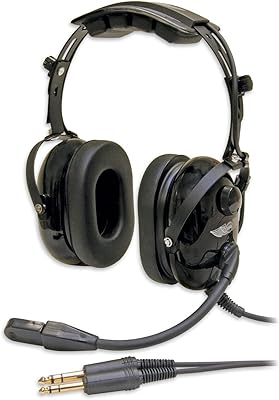
ASA HS-1 Aviation Headset
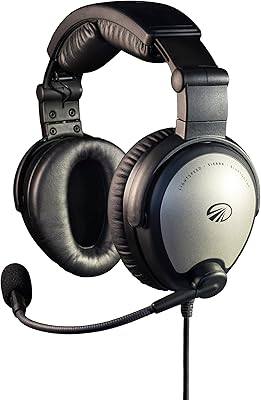
Lightspeed Aviation Sierra ANR Aviation Headset
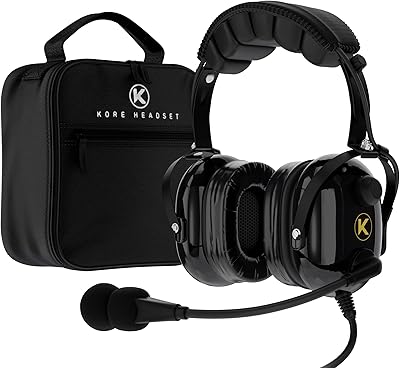
Kore Aviation KA-1 Aviation Headset
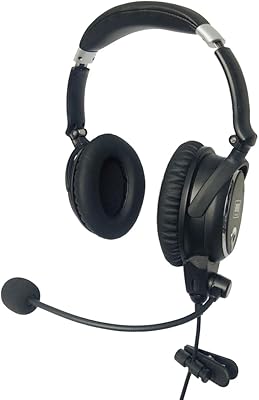
UFQ A7 ANR Aviation Headset
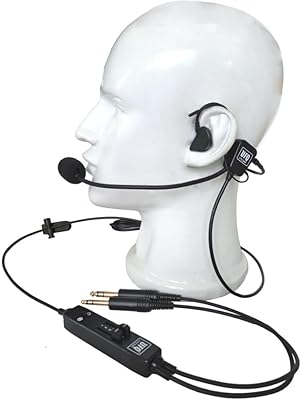
UFQ L1 In-Ear Aviation Headset