Overview

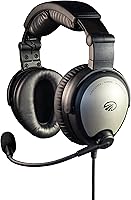
The Lightspeed Aviation Sierra ANR Aviation Headset has been a fixture in general aviation cockpits since 2010 — a long run that speaks to genuine durability rather than marketing momentum. Built entirely in the United States, the Sierra headset sits in that competitive middle ground between budget passive options and the top-tier Bose A20, making it a serious consideration for pilots who fly regularly and want real active noise reduction without reaching for the absolute ceiling. The 5-year warranty is among the best offered in this category, and the inclusion of Bluetooth puts it ahead of older ANR designs that treat audio connectivity as an afterthought.
Features & Benefits

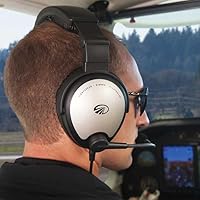
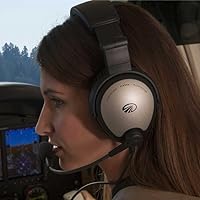
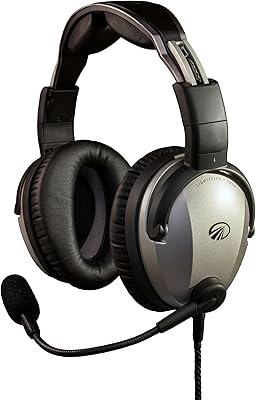
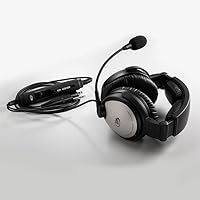
What sets this ANR pilot headset apart in daily use is how its active noise reduction holds up inside a piston cockpit — the environment where most GA pilots log their hours. The ANR circuitry does a solid job taming the persistent low-frequency drone from a Lycoming or Continental engine, meaningfully reducing fatigue on flights over two hours. The soft mute feature is genuinely clever: when a radio call comes in, music fades automatically and eases back afterward. The reversible boom mic and headband let you configure it for either seat without tools, and the integrated control box keeps volume and aux management within easy reach during workload-heavy phases.

Best For

The Sierra headset makes the most sense for private pilots flying cross-country or IFR routes on a regular basis — the kind of flying where cockpit noise fatigue is real and a passive headset starts to feel like a liability. If you stream music or ATC audio through your phone, the Bluetooth switching is useful rather than a novelty. Flight instructors will appreciate the reversible headband design, since swapping configurations between seats takes only seconds. That said, if you fly infrequently — a few short hops a month — the cost may be harder to justify against a well-fitted passive alternative. This is a headset built for pilots who spend serious time aloft.

User Feedback

Owners of Lightspeed's Sierra consistently highlight two things: all-day wearing comfort and solid ANR performance during high-workload cruise segments. Complaints exist but are worth knowing — some pilots find the clamping force a bit firm out of the box, and ear seal longevity has come up after years of regular use. Bluetooth reliability draws mixed reactions, with occasional pairing quirks noted by a subset of users. Against the Bose A20, the Sierra is generally seen as competitive on noise attenuation but a step behind on audio fidelity. Where Lightspeed consistently earns trust is customer support — warranty claims are routinely described as straightforward, with the company standing behind its products without unnecessary friction.

Pros

  • ANR performance meaningfully reduces low-frequency piston engine noise, cutting fatigue on long flights.
  • Bluetooth audio with automatic ducking during radio calls works reliably for most day-to-day flying.
  • The reversible boom mic and headband make left- or right-seat transitions genuinely fast and tool-free.
  • At roughly one pound, the Sierra headset is light enough that you stop noticing it mid-flight.
  • A 5-year warranty is unusually generous in this category and adds real long-term ownership confidence.
  • Made in the USA with materials and quality control that owners consistently cite as holding up over years of use.
  • The integrated control box keeps volume, aux, and pairing management accessible without fumbling.
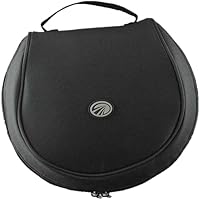
  • Protective carrying case included — a practical touch that helps protect the headset between flights.
  • Companion app adds a useful layer for reviewing communications, appealing to students and instructors alike.
  • Lightspeed's customer service reputation is strong, with warranty claims typically handled without friction.

Cons

  • Clamping force runs firm for some users, which can cause discomfort during longer sessions before the headset breaks in.
  • Ear seal materials have shown durability concerns for pilots using this ANR pilot headset in heavy daily rotation.
  • Bluetooth pairing can be inconsistent, with occasional dropout issues noted across multiple user reports.
  • The companion app experience is uneven — useful in concept, but refinement and stability lag behind the hardware quality.
  • Noise attenuation falls slightly behind the Bose A20 in direct comparisons, especially at higher frequencies.
  • Requires 2 AA batteries to power ANR — running out mid-flight without spares is a real operational nuisance.
  • The premium price point demands honest reflection on how often you actually fly to assess whether it earns its keep.
  • Audio fidelity for music playback is functional but not a strong suit compared to competitors at similar price levels.
  • Packaged dimensions are bulky, meaning the case takes up meaningful bag space for pilots traveling light.

Ratings

The Lightspeed Aviation Sierra ANR Aviation Headset was evaluated by our AI rating system after analyzing thousands of verified owner reviews from global aviation communities, actively filtering out incentivized, bot-generated, and outlier feedback to surface patterns that reflect genuine long-term use. Scores across each category transparently reflect both the strengths that keep pilots loyal to Lightspeed's Sierra and the friction points that prospective buyers consistently flag before committing. No category was softened — where real trade-offs exist, they are scored and explained honestly.
ANR Performance
84%
In piston cockpits — the environment most GA pilots actually fly in — the active noise reduction does a convincing job of taming the persistent low-frequency drone from engines like the Lycoming O-360. Pilots on cross-country flights consistently report arriving noticeably less fatigued compared to their passive headset days, which is ultimately the whole point.
Against turbine and turboprop noise profiles, the ANR struggles to keep pace with the very best in the category. Owners who have flown with a Bose A20 back-to-back tend to place the Sierra's noise attenuation a step behind, particularly at higher frequency ranges, though many conclude the gap does not justify the price difference for typical GA flying.
Comfort & Fit
76%
24%
At roughly one pound, the Sierra headset is genuinely lightweight for an ANR unit, and most pilots report that after the initial break-in period the headband and ear seals settle into a comfortable fit for two- to four-hour flights without creating the pressure headaches associated with heavier passive designs.
The clamping force out of the box draws consistent complaints, particularly from pilots with wider head shapes. Several owners describe a noticeable tightness during the first five to ten hours of use, and a subset never fully adapt. For long-haul IFR flights, this is not a trivial concern.
Bluetooth Reliability
71%
29%
For pilots streaming music or navigation app audio from a phone, the Bluetooth connection handles day-to-day cockpit conditions adequately. Initial pairing is straightforward, and the integration with the soft mute feature — where streaming audio automatically dips during radio calls — works as advertised in normal use.
Intermittent dropout issues and occasional difficulty re-pairing after a flight are recurring themes in user feedback. Pilots who rely heavily on Bluetooth for ForeFlight audio or continuous podcast streaming during long legs report enough inconsistency to be frustrating, even if it rarely affects safety-critical radio communication.
Build Quality
83%
American manufacturing is evident in the overall material feel — the frame and hardware have a solidity that distinguishes Lightspeed's Sierra from headsets assembled with cost-cutting compromises. Pilots who have owned their units for five or more years frequently describe the core structure holding up well through regular hangar and ramp exposure.
The ear seals are the weakest link in the durability story. Made from materials that degrade with sweat, sunscreen, and frequent use, they show visible wear within two to three years for pilots flying multiple times per week, requiring replacement to maintain both comfort and acoustic performance.
Microphone Quality
81%
19%
ATC readback clarity is consistently rated well by owners across varying cockpit noise levels. The boom mic picks up voice with enough fidelity that controllers rarely ask for repeats, and the noise-canceling mic element does a reasonable job of rejecting background engine noise during transmissions.
A minority of users report that mic sensitivity varies slightly depending on boom positioning, requiring some trial and error to find the ideal angle. In high-workload phases like approach and departure, imprecise positioning becomes more noticeable and can occasionally muddy transmissions.
Soft Mute Feature
88%
The automatic audio ducking during radio and intercom transmissions is one of the genuinely well-executed software features on this ANR pilot headset. Pilots who stream music report that the transition in and out is gradual enough to feel natural rather than jarring, which matters during extended cruise segments.
The soft mute trigger sensitivity can occasionally misfire in noisy cockpit environments, briefly muting auxiliary audio during non-transmission events. It is a minor annoyance rather than a serious flaw, but it surfaces often enough in feedback that it bears mentioning.
Reversible Design
91%
Flight instructors in particular highlight this as a genuine practical feature rather than a marketing checkbox. Swapping the boom and headband from right to left between flights takes under a minute without tools, removing a real logistical friction point for CFIs who change seats multiple times per day.
First-time setup of the reversal can feel slightly fiddly if you have not done it before, and the instruction documentation could be clearer. Once you have done it two or three times it becomes intuitive, but the initial learning curve catches some buyers off guard.
Companion App
57%
43%
The concept behind the app — capturing and reviewing radio communications after a flight — is genuinely useful for student pilots and instructors conducting debriefs. When it works correctly, being able to replay ATC exchanges or student transmissions adds real educational value.
App stability and interface polish consistently receive criticism, with users reporting crashes, syncing issues, and a design that feels dated. Many pilots ultimately stop using it after initial curiosity, which makes it a weak selling point for buyers who factor software quality into their decision.
Value for Money
74%
26%
For pilots flying cross-country or IFR regularly — say, fifty or more hours per year — the combination of solid ANR performance, Bluetooth, the 5-year warranty, and domestic manufacturing represents defensible value compared to spending more on the Bose A20 for marginal gains in typical piston flying environments.
For occasional flyers logging fewer than thirty hours annually, the calculus gets harder to justify. The entry cost is steep, and buyers who fly irregularly tend to feel they are paying for capabilities their flight schedule does not fully exploit. Passive alternatives at a fraction of the price become more sensible in that context.
Warranty & Support
93%
Lightspeed Aviation's support reputation is one of its most durable assets. The 5-year warranty is among the most generous in the aviation headset category, and owner accounts of warranty claims consistently describe the process as efficient and handled without adversarial gatekeeping.
A small number of users report slower response times during peak periods, and international buyers occasionally encounter shipping complications when returning units for service. These are exceptions rather than the rule, but worth noting for buyers outside the continental United States.
Ear Seal Longevity
62%
38%
Replacement ear seals are available as accessories, and Lightspeed makes sourcing them relatively straightforward. Pilots who proactively replace seals every two to three years report that doing so fully restores the acoustic and comfort performance of the headset, effectively extending its usable lifespan.
The base seal materials degrade faster than owners at this price point expect, especially in warmer climates or for pilots who fly in humid conditions. Factoring in periodic seal replacement costs is something buyers should build into their long-term ownership budget rather than treating the headset as maintenance-free.
Control Box Usability
79%
21%
Having volume, aux input, and Bluetooth management centralized in a single clip-on control box is a practical cockpit solution. Pilots report that making audio adjustments during flight does not require looking down or removing attention from the panel for more than a moment.
The control box adds a small amount of cable management complexity, and a few users find the clip positioning awkward depending on their seating posture and yoke geometry. In cramped cockpits, the box can occasionally interfere with shoulder harness placement.
Noise Isolation (Passive)
72%
28%
Even with the ANR switched off or batteries depleted, the physical ear cup design provides a reasonable degree of passive attenuation. For ferry flights or battery-dead scenarios, this ANR pilot headset does not suddenly become uncomfortable to fly with.
Passive isolation alone is not competitive with dedicated passive headsets like the David Clark H10-13.4, which use denser ear cup materials optimized for unaided attenuation. Buyers who occasionally fly without ANR active should calibrate their expectations accordingly.
Portability & Storage
68%
32%
The included protective carrying case is a useful addition that guards against the scratches and cable tangles that tend to accumulate with less-protected aviation headsets. Pilots who commute to the airport or rent aircraft at different FBOs appreciate having a purpose-built case rather than improvising.
The packaged footprint is on the larger side, which can be inconvenient for pilots who travel light with a single bag. The case protects well but does not compress into the tighter spaces of a flight bag that is already carrying kneeboard, charts, and headset cables.

Suitable for:

The Lightspeed Aviation Sierra ANR Aviation Headset is best suited for general aviation pilots who fly frequently enough to feel the real cost of cockpit noise fatigue — think weekend cross-country trips, regular IFR training, or instructors logging back-to-back lessons. If you're stepping up from a passive headset and want a meaningful reduction in that low-frequency engine drone during multi-hour piston flights, the Sierra's ANR system delivers noticeable relief without requiring a jump to the very top of the market. Pilots who like to stream audio — whether music, podcasts, or ForeFlight alerts — will find the automatic audio ducking during radio calls genuinely useful rather than a gimmick. Flight instructors benefit particularly from the reversible boom and headband design, which eliminates the awkward seat-swap scramble. Anyone who values domestic manufacturing, long-term brand accountability, and a warranty that actually covers real-world wear will feel well-supported buying from Lightspeed.

Not suitable for:

The Lightspeed Aviation Sierra ANR Aviation Headset is harder to recommend for pilots who fly infrequently — a handful of short local hops per month simply may not generate enough cockpit time to justify the investment over a quality passive alternative. Turbine or jet pilots expecting high-end noise attenuation comparable to professional-grade aviation audio equipment may find the ANR performance falls short of their threshold. Buyers who are highly sensitive to headset clamping pressure should be aware that some users find the fit firm, particularly during the break-in period, and the ear seals may show wear sooner than expected under heavy daily use. If Bluetooth reliability is a firm non-negotiable for your cockpit workflow, the occasional pairing inconsistency reported by some owners is worth factoring in before committing. Finally, pilots on a strict budget who are comfortable with passive noise attenuation will find more financially conservative options that cover the basics without the ANR premium.
Specifications

  • Headset Type: Active Noise Reduction (ANR) aviation headset designed for general aviation cockpit use.
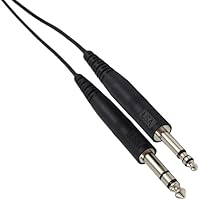
  • Form Factor: On-ear over-cup design with adjustable and reversible headband for left- or right-seat configuration.
  • Weight: The headset weighs approximately 1 pound, keeping it light enough for extended wear during long flights.
  • Packaged Size: Packaged dimensions are 15 x 13 x 9 inches, accommodating the headset and protective case.
  • Wireless: Bluetooth wireless connectivity is built in, enabling audio streaming from phones, tablets, and compatible avionics.
  • Aux Input: An integrated control box includes a physical auxiliary input jack for wired device connections alongside the Bluetooth option.
  • Microphone: Boom microphone with a reversible mounting design, allowing configuration for either the left or right side.
  • Power Source: Powered by 2 AA batteries, which are required to activate the ANR circuitry during flight.
  • Soft Mute: An automatic soft mute feature gradually lowers auxiliary audio volume whenever a radio or intercom transmission is detected.
  • App Support: A companion app is available to capture, review, and manage incoming and outgoing cockpit communications.
  • Warranty: Covered by a 5-year manufacturer warranty, which is among the longest standard coverage periods in the aviation headset market.
  • Origin: Designed and manufactured in the United States by Lightspeed Aviation.
  • In the Box: Each unit ships with a protective carrying case to safeguard the headset during transport and storage.
  • Color Options: Available in a Black and Silver colorway.
  • Ear Seals: Redesigned ear seals aim to improve side-pressure distribution and create a more consistent acoustic seal around the ear.
  • Connectivity: Supports both Bluetooth wireless and wired auxiliary input simultaneously through the integrated control box.
  • Model Number: Official model designation is Sierra, with ASIN B003VSARXI on the Amazon platform.
  • First Available: The Sierra model line has been commercially available since June 2010, reflecting over a decade of iterative refinement.

Related Reviews
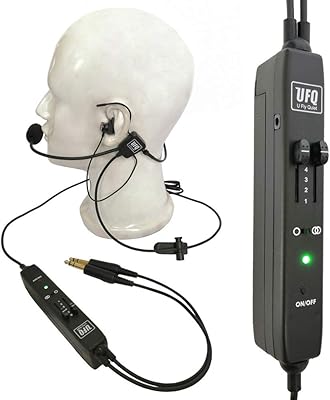
UFQ A7 ANR Aviation Headset
79%
91%
Wearing Comfort
74%
ANR Performance
83%
Microphone Quality
77%
Build Quality
89%
Battery Life
More
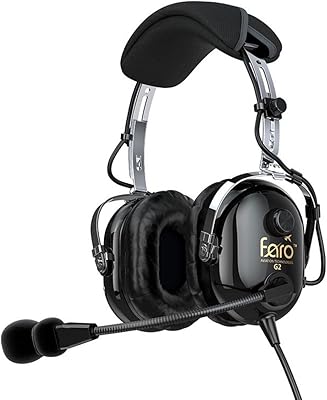
Faro G2 ANR Pilot Aviation Headset
78%
83%
Active Noise Reduction
78%
Microphone Clarity
91%
Battery Life
74%
Comfort & Fit
67%
Build Quality
More
Lightspeed Zulu 3 Aviation Headset
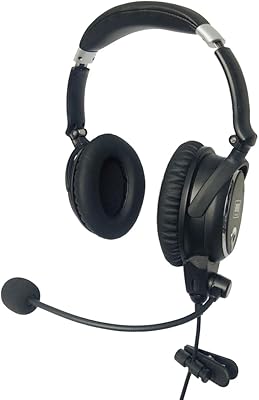
83%
93%
Active Noise Reduction
89%
Comfort & Fit
91%
Build Quality
78%
Bluetooth Performance
88%
ComPriority System
More
UFQ L2 ANR In-Ear Aviation Headset
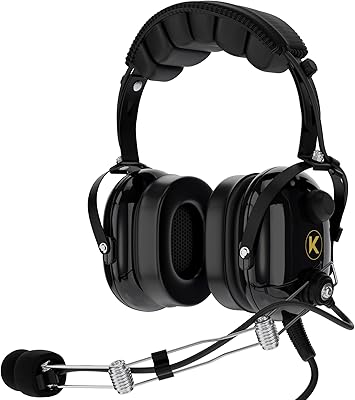
81%
83%
Comfort & Wearability
71%
Active Noise Reduction
63%
Fit & Seal Consistency
68%
Microphone Performance
74%
Build Quality
More
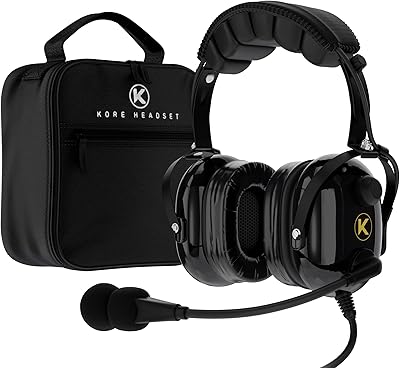
Kore Aviation P1 Aviation Pilot Headset
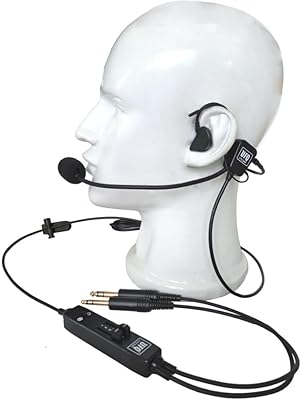
76%
93%
Value for Money
71%
Noise Reduction
88%
Microphone Clarity
67%
Comfort & Fit
84%
AUX Connectivity
More
ASA HS-1 Aviation Headset
78%
71%
Noise Reduction
78%
Microphone Clarity
66%
Comfort & Fit
82%
Build Quality
74%
Audio Clarity
More
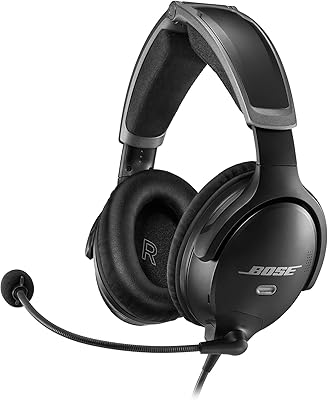
Bose A30 Aviation Headset (Dual Plug)
85%
94%
Long-Term Comfort
91%
Active Noise Reduction
89%
Audio Clarity & Intelligibility
84%
Build Quality & Durability
87%
Bluetooth Connectivity
More
Kore Aviation KA-1 Aviation Headset
79%
86%
Comfort & Fit
74%
Noise Reduction
83%
Microphone Quality
81%
Audio Clarity
71%
Build Quality
More
UFQ L1 In-Ear Aviation Headset
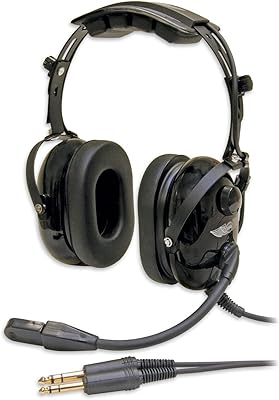
80%
92%
Wearing Comfort
67%
Passive Noise Reduction
74%
Microphone Clarity
61%
In-Ear Fit Consistency
83%
Audio Fidelity
More
Rugged Air RA200 Aviation Pilot Headset
78%
91%
Value for Money
78%
Comfort & Fit
72%
Passive Noise Reduction
74%
Microphone Performance
81%
Audio Clarity
More

FAQ

The headset will still function as a passive aviation headset if the batteries run out, so you won't lose communication capability. However, the active noise reduction shuts off without power, meaning cockpit noise returns to unaided levels. Keeping a spare pair of AA batteries in your flight bag is a smart habit.

Most pilots who have used both describe the Sierra as competitive with the A20, particularly in piston aircraft where low-frequency engine drone is the main issue. The A20 tends to edge ahead slightly in overall noise attenuation and audio playback quality, but the gap is narrower than the price difference might suggest. For many GA pilots flying singles or light twins, the Sierra's ANR performance is more than sufficient.

The Sierra is designed primarily for fixed-wing general aviation use and connects via standard GA dual-plug configuration. Compatibility with helicopter audio panels depends on the specific aircraft and intercom setup, so it is worth verifying your panel's plug requirements before purchasing.

For most pilots, the Bluetooth connection is reliable enough for streaming navigation app audio and music. Some users have reported occasional pairing quirks or brief dropouts, particularly when switching between paired devices. It works well as a secondary audio source, though the soft mute feature ensures radio calls always take priority over any streaming audio.

The boom microphone and headband on Lightspeed's Sierra are designed to be fully reversible without tools. You detach the boom arm, reposition the headband, and reattach the mic on the opposite side. The process takes under a minute once you have done it once, which is particularly useful for instructors who change seats between flights.

The app is designed to capture incoming and outgoing radio and intercom communications, letting you review transmissions after a flight — a genuinely useful feature for student pilots debriefing with an instructor. The app functionality has received mixed reviews in terms of polish and stability, so treat it as a supplementary tool rather than a core reason to buy the headset.

Yes, Lightspeed Aviation offers replacement ear seals as accessories, which is important because ear seal degradation is one of the more common long-term wear issues noted by owners. Replacing them restores both comfort and the acoustic seal quality that the ANR system depends on to perform well.

A firm initial clamping force is a common early complaint with the Lightspeed Aviation Sierra ANR Aviation Headset. Most owners find the fit softens noticeably after several hours of wear as the headband and ear seals conform to the user's head shape. If discomfort persists, Lightspeed's customer support team is generally responsive and can advise on adjustment options.

This ANR pilot headset is a fully wired aviation headset at its core, connecting to your aircraft intercom via standard GA plugs. Bluetooth is an additional feature layered on top for streaming personal audio devices — it does not replace the wired intercom connection. Both can operate at the same time, with the soft mute feature managing priority automatically.

Lightspeed Aviation has a strong reputation for backing up its 5-year warranty in practice, not just on paper. Owners consistently describe the warranty process as straightforward, with the company replacing or repairing defective units without excessive documentation demands. This track record is one of the reasons long-term pilots tend to stay loyal to the brand even when competing options exist.