Overview

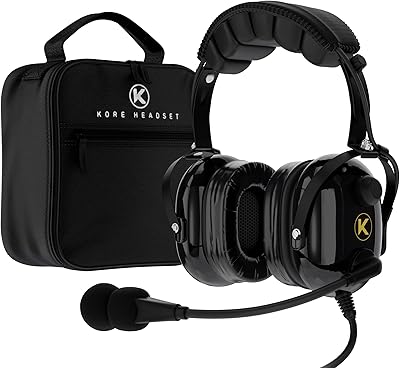
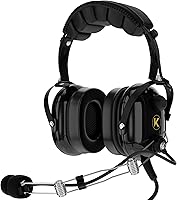
The Kore Aviation P1 Aviation Pilot Headset is Kore Aviation's answer to a real gap in the market: a dependable, no-frills passive noise reduction headset that doesn't require a second mortgage to buy. It's been around since early 2016 and has quietly built a solid reputation among student pilots and flight schools looking for a practical first headset. Using passive noise reduction rather than active electronics, it delivers a 24 dB NRR — honest, workmanlike performance that keeps cockpit noise manageable without the complexity of ANR circuitry. Dual GA plugs mean it drops straight into virtually any general aviation aircraft without adapters.
Features & Benefits

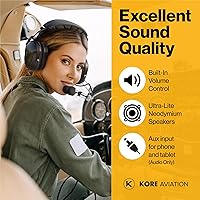
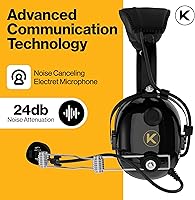
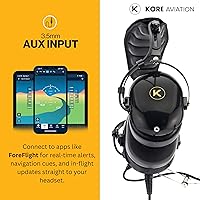
At its core, this pilot headset is built around a 24 dB PNR rating, which takes a real bite out of engine drone and propeller noise — not total silence, but enough to make ATC calls and instructor comms genuinely comfortable over a one- or two-hour lesson. The electret microphone, mounted on an adjustable wire boom with a built-in preamp, transmits clearly even when ambient noise climbs. Acoustic foam ear cups house lightweight neodymium speakers that keep audio clean without adding bulk. A 3.5mm AUX input lets you pipe in ForeFlight audio or tablet navigation cues — audio only, not intercom-linked, but still a useful touch at this price tier. The ear-cup volume knob rounds things out nicely.

Best For

This student headset punches well above its weight class when matched to the right context. Student pilots grinding through primary training in a Cessna 172 or Piper Warrior will find it covers the basics without draining the training budget. Flight schools outfitting multiple cockpits benefit most — at this price, maintaining a small fleet of headsets is entirely reasonable. Recreational flyers who aren't logging heavy hours will also get solid value here. Experienced pilots might keep one stashed in the flight bag as a backup for passengers or unexpected equipment failures. It's not the right pick for loud turbine or high-horsepower piston environments, where passive noise reduction starts to show its limits.

User Feedback

Across hundreds of verified purchases, the P1 headset earns its 4.5-star standing largely through consistent mic clarity and honest value delivery. Most buyers were students or instructors who knew exactly what they were purchasing — a practical starter tool, not a luxury ANR unit — and rated it accordingly. Short-haul comfort gets regular praise; the foam padding holds up fine for a standard training lesson. Where sentiment gets mixed is on longer flights or with larger head sizes, where clamping pressure becomes a recurring complaint. A handful of school-use reviewers raised durability questions after sustained daily wear. The AUX port earns occasional shoutouts as a welcome surprise. Expectations matched to reality make for satisfied buyers.

Pros

  • Strong 24 dB passive noise reduction handles engine noise well in light training aircraft.
  • Electret mic with preamp delivers consistently clear ATC and instructor communications.
  • Dual GA plugs work out of the box in most general aviation cockpits — no adapters needed.
  • Built-in 3.5mm AUX input lets you pipe in tablet or phone audio, a rare feature at this price.
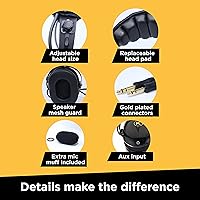
  • Includes a spare mic muff and replaceable head pad, extending the usable life of the headset.
  • On-cup volume control knob makes quick audio adjustments easy without fumbling mid-flight.
  • Lightweight neodymium speakers keep the overall weight low at around 1.21 pounds.
  • Comfortable enough for standard one- to two-hour training sessions according to most users.
  • Competitive price point makes it a realistic option for students already stretched on training costs.
  • Sustained 4.5-star rating across hundreds of purchases reflects genuinely satisfied buyers.

Cons

  • Clamping pressure becomes uncomfortable for larger head sizes during extended wear.
  • Passive noise reduction cannot match the fatigue-reducing performance of ANR headsets on long flights.
  • Mono audio output only — no stereo, which limits the quality of music or navigation audio through the AUX port.
  • AUX input is audio only and not intercom-integrated, so copilots cannot share the same audio feed.
  • Durability concerns have surfaced in high-frequency, daily-use school environments.
  • No carrying case included, which is a practical miss for pilots who travel frequently.
  • The wire boom microphone lacks the rigidity of stiffer boom designs, requiring occasional repositioning.
  • Not well-suited for noisier or high-performance piston aircraft where passive isolation falls short.

Ratings

The scores below reflect our AI-driven analysis of verified global buyer reviews for the Kore Aviation P1 Aviation Pilot Headset, with spam, bot-generated, and incentivized feedback actively filtered out before scoring. Each category captures both the genuine strengths and the recurring frustrations that real pilots — students, instructors, and recreational flyers alike — reported after putting this student headset through actual flight conditions. Nothing here is softened: where this pilot headset earns high marks, the data supports it, and where it falls short, that's reflected honestly too.

Value for Money
93%
Across hundreds of verified purchases, value for money is the single most praised aspect of this headset. Student pilots and flight schools consistently note that the P1 delivers a functional, reliable GA headset experience at a price point that doesn't add stress to an already expensive training journey.
A small subset of buyers who pushed the headset into daily heavy-use school environments felt the long-term durability didn't fully justify even the modest investment. For those users, the cost-per-hour calculation shifts unfavorably after sustained institutional use.
Noise Reduction
71%
29%
The 24 dB passive noise reduction rating performs well in the cockpits it was designed for — light single-engine trainers like the Cessna 172 and Piper Warrior. Most student pilots found that engine drone and propeller noise were sufficiently dampened to make ATC calls and instructor comms clear and manageable during a standard lesson.
Step into a louder or higher-performance piston aircraft and the passive-only design starts to feel inadequate. Pilots accustomed to ANR headsets will notice the difference immediately, and on longer flights even in quieter trainers, some users reported cumulative fatigue that a quality active system would have reduced.
Microphone Clarity
88%
The electret noise-canceling mic with built-in preamp is one of the most positively reviewed aspects of the P1 headset. Reviewers frequently noted that radio calls came through cleanly without the garbled or muddy transmission quality sometimes found on other budget headsets — a genuine relief during busy pattern work.
The flexible wire boom, while adjustable, lacks the rigidity of stiffer designs found on pricier options, and a few users noted it occasionally shifts out of ideal position during longer flights or when adjusting the headset mid-flight, requiring a quick manual correction.
Comfort & Fit
67%
33%
For sessions in the one- to two-hour range — which covers most primary training flights — the foam ear cups and padded headband provide adequate comfort for the majority of buyers. Pilots with average head sizes generally had no complaints during typical lesson durations.
Clamping pressure is the most recurring negative in user reviews, particularly among pilots with larger head sizes or those wearing the headset beyond two hours. The fit is noticeably less forgiving than mid-range competitors, and long cross-country flights in this headset can become genuinely uncomfortable.
AUX Connectivity
84%
The built-in 3.5mm AUX input stands out as a practical differentiator at this price tier, and real buyers noticed. Students using ForeFlight on an iPad or routing situational audio from a tablet appreciated being able to hear navigation alerts directly through the headset without a separate earbud setup.
The AUX port is audio-only and does not integrate with the aircraft intercom, which means a copilot or instructor in the right seat won't share the same audio feed. For some buyers who assumed full intercom integration, this was a disappointing limitation discovered only after purchase.
Build Quality
63%
37%
For light personal use and infrequent flying, the construction feels adequate and the materials hold together reasonably well. The included spare mic muff and replaceable head pad suggest Kore Aviation at least anticipated wear and planned for basic user maintenance.
Under heavy daily use — particularly in flight school environments where headsets get passed between students repeatedly — durability concerns emerged in a meaningful minority of reviews. The plastic components and boom joint feel noticeably less robust than headsets positioned even one tier above this price point.
Weight & Portability
81%
19%
Weighing in at approximately 1.21 pounds, this student headset is comfortably light for a passive over-ear design. Pilots who fly recreationally and store the headset in a flight bag between outings found the size and weight easy to manage without a dedicated case.
No carrying case is included in the box, which is a practical gap for anyone who travels with their gear or tosses it into a shared flight bag regularly. Without protection, the ear cup foam and boom are vulnerable to incidental damage in transit.
Headband Adjustability
74%
26%
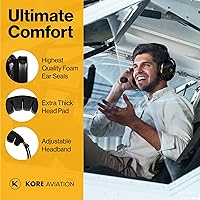
The adjustable headband with a thick foam head pad accommodates a reasonable range of head sizes, and the replaceable pad included in the box is a thoughtful touch that extends the product's usable life without requiring sourcing aftermarket parts early on.
The range of adjustment, while functional for average-sized heads, received criticism from pilots on either end of the size spectrum. The mechanism feels basic compared to the more refined sliders and locking systems found on competing headsets in higher price brackets.
Audio Output Quality
72%
28%
The ultra-lite neodymium speakers reproduce ATC audio and cockpit communications clearly enough for practical flight use. Buyers who used the AUX input for tablet audio found the speaker quality acceptable for navigation alerts and basic audio cues during cruise.
Mono-only output is a real limitation for buyers who wanted a richer listening experience through the AUX port. Music playback through a single mono signal feels noticeably flat, and the overall audio fidelity doesn't hold up to scrutiny when compared even to consumer-grade headphones at a similar price.
GA Plug Compatibility
91%
Standard dual GA plug configuration means this headset connects directly to virtually every light general aviation aircraft panel without adapters. Students training in rental fleets across multiple aircraft types reported plug-in-and-go compatibility without any configuration headaches.
The GA plug setup naturally excludes use in military-style or LEMO-connector aircraft, but that's an inherent category constraint rather than a product flaw. Within the intended GA training environment, compatibility complaints were essentially absent.
Volume Control
79%
21%
The on-cup volume knob gives pilots direct, tactile control over speaker output without touching the avionics. Student pilots found this especially useful when switching between busy terminal frequencies and quieter cruise phases, where a quick adjustment made the difference in listening comfort.
The knob itself feels somewhat plasticky and a few users noted it can rotate too freely, making accidental adjustments during headset repositioning a minor but recurring annoyance over extended sessions.
Setup & Ease of Use
89%
Out of the box, this pilot headset requires virtually no setup — plug in the dual GA connectors, adjust the boom, set the headband, and you're ready for your first lesson. First-time pilots with no prior headset experience consistently described the initial setup as intuitive and straightforward.
The lack of any printed quick-start guide or instructional material in the box left a handful of first-time buyers briefly uncertain about mic boom positioning and AUX port usage. Answers are easy to find, but a simple reference card would have prevented the confusion entirely.
Long-Flight Suitability
54%
46%
For pilots who primarily fly short training hops of an hour or less, the P1 headset holds up acceptably, and many buyers in that use pattern never encountered meaningful discomfort or fatigue during their flights.
Beyond the two-hour mark, the combination of passive-only noise reduction and clamping pressure becomes a genuine endurance issue for a notable share of users. Cross-country pilots or those flying longer recreational legs are the demographic most likely to finish a flight wishing they had invested in a better headset.
Durability Under Daily Use
58%
42%
For individual owners using the headset a few times per week, the construction holds up satisfactorily over time. The inclusion of a spare mic muff and replaceable head pad shows some consideration for maintenance, and personal-use buyers rarely flagged structural failures.
Institutional or high-frequency use accelerates wear noticeably, with school-environment reviewers citing loosening joints, foam compression, and boom fatigue after extended daily cycles. This headset was built for personal student use, and the materials reflect that — it's not engineered for fleet-level punishment.

Suitable for:

The Kore Aviation P1 Aviation Pilot Headset was built with a clear buyer in mind: the student pilot who needs functional, reliable gear without overspending during what is already an expensive phase of training. If you're flying a Cessna 172 or Piper Warrior with an instructor a few times a week, this headset covers every practical requirement — solid passive noise reduction, clear mic transmission, and standard dual GA plugs that work in virtually any training aircraft. Flight schools and instructors looking to outfit multiple cockpits will find the per-unit cost makes building a small fleet of headsets genuinely manageable. Recreational pilots who fly occasionally and don't want to commit to a premium ANR unit will also get strong value here. And for any certificated pilot who wants a compact backup to keep in the flight bag for passengers or unexpected equipment issues, the P1 headset fits that role without hesitation.
Not suitable for:

If you're logging serious hours, flying high-performance piston aircraft, or spending time in noisier cockpits, the Kore Aviation P1 Aviation Pilot Headset is likely to leave you wanting more. A 24 dB passive NRR is adequate for light trainers, but it doesn't come close to what a quality ANR headset delivers in terms of fatigue reduction on longer flights — if you're flying cross-countries regularly, that difference adds up fast. Pilots with larger head sizes should be cautious; the clamping pressure has drawn repeated complaints from users who wore the headset for more than an hour or two at a stretch. Anyone who needs active noise cancellation, a stereo audio output, or intercom-compatible AUX functionality will hit the ceiling of what this student headset is designed to do. It also may not hold up well under the daily punishment of a busy flight school environment over the long term, so high-utilization institutional use warrants realistic durability expectations.
Specifications

  • Manufacturer: Made by Kore Aviation, a company focused on accessible general aviation accessories for student and recreational pilots.
  • Model Number: The official model designation is P1, used consistently across all product listings and documentation.
  • Noise Reduction: Rated at 24 dB passive noise reduction (PNR), providing meaningful attenuation of engine and propeller noise in light training aircraft.
  • Noise Type: Passive noise reduction only — no active noise cancellation (ANR) electronics are present in this headset.
  • Microphone: Electret noise-canceling microphone with a built-in preamp, mounted on a flexible, adjustable wire boom for precise positioning.
  • Audio Output: Mono audio output delivered through ultra-lite neodymium speakers housed in acoustic foam ear cups.
  • AUX Input: 3.5mm stereo jack input for connecting a phone or tablet for audio-only playback; not intercom-integrated.
  • Volume Control: A dedicated volume control knob is located on the ear cup for convenient in-flight audio level adjustment.
  • Connectivity: Standard dual GA plugs (one pilot audio plug and one mic plug) compatible with most general aviation aircraft panels.
  • Ear Cups: Acoustic foam ear cups provide passive sound isolation and cushioning during flight operations.
  • Headband: Adjustable headband with a thick foam head pad accommodates a range of head sizes and includes a replaceable head pad.
  • Included Accessories: Package includes one spare mic muff and one replaceable head pad, supporting longer-term usability without sourcing parts separately.
  • Weight: The headset weighs approximately 1.21 pounds, keeping it relatively lightweight for a passive over-ear aviation design.
  • Dimensions: Packaged dimensions measure 10.08 x 9.57 x 4.88 inches, suitable for storage in a standard flight bag.
  • Availability: First listed in February 2016 and remains an active, non-discontinued product as of current listings.
  • Origin: Listed as imported, with no specific country of manufacture stated in available product documentation.

Related Reviews

Kore Aviation KA-1 Aviation Headset
79%
86%
Comfort & Fit
74%
Noise Reduction
83%
Microphone Quality
81%
Audio Clarity
71%
Build Quality
More
Rugged Air RA200 Aviation Pilot Headset
78%
91%
Value for Money
78%
Comfort & Fit
72%
Passive Noise Reduction
74%
Microphone Performance
81%
Audio Clarity
More
Rugged Air RA900 Aviation Pilot Headset
77%
81%
Comfort & Fit
74%
Passive Noise Reduction
83%
Microphone Clarity
69%
Build Quality
88%
Value for Money
More
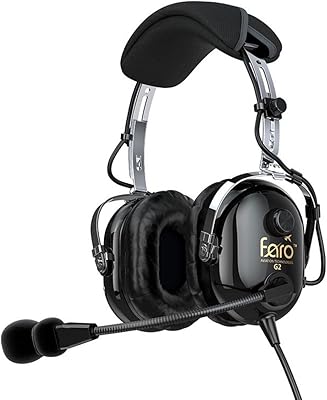
Faro G2 ANR Pilot Aviation Headset
78%
83%
Active Noise Reduction
78%
Microphone Clarity
91%
Battery Life
74%
Comfort & Fit
67%
Build Quality
More
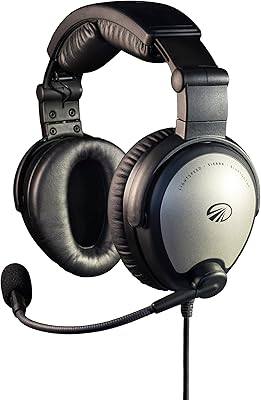
Lightspeed Aviation Sierra ANR Aviation Headset
77%
84%
ANR Performance
76%
Comfort & Fit
71%
Bluetooth Reliability
83%
Build Quality
81%
Microphone Quality
More
ASA HS-1 Aviation Headset
78%
71%
Noise Reduction
78%
Microphone Clarity
66%
Comfort & Fit
82%
Build Quality
74%
Audio Clarity
More
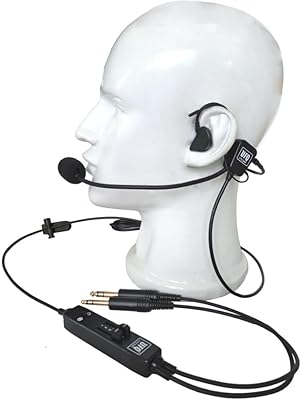
UFQ L1 In-Ear Aviation Headset
80%
92%
Wearing Comfort
67%
Passive Noise Reduction
74%
Microphone Clarity
61%
In-Ear Fit Consistency
83%
Audio Fidelity
More
Bose A30 Aviation Headset (Dual Plug)
85%
94%
Long-Term Comfort
91%
Active Noise Reduction
89%
Audio Clarity & Intelligibility
84%
Build Quality & Durability
87%
Bluetooth Connectivity
More
Telex Airman 850 ANR Aviation Headset
77%
74%
Noise Reduction Performance
83%
Microphone Clarity
78%
Wearing Comfort
61%
Build Quality
79%
Audio Fidelity
More
Lightspeed Zulu 3 Aviation Headset
83%
93%
Active Noise Reduction
89%
Comfort & Fit
91%
Build Quality
78%
Bluetooth Performance
88%
ComPriority System
More

FAQ

Yes, the P1 headset uses standard dual GA plugs — one for audio and one for the mic — which are compatible with the panel jacks found in virtually all light training aircraft, including the 172 and Warrior. You won't need any adapters.

At 24 dB PNR, this student headset does a solid job of taming the droning engine and prop noise you get in a typical single-engine trainer. It won't match what a quality ANR headset delivers, but for short training flights in a quieter aircraft, most pilots find the noise reduction more than adequate. In louder or higher-performance aircraft, the passive design starts to show its limits.

Yes, there is a 3.5mm AUX input on the ear cup that accepts a standard audio cable from your phone or tablet. Keep in mind it's audio playback only — it doesn't integrate with the aircraft intercom, so your copilot won't hear the same feed. It's still a handy feature for routing navigation alerts or situational audio to yourself during cruise.

Most users find the Kore Aviation P1 Aviation Pilot Headset comfortable enough for a standard one- to two-hour training session. The foam head pad and ear cups do their job reasonably well in that window. That said, pilots with larger head sizes have flagged the clamping pressure as an issue on longer wear, so if you have a broader head, it's worth being aware of that trade-off.
Generally, yes. The electret mic with built-in preamp transmits voice clearly and the noise-canceling design reduces background cockpit noise from bleeding into your transmissions. Multiple users specifically called out mic clarity as one of the strongest points of this headset.

No, the package does not include a dedicated carrying case. You get the headset itself, a spare mic muff, and a replaceable head pad. If you plan to toss it in a flight bag regularly, it's worth picking up a padded case separately to protect it.

For occasional or moderate use, the build quality is generally reliable. However, a handful of reviewers who used it under heavy daily school conditions raised concerns about long-term durability. It's a budget-tier headset, and the construction reflects that — it's well-suited to regular student use, but high-intensity institutional environments may accelerate wear.

Absolutely. The dual GA plug configuration works in both the pilot and co-pilot jacks on a standard GA aircraft panel. Many experienced pilots keep the P1 headset specifically for this purpose — handing it to a passenger who doesn't have their own gear.

Yes, the wire boom is flexible and adjustable, so you can bend it to position the mic element close to the corner of your mouth, which is the standard placement for good audio quality. It stays where you put it reasonably well, though it lacks the stiffness of more rigid boom designs found on pricier headsets.

Yes, the on-cup volume knob gives you direct control over speaker output independent of your radio volume. It's a simple but practical feature — being able to quickly dial back audio during quiet phases of flight or boost it on a busy frequency without touching the avionics panel is a genuine convenience during training.