Overview

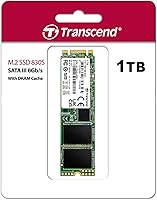
The Transcend MTS830S 1TB M.2 SATA SSD is a practical, no-nonsense upgrade aimed at anyone still waiting on a slow spinning drive. It slots into the M.2 2280 form factor with a B+M key, meaning it works across a wide range of laptops, ultrabooks, and desktops — including older machines that never supported NVMe. What separates it slightly from cheaper alternatives is the inclusion of a DDR3 DRAM cache, which is not a given at this price tier. The drive has been on the market since early 2019, yet it remains a competitive option in a SATA segment where the interface, not the drive, sets the performance ceiling.
Features & Benefits

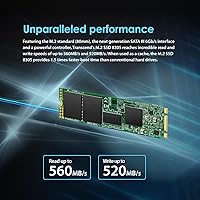
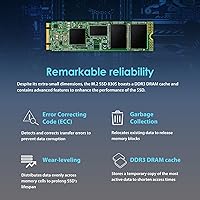
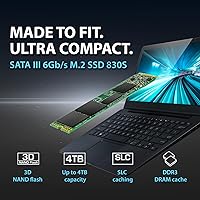
The MTS830S delivers sequential read speeds up to 560 MB/s and writes up to 520 MB/s — about as fast as SATA III allows. That won't impress anyone migrating from an NVMe setup, but for a machine still running a mechanical disk, the difference is stark. The DDR3 DRAM cache earns its keep in everyday tasks: launching applications, loading large files, and handling repeated access patterns all feel snappier compared to cache-less alternatives at similar prices. LDPC error correction quietly safeguards data integrity in the background — a feature some manufacturers omit at this tier. The 3D NAND construction also contributes to better cell endurance over the drive's lifespan.

Best For

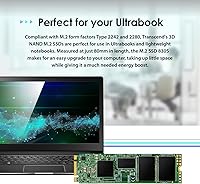
This Transcend SATA drive fits a very specific, common upgrade scenario well. Picture a five-year-old laptop that takes two minutes to boot — swapping its HDD for this M.2 SSD changes the daily experience entirely. It also suits desktop builders who need a secondary OS drive on a tight budget, or ultrabook owners whose systems only support SATA and lack an NVMe slot. Anyone replacing a failed OEM SSD will appreciate how broadly compatible the MTS830S is. It's a sensible pick for buyers who want DRAM-backed performance without paying a premium — provided they're not expecting NVMe-class throughput.

User Feedback

With a 4.5-star average across 356 ratings, the MTS830S reflects steady, reliable satisfaction rather than polarizing hype. Installation gets consistent praise — most buyers report a smooth drop-in experience with immediate boot improvements, particularly those upgrading from hard drives. Thermal behavior is another quiet plus, with several owners noting it runs cool in confined laptop chassis. The fair criticism worth flagging: sustained write speeds can dip noticeably during prolonged sequential transfers, which is worth knowing if you regularly move large media libraries. For everyday workloads — browsing, office apps, light creative work — that ceiling rarely comes into play. Long-term reliability appears solid, with no meaningful failure trends reported.

Pros

  • Boot times drop dramatically when replacing an old spinning hard drive with this Transcend SATA drive.
  • The DDR3 DRAM cache gives a real-world responsiveness edge over cheaper, cache-less M.2 drives at similar prices.
  • LDPC error correction offers meaningful data integrity protection that many budget drives quietly omit.
  • Broad B+M key compatibility means the MTS830S works in most laptops, ultrabooks, and desktops without adapter headaches.
  • 1TB of storage is genuinely useful capacity for a primary OS and application drive.
  • Installation is straightforward — most users report a clean drop-in experience with no driver fiddling required.
  • Runs cool even in tight laptop chassis, which matters for long-term reliability in confined spaces.
  • 3D TLC NAND improves cell endurance compared to older planar designs, giving the drive better long-term stamina.
  • A 4.5-star average across hundreds of real-world ratings reflects consistent, dependable everyday performance.

Cons

  • Sustained sequential write speeds can drop noticeably during prolonged large-file transfers or heavy workloads.
  • SATA III is the hard performance ceiling — no firmware update will change that fundamental interface limit.
  • Buyers with NVMe-capable slots are leaving significant speed on the table by choosing this drive.
  • The drive has been on the market since 2019 and shows its age against newer SATA competitors with updated controllers.
  • No included cloning software or mounting hardware, which can add friction for less experienced upgraders.
  • 3D TLC NAND, while durable enough for typical use, trails 3D MLC in raw write endurance under enterprise-style workloads.
  • Limited public documentation on exact warranty terms and endurance ratings compared to more transparent competitors.

Ratings

Our AI scoring system analyzed verified global buyer reviews for the Transcend MTS830S 1TB M.2 SATA SSD, actively filtering out incentivized, duplicate, and bot-generated feedback to surface what real users genuinely experience. The scores below reflect both the strengths that keep buyers satisfied and the friction points that matter when making a purchasing decision — nothing is glossed over.

Read Performance
83%
Users upgrading from spinning hard drives consistently report a transformative improvement in boot times and application load speeds, often cutting startup times by 60 seconds or more. The 560 MB/s ceiling is exactly what SATA III allows, and this Transcend drive delivers on that promise reliably in everyday workloads.
Buyers migrating from NVMe systems will find the read speeds underwhelming by comparison, as the SATA interface imposes a hard ceiling no firmware update can overcome. For sequential reads of very large files, the gap versus even a mid-range NVMe drive is immediately perceptible.
Write Performance
71%
29%
For typical OS and application workloads — installing software, saving documents, handling moderate file transfers — the MTS830S writes quickly and consistently without hesitation. The DDR3 DRAM cache helps maintain responsiveness during mixed workloads better than cache-less alternatives in the same price range.
Sustained sequential write speeds drop noticeably when pushing large continuous transfers, such as copying a multi-gigabyte video archive in one session. A minority of users specifically flagged this as a disappointment, particularly those who purchased expecting consistent peak write performance throughout heavy workloads.
DRAM Cache Effectiveness
78%
22%
Having a DDR3 DRAM cache is a genuine differentiator at this price point — cache-less SATA drives struggle with repeated random access patterns, and real users notice the difference when multitasking or running an OS with several programs open simultaneously. It keeps the drive feeling responsive under the kind of mixed loads that define everyday computing.
The cache's benefits are most visible in random and mixed workloads rather than the straight-line sequential transfers many benchmarks emphasize. Users who primarily judge drive performance by large single-file copy speeds may find the DRAM cache advantage less obvious than expected.
Compatibility
91%
The B+M dual-key design is one of the most universally compatible configurations available, and buyers across dozens of laptop and desktop models confirm this drive works without any adapter or configuration changes. Several ultrabook owners specifically praised it for working in older machines that cannot accept NVMe drives.
The SATA-only interface means the drive is simply incompatible with M.2 slots that exclusively support NVMe signaling, which is increasingly common in newer premium laptops and motherboards. Buyers who do not check their slot specifications before purchasing occasionally find it does not apply to their hardware.
Installation Experience
93%
Installation consistently earns top marks from buyers across all experience levels — the physical fit is clean, the drive is recognized immediately by Windows without any driver installation, and most users report the entire swap process taking under 15 minutes. First-time upgraders frequently mention how approachable the process felt.
There is no bundled cloning software or mounting screw included in all packaging variants, which can add a small amount of friction for users migrating an existing operating system rather than performing a fresh install. A handful of buyers were caught off guard by needing a separate tool for OS migration.
Thermal Performance
86%
Multiple long-term owners note this drive runs cooler than competing options inside confined laptop chassis, which is a meaningful advantage for ultrabooks where sustained heat can cause throttling or discomfort. The SATA interface inherently draws less power than high-performance NVMe drives, contributing to its thermal advantage.
While the drive runs cool relative to NVMe alternatives, there is limited manufacturer-published documentation on thermal throttling thresholds or sustained temperature ratings, leaving some technically minded buyers to rely on third-party monitoring tools for confidence.
Long-term Reliability
84%
Verified long-term owners — some with two or more years of daily use — report no unusual failure patterns, data corruption incidents, or performance degradation over time. The LDPC error correction appears to be working as intended, with no user reports of silent data integrity issues in normal usage.
The drive has been on the market since early 2019 using a controller and NAND combination that has not been refreshed, which raises mild questions about how it compares to newer designs in endurance ratings. Transcend does not make TBW endurance figures prominently available, which some technically rigorous buyers find frustrating.
Value for Money
88%
At its price point, getting 1TB of DRAM-backed SATA storage with LDPC error correction is strong value — most competing drives at similar prices either omit the DRAM cache or skip the error correction. For HDD-to-SSD upgraders, the cost-per-gigabyte and the included features stack up favorably.
The value calculation shifts if your machine supports NVMe, since the price gap between SATA and entry-level NVMe drives has narrowed considerably. Buyers who overlook that detail may find they paid for a drive that underperforms what a similarly priced NVMe option could have offered.
Error Correction & Data Integrity
81%
19%
LDPC error correction is a meaningful inclusion that budget-tier SATA drives frequently omit, and it matters most during prolonged write sessions or when the drive ages and NAND cells accumulate wear. Users who have run the drive through intensive backup cycles report clean, error-free transfers.
While LDPC provides a solid layer of protection, it is not a substitute for regular backups, and Transcend does not publish detailed endurance or error rate specifications that would let advanced users benchmark the drive's integrity performance against competitors with full spec sheets.
Form Factor & Build
87%
The standard M.2 2280 footprint fits cleanly into virtually every compatible slot without any physical modification, and the drive's 0.317-ounce weight makes it a non-factor even in the lightest ultrabooks. The compact physical profile is exactly what space-constrained laptop upgraders need.
The green PCB is a minor cosmetic consideration for builders with windowed cases who prefer a consistent aesthetic, though it has no bearing on performance. The bare board design also means careful handling during installation is advised to avoid accidental contact with components.
Cold Boot Speed
82%
18%
Buyers replacing aging mechanical drives cite cold boot improvements as the single most satisfying outcome of the upgrade, with Windows loading in under 20 seconds on mid-range hardware being a commonly reported result. The combination of SATA speeds and DRAM cache keeps the OS loading pipeline moving without bottlenecks.
Users already running any SSD — even an older one — will notice a smaller subjective improvement in boot times compared to the dramatic leap experienced when replacing a hard disk. Expectations need to be calibrated accordingly if the starting point is already solid-state.
Software & Ecosystem
59%
41%
Transcend's SSD Scope utility provides basic health monitoring, firmware updates, and a secure erase function, giving users a functional tool to keep tabs on drive status without needing third-party software for routine maintenance checks.
SSD Scope is functional but not particularly polished, and the absence of bundled cloning software is a gap that competing brands fill more generously. Users expecting a complete migration toolkit out of the box will need to source additional tools independently, which adds steps to an otherwise smooth upgrade process.
Noise & Vibration
97%
As a fully solid-state device with no moving parts, the MTS830S produces zero mechanical noise and generates no vibration — a near-universal benefit of flash storage that buyers transitioning from hard drives consistently mention as an underappreciated quality-of-life improvement.
There is essentially no meaningful negative to report in this category for any SSD, and this drive is no exception. The only theoretical concern is coil whine from the controller under extreme load, but no user reports have flagged this as an issue with this specific model.
Packaging & Unboxing
63%
37%
The drive arrives securely packaged without excessive plastic waste, and the compact retail box is easy to store or return if needed. The product itself is well-protected and arrives in clean condition based on buyer reports.
The packaging is minimal to a fault — no mounting screw, no cloning software voucher, and no quick-start guide are included, which leaves less experienced upgraders to figure out the full installation process on their own. A small accessory kit would meaningfully improve the out-of-box experience.

Suitable for:

The Transcend MTS830S 1TB M.2 SATA SSD is the right call for anyone upgrading an older laptop or desktop that still relies on a mechanical hard drive — the performance jump is immediate and tangible in daily use. It particularly shines for students, home users, and small office workers who need a reliable, roomy system drive without overcomplicating their budget. Ultrabook owners whose machines physically lack an NVMe slot will find the B+M key design works straight away with minimal fuss. It also makes a solid secondary drive in a desktop build, handling OS duties or application storage cleanly. Anyone replacing a failed OEM SATA SSD will appreciate the wide compatibility and the added peace of mind that comes from LDPC error correction, which cheaper alternatives often skip.
Not suitable for:

The Transcend MTS830S 1TB M.2 SATA SSD is not the right tool for buyers chasing peak storage performance. If your machine supports NVMe, spending a little more on an NVMe drive will deliver noticeably faster transfer speeds — this Transcend SATA drive simply cannot compete on raw throughput once you leave the SATA interface behind. Power users who regularly move large video libraries, perform disk-intensive backups, or run heavy virtual machine workloads will hit the sustained write ceiling and notice the slowdown. Creative professionals editing high-resolution video directly from the drive should look elsewhere. Similarly, anyone building a high-end gaming rig or a workstation where storage speed is a genuine bottleneck would be underserved by this M.2 SSD.
Specifications

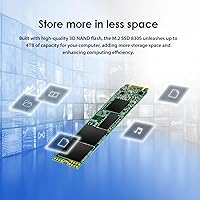
  • Capacity: The drive offers 1TB of usable storage, suitable for operating systems, applications, and general-purpose file storage.
  • Form Factor: Follows the M.2 2280 standard, measuring 3.15 x 0.87 x 0.14 inches, compatible with the vast majority of M.2 slots in laptops and desktops.
  • Interface: Uses the SATA III interface running at up to 6Gb/s, which defines its maximum theoretical throughput ceiling.
  • Key Type: B+M dual-key notch design ensures compatibility with both B-key and M-key M.2 slots across a wide range of motherboards and ultrabooks.
  • Sequential Read: Rated for sequential read speeds of up to 560 MB/s under optimal conditions.
  • Sequential Write: Rated for sequential write speeds of up to 520 MB/s, though sustained workloads may see speeds taper under prolonged transfers.
  • NAND Type: Built on 3D TLC NAND flash, which stacks memory cells vertically to improve density and endurance compared to planar NAND designs.
  • Cache Type: Equipped with a DDR3 DRAM cache that stores frequently accessed data mappings to accelerate read/write response times.
  • Error Correction: Implements Low-Density Parity Check (LDPC) error correction to detect and fix data errors before they affect stored files.
  • Weight: Weighs just 0.317 ounces, making it one of the lightest storage upgrades available for portable systems.
  • PCB Color: Features a green printed circuit board, which is standard for this Transcend model series.
  • Hardware Platform: Designed for PC-based systems running standard desktop or laptop configurations; not intended for console or embedded applications.
  • Compatible Devices: Officially compatible with desktops, laptops, and ultrabooks that include an M.2 SATA slot.
  • Installation Type: Internal drive requiring physical installation into an M.2 slot; no external enclosure or USB adapter is included.
  • Backward Compatibility: The SATA interface allows the drive to function in systems that do not support NVMe, including many older ultrabooks and budget laptops.
  • Date Introduced: First made available in February 2019, establishing it as a mature product with a documented real-world reliability track record.
  • Model Number: Carries the official model designation TS1TMTS830S, used for warranty claims and manufacturer support inquiries.
  • Series: Part of Transcend's MTS800 family of M.2 SATA solid-state drives, which share a common architecture across capacity variants.

Related Reviews
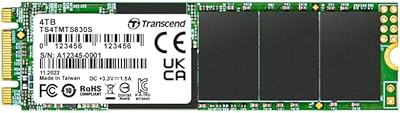
Transcend MTS830S 4TB M.2 SATA III SSD
87%
85%
Overall Performance
90%
Read Speed
78%
Write Speed
92%
Value for Money
88%
Ease of Installation
More
Transcend MTS425S 1TB M.2 2242 SSD
84%
93%
Compatibility & Fit
74%
Read & Write Speed
88%
Value for Money
91%
Installation Ease
86%
Build Quality & Durability
More
Fikwot FN203 M.2 SATA SSD 1TB
85%
86%
Performance
91%
Installation Ease
88%
Reliability
89%
Read Speed
82%
Write Speed
More
Ediloca EN206 1TB M.2 SATA SSD
84%
87%
Performance
92%
Value for Money
90%
Ease of Installation
88%
Compatibility with Devices
84%
Build Quality
More
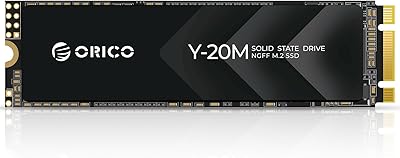
ORICO Y20M 1TB M.2 SATA SSD
80%
71%
Compatibility Clarity
78%
Read/Write Performance
91%
Installation Ease
83%
Value for Money
74%
Drive Longevity & Health Features
More
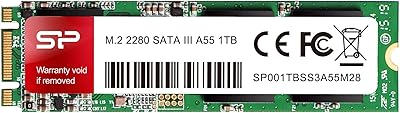
Silicon Power A55 1TB M.2 SATA SSD
76%
91%
Value for Money
74%
Read/Write Performance
68%
Compatibility
78%
Long-Term Reliability
86%
Ease of Installation
More
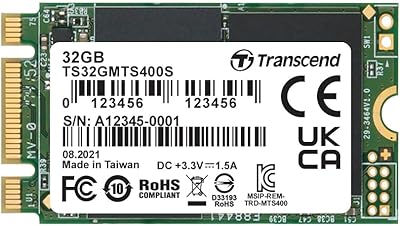
Transcend MTS400 32GB M.2 SATA III SSD
88%
92%
Value for Money
88%
Performance
90%
Read Speed
84%
Write Speed
89%
Power Efficiency
More
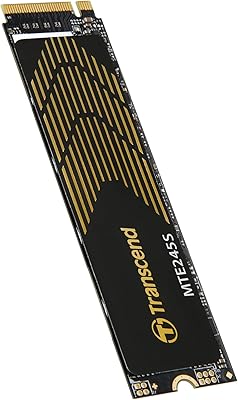
Transcend MTE245S 1TB M.2 PCIe Gen4x4 SSD
88%
92%
Performance (Read/Write Speeds)
89%
Cooling Efficiency (Graphene Heatsink)
93%
Endurance (TBW and MTBF)
82%
Value for Money
90%
Compatibility (Desktops, Laptops, PS5)
More
Transcend MTS830S 512GB M.2 SSD
79%
82%
Real-World Speed
88%
Value for Money
79%
Compatibility
91%
Installation Experience
89%
Boot & Load Times
More
Transcend TS1TMTE220S 1TB M.2 NVMe PCIe Gen3x4 SSD
87%
89%
Performance
91%
Value for Money
94%
Read Speed
88%
Write Speed
85%
Reliability
More

FAQ

Yes, and this is actually the ideal use case for the MTS830S. The B+M key design fits both B-key and M-key slots, and since it uses the SATA interface rather than NVMe, it works perfectly in machines that lack NVMe support. If your laptop has an M.2 slot and accepts SATA drives, this one should drop right in.

No. This is a SATA-based drive, so it will not function in a slot that exclusively supports NVMe. Before purchasing, check your motherboard or laptop specifications to confirm the M.2 slot supports SATA signaling. Many modern ultrabooks and desktops support both, but some newer systems have moved to NVMe-only slots.

The difference is very noticeable in everyday tasks. Boot times that took a minute or more on a spinning drive typically drop to under 20 seconds, and applications open much faster. It won't transform your machine's processor speed, but for anything storage-related — loading files, launching software, waking from sleep — the improvement is hard to miss.

It does, though the benefit is most evident during repeated access to the same files and during mixed read/write tasks rather than raw single-pass transfers. Cache-less drives at similar prices handle occasional bursts fine, but under sustained light workloads — like running an OS with several apps open — the DDR3 DRAM cache helps the MTS830S maintain more consistent response times.

For typical everyday workloads — browsing, office work, media playback, software installations — you are very unlikely to hit this ceiling. The slowdown appears when writing large sequential files continuously, such as transferring a 50GB video archive in one go. If you do that kind of work regularly, it is worth knowing, but for most users it will never come up in practice.

Transcend does offer a free utility called SSD Scope that covers health monitoring and some maintenance functions, but bundled cloning software is not always included in the retail package. If you plan to migrate an existing OS rather than do a fresh install, it is worth downloading a separate cloning tool like Macrium Reflect Free or using your OS's built-in imaging features beforehand.

Under typical home or office workloads, M.2 SATA drives like this one routinely last five or more years without issues. The 3D NAND construction handles everyday write cycles well, and real-world user reports on this drive do not flag unusual failure rates. As with any storage device, keeping regular backups is still the most important precaution you can take.

It works well as a Windows boot drive and is a popular choice for exactly that purpose. For macOS, it depends on the machine — most modern Macs use proprietary connectors and do not accept standard M.2 drives, but older Mac Pro models or Hackintosh builds with standard M.2 SATA slots can use it without problems.

Several real-world users have specifically noted that this Transcend drive runs cooler than expected, which is a practical advantage in slim laptops where airflow is restricted. SATA drives generally produce less heat than high-performance NVMe drives under load, so thermal throttling is rarely a concern here.

For most users — students, remote workers, general home use — 1TB is comfortably enough for an operating system, productivity software, photos, documents, and a reasonable media library. Where it can feel tight is if you store large video projects or a sizable game library locally. If you regularly work with large files, you might want to evaluate whether 2TB makes more sense for your needs before committing.