Overview

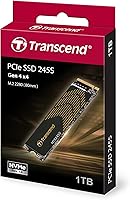
The Transcend MTE245S 1TB NVMe SSD sits in a competitive but realistic spot: a mid-range Gen4 drive built for users stepping up from SATA or older Gen3 hardware. Transcend doesn't always get the attention that Samsung or Western Digital do, but this Taiwanese brand has been producing dependable storage for decades. The single-sided M.2 2280 design is genuinely practical — it matters for PS5 owners where clearance is tight, and for slim laptops where a double-sided board simply won't fit. Sequential speeds are strong on paper, but honest expectations are needed: the real-world benefit depends heavily on whether your workload actually saturates that bandwidth.
Features & Benefits

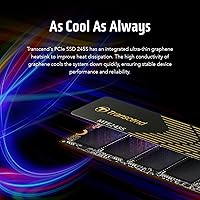
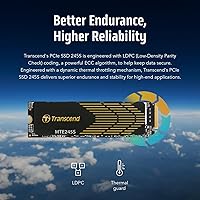
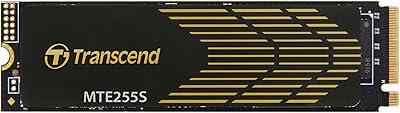
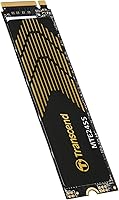
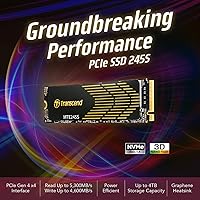
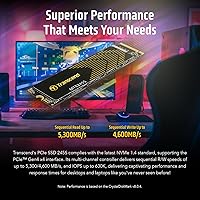
The MTE245S runs on a PCIe Gen4 x4 interface, hitting up to 5,300 MB/s sequential read and 4,600 MB/s sequential write — numbers that comfortably compete with other drives in this tier. What sets it apart visually is the graphene heat spreader bonded directly to the board. It's thin enough not to conflict with most M.2 slot covers, yet it does a genuine job of pulling heat away during sustained transfers, which bare-board drives in this class can struggle with. Long-term reliability looks solid too: 600 TBW endurance and a 2 million hour MTBF rating, backed by LDPC error correction and TRIM support to keep performance from degrading as the drive fills.

Best For

This Transcend Gen4 drive makes most sense for a few specific buyers. PS5 owners looking to expand internal storage will appreciate the single-sided layout, which clears the console's slot cover without any workarounds. Budget-conscious PC builders who want a genuine Gen4 upgrade — without spending on a flagship Samsung or Seagate FireCuda — will find the performance-per-dollar ratio compelling. It also works well for light video editors who want snappier file scrubbing and faster project loads. If you're still running an older SATA drive, the jump in throughput is dramatic and noticeable. Those chasing absolute top-tier benchmarks should look at premium options, but most everyday users won't hit the ceiling this drive sets.

User Feedback

With a 4.3 out of 5 rating across more than 600 reviews, the pattern is clear: most buyers are satisfied, and serious complaints are rare. Installation gets consistent praise — it's straightforward, and the drive shows up immediately in most systems without fuss. Many users note it runs cooler than expected, which likely reflects the graphene spreader doing its job under real-world loads. The criticism worth noting is that peak write speeds aren't always sustained once the write buffer is exhausted — a common trait in TLC drives at this tier, not a unique flaw. A small number of reviewers mention it falls behind flagship Gen4 competitors in synthetic benchmarks, which is fair but expected at this price point. No widespread long-term reliability issues have surfaced.

Pros

  • Gen4 sequential read speeds up to 5,300 MB/s deliver noticeably faster large file transfers and game load times.
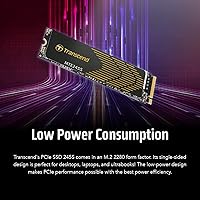
  • Single-sided PCB design fits PS5 storage slots and slim laptops without clearance conflicts.
  • The graphene heat spreader manages sustained load temperatures without adding bulk or requiring active cooling.
  • Rated at 600 TBW endurance and a 2 million hour MTBF — solid reassurance for daily driver use.
  • TRIM support and garbage collection help keep performance consistent as the drive fills up over time.
  • S.M.A.R.T. compatibility lets users track drive health with standard third-party monitoring tools.
  • Installation is plug-and-play on modern systems — no driver setup or extra software required.
  • Transcend's long history in storage hardware offers reasonable confidence in build quality and warranty support.
  • Runs cooler than many bare-board Gen4 alternatives, according to consistent real-world buyer feedback.
  • Competitive value at this price tier for buyers who want Gen4 performance without flagship-level spending.

Cons

  • Peak write speeds drop once the SLC cache is saturated, which can occur during large continuous file transfers.
  • Falls behind flagship Gen4 drives in synthetic benchmarks — noticeable if you actively compare performance metrics.
  • 1TB capacity may feel limiting for users managing large game libraries or uncompressed media archives.
  • Transcend carries less brand recognition than Samsung or WD, which can complicate resale and peer support.
  • No bundled drive management or backup software — third-party tools are required for monitoring and cloning.
  • Gen4 speed gains are largely invisible during everyday tasks like web browsing, email, or light office work.
  • Some buyers report uncertainty around compatibility with certain older motherboard M.2 slot implementations.
  • No hardware encryption support, which is a meaningful gap for users with data security or compliance requirements.

Ratings

The Transcend MTE245S 1TB NVMe SSD scores below reflect an AI-driven analysis of verified global buyer reviews, with spam, incentivized submissions, and bot activity actively filtered out to ensure accuracy. Both the genuine strengths and the real pain points buyers encountered are weighted transparently in each category — no aspect has been softened or inflated to protect brand perception. The result is an honest, multi-dimensional picture of how this drive actually performs across gaming rigs, slim laptops, PS5 consoles, and everyday desktop builds worldwide.
Sequential Read Speed
88%
Hitting close to 5,300 MB/s in sequential reads, the MTE245S loads large game files and transfers high-resolution media noticeably faster than Gen3 drives. Users upgrading from SATA backgrounds consistently report that boot times, application launches, and file copy operations feel significantly snappier in everyday use.
In workloads where data isn't being read in large sequential blocks — like running multiple applications simultaneously or accessing fragmented files — the speed advantage over Gen3 narrows considerably. Reviewers who benchmark thoroughly note it doesn't match the peak sequential read figures of flagship rivals like the Samsung 990 Pro.
Sequential Write Speed
83%
For most writing tasks — installing games, saving large project files, or importing photo libraries — the MTE245S moves data at a pace that leaves Gen3 drives clearly behind. Users working with moderate-sized files consistently report write speeds that feel fast and responsive without any obvious bottlenecks during typical sessions.
The advertised peak write figure assumes the SLC cache is fully available, which isn't always the case after a drive has partially filled or during back-to-back heavy operations. Once the cache saturates, throughput drops to base 3D TLC rates — a real consideration for anyone regularly moving hundreds of gigabytes in a single pass.
Thermal Management
86%
The graphene heat spreader keeps surface temperatures well within safe operating ranges during sustained transfers and gaming sessions, something that bare-board Gen4 drives at this price tier can't always claim. Multiple users specifically note the drive runs cooler than they expected, including in PS5 installations where internal airflow is limited.
While the graphene layer is a meaningful improvement over no thermal solution at all, it isn't as effective as a thicker aluminum heatsink during extreme sustained workloads. Users who repeatedly push the drive with large continuous writes over many minutes may still encounter thermal throttling on systems without active airflow over the M.2 slot.
Value for Money
91%
For a Gen4 NVMe drive with a built-in graphene spreader, the MTE245S hits a price point that undercuts many comparable competitors without a meaningful performance sacrifice for typical use cases. Gamers and everyday users consistently highlight this as the drive's strongest selling point — solid Gen4 performance at a price that doesn't require much compromise.
Buyers focused purely on squeezing maximum performance from every dollar spent may find that a slightly higher investment in a Samsung or WD flagship returns better sustained write handling and benchmark scores. The value equation is strongest for moderate workloads; heavy power users pushing the drive hard will notice it doesn't scale as well as premium alternatives.
Installation & Compatibility
93%
The plug-and-play installation process draws consistent praise — most users report the drive appearing immediately in their system with no extra configuration needed. The single-sided PCB design is the kind of practical detail that makes a real difference, removing a clearance headache for PS5 owners and slim laptop users who've struggled with thicker double-sided drives.
A small subset of reviewers has flagged compatibility questions on certain older motherboards with unusual M.2 slot implementations, though these cases appear to be outliers rather than a systemic issue. Buyers using particularly niche or dated systems should verify NVMe Gen4 support in their motherboard documentation before purchasing.
Sustained Write Performance
62%
38%
For typical day-to-day tasks — installing a game, saving a large project file, or backing up a modest photo archive — the drive handles writes quickly and without complaint. The SLC cache is large enough that most users doing ordinary computing will never actually exhaust it in a single session.
When the SLC write cache is depleted — which happens during back-to-back large file transfers or filling the drive rapidly from near-empty — write throughput falls sharply to the raw 3D TLC rate. This is a meaningful limitation for anyone doing sustained video ingest, large backup operations, or data migrations that exceed the cache window.
Random Read/Write Performance
74%
26%
Random access performance is solid enough for gaming — loading open-world assets, streaming textures, and reducing in-game hitching — as well as snappy OS operation where file access patterns are highly fragmented. Users who've moved from older SATA drives report a clear and immediate improvement in overall application responsiveness.
This drive's random IOPS figures don't compete with top-tier Gen4 controllers, which is most apparent in workloads involving thousands of small simultaneous file operations — database reads, virtual machine storage, or heavy multitasking across many open files. The gap is minimal for gaming but more relevant for professional or enterprise-adjacent tasks.
Longevity & Endurance
84%
A 600 TBW endurance rating for the 1TB model is genuinely comfortable for consumer use — at typical daily write levels, most users will exhaust the drive's useful warranty life well before reaching that threshold. The 2 million hour MTBF figure, while a statistical projection, aligns with what reliable long-term users report anecdotally.
Long-term owner reviews are still relatively limited given the drive's late 2023 release date, so multi-year reliability data isn't yet as established as it is for more mature models. Buyers pushing the drive with write-heavy professional workloads should actively monitor TBW consumption via S.M.A.R.T. tools to stay ahead of the endurance curve.
Drive Health Monitoring
78%
22%
Full S.M.A.R.T. compatibility means users can pull real-time health data — temperature readings, wear indicators, and remaining life estimates — from any standard monitoring utility without needing proprietary tools. This is especially useful for PS5 users who want to track drive health beyond what the console's own diagnostics offer.
Transcend doesn't bundle its own drive management software, which means users must source third-party tools themselves for cloning, secure erase, or advanced health reporting. For less technically confident buyers, this absence of a dedicated app is a noticeable gap compared to Samsung's polished Magician software ecosystem.
PS5 Compatibility
94%
Single-sided M.2 2280 drives are essentially a requirement for a hassle-free PS5 expansion, and this drive fits that specification perfectly — slotting cleanly under the console's heatsink cover without any modifications. Reviewers who installed it in a PS5 consistently report immediate system recognition and stable performance throughout extended gaming sessions.
PS5 system firmware updates can occasionally affect how the console interacts with third-party storage, and while no widespread incompatibility has surfaced, staying current with firmware after installation is advisable. A handful of reviewers recommend letting the PS5 format the drive itself during setup rather than pre-formatting on a PC to avoid minor initialization issues.
Brand Reliability
82%
18%
Transcend has been building storage products for over 30 years, and that history shows in how the MTE245S is engineered — conservative but solid, with endurance specs and error correction that prioritize consistency over headline-grabbing figures. Long-term buyers who've used Transcend products across multiple generations often cite dependable everyday performance as a key reason they return.
Transcend's lower brand profile compared to Samsung or Western Digital means fewer third-party reviews, less community troubleshooting content, and a smaller presence in tech forums where buyers typically seek peer support. This can make it harder to find quick answers to niche compatibility questions, particularly for newer system configurations.
Benchmark Performance
71%
29%
Synthetic benchmark results are respectable for the price tier — users running CrystalDiskMark typically see scores that land comfortably in mid-Gen4 territory and well above any Gen3 alternative. For most buyers, these numbers reflect real-world workloads closely enough to validate the purchase decision without hesitation.
Reviewers who specifically compare this drive head-to-head against the Samsung 990 Pro, WD Black SN850X, or Seagate FireCuda 530 consistently find it trailing in both peak read scores and sustained write benchmarks. For benchmark-focused buyers or those running storage-intensive professional workloads, the performance gap at the flagship tier is real and measurable.
Power Efficiency
76%
24%
Under light loads — browsing, streaming, or running office applications — the drive idles efficiently and doesn't put meaningful strain on a laptop's power budget. Users running this NVMe SSD in thin-and-light notebooks report no noticeable increase in battery drain compared to their previous SATA or Gen3 drives during normal use.
Gen4 NVMe drives as a category draw more power during active workloads than their Gen3 predecessors, and this drive is no exception. Laptop users doing sustained heavy transfers will see measurably higher power draw than they would with a SATA or Gen3 alternative — a trade-off battery-sensitive users should factor in before upgrading.

Suitable for:

The Transcend MTE245S 1TB NVMe SSD is a strong fit for anyone upgrading from a SATA or Gen3 drive who wants a meaningful performance bump without stepping up to premium pricing. PS5 owners will find the single-sided M.2 2280 form factor particularly practical — it fits cleanly under the console's heatsink cover without physical conflicts, which is a real constraint that rules out many competing drives. Slim laptop users face similar clearance challenges, and the low-profile graphene heat spreader keeps the board compact enough for tight spaces while still managing thermal load under sustained use. Budget-conscious PC builders assembling a mid-range gaming rig get Gen4 sequential speeds that handle fast game loading, large file transfers, and OS responsiveness well. Light content creators — anyone scrubbing video timelines or moving large media batches regularly — will notice the read speed advantage in day-to-day tasks. Buyers who prioritize long-term dependability and a proven track record over raw benchmark dominance will feel well served by this drive.
Not suitable for:

The Transcend MTE245S 1TB NVMe SSD is not the right call for buyers who need the absolute fastest storage money can buy. Professionals running heavy, sustained write workloads — think 4K video editing with large RAW files or intensive database operations — will push past the drive's SLC write cache faster than expected, causing speeds to drop back toward base TLC rates. Anyone who wants to top every Gen4 leaderboard will find this drive trailing behind flagship options like the Samsung 990 Pro or WD Black SN850X in head-to-head benchmarks. Users who need more than 1TB in a single drive will hit a ceiling quickly on content-heavy workflows. If your tasks are random read/write intensive rather than sequential — common in virtual machine hosting or enterprise-style workloads — the real advantage over a solid Gen3 drive shrinks considerably. Buyers already running a capable Gen3 NVMe drive on a PCIe 3.0 motherboard should also note that Gen4 speeds will be capped at the slot level, making this particular upgrade largely wasted.
Specifications

  • Form Factor: The drive follows the M.2 2280 standard, measuring 3.15 x 0.87 x 0.1 inches, which is compatible with the vast majority of modern motherboards, laptops, and the PlayStation 5.
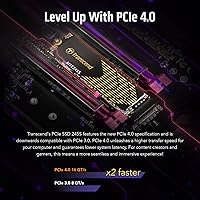
  • Interface: It connects via a PCIe Gen4 x4 NVMe interface, offering roughly double the theoretical bandwidth ceiling of a PCIe Gen3 x4 connection.
  • Sequential Read: Maximum sequential read speed is rated at up to 5,300 MB/s under optimal conditions with an active SLC write cache.
  • Sequential Write: Maximum sequential write speed is rated at up to 4,600 MB/s, though sustained write throughput after cache exhaustion will be lower and typical of 3D TLC NAND drives in this class.
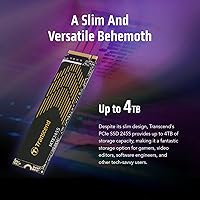
  • Capacity: This review covers the 1TB configuration; the MTE245S family also includes 500GB, 2TB, and 4TB variants.
  • NAND Type: Storage cells use 3D TLC (Triple-Level Cell) NAND flash, a common choice at this price tier that balances density, cost, and adequate consumer-grade endurance.
  • Heatsink: An ultra-thin graphene heat spreader is bonded directly to the board surface to dissipate thermal load during sustained operations without adding significant height above the PCB.
  • Endurance: The 1TB model carries a rated endurance of 600 TBW (terabytes written), sufficient for years of heavy daily use under typical consumer workloads.
  • MTBF: Transcend rates the drive's Mean Time Between Failures at 2 million hours, in line with standard reliability benchmarks for consumer-grade NVMe solid-state drives.
  • Error Correction: The drive employs LDPC (Low-Density Parity-Check) coding alongside an ECC algorithm to detect and correct data errors before they can affect stored data.
  • Key Features: Supported maintenance and health features include TRIM, S.M.A.R.T. monitoring, advanced garbage collection, and backward compatibility with PCIe Gen3 and Gen2 slots.
  • PCB Design: All components are placed on a single face of the board, a critical layout detail for PS5 compatibility and slim-chassis laptops with limited vertical clearance above the M.2 slot.
  • Compatibility: The drive is designed for use in desktop PCs, laptops, and the PlayStation 5, provided the host system has a compatible M.2 NVMe slot.
  • Weight: The drive weighs approximately 0.317 ounces (around 9 grams), adding virtually no measurable mass to any system build.
  • Brand Origin: Manufactured by Transcend Information, a Taiwanese storage hardware company with a continuous product history spanning more than three decades.

Related Reviews

Transcend MTE310 1TB NVMe SSD
88%
92%
Performance
94%
Speed (Read/Write)
88%
Reliability
91%
Ease of Installation
84%
Software/Software Experience
More
Transcend MTE255S 1TB NVMe SSD
80%
91%
Sequential Read Speed
67%
Sustained Write Performance
94%
PS5 Compatibility
83%
Thermal Management
88%
Value for Money
More
Transcend MTE410S 1TB M.2 NVMe SSD
82%
96%
Form Factor Compatibility
83%
Sequential Read Speed
61%
Sustained Write Performance
88%
Power Efficiency
91%
Installation Experience
More
Transcend TS1TMTE220S 1TB M.2 NVMe PCIe Gen3x4 SSD
87%
89%
Performance
91%
Value for Money
94%
Read Speed
88%
Write Speed
85%
Reliability
More
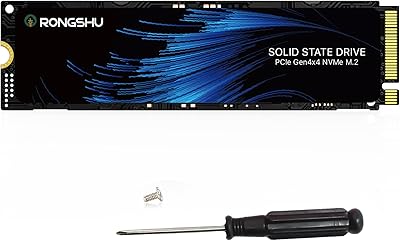
RONGSHU RS001 1TB NVMe SSD
75%
91%
Value for Money
88%
Read/Write Speed
93%
PS5 Compatibility
53%
Brand Trustworthiness
71%
Thermal Management
More
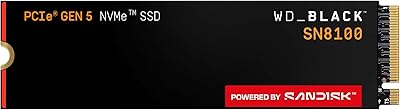
WD_BLACK SN8100 1TB NVMe SSD
78%
97%
Raw Read Performance
83%
Write Speed
76%
Real-World Gaming Impact
81%
Compatibility & Setup
62%
Thermal Management
More
PHIXERO P5000 1TB NVMe SSD
86%
92%
Read/Write Speeds
88%
Performance Under Load
95%
Ease of Installation
85%
Thermal Management
90%
Compatibility with Devices
More
Addlink S91 1TB NVMe SSD
89%
94%
Performance & Speed
88%
Compatibility with Devices
85%
Ease of Installation
91%
Read Speed (Max)
85%
Write Speed (Max)
More
Samsung 980 1TB NVMe M.2 SSD
83%
91%
Read Speed Performance
78%
Write Speed Performance
83%
Value for Money
89%
Build & Reliability
94%
Installation Ease
More
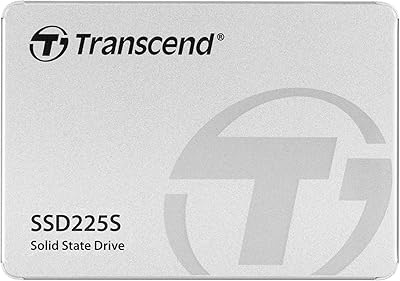
Transcend 1TB SATA III SSD
83%
92%
Value for Money
88%
Performance (Speed)
78%
Ease of Installation
90%
Reliability/Durability
85%
Compatibility
More

FAQ

Yes, and the single-sided board design is actually one of the most practical things about this drive for PS5 owners. Sony's console requires an M.2 2280 drive that clears the factory heatsink cover, and double-sided boards often don't. The integrated graphene spreader on the MTE245S handles thermals well enough that you don't need to source a separate heatsink before installing it.

You don't have to. The graphene layer manages temperatures adequately for typical use. That said, if your motherboard comes with its own M.2 heatsink or cover, go ahead and use it — it won't cause any conflicts and will only help during extended sustained transfers.

Yes, it's backward compatible with Gen3 and Gen2 M.2 slots. The interface will negotiate down to the host's maximum supported speed, so you won't see Gen4 numbers — but the drive will function correctly. Just keep in mind the speed advantage you're paying for won't be available on a Gen3 host.

For most everyday transfers — moving a game install, copying a large folder, importing photos — you'll stay comfortably within the SLC cache and see fast speeds. If you're moving several hundred gigabytes in one continuous pass, speeds will eventually drop to the base TLC write rate once the cache is full. This is normal behavior for drives in this category, not a defect specific to this one.

The Transcend MTE245S 1TB NVMe SSD is a capable mid-range drive, but it does trail the flagship options from Samsung and WD in both peak benchmark scores and sustained write handling. For gaming and general desktop use, the real-world gap is smaller than the spec sheets suggest. If you're running professional-grade workloads or benchmarking obsessively, the premium drives have a clear advantage — but for most buyers, the difference won't be felt in daily use.
No software is included. For drive cloning, free tools like Macrium Reflect (Windows) or Clonezilla work reliably. For ongoing health monitoring, any S.M.A.R.T.-compatible utility — CrystalDiskInfo is a popular free option on Windows — will read the drive's status data without any issues.

It depends on your habits. A single modern AAA title can consume 100GB or more, so 1TB fills up quicker than people expect if you keep a large active library installed. On a PS5 as a secondary expansion drive, 1TB is a practical addition for most players. On a PC with a big game collection, you may want to consider 2TB or plan to use this alongside existing storage.

Transcend typically backs its consumer NVMe drives with a 5-year limited warranty, which matches the standard offered by major competitors in this tier. It's worth confirming the exact terms on Transcend's official site for your specific region, as warranty coverage details can vary by market.

In most cases yes, assuming your laptop accepts M.2 2280 NVMe drives — which is the most common slot type in modern ultrabooks. The single-sided PCB and slim graphene spreader keep the overall height minimal, making it a better candidate for tight chassis than some thicker alternatives. Check your laptop's service manual to confirm it supports NVMe (not just SATA M.2) before buying.

Not significantly, provided you maintain reasonable free space. TRIM and the drive's garbage collection work together to reclaim space from deleted files and keep write performance from degrading. As a general rule, try to keep at least 10 to 15 percent of the drive free — that applies to any SSD, not just this one — and you should see consistent performance over the long term.

Where to Buy