Overview

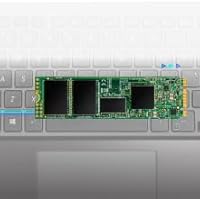
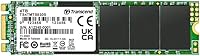
The Transcend MTS830S 4TB M.2 SATA SSD occupies a genuinely useful niche — a high-capacity internal drive built for laptop upgraders, ultrabook owners, and desktop builders who need serious bulk storage without chasing NVMe speeds. That distinction matters upfront: this is a SATA III drive, not NVMe, so expectations around raw throughput should be calibrated accordingly. What sets this Transcend SATA drive apart within its category is the 4TB capacity — rare in the M.2 2280 form factor, where most rivals cap out at 2TB. Transcend has spent decades building reliable storage hardware with enterprise-grade roots, and that experience carries through into their consumer line.
Features & Benefits

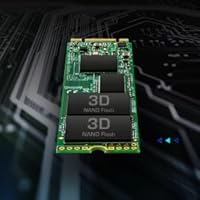
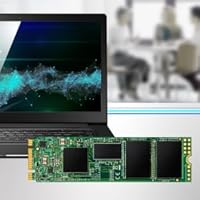
At its technical core, the MTS830S hits the SATA III ceiling with sequential reads up to 560 MB/s and writes up to 520 MB/s — strong numbers for this interface, though sustained write performance on TLC NAND can soften under heavy, prolonged loads, which is worth being upfront about. The onboard DDR3 DRAM cache genuinely helps here, smoothing random read/write latency during multitasking in a way that cacheless budget drives simply cannot match. The 3D TLC NAND architecture stacks cells vertically for better density and longevity over older planar designs, and LDPC error correction quietly guards data integrity on every transfer — a detail that matters more the longer you rely on any drive.

Best For

This 4TB M.2 SSD is a natural fit for anyone constrained to an M.2 SATA slot on an older laptop or motherboard that does not support NVMe — it pulls every bit of performance that interface can deliver. It is also a solid pick for photographers, archivists, or anyone building a secondary storage setup who values capacity over peak speed. What it is not is a stand-in for NVMe where that option exists; users handling heavy video editing, large game libraries, or big dataset processing will bump against the SATA ceiling. For the practical majority upgrading a thin laptop or aging desktop, the trade-off is entirely reasonable and the capacity gain is hard to argue with.

User Feedback

Across over 350 ratings, this Transcend SATA drive holds a 4.5-star average — and working through the actual reviews, that score feels genuinely deserved. Buyers repeatedly highlight how well it fits into ultrabooks and thin laptops, with many noting that installation was straightforward even without prior experience. The sheer 4TB capacity draws consistent praise, particularly from users who were running out of room on older, smaller drives. On the critical side, a few reviewers flag write speed dips during long sustained transfers — a known characteristic of TLC NAND under pressure, not a flaw unique to this drive. Long-term reliability feedback is largely reassuring, with multiple buyers reporting months of consistent, trouble-free use.

Pros

  • 4TB capacity in the M.2 2280 form factor is genuinely rare and fills a real gap in the market.
  • Sequential read speeds reach the practical ceiling of SATA III at 560 MB/s.
  • The DDR3 DRAM cache keeps everyday random read/write performance noticeably smoother than cacheless budget alternatives.
  • 3D TLC NAND construction improves long-term cell endurance compared to older planar designs.
  • LDPC error correction quietly protects data integrity without any user intervention required.
  • B+M Key compatibility means this 4TB M.2 SSD works across a wide range of laptops, ultrabooks, and desktops.
  • Weighing under a quarter of an ounce, it adds nothing meaningful to a slim laptop build.
  • Backward compatibility with older SATA-only systems extends the useful life of aging machines significantly.
  • A 4.5-star average across more than 350 real-world ratings suggests consistent, reliable performance in daily use.
  • Transcend's established track record in storage hardware adds a credible reliability baseline for a less mainstream brand.

Cons

  • SATA III throughput is a hard ceiling — no firmware update will close the gap to NVMe speeds.
  • Sustained write performance can drop under prolonged heavy loads, a known limitation of TLC NAND with a filled cache.
  • The MTS830S sits at a premium price point for a SATA drive, which can be difficult to justify if an NVMe slot is available.
  • No included mounting hardware or adapter, which can be an issue for desktops with M.2 slots that require a screw or bracket.
  • DRAM cache size is not officially disclosed, making it harder to predict exactly where cache exhaustion kicks in.
  • Transcend's warranty terms and regional support coverage deserve a close read before buying, as they vary by location.
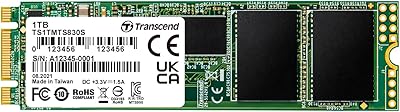
  • Green PCB coloring is a minor cosmetic note but may matter for users with windowed cases or aesthetic builds.
  • The drive is listed as compatible with desktops and laptops, but users should manually verify M.2 SATA support in their specific motherboard before purchasing.

Ratings

The scores below reflect an AI-driven analysis of verified global buyer reviews for the Transcend MTS830S 4TB M.2 SATA SSD, with spam, bot-submitted, and incentivized feedback actively filtered out before scoring. Ratings are built from real-world usage patterns across laptop upgraders, archivists, and desktop builders — not manufacturer claims. Both the genuine strengths and the honest frustrations buyers encountered are factored into every number you see here.

Storage Capacity
94%
Four terabytes in the M.2 2280 SATA form factor is genuinely rare, and buyers notice. Photographers with growing RAW libraries, hobbyist videographers, and users tired of managing multiple external drives consistently cite the capacity as the single biggest reason they chose this drive over anything else in the SATA segment.
A small number of reviewers expected even more headroom for professional archiving workflows and found 4TB fills faster than anticipated. There is currently no 8TB option in this lineup, which leaves heavy-use archivists with limited room to grow within the same interface.
Read Speed Performance
83%
Sequential reads hitting close to the 560 MB/s ceiling translate to genuinely snappy system boot times and quick application launches in everyday laptop use. Buyers upgrading from mechanical hard drives report the difference as transformative, with OS load times dropping dramatically and file browsing feeling nearly instant.
Users coming from NVMe drives sometimes feel let down by real-world read performance on mixed workloads, where the SATA interface becomes a visible bottleneck. The gap is most apparent when reading many small files simultaneously, where latency rather than raw bandwidth becomes the limiting factor.
Write Speed & Sustained Throughput
67%
33%
For typical day-to-day writes — saving documents, downloading software, routine backups — the DRAM cache keeps the MTS830S feeling responsive and well above what any spinning hard drive could offer. Shorter bursts of file writing, which represent the majority of normal computing workloads, land comfortably within the rated range.
Sustained write performance under heavy, prolonged loads is where the TLC NAND architecture shows its limits — speeds can drop noticeably once the write cache saturates during large sequential transfers. Buyers who regularly move hundreds of gigabytes in a single session, such as duplicating large media archives, report visible slowdowns mid-transfer.
Reliability & Longevity
88%
Transcend's enterprise storage background shows up in the LDPC error correction and 3D NAND construction, and buyers who have been running this 4TB M.2 SSD for six or more months consistently report zero issues with data integrity or drive health flags. The overall sentiment around long-term dependability is one of the most positive threads in the review pool.
The sample size for truly long-term feedback beyond twelve months is still limited given the drive's November 2024 launch date, so multi-year endurance data is not yet available at scale. Some buyers noted they would feel more confident with a published TBW endurance rating prominently displayed in product listings.
Compatibility & Fit
91%
The B+M Key edge design and standard M.2 2280 dimensions mean this Transcend SATA drive slots in cleanly across a wide range of older ultrabooks, mid-range laptops, and desktop motherboards without any adapter or modification. Buyers with systems dating back several years consistently report clean recognition at first boot.
A recurring point of confusion in reviews involves buyers who assumed all M.2 slots are interchangeable and discovered their system only supports NVMe after purchasing. This is an interface education issue rather than a product defect, but it generates occasional negative sentiment that affects perceived compatibility satisfaction.
Installation Experience
89%
Reviewers with no prior hardware experience frequently mention completing the installation in under ten minutes with nothing more than a small Phillips-head screwdriver. The drive's light weight and compact footprint make physical handling easy, and Transcend's SSD Scope cloning utility receives praise for simplifying the data migration process.
No mounting screw or bracket is included in the packaging, which catches some desktop builders off guard when their motherboard requires one. A small number of buyers also found Transcend's documentation thin on guidance for first-time installers, requiring them to seek out third-party tutorials.
Value for Money
74%
26%
Within the narrow category of 4TB M.2 SATA drives specifically, buyers generally accept the price as the cost of entry for that capacity tier, and most feel the drive delivers on what it promises. For users with genuine SATA constraints who cannot use NVMe, the value proposition holds up reasonably well against the limited alternatives available.
When buyers compare the price per gigabyte against NVMe drives of similar or greater capacity — which is increasingly common given falling NVMe prices — the value math becomes less favorable for the MTS830S. Reviewers without a firm SATA requirement sometimes express post-purchase regret after discovering NVMe alternatives in a similar price range.
DRAM Cache Effectiveness
81%
19%
The onboard DDR3 DRAM cache makes a tangible difference in random read/write responsiveness during multitasking, and buyers running several applications simultaneously notice the drive keeps up without the stuttering behavior seen in cheaper cacheless SSDs. For office workloads and light creative tasks, the cache does its job quietly and effectively.
The exact cache size is not disclosed in official specs, making it difficult for technically minded buyers to predict precisely where performance will shift under heavy loads. Some power users report that the cache benefits are less apparent during workloads that deliberately bypass caching, such as certain database operations.
Physical Build & Form
86%
At barely over a fifth of an ounce, the drive adds nothing meaningful to a laptop's weight, and the slim 0.14-inch profile fits even tight ultrabook chassis without clearance concerns. The build feels solid in hand with no flex or rattle, which buyers appreciate as a signal of quality component construction.
The green PCB finish, while standard for Transcend, stands out in open-frame desktop builds with windowed side panels where aesthetics matter to the builder. A handful of enthusiast reviewers wished for a darker or neutral board color to better suit their build themes.
Software & Tooling
72%
28%
Transcend's SSD Scope utility covers the fundamentals well — health monitoring, cloning, secure erase, and firmware updates are all accessible through a clean interface that does not require technical expertise to navigate. Buyers who used it for initial OS migration report a generally smooth experience with minimal friction.
SSD Scope is not pre-installed and requires a separate download, which some less experienced buyers miss entirely. Compared to the management software bundled with drives from Samsung or Western Digital, Transcend's tooling feels lighter on advanced diagnostics and lacks features like scheduled health reporting or temperature logging.
Thermal Management
78%
22%
Under typical usage conditions — browsing, document work, media playback — the drive operates at conservative temperatures with no thermal throttling observed in buyer reports. Ultrabook users specifically note that the drive does not contribute meaningfully to chassis warmth during normal daily sessions.
During sustained heavy writes in thermally constrained ultrabooks, a minority of buyers report the drive reaching temperatures that trigger SATA speed scaling as a protective measure. This is an expected behavior for SATA drives in slim enclosures but can catch buyers off guard if they are running intensive batch processes.
Backward Compatibility
87%
The ability to run in older SATA II environments — at reduced but still very usable speeds — extends the useful life of aging systems that might otherwise be stuck with mechanical storage. Several buyers specifically purchased this drive to breathe new life into laptops from 2014 to 2018, reporting successful installations across varied older hardware.
Running the drive in a SATA II slot caps throughput well below its rated ceiling, which some buyers only discover after installation. The product listing could do more to set explicit speed expectations for legacy SATA II environments, as the performance gap versus a SATA III host is noticeable on larger file operations.
Packaging & Unboxing
69%
31%
The drive arrives in protective anti-static packaging that keeps it safe during shipping, and buyers rarely report damage on arrival even after international transit. The no-frills presentation is consistent with Transcend's practical, hardware-focused brand image rather than consumer lifestyle packaging.
Several reviewers note that the box includes almost nothing beyond the drive itself — no installation guide, no mounting hardware, no cable, and no software disc. For buyers new to internal drive upgrades, the sparse packaging can feel underwhelming and leave them scrambling to find setup resources independently.

Suitable for:

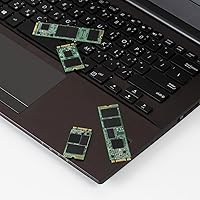
The Transcend MTS830S 4TB M.2 SATA SSD is purpose-built for a specific but surprisingly large group of buyers: people whose systems have an M.2 slot running SATA III rather than NVMe, and who need far more storage than the typical 1TB or 2TB drives in that space provide. Laptop owners running older ultrabooks or thin-and-light machines are the clearest beneficiaries — this drive slots in cleanly, adds virtually no weight, and trades a slower spinning hard drive or cramped smaller SSD for something genuinely roomy. Desktop builders working with motherboards from the mid-2010s era that include M.2 SATA support but predate NVMe are another natural fit. Photographers, hobbyist videographers, and digital archivists who accumulate large libraries over time will appreciate having 4TB of fast, internal storage rather than juggling external drives. If your priority is maximizing usable space within a SATA constraint rather than chasing peak benchmark numbers, this drive makes a compelling, practical case.
Not suitable for:

If your system supports NVMe and speed matters to your workflow, the Transcend MTS830S 4TB M.2 SATA SSD is not the right call — the interface gap between SATA III and modern NVMe is significant, and no amount of DRAM cache closes it. Users doing professional video editing, running large game installs with frequent loading, or processing big datasets will find that the SATA ceiling creates real friction in daily use. It is also worth being direct about sustained write performance: like all TLC NAND drives, prolonged sequential writes can slow once the cache fills, which makes this a poor choice for workloads involving continuous large file transfers. Buyers who assume the M.2 form factor automatically implies NVMe speeds should pause and verify their system specs before purchasing — the slot looks identical, but the performance difference is substantial. For those scenarios, spending more on a proper NVMe drive is the smarter long-term decision.
Specifications

  • Storage Capacity: This drive offers 4TB of usable internal storage, making it one of the highest-capacity options available in the M.2 2280 SATA segment.
  • Form Factor: Built to the M.2 2280 standard, the drive measures 3.15 x 0.87 x 0.14 inches, fitting the slot found in most modern laptops, ultrabooks, and desktop motherboards.
  • Interface: Connects via SATA III at 6 Gb/s, the established standard for SATA-based M.2 drives — distinct from and slower than the NVMe PCIe interface.
  • Key Type: Uses a B+M Key edge connector, which ensures compatibility with both B-keyed and M-keyed M.2 slots across a wide range of systems.
  • Sequential Read: Rated for sequential read speeds up to 560 MB/s, representing the practical performance ceiling for SATA III-based solid state storage.
  • Sequential Write: Rated for sequential write speeds up to 520 MB/s under ideal, cache-assisted conditions on shorter transfer workloads.
  • NAND Type: Uses 3D TLC NAND flash, which stacks memory cells vertically to achieve higher density and improved endurance over older planar NAND designs.
  • Cache Type: Equipped with a DDR3 DRAM cache that stores frequently accessed data mappings, reducing latency and supporting more consistent random read/write performance.
  • Error Correction: Implements Low-Density Parity Check (LDPC) error correction coding to detect and correct data errors on the fly, protecting against silent data corruption.
  • Weight: The drive weighs just 0.212 ounces, adding negligible mass to any laptop or ultrabook installation.
  • Compatible Devices: Officially supported for use in desktops, laptops, and ultrabooks that include an M.2 SATA-compatible slot.
  • Installation Type: Designed for internal installation, intended to serve as either a primary boot drive or a high-capacity secondary storage volume.
  • Backward Compatible: Supports backward compatibility, meaning it functions correctly in systems with older SATA II infrastructure, though at reduced maximum speeds.
  • PCB Color: The drive features a green printed circuit board, consistent with Transcend's standard component aesthetic across their MTS series lineup.
  • Manufacturer: Produced by Transcend Information Inc., a Taiwan-based storage hardware company with over three decades of experience in consumer and enterprise memory products.
  • Model Number: The official model identifier is TS4TMTS830S, part of Transcend's MTS830S product family.
  • Availability Date: This specific 4TB configuration was first made available in November 2024, representing a relatively recent expansion of the MTS830S capacity lineup.

Related Reviews

Transcend MTS830S 1TB M.2 SATA SSD
82%
83%
Read Performance
71%
Write Performance
78%
DRAM Cache Effectiveness
91%
Compatibility
93%
Installation Experience
More
ORICO Y20M 4TB M.2 SATA SSD
76%
94%
Storage Capacity
46%
Compatibility Clarity
71%
Read & Write Speed
88%
Installation Experience
73%
Value for Money
More
S SHARKSPEED 4TB M.2 2242 SATA SSD
84%
92%
Performance
89%
Value for Money
90%
Reliability
86%
Durability
91%
Speed
More
Transcend MTS400 32GB M.2 SATA III SSD
88%
92%
Value for Money
88%
Performance
90%
Read Speed
84%
Write Speed
89%
Power Efficiency
More
Transcend MTS830S 512GB M.2 SSD
79%
82%
Real-World Speed
88%
Value for Money
79%
Compatibility
91%
Installation Experience
89%
Boot & Load Times
More
KingSpec NT 4TB M.2 2280 SATA SSD
73%
93%
Storage Capacity
71%
Read & Write Speed
58%
Compatibility
84%
Value for Money
88%
Installation Ease
More
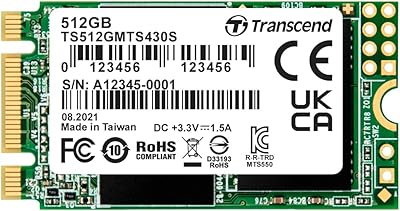
Transcend MTS430S 512GB M.2 SSD
85%
94%
Form Factor Compatibility
76%
Read & Write Speed
83%
Real-World Responsiveness
91%
Installation Ease
89%
Long-Term Reliability
More
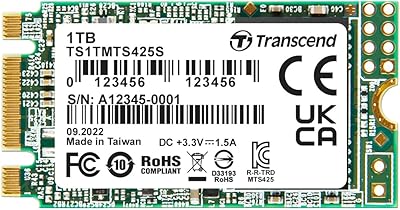
Transcend MTS425S 1TB M.2 2242 SSD
84%
93%
Compatibility & Fit
74%
Read & Write Speed
88%
Value for Money
91%
Installation Ease
86%
Build Quality & Durability
More
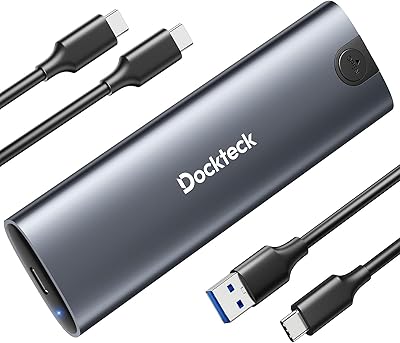
dockteck DH0002 M.2 NVMe/SATA SSD Enclosure
84%
88%
Transfer Speed (NVMe)
76%
SATA Drive Performance
83%
Build Quality
93%
Ease of Setup
79%
Thermal Management
More
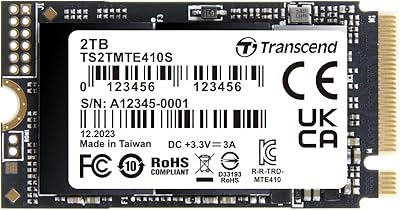
Transcend MTE410S 2TB M.2 NVMe SSD
80%
93%
Device Compatibility
88%
Sequential Read Speed
61%
Sustained Write Performance
86%
Power Efficiency & Battery Impact
91%
Form Factor & Physical Design
More

FAQ

It depends on what type of M.2 slot your laptop has. The Transcend MTS830S 4TB M.2 SATA SSD requires an M.2 slot that supports the SATA protocol — not all M.2 slots do. Some laptops only support NVMe over PCIe, and plugging a SATA drive into one of those will either result in the drive not being recognized or simply not working at all. Check your laptop's manual or motherboard specs for the phrase M.2 SATA support before purchasing.
The easiest approach is to look up your laptop model or desktop motherboard on the manufacturer's support page and find the storage specification section. If it lists M.2 SATA or SATA III among supported protocols, this 4TB M.2 SSD will work. If the slot is listed as PCIe NVMe only, you will need a different drive. Tools like CPU-Z or HWiNFO can also identify your M.2 slot type if you prefer a software check.

For most day-to-day tasks — browsing, office apps, email, even light photo editing — the difference between SATA and NVMe is not dramatic in feel. Where it becomes tangible is during large file transfers, loading big game levels, or working with high-resolution video files. If your workload involves regularly moving tens of gigabytes at a time, an NVMe drive will feel meaningfully faster. For general storage and everyday computing, the MTS830S holds up well.

It can, yes — and it is worth being upfront about this. Like most TLC NAND drives, the MTS830S uses its DRAM cache and a portion of the NAND as a fast write buffer. Once that buffer fills during a very long sustained write, speeds can drop closer to the raw TLC write rate. For typical file transfers and everyday workloads this is not a problem, but if you plan to regularly write hundreds of gigabytes in a single session, keep that in mind.

It works perfectly well as a primary boot drive. Many buyers use it exactly that way in older laptops, replacing a slow hard drive with this 4TB SSD and booting their operating system from it. The DRAM cache helps with the random read workloads that matter most for OS responsiveness. Whether you use it as a boot drive or secondary storage is entirely your call based on your system setup.

Most M.2 SATA SSDs max out at 2TB — 4TB is genuinely uncommon in this form factor. That is one of the main reasons this Transcend drive stands out. If you have been looking for more than 2TB of internal M.2 SATA storage and assumed it was not available, this drive fills that gap directly.

Transcend offers a free utility called SSD Scope, which includes a cloning tool that can help you migrate your existing system or data to the new drive without reinstalling your operating system. It is available as a download from Transcend's official website. Third-party tools like Macrium Reflect Free also work well with this drive if you prefer an alternative.

Transcend typically backs their MTS830S line with a three-year limited warranty, though warranty terms can vary by region and retailer. It is worth confirming the specific warranty coverage from where you purchase, particularly if you are buying internationally. Transcend has a dedicated support portal and is generally regarded as responsive for RMA requests within covered regions.

The M.2 2280 form factor is standard across the vast majority of ultrabooks, and at just 0.14 inches thick and 0.212 ounces, this drive is about as slim and light as M.2 drives get. Physical fitment in a thin chassis is rarely an issue. The main check is always the interface compatibility — confirm your ultrabook supports SATA on its M.2 slot, and the physical installation itself should be straightforward.

Reviewers frequently mention it working reliably for everyday laptop use, large media libraries, photo archives, and as a clean upgrade from aging hard drives in older systems. Several users with thin-and-light laptops specifically call out the easy installation and the immediate quality-of-life improvement over spinning HDDs. Complaints are relatively rare and mostly limited to buyers who expected NVMe-level speeds — a mismatch in expectations rather than a product defect.