Overview

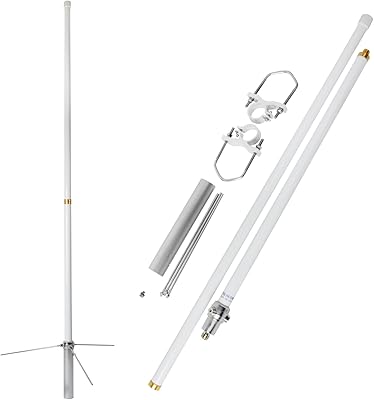
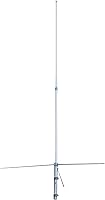
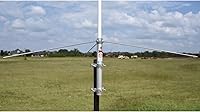
The Tram 1480 Dual-Band Fiberglass Base Antenna has been a go-to choice for amateur radio operators and commercial users for well over two decades. This fiberglass base antenna covers both VHF and UHF bands, so you get meaningful coverage on two frequencies without doubling your hardware. Built in two sections and stretching a full 100 inches, it sits comfortably in the mid-range tier — solid quality without an exotic price tag. One thing buyers should know upfront: Tram has discontinued this model, meaning stock is finite and support is limited. That said, its loyal following and hundreds of real-world ratings speak to a track record that newer antennas are still working to match.

Features & Benefits

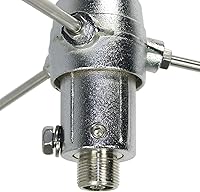
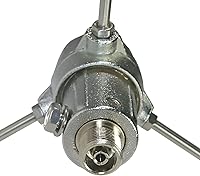
On the technical side, the Tram 1480 covers 144–148 MHz on VHF with a 6 dBd gain and 430–450 MHz on UHF at 8 dBd — both respectable numbers for a fixed base installation. It handles up to 200 watts, which is plenty for serious amateur use or light commercial work. The two-section fiberglass body is rated for winds up to 110 MPH, so it holds up in genuinely rough weather. Despite standing over eight feet tall, it weighs only 2.2 pounds, making rooftop or mast mounting far less of a chore than you might expect. The standard SO-239 connector means it plays nicely with virtually any common transceiver right out of the box.

Best For

This dual-band antenna is a natural fit for licensed ham radio operators running a home base station who want clean coverage across both the 2-meter and 70-centimeter bands without juggling two separate antennas. If you live in a windy region or deal with harsh seasonal weather, the rugged fiberglass build is worth taking seriously. It also suits anyone whose existing radio already has an SO-239 port — no adapters needed, just connect and transmit. That said, if you need multiband coverage beyond VHF and UHF, or if you are chasing the latest hardware with active manufacturer warranties, this fiberglass base antenna may not be the right call. For proven, no-fuss performance on those two core bands, though, it is hard to argue with the track record.

User Feedback

The community response to the Tram 1480 has been consistently strong, with most owners reporting a noticeable improvement in signal reach compared to mobile whips or indoor antennas. Assembly is notably quick and painless, and the two-section design comes together without much fuss. Where buyers do raise concerns, the discontinued status is the loudest: tracking down a genuine unit at a fair price is becoming trickier, and a handful of reviewers have flagged concerns about third-party sellers offering suspicious stock. Long-term users generally report solid durability through multiple seasons of rain, wind, and temperature swings. A few operators note that this dual-band antenna punches above its weight compared to more expensive options in the same frequency range, which keeps demand alive even years after production ended.

Pros

  • Covers both VHF and UHF bands from a single antenna, eliminating the need for two separate installations.
  • Handles up to 200 watts, giving serious amateur operators plenty of headroom for high-power transmissions.
  • The fiberglass construction holds up well through harsh weather, including high winds and temperature extremes.
  • At only 2.2 pounds, installation on a mast or rooftop is manageable without specialized lifting equipment.
  • The standard SO-239 connector works with the vast majority of common amateur and commercial transceivers out of the box.
  • Long-term owners consistently report strong durability across multiple seasons without performance degradation.
  • The two-section joint design keeps structural integrity close to what a single-piece antenna would offer.
  • Users frequently note a clear signal improvement over mobile whips or indoor antennas after switching to this dual-band antenna.
  • Community feedback over many years makes it easier to find real installation tips, grounding advice, and troubleshooting help online.
  • Offers competitive performance compared to higher-priced alternatives in the same frequency range.

Cons

  • Discontinued by the manufacturer, making it harder to find genuine units and impossible to get official support.
  • Third-party sellers have drawn complaints about suspicious or misrepresented stock, so sourcing requires extra caution.
  • Frequency coverage is fixed to two specific bands, with no flexibility for operators who work outside those ranges.
  • At over 100 inches tall, it is impractical for renters, HOA-restricted properties, or anyone with limited mounting space.
  • No manufacturer warranty is available for new purchases, leaving buyers entirely reliant on seller return policies.
  • The two-section design introduces a joint that, while engineered carefully, is still a potential weak point compared to a one-piece build.
  • Buyers in markets with tight availability may end up overpaying due to limited supply of genuine units.
  • There is no built-in weatherproofing on the connector, so additional coax sealing is recommended in wet climates.

Ratings

The scores below reflect an AI-driven analysis of verified buyer reviews for the Tram 1480 Dual-Band Fiberglass Base Antenna, sourced globally and filtered to remove spam, incentivized posts, and bot activity. Ratings are calculated across multiple real-world performance dimensions, capturing both what operators love about this fiberglass base antenna and the recurring frustrations that honest buyers have flagged over the years. Nothing is glossed over: strengths and pain points are weighted equally in every category score.

Signal Performance
88%
Operators consistently report a significant step up in signal clarity and reach compared to mobile whips or indoor antennas they previously used. On both the 2-meter and 70-centimeter bands, users running base stations in suburban and semi-rural areas describe noticeably cleaner contacts at distances that surprised them.
In dense urban environments with heavy RF interference, the gain advantage narrows and some users feel the improvement over a shorter antenna is less dramatic than expected. A handful of reviewers note that real-world range falls well short of theoretical maximums, particularly in hilly or obstructed terrain.
Build Quality
83%
The two-section fiberglass body has earned consistent praise from long-term owners who have run this dual-band antenna through multiple winters, heavy rain, and sustained wind events without visible cracking or joint failure. The special coupler between sections holds firmly and does not rattle or loosen over time under normal mounting conditions.
A small number of buyers have reported minor inconsistencies in the finish quality of the fiberglass sections, including slight surface roughness near the joint. The connector housing, while functional, does not feel as robust as the antenna body itself and benefits from weatherproofing tape in wet climates.
Weather Resistance
86%
The 110 MPH wind rating is not just a marketing figure for most users: long-term owners in coastal and plains regions report that this fiberglass base antenna survives severe storms that damage lesser antennas nearby. The non-conductive fiberglass material also resists corrosion far better than aluminum alternatives in salt-air environments.
Ice accumulation in northern climates adds unexpected mechanical load that the antenna handles with mixed results, with a few users reporting hairline stress marks at the joint after an unusually harsh ice storm. Connector weatherproofing is not included and must be handled by the installer, which catches less experienced buyers off guard.
Ease of Installation
91%
Assembly genuinely takes under fifteen minutes for most people: the two sections align cleanly, and the SO-239 connector accepts a standard PL-259 coax termination without tools or adapters. At only 2.2 pounds, solo rooftop installation on a standard mast pipe is realistic even for operators working without a helper.
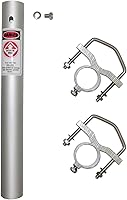
The antenna does not ship with mounting hardware, which requires a separate purchase and occasionally trips up first-time installers who assumed it was included. A few users also mention that the instruction documentation is minimal, leaving newer ham operators to rely on online community guides for grounding and mast-selection advice.
Connector Compatibility
89%
The standard 50-ohm SO-239 interface means this dual-band antenna connects directly to virtually every dual-band amateur transceiver on the market today, including rigs from Yaesu, Kenwood, Icom, and Baofeng adapter setups. Buyers repeatedly note the plug-and-play nature of the connection as one of the most practical aspects of the design.
The connector itself is not sealed from the factory, which means moisture can work its way in over time if coax seal or self-amalgamating tape is not applied during installation. In very cold climates, the metal connector can also develop a slight film of surface oxidation if left exposed, requiring periodic inspection.
Value for Money
79%
21%
Across hundreds of reviews, users frequently note that this fiberglass base antenna delivers performance comparable to antennas in a significantly higher price bracket, making it a smart buy for operators who want serious base station capability without overspending. The dual-band coverage from a single antenna also saves the cost and complexity of running separate VHF and UHF antennas.
Because the antenna is discontinued, retail prices have drifted upward as remaining stock shrinks, and some buyers feel the current going rate no longer reflects the original value proposition. A few operators who paid a premium from third-party resellers expressed frustration that they essentially funded a middleman markup on aging inventory.
Gain Accuracy
82%
18%
Users who have tested the Tram 1480 with an SWR meter and compared its on-air performance against the rated 6 dBd on VHF and 8 dBd on UHF generally confirm that the published specs are close to reality, which is not always the case in this product category. Experienced operators appreciate that the antenna does not rely on inflated dBi figures to make the numbers look impressive.
A minority of technically focused reviewers using calibrated equipment noted that the UHF gain figure can vary slightly depending on mounting height and ground plane conditions, suggesting the spec reflects ideal installation rather than all real-world scenarios. Users in challenging RF environments sometimes feel the gain is marginally lower than expected on the upper end of the UHF band.
Durability Over Time
84%
Multi-year owners are among the most vocal supporters of this dual-band antenna, with several reporting five-plus years of continuous outdoor use without meaningful degradation in SWR or mechanical condition. The fiberglass material ages well and does not pit or flake the way some painted metal antennas do after prolonged UV exposure.
The joint between the two sections is the most commonly cited long-term vulnerability, with a small number of users noting that repeated thermal expansion and contraction cycles can gradually loosen the fit over several years. Periodic re-tightening of the joint is a practical maintenance step that the manufacturer documentation does not explicitly address.
Bandwidth Coverage
77%
23%
For operators whose activity is concentrated in the standard 2-meter and 70-centimeter ham bands, the 4 MHz VHF window and 20 MHz UHF window cover all practical operating frequencies comfortably, including repeater inputs, simplex channels, and APRS frequencies. The UHF bandwidth in particular is wide enough to cover the full 70-centimeter band segment most amateurs actually use.
Operators who want to monitor or transmit outside the 144–148 MHz or 430–450 MHz windows will find this fiberglass base antenna entirely unsuitable, as it is purpose-tuned and offers no flexibility beyond those ranges. Public safety and commercial users who need coverage across wider or adjacent frequency blocks will need to look at a broadband or discone-style alternative.
Availability & Stock
41%
59%
For buyers who locate a legitimate unit from a reputable seller, the antenna itself delivers on its promise and the purchasing experience can be smooth. Some established dealers and ham radio specialty retailers still carry verified genuine stock, and patient buyers willing to shop around can still find the antenna at reasonable prices.
The discontinued status creates a genuinely difficult buying landscape: stock is unpredictable, prices fluctuate widely, and third-party marketplace listings have attracted complaints about counterfeit or misrepresented units. There is no manufacturer channel to verify authenticity, and buyers who receive a substandard unit have limited recourse beyond the seller’s own return policy.
SWR Stability
81%
19%
Most users report consistently low SWR readings across the rated operating bands right out of the box, with many achieving 1.5:1 or better without any tuning adjustments. This out-of-the-box performance is particularly appreciated by operators who do not own an antenna analyzer and prefer not to experiment with trimming.
A small subset of buyers report SWR readings that are higher than expected on initial setup, which in most documented cases traced back to improper coax preparation or an unsealed connector rather than a defect in the antenna itself. Diagnosing these issues remotely is difficult for less experienced users who lack test equipment.
Manufacturer Support
29%
71%
The antenna’s long production run means a large and active community of users exists online, and practical support in the form of installation guides, grounding tips, and troubleshooting threads is widely available through ham radio forums and communities at no cost. Experienced operators are generally generous with advice for new Tram 1480 owners.
Official manufacturer support is effectively nonexistent for this antenna now that Tram has discontinued it, meaning warranty claims, replacement parts, and factory assistance are simply not available. Buyers who encounter a defective unit are entirely dependent on the seller for resolution, and community knowledge, while helpful, cannot fully substitute for formal support infrastructure.
Mounting Flexibility
72%
28%
The antenna’s light weight opens up a wider range of mounting options than heavier fiberglass or aluminum alternatives, including thinner mast pipes and non-reinforced eave mounts that might not safely support a heavier antenna. This makes it practical for apartment rooftops, fence posts, and other installations where structural loading is a concern.
The antenna is strictly designed for vertical polarization on a fixed mast, offering no built-in adjustment for horizontal or cross-polarization applications. Users who need to experiment with antenna orientation or who want to deploy the antenna in a non-standard configuration will find the design offers no accommodation for that kind of flexibility.

Suitable for:

The Tram 1480 Dual-Band Fiberglass Base Antenna is ideally matched to licensed amateur radio operators who want dependable, simultaneous coverage across both the 2-meter VHF band and the 70-centimeter UHF band from a single fixed installation. If you run a home base station with a standard SO-239-equipped transceiver, this antenna connects without adapters or modifications, which keeps the setup process straightforward. Operators in regions with strong seasonal winds will appreciate the rugged fiberglass construction, which is rated to withstand gusts up to 110 MPH without compromising the antenna structurally. Despite its nearly eight-and-a-half-foot height, the 2.2-pound weight makes solo rooftop or mast mounting realistic for most people. Buyers who prioritize a community-tested, field-proven design over the latest-generation hardware will find that the Tram 1480 has earned its reputation honestly across a large pool of real-world users over many years.

Not suitable for:

The Tram 1480 Dual-Band Fiberglass Base Antenna is not the right choice for operators who need coverage beyond the 144–148 MHz and 430–450 MHz windows, as it is a purpose-built dual-band antenna with no flexibility outside those ranges. Because Tram has officially discontinued this model, buyers cannot count on manufacturer support, replacement parts, or consistent retail availability, which is a meaningful risk for anyone planning a long-term installation. Those who prefer purchasing directly from a verified, active manufacturer with a current warranty program should look elsewhere. Mobile operators or those needing a compact, portable antenna will find the 100-inch, two-section format impractical for anything other than a fixed base setup. If you are newer to ham radio and unsure whether VHF and UHF base operation fits your actual use pattern, committing to this antenna before nailing down your operational needs may lead to buyer’s remorse.

Specifications

  • VHF Frequency: This antenna covers the 144–148 MHz VHF band with a 4 MHz total bandwidth.
  • UHF Frequency: UHF coverage spans 430–450 MHz with a 20 MHz bandwidth for wider channel flexibility.
  • VHF Gain: VHF performance is rated at 6 dBd, providing a meaningful signal advantage over a standard dipole reference.
  • UHF Gain: On the UHF band, gain reaches 8 dBd, which is well-suited to both voice and data links on the 70-centimeter band.
  • Power Rating: The antenna handles up to 200 watts of continuous power, supporting high-output amateur and light commercial transceivers.
  • Impedance: Nominal impedance is 50 ohms, matching the standard output of the vast majority of amateur and commercial radio equipment.
  • Connector Type: A UHF SO-239 female connector is included, allowing direct attachment to PL-259-terminated coaxial cables without adapters.
  • Height: The assembled antenna stands 100 inches tall, approximately 8.3 feet, requiring adequate vertical clearance on the mounting structure.
  • Construction: The body consists of two fiberglass sections joined by a specially engineered coupler designed to replicate the structural rigidity of a one-piece build.
  • Wind Rating: The fiberglass assembly is rated to withstand sustained wind speeds of up to 110 MPH without structural failure.
  • Weight: Total assembled weight is 2.2 pounds, keeping rooftop and mast installation practical without heavy hardware or multiple installers.
  • Package Dimensions: The antenna ships in a box measuring approximately 62″ x 5″ x 2.25″, reflecting its two-section disassembled form.
  • Manufacturer: The Tram 1480 was produced by Tram, a U.S.-based antenna manufacturer with a long history in amateur and commercial radio products.
  • Availability Status: This model has been officially discontinued by Tram, meaning new production runs are no longer planned and retail stock is finite.
  • Number of Sections: The antenna consists of two fiberglass tube sections that connect at a single reinforced joint during assembly.
  • Recommended Use: Designed for fixed outdoor base station installations, this antenna is not engineered for mobile or portable applications.

Related Reviews
Tram 1477 Dual-Band VHF/UHF Base Antenna
79%
91%
Ease of Setup
78%
RF Performance
83%
Build Quality
86%
Value for Money
67%
Connector Quality
More
Diamond Antenna X30A Dual-Band Base Antenna
80%
91%
Signal Performance
88%
Build Quality
86%
Weatherproofing
84%
Ease of Installation
89%
SWR Consistency
More
Diamond X50A Dual-Band VHF/UHF Base Antenna
78%
88%
RF Performance
91%
Out-of-Box SWR
84%
Build Quality
79%
Weather Durability
76%
Ease of Assembly
More
UAYESOK Dual Band Fiberglass Radio Antenna 17-inch SO239 Connector
88%
89%
Signal Performance
93%
Durability & Weather Resistance
88%
Ease of Installation
90%
Build Quality
85%
Portability
More
HYS 144/430MHz Dual-Band Base Station Antenna
77%
83%
RF Performance
78%
Build Quality
88%
Ease of Setup
81%
Weatherproofing
62%
Mounting Hardware
More
Tram 1411 Wideband Discone Scanner Base Antenna
72%
94%
Frequency Coverage
88%
Reception Performance
83%
Build Quality
57%
Ease of Installation
81%
Transmit Capability
More
HYS TC-YG08UV Dual-Band Yagi Antenna
70%
83%
Signal Gain Performance
76%
Build Quality
81%
Weather Resistance
84%
Ease of Assembly
61%
Aiming & Directional Usability
More
Tram 1602 VHF Marine Antenna
82%
91%
Build Quality
78%
Signal Performance
93%
Ease of Installation
94%
Quick-Disconnect Usability
62%
Cable Length & Quality
More
Linksys EA2700 Dual-Band Router
82%
84%
Wireless Performance
78%
Signal Coverage
88%
Setup & Installation
90%
Wired Connectivity
81%
Reliability
More
Tram 1604 VHF/AIS Marine Antenna
82%
86%
Build Quality
79%
Signal Performance
77%
AIS Reception
91%
Ease of Installation
84%
Corrosion Resistance
More

FAQ

Yes, as long as your radio uses a standard PL-259 coaxial connector on the output, it will mate directly with the SO-239 on this fiberglass base antenna without any adapter. Most Yaesu, Kenwood, and Icom dual-band radios are fully compatible.

Assembly is genuinely straightforward. The two fiberglass sections thread or slide together at the joint, and most users report completing the full assembly in just a few minutes. No special tools are required, though applying a small amount of coax sealant at the joint and connector is a good idea for outdoor installations.

Grounding is strongly recommended for any outdoor antenna, and this dual-band antenna is no exception. A proper ground connection at the base of the mounting mast helps protect your radio equipment from static buildup and lightning-induced surges. Many experienced operators in the ham community specifically flag grounding as the single most important installation step.

Technically possible, but not ideal. Fiberglass does not block RF the way metal roofing or foil-backed insulation does, so attic performance can be acceptable in some cases. That said, this antenna is engineered for outdoor use, and you will get noticeably better results mounting it in the open air where the signal path is unobstructed.

For most home base installations, LMR-400 or equivalent low-loss 50-ohm coax is the practical choice, especially if your cable run is longer than 25 to 30 feet. Thinner RG-8X works for shorter runs but introduces more loss over distance. Always match the 50-ohm impedance of the antenna to avoid SWR issues.

That is a legitimate concern worth taking seriously. With the Tram 1480 Dual-Band Fiberglass Base Antenna out of production, some third-party sellers have listed questionable stock. Buying from a well-reviewed, reputable seller with a clear return policy is the safest approach, and it helps to compare the unit physically against known reference photos once it arrives.

The antenna itself does not include a mast or mounting bracket. You will need a separate pipe mount or antenna mast clamp rated for the pipe diameter at the base of the antenna. A standard 1.25-inch to 1.5-inch mast works well for most installations, and the light weight of this dual-band antenna means you do not need heavy-duty structural hardware.

The fiberglass body itself holds up well in rain and moderate ice, and the 110 MPH wind rating means it is not going to come apart in a typical severe storm. Heavy ice accumulation adds unexpected mechanical load that no antenna is fully immune to, but long-term owners report that this fiberglass base antenna survives normal winter conditions without significant damage.

The 6 dBd on VHF and 8 dBd on UHF are measured against a dipole reference, which is a more honest benchmark than the inflated dBi figures some manufacturers use. Real-world performance matches the specs closely for most users, though actual range depends heavily on terrain, local RF noise, and how high you can mount the antenna.

It works fine for APRS, packet, and other digital modes that operate within the 144–148 MHz or 430–450 MHz windows, since the antenna does not care whether the signal is voice or data. As long as your operating frequency falls within those bands and your power stays under the 200-watt limit, the antenna performs the same regardless of the mode.