Overview

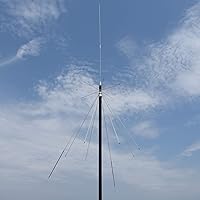
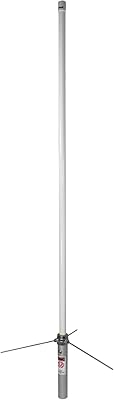
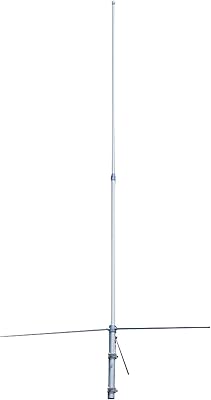
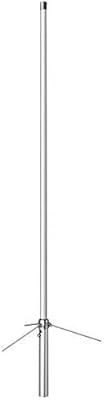
The Tram 1411 Wideband Discone Scanner Base Antenna is built for the kind of hobbyist who refuses to compromise on frequency coverage — someone who wants public safety, aviation, marine, and amateur bands all reachable from a single rooftop installation. Its sweep from 25 MHz to 1,300 MHz is the real draw, and at its mid-range price point, that coverage is hard to beat. TRAM-BROWNING has been selling this discone antenna since 2013, and with over 693 ratings averaging 4.5 stars, it has earned a legitimate track record. One thing needs to be clear upfront, though: line-of-sight operation is not a suggestion. This wideband base antenna must be mounted outdoors, elevated above every obstruction around it, or you will not get what you paid for.
Features & Benefits

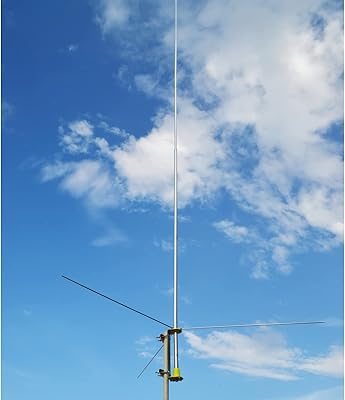
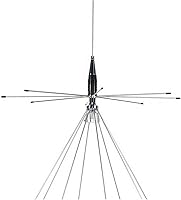
The coverage story starts with 25 MHz to 1,300 MHz reception — that single span pulls in CB chatter, VHF aviation traffic, weather broadcasts, public safety dispatches, and UHF amateur repeaters without ever touching a second antenna. Beyond receiving, the Tram 1411 handles up to 300 watts and supports ten transmit bands, so licensed operators can actually talk back on frequencies like 144 MHz, 440 MHz, and 900 MHz. The radial array is adjustable — two of the lower radials extend from 48 to 53 inches, which lets you tune for specific bands rather than accepting a generic compromise. Stainless steel construction and a standard 50-ohm impedance round out a design that is clearly built for long-term outdoor service.

Best For

This discone antenna earns its place on the rooftop of someone already committed to the hobby. If you are scanning multiple frequency bands and tired of switching antennas or accepting gaps in coverage, the Tram 1411 is a natural consolidation point. Amateur radio operators holding licenses across VHF and UHF bands will find the multi-band transmit capability genuinely useful rather than a novelty. That said, you need real mounting height — think well above the roofline, not a second-floor window bracket. Rural and suburban settings with open sky exposure are ideal. Newcomers should also be comfortable doing some research on radial tuning, or at least willing to learn, because the adjustment process takes real technical confidence.

User Feedback

With a 4.5-star average across more than 693 reviews, the consensus is clear: proper installation makes or breaks the experience. Buyers who get this wideband base antenna high in the air consistently report a meaningful jump in reception quality compared to smaller alternatives, and the build quality draws frequent praise. On the other side, several reviewers found the included instructions thin — tuning the radials without prior RF knowledge requires outside research, and that catches some buyers off guard. Coax cable quality also comes up repeatedly; a cheap or poorly terminated feedline will quietly strangle performance. A smaller number of buyers reported bent radials on arrival, which appears to be a packaging vulnerability worth checking before you start assembly.

Pros

  • Covers 25 MHz to 1,300 MHz, replacing several band-specific antennas with a single installation.
  • Handles up to 300 watts, making it usable for transmit — not just passive scanning.
  • Ten discrete transmit bands give licensed operators real multi-band flexibility from one mount.
  • Adjustable lower radials allow genuine tuning rather than forcing a one-size-fits-all compromise.
  • Stainless steel build holds up well outdoors through weather and seasonal temperature swings.
  • Standard 50-ohm impedance works directly with virtually any scanner or transceiver without matching hardware.
  • A track record since 2013 with 693-plus ratings provides meaningful real-world confidence.
  • Ranked in the top 300 in its category, reflecting consistent buyer satisfaction over time.
  • Lightweight at under 3 pounds, making rooftop handling and pole mounting manageable solo.

Cons

  • Included instructions are minimal — radial tuning without prior RF knowledge requires outside research.
  • Strictly line-of-sight; any obstruction between the antenna and the signal kills performance.
  • Coax cable is not included, and using a cheap feedline will quietly undercut the antenna's potential.
  • Some buyers have reported bent or damaged radials arriving due to packaging limitations on such a long item.
  • Manual radial adjustment is not intuitive for beginners and can be time-consuming to get right.
  • Requires a sturdy pole mount well above the roofline — installation is not a casual weekend task.
  • Not viable for indoor, attic, or apartment use under any practical circumstances.
  • No built-in weatherproofing on the connector end — the feedline junction needs attention in wet climates.

Ratings

The scores below reflect an AI-assisted analysis of verified global buyer reviews for the Tram 1411 Wideband Discone Scanner Base Antenna, with spam, bot-generated, and incentivized feedback actively filtered out before scoring. Ratings are derived from patterns in real user experiences across setup, daily use, and long-term ownership — both the strengths and the genuine frustrations are represented as transparently as the data allows.

Frequency Coverage
94%
The 25 MHz to 1,300 MHz sweep is the single most praised feature across reviews — buyers consistently report pulling in aircraft, public safety, weather, and amateur bands simultaneously with no switching or compromise. For scanner hobbyists who previously juggled two or three antennas, consolidating into one feedline is a real quality-of-life upgrade.
A small number of buyers note that the lower end of the receive range (below 50 MHz) is less sensitive than purpose-built antennas for those bands. It is a discone, not a dedicated low-band antenna, and that trade-off shows when targeting HF-adjacent frequencies.
Reception Performance
88%
When properly installed at height with quality coax, buyers describe noticeably cleaner and longer-range reception compared to smaller whip or mag-mount alternatives. Public safety and aviation monitoring in particular draw strong praise, with users reporting signals from significantly farther distances after switching to this wideband base antenna.
Performance drops sharply when mounting conditions are compromised — even partial obstruction by a roofline or tree line produces a meaningful signal degradation. Several reviewers who rated it poorly were ultimately identified as having mounted it too low, which skews expectations for prospective buyers.
Build Quality
83%
The stainless steel construction inspires confidence, and multi-year outdoor owners generally report no significant corrosion, rust, or structural fatigue even in wet climates. The radials feel solid rather than flimsy, which matters when you are trusting the assembly to hold up through wind and seasonal temperature swings.
Shipping damage to the longer radials is a recurring outlier complaint — the packaging does not always protect the full length of the assembly adequately during transit. A handful of buyers received bent radials out of the box, which requires careful inspection before installation.
Ease of Installation
57%
43%
Experienced antenna installers and licensed hams find the physical assembly straightforward — the radial count is manageable and the pole-mount fitting works with standard mast hardware. Those with even basic RF knowledge tend to get it up and operational without significant issues.
The included documentation is widely described as inadequate. First-time builders or scanner hobbyists without an RF background frequently struggle with the radial tuning process, needing to consult outside forums or YouTube guides before achieving proper SWR readings. This is the most consistent criticism across all review sources.
Transmit Capability
81%
19%
Licensed amateur radio operators praise the ten-band transmit coverage, particularly the inclusion of 144 MHz, 440 MHz, and 900 MHz — three of the most actively used ham bands in North America. The 300-watt power ceiling means it pairs comfortably with most mobile and base transceivers without being the bottleneck.
Achieving low SWR across all transmit bands simultaneously is not realistic without careful individual radial adjustment, and some buyers find this process more involved than they anticipated. CB-specific users should also note the 200-watt limit on those bands rather than the full 300-watt rating.
Radial Tunability
72%
28%
The two adjustable lower radials give this antenna genuine flexibility that fixed-design alternatives lack — users targeting specific bands like 70 cm or 33 cm can optimize rather than accept a generic average. Hobbyists who invest time in the tuning process report meaningfully better SWR on their priority bands.
The adjustment range is limited to two of the eight lower radials, so the tuning flexibility has a ceiling. Without an antenna analyzer, confirming whether your adjustments are actually helping is guesswork, which frustrates buyers who do not already own that test equipment.
Weather Resistance
79%
21%
Long-term owners in rainy or humid regions generally report no meaningful degradation to the radial elements or antenna body over multiple years of outdoor use. The stainless steel choice is clearly deliberate and pays dividends compared to antennas with painted aluminum elements that eventually pit or corrode.
The connector junction at the base is a vulnerability in wet environments — no weatherproofing is built in at the feedline attachment point. Buyers in coastal or high-rainfall areas who skip the step of sealing the connection with self-amalgamating tape have reported premature connector corrosion.
Coax Compatibility
86%
The standard SO-239 connector interfaces directly with PL-259-terminated coax, meaning it works out of the box with most existing feedlines in a ham shack or scanner setup. No adapters or special connectors are required for the majority of buyers.
The antenna itself does not include any coax, and the quality of the feedline has an outsized effect on overall performance. Buyers using budget RG-58 cable — particularly on longer runs — consistently report worse results than those using LMR-400 or equivalent low-loss alternatives.
Value for Money
77%
23%
For buyers who install it correctly and commit to quality coax, the cost-per-band covered is genuinely difficult to beat at this price tier. Replacing what this discone antenna does with multiple single-band alternatives would cost considerably more and require additional feedline management.
Buyers who encounter installation difficulties or receive a unit with shipping damage feel the value proposition erodes quickly, especially given the sparse instructions. For a product that demands real technical investment to perform properly, the lack of better documentation feels like a gap relative to the asking price.
Mounting Flexibility
48%
52%
The pole-mount design is compatible with a wide range of standard mast hardware, and the relatively light weight of under 3 pounds means most standard TV antenna poles and tripod mounts can handle it without reinforcement.
There is no real mounting flexibility here in the broader sense — this antenna has exactly one viable mounting scenario: outdoors, on a pole, high above obstructions. Buyers hoping for any kind of versatile or discrete installation will be disappointed, and this constraint eliminates it entirely for apartment or urban dwellers.
Packaging & Unboxing
53%
47%
The packaging does manage to ship a fragile, multi-radial antenna affordably, and the majority of buyers receive units intact. Components arrive organized enough that the assembly process can begin without significant confusion about what each piece is.
The size of the antenna creates a genuine packaging challenge that the current solution does not always solve. Bent radials on arrival appear in enough reviews to be a pattern rather than a fluke, and there is no protective sleeve or foam insert specifically shielding the radial tips during transit.
Documentation & Support
41%
59%
The manufacturer has been in the antenna business long enough that third-party resources — online forums, amateur radio community guides, and YouTube installation walkthroughs — fill in most of the gaps left by the official documentation.
The included instructions are described by multiple buyers as minimal to the point of being unhelpful for anyone without prior antenna installation experience. There is no tuning guide, no band-by-band radial adjustment chart, and no SWR target reference — information that would meaningfully reduce buyer frustration at no cost to the manufacturer.
Long-Term Reliability
82%
18%
The product has been on the market since 2013 and buyers who report using it for three or more years consistently describe it as still performing to original specification. Stainless steel ages better than most alternative materials in this category, and there are no active electronics to fail over time.
The connector area remains the most likely long-term failure point, particularly for installations that were not properly weatherproofed at setup. A small number of long-term owners report degraded performance traced back to oxidation at the feedline junction rather than any failure of the antenna elements themselves.

Suitable for:

The Tram 1411 Wideband Discone Scanner Base Antenna is the right choice for dedicated scanner hobbyists and licensed amateur radio operators who want a single outdoor antenna capable of covering an enormous swath of the radio spectrum without compromise. If you regularly monitor public safety frequencies, aircraft communications, weather channels, or marine traffic — and want all of that accessible through one feedline — this discone antenna delivers in a way that smaller or band-specific antennas simply cannot. It also makes practical sense for hams who hold VHF and UHF privileges and want transmit capability across multiple bands without swapping hardware. The key qualifier is physical: you need a real mounting location, well above your roofline and clear of trees, buildings, and any other obstructions. Buyers in rural or open suburban settings with a sturdy pole mount available will get the most out of this wideband base antenna, especially if they have some RF background or are prepared to research the radial tuning process before firing it up.
Not suitable for:

The Tram 1411 Wideband Discone Scanner Base Antenna is a poor fit for anyone who cannot commit to a proper elevated outdoor installation — and that eliminates a larger group of potential buyers than many realize. Apartment dwellers, renters without roof access, or anyone planning to use it indoors or in an attic will almost certainly be disappointed; the line-of-sight requirement is a hard physical constraint, not a guideline. It is also not the right antenna for someone who wants a plug-and-play experience, since manually tuning the radials for specific bands requires real RF knowledge, and the documentation included in the box does not bridge that gap. First-time scanner buyers who have never worked with base antennas before may find the learning curve steeper than expected. If your scanning needs are limited to a narrow slice of spectrum, a purpose-built single-band or dual-band antenna would likely outperform this discone antenna at a lower cost and with less installation complexity.
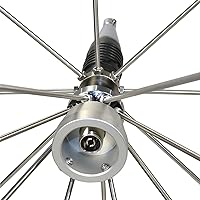
Specifications

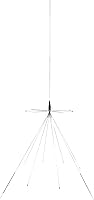
  • Antenna Type: Super Discone design optimized for wideband reception and multi-band transmit capability.
  • Frequency Range: Covers 25 MHz to 1,300 MHz for reception across CB, VHF, UHF, and microwave-adjacent bands.
  • Transmit Bands: Supports transmit on ten discrete bands: 26, 27, 46, 49, 72, 144, 220, 440, 900, and 1,290 MHz.
  • Power Handling: Rated for up to 300 watts maximum, with a specific 200-watt limit when used on CB frequencies.
  • Impedance: 50-ohm impedance matches standard coaxial feedlines used by most scanners and amateur transceivers.
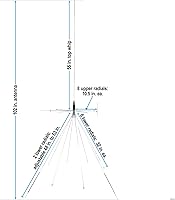
  • Lower Radials: Includes six fixed lower radials, each measuring 32 inches in length.
  • Adj. Radials: Two adjustable lower radials extend from 48 to 53 inches to allow band-specific tuning.
  • Upper Radials: Eight upper radials each measure 10.5 inches and contribute to the upper-band reception geometry.
  • Material: Constructed from stainless steel for corrosion resistance and long-term outdoor durability.
  • Item Weight: The antenna weighs 2.7 pounds, keeping rooftop pole-mounting manageable for a single installer.
  • Package Size: Ships in a box measuring 33.75 x 4.75 x 2.2 inches to accommodate the full radial assembly.
  • Mounting Type: Pole-mount design intended for outdoor elevated installation above all surrounding obstructions.
  • Operation Mode: Line-of-sight only; signals cannot penetrate buildings, trees, hills, or other physical barriers.
  • Connector: Uses a standard SO-239 (UHF female) connector for attachment to a PL-259-terminated coax feedline.
  • Color: Silver finish consistent with the stainless steel construction.
  • Manufacturer: Designed and sold by TRAM-BROWNING, a long-established name in consumer and amateur radio antennas.
  • Model Number: Designated as model 1411 by the manufacturer.
  • Max Range: Manufacturer lists a maximum range figure of 79,200 feet under ideal line-of-sight conditions.

Related Reviews

Tram 1477 Dual-Band VHF/UHF Base Antenna
79%
91%
Ease of Setup
78%
RF Performance
83%
Build Quality
86%
Value for Money
67%
Connector Quality
More
Tram 1480 Dual-Band Fiberglass Base Antenna
76%
88%
Signal Performance
83%
Build Quality
86%
Weather Resistance
91%
Ease of Installation
89%
Connector Compatibility
More
Diamond Antenna X30A Dual-Band Base Antenna
80%
91%
Signal Performance
88%
Build Quality
86%
Weatherproofing
84%
Ease of Installation
89%
SWR Consistency
More
Tram 1602 VHF Marine Antenna
82%
91%
Build Quality
78%
Signal Performance
93%
Ease of Installation
94%
Quick-Disconnect Usability
62%
Cable Length & Quality
More
Uniden BC355N Base/Mobile Scanner
74%
91%
Ease of Setup
86%
Signal Detection & Close Call Performance
83%
Analog Frequency Coverage
18%
Digital & Trunking Compatibility
78%
Build Quality & Durability
More
Tram 1604 VHF/AIS Marine Antenna
82%
86%
Build Quality
79%
Signal Performance
77%
AIS Reception
91%
Ease of Installation
84%
Corrosion Resistance
More
UAYESOK UA-CB6200 20ft CB Base Station Antenna
74%
83%
Signal Performance
78%
SWR & Tuning
74%
Build Quality
86%
Ease of Installation
81%
Weather Resilience
More
Tram 1607-HC VHF Marine Fiberglass Antenna
77%
91%
Ease of Installation
83%
Signal Performance
78%
Build Quality
72%
Durability in Saltwater
74%
Ratchet Mount Reliability
More
Tram 1499 3-Foot Omnidirectional CB Antenna
76%
83%
Build Quality
76%
Signal Performance
88%
Ease of Installation
81%
Weather Resistance
91%
Connector Compatibility
More
UAYESOK VHF Marine Base Antenna 48 Inch
87%
87%
Performance at Sea
92%
Durability in Harsh Conditions
91%
Installation Ease
89%
Signal Range and Clarity
85%
Compatibility with Marine Radios
More

FAQ

No — and this is probably the most important thing to understand before buying. The Tram 1411 Wideband Discone Scanner Base Antenna is a strict line-of-sight antenna, which means it cannot receive or transmit through walls, roofing materials, trees, or any other obstruction. Attic installations will produce noticeably degraded performance. It needs to be mounted outdoors on a pole, elevated above your roofline and any surrounding obstructions.
This is worth taking seriously. The antenna has a standard SO-239 connector, so you will need coax terminated with a PL-259 plug. For the cable itself, LMR-400 or equivalent low-loss coax is strongly recommended, especially for longer runs. Several buyers have traced disappointing reception directly to cheap RG-58 cable — the antenna will only perform as well as the feedline feeding it.

For receive-only scanning, no license is required. However, if you plan to transmit on any of the supported bands — 144 MHz, 440 MHz, 900 MHz, and so on — you will need the appropriate amateur radio license (Technician class or higher covers most of those bands in the US). The CB transmit bands at 26–27 MHz do not require a license for legal CB operation.

Tuning involves adjusting the two variable lower radials (which extend from 48 to 53 inches) to optimize performance on your target bands. The process is not plug-and-play — it benefits from knowing the relationship between radial length and the frequency you are targeting, and ideally an antenna analyzer or SWR meter to confirm your adjustments. The included instructions are sparse, so first-timers should look for supplementary guides from the amateur radio community before attempting tuning.

Yes, and that is exactly what this discone antenna is designed for. Civilian aircraft communicate on VHF airband around 118–137 MHz, public safety agencies typically operate in the 150–174 MHz and 450–470 MHz ranges, and both fall well within the 25–1,300 MHz receive coverage. As long as the antenna has clear line-of-sight exposure in the direction of the transmitting source, reception on these bands is generally excellent.

The antenna uses a standard mast-mount fitting compatible with most 1- to 2-inch diameter poles. A sturdy TV antenna mast or dedicated antenna pole works well. The critical factor is height — you want the antenna above your roofline and above any trees or structures within your immediate area. A short pole on a second-floor eave is rarely sufficient.

You can use it with a handheld scanner as long as your scanner has an external antenna port and you have the appropriate adapter for its connector type. Most handhelds use SMA or BNC connectors, so you would need an adapter to interface with the coax running from this antenna. A base or desktop scanner with a standard SO-239 input connects most directly.

Before starting installation, lay out all the radials and inspect them carefully. Given the length of the package, a small number of buyers have reported bent radials on arrival. Check all six fixed lower radials, both adjustable radials, and the eight upper radials for any bending or kinks. Minor bends in the fixed radials can often be gently straightened, but it is better to identify damage before you are halfway up a ladder.

Yes. The 144 MHz (2-meter) and 440 MHz (70-centimeter) bands are both listed as supported transmit bands, and the antenna handles up to 300 watts, which is well above the output of most amateur transceivers. Keep in mind you will want good coax and properly tuned radials to get the best SWR on those bands before pushing any significant power.

The stainless steel construction handles rain, humidity, and temperature cycling better than aluminum alternatives at this price range. There is no weatherproofing built into the connector junction itself, though, so it is good practice to apply self-amalgamating tape or a weatherproofing compound where the coax meets the antenna after installation. This simple step significantly extends connector life in wet or coastal climates.