UAYESOK UA-40VU Dual Band Fiberglass Base Antenna

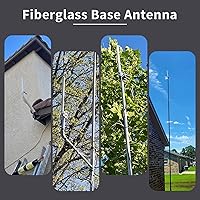
UAYESOK UA-40VU Dual Band Fiberglass Base Antenna — image 1
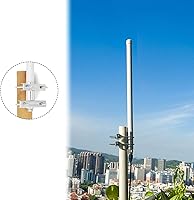
UAYESOK UA-40VU Dual Band Fiberglass Base Antenna — image 2
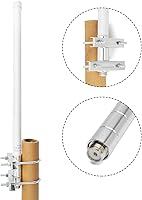
UAYESOK UA-40VU Dual Band Fiberglass Base Antenna — image 3
UAYESOK UA-40VU Dual Band Fiberglass Base Antenna — image 4
UAYESOK UA-40VU Dual Band Fiberglass Base Antenna — image 5
UAYESOK UA-40VU Dual Band Fiberglass Base Antenna — image 6
UAYESOK UA-40VU Dual Band Fiberglass Base Antenna — image 7
UAYESOK UA-40VU Dual Band Fiberglass Base Antenna — image 8
75%
25%

Overview

The UAYESOK UA-40VU Dual Band Fiberglass Base Antenna is a compact, no-frills option aimed at ham radio operators who need reliable dual-band coverage without a large investment. At just 17 inches long, this fiberglass base antenna covers both the 2-meter (144MHz) and 70-centimeter (430MHz) bands — the two most commonly used frequencies in amateur radio. It ships with a mount bracket, so you are not hunting for hardware on day one. The SO239 connector is a standard UHF female fitting found on most base stations and mobile transceivers, meaning it plugs right into most existing setups without adapters. For newer operators or anyone building out a budget-conscious shack, it is a practical and accessible starting point.

Features & Benefits

This dual-band VHF/UHF antenna covers the 136-174MHz and 400-470MHz ranges, handling both VHF and UHF communications on a single feedline — useful when working a local repeater network. The 2.5dBi gain is modest; you will not confuse it with a high-performance Yagi, but it does noticeably outperform a basic rubber duck or simple whip. It handles up to 100 watts, giving comfortable headroom for base station use. One genuinely convenient detail is that no ground plane is required, making attic, wall bracket, or balcony installations straightforward. The 50-ohm impedance aligns cleanly with standard coax cable, so signal loss from impedance mismatch is not a concern in typical setups.

Best For

The UA-40VU fits a specific niche well. It is a natural choice for new ham licensees who want to get on the air quickly with a proper base antenna rather than relying on a handheld rubber duck. It also makes sense as a secondary or backup antenna — if your primary setup goes down, this fiberglass base antenna can keep you connected. Campers, off-roaders, and hikers who need a portable yet more capable base option will appreciate its compact size. For anyone dealing with limited outdoor space, such as a city balcony, shared rooftop, or attic, the no-ground-plane design removes a real installation headache. Emergency preparedness operators gravitate toward it for its simplicity and quick deployment.

User Feedback

Buyers generally praise the ease of assembly and note that the included mount bracket is genuinely useful right out of the box — a small detail that matters when installing in a tight or awkward spot. Repeater access draws favorable comments, with several users reporting solid hits on local repeaters shortly after installation. On the downside, a handful of buyers have flagged SWR irregularities and inconsistent connector quality, which is a realistic concern at this price tier and worth checking with a meter after setup. Long-term outdoor durability feedback is mixed — the fiberglass holds up reasonably well short-term, but longevity expectations should stay moderate. Most buyers feel real-world performance aligns honestly with what a modest-gain antenna should deliver.

Pros

  • Covers both 144MHz and 430MHz bands, handling the two most active amateur radio frequencies on a single antenna.
  • No ground plane required, making indoor spots like attics and garages genuinely viable install locations.
  • Ships with a mount bracket included, so you can get it up without a separate hardware run.
  • The SO239 connector is a universal standard that fits most base stations and mobile transceivers right away.
  • At 7.9 ounces and 17 inches, this dual-band VHF/UHF antenna is easy to handle, move, and reposition.
  • 100W power handling gives comfortable headroom for typical base station and repeater use.
  • Most buyers report successfully hitting local repeaters shortly after installation with minimal tuning.
  • 50-ohm impedance matches standard coax setups cleanly, avoiding signal loss from impedance mismatch.
  • Straightforward assembly means even first-time antenna builders can get it operational quickly.

Cons

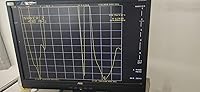
  • SWR readings can be inconsistent out of the box — checking with a meter after installation is genuinely recommended.
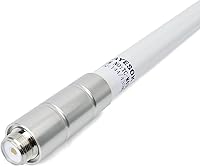
  • Connector build quality feels lightweight and may not inspire confidence during frequent cable swaps.
  • Long-term outdoor durability is uncertain at this price tier; UV and moisture resistance should be treated as moderate, not guaranteed.
  • The 2.5dBi gain ceiling means this fiberglass base antenna is not a good fit for anyone trying to extend range significantly.
  • No coax cable is included in the package, which is an easy oversight to miss when budgeting for a first install.
  • Mounting hardware, while included, is basic and may need reinforcement for permanent or wind-exposed installations.
  • Limited brand support infrastructure means troubleshooting largely falls on community forums rather than official resources.

Ratings

The UAYESOK UA-40VU Dual Band Fiberglass Base Antenna scores below are generated by AI after analyzing verified buyer reviews from global marketplaces, with spam, bot-submitted, and incentivized feedback actively filtered out. The results reflect a genuine cross-section of real operator experiences — from first-time ham licensees to seasoned repeater users — and do not shy away from the pain points that matter when making a buying decision. Both the strengths that make this dual-band VHF/UHF antenna a compelling entry-level choice and the limitations that experienced operators will notice are transparently represented here.

Value for Money
86%
For operators just getting licensed and looking to step up from a rubber duck antenna, this fiberglass base antenna delivers a functional dual-band solution at a price that does not sting. Buyers repeatedly note that the included mount bracket adds tangible value, removing one more item from the shopping list on day one.
Experienced operators who have used mid-tier or premium antennas will feel the gap in connector quality and finishing fairly quickly. At this price point, the value proposition holds — but only if expectations are calibrated accordingly.
Signal Performance
74%
26%
Most buyers report clean, reliable hits on local 2-meter and 70-centimeter repeaters after a straightforward installation, which is ultimately what the majority of new ham operators need from a base antenna. For urban and suburban environments with active repeater networks nearby, real-world performance largely matches what the spec sheet suggests.
The 2.5dBi gain ceiling becomes noticeable when repeaters are at the edge of range or terrain is less than ideal — operators in rural or hilly areas often find themselves needing something with more gain. Long coax runs also compound the limitations, since the antenna does not have enough gain headroom to absorb cable loss gracefully.
Build Quality
62%
38%
The fiberglass body feels solid enough for casual handling and basic outdoor exposure, and the antenna arrives without obvious defects in most cases. For a budget-tier product, the core structure is adequate and does not feel like it will snap under normal mounting conditions.
The SO239 connector is the most commonly flagged weak point — several buyers describe it as feeling lightweight and undersized relative to the rest of the antenna. The overall fit and finish does not inspire confidence for a permanent install, and some buyers report minor cosmetic inconsistencies between units.
Ease of Installation
91%
Buyers across skill levels consistently praise how quickly this dual-band VHF/UHF antenna goes from box to operational. The included mount bracket handles the mechanical side without requiring specialty hardware, and the SO239 connector plugs directly into standard PL-259-terminated coax without any fuss.
The mounting hardware, while appreciated, is on the basic side — in windy locations or for permanent rooftop installs, a few buyers reinforced it with additional brackets. Written instructions are minimal, which is fine for experienced hands but may leave complete beginners spending extra time figuring out cable routing.
SWR Stability
58%
42%
When the antenna is properly installed and connected with a good quality coax, a fair number of buyers report acceptable SWR readings across both the VHF and UHF portions of the band. For casual repeater work where operators are not pushing near the 100W ceiling, the SWR performance is workable.
A consistent thread in user feedback involves SWR readings that require adjustment or simply run higher than expected straight out of the box — particularly on the UHF band. This is not universal, but it is frequent enough to be a real concern, and buyers without an SWR meter or antenna analyzer may not even realize there is an issue.
Weatherproofing
67%
33%
The fiberglass construction handles short to medium-term outdoor exposure reasonably well, and buyers in moderate climates report no significant degradation after a season or two of use. The white finish also reflects sunlight, which helps reduce heat buildup in direct-sun mounting scenarios.
Long-term durability in harsh environments — heavy coastal salt air, prolonged freezing temperatures, or intense UV exposure — is where confidence erodes. Several buyers who pushed past the one-year mark outdoors noted connector corrosion or surface cracking, suggesting the weatherproofing is more suited to sheltered or semi-protected installs.
Connector Quality
53%
47%
The SO239 connector type itself is the right choice for this application and connects cleanly to standard PL-259 coax on the first attempt. For operators who make infrequent cable connections, the connector does its job without immediate issues.
The physical quality of the SO239 fitting is the most consistent complaint in user feedback — it feels thin-walled and shows wear after repeated connect/disconnect cycles. A few buyers reported that the connector loosened noticeably over time, which can introduce unwanted signal loss or intermittent performance.
Compatibility
88%
The SO239 connector and 50-ohm impedance make this fiberglass base antenna immediately compatible with the vast majority of amateur radio base stations and mobile transceivers from Yaesu, Kenwood, Icom, and others. Buyers rarely report needing adapters when connecting to standard ham radio equipment.
Operators using radios with BNC or SMA connectors — more common on handhelds and some compact transceivers — will need an adapter, which adds a small but real extra step. The antenna is not designed for GMRS or commercial radio use, and using it outside its intended amateur radio application requires due diligence on frequency coverage.
Mounting Versatility
83%
The no-ground-plane design opens up a genuinely wide range of install locations — attic rafters, balcony railings, wooden fence posts, PVC pipe mounts — that would be off-limits for ground-plane-dependent antennas. Buyers setting up in apartments or HOA-restricted neighborhoods find this flexibility particularly useful.
The included bracket is sized for straightforward flat-surface mounts and is not ideal for every scenario — pipe or mast mounting requires sourcing a compatible clamp separately. Some buyers in more unusual install situations found the bracket limiting and had to improvise.
Gain Accuracy
69%
31%
Buyers who set realistic expectations going in — understanding that 2.5dBi is modest but still meaningfully better than a stock whip — generally come away satisfied with real-world performance. For local repeater work in well-covered areas, the gain does what the spec implies.
A subset of buyers felt the real-world gain improvement was less noticeable than anticipated, particularly when comparing to even slightly higher-gain alternatives. The 2.5dBi figure is not misleading on paper, but it can create unrealistic expectations for operators who have never worked with antenna gain specifications before.
Package Contents
79%
21%
Including a mount bracket in the box is a genuinely thoughtful touch for a product at this price tier — it means the antenna can go up the same day it arrives without a separate hardware trip. The packaging itself is functional and protects the antenna adequately during shipping.
No coaxial cable is included, which is understandable but catches some first-time buyers off guard if they have not planned ahead. A brief, clearly written quick-start guide would also significantly improve the out-of-box experience for newer operators.
Repeater Accessibility
77%
23%
Hitting local VHF and UHF repeaters is the core use case for this type of antenna, and the majority of buyers report success — often on the first transmission after install. For operators in populated metro and suburban areas with well-placed repeaters, the UA-40VU performs its primary job reliably.
Performance drops off noticeably when repeaters are further away or elevated terrain creates obstacles between the antenna and the repeater site. Operators in rural areas or fringe coverage zones will find this antenna leaves them needing more gain than it can provide.
Portability
82%
18%
At under 8 ounces and 17 inches long, this fiberglass base antenna is easy to transport, reposition, or temporarily deploy — useful for camping setups, field day events, or emergency go-kit configurations where a fixed high-gain antenna is not practical.
The compact form factor is a genuine advantage for portability but also a physical reminder that this is not a high-performance antenna — operators expecting significant range from a 17-inch radiator will be disappointed regardless of gain claims.

Suitable for:

The UAYESOK UA-40VU Dual Band Fiberglass Base Antenna is a strong fit for newly licensed ham radio operators who want to move beyond a handheld rubber duck and set up a proper base station without a steep financial commitment. It works particularly well for anyone operating on local 2-meter and 70-centimeter repeater networks, which cover the vast majority of everyday amateur radio activity. Urban and suburban operators with limited mounting real estate will appreciate that it requires no ground plane, making attic rafters, balcony railings, and garage walls all viable install spots. Emergency preparedness volunteers who need a reliable, quickly deployable antenna for their go-kit or home station will find this dual-band VHF/UHF antenna hits the right balance of simplicity and functionality. It also serves well as a low-cost backup antenna kept on standby should a primary setup fail during critical communications.

Not suitable for:

Operators with serious range demands or those working weak-signal DX contacts will find this fiberglass base antenna falls short of what is needed. At 2.5dBi, the gain is adequate for local repeater work but is nowhere near competitive with higher-gain collinear or directional antennas used for long-distance communication. Experienced operators who already own well-built antennas from established brands will likely find little reason to add the UA-40VU to their station. Anyone planning a permanent, high-exposure outdoor installation in a harsh climate — heavy coastal salt air, extreme UV environments, or regions with frequent severe weather — should temper expectations around multi-year durability, as this is a budget-tier product and its weatherproofing has limits. Finally, operators who need a connector type other than SO239 and do not want to deal with an adapter should verify compatibility before purchasing, as mismatched connectors can introduce unnecessary signal loss.

Specifications

  • Model Number: The manufacturer model number for this antenna is UA-40VU.
  • Frequency Range: This antenna operates across two bands: 136-174MHz (VHF) and 400-470MHz (UHF), covering the most common amateur radio frequencies.
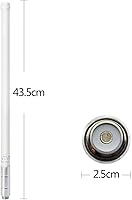
  • Connector Type: The antenna uses an SO239 (UHF Female / SL16-Female) connector, a widely adopted standard in amateur radio equipment.
  • Gain: The antenna provides 2.5dBi of gain across both supported frequency bands.
  • Max Power: The antenna is rated to handle a maximum continuous input power of 100 watts.
  • Impedance: Nominal impedance is 50 ohms, matching standard coaxial cables and most amateur radio transceivers.
  • Length: The radiating element measures 17 inches (approximately 43cm) in total length.
  • Dimensions: Overall packaged dimensions are 1.32 x 0.98 x 17.13 inches, keeping the unit compact and easy to ship or store.
  • Weight: The antenna weighs 7.9 ounces, making it lightweight enough for flexible mounting without heavy-duty hardware.
  • Material: The antenna body is constructed from fiberglass, offering a balance of low weight and reasonable weather resistance.
  • Color: The antenna is finished in white, which reflects sunlight and helps reduce heat absorption in outdoor installations.
  • Ground Plane: No ground plane is required for proper operation, allowing installation on non-metallic surfaces such as wood, PVC, or plastic mounts.
  • Indoor/Outdoor: The antenna is rated for both indoor use (attics, garages) and outdoor use (rooftops, exterior walls) with appropriate mounting.
  • Weather Resistance: The fiberglass construction is described as UV-resistant and weatherproof, providing moderate protection against sun exposure and moisture.
  • Package Contents: Each package includes one dual-band fiberglass antenna and one antenna mount bracket with associated hardware.
  • Manufacturer: This antenna is manufactured by Quanzhou Hai Mao Wei Communication Co., Limited, based in China.
  • Brand: The antenna is sold under the UAYESOK brand, distributed through the UAYESOK-HF Store.

Related Reviews
Tram 1480 Dual-Band Fiberglass Base Antenna
76%
88%
Signal Performance
83%
Build Quality
86%
Weather Resistance
91%
Ease of Installation
89%
Connector Compatibility
More
Diamond Antenna X30A Dual-Band Base Antenna
80%
91%
Signal Performance
88%
Build Quality
86%
Weatherproofing
84%
Ease of Installation
89%
SWR Consistency
More
Tram 1477 Dual-Band VHF/UHF Base Antenna
79%
91%
Ease of Setup
78%
RF Performance
83%
Build Quality
86%
Value for Money
67%
Connector Quality
More
Diamond X50A Dual-Band VHF/UHF Base Antenna
78%
88%
RF Performance
91%
Out-of-Box SWR
84%
Build Quality
79%
Weather Durability
76%
Ease of Assembly
More
UAYESOK UA-CB6200 20ft CB Base Station Antenna
74%
83%
Signal Performance
78%
SWR & Tuning
74%
Build Quality
86%
Ease of Installation
81%
Weather Resilience
More
UAYESOK VHF Marine Base Antenna 48 Inch
87%
87%
Performance at Sea
92%
Durability in Harsh Conditions
91%
Installation Ease
89%
Signal Range and Clarity
85%
Compatibility with Marine Radios
More
HYS 144/430MHz Dual-Band Base Station Antenna
77%
83%
RF Performance
78%
Build Quality
88%
Ease of Setup
81%
Weatherproofing
62%
Mounting Hardware
More
HYS TC-YG08UV Dual-Band Yagi Antenna
70%
83%
Signal Gain Performance
76%
Build Quality
81%
Weather Resistance
84%
Ease of Assembly
61%
Aiming & Directional Usability
More
Linksys EA2700 Dual-Band Router
82%
84%
Wireless Performance
78%
Signal Coverage
88%
Setup & Installation
90%
Wired Connectivity
81%
Reliability
More
AnyTone AT-5888UV Dual Band Mobile Radio
69%
83%
RF Performance
78%
Build Quality
86%
Value for Money
81%
Cross-Band Repeat
74%
Display & Interface
More

FAQ

No, it does not. This is one of the more practical aspects of this dual-band VHF/UHF antenna — it is designed to operate without a ground plane, which means you can mount it on wood, plastic, or other non-metallic surfaces and it will still function correctly. That makes attic installs and balcony mounts much more straightforward than they would be with a mag-mount or ground-plane-dependent design.

You will need a coaxial cable terminated with a PL-259 (UHF Male) plug on the antenna end, since the antenna uses an SO239 (UHF Female) connector. Standard RG-8, RG-213, or RG-58 coax all work fine, with RG-8 or RG-213 preferred for longer cable runs due to lower signal loss. Most ham radio operators already have compatible cable on hand.

That depends on your radio. Most base station transceivers from Yaesu, Kenwood, and Icom use SO239 connectors themselves, so a standard PL-259-terminated coax cable will connect the two without any adapter. If your radio uses a BNC or SMA connector — more common on handhelds — you will need an appropriate adapter, which is inexpensive and easy to source.

Technically you can with an adapter, since most Baofengs use an SMA connector rather than SO239. However, this fiberglass base antenna is really intended for fixed base station use. Connecting it to a handheld is possible in a pinch, but you would be better served by a proper mobile or base setup where the antenna can be mounted upright and clear of obstructions.

Most buyers report solid repeater access on both the 2-meter and 70-centimeter bands after a straightforward installation. Keep in mind that repeater range depends heavily on local terrain, repeater height, and your cable run length — not just the antenna. For typical suburban or urban environments, this antenna performs well for everyday local repeater work.

Yes, absolutely — and that advice applies to any antenna at any price point. A few buyers have reported SWR readings that needed adjustment out of the box, so if you have access to an SWR meter or an antenna analyzer, it is worth a quick check before running full power. Most modern transceivers also have a built-in SWR protection circuit, but verifying before operation is good practice.

It can handle outdoor use, and the fiberglass construction does resist UV and moisture reasonably well. That said, at its price point, long-term durability expectations should be realistic rather than optimistic. If you are in a particularly harsh environment — heavy coastal salt air, extreme heat, or frequent severe storms — you may want to check on it seasonally and consider a more premium option for a permanent installation.

Installation is genuinely straightforward. The included mount bracket handles most of the mechanical work, and buyers consistently note that assembly takes only a few minutes. You will need basic tools — a wrench and a screwdriver — to secure the bracket to your chosen surface. Getting the coax run sorted is usually the more time-consuming part of the job.

The frequency range does overlap with some other radio services. However, this antenna is designed and marketed for amateur (ham) radio use, and any use outside licensed amateur bands is subject to your local regulations. If you are operating on GMRS frequencies in the 462-467MHz range, technically the UHF band coverage is close but you should verify compliance with your specific setup before transmitting.

The UAYESOK-HF Store indicates they respond to inquiries within 12 hours, which suggests reasonably active seller support for a budget-tier product. Formal warranty terms are not explicitly detailed in the product listing, so if warranty coverage is important to you, it is worth reaching out to the seller directly before purchasing to confirm what post-sale support looks like.