Overview

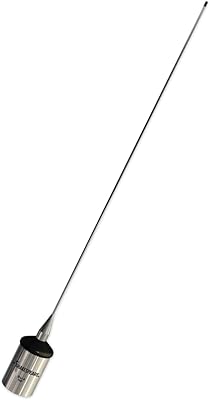
The Tram 1604 VHF/AIS Marine Antenna is a compact stainless steel whip built for recreational boaters and small vessel operators who need dependable VHF and AIS coverage without paying a premium. At its mid-range price, it sits between cheap fiberglass sticks and the high-gain antennas offshore sailors tend to favor. One practical advantage is the no-ground-plane design, which means you can mount it on fiberglass or aluminum hulls without worrying about additional hardware. At just under 40 inches tall, this VHF/AIS whip antenna fits naturally on kayaks, center consoles, and inflatables. Just set realistic expectations — it is a solid coastal performer, not a tool for bluewater passages.

Features & Benefits

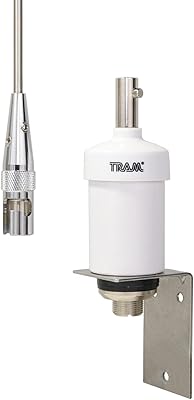
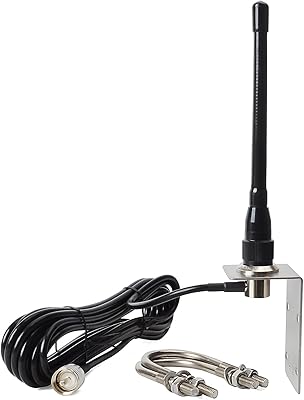
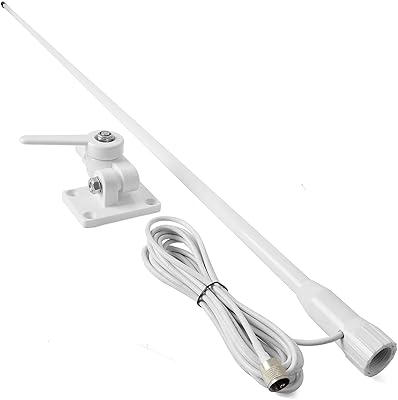
One of the more practical aspects of this marine antenna is that it covers both the full VHF marine band and AIS frequencies in a single unit, saving you the hassle of running separate hardware. The 2.5dBd half-wave design delivers a reliable signal without requiring an unwieldy antenna height — a real consideration on smaller vessels. The base and top are triple chrome-plated brass, which holds up well against the salt spray that eats through cheaper fittings quickly. The stainless steel whip handles flexing and UV exposure better than fiberglass alternatives at this price. A 15-foot RG-58A/U cable with a PL-259 connector and a mast-style mounting bracket are included right out of the box.

Best For

This VHF/AIS whip antenna makes the most sense for coastal and nearshore boaters who want AIS capability without the cost or complexity of a high-end setup. Kayakers and inflatable boat owners benefit especially from the no-ground-plane design, since non-metallic hulls that normally complicate antenna installation are not an issue here. If you are switching from a VHF-only antenna and want to start receiving AIS traffic — nearby ship positions, for instance — this marine antenna is a practical upgrade that does not require rewiring your entire setup. DIY installers will appreciate that everything needed for a basic installation comes in the box. Anyone planning extended offshore passages should look at higher-gain options.

User Feedback

With roughly 59 reviews and a 4.5-star average, the Tram 1604 earns its marks primarily through consistent build quality and straightforward installation. Buyers frequently mention that setup takes less than an hour and that the included cable length is genuinely useful rather than an afterthought. Signal clarity in coastal environments gets positive marks too, particularly from users replacing older or lower-quality antennas. On the critical side, a handful of reviewers note that performance thins out near the edge of the rated range, and those in busy AIS corridors occasionally want more gain. Importantly, most negative reviews point to mounting or compatibility issues specific to the buyer's vessel — not inherent product flaws.

Pros

  • Covers both VHF marine bands and AIS frequencies in one compact antenna, reducing hardware clutter onboard.
  • No-ground-plane design makes installation on fiberglass and aluminum hulls straightforward and hassle-free.
  • Triple chrome-plated brass fittings resist corrosion far better than uncoated or plastic-base alternatives.
  • The stainless steel whip handles UV exposure and physical flex without the cracking risk of fiberglass at this price.
  • Comes with a 15-foot RG-58A/U coaxial cable and PL-259 connector — useful right out of the box.
  • Mounting bracket is included, so most buyers can complete a basic installation without sourcing extra hardware.
  • At 39 inches tall, this VHF/AIS whip antenna fits naturally on small boats, kayaks, and inflatables without awkward overhang.
  • 4.5-star average across verified buyers signals reliable real-world performance for coastal use cases.
  • Signal clarity in nearshore conditions draws consistent praise from users who upgraded from entry-level antennas.
  • Mid-range pricing makes combined VHF and AIS coverage accessible without committing to a high-end antenna budget.

Cons

  • The 2.5dBd gain ceiling limits usefulness for boaters who routinely operate near the edge of the 50-mile rated range.
  • RG-58A/U cable introduces more signal loss over longer runs compared to lower-loss RG-8X or LMR-400 alternatives.
  • The 15-foot cable may fall short for larger vessels where the radio and antenna mounting point are far apart.
  • Performance in congested AIS traffic zones can feel limited compared to higher-gain dedicated AIS antennas.
  • Negative reviews occasionally point to mounting compatibility issues that required additional adapters not included in the box.
  • The review pool of roughly 59 buyers is relatively small, making it harder to draw firm long-term durability conclusions.
  • Not suitable for AIS transmission — reception only, which may frustrate buyers expecting full AIS transponder functionality.
  • Mast-style bracket may not suit every mounting configuration, particularly on vessels with non-standard rail or deck setups.

Ratings

The Tram 1604 VHF/AIS Marine Antenna scores below reflect AI-driven analysis of verified buyer reviews from global markets, with spam, bot activity, and incentivized feedback actively filtered out. Across coastal boaters, kayakers, and small vessel operators, this marine antenna earns strong marks in several key areas while showing honest limitations in others. Both the genuine strengths and the real-world frustrations are captured transparently in the category breakdowns below.
Build Quality
86%
The stainless steel whip and triple chrome-plated brass fittings consistently impress buyers who have dealt with corroded or cracked antenna components on cheaper units. Multiple reviewers with several seasons of saltwater use report no visible degradation on the fittings or whip, which is a meaningful benchmark in harsh marine environments.
A handful of buyers note that the plastic collar section connecting the whip to the base feels slightly less premium than the metal components. On a vessel exposed to constant spray and UV, that junction is worth monitoring and occasionally applying a marine protectant.
Signal Performance
79%
21%
For coastal and nearshore use within 20 to 30 miles, most buyers report clean, reliable VHF communication and solid AIS reception. Boaters who upgraded from entry-level fiberglass antennas frequently describe a noticeable improvement in signal clarity when hailing marinas or coast guard stations.
The 2.5dBd gain does show its limits when operating near the outer edge of the rated 50-mile range, with some buyers noting signal drop-off in conditions that a higher-gain antenna would handle more comfortably. In high-traffic AIS corridors, a few users felt the antenna occasionally missed weaker AIS broadcasts from vessels at distance.
AIS Reception
77%
23%
Being able to receive AIS traffic through a single antenna that also handles VHF communication is a genuine practical advantage for small boat owners who do not want to run separate antenna hardware. Day sailors and coastal cruisers report picking up nearby commercial vessel positions reliably within several miles, which adds meaningful situational awareness.
This antenna is receive-only for AIS, which catches some buyers off guard — those expecting to transmit their own position need a dedicated AIS transponder on top of this setup. In waters with dense AIS traffic, the receive sensitivity at longer distances leaves room for improvement compared to dedicated AIS-only antennas.
Ease of Installation
91%
The inclusion of a 15-foot pre-terminated coaxial cable, a PL-259 connector, and a mast mounting bracket means most buyers can complete installation without a single extra purchase. DIY-minded boaters on kayaks and center consoles consistently report being up and running in under an hour, even with limited antenna installation experience.
The mast bracket is sized for common configurations but does not fit every rail or deck mount without an adapter — a recurring theme in lower-rated reviews. Buyers with non-standard mounting surfaces should verify bracket compatibility before assuming it will drop straight in.
Corrosion Resistance
84%
The chrome-plated brass base and stainless steel whip hold up noticeably well compared to uncoated or fiberglass alternatives that buyers report replacing every one to two seasons. Reviewers who fish in saltwater regularly and hose the antenna down post-trip describe no surface pitting or fitting degradation across multiple seasons.
The coaxial cable jacket and the PL-259 connector area are the weak links in long-term corrosion resistance — buyers who leave the connector exposed to spray without sealing it report oxidation at the connection point. Self-amalgamating tape at the radio connection is a practical fix but arguably should be mentioned in the installation instructions.
Cable Quality
68%
32%
The 15-foot RG-58A/U cable is a practical inclusion that eliminates the first-day hardware run for most small boat installations. For short cable runs, the signal loss introduced by RG-58A/U is manageable and not a meaningful factor in everyday coastal performance.
RG-58A/U is not a low-loss cable by modern standards, and buyers who need longer runs or who are running coax through a larger vessel will find signal loss accumulates meaningfully beyond 15 to 20 feet total. Upgrading to a low-loss cable like RG-8X for extended runs is a commonly cited recommendation from more experienced reviewers.
Value for Money
83%
Sitting at a mid-range price point, this marine antenna offers a combination of dual VHF and AIS coverage, stainless hardware, included cable, and a mounting bracket that would cost noticeably more if sourced individually. For coastal boaters who just want a reliable, no-fuss upgrade from a basic VHF-only antenna, the overall package feels well-priced.
Buyers stepping up from budget fiberglass antennas will feel the value strongly, but those comparing it against similarly priced high-gain antennas may question the 2.5dBd ceiling if their primary goal is maximum range rather than AIS capability. The price-to-performance equation weakens for offshore-oriented boaters.
Antenna Height & Profile
88%
At just under 40 inches, this whip antenna hits a practical sweet spot for small vessels where a taller antenna would create clearance or stability concerns. Kayakers in particular appreciate that the profile does not create the top-heavy feel that longer fiberglass antennas can produce in rough water.
Boaters accustomed to 8-foot fiberglass antennas who are considering this VHF/AIS whip antenna purely for its shorter height should understand that the reduced physical height is one reason the gain is limited to 2.5dBd — there is an inherent tradeoff between compact form and signal reach.
No-Ground-Plane Design
92%
For fiberglass and aluminum hull owners, the ground-plane-free design removes what is often the most confusing and frustrating part of antenna installation. Kayakers and inflatable boat operators report this feature alone being the deciding factor in choosing this whip over competing models that require metal hull bonding.
The benefit is specifically meaningful for non-metallic hulls — buyers with steel-hulled vessels already have a natural ground plane and will not see any particular advantage from this design feature, making it a neutral factor rather than a selling point in those cases.
Durability Over Time
78%
22%
Most buyers who report multi-season use describe the antenna holding up well structurally, with the stainless whip showing no bending or corrosion and the base fittings remaining solid. The physical construction inspires more long-term confidence than fiberglass alternatives that can become brittle with UV exposure.
The review pool is roughly 59 buyers, which limits the depth of long-term durability data available. A small number of users note that the cable jacket can stiffen in cold weather, and one or two flag early connector wear — though these appear to be edge cases rather than a systemic pattern.
Packaging & Out-of-Box Experience
74%
26%
The antenna arrives with all core installation components included, which creates a positive first impression compared to bare-antenna listings that leave buyers scrambling for cable and connectors. The packaging is functional and protects the whip adequately during transit.
The documentation included in the box is minimal — installation instructions are basic and do not address common edge cases like non-standard mount adapters or cable extension scenarios. Buyers without prior antenna experience occasionally report confusion that better documentation would resolve.
Compatibility
81%
19%
The PL-259 connector is the near-universal standard for marine VHF radios, so this antenna connects directly to the vast majority of handheld and fixed-mount marine VHF radios without any adapter. AIS receivers with a standard SO-239 jack accept it equally well.
Buyers using newer DSC-capable radios or multi-function displays with proprietary antenna input configurations may occasionally need a simple adapter, which is not included. Compatibility with non-standard setups is not addressed in the product documentation, which creates mild frustration for a small segment of buyers.
Wind & Vibration Resistance
82%
18%
The stainless steel whip flexes under wind load rather than snapping, which is a meaningful durability advantage for boaters who deal with gusty coastal conditions or leave the vessel rigged in a marina. Several reviewers note the antenna showing no fatigue cracking or loosening at the bracket after extended use in choppy conditions.
In extreme sustained wind conditions, the whip does exhibit visible flex, which a small number of buyers found surprising even though it is by design. The bracket mounting hardware, while adequate for typical conditions, may benefit from a secondary locking nut on vessels subject to heavy vibration from larger outboard engines.

Suitable for:

The Tram 1604 VHF/AIS Marine Antenna is purpose-built for recreational boaters who spend most of their time in coastal and nearshore waters and want combined VHF and AIS coverage without running two separate antennas. Kayakers, canoeists, and inflatable boat owners get particular value here because the no-ground-plane design removes a technical hurdle that typically complicates antenna installation on non-metallic hulls. Center console and small powerboat owners will find the 39-inch stainless steel whip a natural fit — compact enough not to feel intrusive, sturdy enough to handle typical coastal conditions. If you are upgrading from a basic VHF-only antenna and want to start tracking nearby vessel AIS traffic for safety reasons, this marine antenna is a logical and affordable next step. DIY-minded boaters will appreciate that the included cable, PL-259 connector, and mast bracket mean the installation can be completed without a trip to the marine hardware store.

Not suitable for:

The Tram 1604 VHF/AIS Marine Antenna is not the right tool for offshore or bluewater sailors who need reliable signal reach beyond 50 miles or consistent performance in demanding, high-traffic AIS environments. With 2.5dBd gain, it simply cannot compete with longer, higher-gain antennas that experienced offshore passage-makers rely on when distance and signal penetration become critical. Boaters who require AIS transmission — not just reception — will need a dedicated AIS transponder regardless of which antenna they pair it with, so this whip antenna alone does not address that need. Those who need a heavy-duty commercial-grade installation with thick-jacketed low-loss cable will likely find the included RG-58A/U adequate for short runs but limiting over longer cable distances. If your vessel already has a high-gain VHF antenna performing well and you only want to add AIS, a dedicated AIS-only antenna may be a more cost-efficient choice.

Specifications

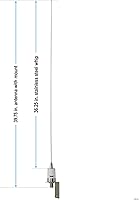
  • Overall Height: The antenna measures 39.75 inches in total length, making it compact enough for small vessels without sacrificing VHF performance.
  • Whip Length: The stainless steel whip portion measures 36.25 inches and is designed to resist corrosion, UV degradation, and flexing fatigue over time.
  • Whip Material: The radiating element is constructed from marine-grade stainless steel, which outperforms fiberglass in durability at this price range.
  • Base Construction: The base and top fittings are triple chrome-plated brass, providing superior corrosion resistance in saltwater environments.
  • Antenna Gain: This antenna delivers 2.5dBd of gain using a half-wave design, balancing signal strength with a manageable physical height.
  • Frequency Coverage: Covers all VHF marine band frequencies as well as the AIS band, spanning approximately 156 MHz to 162.2 MHz.
  • Impedance: The antenna is rated at 50 Ohms, which is the standard impedance for marine VHF radio systems.
  • Ground Plane: This antenna requires no ground plane, allowing straightforward installation on fiberglass, aluminum, or any non-metallic hull.
  • Included Cable: A 15-foot RG-58A/U coaxial cable is included, terminated with a PL-259 connector ready for direct connection to most marine VHF radios.
  • Mount Type: A mast-style mounting bracket is included in the box, compatible with standard rail and deck mounting configurations on most vessels.
  • Operating Range: The antenna is rated for a maximum operating distance of approximately 50 miles under optimal conditions.
  • Connector Type: The cable terminates in a PL-259 connector, the industry-standard fitting for marine VHF and AIS antenna connections.
  • Product Weight: The complete antenna assembly weighs approximately 1.1 lbs, keeping topside weight and wind resistance to a minimum on small boats.
  • Package Dimensions: The packaged unit measures approximately 39 x 5 x 1 inches and weighs around 0.91 kg for shipping purposes.
  • Color: The antenna is finished in white, the conventional color for marine antennas that minimizes heat absorption and blends with most vessel aesthetics.
  • Channels Supported: The antenna is designed for single-channel operation, compatible with standard marine VHF radio transceivers.
  • Manufacturer: This antenna is manufactured by Tram-Browning, a brand with a long history of producing radio antennas for marine, amateur, and commercial applications.
  • Part Number: The official part number is 1604, also referenced as model Tram WSP1604-1604 in manufacturer documentation.
  • First Available: This product was first listed on the market in August 2016 and has maintained consistent availability since its introduction.
  • Warranty: Tram-Browning includes a manufacturer warranty with this antenna; buyers should confirm specific terms directly with the seller or manufacturer at time of purchase.

Related Reviews
Tram 1607-HC VHF Marine Fiberglass Antenna
77%
91%
Ease of Installation
83%
Signal Performance
78%
Build Quality
72%
Durability in Saltwater
74%
Ratchet Mount Reliability
More
Tram 1600-HC 35-Inch VHF Marine Antenna
84%
88%
Signal Performance
91%
Build Quality
86%
Ease of Installation
93%
Corrosion Resistance
84%
Value for Money
More
Shakespeare 5215-AIS 3' VHF AIS Antenna
86%
90%
Build Quality
91%
Durability
88%
AIS Functionality
85%
Ease of Installation
72%
Performance Range
More
Tram 1602 VHF Marine Antenna
82%
91%
Build Quality
78%
Signal Performance
93%
Ease of Installation
94%
Quick-Disconnect Usability
62%
Cable Length & Quality
More
Shakespeare 5241-R 3-Foot VHF Marine Antenna
82%
88%
Ease of Installation
83%
Build Quality
71%
Signal Performance
86%
Corrosion Resistance
74%
Value for Money
More
HYS VHF Marine Antenna
77%
74%
Signal Performance
91%
Ease of Installation
78%
Build Quality
72%
Cable Quality
63%
Connector Fit
More
UAYESOK VHF Marine Base Antenna 48 Inch
87%
87%
Performance at Sea
92%
Durability in Harsh Conditions
91%
Installation Ease
89%
Signal Range and Clarity
85%
Compatibility with Marine Radios
More
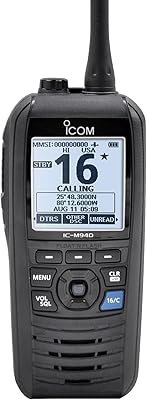
Icom M94D VHF Marine Radio
80%
91%
Build Quality
83%
AIS Receive Performance
87%
DSC Distress Calling
88%
Audio Clarity
92%
AquaQuake Water Draining
More
Uniden MHS75 VHF Marine Radio
89%
94%
Waterproof Performance
85%
Range & Signal Strength
88%
Battery Life
90%
Ease of Use
91%
Build Quality
More
Uniden UM435BK Fixed Mount VHF Marine Radio
80%
93%
Waterproofing & Weather Resistance
88%
Audio Clarity & Reception
84%
Ease of Installation
91%
Channel Coverage & Compatibility
82%
Value for Money
More

FAQ

It handles AIS reception only — meaning it can pick up AIS broadcasts from nearby vessels and display them on a compatible chartplotter or AIS receiver. If you need to transmit your own AIS position, you will need a dedicated AIS transponder in addition to this antenna.

Yes, and it is actually one of the better options for non-metallic vessels at this price. The no-ground-plane design means you do not need a metal hull or any additional grounding hardware to get it working properly. A standard mast or rail mount on a kayak or inflatable works fine.

For smaller boats like center consoles, kayaks, and inflatables, 15 feet is usually sufficient. On larger vessels where the radio and antenna mount are farther apart, you may need a cable extension or a longer aftermarket coax run. Keep in mind that every extra foot of RG-58A/U cable introduces a small amount of signal loss.

The included cable uses a PL-259 connector, which is the standard fitting for virtually all marine VHF radios and AIS receivers sold today. In most cases it will plug directly into your radio without any adapter needed.

Most buyers with basic DIY skills report completing the installation in under an hour. The bracket and cable are included, so there is no specialized hardware to source. The main tasks are mounting the bracket, running the coax to your radio, and connecting the PL-259. There are no complex tuning steps required.

The triple chrome-plated brass base fittings and stainless steel whip are both well-suited for marine saltwater use. Stainless steel naturally resists the corrosion and UV degradation that tends to shorten the life of fiberglass antennas over several seasons. Rinsing it with fresh water after heavy saltwater exposure is always a good maintenance habit.

Yes. The half-wave, no-ground-plane design works equally well on aluminum, fiberglass, and other non-metallic hulls. You do not need to bond the antenna base to the hull or install a ground plate, which simplifies the entire installation significantly.

The rated maximum is around 50 miles, but real-world range depends heavily on geography, obstructions, the output power of your radio, and atmospheric conditions. In typical coastal use with a standard 25-watt VHF radio, expect reliable communication over several miles to perhaps 20 to 25 miles in practical conditions. The 50-mile figure represents an ideal-case ceiling, not a guaranteed everyday result.

Technically the antenna is tuned and optimized for marine VHF frequencies in the 156 to 162 MHz range. While it may receive or transmit on nearby amateur VHF frequencies to some degree, it is not designed or guaranteed to perform well outside the marine band. For ham radio use, you would be better served by an antenna designed for the 2-meter amateur band.

The most frequent issue reported by buyers is mismatched mount compatibility — the included bracket fits standard mast configurations, but some vessels with non-standard rails or deck layouts may need an adapter. Also make sure the PL-259 connection at the radio end is snug and weatherproofed with self-amalgamating tape if it will be exposed to spray. Loose or corroded connectors are responsible for a significant portion of poor-performance complaints that have nothing to do with the antenna itself.