Overview

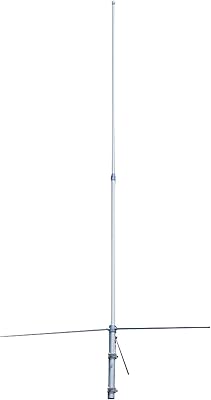
The Diamond X50A Dual-Band VHF/UHF Base Antenna has built a solid reputation among amateur radio operators looking for a reliable, no-nonsense home base option. Diamond Antenna, a Japanese manufacturer with decades of credibility in the ham community, produces this fiberglass vertical to cover both 144 MHz (2 meters) and 440 MHz (70 centimeters) — the two bands most active for local repeater work, APRS, and simplex communication. At 5.6 feet tall, it's compact enough for a rooftop or mast install without drawing too much attention. This is a passive fiberglass vertical — there's no amplifier or active circuitry inside. What you get is clean, honest RF performance from a brand that earns its price.
Features & Benefits

The X50A specs are worth understanding in plain terms, not just as marketing numbers. On 2 meters, the antenna delivers 4.5 dB of gain over a dipole; on 70 centimeters, that jumps to 7.2 dB — a meaningful improvement that concentrates your signal closer to the horizon, which is exactly what you want for repeater and APRS use. It handles up to 200 watts continuous, so it won't blink at anything a typical base transceiver can throw at it. The SO-239 female connector works directly with standard PL-259 terminated coax, no adapters needed. At 2.25 pounds with a fiberglass radome, mounting is straightforward. One honest note: the listing shows 30-ohm impedance, but this antenna is designed for standard 50-ohm systems used by virtually all ham transceivers — that figure appears to be a listing error.

Best For

This dual-band base antenna is well-matched to licensed hams who want a permanent, capable station at home — particularly Technician-class operators and above who are active on local 2m and 70cm repeaters. It's a natural fit for anyone running an APRS iGate or digipeater, where consistent dual-band coverage from a fixed location matters more than portability. EmComm volunteers who need a rooftop antenna that can handle real power levels and stay up through a windstorm will appreciate the 135 MPH wind rating. If you're coming from a mag-mount or a compromise indoor antenna, the improvement in signal reports will be noticeable. It pairs well with rigs like the Yaesu FT-7900R or Kenwood TM-V71A, though it'll work with any standard dual-band transceiver.

User Feedback

Owners of this Diamond vertical tend to be a satisfied group — but not in a way that feels manufactured. The most consistent theme is solid build quality and surprisingly low SWR readings right out of the box on both bands, with no tuning required. Long-term owners — some reporting several years of rooftop exposure — say performance has held up well. On the 70cm side especially, the gain improvement over previous antennas is a recurring observation. That said, a few buyers have flagged that the included instructions are sparse, which can make initial assembly confusing for newer operators. A small number also noted concerns about the SO-239 connector quality. Neither issue is a dealbreaker, but first-time installers should inspect the connector carefully before sealing the mount.

Pros

  • SWR is consistently low on both bands straight out of the box — no tuning required for most installs.
  • The 7.2 dB gain on 70cm produces a noticeable real-world improvement over typical compromise antennas.
  • Handles up to 200 watts continuously, making it compatible with serious base station transceivers.
  • Fiberglass construction keeps the antenna lightweight at 2.25 pounds while protecting internal elements from weather exposure.
  • The SO-239 female connector works directly with standard PL-259 coax — no adapters or pigtails needed.
  • Long-term owners report years of outdoor durability with no significant performance degradation.
  • At 5.6 feet tall, the X50A is discrete enough for residential rooftop or mast installs without excessive visual impact.
  • Diamond Antenna has a well-established reputation in the ham community, and the build quality reflects that heritage.
  • Covers the two most active amateur bands for local repeater, simplex, and APRS use in a single antenna.

Cons

  • The included instruction sheet is sparse — first-time antenna installers may find themselves searching for guidance online.
  • No ice load rating limits confidence in permanent installs across northern or high-elevation climates.
  • Mounting hardware is not included, which adds a separate shopping step before installation can begin.
  • A small number of buyers have reported concerns about the SO-239 connector quality — worth inspecting before weatherproofing the mount.
  • The product listing incorrectly states 30-ohm impedance, which can confuse buyers trying to verify compatibility before purchasing.
  • Gain improvement on 2 meters is less dramatic than on 70cm — operators primarily focused on 2m performance may find other verticals more competitive.
  • No radial or ground plane system is included or specified, which may require additional research for optimal ground-mounted use.
  • At this price point, some buyers expect a more refined unboxing and documentation experience than what is delivered.

Ratings

The scores below reflect an AI-driven analysis of verified global user reviews for the Diamond X50A Dual-Band VHF/UHF Base Antenna, with spam, incentivized feedback, and bot activity actively filtered out before scoring. Each category is weighted against real-world usage patterns reported by amateur radio operators across a range of installations and operating conditions. Both what buyers consistently praise and where they run into genuine frustration are reflected transparently in every score.

RF Performance
88%
Most owners report strong, consistent signal reports on both bands immediately after installation — often a clear improvement over whatever they replaced. The 70cm gain in particular draws repeated praise, with APRS and repeater users noting noticeably better coverage from a fixed home location.
The 2-meter gain improvement, while real, is less dramatic than the 70cm side and may underwhelm operators whose primary activity is on 2m. A handful of users in fringe coverage areas felt the antenna did not close the gap they were hoping for at that band.
Out-of-Box SWR
91%
This is consistently one of the most praised aspects across long-term owners and first-time buyers alike. The vast majority confirm SWR readings well within acceptable range on both bands with zero adjustment, which is genuinely uncommon and saves real setup time.
A small number of users reported higher-than-expected SWR on 70cm, though these cases appear to correlate with suboptimal feedline routing or connector seating issues rather than the antenna element itself. It is rare but not unheard of.
Build Quality
84%
The fiberglass radome feels solid and purposeful — not flimsy or hollow — and the overall fit of the antenna sections instills confidence during assembly. Owners who have had the X50A mounted outdoors for multiple years consistently report no cracking, fading, or physical degradation.
The SO-239 connector has drawn criticism from a small but notable subset of buyers who found the machining or plating quality inconsistent. It is not a systemic failure, but it is worth a close inspection before weatherproofing any outdoor install.
Weather Durability
79%
21%
For operators in temperate or moderate climates, the antenna holds up well through seasons of rain, heat, and wind. The fiberglass body resists UV degradation better than many painted-metal alternatives, and the 135 MPH wind rating covers most non-storm scenarios adequately.
The absence of any ice load rating is a real limitation for operators in northern or high-elevation climates. Several buyers in colder regions expressed concern about leaving this antenna up through winter without any manufacturer guidance on ice accumulation tolerance.
Ease of Assembly
76%
24%
The physical joining of antenna sections is genuinely simple — there are only a few parts, and the mechanical fit is clean. Experienced hams typically have it together and mounted in under thirty minutes without referencing any documentation.
The instruction sheet included in the box is minimal to the point of being unhelpful for anyone without prior antenna installation experience. New Technician-class operators have flagged this repeatedly, and it is a fair criticism for an antenna at this price tier.
Connector Compatibility
86%
The SO-239 female feedpoint connector is the standard throughout the amateur radio world, which means most hams already have PL-259 terminated coax on hand. There is no need for adapters, pigtails, or special connectors in a typical base station setup.
The connector interface is only as reliable as the quality of the SO-239 itself, and a small number of buyers have reported fitment inconsistencies. Applying coax seal or self-amalgamating tape after connection is strongly advisable for any permanent outdoor install.
Power Handling
93%
The 200-watt continuous rating is one of the X50A's clearest practical advantages over lower-tier dual-band verticals. Operators running legal limit output on VHF/UHF have no reason to derate or worry about thermal stress under normal operating conditions.
For the majority of Technician-class operators running 50 watts or less, the headroom goes largely unused — meaning this particular spec is not a differentiator for lighter users, though it certainly does not hurt anything.
Value for Money
73%
27%
For what is fundamentally a passive fiberglass antenna, the performance-to-cost ratio is respectable, particularly for operators who plan to keep it mounted for years. The brand reputation and longevity reports do justify a premium over no-name alternatives.
Budget-conscious buyers will note that several competing dual-band verticals offer comparable gain figures at a lower price point. The Diamond name carries real weight in the hobby, but first-time buyers may reasonably question whether the premium is fully justified by the hardware alone.
Longevity
87%
Multi-year ownership reports are common and encouraging — operators who installed this antenna several years ago and report back do so with positive assessments of sustained performance. The fiberglass construction appears to age better than metal alternatives in humid or coastal environments.
Long-term data specifically on the connector and internal element durability is harder to assess from user reports, since most reviewers focus on overall function rather than component-level degradation. A few very long-term users note the connector area as the first place to show wear.
Mounting Flexibility
68%
32%
The slim profile and light weight (2.25 lbs) make it adaptable to a wide range of mast diameters and mounting positions — rooftop, eave, chimney, or freestanding pole installations are all feasible with standard off-the-shelf hardware.
No mounting hardware is included, which adds a step and a small additional cost to the setup. The antenna is also strictly a fixed-mount vertical — there is nothing portable or deployable about it, which limits its usefulness for field day or go-kit scenarios.
Documentation & Support
47%
53%
The antenna itself requires little ongoing support once installed, and Diamond has a recognizable presence in the hobby that makes community-sourced advice easy to find through forums and ham radio clubs worldwide.
The printed documentation in the box is genuinely poor for a mid-to-premium priced product. New operators frequently report needing to seek out third-party installation guides, and Diamond provides no meaningful online supplemental resources for this specific model.
Visual Footprint
81%
19%
The white fiberglass finish blends reasonably well with most residential rooflines, and at 5.6 feet the antenna does not dominate a rooftop the way a larger HF vertical would. HOA-sensitive operators have found it to be among the less conspicuous options in its class.
It is still a visible outdoor antenna, and the slim white pole does stand out against dark roofing materials or brick. Anyone dealing with strict HOA rules or covenant restrictions will need to assess their specific situation before installing.
Impedance Accuracy
55%
45%
In practice, the antenna performs as a standard 50-ohm system, which is exactly what most hams need. Operators who tested impedance directly confirm the 50-ohm design, and real-world SWR results back this up consistently across many verified installs.
The product listing incorrectly states 30-ohm impedance, which causes genuine confusion for buyers doing pre-purchase research and could lead less experienced operators to add unnecessary matching hardware. Diamond and the listing platform have not corrected this error.

Suitable for:

The Diamond X50A Dual-Band VHF/UHF Base Antenna is a strong match for licensed amateur radio operators — Technician class and above — who are setting up a permanent or semi-permanent home base station and want reliable dual-band coverage without constant tinkering. It's particularly well-suited to APRS iGate and digipeater operators who need a fixed, dependable antenna that can hold its own on both 2 meters and 70 centimeters simultaneously. EmComm volunteers who may need to run higher power levels through a rooftop antenna during real activations will appreciate the 200-watt rating and the wind survivability. If you're currently working with a mag-mount, a small attic antenna, or any kind of compromise setup, the real-world improvement in signal reports this antenna delivers will feel meaningful. It pairs cleanly with popular dual-band base and mobile rigs without requiring adapters or extra hardware, making the overall station setup straightforward.

Not suitable for:

The Diamond X50A Dual-Band VHF/UHF Base Antenna is not the right tool for every situation, and it's worth being clear about where it falls short. Operators in regions with heavy ice loading — the antenna carries no ice survival rating — should look at more ruggedized options before committing to a permanent rooftop install. It is strictly a VHF/UHF antenna, so anyone who also needs HF capability will still need a separate solution; this does nothing below 144 MHz. Portable or go-kit operators who need something they can break down and redeploy quickly will find the 5.6-foot rigid fiberglass form factor impractical compared to collapsible or rollup alternatives. Buyers hoping for a plug-and-play experience with detailed printed documentation may also be frustrated — the included instructions are minimal, and newer hams may need to supplement with online resources or community forums to get through the install confidently.

Specifications

  • Frequency Bands: Covers 144 MHz (2-meter VHF) and 440 MHz (70-centimeter UHF) simultaneously, the two most active bands for local amateur radio use.
  • Gain: Rated at 4.5 dB on the 2-meter band and 7.2 dB on the 70-centimeter band, both measured relative to a dipole.
  • Power Rating: Handles up to 200 watts of continuous power, making it suitable for full-output base station transceivers rather than just handheld radios.
  • Wind Survival: Rated to withstand wind speeds up to 135 MPH under no-ice conditions, appropriate for permanent outdoor installs in moderate climates.
  • Connector Type: Uses a UHF female (SO-239) connector at the feedpoint, which accepts a standard PL-259 terminated coax line directly.
  • Impedance: Designed for 50-ohm systems, matching virtually all amateur radio transceivers and standard coaxial cable — a product listing figure of 30 ohms appears to be an error.
  • Height: Stands 5.6 feet (60″) tall, making it practical for rooftop, mast, or eave-mount installations without excessive structural load.
  • Weight: Weighs 2.25 pounds, light enough for a standard mast or pipe mount without reinforced support hardware.
  • Dimensions: Measures 3″ in diameter and 60″ in length, with a slim profile that minimizes wind loading and visual footprint.
  • Construction: Built with a fiberglass radome that protects internal antenna elements from moisture, UV exposure, and general weathering.
  • Color: Finished in white, which blends with most rooflines and reduces heat absorption from direct sunlight.
  • Mounting Style: Designed for mast or pipe mount installation; no mounting hardware is included in the package.
  • Manufacturer: Produced by Diamond Antenna, a Japanese company with a long-standing reputation in the amateur radio community.
  • Model Number: Officially designated as the X50A, a model that has been in continuous production since at least 2015.
  • Compatibility: Works with any standard 50-ohm dual-band transceiver and conventional coaxial feedlines terminated with PL-259 connectors.

Related Reviews
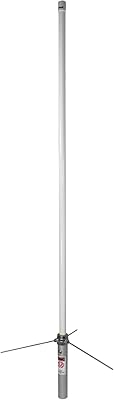
Diamond Antenna X30A Dual-Band Base Antenna
80%
91%
Signal Performance
88%
Build Quality
86%
Weatherproofing
84%
Ease of Installation
89%
SWR Consistency
More
Tram 1477 Dual-Band VHF/UHF Base Antenna
79%
91%
Ease of Setup
78%
RF Performance
83%
Build Quality
86%
Value for Money
67%
Connector Quality
More
TYT MD-UV390 Dual Band VHF UHF DMR Radio
82%
86%
Overall Performance
92%
Build Quality & Durability
81%
Ease of Use & Programming
88%
Battery Life
94%
Waterproofing & Ruggedness
More
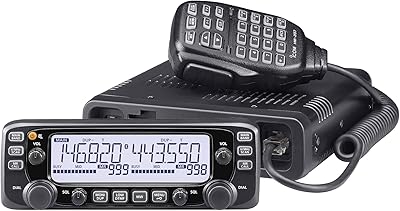
Icom IC-2730A Dual Band VHF/UHF Mobile Radio
78%
93%
Transmit Power
91%
Dual-Band Receive
88%
Build Quality
89%
Audio Clarity
54%
Menu Navigation
More
Tram 1480 Dual-Band Fiberglass Base Antenna
76%
88%
Signal Performance
83%
Build Quality
86%
Weather Resistance
91%
Ease of Installation
89%
Connector Compatibility
More
TYT MD-UV380 Dual Band VHF/UHF Two-Way Radio
77%
92%
Value for Money
88%
Range and Performance
85%
Build Quality and Durability
80%
Ease of Use
65%
Software and Setup Experience
More
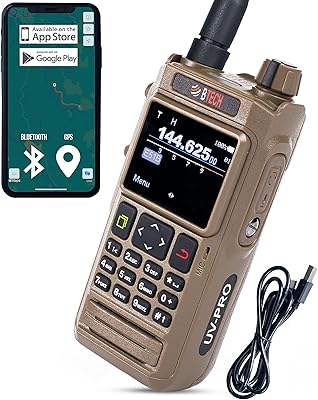
BTECH UV-PRO Dual Band Two-Way Radio
79%
86%
Build Quality
88%
Waterproofing & Durability
78%
Bluetooth App Integration
81%
APRS & GPS Performance
67%
Range & Signal Clarity
More
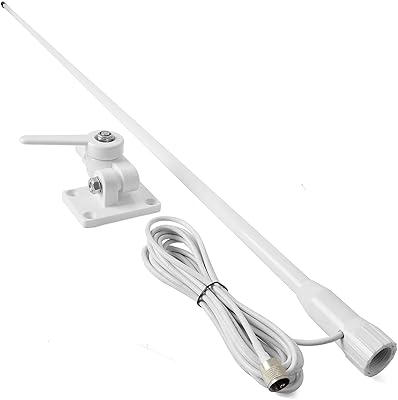
UAYESOK VHF Marine Base Antenna 48 Inch
87%
87%
Performance at Sea
92%
Durability in Harsh Conditions
91%
Installation Ease
89%
Signal Range and Clarity
85%
Compatibility with Marine Radios
More
UAYESOK Dual Band Fiberglass Radio Antenna 17-inch SO239 Connector
88%
89%
Signal Performance
93%
Durability & Weather Resistance
88%
Ease of Installation
90%
Build Quality
85%
Portability
More
Televes DiNova Boss Mix UHF/VHF HDTV Antenna
80%
88%
Signal Reception
91%
LTE Interference Filtering
92%
Build Quality
63%
Value for Money
67%
Ease of Installation
More

FAQ

Yes. This antenna is designed for use on the 2-meter and 70-centimeter amateur radio bands, which require at minimum a Technician class license in the United States. It is not a receive-only antenna, and transmitting without a license on these frequencies is illegal under FCC regulations.

For the vast majority of users, yes — it works right out of the box with no tuning needed. Most owners report excellent SWR readings on both bands immediately after installation. That said, it is always worth doing a quick SWR check with a meter before running high power, just as a best practice with any new antenna.

The X50A is designed for a standard 1.25-inch to 2-inch outside-diameter mast or pipe. You will need to supply your own mounting hardware — nothing is included in the box. A simple U-bolt mast clamp available at most hardware stores or ham radio suppliers will do the job.

Absolutely — it is one of the more popular choices for APRS iGate and digipeater setups. The dual-band coverage on both 144.390 MHz (the primary APRS frequency in North America) and the 70cm band makes it a practical single-antenna solution for a fixed APRS station.

Not ideally. The antenna carries a wind rating of 135 MPH but has no rated ice load survivability. In areas where ice accumulation on antennas is common, there is a real risk of structural damage. Operators in those regions should look for antennas with an explicit ice load rating or plan to take the antenna down during severe winter weather.

The 50-ohm figure is correct. The X50A is designed for standard 50-ohm coaxial systems used by virtually all amateur radio transceivers. The 30-ohm figure in the product listing appears to be a data entry error. You can run standard RG-8, RG-213, LMR-400, or any 50-ohm coax directly to this antenna without a matching network.

Coax loss depends entirely on the cable type and run length you use — the antenna itself introduces no additional loss beyond its feedpoint. For longer runs, LMR-400 or equivalent low-loss coax is worth the investment, especially on 70cm where cable losses are more significant than on 2 meters. Avoid cheap RG-58 for anything over about 20 feet.

The physical assembly is straightforward — the antenna ships in a small number of sections that join together. The trickier part for some buyers is that the included instruction sheet is quite minimal. If you have never installed a vertical base antenna before, it is worth looking up an install video or posting in a ham radio forum before you start. Nothing about it is technically complex, but clear documentation would help.

Reports from long-term owners are generally positive. Several users mention having this Diamond vertical mounted outdoors for multiple years — through heat, rain, and moderate wind — with no noticeable drop in performance. The fiberglass construction avoids the corrosion issues that affect some metal-bodied antennas over time.

It comes up occasionally, though it is not a widespread complaint. The practical advice is to inspect the SO-239 connector before you weatherproof the connection, verify that the center pin is straight and that the connector body seats cleanly on your PL-259, and use self-amalgamating tape or coax seal to protect the joint from moisture once everything checks out. That routine applies to any outdoor antenna installation regardless of brand.