Overview

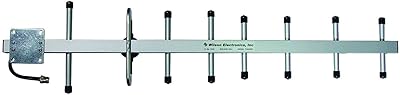
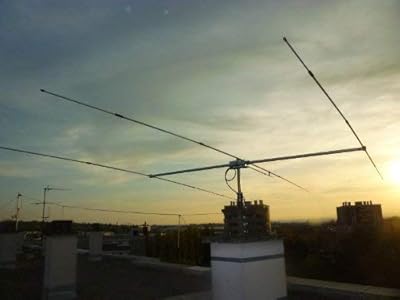
The HYS TC-YG08UV Dual-Band Yagi Antenna occupies a practical middle ground in the ham radio antenna market — not a beginner rubber duck, not a pricey commercial link antenna, but something genuinely useful for operators who need outdoor directional gain without overspending. HYS, also known as Quanzhou Truest Communication, produces a wide range of amateur radio accessories, and this model covers both the 2-meter (144MHz) and 70-centimeter (430MHz) bands from a single assembly. With over 150 ratings on Amazon and a top-500 category ranking, the antenna has earned a respectable track record, though it comes with a few practical considerations worth understanding before you buy.
Features & Benefits

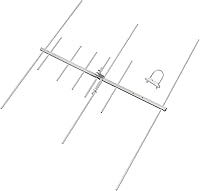
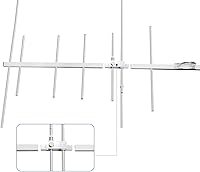
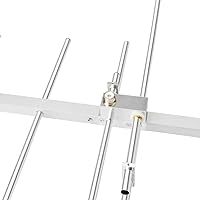
Think of dBi as a measure of how focused an antenna pushes signal in one direction compared to a basic baseline — at 9.5dBi on VHF and 11.5dBi on UHF, this dual-band Yagi delivers considerably more concentrated output than a typical omnidirectional whip. That focus comes from fairly narrow beamwidths: roughly 48–53° on the 2-meter band and 40–45° on 70 centimeters, so deliberate aiming at your target is essential. It handles up to 100 watts continuously, covering most base station and repeater link applications without breaking a sweat. The aluminum alloy elements are weatherproofed to handle winds up to 60 meters per second, and the included U-bolt mount makes mast installation manageable. Horizontal or vertical polarization is selectable simply by rotating the mount orientation.

Best For

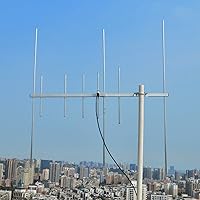
This outdoor directional antenna shines in scenarios where you are fighting distance or difficult terrain. Rural operators trying to reach a repeater 30 or 40 miles out will likely get more from this Yagi than any radio upgrade could provide. Repeater link builders on a tight budget will find it attractive, since it delivers respectable gain without the premium cost of commercial directional hardware. Technician-class hams curious about antenna theory can experiment with polarization and aiming to see measurable effects on signal quality. It pairs well with radios from BaoFeng, Kenwood, AnyTone, and Wouxun. It is less suited for anyone needing to monitor all directions freely — committing to a Yagi means committing to a fixed aim.

User Feedback

Averaging 4.0 out of 5 stars across more than 150 reviews, the HYS Yagi antenna earns consistent praise for noticeable range gains and how cleanly it assembles out of the box — many buyers describe the process as intuitive even for a first installation. On the critical side, a recurring frustration is what is absent from the package: no coaxial cable and no mast pole, just a single U-bolt. Plan those purchases separately or installation day will stall. A handful of buyers with antenna analyzers have flagged imperfect SWR readings straight from the package, occasionally requiring minor adjustments. Beginners unfamiliar with directional antenna aiming sometimes feel let down expecting plug-and-play simplicity from what is fundamentally a precision-pointed tool.

Pros

  • Genuine gain improvement on both VHF and UHF bands makes a noticeable difference for distant repeater access.
  • Dual-band coverage means one antenna handles both 144MHz and 430MHz without switching hardware.
  • Aluminum alloy construction holds up well in outdoor installations through rain, wind, and temperature swings.
  • Wind resistance rated to 60 m/s gives real confidence for rooftop or tower-mounted deployments.
  • Supports both horizontal and vertical polarization simply by adjusting the mount angle.
  • The U-bolt and plate mount are included, making standard mast attachment straightforward.
  • 100-watt power handling suits base stations and repeater link applications comfortably.
  • Assembly is clean and intuitive according to the majority of verified buyers.
  • Competitive mid-range pricing puts serious directional gain within reach without a large investment.
  • Compatible with a wide range of common ham radio brands right out of the box.

Cons

  • No coaxial cable is included, which catches many first-time buyers off guard at installation time.
  • No mast pole is provided despite the listing prominently featuring a mounted installation.
  • A subset of buyers with antenna analyzers have reported SWR readings that needed adjustment before the antenna performed optimally.
  • The narrow beamwidth demands careful and deliberate aiming — even a few degrees off-target can noticeably reduce performance.
  • Beginners unfamiliar with Yagi antenna behavior may find the learning curve steeper than expected.
  • This outdoor directional antenna is not useful for general scanning or monitoring signals from multiple directions.
  • Connector and hardware quality, while functional, does not match the standard of higher-end commercial alternatives.
  • Advertised dBi figures may not fully align with real-world measurements in all installation conditions.
  • Buyers in multi-repeater areas will find frequent physical reorientation impractical for everyday use.
  • Customer support and warranty resolution from the manufacturer can be slow or difficult for international buyers.

Ratings

The scores below reflect an AI-driven analysis of verified global buyer reviews for the HYS TC-YG08UV Dual-Band Yagi Antenna, with spam, bot activity, and incentivized feedback actively filtered out before scoring. Each category captures both the genuine enthusiasm and the recurring frustrations that real operators have reported after installing this outdoor directional antenna in the field. Nothing has been smoothed over — where buyers had consistent complaints, the scores reflect that honestly.

Signal Gain Performance
83%
The majority of buyers report a clear, immediately noticeable improvement in repeater access after switching from a stock omnidirectional whip. Rural operators especially praise the antenna for unlocking repeaters that were previously unusable, often without changing their radio or power output at all.
A portion of technically inclined buyers who tested with antenna analyzers found that real-world gain did not always match the advertised dBi figures precisely. Results vary significantly based on installation height, local terrain, and how accurately the antenna is aimed at the target.
Build Quality
76%
24%
The aluminum alloy elements feel solid and resist bending during assembly, and most buyers report no corrosion or structural fatigue after months of outdoor exposure. For the price tier, the physical construction inspires reasonable confidence in long-term durability.
The connector and junction hardware quality drew criticism from experienced operators who compared it unfavorably to commercial-grade alternatives. A few buyers noted slight play in the element fittings and reported that the SO-239 connector required careful inspection before use.
Weather Resistance
81%
19%
Buyers in areas with heavy seasonal rain, snow, and sustained winds have generally reported no structural failures or significant performance degradation over extended use. The wind rating of 60 meters per second gives it meaningful headroom for rooftop and elevated mast installations.
The feed point connector area is not self-sealing, and several experienced installers flagged that moisture can eventually work its way in without additional weatherproofing tape applied by the user. Long-term UV resistance of the hardware fittings is less proven than the aluminum elements themselves.
Ease of Assembly
84%
Most buyers, including those with limited antenna experience, describe the physical assembly as logical and manageable without specialist tools. Elements attach to the boom in a clear sequence, hardware fits cleanly, and the whole process typically takes under an hour.
The included instructions are minimal and lack detail for beginners unfamiliar with Yagi antenna construction. Buyers who struggled tended to be those who had never assembled a directional antenna before and were unsure about element spacing or polarization orientation.
Aiming & Directional Usability
61%
39%
For operators with a single, fixed target — a hilltop repeater or a known point-to-point link path — the narrow beam is actually an asset, concentrating energy where it counts and rejecting interference from other directions. Experienced hams planning their installation in advance appreciate this precision.
Buyers expecting flexibility were frequently caught off guard by how unforgiving a narrow-beam Yagi is in practice. Anyone needing to communicate with stations at varying bearings will find constant physical reorientation impractical, and even small aiming errors of 20 to 30 degrees can produce measurable signal loss.
Package Completeness
44%
56%
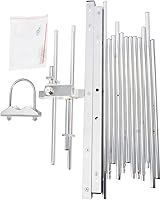
The antenna elements, boom, mounting plate, U-bolt, and assembly screws are all present and accounted for, giving buyers everything they need to put the antenna itself together. The U-bolt mount is a practical inclusion that fits standard mast diameters commonly available at hardware stores.
The absence of a coaxial feed line and a mast pole is a genuine frustration that generates some of the most pointed negative feedback in the review set. Many buyers discover these omissions only after the antenna arrives, forcing an additional purchasing delay before the installation can be completed.
SWR & RF Performance Consistency
67%
33%
The majority of operators running this dual-band Yagi on handhelds or modest base stations report clean, functional performance without any measurement concerns. For everyday repeater access at moderate power levels, SWR is rarely a practical problem.
A notable minority of buyers who checked SWR with meters or analyzers found readings outside the ideal range without any adjustments. This inconsistency is more concerning for operators running higher power levels where a poor SWR match can stress both the antenna and the transmitter over time.
Value for Money
78%
22%
Relative to commercial directional antennas offering similar dual-band gain figures, this outdoor directional antenna sits at a price point that most amateur radio hobbyists consider fair and accessible. For operators on a tight budget who need real directional performance, it delivers a reasonable return.
When the true cost of a quality feed line, adapters, and a mast pole is added, the total out-of-pocket investment climbs noticeably and narrows the value gap versus pricier options that include these components. Buyers who factor in those extras sometimes feel the headline price is a little misleading.
Compatibility
86%
The SO-239 connector and 50-ohm impedance match virtually all common amateur radio equipment without adaptation issues. Operators using BaoFeng, Kenwood, AnyTone, Wouxun, and Motorola radios all report clean connectivity via a standard PL-259-terminated feed line.
Buyers using radios with SMA connectors — the majority of BaoFeng handhelds, for instance — need a separate SMA-to-PL-259 adapter that is not mentioned in the listing. This small but necessary accessory trips up newer operators who do not know to look for it.
Polarization Flexibility
79%
21%
The ability to switch between horizontal and vertical polarization by simply rotating the mount is a genuinely useful feature, especially for operators who want to experiment with weak-signal SSB work on VHF or match the polarization of a specific repeater system.
Changing polarization after the antenna is permanently installed on a rooftop or high mast requires physically rotating the boom and re-tightening the U-bolt, which is not a quick or casual adjustment. There is no rotatable collar or quick-release mechanism to simplify field polarization changes.
Beginner Friendliness
53%
47%
The physical assembly is genuinely approachable for newcomers, and buyers with no prior antenna-building experience have successfully put the hardware together without issues. The light weight also makes it less physically demanding to lift and position during installation.
The broader learning curve around directional antenna operation — understanding beam aiming, polarization matching, SWR checking, and proper feed line selection — trips up a meaningful share of newer hams. Technician-class operators without an Elmer or online guidance often end up frustrated rather than impressed.
Long-Term Durability
72%
28%
Buyers who have used this dual-band Yagi through multiple seasons in exposed outdoor environments generally report no catastrophic failures or element loss. The aluminum construction resists the kind of corrosion that plagues lower-grade steel-element alternatives over time.
Hardware fittings such as bolts, clamps, and the connector show more wear than the elements themselves after prolonged outdoor exposure. Some buyers note that the mounting hardware benefits from replacement with stainless steel equivalents, especially in coastal or high-humidity environments.
Manufacturer Support
48%
52%
HYS has a reasonably broad presence on Amazon with a recognizable brand, and the product has been available long enough to accumulate a meaningful public review record that buyers can consult before purchasing.
Direct after-sale support from the manufacturer is a consistent weak point in buyer feedback, with slow or unsatisfying responses reported by several users who encountered defective units or had technical questions. Return and warranty resolution through Amazon tends to be the more reliable path for dissatisfied buyers.

Suitable for:

The HYS TC-YG08UV Dual-Band Yagi Antenna is a strong match for amateur radio operators who have a clear, fixed target in mind — a distant repeater, a hilltop gateway station, or a point-to-point link across challenging rural terrain. If you live in a rural or semi-rural area where omnidirectional antennas simply cannot bridge the gap to the nearest active repeater, this dual-band Yagi offers a practical and affordable way to claw back that distance without touching your radio setup. It works well for operators running common handheld or mobile rigs from brands like BaoFeng, Kenwood, AnyTone, or Wouxun, since the gain advantage of the antenna does the heavy lifting that a radio power upgrade cannot always deliver legally. Technician-class hams curious about directional antenna behavior will also find it a rewarding platform to experiment with, especially when testing the impact of polarization switching or beam aiming on actual signal reports. Repeater trustees or club members building a budget link system on a fixed structure will appreciate the 100-watt power handling and weather-resistant construction.
Not suitable for:

The HYS TC-YG08UV Dual-Band Yagi Antenna is a poor fit for anyone expecting a versatile, all-direction monitoring antenna — once you point a Yagi, everything outside that narrow beam essentially disappears, and rotating a fixed outdoor mount every time your contact changes position is not realistic for casual use. Operators in urban or suburban environments with multiple active repeaters spread across different compass bearings will quickly find the fixed aim a frustrating limitation compared to a good omnidirectional vertical. New hams who have never dealt with SWR, coaxial cable selection, or antenna aiming concepts should be prepared for a steeper setup curve than the packaging implies; this outdoor directional antenna rewards experience and preparation. Budget-conscious buyers also need to factor in the true out-of-pocket cost: the package includes no coaxial feed line and no mast pole, so what initially looks like a complete solution will require additional purchases before it is operational. Anyone needing broad band coverage beyond the 2-meter and 70-centimeter bands will also need to look elsewhere.
Specifications

  • Frequency Bands: Covers dual bands: 144MHz (2-meter VHF) and 430MHz (70-centimeter UHF), the two most widely used amateur radio bands worldwide.
  • Gain: Rated at 9.5dBi on the VHF band and 11.5dBi on the UHF band, providing meaningful directional signal concentration over standard omnidirectional antennas.
  • Max Power: Handles up to 100 watts of continuous power input, making it suitable for base station transceivers and repeater link applications.
  • Impedance: Designed for a 50-ohm system impedance, which is the standard for virtually all amateur radio and two-way radio equipment.
  • Connector: Equipped with an SO-239 (UHF female) coaxial connector for compatibility with PL-259-terminated feed lines commonly used in amateur radio installations.
  • VHF Beamwidth: On the 144MHz band, the antenna produces a beamwidth of approximately 48° in the vertical plane and 53° in the horizontal plane.
  • UHF Beamwidth: On the 430MHz band, the antenna narrows to approximately 40° vertical and 45° horizontal beamwidth, allowing more precise directional targeting.
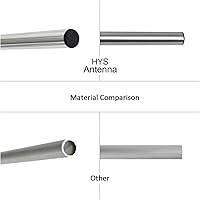
  • Material: Elements and boom are constructed from aluminum alloy, providing a balance of lightweight handling and resistance to outdoor corrosion.
  • Wind Rating: Structurally rated to withstand wind velocities up to 60 meters per second, suitable for rooftop or tower installations in most climates.
  • Polarization: Supports both horizontal and vertical polarization, selectable by rotating the mounting orientation relative to the mast.
  • Mount Included: Comes with one U-bolt and a mounting plate that allows attachment to a standard vertical mast pole — no additional mounting hardware is required.
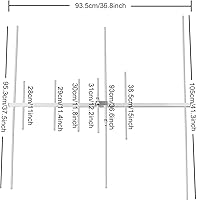
  • Package Dimensions: Ships in a box measuring 17.91 x 5.79 x 3.9 inches, containing the antenna elements, boom, mount hardware, and assembly screws.
  • Weight: The complete antenna assembly weighs 1.94 pounds, light enough for single-person installation on most mast configurations.
  • Weatherproofing: Rated for permanent outdoor use with construction intended to resist moisture intrusion and UV degradation over extended periods.
  • Compatibility: Works with common dual-band amateur radios and handheld transceivers from brands including BaoFeng, Kenwood, AnyTone, Motorola, and Wouxun via a standard PL-259 feed line.
  • Model Number: Manufacturer model designation is TC-YG08UV, produced by Quanzhou Truest Communication Co., Limited under the HYS brand.

Related Reviews

Diamond Antenna X30A Dual-Band Base Antenna
80%
91%
Signal Performance
88%
Build Quality
86%
Weatherproofing
84%
Ease of Installation
89%
SWR Consistency
More
Tram 1477 Dual-Band VHF/UHF Base Antenna
79%
91%
Ease of Setup
78%
RF Performance
83%
Build Quality
86%
Value for Money
67%
Connector Quality
More
Tram 1480 Dual-Band Fiberglass Base Antenna
76%
88%
Signal Performance
83%
Build Quality
86%
Weather Resistance
91%
Ease of Installation
89%
Connector Compatibility
More
weBoost Single-Band Yagi Antenna 700/800/900 MHz
87%
89%
Signal Performance
88%
Ease of Installation
90%
Build Quality
91%
Durability in Harsh Conditions
92%
Compatibility with Signal Boosters
More
Diamond X50A Dual-Band VHF/UHF Base Antenna
78%
88%
RF Performance
91%
Out-of-Box SWR
84%
Build Quality
79%
Weather Durability
76%
Ease of Assembly
More
UAYESOK Dual Band Fiberglass Radio Antenna 17-inch SO239 Connector
88%
89%
Signal Performance
93%
Durability & Weather Resistance
88%
Ease of Installation
90%
Build Quality
85%
Portability
More
Sirio Antenna SY27-3 3 Elements Yagi Antenna 26.5-30 MHz
86%
93%
Signal Strength
88%
Build Quality
80%
Ease of Installation
91%
Durability
90%
Range & Coverage
More
Linksys EA2700 Dual-Band Router
82%
84%
Wireless Performance
78%
Signal Coverage
88%
Setup & Installation
90%
Wired Connectivity
81%
Reliability
More
RCA ANT751E Yagi HDTV Antenna
85%
88%
Reception Quality
90%
Durability
85%
Installation Ease
89%
Signal Range
82%
App Integration (Signal Finder)
More
Tupavco TP514 Yagi Directional Antenna
73%
83%
Signal Improvement
54%
Ease of Setup
86%
Build Quality
78%
Value for Money
74%
Compatibility
More

FAQ

No, and this catches a lot of buyers off guard. The package includes the antenna elements, the boom, mounting hardware, and screws — but no coaxial feed line. You will need to purchase an appropriate length of coax with a PL-259 connector separately before you can connect it to your radio.

A mast pole is not included. The package comes with one U-bolt and a mounting plate designed to clamp onto an existing mast or pipe. You will need to source a suitable pole or pipe for mounting, which is a common additional purchase that the product listing does not make obvious.

Yes, it is compatible with dual-band handhelds like the BaoFeng UV-5R, provided you use an appropriate coaxial adapter and cable. Most BaoFeng radios use an SMA-Female antenna port, so you will need an SMA-Male to PL-259 adapter in addition to your feed line. Once connected, the gain improvement compared to the stock rubber antenna is very noticeable, especially for distant repeater access.

Most buyers report the assembly as straightforward. The elements slide or clamp onto the boom in a logical order, and the included screws hold everything securely. Physically mounting the antenna on a mast is a one-person job given how light it is. The trickier part for newcomers is getting the aiming right, not putting the hardware together.

Fairly precisely, especially on the UHF band where the beam is narrowest. A Yagi is not like an omnidirectional whip — it concentrates signal in one specific direction, and pointing it even 20 to 30 degrees off-target can noticeably degrade performance. Before mounting, it helps to identify the exact compass bearing to your target repeater or station and use that to align the boom direction.

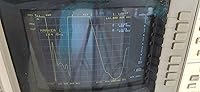
A small number of buyers have reported SWR readings that were higher than expected right out of the box. For most users this has not been a major problem, but if you have an antenna analyzer or SWR meter, it is worth checking before running full power. Minor element repositioning can sometimes resolve it. If you are running a low-power handheld, a somewhat elevated SWR is less of a concern than it would be on a high-power base station.

Yes. The HYS TC-YG08UV Dual-Band Yagi Antenna supports both horizontal and vertical polarization simply by rotating the mounting bracket and U-bolt assembly. Horizontal polarization is commonly used for weak signal SSB and CW work on VHF, while vertical is standard for FM repeater operation. Just make sure your target station is using the same polarization or you will take a significant signal hit.
The aluminum alloy construction and a wind rating of 60 meters per second mean it should handle most real-world weather conditions without issue. Buyers in regions with heavy rain, snow, and gusty conditions have generally reported no structural failures over extended use. The connector area is the one spot worth checking periodically — adding self-amalgamating tape around the feed point is a good practice for any outdoor antenna installation.

It varies heavily depending on terrain, local RF noise, and what you are connecting to, but the gain figures are genuine and meaningful. Operators in flat or elevated areas with clear line of sight have reported reaching repeaters well beyond what their previous omnidirectional antenna could manage. In hilly or obstructed environments, the results are harder to predict. Think of it as a tool that maximizes what is possible given your specific geography, not a guarantee of a fixed distance.

Yes, this is actually one of the better use cases for this dual-band Yagi. Repeater trustees building a point-to-point link between two sites at a fixed bearing will benefit from the directional gain and the 100-watt power handling. The aluminum construction and weatherproofing also make it practical for permanent hilltop or rooftop installations typical in repeater infrastructure.