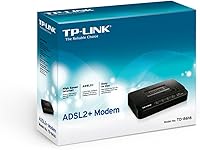
Overview

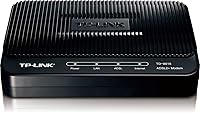
The TP-Link TD-8616 ADSL2+ Modem has been a quiet workhorse in the DSL networking space since its debut in 2010, and its continued availability says something real about its staying power. This is not a router, and it does not broadcast Wi-Fi — it is a dedicated DSL modem built for one job: bridging your phone line to a wired network. For home users and small offices running on legacy DSL infrastructure, that focused design is a strength rather than a shortcoming. Plug it in, connect it to your existing router or a single PC, and you have a straightforward, no-fuss setup.

Features & Benefits

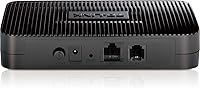
The TD-8616 supports the full ADSL family — ADSL, ADSL2, and ADSL2+ — with downstream speeds up to 24Mbps depending on your line quality and ISP plan. A single RJ-45 Ethernet port handles the connection to your router or computer, while the RJ-11 phone port slots straight into a standard line splitter. The built-in firewall offers basic but meaningful protection against common threats without requiring any configuration. Perhaps the most underappreciated spec here is the 6KV lightning protection, which adds hardware-level surge defense — genuinely useful if storms are a regular occurrence where you live. A two-year warranty and toll-free support round things out nicely.

Best For

This ADSL modem is an ideal fit for anyone whose only viable internet option is DSL — think rural homes, remote small offices, or areas where fiber and cable simply have not arrived yet. It also makes a strong case for buyers looking to replace their ISP-provided modem with something they own outright and trust over the long haul. The dedicated modem design appeals to users who already have a router they prefer and have no interest in a combined gateway device. One honest caveat: if your area supports faster broadband technologies, this unit will feel like the wrong tool for the job.

User Feedback

Among the roughly 1,000 ratings this DSL modem has accumulated, easy plug-and-play setup comes up constantly — most users report syncing with their DSL line quickly and without technical headaches. Build quality also draws consistent praise; many buyers note it feels noticeably sturdier than the modem their ISP handed them. That said, a handful of reviewers have encountered ISP compatibility issues, so checking with your provider before purchasing is genuinely worthwhile advice. The absence of Wi-Fi divides opinion — some see it as a deliberate, clean design choice while others wished for an all-in-one. A smaller group of long-term users flags the 100Mbps Ethernet ceiling as a minor bottleneck when paired with modern routers.

Pros

  • Supports ADSL, ADSL2, and ADSL2+ standards, covering virtually all legacy DSL line types.
  • Hardware-level 6KV lightning protection adds real storm-season peace of mind.
  • Setup is genuinely plug-and-play — most users report syncing with their DSL line in minutes.
  • Built noticeably sturdier than the average modem an ISP hands you for free.
  • Built-in firewall provides basic but functional protection without needing any configuration.
  • Two-year warranty is longer than most competing DSL modems in this category.
  • Toll-free technical support is available if you run into line compatibility issues.
  • Dedicated modem design pairs cleanly with any existing router without interference or overlap.
  • The TD-8616 has a proven track record spanning well over a decade of real-world use.
  • Lightweight and compact enough to tuck away without cluttering a desk or shelf.

Cons

  • The 100Mbps Ethernet port will become a bottleneck if you upgrade to a gigabit router.
  • No Wi-Fi whatsoever — a separate router is mandatory for any wireless devices.
  • Compatibility issues with certain ISP line profiles have been reported by a minority of buyers.
  • Maximum downstream is capped at 24Mbps, which depends entirely on your line quality.
  • Only one Ethernet port means zero flexibility for direct wired connections beyond a single router.
  • Not compatible with VDSL, fiber, or cable infrastructure — DSL-only by design.
  • Long-term firmware support is uncertain given the product was first released in 2010.
  • No built-in diagnostics display or status LEDs detailed enough for advanced troubleshooting.

Ratings

The scores below for the TP-Link TD-8616 ADSL2+ Modem were generated by our AI engine after systematically analyzing verified purchaser reviews from around the world, with spam, bot-submitted, and incentivized feedback actively filtered out before any scoring took place. The result is an honest, data-driven picture of how this DSL modem performs in real homes and small offices — strengths and frustrations included, nothing glossed over.

Setup & Installation
91%
Most buyers describe the out-of-box experience as genuinely painless — plug the phone line in, connect an Ethernet cable to a router, and the unit syncs with the DSL line within minutes. No software disc, no account creation, no configuration wizard to fight through.
A minority of users with less common ISP line profiles report that the auto-sync does not always succeed on the first attempt, requiring a manual reboot or a call to their ISP to verify the line settings before things stabilize.
Connection Stability
87%
Long-term owners consistently highlight how reliably this DSL modem holds its sync once it is up and running. Many rural users specifically mention weeks or months of uptime without unexpected drops, which is a meaningful endorsement for a device in this category.
Stability can be line-dependent rather than a guaranteed outcome — some users on older copper infrastructure report occasional sync drops during heavy rain, suggesting the modem performs best when the physical phone line itself is in good condition.
Build Quality
83%
The TD-8616 feels noticeably more substantial than the thin plastic modems ISPs typically hand out. The casing has a solid, grounded feel that gives users confidence it will last through years of continuous use sitting on a shelf or desk.
The ventilation design is minimal, and a handful of long-term users have noted the unit runs warm after extended operation. While no thermal failures were widely reported, users in hot climates or enclosed spaces should ensure adequate airflow around the unit.
Lightning & Surge Protection
88%
The 6KV hardware-level surge protection is a standout feature for buyers in storm-prone regions. Several reviewers specifically credit the TD-8616 with surviving thunderstorms that took out other equipment on the same line, lending real-world credibility to the spec.
Surge protection covers the modem itself, but some users mistakenly assume it extends protection to downstream devices like routers and computers — it does not. A separate surge protector on the power side is still advisable for full peace of mind.
Compatibility
68%
32%
For the majority of buyers on standard ADSL, ADSL2, or ADSL2+ lines, compatibility is a non-issue — the modem negotiates the line profile automatically and works across a wide range of ISPs in North America, Europe, and Asia.
A recurring complaint among a notable subset of reviewers involves ISPs with non-standard or proprietary DSL configurations where the modem either fails to sync fully or achieves a lower-than-expected connection speed. Checking with your ISP before purchasing is genuinely important, not just a formality.
Ethernet Port Speed
54%
46%
The 10/100Mbps Ethernet port is perfectly adequate for the ADSL internet speeds this modem is designed to deliver. For typical DSL connections topping out well under 24Mbps, the 100Mbps LAN ceiling is never a real bottleneck in day-to-day use.
Buyers pairing this modem with a modern gigabit router will notice the port immediately caps data transfer at 100Mbps, which feels anachronistic in a networking ecosystem that moved on to gigabit as a baseline standard years ago. For future-proofing, this is the unit's most dated specification.
Value for Money
72%
28%
For users locked into DSL and looking to escape monthly ISP modem rental fees, this ADSL modem pays for itself over time. The two-year warranty and included technical support add meaningful long-term value that cheaper generic alternatives rarely offer.
At its current price point, some buyers feel the TD-8616 is slightly expensive relative to competing ADSL modems, particularly given its 100Mbps Ethernet port and the age of the underlying technology. Those on tight budgets may find comparable options at a lower cost.
Technical Support
79%
21%
Having toll-free telephone support available — with a dedicated French-language line as well — is a genuine differentiator in a product category where many brands offer nothing beyond an online FAQ. Users who have called in generally report knowledgeable agents and reasonable wait times.
Some users report that support is better equipped to handle general setup questions than nuanced ISP-specific compatibility issues, where agents occasionally defer back to the ISP rather than providing hands-on troubleshooting guidance.
Warranty Coverage
84%
A two-year warranty on a networking peripheral is meaningfully above the industry norm of one year, and TP-Link has a reasonably strong reputation for honoring it without excessive friction. For buyers worried about long-term reliability, this provides a real safety net.
The warranty covers manufacturing defects but excludes damage from power surges or misuse, which is standard but worth noting given that storm-related failures are a plausible scenario for some buyers despite the onboard surge protection.
Form Factor & Footprint
81%
19%
At just 3.52 ounces and with a compact rectangular profile, this DSL modem tucks neatly behind a monitor, on a bookshelf, or against a wall without demanding attention. Its understated black finish blends into most home and office environments without looking out of place.
The unit does not include any mounting hardware or adhesive feet for wall or vertical mounting, which limits placement flexibility for users trying to keep cable runs tidy in a compact workspace.
Long-Term Reliability
86%
Given that this modem has been in continuous production since 2010, its longevity in the market is evidence in itself. Buyers who have owned the TD-8616 for three, four, or even five years report it still performing exactly as it did out of the box.
Because the hardware design is over a decade old, there is legitimate uncertainty about how long firmware updates and active manufacturer support will continue — an important consideration for security-conscious buyers who rely on a firewall that never gets patched.
Firewall Protection
66%
34%
The built-in firewall handles basic Stateful Packet Inspection and filters out common unsolicited inbound traffic effectively. For a standalone modem, having any firewall capability at all puts it ahead of completely bare-bones alternatives in the same category.
The firewall is not configurable beyond factory defaults — there is no interface to set custom rules, block specific IP ranges, or monitor traffic logs. Users with more advanced security needs will need to rely on their router's firewall for meaningful protection.

Suitable for:

The TP-Link TD-8616 ADSL2+ Modem is built squarely for people whose internet options begin and end with DSL — and for that audience, it delivers exactly what it promises. Rural households and small-town residents who cannot access fiber or cable will find this a dependable, no-drama modem that simply gets the line connected and keeps it stable. Small office setups that already own a quality router will appreciate the clean separation of duties: let this handle the DSL handshake, and let your router handle everything else. It is also a smart pick for anyone tired of renting an ISP-provided modem that is mediocre at best and a monthly fee at worst. If you live somewhere thunderstorms are a seasonal reality, the hardware-level 6KV surge protection is a practical bonus that cheaper modems simply skip.

Not suitable for:

The TP-Link TD-8616 ADSL2+ Modem is the wrong choice for anyone who has access to faster broadband technologies like fiber, cable, or even VDSL, because its ADSL2+ standard simply cannot compete on raw throughput. It does not emit any wireless signal — there is no Wi-Fi here, not even a basic 2.4GHz radio — so buyers expecting an all-in-one gateway will need to look elsewhere. The single 10/100Mbps Ethernet port means it will create a bottleneck if you eventually upgrade to a gigabit network environment. Users who need to connect multiple wired devices directly from the modem are also out of luck — a router is a necessity, not an option, with this unit. Anyone on a non-DSL ISP should not give this a second glance, as it has no compatibility with cable or fiber infrastructure whatsoever.

Specifications

  • DSL Standards: The modem supports ADSL, ADSL2, and ADSL2+ standards, covering the full range of legacy DSL line types used by most DSL-based ISPs.
  • Downstream Speed: Maximum downstream bandwidth reaches up to 24Mbps under ADSL2+, though actual speeds depend on line quality and ISP provisioning.
  • Upstream Speed: Maximum upstream bandwidth is up to 3.5Mbps under the ADSL2+ standard.
  • WAN Interface: A single RJ-11 phone line port serves as the WAN interface, connecting directly to your telephone wall socket.
  • LAN Interface: One RJ-45 Ethernet port operating at 10/100Mbps provides the wired connection to a router or a single computer.
  • Wi-Fi: This is a wired-only modem with no wireless radio; it does not broadcast any Wi-Fi signal.
  • Firewall: A built-in firewall provides basic protection against common internet-based intrusion attempts without requiring manual configuration.
  • Lightning Protection: Hardware-level 6KV lightning protection circuitry is integrated to guard the unit and connected equipment against voltage surges from storms.
  • Dimensions: The unit measures 10.24″ x 7.09″ x 2.76″, making it a compact footprint suitable for a desk or shelf.
  • Weight: The modem weighs 3.52 ounces, making it light enough to mount or relocate without any difficulty.
  • Color: The unit is finished in solid black, consistent with TP-Link's standard networking hardware aesthetic.
  • Warranty: TP-Link covers this modem with a two-year limited warranty from the date of purchase.
  • Technical Support: Toll-free telephone technical support is included, with a dedicated English-language line and a separate French-language hotline available.
  • Compatible ISPs: The modem is designed for use exclusively with DSL-based internet service providers; it is not compatible with cable or fiber services.
  • Model Number: The official model number is TD-8616, as designated by TP-Link.
  • Manufacturer: The TD-8616 is designed and manufactured by TP-Link, a globally recognized networking hardware brand.
  • First Available: This modem was first made available in January 2010, reflecting a long and proven track record in the DSL market.
  • ASIN: The Amazon Standard Identification Number for this product is B0034JSYZ2.

Related Reviews
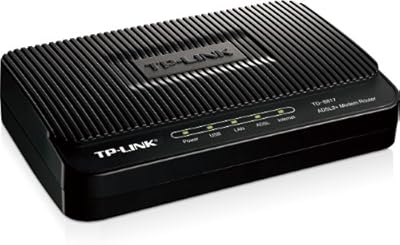
TP-Link TD-8817 ADSL2+ Modem
80%
87%
Value for Money
92%
Ease of Setup
85%
Build Quality
80%
Internet Speed
88%
Security Features
More
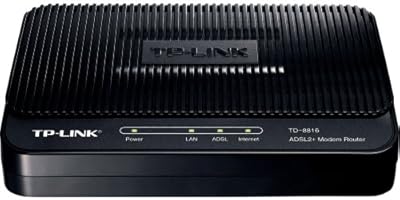
TP-Link TD-8816 ADSL2+ Modem Router
70%
83%
Ease of Setup
78%
Connection Stability
61%
Throughput & Speed Performance
69%
Build Quality & Durability
77%
Value for Money
More
TP-Link TD-W9970 Modem Router
83%
91%
Value for Money
95%
Ease of Setup
76%
Wi-Fi Performance
84%
Build Quality
87%
USB Port Functionality
More
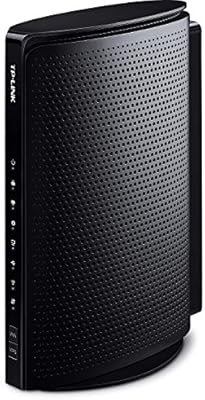
TP-Link TC-7610 DOCSIS 3.0 Cable Modem
69%
91%
Value for Money
88%
Ease of Setup
74%
Connection Stability
69%
Speed Performance
83%
ISP Compatibility
More
TP-Link TC-W7960 Cable Modem Router
71%
83%
Value for Money
74%
Setup & Activation
81%
Wired Connection Stability
58%
Wi-Fi Performance
54%
Wi-Fi Range & Coverage
More
TP-Link Archer BE600 WiFi 7 Router
81%
91%
Wireless Performance
84%
Coverage & Range
93%
Wired Port Selection
88%
Setup & Installation
79%
Multi-Link Operation (MLO)
More
TP-Link EAP670 V2 WiFi 6 Access Point
82%
91%
Wireless Performance
78%
Setup & Onboarding
88%
Build Quality
83%
Omada App & Cloud Management
89%
Multi-Device Handling
More
TP-Link EAP610 V2
TP-Link EAP610 V2
82%
86%
Wireless Performance
91%
Setup & Installation
88%
Cloud Management & App
83%
Multi-Device Handling
79%
Range & Coverage
More
NETGEAR DM111PSP ADSL2+ Modem
74%
83%
DSL Compatibility & Protocol Support
79%
Setup & Installation Experience
81%
Connection Stability & Reliability
86%
OS & Platform Compatibility
72%
Value for Money
More
TP-Link Archer VR2100 VDSL/ADSL Modem Router
76%
88%
VDSL Line Sync Stability
67%
Wi-Fi Coverage & Range
91%
Wired Gigabit Performance
86%
Setup & Initial Configuration
57%
USB 3.0 & NAS Functionality
More

FAQ

No, it does not. The TD-8616 is a dedicated wired modem with no wireless radio whatsoever. If you need Wi-Fi, you will have to connect a separate wireless router to its Ethernet port.

It is compatible with DSL-based internet service providers that use ADSL, ADSL2, or ADSL2+ line technology. That said, a small number of users have reported compatibility issues with specific ISP configurations, so it is worth confirming with your provider before purchasing.

If you have more than one device to connect, or if you need Wi-Fi, yes — a separate router is required. This modem has only one Ethernet port, so it connects to a single device or, more commonly, to a router that then handles your home or office network.

It means the modem has internal circuitry rated to withstand voltage surges up to 6 kilovolts, which can occur during nearby lightning strikes transmitted through your phone line. It is a genuine hardware safeguard, not just a marketing claim, and it is particularly useful in storm-prone regions.

In most cases, yes. As long as your ISP uses an ADSL, ADSL2, or ADSL2+ line standard, this modem can serve as a direct replacement. Just confirm your ISP supports third-party modems and that your specific line profile is compatible before making the switch.

Most users find the setup refreshingly simple. You plug the phone line into the RJ-11 port, connect an Ethernet cable to your router or PC, and the modem syncs with your DSL line automatically. No software installation is required in most cases.

Under ADSL2+, it supports downstream speeds up to 24Mbps and upstream speeds up to 3.5Mbps. Keep in mind your actual speed will be determined by your ISP plan and the physical quality of your phone line, not just the modem itself.

Not directly — the modem has only one Ethernet port. To connect multiple devices, you need to pair it with a router or a network switch. Think of this unit as the bridge between your phone line and your network, not the network itself.

For typical DSL internet speeds, no. However, its Ethernet port is rated at 100Mbps, which is below the gigabit standard now common in home routers. If you ever upgrade to a faster broadband technology, the Ethernet port speed could become a limiting factor, but on an ADSL line it is unlikely to matter.

TP-Link provides toll-free telephone support — there is an English-language line and a separate French-language hotline. The modem also comes with a two-year warranty, so if the unit itself fails within that window, you have a clear path to a replacement.