Overview

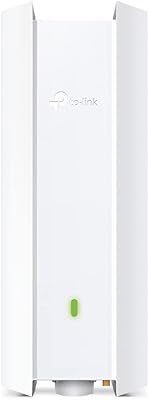
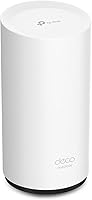
The TP-Link Deco X50-Outdoor WiFi 6 Mesh Node is built for one specific job: pushing fast, reliable WiFi beyond your home's walls. At its price point, buyers reasonably expect more than just weather resistance — they want genuine mesh performance, not a watered-down signal repeater. This outdoor mesh node delivers on that expectation, and the fact that it holds the #1 bestseller spot in Whole Home & Mesh WiFi Systems is not accidental. One important caveat upfront: the Deco X50-Outdoor is a single-node expansion unit. It works as part of an existing Deco ecosystem, not as a standalone router. Know that going in, and it makes a lot of sense.
Features & Benefits

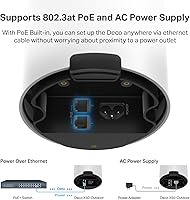
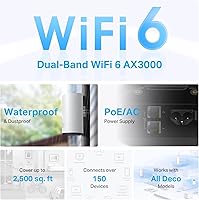
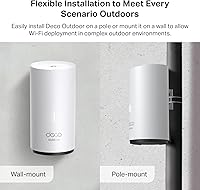
The headline spec here is AX3000 dual-band WiFi 6, which in practice means more simultaneous device connections handled without the stuttering you would get from older outdoor access points. The weatherproofing is rated for both dust ingress and rain exposure — useful not just for wet climates, but anywhere humidity or debris is a factor, like coastal properties or wooded yards. Two Gigabit Ethernet ports with PoE+ support stand out as a practical win: run one cable from a PoE switch, and you have handled both power and data without threading a separate power line. Mounting options — pole, wall, or tabletop — give you real flexibility, and Deco app onboarding takes minutes for existing Deco users.

Best For

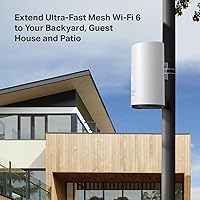
This weatherproof WiFi 6 extender makes the most sense for homeowners who already have a Deco mesh network indoors and want to push that same signal out to a backyard, patio, pool area, or detached structure. If you have a PoE-capable switch, installation is clean and cable-efficient. It is also a solid upgrade for anyone retiring an older outdoor access point — the app-based management and Alexa compatibility make daily operation noticeably more convenient. Smart outdoor setups with cameras, doorbells, or streaming devices are natural fits. That said, it is less suited for users without an existing Deco system, or those hoping to run it as a standalone wireless router.

User Feedback

With over 16,500 ratings averaging 4.4 stars, the Deco X50-Outdoor has clearly earned broad trust — though it is worth understanding the nuances behind that number. Reviewers consistently praise the straightforward app setup and the coverage range, especially for larger yards where indoor routers simply fall short. The compact, unobtrusive design earns mentions too. On the downside, a recurring frustration is finding out the PoE injector is not included — it is a separate purchase if you lack a PoE switch, which catches some buyers off guard. A subset of users also run it in access-point mode with non-Deco routers successfully, though with reduced feature access. Long-term weatherproofing in extreme climates draws mixed anecdotal reports.

Pros

  • Extends an existing Deco mesh outdoors with minimal effort — onboarding through the app takes only minutes.
  • WiFi 6 support handles multiple outdoor devices at once without the congestion issues common on older standards.
  • Dual PoE+ ports mean one cable from a compatible switch covers both power delivery and data — no separate outlet needed.
  • IP-rated weatherproofing provides real protection against rain, humidity, and dust in everyday outdoor conditions.
  • Three mounting options — pole, wall, or tabletop — make it adaptable to garages, patios, barns, and outbuildings.
  • Free HomeShield tier includes parental controls, IoT device identification, and QoS at no ongoing subscription cost.
  • Compact, low-profile design blends into outdoor spaces without looking like industrial networking hardware.
  • Alexa voice control enables hands-free management of guest Wi-Fi and basic network toggles.
  • Over 16,500 buyer ratings averaging 4.4 stars signal strong, consistent satisfaction across a wide real-world install base.
  • AC power adapter is included in the box, so buyers without a PoE switch can still power it immediately.

Cons

  • Requires an existing Deco mesh system to function as intended — it is not a standalone router under any configuration.
  • The PoE injector is sold separately, which surprises many buyers and adds unexpected cost to the total setup budget.
  • Full mesh intelligence and app features are significantly reduced when paired with non-Deco, third-party routers.
  • Long-term weatherproof durability in extreme climates — heavy snow, intense desert heat — remains an open question with mixed user reports.
  • Sold as a single-node pack, so covering large properties or multiple outdoor zones means buying additional units.
  • HomeShield advanced security features sit behind a paid subscription; the free tier has meaningful gaps for power users.
  • No WAN failover or backup connectivity — if the main internet connection drops, outdoor coverage goes with it.
  • Management is entirely app-dependent with no traditional browser-based admin interface for users who prefer that control.

Ratings

The scores below for the TP-Link Deco X50-Outdoor WiFi 6 Mesh Node were generated by our AI review engine after analyzing thousands of verified global buyer experiences, with spam, bot-generated, and incentivized feedback actively filtered out before any category was scored. This outdoor mesh node earned strong marks where it matters most — wireless reach, outdoor resilience, and ecosystem integration — while the ratings also honestly reflect where real buyers ran into friction. Both the genuine strengths and the recurring pain points are transparently weighted into every category you see here.

Wireless Performance
88%
Buyers consistently report that this weatherproof WiFi 6 extender delivers noticeably faster and more stable outdoor connections compared to older access points, especially when several devices are active at once. Video calls from the patio and 4K streaming by the pool hold steady without the buffering typical of older 802.11ac hardware.
Peak theoretical speeds rarely translate fully at longer distances, and a few users note signal drop-off through dense foliage or thick masonry walls sitting between the indoor node and the outdoor unit. Performance in obstructed multi-story outdoor settings is less consistent than in open-yard deployments.
Weatherproofing
74%
26%
For the vast majority of buyers in temperate or moderately variable climates, the IP-rated weatherproofing performs reliably — users in rainy coastal and Pacific Northwest environments report no water ingress or performance degradation even after extended wet-season outdoor exposure across multiple years.
Long-term durability in extreme climates is where confidence drops: buyers in snow-belt and desert Southwest regions report mixed outcomes, with some units showing housing stress or performance changes after sustained sub-freezing or intense heat exposure. TP-Link does not publish a specific operating temperature ceiling prominently on packaging.
Setup & Installation
83%
Existing Deco users consistently praise how little effort it takes to add this outdoor mesh node to a running network — the app-guided onboarding takes under ten minutes, with no browser admin panel to navigate or existing network settings to reconfigure from scratch.
The physical installation side requires real effort: routing Ethernet cable from an indoor switch to an outdoor mounting location involves drilling, weatherproofing cable entry points, and careful planning. Buyers without prior DIY networking experience frequently find the hardware setup more involved than the app experience suggests.
Value for Money
71%
29%
At its mid-to-premium price point, the Deco X50-Outdoor delivers genuinely capable WiFi 6 hardware in a weatherproof chassis with PoE flexibility — specs that would cost considerably more from enterprise-grade outdoor access point brands targeting the same backyard and outbuilding coverage scenarios.
The sticker price does not capture the full cost: buyers without a PoE+ switch face additional hardware purchases, and full HomeShield feature access requires an ongoing subscription. For buyers who only need basic outdoor WiFi without mesh roaming or smart home integration, the value proposition is harder to justify.
Ecosystem Integration
91%
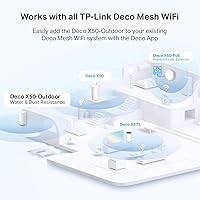
Within the Deco ecosystem, integration is about as frictionless as outdoor networking hardware gets — the node automatically joins the mesh, inherits network settings, and benefits from intelligent band steering and roaming without any manual configuration. Users with multiple Deco units indoors report the outdoor extension feels entirely native.
The dependency on the Deco ecosystem is also its most significant constraint: buyers without existing Deco hardware get a dramatically reduced experience, and access-point mode with third-party routers sacrifices most of the app intelligence and mesh roaming features that define the product's core value proposition.
Build Quality
82%
18%
The physical construction feels appropriately solid for an outdoor device — the housing has reassuring density, the port covers fit snugly, and the mounting hardware is sturdy enough to keep the unit stable in moderate wind on both wall and pole installations without play or rattling.
Some buyers note the white plastic exterior shows UV yellowing and surface scuffing sooner than expected in high-sun environments, and a handful of reviews mention the cable port covers becoming harder to reseat after repeated removal. It falls just short of feeling fully industrial-grade at its price tier.
PoE Flexibility
86%
The dual Gigabit PoE+ ports are a standout practical feature for buyers with a managed network switch — running one Ethernet cable from the switch handles both power and data, eliminating the need for an outdoor outlet and keeping fence-line or eave installations clean and professional-looking.
The PoE injector is absent from the box, which consistently surprises buyers given the prominent PoE marketing. Anyone without an existing PoE+ switch needs to budget and source a separate 802.3at injector before the single-cable installation benefit becomes accessible, adding both cost and a hardware sourcing step.
Range & Coverage
87%
In open outdoor environments — unobstructed backyards, pool areas, and patios — the coverage radius is genuinely impressive. Multiple reviewers specifically mention that devices at the far edge of a large yard maintain fast, usable connections rather than barely hanging on at the edge of the signal.
Coverage drops more steeply than expected once significant obstructions appear — a dense tree line, a stucco garden wall, or an outbuilding with metal roofing can noticeably reduce effective range. Buyers with heavily landscaped or irregular-shaped properties may find a single node does not cover the full outdoor footprint they anticipated.
App Experience
84%
The Deco app is among the better consumer networking applications available — setup guidance is visual and clear, remote management works reliably, and new device connection alerts give users a useful level of network awareness without overwhelming them with raw data or technical jargon.
The complete absence of a browser-based admin interface is a real limitation for users who prefer desktop management or need to troubleshoot from a laptop. Advanced users also find the app deliberately simplified, with limited access to granular DNS settings, VLAN configuration, or per-device bandwidth analytics.
Multi-Device Handling
83%
WiFi 6 OFDMA and MU-MIMO capabilities translate to real-world benefits in busy outdoor settings — when smart cameras, outdoor speakers, phones, and tablets are all connected at once, the connection quality holds up far better than older hardware manages, which users notice most at outdoor gatherings.
The dual-band-only configuration means heavy channel congestion remains a possibility in densely populated neighborhoods with many overlapping networks. The absence of a dedicated tri-band backhaul channel can create throughput bottlenecks on demanding mesh setups where several nodes are pushing heavy traffic simultaneously.
Mounting Options
78%
22%
Three supported mounting configurations — pole, wall, and tabletop — give buyers genuine placement flexibility, and the included mounting kit covers the most common scenarios without requiring a separate hardware store run. The pole mount option suits fence-line and garden post deployments particularly well.
The mounting hardware feels like a secondary design consideration — the pole clamp accommodates a limited diameter range, and several buyers report the wall bracket requires careful measuring to avoid a visibly crooked install. A more robust and adjustable mounting kit would be appropriate at this price level.
Security Features
69%
31%
The free HomeShield tier provides a meaningful baseline out of the box — network security scans, IoT device identification, and basic parental controls are available without any subscription, which is a reasonable included benefit for a device focused primarily on outdoor wireless coverage rather than security.
Advanced threat protection, detailed usage reports, and granular parental control scheduling all sit behind a paid HomeShield Pro subscription. Buyers expecting robust network security from the included free tier alone will find it insufficient for anything beyond basic household awareness and light filtering.
Cable Management
77%
23%
The PoE+ port design meaningfully reduces cable clutter for buyers with the right network infrastructure — a single Ethernet run replaces a separate power cable plus data cable, and port placement on the unit keeps connections reasonably tidy across wall and pole mounting configurations.
Without a PoE switch or injector, buyers revert to running two cables, which partially defeats the clean-install appeal. The cable entry area also lacks a rubber grommet or conduit guide, leaving fully weatherproofed and aesthetically clean outdoor cable routing entirely to the buyer to solve independently.
Voice Control
62%
38%
Alexa integration works reliably for the commands it supports — toggling the guest network on or off by voice is a genuine convenience for households with frequent visitors, and setup through the Alexa app is straightforward for anyone already embedded in the Amazon smart home ecosystem.
The Alexa feature set is narrow: outside of guest network toggling and basic on/off controls, there is little depth to the voice integration. Buyers expecting granular voice-driven network management comparable to some competing platforms will find this implementation limited and unlikely to change their day-to-day habits.
Design & Aesthetics
79%
21%
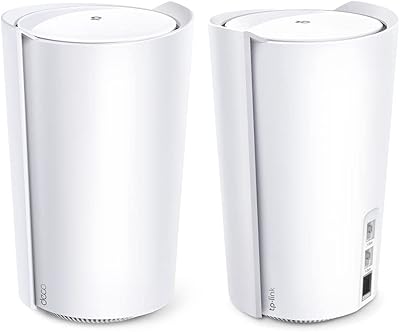
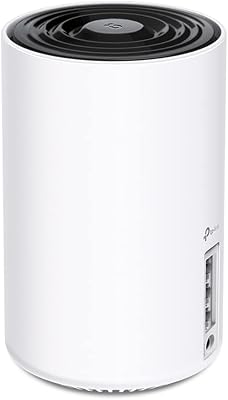
The clean white cylindrical form factor is well-considered for residential outdoor settings — it reads more like a smart home sensor than industrial network gear, which means it blends into typical suburban exterior walls and eaves without drawing attention or clashing with most landscaping styles.
The single white colorway limits options for buyers with darker exterior walls or natural wood finishes where the unit stands out visibly. The design also omits any built-in cable channel or cover strip, leaving exposed cable runs looking less polished than the unit itself when wall-mounted.

Suitable for:

The TP-Link Deco X50-Outdoor WiFi 6 Mesh Node is the right call for homeowners who already run a Deco mesh system indoors and are tired of dead zones the moment they step outside. If your backyard, patio, or pool area sees regular use — for video calls, 4K streaming, or smart outdoor devices — this outdoor mesh node fills that gap without requiring a separate router or complex reconfiguration. Property owners with detached garages, guest houses, or workshops will find it especially practical, since it can serve as both a wireless extender and a wired connection point for devices in those spaces. The dual PoE+ ports are a genuine advantage for anyone with a managed switch or PoE-capable router, since one cable run handles both power and data for a clean, professional install. Tech-forward users who want app-based control, Alexa integration, and basic network security without paying for a premium subscription will also find the free HomeShield tier a reasonable, no-friction bonus.
Not suitable for:

If you do not already own a Deco mesh system, the TP-Link Deco X50-Outdoor WiFi 6 Mesh Node is not the right starting point — it is an expansion node by design, not a standalone router, and without that existing foundation it simply will not function as a mesh unit. Buyers expecting a universal access point that integrates natively with any brand's router will run into real limits; access-point mode does work with third-party hardware, but you lose the Deco app intelligence and mesh roaming features that justify this price tier. Anyone planning to use it in particularly extreme climates — persistent heavy snowfall, desert heat well above 40°C, or direct coastal salt spray — should know that long-term weatherproof durability under those specific conditions is not well-documented and draws cautious feedback from some users. It is also not a budget buy, and shoppers who just need basic outdoor coverage without WiFi 6 speeds or mesh roaming will likely find a simpler, less expensive access point more appropriate for their actual needs. Finally, buyers who prefer a traditional browser-based admin interface should know upfront that management runs exclusively through the Deco mobile app.
Specifications

  • WiFi Standard: Operates on WiFi 6 (802.11ax) across dual-band 2.4 GHz and 5 GHz frequencies, with backward compatibility for 802.11a/b/g/n/ac devices.
  • Max Throughput: Combined dual-band throughput is rated at AX3000, delivering faster and more efficient multi-device handling than WiFi 5 predecessors.
  • Ethernet Ports: Equipped with two Gigabit Ethernet ports, both supporting IEEE 802.3at PoE+, configurable for either power input or wired device connections.
  • PoE Standard: Supports IEEE 802.3at (PoE+) for single-cable power and data delivery; a compatible PoE+ network switch or injector is required and sold separately.
  • Power Input: Accepts power via IEEE 802.3at PoE+ or the included AC adapter, which supports universal voltage input of 100–240V at 50/60 Hz, 0.5A.
  • Weatherproofing: Carries an IP certification for resistance to dust ingress and water exposure, making it suitable for outdoor deployment in rain, humidity, and dusty environments.
  • Dimensions: Physical unit measures 4.78 x 4.33 x 8.48 inches (approximately 121 x 110 x 215 mm), not including mounting hardware or cable connections.
  • Weight: The unit weighs 1.96 pounds (approximately 889 g) without cables, the power adapter, or attached mounting hardware.
  • Mounting Options: Supports three installation configurations — pole mount, wall mount, and tabletop placement — using the mounting kit included in the box.
  • App Management: Configured and managed exclusively through the TP-Link Deco app on iOS or Android; no browser-based administrator interface is available.
  • Voice Control: Compatible with Amazon Alexa for hands-free voice commands, including the ability to toggle guest Wi-Fi on or off.
  • Security Suite: Bundled with TP-Link HomeShield, which includes a free tier covering network security scans, basic parental controls, IoT device identification, and Quality of Service controls.
  • Mesh Compatibility: Functions as an expansion node within any TP-Link Deco mesh system and requires an existing Deco network to operate with full mesh capability.
  • Pack Contents: Each package includes one outdoor unit, one AC power adapter, one RJ45 Ethernet cable, a wall mounting kit, and a printed installation guide.
  • Color: Available in a single White colorway designed to blend into typical outdoor wall and pole surfaces.
  • Release Date: The product was first made available for purchase in October 2022.
  • Manufacturer: Designed and produced by TP-Link Technologies Co., Ltd., a global networking hardware manufacturer.

Related Reviews

TP-Link Deco X55 1-Pack Mesh Wi-Fi System
81%
91%
Ease of Setup
84%
WiFi Speed & Throughput
78%
Coverage Reliability
72%
App & Management Experience
88%
Value for Money
More
TP-Link Deco X20 1-Pack Mesh WiFi System
78%
93%
Ease of Setup
71%
Coverage Reliability
84%
Multi-Device Performance
88%
App Experience
86%
Parental Controls
More
TP-Link Deco X95 2-Pack Mesh WiFi System
76%
83%
Coverage & Range
81%
Network Performance
88%
Setup & Installation
71%
App Experience
67%
Value for Money
More
TP-Link Deco X68 2-Pack Mesh WiFi System
76%
91%
Setup Experience
78%
WiFi Coverage
83%
Network Performance
74%
App & Management
58%
HomeShield Value
More
TP-Link Deco XE75 Mesh WiFi System 1-Pack
77%
91%
Setup Experience
78%
WiFi Coverage
83%
Real-World Speed
62%
6 GHz Band Utility
86%
Multi-Device Performance
More
TP-Link Deco BE85 WiFi 7 Mesh System
76%
84%
Wireless Performance
93%
Wired Port Selection
67%
Mesh Coverage
76%
Setup & App Experience
82%
Build Quality & Design
More
TP-Link Deco BE23 WiFi 7 Mesh Router
82%
93%
Value for Money
91%
Setup & Ease of Use
84%
Wi-Fi Speed Performance
82%
Coverage & Signal Range
89%
Wired Port Quality
More
TP-Link Deco BE75 WiFi 7 Mesh System
85%
94%
Performance
88%
Ease of Setup
91%
Security Features
92%
Coverage & Range
79%
Value for Money
More
TP-Link Deco BE63 2-Pack Mesh WiFi System
82%
91%
Coverage & Range
86%
Network Speed
93%
Setup & Installation
78%
App Experience
89%
Wired Port Flexibility
More
TP-Link EAP650-Outdoor WiFi 6 Outdoor Access Point
80%
91%
Wireless Range
88%
Wi-Fi 6 Performance
93%
Build & Weather Resistance
67%
Ease of Setup
84%
Omada SDN Integration
More

FAQ

For full mesh functionality — roaming handoffs, app-based management, and HomeShield features — you need at least one other Deco unit acting as the main gateway on your network. A subset of users do run the Deco X50-Outdoor in access-point mode connected to a non-Deco router, and it works for basic wireless coverage, but you lose most of the mesh intelligence and app controls that make it worth the price. If you are already in the Deco ecosystem, adding this node is genuinely effortless.

The PoE injector is not included — this is one of the more common surprises for first-time buyers. If you already have a PoE+ capable network switch, you are all set. If not, you will need to purchase an 802.3at PoE+ injector separately before you can take advantage of the single-cable installation method. The included AC power adapter is a perfectly good alternative if you have a nearby outdoor outlet.

No — the TP-Link Deco X50-Outdoor WiFi 6 Mesh Node is designed as a mesh expansion node, not a standalone router. It has no WAN port and lacks the routing logic needed to serve as the primary gateway on a network. You need at least one Deco unit already running indoors as your main router for this unit to operate as intended.
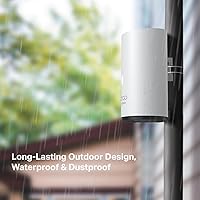
The IP-rated weatherproofing covers the conditions most outdoor installations encounter: rain, humidity, splashing water, and dust. For moderate climates, users generally report no issues over extended periods. Where things become less certain is at the extremes — prolonged sub-freezing temperatures with ice accumulation, or sustained desert heat well above 40°C — and user feedback in those environments is more cautious. If you live somewhere with genuinely brutal seasons, it is worth monitoring the unit through its first full cycle.

Real-world range outdoors depends heavily on obstructions — dense hedging, fencing, elevation changes, and building materials all cut into signal reach more than people expect. In open conditions with a clear line of sight to the indoor Deco node, this outdoor mesh node covers a generous area, making it well-suited for large backyards, pool decks, and patios. For best results, position it where it has a clear path to both the indoor router and the coverage zone you need.

Pole mounting is one of the three supported installation methods, alongside wall mounting and tabletop placement, and the included mounting kit accommodates all three. The pole mount option works well for round fence posts, garden stakes, or similar cylindrical supports, which gives you considerably more placement flexibility than a wall-only design would allow.

Yes — the Deco app supports remote management over the internet, so you can check network status, toggle guest Wi-Fi, run security scans, and adjust basic settings from anywhere with a mobile connection. If you have the Alexa integration enabled, you can also issue voice commands through the Alexa app while away from home.

If you are replacing an 802.11ac (WiFi 5) outdoor unit, the improvement is most noticeable when multiple devices are connected at the same time — WiFi 6 manages channel congestion more efficiently, which reduces slowdowns when several phones, smart cameras, and outdoor speakers are all active. For single-device use, the jump may feel less dramatic, but the more stable connection and better handling of device queuing still benefits overall outdoor network reliability.

The app side of setup is genuinely straightforward: open the Deco app, follow the guided steps, scan a QR code on the unit, and it joins your existing mesh in a few minutes. The trickier part is usually the physical installation — running a cable from your network switch or indoor router to the outdoor location, and choosing a mounting spot with good coverage. If you are comfortable with basic home improvement tasks, the full installation is manageable without professional help.

The box includes the outdoor unit, an AC power adapter, an RJ45 Ethernet cable, a wall mounting kit, and an installation guide. For most buyers, the only potential gap is the PoE injector — if you want to power the unit through a single Ethernet cable and do not already have a PoE+ switch, that is an additional purchase. If you have an outdoor power outlet, the included AC adapter covers you completely and nothing extra is needed.

Where to Buy