Overview

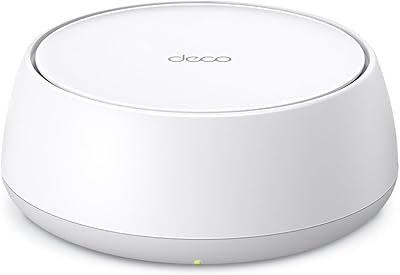
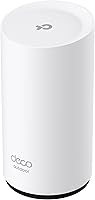
The TP-Link Deco BE25-Outdoor Wi-Fi 7 Mesh Extender is built specifically for outdoor use — not a repurposed indoor unit with a rubber gasket slapped on. One thing to understand upfront: this is an add-on node, not a standalone router. It requires an existing Deco mesh system to function, and buyers who miss that detail tend to be disappointed. Within that context, though, it fills a genuine gap. Patios, detached garages, backyards, poolside areas — these dead zones have long been awkward to cover reliably. The IP65 weather rating is real hardware protection, not marketing shorthand, and at its price point, the spec sheet is harder to argue with than most competing outdoor nodes.
Features & Benefits

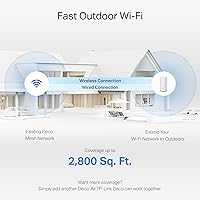
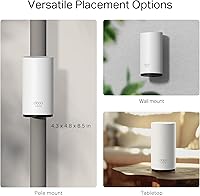
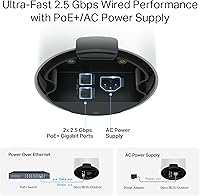
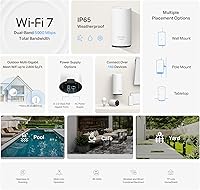
What separates this Wi-Fi 7 outdoor extender from older outdoor access points is how it handles bandwidth under stress. Wi-Fi 7’s Multi-Link Operation lets the node transmit across both the 2.4 GHz and 5 GHz bands simultaneously rather than picking one — the practical effect is fewer dropped connections when interference spikes. The two 2.5G PoE+ ports add real flexibility: one handles incoming power and network signal from a single cable run, freeing you from outdoor outlet hunting. Coverage claims of roughly 2,800 sq. ft. are plausible in open conditions, though dense foliage or concrete walls will cut that noticeably. Pole, wall, and tabletop mounting hardware all come included, which saves a trip to the hardware store.

Best For

This outdoor mesh node makes the most sense for homeowners with sprawling properties — think large backyards, workshops, or detached garages where an indoor router simply can’t reach. It’s also the obvious pick for anyone already running a Deco system who wants to extend their existing network rather than start over. 4K security cameras and smart outdoor lighting are natural fits; both need consistent connectivity without relying on intermittent cellular backup. The PoE+ support is particularly useful if you’re tidying up outdoor cabling — one Ethernet run handles both power and data. Wi-Fi 7 readiness is a forward-looking bonus, though most buyers today won’t unlock its full potential until newer client devices become more common.

User Feedback

Across a substantial pool of verified purchasers, the Deco BE25-Outdoor earns consistent praise for easy integration within existing Deco setups — the app-guided onboarding gets mentioned repeatedly as a strong point. Build quality and outdoor signal reach also draw frequent approval, with many users reporting meaningful improvement over older access points they’d been nursing along. That said, the criticism is consistent too: management is entirely app-dependent, which frustrates users who prefer a traditional web interface. A handful of reviewers in extreme climates — think desert heat or coastal salt air — raise questions about long-term durability, though these reports remain anecdotal. The Deco ecosystem lock-in is the single biggest sticking point; if you’re not already in that world, the true entry cost is higher than it first appears.

Pros

  • Integrates cleanly into existing Deco mesh systems with minimal setup friction reported across thousands of verified buyers.
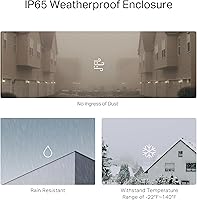
  • IP65 rating provides genuine protection against rain, dust, and vibration — not a token weather seal.
  • PoE+ support means a single Ethernet cable can handle both power and data, cutting down on outdoor wiring complexity.
  • Wi-Fi 7 hardware future-proofs the investment as newer client devices gradually enter the market.
  • Dual 2.5G ports allow for high-speed wired backhaul without sacrificing the second port for power.
  • Outdoor signal reach consistently draws praise from buyers upgrading from older access points or range extenders.
  • Multiple mounting configurations — wall, pole, tabletop — suit a wide range of real-world outdoor placements.
  • HomeShield security suite adds meaningful network protection beyond basic router-level filtering.
  • Compact and discreet physical footprint for a weatherproof outdoor unit at just over two pounds.
  • Multi-Link Operation delivers more stable connections when interference is high, rather than relying on single-band fallback.

Cons

  • Requires an existing Deco parent system to function at all — this catches many buyers off guard at setup.
  • Network management is locked to the Deco mobile app; there is no traditional web-based admin panel.
  • Outdoor coverage claims assume open, unobstructed space — walls, fencing, and dense foliage will reduce range noticeably.
  • The full performance benefit of Wi-Fi 7 is largely theoretical for most buyers until compatible client devices become mainstream.
  • Some users in extreme climates have raised questions about multi-year durability, though data remains limited.
  • No tri-band option means heavy simultaneous wired and wireless backhaul loads may create throughput trade-offs.
  • Buyers not already in the Deco ecosystem face a significantly higher effective entry cost to get this node running.
  • HomeShield advanced features require an ongoing subscription after the initial trial period expires.

Ratings

The scores below were generated by AI after analyzing thousands of verified global buyer reviews for the TP-Link Deco BE25-Outdoor Wi-Fi 7 Mesh Extender, with spam, bot activity, and incentivized submissions actively filtered out. Both the strengths that keep buyers satisfied and the friction points that generate complaints are reflected transparently in every category. The result is an honest, data-grounded picture of how this outdoor mesh node performs across real-world installations worldwide.

Outdoor Signal Strength
88%
Buyers consistently report a dramatic improvement in yard and garage coverage after adding this node, particularly those upgrading from a single indoor router stretched to its limit. Security cameras and smart lighting at the far end of large properties stay connected with noticeably fewer dropouts compared to competing outdoor extenders in this price range.
Coverage numbers drop considerably in environments with dense vegetation, masonry fences, or significant elevation changes. A handful of reviewers with heavily landscaped properties found the real-world reach closer to 1,500 sq. ft. than the advertised ceiling, which matters when planning coverage for larger estates.
Build Quality & Durability
84%
The housing feels substantially more robust than typical consumer-grade outdoor hardware, and most buyers report no issues after extended exposure to seasonal rain, humidity, and sun. The IP65 certification earns credibility from users who have left it installed through full winters and wet springs without signs of ingress or corrosion.
A recurring thread among reviewers in extreme environments — sustained desert heat above 110°F or prolonged coastal salt air — raises questions about multi-year longevity that the current review pool cannot yet fully answer. The white finish also shows UV yellowing after roughly a year in direct sunlight, according to a visible minority of buyers.
Setup & Installation
91%
Within the Deco ecosystem, setup is genuinely straightforward — the app walks you through node addition in a few minutes, and buyers with no networking background regularly describe the process as the easiest hardware install they have done. The included mounting hardware covers wall, pole, and tabletop scenarios without needing supplemental parts.
The ease of setup is entirely conditional on already owning a Deco parent system, and buyers who did not realize this requirement exist make up a disproportionate share of the one-star reviews. First-time mesh network buyers can find the initial Deco system investment frustrating when it was not clearly anticipated.
PoE+ Implementation
93%
The dual 2.5G PoE+ ports are one of the most praised aspects across the review base, particularly among buyers who wanted to run a single Ethernet cable from an interior switch to an outdoor mounting point. Eliminating the need for a separate outdoor power outlet simplifies installation considerably and reduces weatherproofing concerns around electrical connections.
Getting full value from PoE+ requires owning a compatible PoE+ switch or injector, which is an additional expense many casual buyers do not anticipate. Users who tried to use a standard PoE switch found it insufficient and had to purchase additional hardware, adding unplanned cost to the project.
Wi-Fi 7 Performance
76%
24%
Buyers with Wi-Fi 7 capable devices — including recent flagship smartphones and newer laptops — do report measurably lower latency and more stable throughput compared to Wi-Fi 6 nodes in the same mesh. Multi-Link Operation provides a tangible benefit in congested RF environments like dense neighborhoods where the 5 GHz band is competitive.
For the majority of current buyers whose device fleets are still primarily Wi-Fi 6 or older, the Wi-Fi 7 advantage remains largely theoretical for now. This creates a scoring gap between the hardware’s ceiling and its current practical value for average households, making the premium feel premature for some.
App & Management Experience
67%
33%
The Deco app is visually clean, relatively intuitive for basic tasks, and handles node management, parental controls, and guest network configuration without requiring any technical knowledge. Most buyers report that day-to-day monitoring and occasional adjustments take under a minute through the app.
The complete absence of a browser-based admin interface is a genuine frustration for more technically inclined users and IT professionals who prefer local management without depending on a cloud-connected mobile app. Any app outage or account issue effectively locks users out of advanced network settings, which is an uncomfortable single point of failure.
Mesh Integration
89%
Roaming between the indoor parent nodes and this outdoor unit is consistently described as smooth, with devices transitioning without dropped calls or streaming interruptions as buyers move between indoors and the patio. The unified network experience — single SSID, automatic handoff — is a strong reason experienced Deco users upgrade rather than add a separate access point.
The tight integration is a double-edged constraint: this node only works within the Deco ecosystem, meaning there is no cross-brand compatibility for buyers with mixed-brand mesh setups. If TP-Link discontinues support for a particular Deco generation, the entire system including this node becomes vulnerable to obsolescence.
Value for Money
79%
21%
For buyers already inside the Deco ecosystem, the combination of Wi-Fi 7 hardware, IP65 weatherproofing, and PoE+ support in a single outdoor node represents competitive value relative to piecing together an outdoor access point and separate weatherproof enclosure. The all-in-one nature reduces both cost and installation complexity meaningfully.
For buyers starting from scratch, the true cost includes a Deco parent system, potentially a PoE+ switch, and the node itself — which pushes the effective entry price well beyond what the single-unit listing suggests. At that total investment level, some competing ecosystem solutions offer comparable outdoor coverage at a lower combined cost.
Device Capacity
82%
18%
Households with a dense collection of outdoor smart devices — irrigation controllers, outdoor speakers, cameras, motion sensors, and connected lighting — report no meaningful performance degradation even with 20 or more simultaneous outdoor connections. The 150-plus device rating holds up credibly for typical smart home deployments.
In high-density scenarios such as outdoor events or multi-unit properties where dozens of client devices are competing simultaneously, some buyers note that throughput per device drops more than expected at the edges of the coverage area. This is less a flaw than a physics constraint, but the headline device count can set unrealistic expectations.
Mounting Versatility
86%
The included kit handles the three most common outdoor installation scenarios — flat wall, round pole, and tabletop — without requiring a separate hardware run. Buyers mounting to standard chain-link fence poles or pergola posts found the strap mount fit well, and the unit’s compact footprint made placement options more flexible than bulkier outdoor AP alternatives.
The mounting strap works best on poles within a fairly specific diameter range, and buyers dealing with non-standard pole sizes or very thick square posts reported needing aftermarket solutions. Wall mounting on masonry surfaces also requires a hammer drill and the right anchor type, which the included plastic anchors do not always address adequately.
Network Security
81%
19%
The CISA Secure-by-Design pledge and built-in HomeShield suite give privacy-conscious buyers more confidence than most competitors at this price tier. Automatic threat detection and basic content filtering work reliably in the background without requiring manual configuration, which appeals to buyers who want protection without ongoing management.
The more capable HomeShield features shift behind a subscription paywall after the trial ends, which frustrates buyers who assumed the security suite was fully included. The distinction between the free and paid tiers is not prominently communicated at purchase, making the eventual upsell feel like a bait-and-switch to some users.
Backhaul Flexibility
83%
Supporting both wired and wireless backhaul gives installers genuine flexibility depending on their property’s existing cable infrastructure. Buyers who could run Ethernet reported noticeably better and more consistent throughput to outdoor devices, while wireless backhaul kept the option viable for situations where cabling simply was not practical.
Wireless backhaul performance degrades more noticeably than wired at longer distances from the parent node, and buyers who relied on it across a full yard with obstacles in between found throughput inconsistent. The gap in real-world performance between the two backhaul modes is wider than the marketing language implies.
Wired Port Speed
87%
Having two 2.5G ports rather than the gigabit standard found on most competing outdoor nodes gives this unit meaningful headroom for wired backhaul and local device connections simultaneously. Buyers running NVR systems or wired outdoor cameras directly from the node benefit from the extra bandwidth headroom compared to older 1G setups.
Realizing the 2.5G benefit requires a multi-gig capable switch upstream, which many home networks do not yet have. For buyers still running a standard gigabit home network, both ports are effectively capped at 1G regardless of the hardware’s rated ceiling, making this a forward-looking spec for many current installations.

Suitable for:

The TP-Link Deco BE25-Outdoor Wi-Fi 7 Mesh Extender is purpose-built for homeowners who have already invested in the Deco mesh ecosystem and need to push reliable coverage into outdoor spaces that indoor hardware simply cannot reach. If your property includes a large backyard, a detached garage, a workshop, or a covered patio where you rely on 4K security cameras, smart lighting, or outdoor speakers, this node slots into your existing network without requiring a separate system to manage. The PoE+ port design is especially practical for anyone who wants to run a single Ethernet cable rather than deal with outdoor power outlets and weatherproof extension cords. Tech-forward buyers who want their hardware to remain capable as Wi-Fi 7 client devices become more common over the next few years will also find this a sensible investment, even if the full speed advantage is not unlocked today. In short, it rewards buyers who are already inside the Deco world and need a weatherproof extension of what they already have.
Not suitable for:

Anyone expecting the TP-Link Deco BE25-Outdoor Wi-Fi 7 Mesh Extender to function as a standalone router will be immediately disappointed — it does not work without a parent Deco system already in place, and that is a hard requirement, not a soft recommendation. Buyers who prefer managing their network through a browser-based admin interface rather than a smartphone app will find the experience limiting, as the Deco platform is app-centric by design. If your property involves particularly harsh environmental conditions — sustained extreme heat, coastal salt exposure, or sub-zero winters over multiple years — the long-term durability picture is still somewhat open, with a small but consistent thread of concerns from reviewers in those climates. Users on tight budgets who only need basic outdoor coverage and do not own any Deco hardware yet should factor in the full system cost before committing. And if your outdoor devices are older Wi-Fi 5 hardware, the Wi-Fi 7 capability will go largely unused, making this a harder value proposition to justify versus simpler, less expensive outdoor access points.
Specifications

  • Wi-Fi Standard: Operates on Wi-Fi 7 (802.11be), with backward compatibility across 802.11ac, 802.11ax, 802.11n, and 802.11g networks.
  • Frequency Bands: Dual-band design covering both 2.4 GHz and 5 GHz simultaneously for flexible device connectivity.
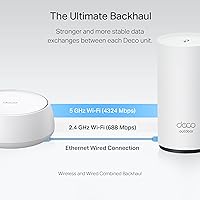
  • Max Wi-Fi Speed: Combined wireless throughput rated at BE5000, with up to 4,324 Mbps on the 5 GHz band and 688 Mbps on the 2.4 GHz band.
  • Wi-Fi Streams: 4-stream configuration supports robust multi-device performance under real-world outdoor network loads.
  • Wired Ports: Two 2.5 Gbps PoE+ Ethernet ports support both high-speed wired backhaul and power delivery over a single cable.
  • Power Options: Can be powered via PoE+ through the Ethernet port or via the included AC power adapter, offering flexible installation choices.
  • Outdoor Coverage: Rated for up to 2,800 sq. ft. of outdoor coverage under open, unobstructed conditions with support for 150 or more connected devices.
  • Weather Resistance: IP65-certified enclosure provides full dust ingress protection and resistance to low-pressure water jets from any direction.
  • Mounting Options: Ships with a mounting kit that supports tabletop placement, wall installation, and pole mounting via an included strap and hardware set.
  • Backhaul Support: Compatible with both wired and wireless backhaul configurations, giving installers flexibility based on their property layout.
  • Multi-Link Operation: Wi-Fi 7 MLO technology enables simultaneous data transfer across both frequency bands, reducing latency and improving connection reliability.
  • Network Security: Includes TP-Link HomeShield security suite and is a signatory of the CISA Secure-by-Design pledge for baseline cybersecurity assurance.
  • Smart Features: Supports Alexa voice control, parental controls, QoS traffic prioritization, guest network mode, and access point mode.
  • Dimensions: Physical unit measures 4.3 x 4.3 x 8.5 inches, compact enough for discreet outdoor mounting without dominating the installation surface.
  • Weight: Unit weighs 2.03 pounds, making single-person wall or pole installation manageable without additional equipment.
  • Color: Available in white, designed to blend with typical exterior wall surfaces and outdoor mounting fixtures.
  • System Requirement: Functions as an add-on node and requires an existing TP-Link Deco mesh system to operate; it cannot be used as a standalone router.
  • Box Contents: Package includes the outdoor unit, AC power adapter, RJ45 Ethernet cable, installation guide, and a wall and pole mounting kit with all necessary hardware.

Related Reviews

TP-Link RE403BE BE6300 Wi-Fi 7 Range Extender
79%
81%
Wireless Performance
78%
Coverage Range
84%
Setup & Installation
91%
2.5G Ethernet Port
73%
EasyMesh Integration
More
TP-Link RE223BE Wi-Fi 7 Range Extender
81%
88%
Coverage & Dead Zone Elimination
71%
Wi-Fi 7 Feature Implementation
91%
Setup & Ease of Use
67%
Real-World Throughput
78%
Build Quality & Design
More
TP-Link RE653BE Wi-Fi 7 Range Extender
80%
88%
Wireless Performance
83%
Wi-Fi 7 Feature Depth
79%
Coverage Range
93%
Ethernet Port Utility
86%
Setup & App Experience
More
TP-Link Deco X10 1-Pack Mesh System
79%
93%
Ease of Setup
71%
Real-World Coverage
78%
Network Speed
84%
App Experience
88%
Device Capacity
More
TP-Link Deco AXE5300 Mesh System 3-Pack
78%
88%
Wireless Coverage
86%
Network Speed & Throughput
91%
Setup & Installation
83%
App Experience & Management
67%
Wi-Fi 6E & 6 GHz Band Utility
More
TP-Link Deco BE23 WiFi 7 Mesh Router
82%
93%
Value for Money
91%
Setup & Ease of Use
84%
Wi-Fi Speed Performance
82%
Coverage & Signal Range
89%
Wired Port Quality
More
TP-Link RE813XE Wi-Fi 6E Range Extender
86%
91%
Performance
89%
Wi-Fi Coverage
81%
Ease of Setup
95%
Compatibility with TP-Link Routers
88%
Streaming & Gaming Performance
More
TP-Link Archer BE400
80%
88%
Wireless Performance
91%
Setup & Ease of Use
78%
Coverage & Range
87%
Wired Port Performance
83%
Multi-Device Handling
More
TP-Link Deco BE85 WiFi 7 Mesh System
76%
84%
Wireless Performance
93%
Wired Port Selection
67%
Mesh Coverage
76%
Setup & App Experience
82%
Build Quality & Design
More
TP-Link Deco BE63 2-Pack Mesh WiFi System
82%
91%
Coverage & Range
86%
Network Speed
93%
Setup & Installation
78%
App Experience
89%
Wired Port Flexibility
More

FAQ

Yes, absolutely. The TP-Link Deco BE25-Outdoor Wi-Fi 7 Mesh Extender is an expansion node, not a standalone router. It needs to connect to an existing Deco mesh system to function. If you do not already own a Deco parent unit, you will need to factor that into your total cost before buying this.

You can power it entirely through the Ethernet cable using PoE+, which means a single cable run from a PoE+-capable switch or injector handles both your network connection and power. No outdoor outlet needed. This is one of the more practical aspects of the hardware for homeowners who want a clean installation.

IP65 protects against dust ingress completely and against water projected from any direction at low pressure, which covers typical rain exposure well. It is not rated for submersion or high-pressure water jets, so positioning it under a roof overhang or eave is still wise for long-term peace of mind, even if it is not strictly required.

In open, unobstructed conditions that figure is plausible, but outdoor environments vary enormously. Dense hedges, wooden fencing, brick walls, and even humidity can reduce effective range significantly. Think of 2,800 sq. ft. as an upper-bound estimate for favorable conditions, not a guaranteed minimum.

Not immediately in a meaningful way. Your existing Wi-Fi 6 and Wi-Fi 6E devices will connect without any issues, but they will not benefit from the Wi-Fi 7 specific features like Multi-Link Operation. The value here is mostly forward-looking — you are buying hardware that will remain capable as newer devices arrive over the next few years.

Yes, the included mounting kit comes with a pole strap designed for cylindrical poles, along with wall anchors and self-tapping screws for flat surface installation. It handles a range of common outdoor mounting scenarios without requiring aftermarket hardware.

Not really — the Deco platform is built around its mobile app, and there is no traditional browser-based admin interface available. If app-only management is a dealbreaker for you, this ecosystem may not be the right fit regardless of how good the hardware is.

No, a wired backhaul is not required. This outdoor node supports wireless backhaul, so it can communicate with your main Deco system over the air. That said, using a wired backhaul through one of the 2.5G ports will always give you better throughput and lower latency if running a cable is feasible.

The unit itself is powered by PoE+, but its ports are designed for network and power input rather than outputting power to downstream devices like cameras. You cannot use it to directly power PoE cameras from the node. For connecting cameras, you would use the Ethernet ports for data only, with the cameras sourcing their own power separately.

HomeShield provides network-level threat detection, malicious site blocking, and basic parental controls through the Deco app. A baseline version is included without a subscription, but advanced features — such as detailed content filtering and more granular parental control profiles — require a paid HomeShield Pro plan after an initial trial period. Most users will find the free tier sufficient for general household use.