Overview

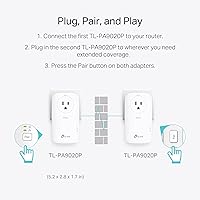
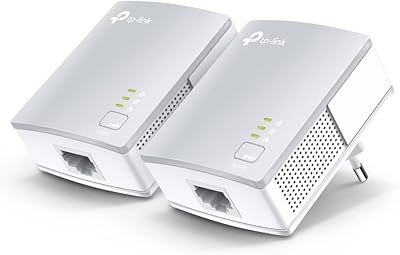
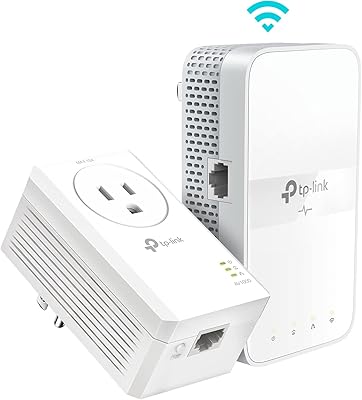
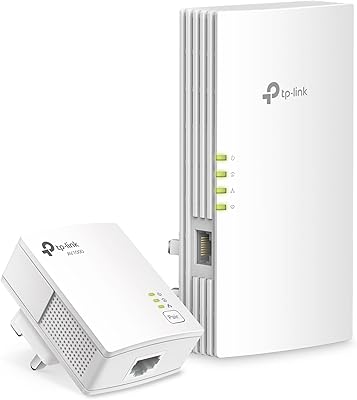
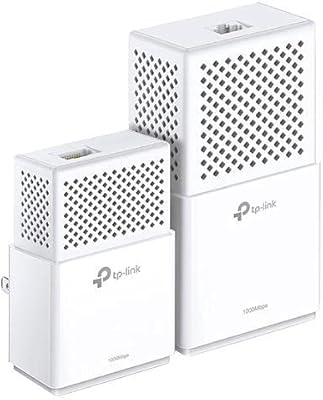
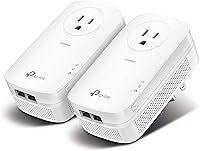
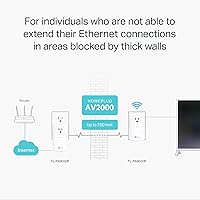
The TP-Link TL-PA9020P KIT AV2000 Powerline Adapter takes a straightforward approach to a genuinely frustrating problem: getting a reliable wired connection to rooms your router simply cannot reach. This powerline kit ships as a two-adapter set and requires no drilling, no new cable runs, and no software installation — you plug one unit near your router, connect it with the included Ethernet cable, then plug the second wherever you need connectivity. It operates on the HomePlug AV2 standard, with a theoretical ceiling of 2000 Mbps, though real-world speeds will vary based on your home's wiring age and layout. The plug-and-play setup keeps things accessible even for buyers with limited networking experience.
Features & Benefits

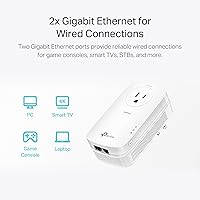
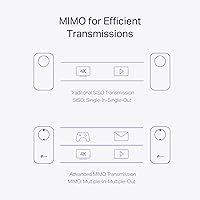
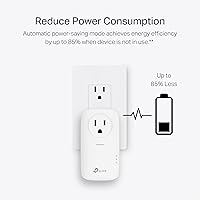
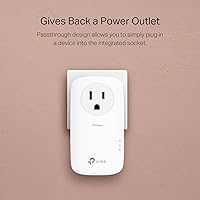
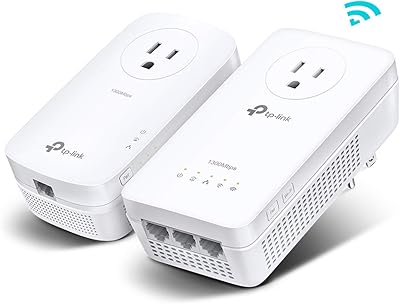
The standout hardware detail is 2x2 MIMO with beamforming, which helps maintain a stable signal across longer electrical runs rather than just pushing data and hoping for the best. Each adapter in the pair provides two Gigabit Ethernet ports, so you can wire up a desktop and a smart TV from a single unit without needing a separate switch. The built-in passthrough outlet means you don't sacrifice a wall socket in the process — a small but genuinely useful touch in rooms where outlets are scarce. AES encryption keeps data secure over the electrical circuit, and an automatic power-saving mode trims energy use during idle periods, which adds up over time.

Best For

This Ethernet-over-power solution makes the most sense for homeowners who have exhausted Wi-Fi options — think thick concrete walls, multi-story layouts, or a detached garage sitting stubbornly outside your router's range. Gamers and streamers benefit from the consistent, low-latency wired connection it provides compared to a Wi-Fi extender bouncing a signal through multiple walls. Remote workers who need a dependable link for video calls will appreciate the stability as well. One critical caveat before buying: both adapters must share the same electrical circuit. If your home has separate circuits for different areas, connectivity is not guaranteed, so checking your electrical layout beforehand is genuinely worth the few extra minutes.

User Feedback

Across thousands of reviews, buyers consistently highlight the noticeable speed improvement over Wi-Fi extenders — especially in basements and upstairs rooms that were previously unreliable. The passthrough outlet comes up repeatedly as a welcome practical bonus. On the flip side, performance variability is the most common frustration: homes with older wiring or long circuit runs tend to see reduced throughput, and a small number of users report units that never paired due to incompatible circuit configurations. Long-term reliability holds up well overall, with many owners reporting consistent performance after two or more years of daily use — which is reassuring and speaks to the build quality at this tier.

Pros

  • No drilling, no cable fishing — this powerline kit extends wired internet using outlets already in your walls.
  • Plug-and-play setup means most buyers are connected within minutes, no technical background required.
  • Two Gigabit Ethernet ports per adapter let you wire two devices from a single unit simultaneously.
  • The built-in passthrough outlet means you keep your wall socket available for other devices.
  • Long-term reliability is solid — many units reported still performing well after two or more years of daily use.
  • 2x2 MIMO with beamforming helps maintain a stable signal even across longer electrical runs.
  • Automatic power-saving mode reduces energy draw during idle periods without any manual configuration.
  • 128-bit AES encryption protects data traveling over your home electrical circuit automatically.
  • Included Ethernet cables mean you can start using the TP-Link AV2000 adapter pair straight out of the box.
  • HomePlug AV2 compatibility allows network expansion with additional adapters down the line.

Cons

  • Real-world speeds vary significantly and often fall well short of the advertised 2000 Mbps theoretical ceiling.
  • Both adapters must share the same electrical circuit — a dealbreaker in homes with split-phase wiring.
  • Surge protector strips block the powerline signal entirely, limiting where adapters can be placed.
  • Electrical noise from appliances on the same circuit can cause intermittent drops that are hard to diagnose.
  • Performance in homes with older or lower-quality wiring is unpredictable and sometimes genuinely poor.
  • Included Ethernet cables are short, often requiring buyers to purchase longer cables separately.
  • No user-facing interface or app means zero visibility into actual link speeds or connection health.
  • Buyers in apartments may experience signal bleed into neighboring units despite encryption being active.
  • Adding adapters from different brands or older generations can introduce pairing and speed inconsistencies.

Ratings

The TP-Link TL-PA9020P KIT AV2000 Powerline Adapter has accumulated tens of thousands of verified reviews worldwide, and the scores below reflect an AI-assisted analysis of that feedback — with spam, bot submissions, and incentivized reviews actively filtered out before any scoring took place. This powerline kit earns strong marks in several areas while showing real, documented weaknesses in others, and both sides are represented here without softening. Buyers will find an honest picture of what this Ethernet-over-power solution consistently delivers and where it falls short depending on their specific home setup.
Real-World Throughput
72%
28%
In homes with modern wiring and short-to-medium circuit runs, buyers report speeds that comfortably support 4K streaming, video calls, and online gaming without the stuttering they experienced on Wi-Fi extenders. Many users switching from range extenders describe the difference as immediately noticeable.
The 2000 Mbps theoretical ceiling rarely reflects actual use — older homes or longer electrical runs often cap out at a fraction of that figure. Users on aged wiring regularly report speeds well below expectations, which is the single most common source of disappointment in the review pool.
Setup & Installation
88%
The plug-and-play process is genuinely simple: most buyers report being up and running within a few minutes of unboxing, with no software, apps, or configuration screens required. Non-technical users frequently call out the setup experience as one of the kit's strongest points.
The same-circuit requirement catches a meaningful number of buyers off guard — if both adapters are not on the same electrical circuit, they will not pair, and there is no workaround. A handful of users only discovered this limitation after purchase, leading to frustration and returns.
Connection Stability
76%
24%
For users in compatible homes, the connection holds steady over long periods without the random drops that plague Wi-Fi extenders and mesh nodes in signal-challenged rooms. Remote workers and gamers in basements or second-floor offices consistently describe the stability as a meaningful upgrade.
Stability is heavily environment-dependent. Electrical noise from appliances on the same circuit — refrigerators, air conditioners, washing machines — can introduce intermittent drops that are difficult to diagnose and harder to fix without rerouting which outlets each adapter uses.
Value for Money
74%
26%
For buyers where the kit performs well, the price feels justified compared to running physical Ethernet cable through walls or investing in a whole-home mesh system. The dual Gigabit ports per adapter add practical value since each unit can serve two devices simultaneously.
When performance is limited by wiring conditions, the mid-to-premium price starts to feel hard to defend. Some buyers feel the cost is steep given that results are so dependent on factors outside their control, especially when cheaper powerline kits in the same house might perform similarly.
Passthrough Outlet
86%
The built-in outlet passthrough is a feature buyers notice and appreciate in practice — particularly in rooms where wall sockets are limited. Being able to plug in a lamp or charger while the adapter occupies the outlet is a small convenience that adds up daily.
The passthrough does not support surge protectors, which is a notable limitation for users who want to protect nearby electronics. Buyers who assumed passthrough meant full outlet replacement sometimes find the restriction inconvenient, especially in home office setups.
Build Quality & Durability
81%
19%
The physical construction feels solid for a networking peripheral at this price tier, and long-term owners frequently note that units bought several years ago are still functioning reliably. The adapter sits flush against the wall without the awkward protrusion seen on some competing models.
The white plastic finish shows scuff marks and yellowing over time in some user reports, particularly in warmer or sunnier rooms. A small number of buyers report units that stopped functioning after one to two years, though this appears to be an outlier rather than a pattern.
Gigabit Port Performance
79%
21%
Having two Gigabit Ethernet ports on each adapter is genuinely useful — buyers commonly connect both a desktop PC and a games console from the same receiving unit without needing an external switch. The ports themselves perform reliably at full Gigabit when the powerline link supports it.
The Gigabit ports are only as fast as the powerline link feeding them allows. In weaker electrical environments, users see the ports throttled well below their rated capacity, which can feel misleading when both the ports and the adapter are marketed at premium speeds.
Range & Coverage
71%
29%
The claimed 750-foot range through electrical wiring is more than sufficient for the vast majority of residential properties, including larger multi-story homes and detached garages. Buyers in sprawling older homes or properties with outbuildings report coverage that Wi-Fi simply could not match.
Range figures assume ideal wiring conditions that many homes do not have. Circuit distance, junction boxes, and the number of intermediate connections between two outlets all chip away at practical range, and a subset of buyers found performance degraded noticeably beyond moderate distances.
Encryption & Security
83%
The 128-bit AES encryption ensures that data traveling over the home electrical circuit is protected — an important consideration since powerline signals can technically travel beyond property lines in dense housing. Security-conscious users appreciate that this is handled automatically without any manual configuration.
There is no user-facing security dashboard or alert system, so buyers simply have to trust that encryption is active and functioning. Advanced users who want visibility into network security events or the ability to customize encryption settings will find the kit entirely opaque on this front.
Power Efficiency
78%
22%
The automatic power-saving mode is a background feature that genuinely functions — several users running smart plugs to monitor energy draw confirmed reduced consumption during overnight idle periods. For a device that stays plugged in permanently, this kind of passive efficiency is worth acknowledging.
Power-saving behavior occasionally introduces a brief reconnection delay when a device wakes from sleep, which a minority of users find mildly disruptive. It is not a major issue, but buyers who frequently switch devices on and off may notice the half-second lag before the link fully reactivates.
Compatibility with Home Wiring
63%
37%
In homes built within the last two decades using standard residential wiring, the adapter pair tends to pair reliably and deliver decent throughput. Buyers in newer construction properties report a much smoother experience with fewer of the performance complaints seen elsewhere in the review pool.
Compatibility is the kit's most unpredictable variable. Older homes with knob-and-tube wiring, aluminum wiring, or split-phase circuits that separate different rooms onto isolated legs present real obstacles. No amount of troubleshooting resolves a fundamental circuit incompatibility, and this is a genuine purchase risk.
Ease of Expanding the Network
69%
31%
The HomePlug AV2 standard means additional adapters from compatible brands can be added to the network later, giving buyers a path to extend coverage to more rooms without replacing the whole kit. This interoperability is a practical advantage over proprietary systems.
Mixing adapter brands or generations sometimes introduces pairing headaches, and not all HomePlug AV2 devices negotiate maximum speeds with each other. Buyers who try to expand using older or budget adapters often find the network behaves unpredictably until they standardize on the same model line.
Packaging & Included Accessories
77%
23%
Both Ethernet cables are included in the box, which is a small but appreciated touch — buyers do not need to make an extra purchase before getting started. The packaging is compact and protective, and the adapters arrive undamaged in the overwhelming majority of reported unboxing experiences.
The included Ethernet cables are functional but short, which can be limiting if the router or destination device is not immediately adjacent to the wall outlet. Buyers setting up in rooms where the outlet is far from the desk or TV cabinet often need to source longer cables separately.

Suitable for:

The TP-Link TL-PA9020P KIT AV2000 Powerline Adapter is the right call for homeowners who have genuinely exhausted their Wi-Fi options and need a wired connection in a room that a router simply cannot reach effectively. It works particularly well in multi-story homes where thick concrete or brick floors and walls kill wireless signals before they arrive, and where running a physical Ethernet cable through walls or ceilings is either too expensive or too disruptive. Gamers who need consistent, low-latency connections for competitive play will appreciate having a true wired link in a bedroom or basement without tearing up drywall. Remote workers who rely on stable video calls and cannot afford the random drops that come with range extenders will also find this kit a practical step up. Anyone trying to connect a smart TV, games console, or desktop in a garage or second-floor office will get real mileage out of the dual Gigabit ports on each adapter. If your home was built within the last couple of decades and you know both target outlets share the same electrical circuit, this powerline kit is a strong, no-drilling solution worth serious consideration.

Not suitable for:

Buyers living in older homes — particularly properties with aging wiring, aluminum conductors, or electrical panels that split different rooms onto isolated circuit legs — should approach this Ethernet-over-power solution with caution, because no amount of setup effort will overcome a fundamental circuit incompatibility. Renters in apartments or older buildings where the electrical layout is unknown or shared with other units face a similar gamble, and the return process becomes the backup plan rather than a last resort. If you are expecting to hit speeds anywhere close to the 2000 Mbps theoretical rating, it is worth knowing upfront that real-world throughput is routinely a fraction of that figure, especially over longer runs or through busy circuits with appliances on the same line. Anyone who needs to plug adapters into surge protectors rather than directly into wall outlets will also be out of luck, since surge protection strips block the powerline signal entirely. Finally, buyers in densely packed apartment buildings where electrical wiring may pass through shared infrastructure should be aware that powerline signals can technically travel beyond a single unit, raising both performance and minor privacy considerations even with encryption active.

Specifications

  • Networking Standard: Operates on the HomePlug AV2 standard, ensuring compatibility with other HomePlug AV2-certified powerline devices.
  • Data Rate: Theoretical maximum data transfer rate is 2000 Mbps; actual speeds vary based on wiring quality, distance, and electrical interference.
  • Ethernet Ports: Each adapter unit includes two Gigabit Ethernet ports, supporting wired connections at up to 1000 Mbps per port.
  • MIMO Technology: Uses 2x2 MIMO with beamforming to improve signal stability and throughput across longer or more complex electrical runs.
  • Max Wiring Range: Rated to cover up to 750 feet through existing home electrical wiring under optimal conditions.
  • Passthrough Outlet: Each adapter includes a built-in AC power passthrough outlet, preserving the wall socket for other devices.
  • Encryption: Data transmitted over the electrical circuit is protected with 128-bit AES encryption, activated automatically without user configuration.
  • Power Saving: An automatic power-saving mode reduces energy consumption when no active network traffic is detected on the adapter.
  • Setup Method: Plug-and-play configuration requires no software installation; adapters pair automatically when plugged into compatible outlets.
  • Dimensions: Each adapter measures 2.8″ in length, 1.7″ in width, and 5.2″ in height.
  • Weight: Each adapter unit weighs approximately 1.65 pounds.
  • Color: Both adapters in the kit are finished in white.
  • Included Cables: Two Ethernet cables are included in the box, one for each adapter unit.
  • Kit Contents: The kit ships as a pair of two powerline adapter units, ready to deploy without purchasing additional hardware.
  • Surge Protector Use: Adapters must be plugged directly into a wall outlet; use with surge protector strips is not supported and will prevent operation.
  • Circuit Requirement: Both adapter units must be connected to the same electrical circuit within the home in order to establish a network link.
  • Manufacturer: Designed and manufactured by TP-Link, a global networking hardware company headquartered in China with offices worldwide.
  • Model Number: The official model designation for this two-unit kit is TL-PA9020P KIT.

Related Reviews

TP-Link TL-PA411KIT Powerline Network Adapter
85%
91%
Setup and Installation
84%
Connection Stability
87%
Power Efficiency
89%
Speed and Performance
80%
Build Quality
More
TP-Link TL-WPA7617 Powerline WiFi Extender Kit
85%
88%
Wi-Fi Performance
93%
Ease of Setup
85%
Signal Strength
81%
Build Quality
82%
Reliability in Hard-to-Reach Areas
More
TP-Link TL-WPA8631P Powerline WiFi Extender Kit
84%
92%
Ease of Setup
85%
Performance & Speed
88%
WiFi Coverage
78%
Build Quality
90%
Compatibility with Devices
More
TP-Link TL-WPA7817 Powerline Wi-Fi 6 Extender Kit
86%
88%
Wi-Fi Performance
94%
Setup & Installation
91%
Value for Money
85%
Powerline Range
89%
Dual-Band Speeds
More
TP-Link AV500 Nano Powerline Adapter
85%
86%
Performance
94%
Setup and Installation
89%
Value for Money
80%
Range and Coverage
91%
Energy Efficiency
More
TP-Link AV1000 Powerline Ethernet Adapter
84%
94%
Ease of Setup
83%
Connection Reliability
88%
Energy Efficiency
90%
Network Speed
85%
Compatibility with Other Adapters
More
D-Link DHP-601AV Powerline Adapter Starter Kit
85%
88%
Performance for Gaming
92%
Ease of Setup
85%
Speed and Reliability
90%
Value for Money
87%
Compatibility with Devices
More
D-Link Powerline AV Network Adapter Kit DHP-307AV
81%
83%
Performance
90%
Ease of Setup
78%
Reliability
70%
Speed Consistency
88%
Security (Encryption)
More
TP-Link TL-SG3428XMP
88%
91%
Performance
88%
Build Quality
90%
Cloud Management & Software
87%
Ease of Setup
85%
Power Efficiency
More
NETGEAR Powerline Adapter Kit PLP2000-100PAS
74%
91%
Ease of Setup
67%
Real-World Speed Performance
78%
Network Reliability & Stability
74%
Build Quality & Durability
88%
Pass-Through Outlet Design
More

FAQ

Not really. You plug one adapter into a wall outlet near your router and connect it with an Ethernet cable, then plug the second adapter into any outlet in the room where you need internet and connect your device. That is essentially the entire process — no apps, no login portals, no configuration screens.

It depends on your wiring. The TP-Link TL-PA9020P KIT AV2000 Powerline Adapter performs best in homes with reasonably modern electrical wiring. Older properties with aluminum wiring, knob-and-tube installations, or heavily degraded circuits may see significantly reduced speeds or, in some cases, no connection at all. If your home is quite old, it is worth being aware of that risk before purchasing.
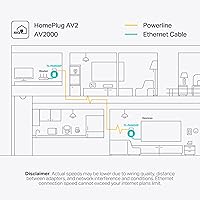
The easiest way is to check your home's breaker panel — outlets controlled by the same breaker are typically on the same circuit. If you are unsure, an electrician can confirm it quickly, or you can simply try the adapters and see if they pair. If they do not connect at all, a different circuit is often the cause.

No — this is a firm limitation. The adapters must go directly into a wall outlet. Surge protectors and most power strips filter out the high-frequency signal that powerline adapters use to communicate, which means the two units simply will not find each other. This catches a lot of buyers off guard, so it is worth planning your outlet placement before you buy.

The 2000 Mbps figure is a theoretical ceiling under perfect lab conditions, not a real-world guarantee. In practice, most users see speeds ranging from roughly 100 Mbps to 400 Mbps depending on wiring quality, circuit distance, and electrical noise from nearby appliances. That is still more than enough for streaming, gaming, and video calls in most households.

Yes. Each adapter has two Gigabit Ethernet ports, so you can connect two devices per unit straight out of the box — four devices total across the pair. If you need more connections at a single location, you can add an inexpensive Ethernet switch to one of the ports and expand from there without needing additional powerline adapters.

The kit uses 128-bit AES encryption automatically, so the data passing through your wiring is encrypted without you having to do anything. It is worth noting that in dense housing like apartments, powerline signals can occasionally travel beyond your unit into shared wiring, but the encryption ensures anyone intercepting that signal cannot read the data.

For most users, this powerline kit will outperform a Wi-Fi extender in terms of both stability and latency. Extenders rebroadcast a wireless signal that degrades with every wall it passes through, whereas a powerline adapter delivers a true wired connection. For gaming and high-definition streaming in particular, the difference in consistency is usually noticeable.

Yes, the HomePlug AV2 standard allows you to add compatible adapters from TP-Link or other HomePlug AV2 brands to the same network. Keep in mind that mixing different models or brands can sometimes introduce pairing quirks or reduce maximum speeds, so sticking with the same adapter model line tends to give the most predictable results.

TP-Link generally offers a warranty on their networking hardware, so it is worth registering the product after purchase and checking the warranty terms included in the box. User reports suggest these adapters tend to be reliable over multi-year periods, but having proof of purchase on hand is always a good idea in case you need to make a claim.