Overview

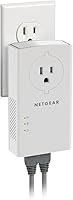
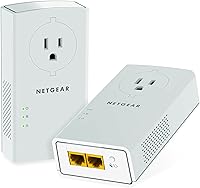
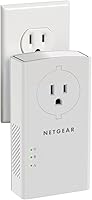
The NETGEAR Powerline Adapter Kit PLP2000-100PAS is a two-adapter networking kit that extends your internet connection through the electrical wiring already inside your walls — no drilling, no cable runs. It has been on the market since late 2017 and remains actively sold, which is a quiet signal of reliability in a category where cheaper options cycle in and out quickly. The kit plugs directly into wall outlets and includes a pass-through power outlet on each adapter, so you don't sacrifice a socket in the process. Sitting at the premium end of the powerline market, it competes with the best available options rather than cutting corners to hit a budget price.
Features & Benefits

The headline spec is 2000 Mbps, but that's a theoretical ceiling set by the HomePlug AV2 standard — not a number you'll see in everyday use. Real-world throughput depends heavily on your home's wiring age and whether both adapters share the same electrical circuit. That said, this adapter pair uses MIMO combined with beamforming, which steers the signal through the wiring more intelligently rather than just pushing it blindly. Each unit also carries two Gigabit Ethernet ports, letting one adapter serve two devices simultaneously. Setup is genuinely plug-and-play with no software to install, and the 100–240V voltage range makes it usable internationally without any adapters.

Best For

This powerline kit suits anyone dealing with persistent Wi-Fi dead zones caused by thick walls, older construction, or a home layout that wireless signals simply can't reach well. Gamers and 4K streamers will appreciate the consistent, low-latency wired connection that wireless can't reliably match. It's equally practical for home office setups where dropped video calls or slow file transfers aren't an option. Smart TVs, consoles, and streaming sticks in distant rooms are natural fits too. If you've been avoiding the hassle of running Ethernet cable through walls, the NETGEAR PLP2000 makes a reasonable case that you don't need to.

User Feedback

With nearly 4,000 ratings and a 4.2-star average, the overall reception is solidly positive. Buyers frequently highlight quick, painless setup — most describe both adapters running within minutes — and a noticeable improvement in wired speeds over what they were getting with Wi-Fi. The pass-through outlet also earns appreciation as a small but practical design touch. Where things get mixed is around the speed expectations: buyers in homes with older wiring or adapters on separate circuits often see disappointing real-world results compared to the 2000 Mbps claim. A small but consistent number of reviews also mention pairing failures or early hardware issues, which is worth weighing given the price.

Pros

  • Plug-and-play setup takes minutes with zero software, configuration, or technical knowledge required.
  • Two Gigabit Ethernet ports per adapter let you wire two devices from a single wall outlet.
  • The built-in pass-through outlet means you never lose a wall socket to the adapter.
  • In well-wired homes, real-world speeds are fast enough for smooth 4K streaming and lag-sensitive gaming.
  • Day-to-day connection stability is consistently praised — far fewer random dropouts than Wi-Fi extenders.
  • The NETGEAR PLP2000 has remained on the market since 2017, signaling above-average product longevity.
  • Wide 100–240V voltage range makes this adapter pair usable internationally without a converter.
  • The noise-filtered outlet adds a layer of protection for devices plugged into the pass-through.
  • Compact wall-plug form factor keeps desk and floor space completely clear.
  • Nearly 4,000 global ratings provide a trustworthy signal that this is a proven, widely tested product.

Cons

  • Real-world speeds fall well short of the 2000 Mbps headline — often by a significant margin.
  • Performance varies unpredictably depending on home wiring age and electrical circuit layout.
  • Adapters on separate electrical circuits frequently deliver weak or unusable connections.
  • Some buyers report one unit failing within the first year, raising questions about long-term reliability.
  • LED indicators are too minimal to help diagnose pairing problems or poor signal quality.
  • The adapter's depth can partially block an adjacent outlet on older double-socket wall plates.
  • Units run noticeably warm under sustained heavy load, which some buyers in enclosed spaces flag.
  • Cross-brand powerline compatibility is unreliable, locking buyers into the NETGEAR ecosystem to expand.
  • The premium price point is hard to justify when performance outcomes depend so heavily on factors outside your control.
  • No clear guidance is provided in the box about which wiring conditions are needed for optimal results.

Ratings

The NETGEAR Powerline Adapter Kit PLP2000-100PAS earns its place near the top of the powerline category, but the full picture is more nuanced than the headline specs suggest. These scores were generated by AI after analyzing thousands of verified global user reviews, with spam, bot activity, and incentivized feedback actively filtered out. Both what buyers consistently love and where real frustrations surface are reflected here without sugar-coating.
Ease of Setup
91%
Getting this adapter pair running takes maybe five minutes for most people — plug one unit into an outlet near the router, connect it with an Ethernet cable, plug the second anywhere else in the house, and you're done. No software, no account creation, no configuration screens. Non-technical users repeatedly call this out as a genuine relief.
A small share of buyers run into pairing issues where the two units don't automatically recognize each other out of the box. Resetting and re-pairing usually fixes it, but when it happens without any instructions or indicator lights to guide you, it can feel confusing.
Real-World Speed Performance
67%
33%
In favorable conditions — both adapters on the same electrical circuit, modern home wiring — users report speeds comfortably fast enough for 4K streaming, video calls, and online gaming with noticeably lower latency than their previous Wi-Fi setup. That practical improvement is real and well-documented.
The 2000 Mbps figure is a theoretical ceiling that almost no one reaches. Buyers in homes with older wiring or split circuits frequently report speeds a fraction of what was advertised, and some feel genuinely misled by the spec. Actual throughput varies too much to rely on the headline number.
Network Reliability & Stability
78%
22%
Day-to-day stability is where this adapter pair earns most of its goodwill. Streamers and remote workers note that once it's running well, it just keeps running — no random dropouts mid-call or buffering spikes during peak evening hours like they experienced with Wi-Fi extenders.
Reliability is heavily tied to home wiring quality, which NETGEAR has no control over but also doesn't warn buyers about clearly enough. Users with older homes or apartments on shared wiring sometimes report inconsistent connections that never fully stabilize regardless of placement.
Build Quality & Durability
74%
26%
The units feel solid and have a clean, unobtrusive white finish that blends into most wall outlets without drawing attention. Long-term buyers who have used this adapter pair for two or more years report no degradation in performance, which speaks to decent internal component quality.
There is a recurring thread of buyers experiencing one adapter dying within the first year — not a majority, but frequent enough to notice. The plastic housing also runs noticeably warm during extended use, which some buyers flag as a minor concern even if it hasn't caused failures.
Pass-Through Outlet Design
88%
Getting a wall plug back after plugging in a networking device sounds minor until you've lost a socket behind a TV stand or desk. The noise-filtered pass-through outlet on each unit is one of the most consistently praised design decisions across all reviews, and it genuinely solves a real everyday inconvenience.
The adapter's physical size means it can partially block a neighboring outlet on some wall plates, particularly on older double-outlet configurations. It's not a deal-breaker, but worth checking your outlet layout before buying.
Value for Money
63%
37%
When performance lands in the upper range — which it does in well-wired homes — the combination of dual Gigabit ports, pass-through outlet, and plug-and-play simplicity does justify the premium positioning. Buyers who get strong speeds consistently tend to call it worth every dollar.
At this price point, buyers expect consistent results, and the variance in real-world performance makes that a gamble. Several reviewers explicitly say they would have bought a cheaper powerline kit had they known speeds would depend so heavily on their home's wiring age and circuit layout.
Coverage & Range
72%
28%
For most standard-size homes, running signal from a ground-floor router to an upstairs bedroom or a garage office works without any meaningful signal degradation. The MIMO and beamforming technology does appear to help in moderately challenging wiring setups compared to older generation adapters.
Larger homes or properties with multiple electrical sub-panels can see significant drop-off. Users trying to bridge across two separate circuits — such as a detached garage or an older home addition — often report poor or no connection, which isn't clearly communicated before purchase.
Compatibility with Devices
86%
Connecting smart TVs, game consoles, streaming sticks, desktop PCs, and NAS drives all work without any configuration changes — anything with an Ethernet port connects instantly. The dual-port design per adapter adds flexibility that single-port competitors simply can't match.
Compatibility with other manufacturers' powerline adapters is not guaranteed. Buyers who already own a different brand and hope to mix units into one network often find they don't pair reliably, effectively locking you into NETGEAR's ecosystem if you expand.
Physical Footprint & Outlet Impact
71%
29%
The vertical wall-plug format keeps desk and floor space completely clear, which matters when you're placing adapters near entertainment centers or behind furniture. The compact profile is noticeably smaller than some older powerline units that used to dominate available wall space.
Despite being reasonably compact, the depth of the unit protrudes enough to make it awkward behind furniture placed close to the wall. A handful of buyers mention having to rearrange furniture slightly just to give the adapter clearance, which isn't ideal in tight rooms.
Indicator Lights & Status Feedback
58%
42%
LED indicators do give you a basic read on connection status and signal strength, which is helpful during initial setup to confirm the pair has recognized each other and that the link is active rather than just assumed.
The LED feedback system is minimal and hard to interpret without the manual. Buyers who experience pairing problems or degraded speeds find the lights give almost no actionable information to help diagnose the issue, leaving them guessing whether it's a wiring problem or a hardware fault.
Heat Management
61%
39%
Under light to moderate network load, the units stay at an acceptable temperature and don't cause any concern. For casual browsing or standard-definition streaming, thermal behavior is a non-issue for the vast majority of buyers.
Under sustained heavy load — like continuous large file transfers or extended 4K streaming sessions — the adapters get noticeably warm to the touch. While no widespread reports of heat-related failures exist, buyers running high-demand workloads in poorly ventilated outlet locations flag this with some frequency.
International Usability
83%
The 100–240V input range means the hardware itself works across North America, Europe, and most of Asia without modification. For buyers who relocate internationally or want to use the same kit in multiple countries, that flexibility has real practical value.
The physical plug is a standard North American two-prong configuration, so international users need local plug adapters — which, depending on region, may affect the pass-through outlet's usability. Not a major issue, but worth noting for non-US buyers.

Suitable for:

The NETGEAR Powerline Adapter Kit PLP2000-100PAS is a strong fit for anyone who has exhausted Wi-Fi options and needs a reliable wired connection in a room that's simply too far from the router to reach cleanly wirelessly. It works particularly well in modern homes with updated electrical wiring, where both adapters can share the same circuit and the connection stays consistent. Gamers and 4K streamers who need low-latency, stable throughput without the disruption of running Ethernet cable through walls will find this adapter pair a practical middle ground. Home office setups benefit too — video calls, large file transfers, and VPN connections all perform more predictably over a wired powerline link than over a congested Wi-Fi channel. It's also a sensible pick for anyone connecting a smart TV, console, or streaming device in a distant room without the technical appetite for a full network installation.
Not suitable for:

The NETGEAR Powerline Adapter Kit PLP2000-100PAS is the wrong tool for buyers in older homes where the electrical wiring hasn't been updated in decades — performance in those environments can be so inconsistent that the investment rarely pays off. Anyone expecting to get close to the 2000 Mbps advertised speed should recalibrate expectations before buying; real-world throughput is typically a fraction of that figure, and buyers who need guaranteed high speeds for professional work or competitive gaming at scale may be left frustrated. If your home has multiple electrical sub-panels, or you need the adapters to work across separate circuits — such as between a main house and a detached garage — this powerline kit will likely disappoint. Budget-conscious buyers should also weigh carefully whether the premium price is justified for their specific use case, particularly if a mid-range powerline option or a mesh Wi-Fi node would serve their actual needs at lower cost. Finally, anyone already invested in a different brand's powerline ecosystem should know that cross-brand compatibility is unreliable.
Specifications

  • Data Transfer Rate: Maximum theoretical throughput is 2000 Mbps under the HomePlug AV2 standard; real-world speeds vary based on home wiring quality and circuit configuration.
  • Network Standard: Compliant with HomePlug AV2, IEEE 1901, and IEEE 802.3 specifications.
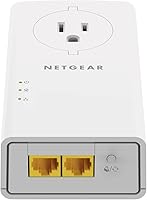
  • Ethernet Ports: Each adapter includes two RJ-45 Gigabit Ethernet ports, allowing two wired devices to connect per unit.
  • Form Factor: Wall-plug design mounts directly into a standard electrical outlet with no desk or shelf footprint required.
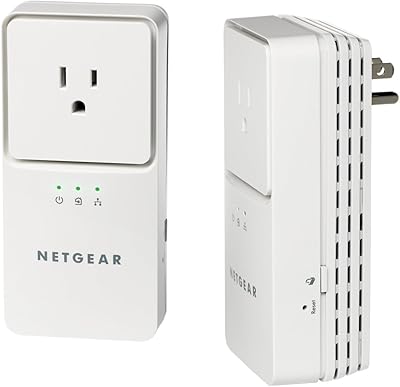
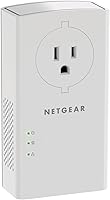
  • Pass-Through Outlet: Each adapter features a built-in noise-filtered power outlet that restores the wall socket for use by other devices.
  • Signal Technology: Uses MIMO (Multiple Input Multiple Output) combined with Beamforming to direct signal more efficiently through electrical wiring.
  • Setup Method: Plug-and-play configuration requires no software installation, driver downloads, or account creation.
  • Input Voltage: Accepts 100–240V input, making the hardware compatible with electrical systems in North America, Europe, and most of Asia.
  • Dimensions: Each adapter measures 2.8″ (L) x 1.49″ (W) x 5.26″ (H).
  • Weight: Each adapter weighs approximately 1.51 pounds.
  • Color: Available in white finish.
  • Kit Contents: Each kit includes two pre-paired powerline adapters ready to use out of the box.
  • Compatible Devices: Works with any Ethernet-enabled device including smart TVs, game consoles, streaming players, desktop PCs, and NAS drives.
  • Model Number: Official model designation is PLP2000-100PAS, manufactured by NETGEAR.
  • First Available: This product was first listed for sale in November 2017 and remains actively sold and non-discontinued as of 2024.
  • Market Rank: Ranked in the top 10 in the Powerline Network Adapters category on Amazon based on sales performance.
  • Encryption: Supports 128-bit AES data encryption for secure data transmission through home electrical wiring.
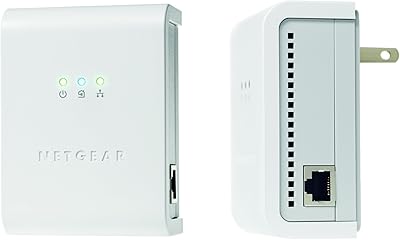
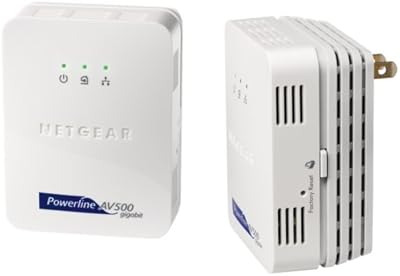
  • Indicator Lights: Each unit includes LED status indicators for power, powerline link strength, and Ethernet port activity.

Related Reviews

Netgear XAVB5001 Powerline Network Adapter Kit
86%
84%
Overall Performance
92%
Ease of Setup
87%
Connection Stability
80%
Speed Consistency
88%
Build Quality
More
Netgear 85Mbps Powerline Network Adapter Kit
85%
81%
Performance & Speed
94%
Ease of Setup
88%
Design & Build Quality
75%
Wi-Fi Signal Extension
82%
Connectivity Reliability
More
NETGEAR Powerline AV+ 200 Adapter Kit XAVB2501
82%
86%
Performance
92%
Ease of Setup
82%
Connectivity Reliability
78%
Speed Stability
88%
Value for Money
More
NETGEAR Powerline AV 200 Mbps Nano Adapter Kit
83%
88%
Performance
93%
Ease of Setup
82%
Connectivity Stability
80%
Build Quality
85%
Design & Size
More
Zyxel PLA6456 Powerline Ethernet Adapter Kit
84%
88%
Performance
91%
Ease of Setup
79%
Connectivity Stability
83%
Speed Consistency
85%
Build Quality
More
Actiontec PWR514K01 Powerline Ethernet Adapter Kit
83%
88%
Setup & Installation
85%
Connection Stability
90%
Security & Encryption
82%
Data Transfer Speed
80%
Build Quality
More
Netgear XAVB1301 Powerline 200Mbps Mini Adapter
82%
85%
Performance
91%
Ease of Setup
74%
Range and Coverage
81%
Stability for Streaming and Gaming
89%
Value for Money
More
NETGEAR Powerline 500 + N300 WiFi Starter Kit
83%
94%
Ease of Setup
85%
WiFi Performance
78%
Range/Signal Strength
92%
Value for Money
87%
Energy Efficiency
More
D-Link DHP-601AV Powerline Adapter Starter Kit
85%
88%
Performance for Gaming
92%
Ease of Setup
85%
Speed and Reliability
90%
Value for Money
87%
Compatibility with Devices
More
Actiontec PWR511K01 500 Mbps Powerline Network Adapter Kit
84%
89%
Installation Ease
85%
Connection Stability
80%
Speed Performance
92%
Compatibility with Devices
88%
Design and Size
More

FAQ

Not at all. You plug one adapter into an outlet near your router and connect it with an Ethernet cable, then plug the second adapter wherever you need internet and connect your device. That's it — the two units find each other automatically and there's no software or app involved. Most buyers have it running in under five minutes.

Realistically, no. The 2000 Mbps figure is a theoretical maximum set by the HomePlug AV2 standard, not a speed you'll hit in a typical home. Actual throughput depends on your home's wiring age, the distance between adapters, and whether both units share the same electrical circuit. Most users see speeds that are fast enough for 4K streaming and gaming, but significantly below the advertised ceiling.

Yes, it matters quite a bit. The adapters work best when both are on the same electrical circuit — ideally the same circuit breaker. If they end up on different circuits, performance can drop sharply or the connection may not establish reliably at all. This is the single most common source of frustration for buyers who get poor results.

It might, but results are unpredictable. Older wiring tends to introduce more electrical noise, which degrades the signal passing through it. Some buyers in older homes report perfectly acceptable speeds; others see inconsistent or slow connections regardless of placement. If your home was wired before the 1980s, it's worth considering whether a mesh Wi-Fi system might be a more reliable alternative.

Cross-brand compatibility with HomePlug AV2 devices is technically possible in theory, but in practice it's unreliable. NETGEAR units pair most consistently with other NETGEAR powerline adapters. If you're mixing brands, pairing may fail or speeds may drop considerably. It's safest to treat this as a closed NETGEAR ecosystem if you plan to expand.

The units come pre-paired from the factory, so most of the time they connect without any manual steps. If they don't, there's a Pair button on each adapter — pressing it initiates a manual pairing sequence. If that fails, a factory reset followed by a fresh pair attempt resolves it for the majority of buyers who encounter this issue.

Yes, and this is important — powerline adapters should always be plugged directly into a wall outlet, not into a power strip, surge protector, or UPS. Those devices filter electrical signals in ways that interfere with the data transmission, and performance can degrade significantly or drop out entirely. The built-in pass-through outlet on the NETGEAR Powerline Adapter Kit PLP2000-100PAS is specifically designed so you don't need a strip.
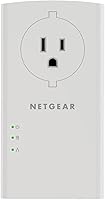
Each adapter has two Gigabit Ethernet ports, so out of the box the kit can support up to four wired devices — two per adapter. If you need more coverage, you can add additional compatible NETGEAR powerline adapters to the same network without needing a separate router or switch.

The adapter pair uses 128-bit AES encryption for all data transmitted through the electrical wiring, so your network traffic is protected. In multi-unit buildings where electrical wiring may be shared between apartments, this encryption prevents other powerline users on the same wiring from accessing your data or joining your network.

They run warm, especially under sustained load like continuous file transfers or extended streaming sessions. It's normal and within design tolerances, but users in enclosed outlet spaces — behind furniture or inside cabinets — occasionally flag it as a concern. Giving the adapters some airflow and plugging them into exposed wall outlets rather than enclosed ones helps manage the heat.