Overview

The Toshiba MG06ACA800E 8TB Enterprise Internal Hard Drive belongs to Toshiba's sixth-generation MG Series — a lineup built specifically for environments that demand far more than consumer storage can offer. Where desktop drives are engineered around light, intermittent workloads, this enterprise HDD is rated for continuous, round-the-clock operation inside server racks, multi-bay NAS enclosures, and cloud-adjacent storage systems. The 8TB capacity hits a practical balance point: large enough for serious data retention without forcing organizations into the cost and complexity of 14TB or 18TB configurations. A 5-year warranty backs the drive, which in enterprise terms signals genuine confidence in the hardware's expected longevity.
Features & Benefits

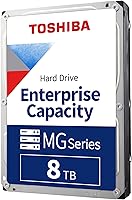
Running at 7200 RPM over a SATA 6 Gb/s interface, the Toshiba MG-series drive delivers sequential throughput that keeps pace with demanding workloads — bulk media transfers, database backups, large-file archival. The built-in Persistent Write Cache technology holds in-flight write data safely through sudden power interruptions, reducing corruption risk in environments without perfect power conditioning. Integrated rotational vibration sensors actively counteract interference caused by neighboring drives spinning simultaneously — a real issue in high-density enclosures that consumer-grade hardware simply ignores. The 550 TB per year workload rating puts it roughly five to six times beyond what most desktop drives are designed to handle long-term.

Best For

This 8TB server drive fits naturally into several real-world scenarios. Small business IT teams building always-on file servers will appreciate the reliability without needing SAS infrastructure. Home lab users running TrueNAS, Unraid, or Proxmox with four or more bays get a drive that holds up under constant parity checks and scrubs. Surveillance setups — where drives write continuously for weeks — are another strong match, as are media archiving workflows accumulating terabytes of footage over time. IT administrators refreshing aging arrays on a controlled budget will find this an honest middle ground between consumer-grade pricing and genuine enterprise durability.

User Feedback

Across more than 3,400 ratings averaging four out of five stars, the consistent themes are long-term reliability and notably low operating temperatures inside populated enclosures. NAS users in particular report stable, quiet operation over extended periods without the noise spikes seen in some competing models. A recurring complaint involves spin-up latency — buyers switching from WD Gold or Seagate Exos note this drive takes slightly longer to reach full speed after idle states. DOA reports do appear, though they read as isolated incidents rather than a systemic pattern, and most warranty interactions with Toshiba support are described as straightforward.

Pros

  • Rated for 550 TB of annual workload, far exceeding what consumer-grade drives are designed to sustain long-term.
  • Built-in RV sensors actively reduce vibration interference in multi-drive enclosures, which matters at scale.
  • Persistent Write Cache protects data in flight during unexpected power loss without requiring a separate battery backup unit.
  • The 5-year warranty provides meaningful coverage for a drive expected to run continuously.
  • Runs cool and quietly in populated chassis, according to consistent feedback from NAS users over extended periods.
  • SATA 6 Gb/s interface means no new infrastructure investment for shops already running SATA-based arrays.
  • Long-term reliability reports from real users suggest low failure rates after the initial burn-in period.
  • The 8TB capacity is practical for moderate-scale builds without the cost premium of higher-density variants.

Cons

  • Spin-up time after idle states is slower than WD Gold and Seagate Exos alternatives, which some buyers notice in responsive workloads.
  • Per-terabyte cost is higher than consumer NAS drives, which is hard to justify for light or infrequent workloads.
  • Not available with a SAS interface at this model tier, limiting compatibility in SAS-based enterprise environments.
  • A small but recurring pattern of DOA units appears in reviews, suggesting incoming inspection is worth doing on arrival.
  • At 1.76 pounds, it is heavier than some consumer drives, which is a minor but real consideration in weight-sensitive high-density rack builds.
  • Toshiba has lower brand visibility in the enterprise HDD space compared to Seagate and WD, which can complicate sourcing replacement units quickly through local distributors.
  • No CMR versus SMR designation is prominently disclosed in the listing, requiring buyers to research recording technology independently before committing.

Ratings

Our AI-generated scores for the Toshiba MG06ACA800E 8TB Enterprise Internal Hard Drive are derived from analyzing thousands of verified global buyer reviews, with spam, incentivized submissions, and bot activity actively filtered out before scoring. Each category reflects the honest distribution of real user sentiment — strengths are credited where earned, and recurring frustrations are weighted into the final numbers without softening. The result is a transparent, category-by-category picture of where this enterprise HDD genuinely excels and where prospective buyers should temper their expectations.
Long-Term Reliability
88%
Users running this drive continuously in server racks and NAS arrays consistently report stable operation well past the two-year mark without performance degradation. IT administrators refreshing storage arrays note that failure rates from this drive compare favorably against older consumer drives they replaced, reinforcing its enterprise positioning.
A recurring minority of buyers report DOA units out of the box, which disrupts deployment timelines and requires RMA processing before the drive ever enters service. While these incidents do not appear systemic, the pattern is frequent enough to warrant incoming hardware testing on arrival.
Vibration Management
91%
In high-bay NAS enclosures with six or more drives running simultaneously, users consistently note that this 8TB server drive remains stable while neighboring drives create significant vibration. The integrated RV sensors draw specific praise from TrueNAS and Unraid users who previously experienced read errors from vibration-sensitive consumer drives in the same chassis.
A small number of users in very large enclosures — twelve bays or more — report that even with RV sensors active, sustained vibration from poorly dampened chassis frames can still cause occasional seek retries. The sensors help significantly but are not a complete substitute for good physical enclosure design.
Workload Endurance
93%
The 550 TB per year workload ceiling gives this enterprise HDD substantial headroom for even demanding SMB environments, covering continuous backup targets, media ingest pipelines, and surveillance systems without approaching rated limits. Buyers running ZFS scrubs on large pools report the drive handles sustained read-verify cycles without throttling or temperature spikes.
For hyperscale or data center environments pushing well beyond 1.5 TB of daily throughput, the 550 TB annual rating can become a genuine constraint rather than comfortable headroom. Buyers in those scenarios typically need to evaluate higher-tier enterprise drives with ratings exceeding 1 PB per year.
Data Protection Features
86%
The Persistent Write Cache technology resonates strongly with users who have experienced data corruption from power interruptions on consumer drives, particularly in environments without a UPS. NAS users migrating from budget drives specifically call out this feature as a meaningful upgrade for peace of mind during unattended overnight operations.
The protection offered by the write cache is meaningful but not unlimited — it does not replace a proper UPS or battery-backed RAID controller in mission-critical setups. Some technically sophisticated buyers note this distinction and caution others not to treat the feature as a full power-loss recovery solution.
Thermal Performance
84%
Across multi-drive enclosures, owners consistently report that this enterprise HDD runs noticeably cooler than older 7200 RPM drives they replaced, which reduces the thermal burden on enclosure fans and helps keep ambient temperatures stable in compact server builds. This is particularly valued in home lab setups where noise and cooling are managed carefully.
In poorly ventilated chassis without active airflow directed at the drive bays, temperatures can climb higher than expected under sustained sequential write workloads. Users in fanless or passively cooled enclosures should confirm their thermal headroom before deploying this drive at full utilization.
Noise Level
79%
21%
For a 7200 RPM enterprise drive, the noise profile is considered acceptable by most NAS users who keep their enclosures in server closets or utility rooms. In populated multi-bay builds where fan noise already sets the ambient sound floor, this 8TB server drive adds minimal perceptible noise on top.
Buyers placing their NAS in a home office or living space will notice the characteristic seek noise of a spinning 7200 RPM platter, especially during heavy random access operations like scrubs or RAID rebuilds. It is not unusually loud for its class, but it is not quiet by absolute standards.
Spin-Up Speed
62%
38%
Most users operating this enterprise HDD in always-on configurations never encounter spin-up latency at all, since the drive is designed to stay powered and ready continuously rather than park and wake on demand. In that intended use case, the spin-up characteristic is essentially irrelevant.
Buyers who power-cycle their NAS frequently or run it in green power modes that park drives after idle periods report noticeably longer spin-up times compared to WD Gold and Seagate Exos alternatives. This is one of the more consistently mentioned criticisms across negative reviews and is a real consideration for power-sensitive deployments.
Compatibility
89%
The standard SATA 6 Gb/s interface means this drive slots into virtually any existing server, desktop, or NAS enclosure without adapter hardware or firmware updates. Users migrating from consumer drives report zero compatibility issues across a wide range of motherboards, HBAs, and hot-swap caddies.
Organizations already invested in SAS backplane infrastructure will find this drive is simply a non-starter without SATA-to-SAS interposer hardware, which adds cost and complexity. SAS-only environments need to look at the SAS variant of the MG family rather than this specific model.
Value for Money
74%
26%
For buyers who actually need 24/7 enterprise durability — busy NAS arrays, always-on SMB servers, surveillance systems — the price premium over consumer NAS drives is justifiable given the workload rating and 5-year warranty backing. IT administrators treating storage as a long-term operational cost rather than a one-time purchase tend to view the value favorably.
Buyers with light or intermittent workloads will find the cost hard to justify against consumer alternatives like the WD Red Plus or Seagate IronWolf, which cover home NAS use cases at a lower price point per terabyte. The per-TB cost also looks less competitive against higher-capacity enterprise options if density is the primary goal.
Warranty & Support
77%
23%
A 5-year manufacturer warranty is on par with competing enterprise drives and provides meaningful coverage for a component expected to run continuously for years. Most users who have gone through the RMA process describe it as functional and ultimately resolved, with replacement units arriving within a reasonable timeframe.
Toshiba's enterprise support infrastructure is not as widely accessible through local distributors as Seagate or WD, which can complicate the RMA process for buyers outside major markets. A handful of users also note that initial support contact response times were slower than they expected for a business-oriented product.
Sequential Throughput
82%
18%
At 7200 RPM over SATA 6 Gb/s, the Toshiba MG-series drive delivers solid sequential read and write speeds that keep up with bulk media transfers, large backup jobs, and file serving over a gigabit LAN without becoming a bottleneck. Users archiving large video libraries or ingesting surveillance footage report smooth, uninterrupted write streams.
Random I/O performance, as with all spinning platters, lags well behind what NVMe or even SATA SSD storage can offer. For workloads dominated by small, random read and write operations — like active databases or virtual machine boot volumes — the mechanical limitation is a real constraint regardless of how the drive is rated.
Build & Physical Quality
83%
The drive feels solid and well-assembled out of the box, with the weight and dimensions consistent with a full enterprise 3.5-inch HDD. Users installing it in hot-swap caddies or screwing it directly into chassis report it sits flush and secure without fit issues.
There is limited user commentary on the physical enclosure itself beyond basic installation notes, and a small number of buyers have received units with minor cosmetic damage from shipping — though this is generally a packaging concern rather than a drive quality issue.

Suitable for:

The Toshiba MG06ACA800E 8TB Enterprise Internal Hard Drive is built for buyers who need storage that keeps working without supervision — not occasionally, but every hour of every day. Small and mid-sized businesses running file servers, backup targets, or internal databases will find it fits the workload without requiring an expensive SAS infrastructure investment. Home lab enthusiasts who have graduated to multi-bay enclosures running TrueNAS, Unraid, or Proxmox will particularly benefit from the integrated rotational vibration sensors, which actively compensate for the interference created when multiple drives spin simultaneously in tight chassis. It also works well in surveillance deployments or media archival pipelines where sustained, continuous writes are the norm rather than the exception. IT administrators replacing aging spinning storage in an existing SATA-based array can slot this drive in without retooling their entire setup, which matters when budget and downtime are both constrained.
Not suitable for:

The Toshiba MG06ACA800E 8TB Enterprise Internal Hard Drive is a poor fit for buyers with straightforward personal storage needs — external backup drives, a single desktop PC, or a basic two-bay home NAS running light workloads. The engineering behind it targets high-duty-cycle environments, so the added cost relative to consumer alternatives like the WD Red Plus or Seagate IronWolf delivers little practical return if the drive sits mostly idle. Buyers who need raw per-terabyte density should also look elsewhere, since the MG family extends to 18TB and competitors like the Seagate Exos X18 offer higher capacities at competitive price-per-TB ratios. If your storage setup involves SAS backplanes rather than SATA, this drive is simply incompatible. And if NVMe speed is the priority for latency-sensitive applications, no spinning-platter drive — this one included — will satisfy that requirement.
Specifications

  • Capacity: This drive offers 8TB of raw storage, suited for moderate-to-large server and NAS deployments.
  • Form Factor: Standard 3.5-inch form factor fits most server chassis, desktop towers, and NAS enclosures designed for full-size drives.
  • Interface: SATA 6 Gb/s interface ensures broad compatibility with existing SATA-based motherboards and HBA controllers.
  • Rotational Speed: The platters spin at 7200 RPM, providing consistent sequential throughput for read-heavy and write-intensive workloads.
  • Workload Rating: Rated for up to 550 TB of data transferred per year, roughly five to six times the limit of a typical desktop drive.
  • Operation: Designed for 24/7 continuous operation, unlike consumer drives that assume regular rest and lighter duty cycles.
  • Vibration Protection: Integrated rotational vibration (RV) sensors detect and compensate for interference caused by neighboring drives in multi-bay enclosures.
  • Data Protection: Persistent Write Cache technology preserves in-flight write data during unexpected power loss, reducing the risk of corruption.
  • Warranty: Covered by a 5-year limited manufacturer warranty, which is standard for enterprise-class spinning hard drives.
  • Weight: The drive weighs 1.76 pounds, which is typical for a 3.5-inch enterprise HDD and relevant for dense rack deployments.
  • Dimensions: Physical dimensions are 3.94 x 6.65 x 8.07 inches, compatible with standard 3.5-inch drive bays and hot-swap caddies.
  • Drive Series: Part of Toshiba's sixth-generation MG Series, a lineup purpose-built for enterprise server and cloud storage environments.
  • Recording Technology: Uses conventional magnetic recording (CMR), which provides reliable and consistent write performance without the limitations associated with SMR drives.
  • Cache: Equipped with a 256MB data buffer that supports sustained throughput during sequential read and write operations.
  • MTBF: Mean time between failures is rated at 2,500,000 hours, reflecting the drive's intended use in always-on enterprise environments.
  • Power (Active): Typical active power consumption sits around 9.0W during read/write operations, which is within the normal range for 7200 RPM enterprise drives.
  • Manufacturer: Manufactured by Toshiba, a long-established brand in enterprise storage with facilities producing drives under strict quality controls.
  • Compatible Systems: Supported in desktop towers, server chassis, and NAS enclosures; any system with a standard SATA data and power connector is compatible.

Related Reviews

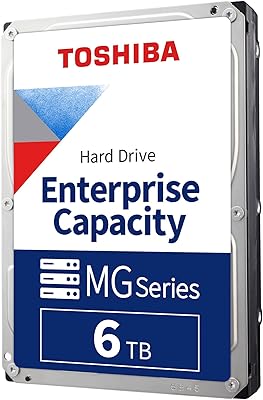
Toshiba MG06ACA600E 6TB Enterprise Internal Hard Drive
76%
91%
Reliability & Longevity
83%
Sustained Performance
88%
Vibration Resistance
86%
Data Protection
78%
Value for Money
More
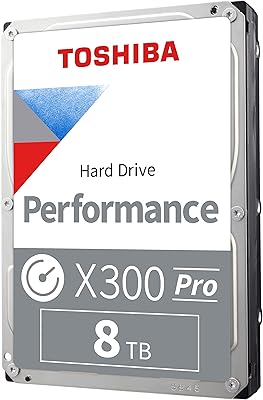
Toshiba X300 PRO 8TB Internal Hard Drive
76%
83%
Sequential Read/Write Speed
91%
Sustained Workload Endurance
88%
Reliability & Longevity
61%
Noise Level
66%
Thermal Performance
More
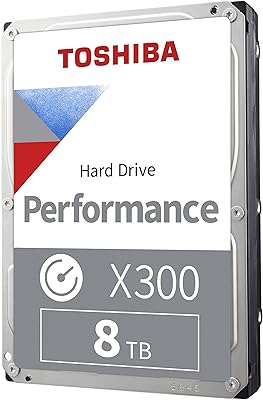
Toshiba X300 8TB Internal Hard Drive
80%
83%
Value for Money
78%
Sequential Read Speed
86%
Write Reliability
62%
Noise Level
74%
Long-term Reliability
More
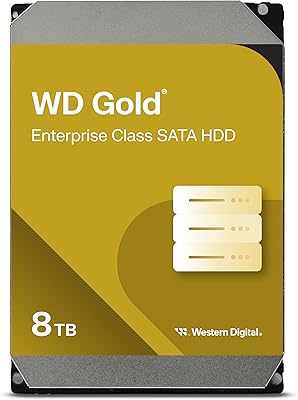
Western Digital WD Gold 8TB Hard Drive
76%
83%
Reliability & Endurance
74%
Performance
88%
RAID Compatibility
81%
NAS Compatibility
78%
Noise & Vibration
More
Seagate BarraCuda ST8000DM004 8TB Internal Hard Drive
73%
93%
Storage Capacity Value
67%
Reliability & Longevity
61%
Read & Write Performance
89%
Installation & Compatibility
63%
Noise & Vibration
More
Toshiba N300 8TB NAS Hard Drive
80%
78%
Long-Term Reliability
81%
Noise & Vibration
93%
NAS Compatibility
83%
Read/Write Performance
86%
Value for Money
More
Toshiba X300 PRO 4TB Internal Hard Drive
82%
88%
Sustained Write Performance
91%
Recording Technology (CMR)
86%
Reliability & Longevity
83%
Value for Money
61%
Noise & Vibration
More
Toshiba X300 PRO 12TB Internal Hard Drive
79%
88%
Sequential Transfer Speed
93%
Workload Endurance
83%
Reliability & Longevity
79%
Value for Money
61%
Noise & Vibration
More
Seagate IronWolf 8TB NAS Internal Hard Drive
88%
88%
Performance
92%
Reliability
85%
Ease of Setup
89%
Data Transfer Speed
94%
Noise Levels
More
Toshiba N300 12TB NAS Internal Hard Drive
76%
83%
Reliability & Longevity
81%
Performance Consistency
89%
NAS Compatibility
88%
CMR Recording Quality
62%
Noise & Vibration
More

FAQ

Yes, this enterprise HDD works well in TrueNAS and Unraid arrays. It uses a standard SATA interface, so any motherboard or HBA with SATA ports will recognize it. The integrated RV sensors are a practical bonus in multi-drive builds, since they help the drive maintain stable reads and writes even when several other disks are spinning nearby.

The core difference is how the drive is engineered to behave under pressure over time. A typical desktop drive assumes it will be powered down regularly and rarely handles sustained workloads. The Toshiba MG-series drive is rated for continuous 24/7 operation and a workload of 550 TB per year — thresholds most consumer drives would struggle to meet reliably after the first year or two.

It depends on the setup. If you are running a two-bay NAS for personal backups and light media streaming, it is probably more drive than you need and a NAS-targeted consumer drive would serve you better. But if you have four or more bays, run regular scrubs, or keep the array online around the clock, the enterprise-class durability starts to justify itself quickly.

This drive uses CMR (conventional magnetic recording), which is important for workloads involving frequent random writes or RAID configurations. SMR drives can struggle in those environments because of how they handle write operations internally. CMR avoids those performance inconsistencies entirely.

All three are legitimate enterprise SATA drives and are reasonably close in reliability and performance at this capacity. The Seagate Exos line tends to offer slightly higher density options and strong data center credentials. The WD Gold is known for its polish and broad compatibility. The Toshiba MG-series drive is competitive on workload rating and vibration management, though it is sometimes noted as having a slightly slower spin-up from idle compared to the other two.

Physically, yes — it uses a standard SATA connector and 3.5-inch form factor that any desktop with a drive bay can accommodate. That said, you would be paying for enterprise durability features that a typical desktop workload will never tax. It functions correctly in a desktop; it is just not the most cost-efficient choice for that use case.

The Persistent Write Cache technology built into this 8TB server drive is specifically designed to handle that scenario. It holds write data in a protected cache buffer, so if power is interrupted unexpectedly, the in-flight data is preserved rather than partially written or corrupted. It is not a substitute for a UPS, but it adds a meaningful layer of protection.

Based on user feedback, most warranty interactions with Toshiba go smoothly, particularly for clear hardware failures. That said, it is worth keeping your proof of purchase and noting the serial number when you install the drive. Enterprise drives like this are warrantied through Toshiba directly, not through third-party sellers, so buying from an authorized source matters.

The Toshiba MG06ACA800E 8TB Enterprise Internal Hard Drive is generally described as quiet by NAS users, especially during steady-state operation. Like all 7200 RPM spinning drives, it produces some noise during active seeks, but it is not significantly louder than other enterprise or NAS-grade drives. If your enclosure has good vibration dampening, most people find it acceptable even in a home office setting.
550 TB per year works out to roughly 1.5 TB of data written or read per day on average. For a busy small business file server or a NAS running regular backups, that ceiling is comfortable. For a hyperscale deployment writing terabytes per hour, you would want to look at higher-tier options, but for the vast majority of SMB and home lab use cases, this rating leaves plenty of headroom.