Overview

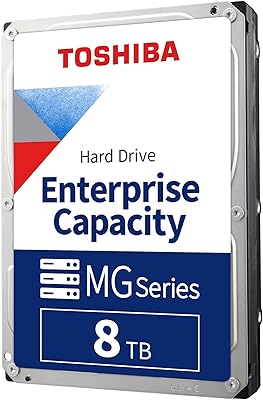
The Toshiba MG06ACA600E 6TB Enterprise Internal Hard Drive belongs to a class of storage hardware that most home users will never need — and that's precisely the point. Toshiba's MG Series has built a quiet reputation in business storage circles, offering the kind of reliability engineering that desktop drives simply aren't designed to deliver. This is a component built for server racks, NAS enclosures, and workstation arrays, not a drop-in upgrade for your gaming PC. At 6TB, it hits a practical sweet spot for small-to-midsize deployments. Against rivals like the WD Gold and Seagate Exos, this Toshiba MG Series drive competes credibly on price without sacrificing the durability credentials that enterprise buyers prioritize.
Features & Benefits

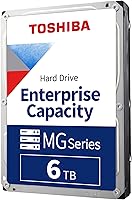
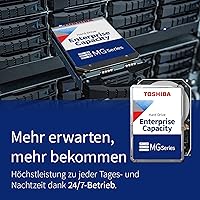
At its core, this enterprise hard drive spins at 7200 RPM over a 6 Gb/s SATA connection — fast enough for sustained sequential throughput but not optimized for the kind of frantic random I/O that SSDs handle better. Where it genuinely earns its price premium is in the engineering around endurance. The built-in RV sensors actively detect and compensate for rotational vibration caused by neighboring drives in dense enclosures — a real problem in 12-bay or 24-bay NAS units that consumer drives simply ignore. The Persistent Write Cache feature protects data mid-write during a power event, which matters enormously in production environments. And a workload rating ten times higher than a typical desktop drive tells you everything about the durability expectations baked into its design.

Best For

This Toshiba MG Series drive makes the most sense for IT professionals and serious home-lab builders who run platforms like TrueNAS, Proxmox, or Unraid. In those environments — especially multi-drive arrays — the vibration compensation and continuous-duty rating translate directly into fewer headaches. Small businesses expanding on-premises backup infrastructure will also find the five-year warranty meaningful when calculating total storage costs over time. That said, if your workload is a single-user desktop or a video editing rig needing fast random reads, this is the wrong tool. It's also worth noting that CMR recording makes it more predictable under mixed workloads than SMR alternatives. The MG06ACA600E is not a casual purchase — it rewards buyers who know exactly what they're deploying.

User Feedback

With over 3,400 ratings sitting at a solid four-star average, this enterprise hard drive has developed a reputation for being exactly what it promises: dependable over the long run. Reviewers — many of them IT administrators and NAS builders — consistently mention low operating temperatures in well-ventilated enclosures and stable read performance over months of continuous use. The criticism that surfaces most often involves firmware compatibility with older HBA controllers, which is worth verifying before ordering if your infrastructure predates the last few years. DOA rates appear low relative to the volume of units sold, and Toshiba's RMA process draws generally positive mentions. Not flashy, not exciting — just a reliable workhorse that rarely surprises its buyers, for better or worse.

Pros

  • Engineered for round-the-clock operation, making it genuinely reliable in always-on server and NAS environments.
  • Built-in RV sensors reduce vibration interference in multi-drive enclosures, protecting data integrity across dense arrays.
  • Persistent Write Cache technology guards against data loss during unexpected power cuts — a real safeguard in production setups.
  • Workload rating roughly ten times higher than a typical desktop drive reflects true enterprise-grade endurance expectations.
  • A five-year manufacturer warranty significantly lowers total cost of ownership for long-running storage deployments.
  • CMR recording ensures consistent, predictable write performance without the degradation risks tied to SMR alternatives.
  • Works natively with Linux and Windows Server with no significant driver compatibility complaints from experienced users.
  • Runs cooler than many competing enterprise drives in well-ventilated chassis, according to consistent real-world feedback.
  • Competitive pricing against WD Gold and Seagate Exos makes this MG Series drive a cost-conscious choice for multi-drive builds.
  • Over 3,400 user ratings reflect a stable, mature product with a low reported rate of early-life failures.

Cons

  • Audibly louder than most desktop HDDs — a real drawback in quiet home office or bedroom environments.
  • Firmware compatibility quirks with older HBA controllers have been flagged by multiple users, requiring careful pre-purchase research.
  • Random read performance lags behind SSDs by a wide margin, limiting usefulness in latency-sensitive or high-IOPS applications.
  • Higher power draw than consumer drives translates into increased electricity costs over large-scale or long-term deployments.
  • Requires an internal SATA bay and proper mounting hardware — there is no plug-and-play external option.
  • At 6TB, the capacity feels conservative compared to higher-density enterprise options now available at comparable price points.
  • Weighing close to 1.8 pounds, it is heavier than consumer alternatives, which adds up when populating dense rack enclosures.
  • Not practical as a primary OS drive — its engineering prioritizes sustained sequential throughput over snappy system responsiveness.
  • The enterprise-tier positioning makes it overkill and cost-inefficient for anyone running a single-user or light home storage setup.

Ratings

The Toshiba MG06ACA600E 6TB Enterprise Internal Hard Drive earned its 4.0-star consensus from more than 3,400 verified buyers — a pool dominated by IT administrators, NAS builders, and small business storage engineers whose feedback tends to be detailed and technically grounded. These scores were generated by AI after analyzing verified global user reviews, with spam, bot-generated, and incentivized feedback actively filtered out. Both the genuine strengths of this Toshiba MG Series drive and its real-world friction points — from vibration compensation to firmware compatibility — are transparently reflected in each category.
Reliability & Longevity
91%
Enterprise buyers running this Toshiba MG Series drive in always-on NAS arrays and backup servers consistently report stable operation over years of continuous use. The high workload rating — far beyond what desktop alternatives are designed to handle — means it holds up under the kind of stress that would degrade a consumer drive within months.
A small but consistent minority of reviewers report drives that arrived dead or failed within the first few weeks — not alarming at this sales volume, but a real risk worth noting. Buyers are advised to stress-test new units with tools like badblocks or HD Tune before deploying them into production.
Sustained Performance
83%
For sequential workloads — bulk data ingestion, backup jobs, media streaming from a NAS — this enterprise hard drive delivers steady, predictable throughput that holds up under prolonged use. Users building TrueNAS or Unraid arrays report that it handles continuous read and write cycles without the thermal throttling or slowdowns seen in lower-tier alternatives.
Sustained performance is strong, but it is fundamentally a spinning disk, and that ceiling becomes obvious when workloads shift to random access patterns — database queries, VM boot storms, or frequent small-file operations. For those scenarios, no amount of cache or spindle speed closes the gap against an SSD.
Vibration Resistance
88%
The built-in dual RV sensors are one of the most appreciated features among users running dense multi-drive enclosures. In 8-bay, 12-bay, and larger NAS units, neighboring drives generate vibration that can measurably degrade data integrity — and users consistently note that this enterprise hard drive handles those conditions well.
While the RV sensors perform admirably in most configurations, a few users in extremely high-density racks with older or poorly damped chassis report that compensation has its limits. The sensors are not a substitute for proper drive mounting hardware and vibration isolation in very large-scale deployments.
Data Protection
86%
Persistent Write Cache is the kind of safeguard that only gets appreciated when something goes wrong — and for buyers who have lost data during an unexpected power cut, it is a genuine selling point. Users managing production workloads and VM hosts consistently cite it as a key differentiator over cheaper consumer or near-line alternatives.
PWC provides meaningful protection against power-loss data corruption, but it is not a substitute for proper UPS infrastructure or RAID redundancy. A handful of users note that the feature adds troubleshooting complexity when diagnosing unusual write behaviors, particularly in non-standard controller configurations.
Value for Money
78%
22%
For buyers who genuinely need enterprise-grade endurance and vibration protection, the price is competitive — especially relative to WD Gold and Seagate Exos at the same capacity. Over a five-year deployment with warranty coverage factored in, the total cost of ownership compares favorably against replacing cheaper drives that wear out prematurely under heavy use.
For anyone who does not actually need 24/7 operation or multi-drive vibration compensation, the price premium over a consumer desktop drive is difficult to justify. Buyers who discover mid-purchase that their workload is light or single-drive will likely feel they overspent for features that simply remain dormant.
Thermal Management
82%
18%
In enclosures with reasonable airflow — even a mid-range NAS or a tower server with a couple of case fans — this enterprise hard drive runs at stable temperatures under sustained read and write loads. Reviewers frequently mention that thermal performance holds up well in multi-drive arrays where heat accumulation is a genuine concern.
In poorly ventilated enclosures or tightly packed chassis without dedicated drive cooling, temperatures can climb under extended workloads. This is more a chassis design issue than a drive flaw, but buyers running compact or passively cooled setups should plan airflow carefully before committing to a multi-drive configuration.
Noise Level
57%
43%
In server rooms, rack cabinets, and utility closets where ambient noise is already expected, the drive's operating hum is completely unremarkable. IT professionals deploying it in professional environments report no noise-related complaints — in those contexts, the sound is simply background and not a meaningful factor.
For home lab users running NAS units in living spaces or home offices, the continuous 7200 RPM hum is noticeably louder than consumer desktop drives. Several reviewers specifically flag noise as their only frustration, particularly those who co-locate server hardware in shared or sleeping spaces.
Compatibility
74%
26%
On modern hardware — current-generation NAS enclosures, recent HBA cards, and mainstream server motherboards — this Toshiba MG Series drive installs cleanly and is recognized without special configuration. Linux and Windows Server environments both handle it natively, which reduces setup friction for IT professionals managing mixed infrastructure.
Compatibility is where some buyers hit friction: several users with older HBA controllers or legacy server hardware report recognition issues that required firmware updates or, in some cases, remained unresolved. Checking manufacturer compatibility lists before ordering is strongly recommended if your infrastructure is more than a few years old.
Warranty & Support
84%
Five years of manufacturer warranty coverage is a genuine differentiator in the storage market, where most consumer drives offer two years or less. Reviewers who have navigated the RMA process generally describe Toshiba's handling as competent and straightforward, with replacement units arriving within reasonable timeframes.
While the warranty terms are strong, some users note that Toshiba's direct customer support can be slower to respond than larger volume-oriented vendors. A few reviewers also flag that coverage becomes complicated for resold or gray-market units, making it important to purchase through authorized channels.
Build Quality
87%
The physical construction reflects its intended environment — reinforced metal casing, secure mounting points, and tolerances built for server-rack vibration rather than occasional desk use. Reviewers handling multiple units consistently describe the MG06ACA600E as solid and well-finished compared to consumer-tier drives at similar capacities.
At nearly 1.8 pounds, it is heavier than desktop alternatives — a minor inconvenience for individual installation but one that adds up in high-density deployments where dozens of drives need to be racked and managed. There are no significant build defect patterns, but the weight catches some buyers off-guard.
Ease of Installation
76%
24%
For anyone with basic server or NAS assembly experience, installation is a standard process — mount the drive, connect SATA power and data cables, and the system recognizes it without drama. Home lab users on TrueNAS and Unraid consistently report that it initializes cleanly in most modern enclosures with no special steps required.
Less experienced buyers new to enterprise hardware sometimes underestimate the setup requirements — there is no USB option, no out-of-box formatting, and a compatible enclosure plus OS configuration is needed before the drive is useful. It is not a difficult install by any measure, but it is definitely not plug-and-play.
Random I/O Performance
52%
48%
For workloads that do not demand fast random access — sequential backup jobs, media streaming, archival reads, and bulk data transfers — this enterprise hard drive performs its role without issue. In those specific use cases, random I/O limitations simply do not enter the picture.
When workloads involve frequent small-file random operations — VM boot volumes, active database I/O, or high-concurrency application servers — the mechanical nature of this drive is a hard bottleneck. No enterprise tuning or controller configuration changes that fundamental physical constraint, and users running those workloads consistently report clear disappointment.
Power Efficiency
63%
37%
Within its workload class, the power draw is reasonable and broadly in line with competing enterprise drives from WD and Seagate. For buyers running a handful of drives in a small business NAS, the electricity overhead is not a meaningful concern in day-to-day operations.
Running continuously at full spindle speed means this Toshiba MG Series drive draws noticeably more power than desktop alternatives, which adds up in large-scale multi-drive deployments. Home lab users populating eight or more drives in a single enclosure should factor power supply capacity and ongoing electricity costs into their total build budget.
Firmware & Software
69%
31%
On current hardware with up-to-date firmware, the drive integrates without software-side friction — no proprietary management suite is required, and it functions cleanly with standard storage tools on both Linux and Windows Server. Enterprise users running SMART monitoring consistently report reliable and readable health telemetry over long deployment periods.
The friction point flagged most consistently by real buyers is firmware compatibility with older HBA controllers, which in some cases caused recognition failures that were not easily resolved. Toshiba offers no consumer-friendly management utility, so users needing drive-level monitoring must rely on third-party tools like CrystalDiskInfo or smartmontools.

Suitable for:

The Toshiba MG06ACA600E 6TB Enterprise Internal Hard Drive is the right call for anyone building or maintaining storage infrastructure that runs continuously and cannot afford unpredictable failures. Small business IT teams assembling NAS arrays — particularly on platforms like Synology, QNAP, or custom TrueNAS builds — will get real value from its vibration-compensating sensors and high-endurance design. Home lab enthusiasts who have outgrown consumer drives and want server-grade reliability without jumping to the complexity of SAS are a natural fit. The five-year warranty and continuous-duty engineering also make it a smart choice for on-premises backup servers where replacement cost and downtime are genuine concerns. If you are managing data that matters — client records, surveillance footage, or virtual machine storage — this Toshiba MG Series drive is built precisely for that kind of sustained pressure.
Not suitable for:

The Toshiba MG06ACA600E 6TB Enterprise Internal Hard Drive is a poor match for casual home users who simply need extra storage for media, photos, or personal backups on a single desktop machine. The price premium over a consumer desktop drive is difficult to justify when you are not actually running always-on workloads or multi-drive arrays that stress-test its enterprise features. Creative professionals — video editors, photographers, or audio producers — who depend on fast random read performance will find this mechanical drive underwhelming next to an NVMe SSD. This enterprise hard drive also runs at full rotational speed by design, which makes it noticeably louder and warmer than desktop-oriented drives that park their heads during idle periods, so anyone assembling a quiet home setup should factor that in carefully. Buyers with older HBA controllers or non-enterprise motherboards should also verify firmware compatibility before committing.
Specifications

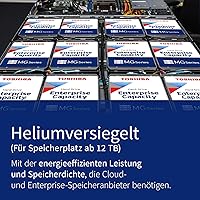
  • Capacity: This drive offers 6TB of raw storage, suited for small-to-mid enterprise NAS arrays and on-premises backup servers.
  • Form Factor: Standard 3.5-inch form factor compatible with most server chassis, desktop towers, and NAS enclosures that accept full-size drives.
  • Interface: Uses a SATA 6 Gb/s connection, the most common enterprise-accessible interface for high-capacity mechanical storage.
  • Rotational Speed: Spins at 7200 RPM, providing consistent sequential throughput suitable for sustained read and write workloads in server environments.
  • Cache Size: Equipped with 256 MB of onboard cache to buffer frequently accessed data and smooth out write performance during heavy workloads.
  • Workload Rating: Rated for up to 550 TB of data transferred per year, roughly ten times the endurance ceiling of a typical consumer desktop drive.
  • Warranty: Backed by a five-year manufacturer warranty, which meaningfully reduces replacement risk and total cost of ownership in multi-drive deployments.
  • Operation: Designed for 24/7 continuous operation without head-parking or aggressive power management that could interrupt sustained workloads.
  • RV Sensors: Features dual built-in rotational vibration sensors that actively detect and compensate for vibration caused by adjacent drives in dense enclosures.
  • Data Protection: Persistent Write Cache (PWC) technology protects in-flight data by preserving uncommitted writes during unexpected power interruptions.
  • Drive Type: Uses Conventional Magnetic Recording (CMR), delivering predictable and consistent write performance without the throughput degradation risks of SMR drives.
  • Compatible OS: Natively supported on Linux and Windows Server environments with no specialized drivers required for standard SATA configurations.
  • Weight: Weighs approximately 1.76 pounds, slightly heavier than consumer alternatives due to its reinforced enterprise-grade construction.
  • Dimensions: Measures 9.2 x 6.8 x 1.8 inches, fitting standard 3.5-inch drive bays in rack-mounted servers and desktop NAS units.
  • Manufacturer: Produced by Toshiba under their MG Series enterprise hard drive line, a range built specifically for business-grade storage infrastructure.

Related Reviews

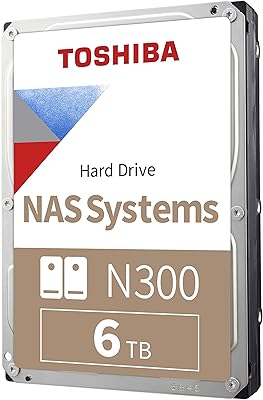
Toshiba N300 6TB NAS Internal Hard Drive
86%
88%
Performance
91%
Reliability
72%
Noise Levels
86%
Data Transfer Speed
85%
Ease of Installation
More
Toshiba MG06ACA800E 8TB Enterprise Internal Hard Drive
82%
88%
Long-Term Reliability
91%
Vibration Management
93%
Workload Endurance
86%
Data Protection Features
84%
Thermal Performance
More
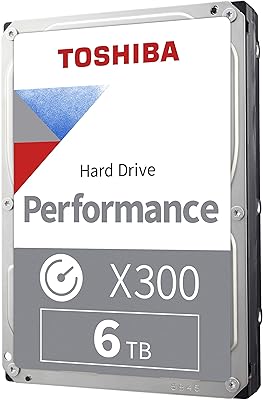
Toshiba X300 6TB Performance & Gaming Internal Hard Drive
86%
92%
Performance Speed
96%
Storage Capacity
85%
Durability & Reliability
89%
Value for Money
72%
Noise Level
More
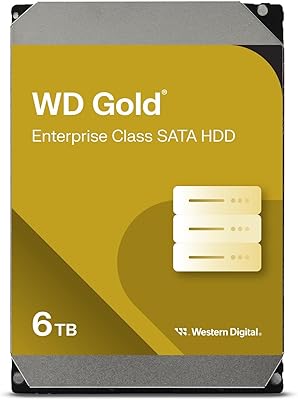
Western Digital 6TB WD Gold Enterprise Class Internal Hard Drive
88%
95%
Performance in Data-Intensive Tasks
93%
Reliability and Durability
88%
Vibration Protection Effectiveness
92%
Long-Term Stability (MTBF)
85%
Ease of Installation
More
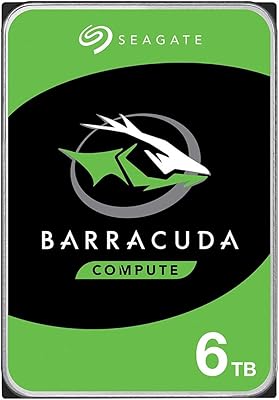
Seagate Barracuda 6TB Internal Hard Drive
77%
93%
Value for Money
91%
Storage Capacity
74%
Reliability & Longevity
89%
Installation Ease
61%
Read/Write Performance
More
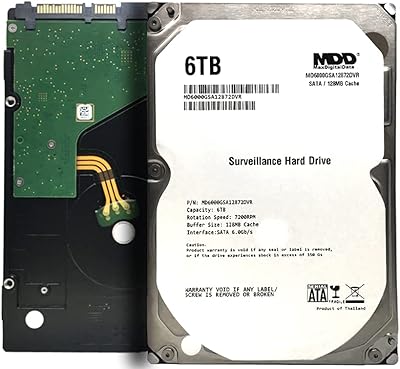
MDD MaxDigitalData 6TB Surveillance Internal Hard Drive
73%
88%
Value for Money
76%
Reliability & Durability
83%
Recording Performance
71%
Ease of Installation
86%
Compatibility
More
Toshiba X300 PRO 8TB Internal Hard Drive
76%
83%
Sequential Read/Write Speed
91%
Sustained Workload Endurance
88%
Reliability & Longevity
61%
Noise Level
66%
Thermal Performance
More
Toshiba X300 PRO 4TB Internal Hard Drive
82%
88%
Sustained Write Performance
91%
Recording Technology (CMR)
86%
Reliability & Longevity
83%
Value for Money
61%
Noise & Vibration
More
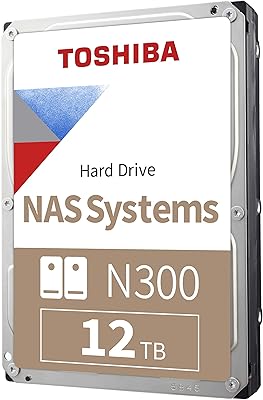
Toshiba N300 12TB NAS Internal Hard Drive
76%
83%
Reliability & Longevity
81%
Performance Consistency
89%
NAS Compatibility
88%
CMR Recording Quality
62%
Noise & Vibration
More
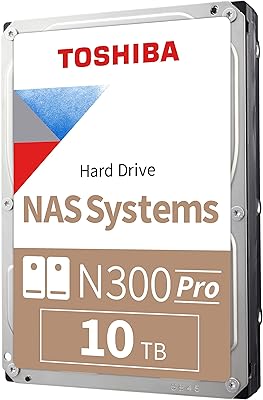
Toshiba N300 PRO 10TB Internal Hard Drive
87%
92%
Reliability for 24/7 NAS Use
89%
Performance in RAID Setups
91%
Workload Capacity (300 TB/year)
85%
Data Transfer Speed
88%
Vibration Control with RV Sensors
More

FAQ

Technically yes — the Toshiba MG06ACA600E 6TB Enterprise Internal Hard Drive will physically fit and function in a standard desktop with a SATA connection. That said, it is engineered for always-on server environments, so in a typical desktop you are paying an enterprise premium for features you will never use. For a home PC, a consumer desktop drive will serve you better at a lower cost.
Yes, and honestly this is one of its best use cases. This Toshiba MG Series drive works well with TrueNAS, Unraid, and Proxmox out of the box on both Linux and Windows Server. The CMR recording type and high endurance rating make it a solid choice for ZFS-based arrays in particular, where write consistency and long-term reliability matter a lot.

All three are legitimate enterprise-class drives competing in the same tier, and the differences in real-world NAS or server performance are marginal for most buyers. The MG Series drive is generally priced competitively and has a comparable warranty and endurance rating. Your decision may come down to which brand your monitoring tools or enclosure firmware plays best with, or simply which is in stock at the better price.

Persistent Write Cache (PWC) is a feature that holds recent write operations in a protected cache area so that if power is suddenly cut, that data is not lost or corrupted. For a home media server it is a nice safety net. For any business environment where data integrity is non-negotiable — accounting records, database logs, VM storage — it is genuinely important and worth having.

It works with most modern HBA controllers without issue, but a handful of users with older or budget HBA cards have reported firmware compatibility quirks. Before ordering, check whether your controller supports the drive via the manufacturer's compatibility list. This is less of a problem if your infrastructure is relatively current, but it is worth a five-minute verification if you are running older hardware.

It is noticeably louder than a consumer desktop drive. Because it is designed to spin continuously at full speed rather than parking its heads during quiet periods, you will hear a consistent hum. In a server room or enclosed rack cabinet this is not a problem, but if you are building a home lab in a living space or bedroom, factor in that acoustic difference before buying.

Toshiba covers manufacturing defects for five years, which is standard for enterprise-tier drives. Based on user feedback, the RMA process is generally smooth with reasonable turnaround times. Keep your proof of purchase and register the drive if possible — that paperwork makes the process much easier if you ever need it.

The drive itself has no USB interface — it is a SATA-only internal drive. You can physically put it in a USB-to-SATA enclosure, and it will work, but that setup defeats the purpose of most of its enterprise features. If you need portable or external storage, a purpose-built external drive will be a better fit.

This is a CMR (Conventional Magnetic Recording) drive, and yes, it absolutely matters for NAS builds. SMR drives can struggle under the mixed read/write workloads common in RAID arrays and ZFS pools, sometimes leading to timeouts or degraded rebuilds. CMR avoids those issues entirely, which is one reason this enterprise hard drive is well-regarded in the home lab community.

Under normal conditions with adequate airflow, the MG Series drive runs at reasonable temperatures — users consistently report it staying within comfortable thermal limits in well-ventilated enclosures. You do not need exotic cooling, but you should not seal it in a poorly ventilated case either. Standard chassis airflow with a case fan or two is sufficient for most multi-drive setups.