Overview

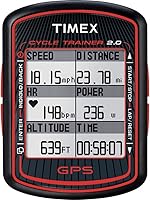
The Timex T5K615 GPS Bike Computer arrived in 2012 as a capable mid-range option for riders who wanted real data on their rides without paying flagship prices. At the time, having dedicated GPS tracking on a handlebar-mounted unit was a meaningful step up from basic cycle computers. This Timex bike computer also supported the ANT+ sensor ecosystem, which meant it could communicate with heart rate monitors, cadence sensors, and power meters right out of the box. Training Peaks integration added another layer for structured training. The design shows its age, but the core feature set still holds up reasonably well for its market tier.

Features & Benefits

On the feature side, the T5K615 covers the fundamentals well. GPS speed and distance tracking works independently of your phone, which matters on long rides where you want one less device draining battery. The ANT+ support is probably the standout: pair a heart rate strap, a cadence sensor, or even a power meter, and all that data feeds into one display. You can configure which metrics appear on screen, so if power output matters more to you than mapping, you can set it up accordingly. Uploading rides to Training Peaks afterward is straightforward, making it practical for structured training plans. The 18-hour battery is generous enough for century rides or multi-day touring.

Best For

This GPS cycling computer makes the most sense for riders who want sensor-rich data without tethering their ride to a smartphone. It suits fitness-focused cyclists who follow structured plans on Training Peaks and need a reliable head unit to log every session accurately. Triathletes will appreciate the multi-sport flexibility and ANT+ compatibility, since the same device handles both cycling and cross-training metrics. Riders heading out on long-distance events or overnight bike-packing trips will find the extended battery life genuinely useful rather than just a spec sheet number. Where it makes less sense is for tech-forward riders expecting modern connectivity — this is a straightforward, data-focused tool, not a navigation powerhouse.

User Feedback

Owners of this Timex bike computer tend to praise the GPS accuracy and how reliably it pairs with ANT+ sensors — for most riders, that core experience works without much fuss. The Training Peaks upload process draws mixed reactions: some find it smooth, others report occasional friction depending on software versions. A recurring concern is the device’s age; firmware updates are no longer expected, and compatibility with evolving platforms is a legitimate question mark for buyers today. Mount durability and screen readability in direct sunlight have both come up repeatedly, with results varying by setup. Battery life generally tracks close to the advertised figure on moderate rides, though heavy sensor use can trim it somewhat.

Pros

  • GPS tracking works reliably and independently, no phone needed on the road.
  • ANT+ compatibility covers heart rate, cadence, and power meters from virtually any brand.
  • Training Peaks integration makes post-ride data review easy for structured athletes.
  • The 18-hour battery genuinely supports long endurance rides and back-to-back training days.
  • At just 4 oz, this GPS cycling computer adds almost no noticeable weight to your handlebar setup.
  • Customizable display means you only see the metrics that actually matter to your riding style.
  • Broad multi-sport support makes it versatile for triathletes juggling multiple disciplines.
  • ANT+ sensor pairing is consistently reliable according to most long-term users.
  • For its market tier, the core data accuracy has held up well over years of real-world use.

Cons

  • No firmware updates are expected, leaving long-term platform compatibility uncertain.
  • Training Peaks upload can be inconsistent depending on software versions and operating systems.
  • Display readability in direct sunlight is a recurring complaint among users.
  • Navigation features are basic — this is not a device built for exploring unfamiliar routes.
  • Mount hardware durability has been flagged by some riders as a weak point over extended use.
  • No Bluetooth connectivity limits integration with modern apps and devices.
  • The interface design feels dated compared to current GPS units at comparable prices.
  • Heavy sensor use in the field can reduce real-world battery life below the advertised figure.
  • Buying a device this age means inheriting any obsolescence risks with no manufacturer support path.

Ratings

The Timex T5K615 GPS Bike Computer has been scored by our AI system after analyzing verified buyer reviews from global markets, with spam, bot activity, and incentivized feedback actively filtered out. The scores below reflect a balanced picture of where this GPS cycling computer genuinely delivers and where real users have run into friction. Both the strengths that keep riders loyal and the pain points that push others toward newer alternatives are transparently represented.

GPS Accuracy
83%
Most riders report that the GPS tracking holds up well across varied terrain, from urban commutes to open road century rides. Lock-on time is generally fast, and distance figures tend to align closely with other devices used in back-to-back comparisons.
A small portion of users note occasional signal drift in tree-heavy or canyon terrain, which can distort route data. It is not a major issue for most, but riders who frequently ride in dense environments may notice inconsistencies.
ANT+ Sensor Pairing
86%
The ANT+ connectivity is consistently praised as one of the strongest aspects of this GPS cycling computer. Heart rate monitors, cadence sensors, and power meters from various brands pair reliably without repeated dropouts during structured interval sessions.
A few users report that pairing can take longer on initial setup than expected, and very occasionally a sensor drops mid-ride without an obvious reason. These cases appear to be edge scenarios rather than a widespread pattern.
Battery Life
79%
21%
Riders tackling long-distance events and multi-day touring consistently cite the battery as a genuine advantage, with many reaching the 15 to 18 hour range on moderate sensor loads. For an endurance-focused device, this is a meaningful real-world benefit.
Running multiple ANT+ sensors simultaneously — particularly a power meter alongside heart rate and cadence — draws more power and can push real-world runtime noticeably below the advertised ceiling. Cold weather riding compounds this further.
Training Peaks Integration
71%
29%
For cyclists already embedded in the Training Peaks ecosystem, the upload workflow functions as intended and makes post-ride analysis accessible without manual data entry. Coaches working with athletes on structured plans find the data transfer covers the essential metrics well.
The upload process depends on older Timex software that is no longer actively developed, and compatibility issues with newer operating systems have been reported by a meaningful number of users. On some setups, getting the sync to work reliably requires troubleshooting.
Display Readability
58%
42%
In shaded conditions, overcast rides, or indoor trainer sessions, the display is adequately legible and shows configured data fields without clutter. Riders who do most of their riding in temperate or low-glare environments generally have no complaints here.
Direct sunlight is a recurring problem. Multiple users describe struggling to read the screen quickly during rides on bright days, which is a meaningful usability issue for a device meant to deliver at-a-glance data while moving at speed.
Build Quality
67%
33%
The unit itself feels reasonably solid for its market tier and has survived years of regular use for many long-term owners. The overall form factor is compact and does not feel fragile in the hand or on the bar.
The mount system has drawn consistent criticism, with some users reporting cracking or loosening over extended use and rough road surfaces. For a device that lives on a handlebar, mount reliability is a non-trivial concern.
Ease of Setup
72%
28%
First-time GPS cycling computer users generally find the initial hardware setup manageable, and the ANT+ pairing process for sensors is intuitive enough that most riders are up and running within a single session.
The software side of setup — particularly installing the Timex Device Agent on modern operating systems — can be a friction point. Users on newer versions of Windows or macOS have reported compatibility issues that require additional workarounds.
Display Customization
76%
24%
The ability to choose which metrics appear on screen is well-regarded among data-focused riders. Cyclists who prioritize power output can surface that front and center, while those focused on heart rate zones can configure accordingly.
The number of customizable fields is limited compared to what current cycling GPS units offer at comparable price points. Users who want complex multi-page data layouts will find the options here feel constrained.
Value for Money
62%
38%
At the time of its release, this Timex bike computer offered a genuinely competitive feature set for the price. Buyers who find it at a reduced price on the used or clearance market can still extract real value from its core GPS and ANT+ capabilities.
Evaluated against what the current market offers at similar price points, the T5K615 is harder to justify at full retail. The combination of discontinued software support, dated interface, and no Bluetooth connectivity makes the value proposition less compelling for new buyers today.
Software & Firmware Support
38%
62%
The core device functions continue to operate as designed on the hardware level, and riders who use it purely as a standalone GPS head unit without needing software updates can still get reliable performance from the unit itself.
Firmware development ended years ago, and the companion software is no longer maintained. This is a meaningful long-term risk: platform compatibility will only become harder to sustain as operating systems evolve, and there is no manufacturer path forward.
Mount System
53%
47%
The mount attaches securely to standard handlebar diameters and holds the unit at a readable angle without excessive vibration under normal road conditions. For most setups, it works adequately out of the box.
Durability over time is the core complaint. Several users describe the mount clip wearing out or breaking after a year or two of regular use, and sourcing replacement mounts for a discontinued product line is not straightforward.
Weight & Form Factor
84%
At 4 oz, the T5K615 adds almost nothing to a handlebar setup, which matters on longer rides where every gram of cockpit weight has a marginal cumulative effect. Riders assembling a lightweight touring or endurance build will appreciate this.
The physical dimensions, while not large, make the unit feel slightly bulkier than the slimmer profiles offered by more recent competitors. It is a minor aesthetic point, but noticeable on minimalist cockpit builds.
Data Accuracy
81%
19%
Speed, distance, and sensor data readings are generally consistent and trustworthy for training purposes. Riders using the device alongside power meters report that the data displayed aligns well with what they see on post-ride analysis platforms.
Edge cases involving rapid elevation changes or tunnels can occasionally produce data artifacts in the GPS track. These are infrequent and not specific to this unit, but worth knowing for riders in highly variable terrain.
Durability Over Time
61%
39%
A meaningful number of long-term owners report using the device for several years of regular riding without hardware failure. The electronics themselves appear reasonably robust given the age of the product.
Beyond the mount system, some users have reported button wear and screen responsiveness degrading over multi-year ownership. For a device that no longer receives support, hardware failure means replacement rather than repair.

Suitable for:

The Timex T5K615 GPS Bike Computer is a strong match for fitness-focused cyclists and recreational riders who want dependable, sensor-rich data on every ride without relying on a smartphone. If you follow a structured training plan on Training Peaks — whether self-coached or working with a coach — this GPS cycling computer integrates directly into that workflow, making post-ride analysis genuinely straightforward. Triathletes and multi-sport athletes will appreciate the broad ANT+ compatibility, since a single device can handle heart rate, cadence, and power data across disciplines. Riders who regularly tackle century rides, endurance events, or multi-day touring will find the 18-hour battery a real practical advantage rather than just a number on a spec sheet. It also suits budget-conscious buyers who want a capable, standalone GPS head unit with full sensor support and are willing to accept an older design in exchange for solid core performance.

Not suitable for:

Buyers expecting modern smart features — Bluetooth smartphone connectivity, turn-by-turn navigation, live tracking, or app syncing beyond Training Peaks — will find the T5K615 falls well short of current expectations. The device launched in 2012, and while the hardware still functions, firmware updates are a thing of the past and long-term software compatibility with evolving platforms is genuinely uncertain. Riders who depend heavily on real-time mapping or breadcrumb navigation for exploring unfamiliar routes will find the GPS functionality here more basic than what newer competitors offer at similar or lower price points today. Those who prefer a modern, polished user interface or quick-glance display in harsh sunlight may also find the experience frustrating. If you are buying new hardware in today’s market, the age of this Timex bike computer means you are trading currency for a device that the broader cycling tech ecosystem has largely moved past.

Specifications

  • Brand: Manufactured by Timex, a long-established American watch and timing device company.
  • Model Number: The unit is identified by part number T5K615F5.
  • Country of Origin: This GPS cycling computer is manufactured in Taiwan.
  • Dimensions: Unit dimensions measure 5.5 x 6.5 x 2.75 inches, with package dimensions of 5.5 x 5.4 x 2.7 inches.
  • Weight: The device weighs 4 oz, with a total package weight of 0.35 lbs.
  • Battery Type: Powered by an internal rechargeable lithium-ion battery with an advertised runtime of up to 18 hours.
  • GPS Tracking: Built-in GPS records real-time speed, distance, and route data without requiring a paired smartphone.
  • Wireless Protocol: Supports ANT+ wireless communication for connecting external sensors including heart rate monitors, cadence sensors, and power meters.
  • Display: Features a customizable screen layout allowing riders to configure which data fields are shown during a ride.
  • Platform Sync: Compatible with Training Peaks for post-ride workout upload, analysis, and training load management.
  • Sport Type: Classified as a multi-sport device, suitable for cycling-focused use and compatible with broader endurance sport workflows.
  • Suggested Users: Designed for unisex adult use across recreational, fitness, and competitive cycling contexts.
  • Heart Rate Support: Pairs with ANT+ heart rate monitors to display and record real-time heart rate data during rides.
  • Cadence Support: Compatible with ANT+ cadence sensors to track pedal stroke rate throughout a workout.
  • Power Meter Support: Can receive data from ANT+ power meters, making it viable for power-based training.
  • Included Components: Package includes the GPS head unit; additional sensors such as heart rate monitors or cadence sensors are sold separately.
  • Availability Date: This product was first made available on Amazon in February 2012.
  • Size Option: Sold as a single one-size unit with no variant sizing options available.

Related Reviews
CooSpo BC107 GPS Bike Computer
76%
91%
Value for Money
86%
GPS Accuracy
78%
Ease of Setup
62%
App Experience
79%
Build Quality
More
TwoNav Terra 32GB GPS Bike Computer
75%
91%
Map Quality
88%
Screen Readability
86%
Navigation Accuracy
84%
Route Planning & Editing
79%
Battery Life
More
Beeline Velo 2 Cycling GPS Computer
77%
88%
Ease of Setup
79%
Navigation Accuracy
86%
Battery Life
83%
Build Quality & Durability
74%
Display Readability
More
Bryton Rider 17 GPS Cycling Computer
78%
88%
Screen Readability
91%
Battery Life
87%
Value for Money
69%
GPS Performance
63%
App Reliability
More
Bryton Rider S510 GPS Cycling Computer
77%
93%
Battery Life
78%
Navigation Accuracy
84%
Touchscreen Quality
72%
Climb Challenge 2.0
88%
Sensor Compatibility
More
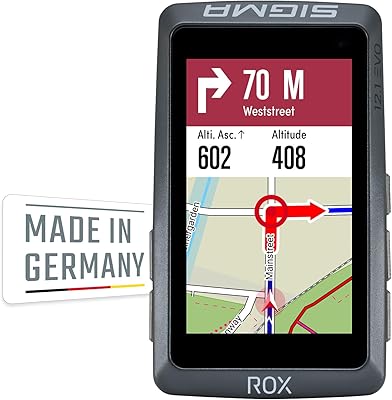
Garmin Edge 1040 Solar GPS Bike Computer
80%
93%
GPS Accuracy
88%
Battery Life
71%
Solar Charging
86%
Navigation
84%
Training Analytics
More
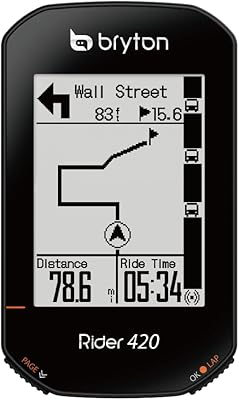
Sigma ROX 12.1 EVO GPS Bike Computer
78%
88%
GPS Accuracy
91%
Map Navigation
71%
Touchscreen Responsiveness
74%
Battery Life
86%
E-Bike Integration
More
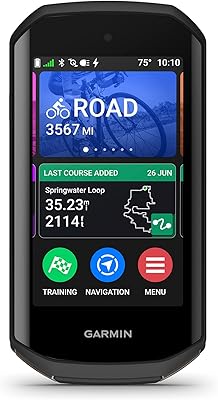
Garmin Edge 540 GPS Cycling Computer
81%
93%
GPS Accuracy
89%
Battery Life
86%
Navigation & Mapping
91%
ClimbPro Functionality
74%
Adaptive Coaching & Training Tools
More
Garmin Edge 1050 GPS Cycling Computer
79%
88%
Touchscreen Quality
91%
Battery Life
86%
Navigation Accuracy
82%
Built-in Speaker
78%
Group Ride Features
More
Garmin Edge 840 GPS Cycling Computer
79%
93%
GPS Accuracy
88%
Battery Life
91%
ClimbPro Feature
62%
Touchscreen Performance
74%
Adaptive Training Tools
More

FAQ

Yes, entirely. The GPS is built directly into the unit, so it tracks speed, distance, and your route on its own. You do not need your phone mounted or nearby during a ride.

It is compatible with ANT+ heart rate monitors, cadence sensors, and power meters from most major brands. As long as the sensor uses the ANT+ protocol, pairing is generally straightforward and reliable based on user experience.

After a ride, you connect the device to a computer and use the Timex Device Agent software to transfer workout files to your Training Peaks account. Most users find it functional, though some report occasional friction depending on their operating system version and software compatibility.

Under normal conditions — GPS running with one or two ANT+ sensors active — most riders get close to the advertised figure. If you are running multiple sensors simultaneously or in colder temperatures, expect the real-world runtime to be somewhat shorter.

The device is classified as multi-sport, and triathletes do use it across disciplines. That said, its mount and form factor are primarily designed for handlebar use, so off-bike use requires more improvisation.

No. The device launched in 2012 and Timex is no longer issuing firmware updates for it. The hardware still functions, but you should go in with realistic expectations about long-term compatibility with evolving platforms and operating systems.

This is one of the more common complaints among users. The display is readable in moderate light, but direct sunlight can make it harder to glance at quickly while riding. It is not a deal-breaker for most, but worth knowing if you ride in consistently bright conditions.

This GPS cycling computer uses a proprietary Timex mount system. It is designed to attach to standard road and mountain bike handlebars, but since it is an older device, third-party mount adapters may be needed for some modern bar configurations. A handful of users have flagged the mount durability as a concern over extended use.

The device records GPS route data, but the mapping display is basic. It is not designed for turn-by-turn navigation or detailed on-screen maps the way modern dedicated cycling GPS units are. Think of it more as route logging with a track overview rather than active navigation.

It depends on your expectations. If you want straightforward GPS data, sensor connectivity, and Training Peaks integration, this Timex bike computer covers those bases well. If you are new to the category and expecting modern features like Bluetooth syncing or a polished app experience, you will likely find newer alternatives at similar price points to be a better fit today.