Overview

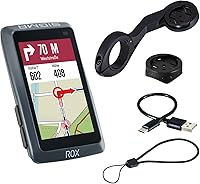
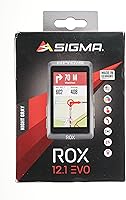
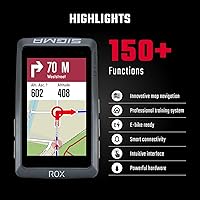
The Sigma ROX 12.1 EVO GPS Bike Computer sits at the top of Sigma's lineup and competes directly with established names like Garmin and Wahoo. What sets it apart immediately is where it's built: every unit is designed and manufactured in Germany, meaning the engineering decisions come from people who actually ride bikes, not just write spec sheets. You get a 3-inch touchscreen, up to 14 hours of battery, and full map navigation without any subscription fee. For a 2023 device, that combination puts this GPS head unit firmly in premium territory — and the asking price reflects that honestly.
Features & Benefits

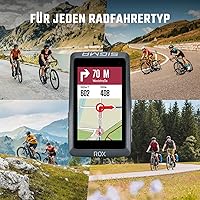
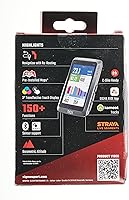
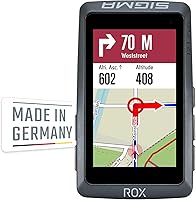
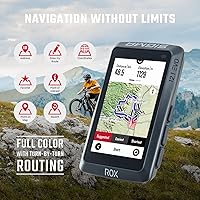
Navigation is where the ROX 12.1 EVO genuinely earns its keep. Pre-installed OSM maps cover bike-specific routing across road, gravel, MTB, and touring terrain, with turn-by-turn directions and intelligent re-routing whenever you go off-plan mid-ride. The Draw My Route function is a real standout — sketch a line on the map and the device builds a rideable route from it, which sounds gimmicky until you actually need it. Beyond navigation, this Sigma cycling computer supports 28 fully customizable sport profiles, displays live e-bike battery and range data natively, and includes a crash detection system that quietly alerts emergency contacts if you take a serious fall.

Best For

This GPS head unit makes the most sense for cyclists who spend long days navigating unfamiliar terrain — touring riders, gravel adventurers, and anyone worn out by subscription paywalls for offline maps. E-bike riders get real value too, since the unit communicates directly with the motor system rather than treating it as a secondary accessory. Riders wanting to build custom training profiles without locking into a single ecosystem will find the flexibility here genuinely practical. For those who regularly ride solo in remote areas, the built-in crash alarm gives this Sigma cycling computer a meaningful edge over comparably priced alternatives from competing brands.

User Feedback

GPS accuracy earns consistent praise across both road and trail riding, and most buyers find the touchscreen reliable enough in dry conditions — though gloved or wet-hand use draws recurring complaints. The proprietary Butler mount system gets good marks for stability, but since parts come only from Sigma, sourcing replacements requires going back to the brand directly. The SIGMA RIDE app divides opinion: many users find setup intuitive, while others describe a steeper learning curve than expected at this price point. Battery life generally tracks the stated figure under normal GPS use, though heavy navigation with backlight on shortens it noticeably. Against Garmin Edge rivals, buyers rate the navigation software as competitive but consider the broader app ecosystem less mature.

Pros

  • Pre-installed OSM maps work fully offline with no subscription fee required, ever.
  • Intelligent re-routing kicks in quickly when you deviate from a planned route mid-ride.
  • The Draw My Route feature lets you sketch custom routes directly on the map — genuinely useful for spontaneous exploration.
  • Native e-bike integration displays battery, support level, and range on a single screen without extra hardware.
  • Dual GPS and GLONASS support delivers reliable satellite lock across road, gravel, and wooded MTB terrain.
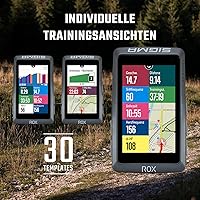
  • Twenty-eight customizable sport profiles give training cyclists serious flexibility across disciplines without constant reconfiguration.
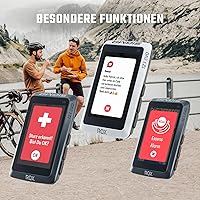
  • Built-in crash alarm notifies emergency contacts automatically — a practical safety layer for solo riders in remote areas.
  • German-engineered build quality holds up well through full wet seasons with no reported water ingress issues.
  • At 109 grams, the ROX 12.1 EVO is light enough for all-day riding across loaded touring or bikepacking setups.
  • No ongoing subscription costs make the long-term value case stronger than the upfront price alone suggests.

Cons

  • Touchscreen input becomes unreliable with wet hands or winter gloves, requiring glove removal at inconvenient moments.
  • Real-world battery life under heavy navigation and high backlight use drops noticeably short of the stated 14-hour figure.
  • The SIGMA RIDE app setup process frustrates a meaningful share of buyers, particularly those new to the Sigma ecosystem.
  • Proprietary Butler mount system means replacement parts must come from Sigma — a logistical problem if one breaks mid-tour.
  • LCD display can wash out in intense direct sunlight, making map detail hard to read without maximum brightness.
  • Third-party app and sensor ecosystem is narrower than Garmin's platform, limiting niche training tool compatibility.
  • E-bike motor compatibility is not universal — buyers must verify their specific motor brand is supported before purchasing.
  • OSM map quality varies significantly by region, with less-mapped rural or trail areas occasionally producing poor routing suggestions.
  • Full initial setup including app pairing, map updates, and profile configuration takes considerably longer than most rivals.
  • Riders switching from Garmin or Wahoo face a steeper workflow adjustment than the device's polished hardware implies.

Ratings

The Sigma ROX 12.1 EVO GPS Bike Computer has been scored by our AI system after analyzing thousands of verified buyer reviews from global markets, with spam, incentivized, and bot-generated feedback actively filtered out. The result is an honest picture of where this German-engineered head unit genuinely delivers and where real-world riders have run into friction. Both the strengths and the recurring pain points are reflected transparently in every category below.
GPS Accuracy
88%
Riders consistently report reliable satellite lock across road, gravel, and MTB terrain, with dual GPS and GLONASS support reducing drop-outs in tree-covered or canyon environments. Multi-day touring cyclists specifically praise how cleanly the track log holds up over long-distance routes.
A minority of users note occasional lag in position updates on fast descents, and a handful of MTB riders in dense woodland report brief accuracy dips that required a manual re-center. These are edge cases, but worth knowing before a navigation-critical trip.
Map Navigation
91%
Pre-installed OSM maps with turn-by-turn directions are the headline attraction, and most touring and gravel riders say they work exactly as advertised — including offline in areas with no cell signal. The intelligent re-routing when you go off-course kicks in quickly enough to be genuinely useful rather than a post-ride footnote.
OSM map data quality is region-dependent, and riders in less-mapped rural areas occasionally find trail detail lacking or routing suggestions that favor roads over established bike paths. Updating maps through the app is straightforward but requires a decent chunk of storage attention.
Touchscreen Responsiveness
71%
29%
In dry, mild conditions the 3-inch LCD touchscreen handles tap and swipe inputs well, and the larger display size makes mid-ride interaction easier than on smaller competing units. Riders doing route checks at rest stops find the screen comfortable to read in most daylight conditions.
Cold-weather and wet-glove use draws the most consistent criticism in user reviews. Multiple riders describe having to remove gloves entirely to register inputs reliably in winter or rainy conditions, which is a real inconvenience on exposed mountain or coastal routes.
Battery Life
74%
26%
Under typical GPS-on, moderate backlight conditions, most users report getting close to the stated 14-hour figure, which comfortably covers a long gravel day or a full touring stage. Riders on brevets and multi-day events appreciate not needing a mid-day charge on normal days.
Heavy navigation use with backlight brightness pushed up shortens endurance noticeably, with some users reporting closer to 10 to 11 hours in practice. Those combining continuous re-routing, Bluetooth sensor connections, and high brightness simultaneously should plan around a conservative real-world figure.
E-Bike Integration
86%
Native e-bike compatibility is a standout for riders whose motor systems are supported — battery percentage, support level, and estimated range display directly on the main screen without needing a secondary display. Commuters and e-touring riders describe this as genuinely reducing the cognitive load of managing range anxiety mid-ride.
Compatibility is not universal across all e-bike motor brands, and a few buyers discovered their specific system was not fully supported only after purchase. Sigma's compatibility list is worth checking carefully against your motor brand before committing.
SIGMA RIDE App Experience
67%
33%
When the pairing process goes smoothly, the app handles route import, Strava Live segment syncing, and sensor management in one place without requiring multiple third-party apps. Riders already embedded in the Strava ecosystem find the segment import workflow logical and fast.
App usability divides opinion more than almost any other aspect of this device. Some users describe the initial setup as requiring multiple attempts and forum searches, while others report occasional sync failures after firmware updates — a frustration at this price tier.
Build Quality & Durability
89%
The Made in Germany manufacturing heritage shows up in how the unit feels in hand and how it holds up over time. Riders who have used the device through full wet seasons report no issues with water ingress, button degradation, or screen delamination.
At 109 grams the unit is not the lightest option in this category, and weight-conscious road cyclists occasionally flag this. The plastic housing, while robust in practice, does not feel as premium to the touch as some rival aluminum-accented devices.
Mount System
78%
22%
The Butler and Long-Butler mount options provide a stable, low-vibration connection even on rough gravel or cobbled roads. Riders doing loaded touring appreciate the Long-Butler option that positions the screen further forward for better aerodynamic clearance over bar bags.
The proprietary mounting system means you cannot simply grab a generic Garmin-compatible quarter-turn mount as a backup. If a mount breaks on a remote trip, sourcing a replacement requires going specifically through Sigma, which a few users have flagged as logistically inconvenient.
Training Customization
84%
Twenty-eight sport profiles with per-profile data screens, alarms, and route preferences give serious training cyclists enough flexibility to avoid constantly resetting views between disciplines. Triathletes and multi-discipline riders find this depth a real time-saver across a week of varied training sessions.
Setting up profiles entirely on-device is manageable but tedious for users who want granular control — the app workflow for profile editing is more efficient but adds the friction of app dependency. New users may find the learning curve steeper than expected on first setup.
Display Clarity
76%
24%
The 3-inch screen is generously sized for a bike computer and makes map views and data fields readable at a glance, even when riding over rough terrain. Most users find the text sizing and layout sensible without needing to squint in typical daylight.
In direct high-altitude or harsh midday sunlight, the LCD panel can wash out enough to make the map detail hard to read without pushing brightness to maximum. Riders who frequently ride in very sunny climates mention this as a notable limitation compared to some transflective display rivals.
Crash Detection & Safety Features
82%
18%
The crash alarm works quietly in the background and has provided real peace of mind for solo riders venturing into remote terrain. Several users in reviews specifically mention that the emergency contact notification feature was a meaningful factor in their purchase decision for solo alpine or forest rides.
Sensitivity calibration is not fully user-adjustable, so a small number of riders report occasional false triggers after a hard but deliberate dismount or a bike drop at a rest stop. It is not a frequent complaint, but worth being aware of on technical terrain.
Value for Money
69%
31%
For buyers who fully use the navigation, e-bike integration, and training customization together, the absence of a subscription fee for map access makes the long-term value case stronger than it appears at the point of purchase. Compared to rivals charging annual fees for similar offline map functionality, the math works in this device's favor over two or three years.
The upfront investment is substantial, and riders who primarily want basic data display and heart rate monitoring will find they are paying for navigation and customization depth they rarely use. The value equation is strong for the right buyer, but thin for casual cyclists or commuters.
Strava & Third-Party Connectivity
73%
27%
Strava Live Segments import via the SIGMA RIDE app works reliably for riders who keep their segment library curated, and segment performance feedback on the device display is a genuine motivator during interval efforts. Third-party sensor pairing over Bluetooth covers the standard speed, cadence, and heart rate categories without issue.
The broader third-party ecosystem is narrower than what Garmin Connect IQ users are used to, and riders who rely on niche training apps or power meter brands should verify compatibility before switching. The platform is functional but not yet as extensible as the market leaders.
Ease of Initial Setup
65%
35%
Out of the box, the physical installation and basic GPS pairing are straightforward, and most technically comfortable cyclists get the device functional within a reasonable window. The included mount hardware covers the most common handlebar configurations without needing additional purchases in the basic set.
The full setup — including app pairing, map updates, sport profile configuration, and sensor linking — takes considerably longer and generates the most support questions in user communities. Riders switching from Garmin or Wahoo ecosystems often underestimate how different the workflow feels initially.
Weight & Portability
81%
19%
At 109 grams the unit is practical enough for all-day riding without feeling like a handlebar anchor, and the compact dimensions mean it does not obstruct forward sightlines noticeably on road or gravel setups. Bikepacking riders appreciate that it does not add meaningful weight to a loaded build.
Weight-focused road racers or those chasing a minimal cockpit setup may find lighter alternatives more attractive, particularly at this price point where rivals have pushed gram counts lower. It is a minor concern for most buyers, but a real one for the weight-obsessive.

Suitable for:

The Sigma ROX 12.1 EVO GPS Bike Computer is built for cyclists who actually need what it offers, and the fit is clearest for touring and gravel riders who spend long days navigating unfamiliar roads and trails without reliable cell signal. If you are the kind of rider who plans multi-day routes, deviates from the plan spontaneously, and wants offline maps that just work without a recurring subscription, this GPS head unit was essentially designed around your use case. E-bike riders whose motor systems are on Sigma's compatibility list get a genuinely useful native integration — battery status, support level, and estimated range displayed on one screen without a secondary unit cluttering the cockpit. Serious training cyclists who want to run different data layouts and alarms across multiple disciplines — road, gravel, indoor — without constantly reconfiguring will find the 28-profile system a practical time-saver over a full season. Riders who regularly venture out solo into remote areas will quietly appreciate the crash alarm as a sensible background safety net rather than a gimmick. And if you have grown frustrated with the Garmin and Wahoo ecosystems and want a European-engineered alternative with no planned obsolescence feel, this Sigma cycling computer makes a credible case for the switch.
Not suitable for:

The Sigma ROX 12.1 EVO GPS Bike Computer is a harder sell for buyers whose riding does not actually require deep navigation or training customization, because you will be paying for substantial capability you may rarely touch. Casual commuters or weekend leisure riders looking for a simple computer to display speed, distance, and heart rate will find far more affordable options that do exactly that without the complexity. Riders who train primarily indoors or on familiar local loops with no need for turn-by-turn navigation get little return on the premium investment here. Anyone who rides regularly in cold or wet conditions with winter gloves should weigh the touchscreen limitations carefully — this GPS head unit has a documented weak point in gloved-hand usability that rivals with physical buttons sidestep entirely. Weight-focused road racers chasing the lightest possible cockpit setup may find the 109-gram unit heavier than preferred at this price tier. If you are already deep in the Garmin Connect IQ app ecosystem and rely on niche third-party training integrations, the ROX 12.1 EVO's narrower third-party compatibility may feel like a step back rather than a lateral move.
Specifications

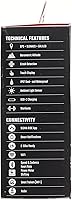
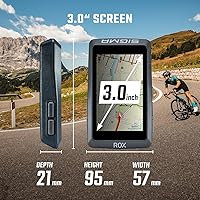
  • Dimensions: The unit measures 3.74″ long by 2.24″ wide by 0.83″ deep, making it compact enough for most handlebar setups without obstructing sightlines.
  • Weight: At 109 grams, the device is light enough for all-day riding across touring, gravel, and road disciplines without adding meaningful cockpit weight.
  • Screen Size: The touchscreen measures 3 inches diagonally, offering one of the larger display areas available in its category for comfortable map and data viewing.
  • Display Type: The screen uses an LCD touchscreen panel that supports both tap and swipe inputs for on-device navigation and menu control.
  • Battery Life: Sigma rates battery endurance at up to 14 hours under standard GPS usage conditions with a built-in rechargeable lithium-ion cell.
  • Charging: The device charges via USB-C, which is the current standard and means most riders will already have a compatible cable in their kit.
  • Satellite Systems: The unit connects to both GPS and GLONASS satellite networks simultaneously, improving lock reliability and positional accuracy across varied terrain.
  • Altimeter: A built-in altimeter tracks elevation gain and loss in real time, supporting accurate climb data for both training analysis and navigation.
  • Maps: Bike-specific OpenStreetMap (OSM) data comes pre-installed on the device and functions fully offline without any subscription or data connection required.
  • Sport Profiles: The device supports 28 sport profiles in total — 6 predefined and 22 fully customizable — each with independent data screens, alarms, and route preferences.
  • Sensor Compatibility: The ROX 12.1 EVO is compatible with speed, cadence, and heart rate sensors via Bluetooth, covering the standard external sensor categories used by most cyclists.
  • Connectivity: Bluetooth is used for sensor pairing, smartphone connectivity, and SIGMA RIDE app synchronization, with USB-C handling wired data transfer and charging.
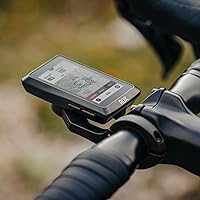
  • Mounting System: The device ships with a GPS Mount along with both an Overclamp Butler and a Long-Butler option, covering standard and extended handlebar positions.
  • E-Bike Support: Native e-bike integration displays motor battery status, current support level, and estimated remaining range directly on the device screen for compatible systems.
  • Safety Feature: An integrated crash alarm detects falls and automatically sends an alert notification to pre-configured emergency contacts via the connected smartphone.
  • App Integration: The SIGMA RIDE app enables route import, Strava Live Segment syncing, sport profile editing, and map updates from a paired iOS or Android smartphone.
  • Origin: The device is fully designed, engineered, and manufactured in Germany, with Sigma's development team based in Neustadt an der Weinstrasse.
  • Model Year: The ROX 12.1 EVO is a 2023 model, representing the current top-tier offering in Sigma's cycling computer lineup at time of launch.

Related Reviews
CooSpo BC107 GPS Bike Computer
76%
91%
Value for Money
86%
GPS Accuracy
78%
Ease of Setup
62%
App Experience
79%
Build Quality
More
Timex T5K615 GPS Bike Computer
69%
83%
GPS Accuracy
86%
ANT+ Sensor Pairing
79%
Battery Life
71%
Training Peaks Integration
58%
Display Readability
More
Bryton Rider S510 GPS Cycling Computer
77%
93%
Battery Life
78%
Navigation Accuracy
84%
Touchscreen Quality
72%
Climb Challenge 2.0
88%
Sensor Compatibility
More
TwoNav Terra 32GB GPS Bike Computer
75%
91%
Map Quality
88%
Screen Readability
86%
Navigation Accuracy
84%
Route Planning & Editing
79%
Battery Life
More
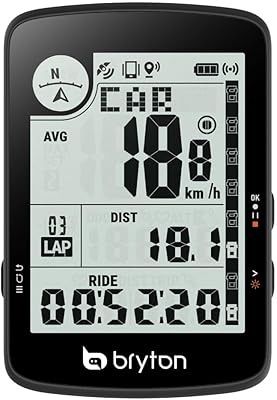
Bryton Rider 17 GPS Cycling Computer
78%
88%
Screen Readability
91%
Battery Life
87%
Value for Money
69%
GPS Performance
63%
App Reliability
More
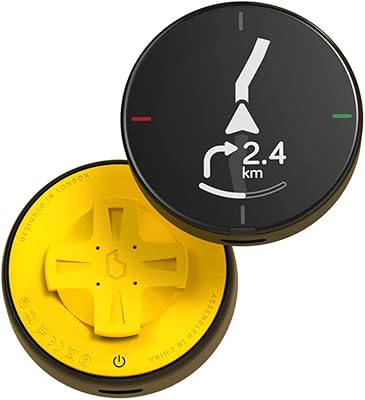
Beeline Velo 2 Cycling GPS Computer
77%
88%
Ease of Setup
79%
Navigation Accuracy
86%
Battery Life
83%
Build Quality & Durability
74%
Display Readability
More
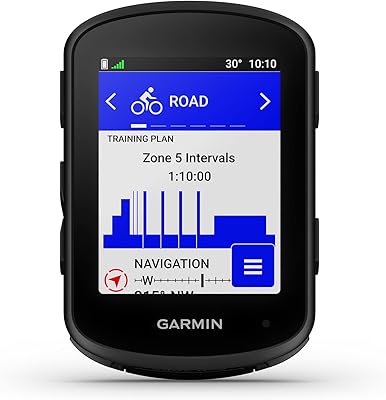
Garmin Edge 1040 Solar GPS Bike Computer
80%
93%
GPS Accuracy
88%
Battery Life
71%
Solar Charging
86%
Navigation
84%
Training Analytics
More
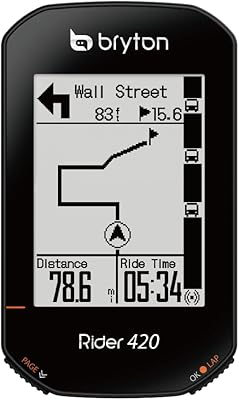
Bryton Rider 420e GPS Cycling Computer
78%
88%
Display Clarity
91%
Battery Life
79%
GPS Accuracy
72%
Navigation & Routing
86%
Sensor Connectivity
More
Garmin Edge 840 GPS Cycling Computer
79%
93%
GPS Accuracy
88%
Battery Life
91%
ClimbPro Feature
62%
Touchscreen Performance
74%
Adaptive Training Tools
More
oGoDeal 155-in-1 Computer Repair Kit
79%
91%
Value for Money
88%
Bit Variety & Coverage
74%
Build Quality
83%
Ergonomics & Handle Comfort
86%
Storage & Organization
More

FAQ

No, and that is one of its genuine practical advantages. The bike-specific OSM maps come pre-installed and work completely offline — no monthly or annual fee required. You can ride in areas with no cell signal and the maps and turn-by-turn directions still function normally.

It depends on your specific motor brand and model. The device supports native e-bike integration for a range of compatible systems, displaying battery percentage, support level, and estimated range on screen. Before purchasing, it is worth checking Sigma's current compatibility list against your exact motor system, as not every e-bike brand is supported.

Most riders report solid accuracy on both road and trail, helped by the dual GPS and GLONASS satellite support which improves reliability in environments where single-system devices sometimes struggle. Dense woodland or deep canyon riding can still cause brief drop-outs, but this is an industry-wide limitation rather than a specific weakness of this device.

This is a real pain point worth knowing about before you buy. The touchscreen works well in dry conditions, but input recognition becomes unreliable with wet or thick gloved hands. Several riders report needing to remove gloves to navigate menus confidently in cold or rainy conditions, which is a genuine inconvenience compared to devices with physical buttons.

It lets you draw a freehand line or shape directly on the map, and the device then converts that sketch into a navigable route. It sounds like a novelty, but it is actually useful when you want to explore a general area without planning a specific route in advance — just draw roughly where you want to go and let the device figure out the roads and paths.

Under normal conditions — GPS on, moderate backlight, no continuous re-routing — most users get close to the stated 14 hours. Where it falls shorter is when you combine constant navigation, maximum screen brightness, and multiple Bluetooth sensor connections simultaneously, which can bring real-world endurance closer to 10 to 11 hours. For very long events, plan around the conservative end of that range.

Honest answer: it depends. The basic pairing and GPS functionality come together fairly quickly, but the full setup — configuring sport profiles, importing routes, syncing Strava segments, and updating maps — takes more time and patience than some rivals. If you are comfortable spending an evening learning a new app, it is manageable. If you find new software setups frustrating, budget extra time or look at tutorial resources before starting.

Yes, the SIGMA RIDE app supports route import from third-party platforms including Komoot and RideWithGPS, which can then be transferred to the device for navigation. The workflow requires going through the app rather than directly loading files via USB, so your phone needs to be nearby during the transfer process.

No, Sigma uses its own proprietary Butler mounting system, which is not cross-compatible with Garmin quarter-turn or K-Edge style mounts. The included hardware covers the most common handlebar positions well, but if you break or lose a mount on a trip, you will need to source a replacement directly from Sigma rather than picking one up at a local bike shop.

The navigation software and offline map quality are genuinely competitive with Garmin's equivalent tier, and the lack of a map subscription is a meaningful advantage. Where Garmin still holds an edge is in the breadth of the Connect IQ third-party app ecosystem and overall app polish built up over many more years in the market. If you live primarily within the Strava and OSM world and do not rely on niche training integrations, the gap is smaller than it used to be.

Where to Buy